Author Archive

Is the Expansion of the Universe Isotropic?

Posted in Astrohype, The Universe and Stuff with tags , , , , , on April 9, 2020 by telescoper

There’s a new paper out that has been making a few waves in cosmology. Here’s the title and abstract:

It’s published in Astronomy & Astrophysics but you can find it on the arXiv here.

Here’s a gratuitous pretty picture showing the distribution of the X-ray clusters used in the analysis.

The discussion in the paper focuses on two possibilities: (i) that the clusters are participating in a large-scale correlated motion; and (ii) that the Expansion of the Universe is not occurring isotropically. The latter option is the one that has attracted the most media attention (presumably because it has the most far-reaching implications). This seems to me to be a very unlikely explanation, however, because anisotropic expansion of the magnitude implied would leave a ~10% signal in the Cosmic Microwave Background which is not observed.

There is, however, a third possibility (admittedly duller than the other two) which is that there is some unknown systematic error in the observations…

What works with Online Teaching?

Posted in Covid-19, Education, Maynooth with tags , on April 8, 2020 by telescoper

Since the cancellation of in-person lectures and tutorials at Maynooth University a few weeks ago, we’ve all been trying – mostly without much a priori knowledge – how to teach students using exclusively online methods.

In the Department of Theoretical Physics we’re all trying different things and trying our best to learn from student feedback how to improve.

Maynooth University recently launched a survey of students that was completed by about 3000 in 24 hours, which is a very good response.

The results are very interesting. When asked what works best for them the responses were:

  1. 39% prefer PowerPoint with sound;
  2. 27.2% prefer recorded video or screencast;
  3. 18.6% prefer text materials (Word/Pwpt); and
  4. 12.2% prefer live video or screen cast.

I’m sure that there is no single “best” way of doing this. What works will depend a lot on the discipline (and the kind of material to be presented) and on the lecturer (and how comfortable they are with different approaches), as well as on the student.

I’ve always felt that students being different individuals all learn in different ways so the best approach is to offer as broad a mixture of approaches as possible in order to try to offer something for everyone.

For my part what I’m doing is making a PDF of the lectures available for the students to study in their own time, but also record short (15-minute) recorded video explainers of the key concepts using a piece of software called Screencast-o-matic.

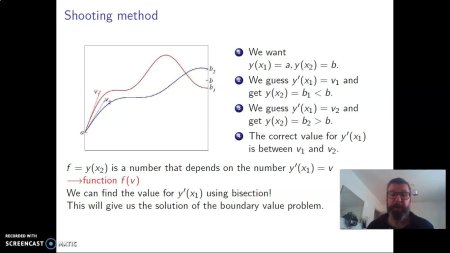
Here’s a still from one of my Computational Physics videos:

You see they get the notes with a pointer moving about on it as I talk, but also have to endure an encapsulated video of me waving my hands and blabbering on, for that authentic lecture experience.

The video and audio is not ideal because of lighting and background sound issues in my flat which is why I felt keeping the recordings short would be useful.

I recorded the one shown above (and several others) before I figured that it works better to use the natural light coming in through the window than electric lighting. That means that I now do my recordings in the morning, when I can face the sunlight in my sitting room.

I should add that we also have a laboratory for this course. The students are given a script to work through then some (Python) coding exercises to complete. They have to do these at home but myself and a demonstrator are online via Microsoft Teams to assist the students who can share screens and output files to help us diagnose any bugs.

Anyway, what works for you?

Wordsworth 250: Lines Written in Early Spring

Posted in Uncategorized with tags , on April 7, 2020 by telescoper

The poet William Wordsworth was born on 7th April 1770, which means that today is the 250th anniversary of his birth.

I’ve posted a number of poems by and reflections on Wordsworth on this blog over the years, including one of the very first pieces I wrote on here. That was an article inspired by one of my oldest and most treasured possessions, little book of Wordsworth’s poems:

I’m very fond of this book and the poetry within it. Unfortunately it, along with most of the rest of my poetry collection, is not with me during this period of lockdown.

Anyway, it’s lovely Spring day in Maynooth so to celebrate that and Wordsworth’s 250th Birthday, here is an appropriate poem.

I heard a thousand blended notes,
While in a grove I sate reclined,
In that sweet mood when pleasant thoughts
Bring sad thoughts to the mind.

To her fair works did Nature link
The human soul that through me ran;
And much it grieved my heart to think
What man has made of man.

Through primrose tufts, in that green bower,
The periwinkle trailed its wreaths;
And ’tis my faith that every flower
Enjoys the air it breathes.

The birds around me hopped and played,
Their thoughts I cannot measure:–
But the least motion which they made
It seemed a thrill of pleasure.

The budding twigs spread out their fan,
To catch the breezy air;
And I must think, do all I can,
That there was pleasure there.

If this belief from heaven be sent,
If such be Nature’s holy plan,
Have I not reason to lament
What man has made of man?

by William Wordsworth (1770-1850)

R. I. P. Honor Blackman (1925-2020)

Posted in Film, Television with tags , , on April 6, 2020 by telescoper

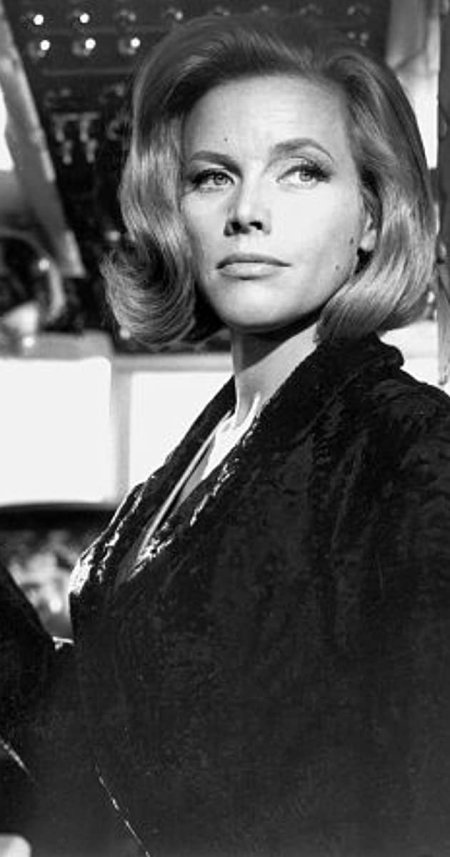
More sad news today: the wonderful actress Honor Blackman, best known as Cathy Gale, John Steed’s first sidekick in The Avengers, and as Pussy Galore in the Bond film Goldfinger, has passed away at the age of 94.

Rest in peace, Honor Blackman (1925-2020).

R.I.P. Margaret Burbidge (1919-2020)

Posted in History, The Universe and Stuff with tags , , , , , on April 6, 2020 by telescoper

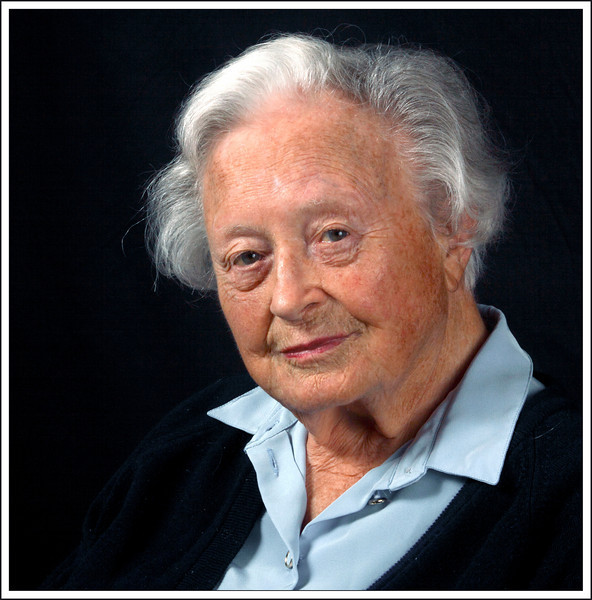
I just heard via Twitter that Margaret Burbidge has passed away at the age of 100. I send my condolences to her friends, colleagues and family.

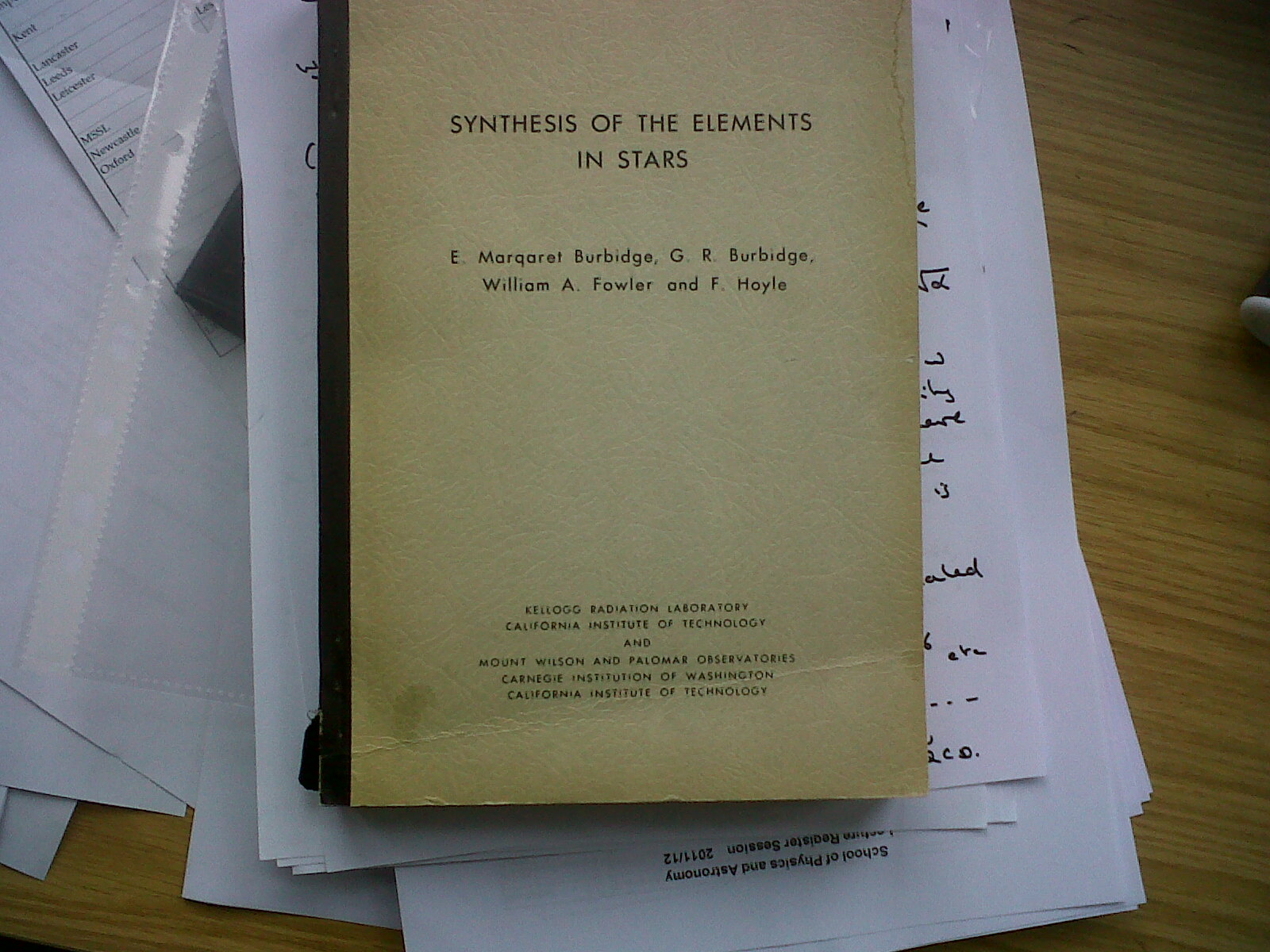
Margaret Burbidge will perhaps be best remembered as the first author anniversary of the classic work of Burbidge, Burbidge, Fowler and Hoyle in 1957 (a paper usually referred to as B2FH after the initials of its authors). It’s such an important contribution, in fact, that it has its own wikipedia page.

One of the interesting astronomical things I’ve acquired over the years is a preprint of the B2FH paper. Younger readers will probably not realize that preprints were not always produced in the electronic form they are today. We all used to make large numbers of these and post them at great expense to (potentially) interested colleagues before publication in order to get comments. In the age of the internet people don’t really bother to make hard copies of preprints for distribution any more.

Anyway, here’s a snap of it.

Sadly all of the authors have now passed away Margaret Burbidge did much more than that paper, of course. She made important contributions over a wide range of topics in astrophysics and will be greatly missed.

Rest in peace, Margaret Burbidge (1919-2020)

The Birds

Posted in Maynooth with tags , on April 5, 2020 by telescoper

One of the far from unpleasant side-effects of the lockdown here in Maynooth is that you notice the birds much more.

For one thing the marked decrease in traffic means that birdsong a lot more audible, which is very pleasant; for another, some otherwise rather shy species are to be seen out and about. I saw (and heard) one of these critters fo on Maynooth Campus yesterday when I went for my daily constitutional:

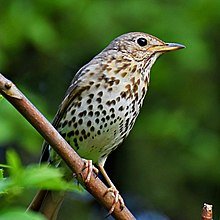
It’s a song thrush. I’ve never seen one on the campus before. I’ve also seen various colourful finches from time to time.

The resident bird population of Maynooth University campus is dominated by various members of the crow family: Jackaws, Rooks, Hooded Crows, Magpies, etc. They’re still around but they live mainly by scavenging and there are far fewer people around leaving far less stuff to scavenge, they seem to be roaming farther afield. Yesterday, however, I noticed that a couple of Magpies swooped on the cat’s dish after he’d finished his lunch to see if there was anything left to eat. They must be hungry.

Outside my flat there’s a group of tall trees. Yesterday afternoon I watched from a window for a full twenty minutes as a rather large and clumsy Rook tried to balance precariously on a long slender twig right at the top. Why it didn’t perch on one of the thicker branches lower down instead, I don’t know.

It struck me as an excellent metaphor, but I’m not sure for what.

Assessment at a Distance

Posted in Covid-19, Education, Maynooth with tags , , , on April 4, 2020 by telescoper

In the light of the Covid-19 restrictions currently in place, Maynooth University has issued updated guidance to students about the rest of the Semester.

Of particular concern to students is what will happen to their examinations, usually held in the second half of May.

Here the guidance begins:

The university examinations will not take place this semester in the usual format. The examinations will be replaced by remote assessments, including assignments, timed remote assessments and in some cases video interviews. As far as possible assessments will be completed by the scheduled dates. We plan to have resit examinations in August as usual.

There has been a lot of work and discussion going on behind the scenes to come up with ways of doing without the usual in situ examinations and the solutions proposed will no doubt vary considerably from discipline to discipline.

In the case of Theoretical Physics the vast majority of our examinations will be in the form of a timed assessment as mentioned above. What this means is that a test of similar format to the usual examinations will be made available in the form of a pdf file for students to download at home at a specific time. They must then scan and upload their answers, within a given time limit, extra time being added to formal duration of the assessment to allow for doing this.

There are two main potential difficulties with this approach.

One is that the students will not be invigilated and may cheat, either by referring to notes or other material (e.g. online) or by colluding with others. I believe the former risk can be mitigated (a) by the time limit and (b) by designing an assessment that emphasises problem-solving rather than rote learning (which, frankly, is what we should be doing anyway). Collusion is more difficult to deal with but we can at least require students to make a declaration that the submission is their own and reserve the right to interview afterwards.

The second (and, I believe more serious) source of difficulty is on the side of the student. This approach will require students to have somewhere at home where they can do the test, as well as access to the Internet and a scanning device of some sort. They will only have to download a relatively small pdf but the upload may cause problems. A scanned pdf would be easier to upload than, for example, pictures taken using a phone camera (which may be rather large files).

Still, given that there is a period of six weeks before these assessments are due to take place, I hope the vast majority of students will be able to put appropriate arrangements in place. We can also provide a dummy test so they can check that everything works satisfactorily.

These proposals are not ideal, but few things can be in the situation we are in. I do think this is a reasonable approach for our students because at least it means they can prepare using past examination papers knowing that the timed assessment will be similar in form. I think dumping an entirely new and unfamiliar kind of assessment on students now, at a time of already high stress, would have been grossly unfair.

Maynooth University Library Cat Update

Posted in Maynooth with tags , , on April 3, 2020 by telescoper

Quite a few people have been asking me how the Maynooth University Library Cat is coping with the lockdown. I always visit him when I take the daily exercise (usually after lunch) allowed by the Covid-19 restrictions. I know that others are looking after him too so he’s doing well.

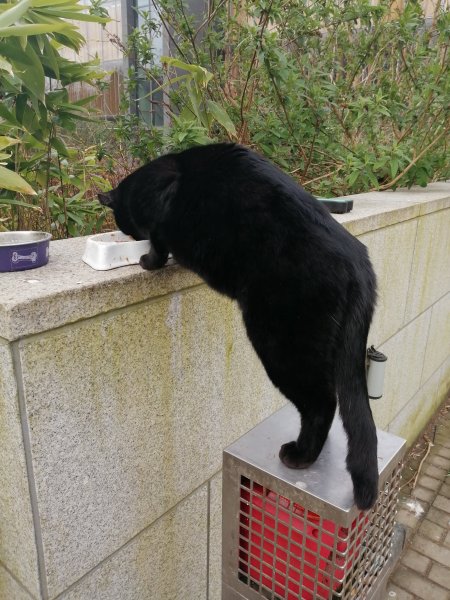
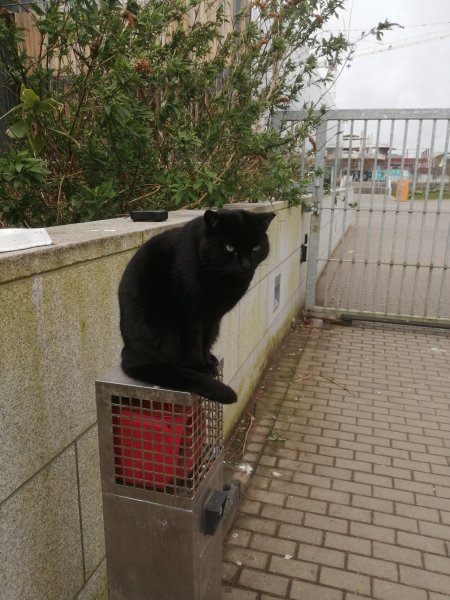
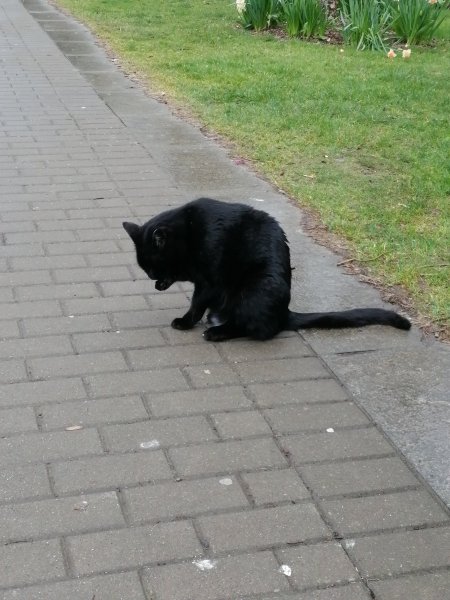
When I saw him yesterday he was asleep in his box. He emerged to climb onto his wall to eat the food I put out, paused for a photo-opportunity on his usual post, then descended to ground level for a quick wash, after which he went back into his box to resume his kip.

Incidentally, you will see in the middle picture that the metal gate near his spot is now locked so it’s not possible to get from the South Campus to the North Campus past the Library. Not for us hoomans, I mean. The cat can manage it!

Cosmology Talks: Julien Lesgourgues on Neutrino Masses

Posted in The Universe and Stuff with tags , , , on April 3, 2020 by telescoper

If you are missing your regular seminar experience because of the Coronavirus lockdown, Shaun Hotchkiss has set up a YouTube channel just for you!

The channel features technical talks rather than popular expositions so it won’t be everyone’s cup of tea but for those seriously interested in cosmology at a research level they should prove interesting.

Here’s an example in which Julien Lesgourgues talks about (not measuring neutrino masses with cosmological data.

Winging IT

Posted in Biographical, Covid-19, Education with tags , , , , , on April 2, 2020 by telescoper

The current restrictions resulting from the Covid-19 outbreak have forced many of us academics to adapt to using IT in ways we hadn’t even imagined just a month ago. It’s not only remote teaching via virtual learning environments with live and/or prerecorded video lectures, but also meetings held by videoconferencing platforms such as Zoom or Microsoft Teams.

Few of us have had much training in the use of these things, so when it comes to Information Technology we’re all winging it. Still, necessity is the mother of invention and we just have to get on with it.

I’m gradually getting used to Microsoft Teams, for example. I’ve even got proper kit to wear.

Incidentally, yesterday I learned that the expression ‘to wing it’ actually comes from the Theatre, where it alludes to an actor studying their lines in the wings (at the side of the stage) because they haven’t had time to learn their part before the performance (usually because they are replacing another actor at short notice).

Nowadays ‘winging it’ means generally improvising or making it up as you go along. I’m finding winging it to be rather hard work but quite fun, actually. While we’ve been trying to flatten the Covid-19 curve the learning curve has definitely been getting steeper.