Author Archive

Euclid’s Flagship Simulation

Posted in Euclid, The Universe and Stuff with tags , , on July 28, 2017 by telescoper


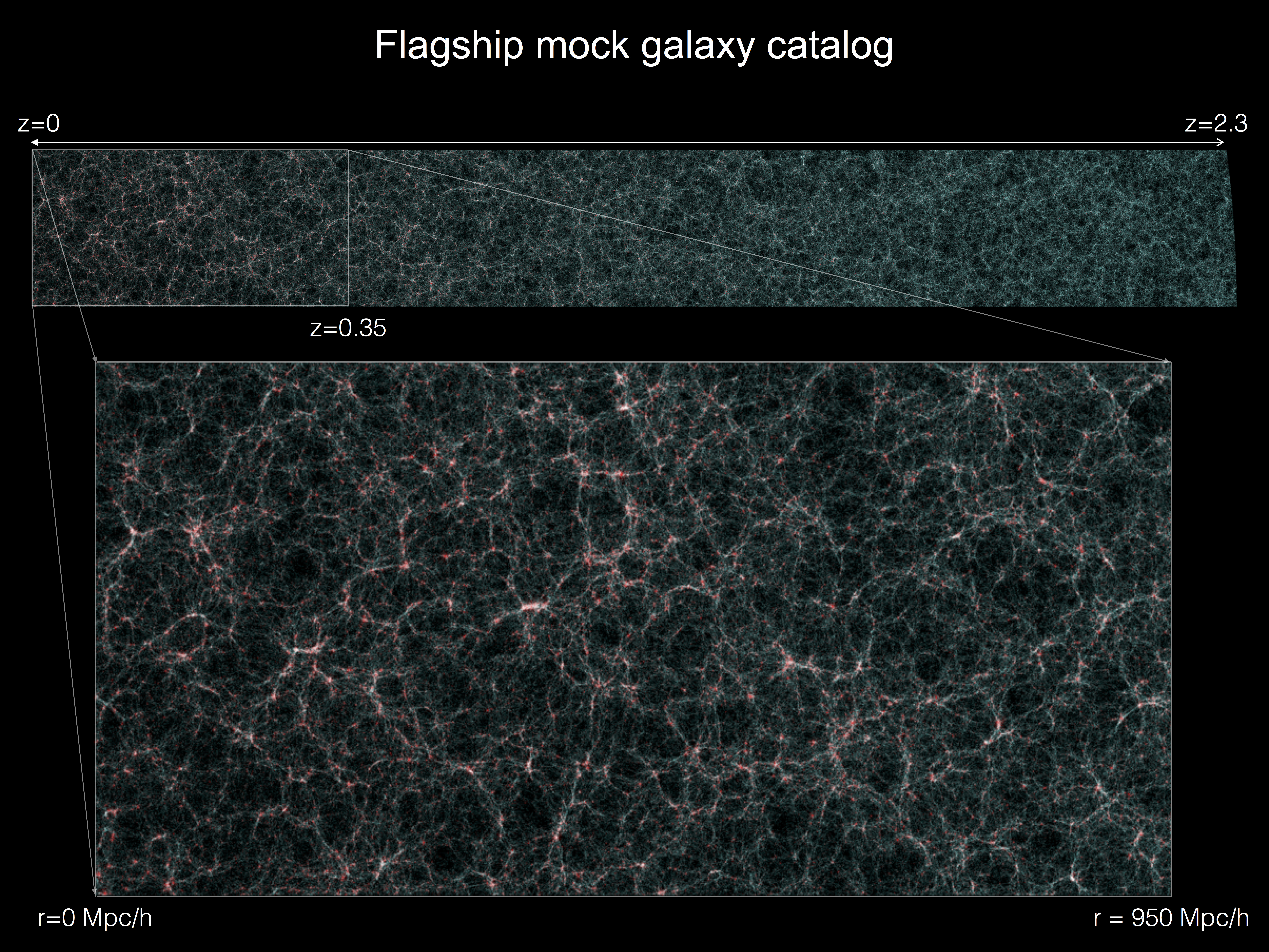
Credit: J. Carretero/P. Tallada/S. Serrano for ICE/PIC/U.Zurich and the Euclid Consortium Cosmological Simulations Science Working Group.

The above image is taken from the world’s largest simulated galaxy catalogue, which has been constructed to help prepare for the  forthcoming Euclid space mission. The image actually shows only a small part of the full Euclid Flagship mock galaxy catalogue, which contains more than 2 thousand million galaxies distributed over the 3-dimension cosmological volume that Euclid will survey. Synthetic galaxies in this simulation mimic with great detail the complex properties that real sources display: ranging from their shapes, colours, luminosities, and emission lines in their spectra, to the gravitational lensing distortions that affect the light emitted by distant galaxies as it travels to us. The simulation is large enough to allow full `light-cone’ effects to be taken into account, as the look-back time to the edge of the Euclid survey volume is long enough for significant evolution to have occurred; according to the standard cosmological model, the time taken for light to travel from redshift z=2.3 to now is about 10.8 billion years, a significant fraction of the age of the Universe.

`Mock’ catalogues like this are needed to plan large observational programmes, whether using space missions or ground-based facilities, and to help prepare the data analysis strategies and tools needed to deal with the real data when it arrives. They can also be used to make excellent images for PR and outreach purposes.

The use of the word `simulation’ always makes me smile. Being a crossword nut I spend far too much time looking in dictionaries but one often finds quite amusing things there. This is how the Oxford English Dictionary defines SIMULATION:

1.

a. The action or practice of simulating, with intent to deceive; false pretence, deceitful profession.

b. Tendency to assume a form resembling that of something else; unconscious imitation.

2. A false assumption or display, a surface resemblance or imitation, of something.

3. The technique of imitating the behaviour of some situation or process (whether economic, military, mechanical, etc.) by means of a suitably analogous situation or apparatus, esp. for the purpose of study or personnel training.

So it’s only the third entry that gives the meaning intended to be conveyed by the usage in the context of cosmological simulations. This is worth bearing in mind if you prefer old-fashioned analytical theory and want to wind up a simulationist!

In football, of course, you can even get sent off for simulation…

The 1967 Sexual Offences Act

Posted in History, LGBTQ+ with tags , , on July 27, 2017 by telescoper

1967 act

Just a short post to note that today is the 50th anniversary of the day that the Sexual Offences Act (1967) received the Royal Assent (27th July 1967). This Act partially decriminalised sex between two male adults provided both were over the age of 21 at the time. I’ve emphasised `partially’ because the number of prosecutions of men for consensual sexual acts actually went up in the years following this law. It was not until 2000 that the Sexual Offences (Amendment) Act 2000 equalised that age of consent at 16 for both homosexual and heterosexual behaviours throughout the United Kingdom. The 1967 Act was problematic in many ways, but it was a start…

CMB Spectral Distortions Revisited

Posted in Biographical, The Universe and Stuff with tags , , , , , , , , , on July 27, 2017 by telescoper

While uploading some bibliographic information for bureaucratic purposes yesterday I noticed that an old paper of mine had recently attracted a number of citations. The paper was written while I was a postdoctoral research fellow in the Astronomy Centre at the University of Sussex in 1990, but not published until 1991 by which time I had moved to Queen Mary College (as it was then called). The citation history of this article is actually quite interesting:

You can see that it was cited a bit immediately after publication, then endured a long spell from 1997 to 2012 in which nobody seemed interested in it, then experienced something of a revival. It currently has a total of about 49 citations, which doesn’t exactly make it a classic in a field which is extremely active, but it’s nice to see it hasn’t been forgotten entirely.

Here is the abstract of the paper:

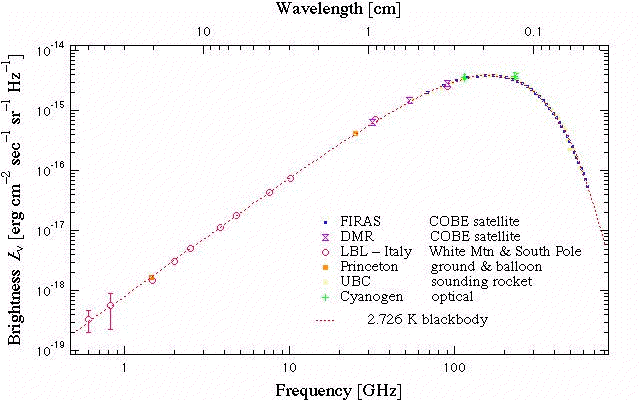
As the abstract makes clear we wrote this paper in response to a measurement of the spectrum of the cosmic microwave background radiation by the FIRAS instrument on the satellite COBE that had demonstrated that it was extremely well fitted by a Planck spectrum, with little room for any deviation away from a perfect black-body shape. Here’s the measured curve from COBE and some other experiments at the time:

The accuracy of the fit allows one to place limits on any process happening in the early Universe that might produce a distortion of the spectrum. There are a number of things that could do this. Any energy released in the early Universe takes time to thermalise, i.e. for the radiation field and the matter to come into thermal equilibrium via Compton scattering, double Compton scattering and Bremsstrahlung. Imperfect thermalisation produces a spectrum which doesn’t quite match the Planck curve.

Two types of distortion are possible, both introduced in classic papers from 1969 and 1970 by Rashid Sunyaev and Ya. B. Zel’dovich. One type is called a y-distortion (which corresponds to photons being shifted from low frequency and the other is called a μ-distortion, which is described by inserting a chemical potential term to the usual Planck formula for the black-body spectrum. Observational limits on both forms of distortion are very tight : |y|<1.5 ×10-5; |μ|<1.5 ×10-5, which places stringent limits on any energy release, including that which would arise from the dissipation of primordial acoustic waves (which is what John and I concentrated on in the paper).

So why did interest in this get revived a few years ago? The answer to that is that advances in relevant technology have now made it possible to think about an experiment that can measure much smaller spectral distortions than has hitherto been possible. A proposal for an experiment, called PIXIE, which includes such a measurement, is described here. Although spectral distortions are only a secondary science goal for PIXIE, it could push down the upper limits quoted above by a factor of 1000 or so, at which level we should expect to see departures from the Planck curve within the standard model, which would be a very important test of basic cosmological theory.

That all depends on whether PIXIE – or something like it – goes ahead.


Par scores in T20 cricket

Posted in Cricket with tags , , on July 26, 2017 by telescoper

So last night Glamorgan won a Natwest T20 Blast match against Gloucestershire by 25 runs having batted first and scored 176 off their 20 overs. Glamorgan are now top of the `South Division’, despite having three games rained off. They play second-placed Surrey on Friday. Weather permitting.

Anyhow, last night when I saw the result I got to wondering what the par score is for a first innings in Twenty20 (i.e. median score for a winning side batting first).  Would you have expected them to win with a score of 176? The answer – and the answers to many other questions – can be found in this interesting post.

P.S. If you can’t be bothered to read the post, the median winning score for men’s T20 matches is about 164 so Glamorgan had a better-than-even chance of winning after their first innings.

Ben Raue's avatarStrike Rate

I haven’t blogged for the last two weeks – partly because life has been busy, but also because I’ve struggled to come up with anything to say that provides particular insights about individual BBL or WBBL matches that are being played. I will return to this, and will continue to post key stats about various matches on the Strike Rate twitter account.

In this post, I’m posting my analysis of ‘par scores’ for T20, and how they vary between the men’s and women’s game, and in different parts of the world. This is useful for understanding what sort of score can be expected in particular conditions.

Par scores are calculated as run rates, which can be converted into total scores by multiplying by 20. This is more useful than raw total scores, since not all innings last for the full 20 overs. When a team wins in the second innings…

View original post 759 more words

A Problem with Spitfires

Posted in Cute Problems, History, The Universe and Stuff with tags , , , , , on July 25, 2017 by telescoper

This problem stems from an interesting exchange on Twitter last night, prompted by a tweet from the Reverend Richard Coles:

I think his clerical vocation may be responsible for the spelling mistake. The answer to his question doesn’t require any physics beyond GCSE but it does require data that I didn’t have access to last night.

Here’s a version for you to try at home with all the necessary numbers (though not necessarily in the right units):

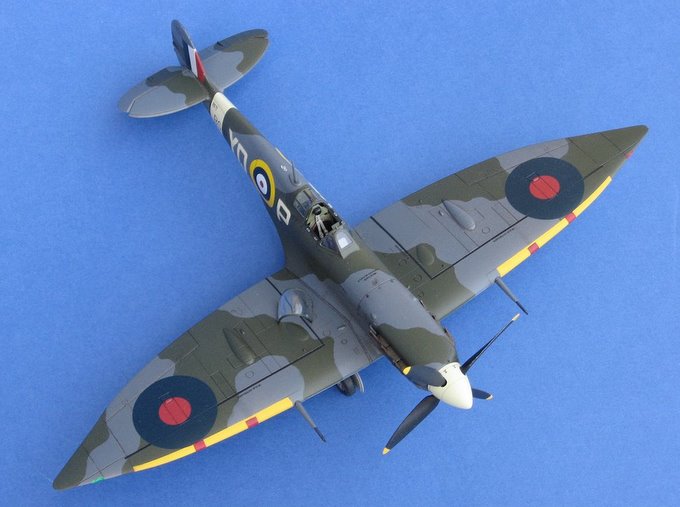
A model of a Mark VI Spitfire showing its two 20mm cannons.

A Supermarine  Mark VI (Type 350) Spitfire fighter aircraft weighing 6740 lb is initially travelling at its top speed of 354 mph. The aircraft is armed with two Hispano-Suiza HS.404 20mm cannons, one on each wing, each of which is fed by a drum magazine containing 60 rounds. Each projectile  fired from  the cannon weighs 130 grams, the rate fire of each cannon is 700 rounds per minute and the muzzle velocity of each shell is 860 m/s.

(a) Calculate the reduction in the aircraft’s speed if the pilot fires both cannon simultaneously until the magazines are empty, if the pilot does nothing to compensate for the recoil. Express your answer in kilometres per hour.

(b) Calculate the average deceleration of the aircraft while the cannons are being fired, and express your result as a fraction of g, the acceleration due to gravity at the Earth’s surface which you can take to be 9.8 ms-2.

(c) A Mark 24 Spitfire – which is somewhat heavier than the Mark VI, at 9,900 lb (4,490 kg) – is armed with 4×20mm cannons, two on each wing. The inboard cannon on each wing has a magazine containing 175 rounds; the outboard one has 150 rounds to fire. Repeat the above  analysis for these new parameters and comment on your  answer.

Answers through the comments box please!


Deep Time and Doggerland

Posted in Biographical, Music, The Universe and Stuff with tags , , , , , on July 24, 2017 by telescoper

One of the bonuses on offer during the BBC Proms season on Radio 3 is the opportunity to listen to the fascinating discussions recorded over the road from the Albert Hall at Imperial College and broadcast during the intervals under the title of Proms Extra. Last week (at Prom Number 4) there was a discussion with the title Deep Time, taking its theme from the UK premier of a fascinating composition of the same name by Sir Harrison Birtwistle.

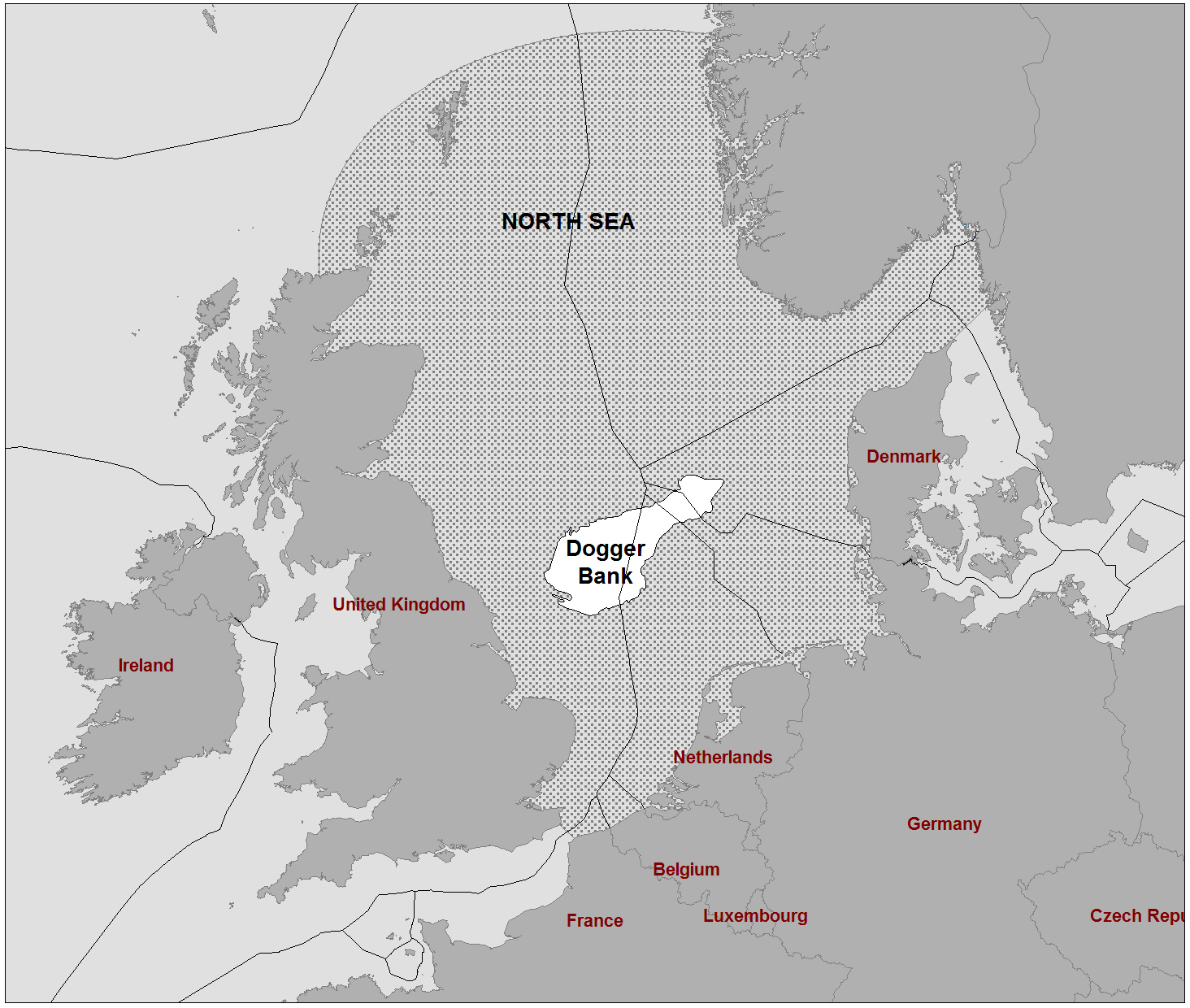
The Proms Extra programme focussed on `Deep Time’ in the sense in which it is used in geological, i.e. time as inferred from rock strata and the fossil record. In the course of the discussion mention was made of Doggerland which is not, as you might imagine, a theme park devoted to outdoor sexual activities, but an area now submerged beneath the North Sea that connected Great Britain to continental Europe during and after the last glacial period. About 12,000 years ago at the start of the Holocene Era, it is thought that the area now covered by the North Sea looked something like this:

(Picture credit: this website). Obviously the cities marked on the map where not there at the time! Britain was connected to mainland at this time, although much of the land mass was under glaciers at the time. At the end of the last ice age the glaciers retreated, sea levels rose and the area once covered by Doggerland was submerged. It is thought that this happened around 8500 years ago. Great Britain has been separated from the continent by less than 10,000 years.

Doggerland gets its name from the Dogger Bank, a huge sandbank off the North-Eastern coast of England which is thought to be a glacial moraine left behind by the retreating ice sheet. The Dogger bank lies about 60 miles from the coast, and is about 60 miles wide by 100 miles long. The water is quite shallow – typically 20 metres deep and is a well-known fishing area. Its name derives from old Dutch fishing vessels called doggers who specialised in catching cod. Here’s a map (from here) showing the Dogger Bank:

When I was a teenager I had the opportunity, with a few friends from school, to go out from Newcastle in a trawler to the Dogger Bank. The skipper insisted that the Dogger Bank was, in places, so shallow that you could paddle around on it with your trousers rolled up. We all believed him, but he was clearly having us on!

The other thing I remember about that trip in a trawler – apart from the all-pervasive smell of fish – was that a bit of storm brewed up on the way home. All my school friends got sea-sick, but I didn’t. That was the first time I realised that I don’t suffer from seasickness. I can enjoy travelling on ships and boats without having to worry about it.

Dogger is of course also the name of one of the sea areas used in the Shipping Forecast: it is East of the coastal area Tyne, South of Forties, North of Humber and West of German Bight. Whenever I hear the shipping forecast on the radio, I always feel a bit of nostalgia when I hear the names of these areas read out.

Anyway, trawlers operating at the Dogger Bank frequently bring up bits of ancient animals (including mammoth and rhinoceros) as well as prehistoric human artefacts, showing that the area was at one time inhabited. I don’t think anybody knows exactly how long it took Doggerland to become submerged, but it may well have involved one or more catastrophic flooding events. If there were people living on Doggerland then,  they obviously had to migrate one way or the other..


Women’s Cricket World Cup Winners!

Posted in Cricket on July 23, 2017 by telescoper

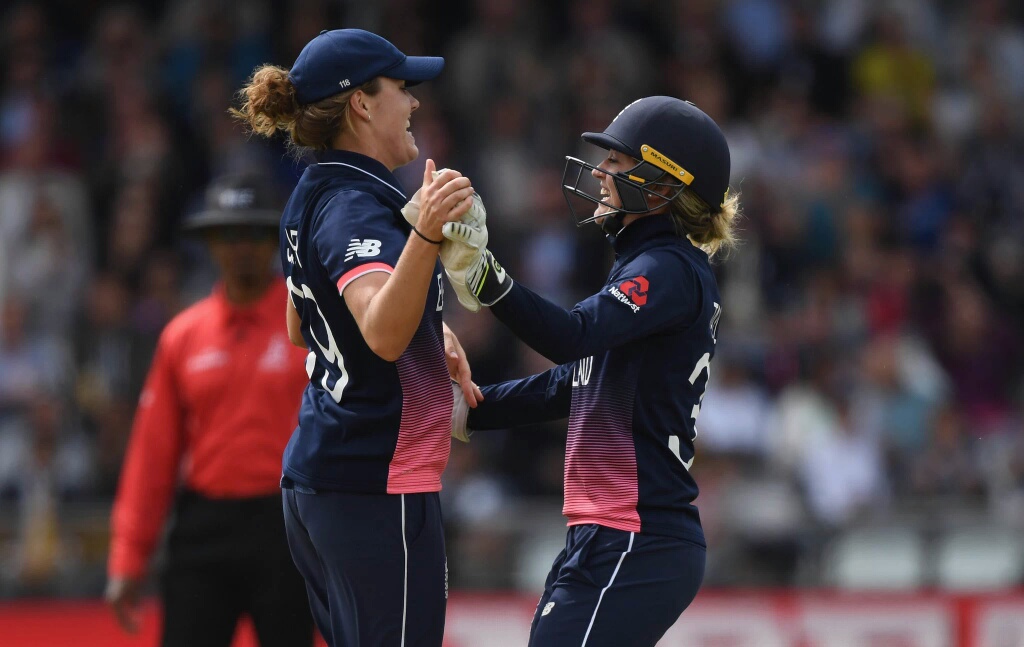
There wasn’t any cricket in Cardiff today because  Glamorgan’s T20 Blast match was abandoned without a ball being bowled. However, that meant I was able to follow the thrilling final of the Women’s World Cup at Lord’s, which was won by England by 9 runs.

I didn’t think England’s total of 228/7 off 50 overs was going to be enough, and India seemed to be set for a comfortable win, but England’s bowlers stuck to their task magnificently and India crumbled in the last five overs to be bowled out for 219, having lost their last 6 wickets for just 24 runs.

A great performance by England and a magnificent advertisement for Women’s Cricket in front of a sellout crowd at Lord’s. I think this may herald a huge surge in popularity for the women’s game. Congratulations to England and commiserations to India.

Now, is there anything to stop England fielding an all-female team against South Africa on Thursday? England women played with a lot more determination today than the men did against South Africa at Trento Bridge!

The Brexit HBR Business Case

Posted in Uncategorized on July 23, 2017 by telescoper

I think the Government has picked option C!

voiceoftreasoning's avatarVoice of TREASON

cartoon6953

Today we’re going to work through a strategic business case to evaluate how you’re likely to perform in role.

Investment Case

You have an initial investment of £50-60B to make that will have an impact in £100s of Billions over decades. The transformation will completely distract your Executive Team and all your senior managers leaving you unable to do anything else except the project. Once initiated the project cost will be sunk and and the company irreversibly comitted to the course.

All of your consultants have advised you against initiating the project. Your competitors, sensing a misstep have started to hire your most trusted staff. You have a tenuous grip on your board and e-team and expect to lose some critical board votes that will secure the project.

You’re  certain you don’t have the staff to manage the initial analysis  let alone the deployment of the project.

A year ago…

View original post 203 more words

Natwest T20 Blast: Glamorgan v Sussex

Posted in Cricket with tags , , , on July 22, 2017 by telescoper

Last night’s Twenty20 match in Cardiff was planned as a staff social outing for members of the School of Physics & Astronomy at Cardiff University. I had to do some things at home before the 6.30 start so didn’t join the group that went to a pub first but went straight to the ground.

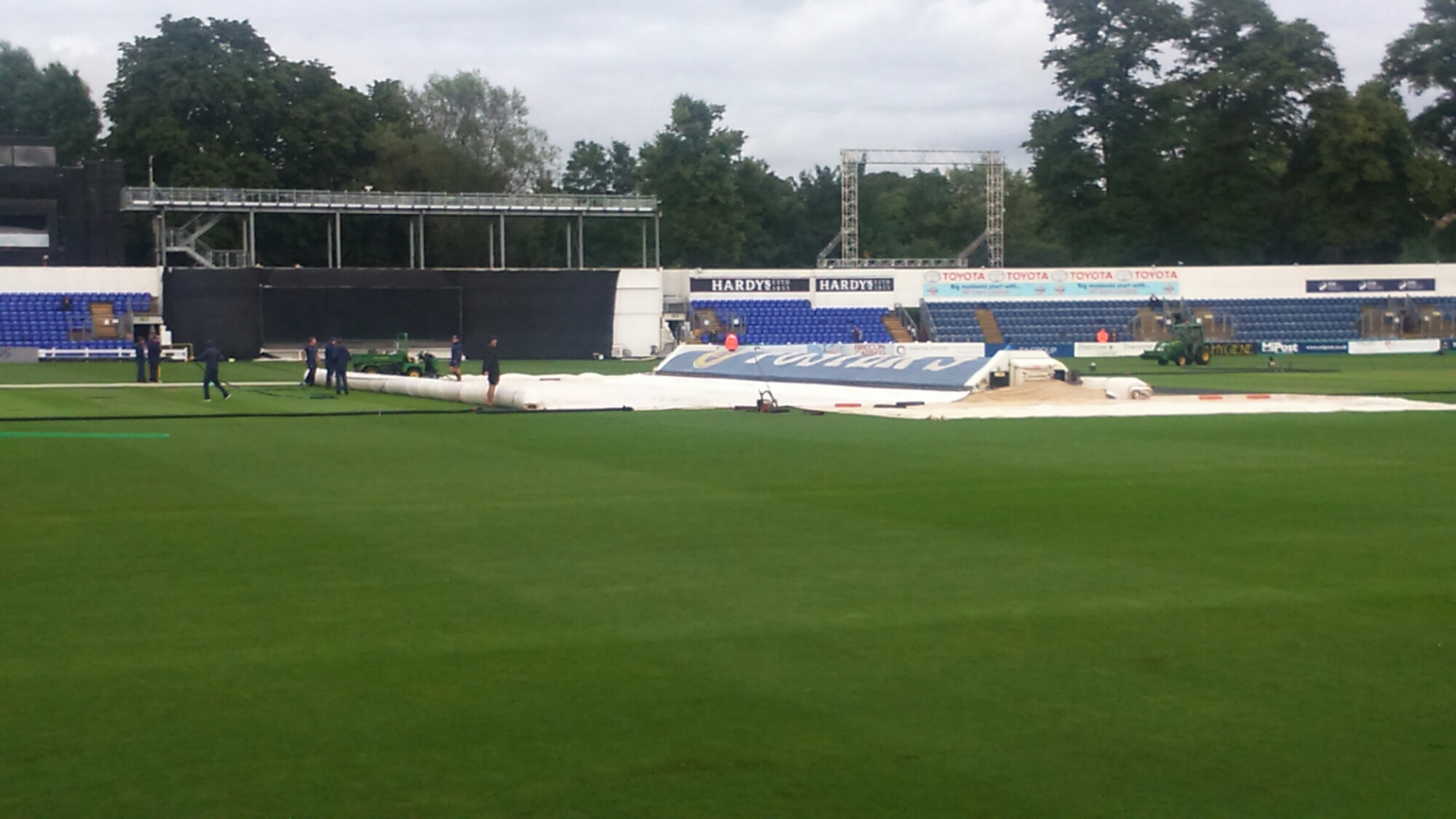
It had rained much of the day, but stopped around 6pm. When I got to the ground the covers were still on:

The umpires inspected the pitch at 7pm, and during their deliberations it started drizzling. They decided to have another look at 7.30.

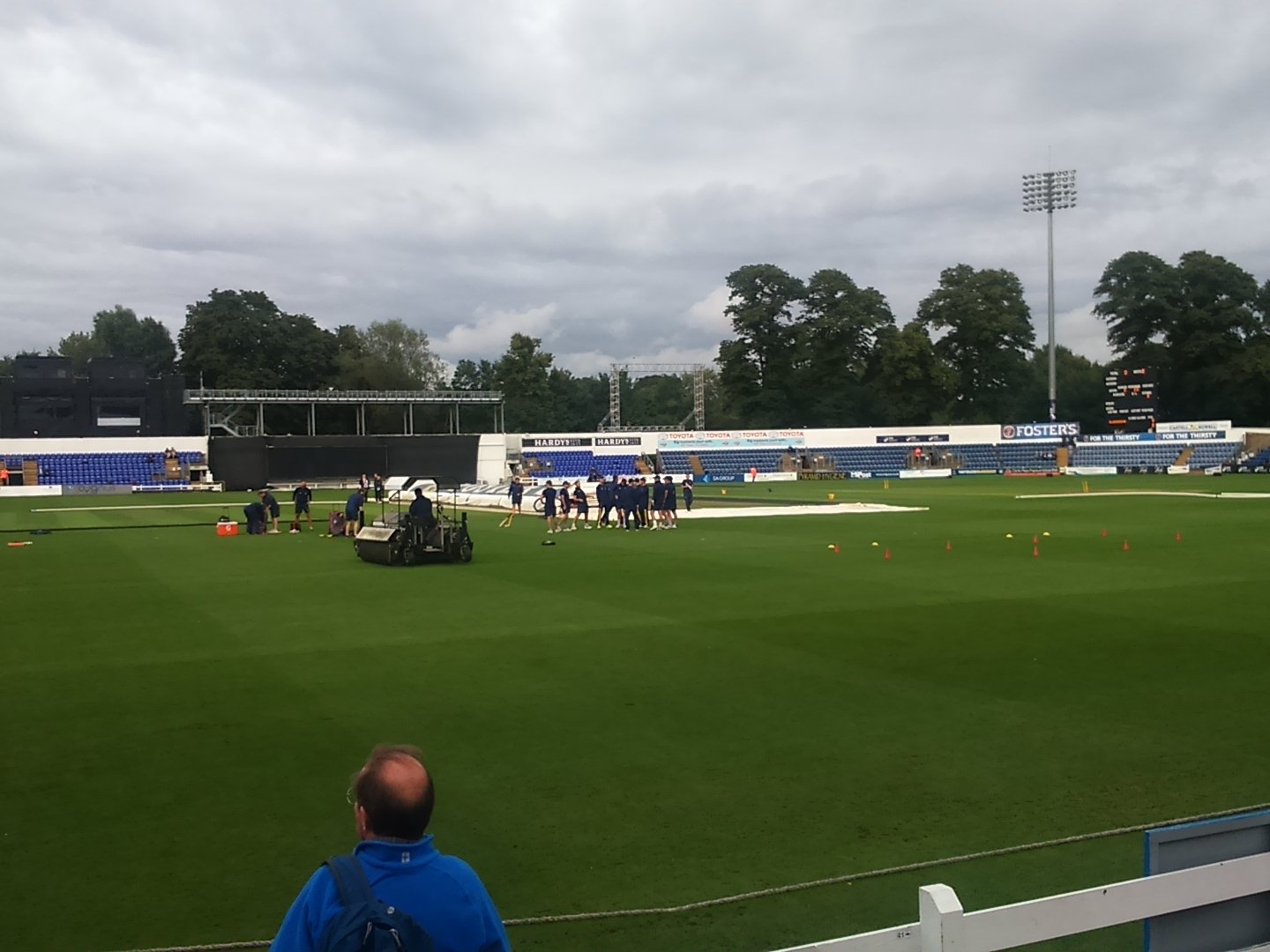
I stayed inches ground, updating the rest of the staff group who happily stayed in the pub while I sat in the gloom of a sparsely populated SWALEC.

Eventually the ground staff started to remove the covers

The toss was finally thrown at 8pm. Glamorgan won and decided to field. Play would start at 8.30, with 9 overs per side.

Play did get under way at 8.30..

It was predictably knockabout stuff, with Sussex slogging from the word go. They reached 87 for 2 off 8 overs, but then the rain returned. A little after 9pm the game was abandoned. Fewer than 10 overs having been bowled, tickets were refunded.

It was a shame that we didn’t get a full game, not only because the social event was a damp squib, but also because Glamorgan really wanted a win. Their previous match at the SWALEC (against Somerset last Saturday) was also rained off but their match  the following day against Essex in Chelmsford led to a victory with a six off the last ball as Glamorgan chased 220 to win off 20 overs.

Anyway, it’s the return match against Essex in Cardiff on Sunday so let’s hope for a full game then.

The Dead Statesman

Posted in Poetry, Politics with tags , , on July 21, 2017 by telescoper

I could not dig; I dared not rob:
Therefore I lied to please the mob.
Now all my lies are proved untrue
And I must face the men I slew.
What tale shall serve me here among
Mine angry and defrauded young?

by Rudyard Kipling (1865-1936)