Author Archive

Cable St 4th Oct 1936: why taking sides in history & now is important

Posted in History with tags on October 4, 2016 by telescoper

Eighty years on from the Battle of Cable Street, I hope this generation will be brave enough when the time comes to say “They Shall Not Pass”..

kmflett's avatarKmflett's Blog

Cable St & why it is important to remember history

cable

The Battle of Cable St took place 80 years ago on 4th October 1936 and there will be events to mark the anniversary this coming weekend.

Why remember it?

After all the media in particular is full of pieces remembering anniversaries of events and occasions. Not all of what is printed or posted is that historically accurate and a good deal of it is not particularly enlightening. We might call it an anniversary culture.

Of course as an historian I contribute to it myself though I do try and look at events that are less well remembered either because they are genuinely obscure (but hopefully of interest) or because they present awkward questions for the present.

The 80th anniversary of Cable St probably falls into the latter category. You won’t find too many today who will argue that…

View original post 200 more words

The 2016 Nobel Prize for Physics goes to David Thouless, Duncan Haldane and Michael Kosterlitz

Posted in Science Politics, The Universe and Stuff with tags , , , , , , , on October 4, 2016 by telescoper

Well, as I suspected, the Nobel Prize Committee for Physics played with a very straight bat and did not award this years Prize to gravitational waves. I thought there was a reasonable chance they might bend the rules, and the polling was very even , so clearly some people thought so too. Anyway, I don’t think any bookmakers will be taking bets on next year!

Anyway, none of this should detract at all from the winner. Half this year’s prize was awarded to David J. Thouless (University of Washington, Seattle, WA, USA)  and the other half to F. Duncan M. Haldane (Princeton University, NJ, USA) and J. Michael Kosterlitz
(Brown University, Providence, RI, USA)

”for theoretical discoveries of topological phase transitions and topological phases of matter”

Although they now live and work in the USA, all three of the winners were born in the United Kingdom (two of them, Kosterlitz and Thouless, in Scotland); Haldane retains British nationality, Kosterlitz is now an American citizen and Thouless has joint US/UK nationality.

And here’s the text of the citation:

This year’s Laureates opened the door on an unknown world where matter can assume strange states. They have used advanced mathematical methods to study unusual phases, or states, of matter, such as superconductors, superfluids or thin magnetic films. Thanks to their pioneering work, the hunt is now on for new and exotic phases of matter. Many people are hopeful of future applications in both materials science and electronics.

The three Laureates’ use of topological concepts in physics was decisive for their discoveries. Topology is a branch of mathematics that describes properties that only change step-wise. Using topology as a tool, they were able to astound the experts. In the early 1970s, Michael Kosterlitz and David Thouless overturned the then current theory that superconductivity or suprafluidity could not occur in thin layers. They demonstrated that superconductivity could occur at low temperatures and also explained the mechanism, phase transition, that makes superconductivity disappear at higher temperatures.

In the 1980s, Thouless was able to explain a previous experiment with very thin electrically conducting layers in which conductance was precisely measured as integer steps. He showed that these integers were topological in their nature. At around the same time, Duncan Haldane discovered how topological concepts can be used to understand the properties of chains of small magnets found in some materials.

We now know of many topological phases, not only in thin layers and threads, but also in ordinary three-dimensional materials. Over the last decade, this area has boosted frontline research in condensed matter physics, not least because of the hope that topological materials could be used in new generations of electronics and superconductors, or in future quantum computers. Current research is revealing the secrets of matter in the exotic worlds discovered by this year’s Nobel Laureates.

It’s not my field, but I send my heartiest congratulations to Professors Thouless, Haldane and Kosterlitz. Enjoy your trip to Stockholm – it’s lovely in December!

Note that the Thomson-Reuters Nobel Prize “predictor”“, which is not often right, was wrong again!


The Merchant of Venice at Welsh National Opera

Posted in Opera with tags , , , on October 3, 2016 by telescoper

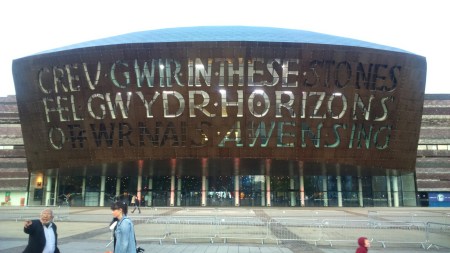
image

Last Friday (30th September 2016) I got another fix of opera in the form of a new Welsh National Opera production of The Merchant of Venice by André Tchaikowsky at the Wales Millennium Centre in Cardiff Bay (above; the people in the bottom left of the picture were having an important discussion about the location of the nearest Fish & Chip shop).

The Opera sticks very closely to Shakespeare’s play of the same name, even to the extent that the libretto uses some of the original text verbatim. That creates the opposite problem to that which I mentioned in my review of Verdi’s Macbeth. In Verdi’s case the text was excessively abridged with many memorable passages omitted entirely, but in this case the Opera struggles to under the weight of so many words. It’#s not just that the Opera has to be rather long in order to accommodate so much of the original play,  more that Shakespeare’s verse has a compelling rhythm to it that echoes but also amplifies the cadences of natural English speech. Unless it is done exceptionally well, setting the words to music actually detracts from the poetry rather than adding anything to it. Take for example, Portia’s wonderful speech in the courtroom scene (Act IV of the play; Act III of the opera):

The quality of mercy is not strained;
It droppeth as the gentle rain from heaven
Upon the place beneath. It is twice blest;
It blesseth him that gives and him that takes:
‘T is mightiest in the mightiest; it becomes
The throned monarch better than his crown:
His sceptre shows the force of temporal power,
The attribute to awe and majesty,
Wherein doth sit the dread and fear of kings;
But mercy is above this sceptred sway;
It is enthronèd in the hearts of kings,
It is an attribute to God himself;
And earthly power doth then show likest God’s
When mercy seasons justice. Therefore, Jew,
Though justice be thy plea, consider this,
That, in the course of justice, none of us
Should see salvation: we do pray for mercy;
And that same prayer doth teach us all to render
The deeds of mercy. I have spoke thus much
To mitigate the justice of thy plea;
Which if thou follow, this strict court of Venice
Must needs give sentence ‘gainst the merchant there.

These words have music to them in their own right, a music that, frankly, I preferred to what Tchaikowsky added which seemed to distort their proper metre.

I’m not saying that I didn’t like the music; the score is often highly effective. Rigorously atonal – in fact somewhat reminiscent of Alban Berg – it generates great psychological tension and carries considerable emotional force. I just think it was a mistake to take such a literal approach to Shakespeare’s text.

That said, there is a great deal to savour in this production. The staging is extremely well done, with each scene having a completely different look and feel, and the principals sang their roles extremely well. Lester Lynch was a particularly fine Shylock, managing to transcend the stereotypical aspects of his character with a performance of great nobility. The antisemitism of Shakespeare’s play is certainly present in the Opera,  but casting Shylock as a black actor turns it into a more general statement about the evil of prejudice. The play only hints that the relationship between the two men Antonio and Bassanio is more than just a friendship, but the Opera clearly suggests that there is a sexual element to it. Antonio is left alone and distraught at the end, as Bassanio abandons him for Portia, but sympathy for him is limited by his awful behaviour towards Shylock. That suggests (at least to me) that the abuse Antonio directs at Shylock is born of his own internal conflict. At any rate he ends the Opera as he starts it, on a psychiatrist’s couch.

A word must be said about Antonio. The role (for a counter-tenor) was supposed to be sung by Martin Wölfel but he was indisposed by laryngitis. In stepped Feargal Mostyn-Williams at very short notice in what must be an immensely demanding role. I thought he was very good indeed. He held the stage well and though he struggled to project over the orchestra at the start (presumably due to nerves) he grew into the role very well.

This is a production that’s well worth seeing, and I enjoyed it a lot despite the difficulties I tried to explain above. Sadly there were only two performances in Cardiff, so if you want to see it you’ll have to catch it on tour or next summer when it is to be staged at the Royal Opera House in Covent Garden.


The 2016 Nobel Prize for Physics

Posted in Science Politics, The Universe and Stuff with tags , , , on October 3, 2016 by telescoper

Just time for a quick post to point out that tomorrow, Tuesday 4th October 2016, will see the announcement of the 2016 Nobel Prize for Physics. See here if you want to follow the announcement live.

You might think that this year is a foregone conclusion. The big science result of the year is undoubtedly the discovery of gravitational waves by Advanced LIGO. The three leaders iof the team, i.e.

Ronald W.P. Drever Professor of Physics Emeritus, California Institute of Technology, Pasadena, CA USA
Kip S. Thorne Feynman Professor of Theoretical Physics Emeritus, California Institute of Technology, Pasadena, CA USA
Rainer Weiss Professor of Physics Emeritus, Massachusetts Institute of Technology, MA USA

These three scientists have already won this year’s Gruber and Kavli prizes and they are among the favourites on this Nobel Prize prediction site.

I would be very happy indeed to see the Nobel Prize for Physics go to this group, but I don’t think it’s the foregone conclusion many think it is.

To see why, look at the timetable of how the Nobel Prize Committee works. In particular, note:

SeptemberNomination forms are sent out. The Nobel Committee sends out confidential forms to around 3,000 people – selected professors at universities around the world, Nobel Laureates in Physics and Chemistry, and members of the Royal Swedish Academy of Sciences, among others.

February – Deadline for submission.The completed nomination forms must reach the Nobel Committee no later than 31 January of the following year. The Committee screens the nominations and selects the preliminary candidates. About 250–350 names are nominated as several nominators often submit the same name.

The official announcement of the detection of gravitational waves was not made until 11th February, i.e. after the above deadline. Now of course many people had inside knowledge about the discovery before then so they may well have made a nomination on time, but it’s not obvious how the Nobel Prize Committee would have treated a submission based essentially on hearsay. They have a reputation for being sticklers for procedure so it’s hard to be sure. If it did make the shortlist then this nomination will surely win, but it may not have. We’ll just have to wait and see. Or am I being too cautious? Let me know what you think will happen through the  poll below:


Oh, and if you think it will be for “Something Else” please feel free to expand via the Comments Box.


Autumn Dreams

Posted in Open Access, Poetry, Uncategorized with tags , , on October 2, 2016 by telescoper

I know the year is dying,
Soon the summer will be dead.
I can trace it in the flying
Of the black crows overhead;
I can hear it in the rustle
Of the dead leaves as I pass,
And the south wind’s plaintive sighing
Through the dry and withered grass.

Ah, ’tis then I love to wander,
Wander idly and alone,
Listening to the solemn music
Of sweet nature’s undertone;
Wrapt in thoughts I cannot utter,
Dreams my tongue cannot express,
Dreams that match the autumn’s sadness
In their longing tenderness.

by Mortimer Crane Brown (1857-1907)

The Penny Universities

Posted in Uncategorized on October 1, 2016 by telescoper

It’s International Coffee Day, which makes me even more annoyed that I just returned from a shopping trip having forgotten to buy any (despite having “coffee” right at the top of my list..

thonyc's avatarThe Renaissance Mathematicus

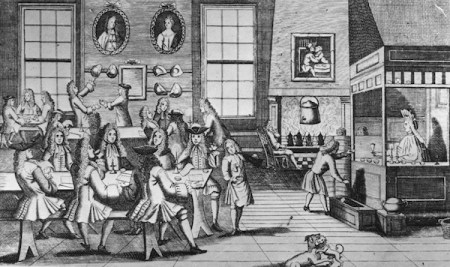
The Hungarian mathematician Alfréd Rényi famously quipped about his colleague Paul Erdös that, “a mathematician is a machine for turning coffee into theorems”. However this theorem producing process didn’t start with Erdös in the twentieth century but became an established routine as soon the coffee house made its appearance in Restoration England in the second half of the seventeenth century.

The first coffee house in England, The Angel, opened in Oxford in 1650 closely followed by The Queen’s Lane Coffee House in 1654, which is still in existence. London’s first coffee house, owned by Pasqua Rosée opened in 1652. The Temple Bar, London’s second coffee house opened in 1656.

Coffee House Circa 1740, A London coffee house. (Photo by Hulton Archive/Getty Images)

From the very beginning English coffee houses became the favourite haunts of the virtuosi, the new generation of natural philosophers pushing the evolution of science forward in England in the…

View original post 394 more words

Friday Music Quiz: The Yardbird Suite

Posted in History, Jazz with tags , , on September 30, 2016 by telescoper

Not much time to write today so I thought I’d put up a bit of music to end the week. This is a classic from 1946, featuring Charlie Parker leading a band that included a very young Miles Davis. The Yardbird Suite an original composition by Parker, and has become a jazz standard, but he never copyrighted the tune so never earned any royalties from it.

Now, here’s a little question to tease you with. Can anyone spot the connection between this tune and a notable event that occurred today, 30th September 2016?

Answers through the comments box please!


Book Review : HMS Ulysses

Posted in Uncategorized on September 30, 2016 by telescoper

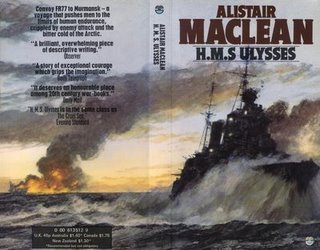
Following on from yesterday’s post about the Arctic Convoys, here is a review of HMS Ulysses by Alistair Maclean which I found on another wordpress site.

subhojit / swarnabha's avatarloony radio

Most war or action novels have a few things in common : A handsome hero who can shoot you between the eyes with his left hand while he lights a cigar with his right, a funny sidekick who never ever tries to steal the limelight, a pretty girl who is in serious and frequent need of rescuing, and plenty of ugly, stupid bad guys. My favorite one of all time (and I assure you, I’ve read a lot), however, involves a single warship at sea. The handsome hero is missing, so are sidekicks and pretty girls. The bad guys are not ugly or stupid at all. They are menacing, ruthless and brilliant; and they manage to outfox the good guys at almost every turn.

Welcome to HMS Ulysses (1955), the first novel by the Scottish author Alistair Maclean.  Maclean, incidentally, also happens to be one of my favorite authors…

View original post 808 more words

The Arctic Convoys

Posted in History with tags , on September 29, 2016 by telescoper

Today also marks a far less happy anniversary. On this day 75 years ago, on 29th September 1941, the Allied Convoy PQ 1 set sail from Hvalfjörður in Iceland; it arrived in Arkhangelsk in Northern Russia on October 11. This wasn’t the first of the Arctic convoys – that was Operation Dervish,  which set out in August 1941 , but it was the first of the most famous sequence, numbered from PQ 1 to PQ 18. The PQ sequence was terminated in September 1942, but convoys resumed in 1943 with a different numbering system (JW) for the duration of the Second World War. For every PQ convoy there was also a QP convoy making the return journey; the counterpart of the JW sequence was RA.

The Arctic convoys carried military supplies (including tanks and aircraft) to the Soviet Union after Germany invaded in the summer of 1941. Their purpose was largely political – to demonstrate the willingness of the Allies to support the Soviet Union, especially before before a second front could be opened.

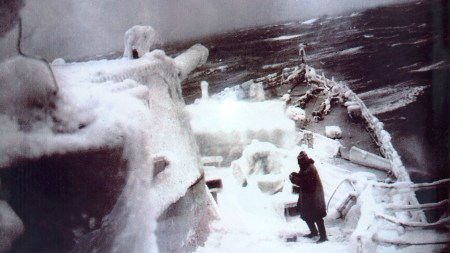
Arctic Convoy

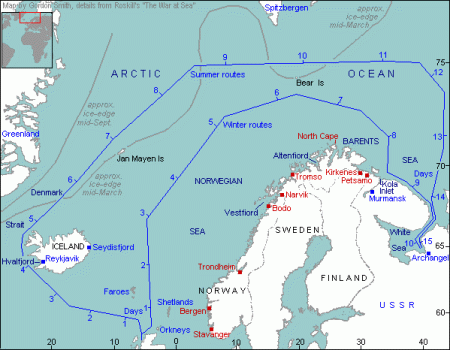
The reality of the Arctic convoys was unimaginably grim. Slow-moving merchant ships had to run the gauntlet of German U-Boats and aircraft. During the summer, when the Arctic ice retreated, the convoys took a longer route but the long daylight hours of an Arctic summer made for an exhausting journey with the constant threat of air attack. In the winter the route was shorter, but made in terrible weather conditions of biting cold and ferocious storms.

ww2mr110arctic

The map is taken from this site, which also gives detailed information about each convoy.

As it happens, one of my teachers at school (Mr Luke, who taught Latin), who was also an officer in the Royal Navy Reserve, served on Royal Navy escort vessel in some of the Arctic convoys in 1941.  I was interested in naval history when I was a teenager and when he told me he had first-hand experience of the Arctic convoys I asked him to tell me more. He talked about the bitter cold but about everything else he refused to speak, his eyes filling with tears. I didn’t such things understand then, I was too young, but later I saw that it was less that he wouldn’t talk about it, more that he couldn’t. Terrible experiences leave very deep scars on the survivors.

The most infamous convoy in the PQ series was PQ 17 which sailed on June 27 1942 from Reykjavik. Rumours that the German battleship Tirpitz had left its berth in Northern Norway to intercept the convoy led to the Admiralty issuing an order for the escort to withdraw and for the convoy to disperse, each vessel to make its way on its own to its destination. The unprotected merchant ships were set upon by planes and submarines, and of the 35 that had left Reykjavik, 24 were sunk. It was a catastrophe. Just a year earlier, Convoy PQ 1 had arrived at its destination unscathed.

There is a project under way to set up a museum as a lasting memorial to the brave men who served during the Arctic convoys. I think it’s well worth supporting. Although the 75th anniversary of the arrival of Dervish was commemorated earlier this year, the courage and sacrifice of those who served in this theatre is not sufficiently recognised .


Happy 70th Birthday to the “Third Programme”!

Posted in Jazz, Music, Opera, Uncategorized with tags , on September 29, 2016 by telescoper

I’ve just got time for a quick post-prandial post to mark the fact that 70 years ago today, on September 29th 1946, the British Broadcasting Corporation (BBC) made its first radio broadcast on what was then called The BBC Third Programme. The channel changed its name in 1970 to BBC Radio 3, but I’m just about old enough to remember a time when it was called the Third Programme; I was only 6 when it changed.

radio-times

It was a bold idea to launch a channel devoted to the arts in the depths of post-War austerity and it was perceived by some at the time as being “elitist”. I think some people probably think that of the current Radio 3 too. I don’t see it that way at all. Culture enriches us all, regardless of our background or education, if only we are given access to it. You don’t have to like classical music or opera or jazz, but you can only make your mind up if you have the chance to listen to it and decide for yourself.

My own relationship with Radio 3 started by accident at some point during the 1990s while I was living in London. I was used to listening to the Today programme on Radio 4 when I woke up, but one morning when my alarm switched on it was playing classical music. It turned out that there was a strike of BBC news staff so they couldn’t broadcast Today and had instead put Radio 3 on the Radio 4 frequency. I very much enjoyed it to the extent that when the strike was over and Radio 4 reappeared, I re-tuned my receiver to Radio 3. I’ve stayed with it ever since. I can’t bear the Today programme at all, in fact; almost everyone on it makes me angry, which is no way to start the day.

Over the years there have been some changes to Radio 3 that I don’t care for very much – I think there’s a bit too much chatter and too many gimmicks these days (and they should leave that to Classic FM) – but I listen most days, not only in the morning but also in the evening,  especially to the live concert performances every night during the week. Many of these concerts feature standard classical repertoire, but I particularly appreciate the number of performances of new music or otherwise unfamiliar pieces.

I also enjoy Words and Music, which is on Sunday afternoons and Opera on 3, which includes some fantastic performances Live from the Metropolitan Opera in New York, and which is usually on Saturday evenings. And of course the various Jazz on 3 programmes: Jazz Record Requests, Jazz Line-up, Geoffrey Smith’s Jazz, etc.

It’s not the just the music, though. I think BBC Radio 3 has a very special group of presenters who are not only friendly and pleasant to listen to, but also very knowledgeable about the music. They also have some wonderful names: Petroc Trelawny, Clemency Burton-Hill, and Sara Mohr-Pietsch, to name but a few. There’s also a newsreader whose name I thought, when I first heard it, was Porn Savage.

I feel I’ve found out about so many things through listening to Radio 3, but there’s much more to my love-affair with this channel than that. Some years ago I was quite ill, and among other things suffering very badly from insomnia. Through the Night brought me relief in the form a continuous stream of wonderful music during many long sleepless nights.

I wish everyone at BBC Radio 3 a very happy 70th birthday. Long may you broadcast!