Author Archive

Child of Europe

Posted in Poetry with tags , , on April 14, 2016 by telescoper

The poet Czeslaw Milosz was the winner of the Nobel Prize for Literature in 1980. He was born in Lithuania, in 1911, to a family of Polish origin.  He experienced at first hand the suffering caused by the Nazi terror and genocide, the war, and later, Stalinist tyranny.  His Nobel Prize citation states that he ” with uncompromising clear-sightedness voices man’s exposed condition in a world of severe conflicts”. This example of his poetry, written (I believe) in Poland in 1945, is a particularly powerful example.

1

We, whose lungs fill with the sweetness of day,

Who in May admire trees flowering,
Are better than those who perished.

We, who taste of exotic dishes,
And enjoy fully the delights of love,
Are better than those who were buried.

We, from the fiery furnaces, from behind barbed wires
On which the winds of endless Autumns howled,
We, who remember battles where the wounded air roared in paroxysms of pain,
We, saved by our own cunning and knowledge.

By sending others to the more exposed positions,
Urging them loudly to fight on,
Ourselves withdrawing in certainty of the cause lost.

Having the choice of our own death and that of a friend,
We chose his, coldly thinking: let it be done quickly.

We sealed gas chamber doors, stole bread,
Knowing the next day would be harder to bear than the day before.

As befits human beings, we explored good and evil.
Our malignant wisdom has no like on this planet.

Accept it as proven that we are better than they,
The gullible, hot-blooded weaklings, careless with their lives.

2

Treasure your legacy of skills, child of Europe,
Inheritor of gothic cathedrals, of baroque churches,
Of synagogues filled with the wailing of a wronged people.
Successor of Descartes, Spinoza, inheritor of the word “honor,”
posthumous child of Leonidas,
Treasure the skills acquired in the hour of terror.

You have a clever mind which sees instantly
The good and bad of any situation.
You have an elegant, skeptical mind which enjoys pleasures
Quite unknown to primitive races.

Guided by this mind you cannot fail to see
The soundness of the advice we give you:
Let the sweetness of day fill your lungs.
For this we have strict but wise rules.

3

There can be no question of force triumphant.
We live in the age of victorious justice.

Do not mention force, or you will be accused
Of upholding fallen doctrines in secret.

He who has power, has it by historical logic.
Respectfully bow to that logic.

Let your lips, proposing a hypothesis,
Not know about the hand faking the experiment.

Let your hand, faking the experiment,
Not know about the lips proposing a hypothesis.

Learn to predict a fire with unerring precision.

Then burn the house down to fulfill the prediction.

4

Grow your tree of falsehood from a small grain of truth.
Do not follow those who lie in contempt of reality.

Let your lie be even more logical than the truth itself,
So the weary travelers may find repose in the lie.

After the Day of the Lie gather in select circles,
Shaking with laughter when our real deeds are mentioned.

Dispensing flattery called: perspicacious thinking.
Dispensing flattery called: a great talent.

We, the last who can still draw joy from cynicism.
We, whose cunning is not unlike despair.

A new, humorless generation is now arising,
It takes in deadly earnest all we received with laughter.

5

Let your words speak not through their meanings,
But through them against whom they are used.

Fashion your weapon from ambiguous words.
Consign clear words to lexical limbo.

Judge no words before the clerks have checked
In their card index by whom they were spoken.

The voice of passion is better that the voice of reason.
The passionless cannot change history.

6

Love no country: countries soon disappear.
Love no city: cities are soon rubble.

Throw away keepsakes, or from your desk
A choking, poisonous fume will exude.

Do not love people: people soon perish.
Or they are wronged and call for your help.

Do not gaze into the pools of the past.
Their corroded surface will mirror
A face different from the one you expected.

7

He who invokes history is always secure.
The dead will not rise to witness against him.

You can accuse them of any deed you like.
Their reply will always be silence.

Their empty faces swim out of the deep dark.
You can fill them with any features desired.

Proud of dominion over people long vanished,
Change the past into your own, better likeness.

8

The laughter born of the love of truth
Is now the laughter of the enemies of the people.

Gone is the age of satire. We no longer need mock
The senile tyrant with false courtly phrases.

Stern as befits the servants of a cause,
We will permit ourselves only sycophantic humor.

Tight-lipped, guided by reasons only,
Cautiously let us step into the era of the unchained fire.

by Czeslaw Milosz (1911-2004).

Mystery Photograph

Posted in Art, History on April 13, 2016 by telescoper

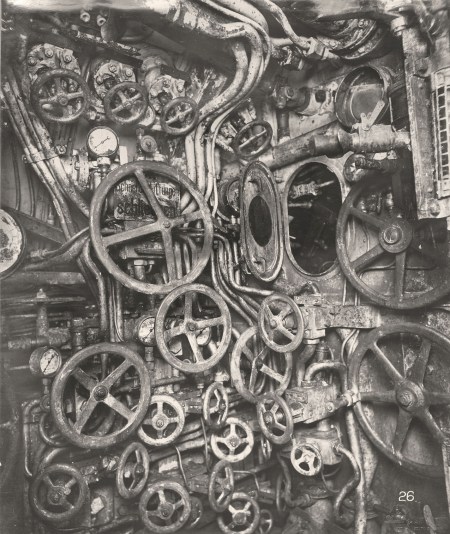
In lieu of a blog post today, I thought I’d post an intruiging photograph. See if you can figure out what this shows:

Mystery

If you want to know the answer you can find out here, where you can find many other pictures from the same source.

Why EU funding is so important for UK science

Posted in Politics, Science Politics, Uncategorized with tags , , , , , , , on April 12, 2016 by telescoper

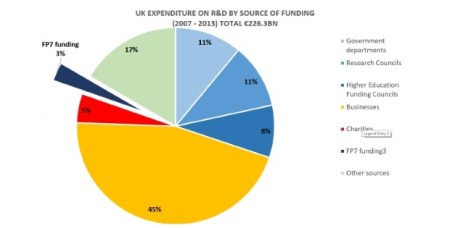
One of the figures bandied about by the Leave campaign and in particular by the strangely litigious group  that calls itself “Scientists for Britain” (which has only six members that I know of, not all of them scientists) is that the EU is not important for British science because it only funded 3% of UK R&D between 2007 and 2013). They’ve even supplied a helpful graphic:

UK_RD_2007-2013

The figures are taken from a Royal Society report and are, as far as I’m aware, accurate. It’s worth noting however that the level of funding  under the FP7 “Framework Programme” which funds research is much smaller than the current Horizon2020 programme.

However, as Stephen Curry has pointed out in a typically balanced and reasonable blog post, the impact of a BrExit on UK science is much more complex than this picture would suggest. I want to add just a few  points from my specific perspective as a university-based researcher.

First, the 3% figure is arrived at by a tried-and-tested technique of finding the smallest possible numerator and dividing it by the lowest possible denominator. A fairer comparison, in my view, would just look at research funded by the taxpayer (either directly from the UK or via the EU). For one thing we don’t know how much of the research funded by businesses in the UK is funded by businesses which are only here in the UK because we’re part of the European Union. For another these figures are taken over the whole R&D effort and they hide huge differences from discipline to discipline.

From my perspective as an astrophysicist – and this is true of many researchers in “blue skies” areas – most of the pie chart is simply not relevant. The main sources of funding that we can attempt to tap are the UK Research Councils (chiefly STFC and EPSRC) and EU programmes; we also get a small amount of research income from charities, chiefly the Leverhulme Trust. The situation is different in other fields: medical research, for example, has much greater access to charitable funding.

As it happens I’ve just received the monthly research report of the School of Mathematical and Physics Sciences at the University of Sussex (of which I am currently Head) and I can tell you the EU counts not for 3% of our  income but 21% (which is in line with the proportions) above; most of that comes from the European Research Council. The possibility of losing access to EU funding  alarms me greatly as it would mean the loss of about one-fifth of our research base. I know that figure is much higher in some other institutions and departments.

But it’s not just the money that’s important, it’s also the kind of programmes that the EU funds. These are often to do with mobility of researchers, especially those early in their careers (including PhD students), grants that allow us to exploit facilities that we would otherwise not be able to access, and those that sustain large collaborations. It’s not just the level of cash that matters but the fact that what it funds is nicely complementary to the UK’s own programmes. The combination of UK and EU actually provides a much better form of “dual funding” than the UK can achieve on its own.

Some say that BrExit would not change our access to EU funding, but I maintain there’s a huge risk that this will be the case. The loss of the UK’s input into the overall EU budget will almost certainly lead to a revision of the ability of non-member states to access these programmes. The best that even BrExit campaigners argue for is that access to EU funding will not change. There is therefore, from a science perspective, there is no chance of a gain and a large risk of a loss. For me, that kind of a decision is a no-brainer. I’m not the only one who thinks that either: 150 Fellows of the Royal Society agree with me, as do the vast majority of scientists surveyed in a poll conducted by Nature magazine.

Of course there will be some who will argue that this “blue skies” academic research in universities isn’t important and we should be spending more money on stuff that leads to wealth creation. I can think of many arguments against that, but for the purposes of this post I’ll just remind you that 45% of UK research is done in industry and commercial businesses of various kinds. Where do you think the supply of science graduates come from, what kind of research draws students into science courses in the first place, and where do the teachers come from that educate the next generations?

As a scientist who cares passionately about the sustainability of Britain’s research base, I think we should definitely remain in the European Union.

Blog Paper

Posted in Biographical, The Universe and Stuff with tags , , on April 12, 2016 by telescoper

I don’t often blog about my own research. To be honest that’s partly because I don’t get much time to do any. Fortunately, however, I have an excellent postdoctoral research assistant (Dipak) and some excellent collaborators. Anyway, I just heard yesterday that the following paper has been accepted for publication in the Journal of Cosmology and Astroparticle Physics (JCAP):

Munshi

It’s not exactly a light read – it’s 32 pages long – but at least it gives the non-cosmology readers of this blog an idea of my research interests. Hopefully it won’t be too long before we can apply techniques such as those described in the above paper to real data!

Hopefully also in future I’ll be able to persuade my co-authors to submit to the Open Journal of Astrophysics!

Fear, Risk, Uncertainty and the European Union

Posted in Politics, Science Politics, The Universe and Stuff with tags , , , , , , , , , on April 11, 2016 by telescoper

I’ve been far too busy with work and other things to contribute as much as I’d like to the ongoing debate about the forthcoming referendum on Britain’s membership of the European Union. Hopefully I’ll get time for a few posts before June 23rd, which is when the United Kingdom goes to the polls.

For the time being, however, I’ll just make a quick comment about one phrase that is being bandied about in this context, namely Project Fear.As far as I am aware this expression first came up in the context of last year’s referendum on Scottish independence, but it’s now being used by the “leave” campaign to describe some of the arguments used by the “remain” campaign. I’ve met this phrase myself rather often on social media such as Twitter, usually in use by a BrExit campaigner accusing me of scaremongering because I think there’s a significant probability that leaving the EU will cause the UK serious economic problems.

Can I prove that this is the case? No, of course not. Nobody will know unless and until we try leaving the EU. But my point is that there’s definitely a risk. It seems to me grossly irresponsible to argue – as some clearly are doing – that there is no risk at all.

This is all very interesting for those of us who work in university science departments because “Risk Assessments” are one of the things we teach our students to do as a matter of routine, especially in advance of experimental projects. In case you weren’t aware, a risk assessment is

…. a systematic examination of a task, job or process that you carry out at work for the purpose of; Identifying the significant hazards that are present (a hazard is something that has the potential to cause someone harm or ill health).

Perhaps we should change the name of our “Project Risk Assessments” to “Project Fear”?

I think this all demonstrates how very bad most people are at thinking rationally about uncertainty, to such an extent that even thinking about potential hazards is verboten. I’ve actually written a book about uncertainty in the physical sciences , partly in an attempt to counter the myth that science deals with absolute certainties. And if physics doesn’t, economics definitely can’t.

In this context it is perhaps worth mentioning the  definitions of “uncertainty” and “risk” suggested by Frank Hyneman Knight in a book on economics called Risk, Uncertainty and Profit which seem to be in standard use in the social sciences.  The distinction made there is that “risk” is “randomness” with “knowable probabilities”, whereas “uncertainty” involves “randomness” with “unknowable probabilities”.

I don’t like these definitions at all. For one thing they both involve a reference to “randomness”, a word which I don’t know how to define anyway; I’d be much happier to use “unpredictability”.In the context of BrExit there is unpredictability because we don’t have any hard information on which to base a prediction. Even more importantly, perhaps, I find the distinction between “knowable” and “unknowable” probabilities very problematic. One always knows something about a probability distribution, even if that something means that the distribution has to be very broad. And in any case these definitions imply that the probabilities concerned are “out there”, rather being statements about a state of knowledge (or lack thereof). Sometimes we know what we know and sometimes we don’t, but there are more than two possibilities. As the great American philosopher and social scientist Donald Rumsfeld (Shurely Shome Mishtake? Ed) put it:

“…as we know, there are known knowns; there are things we know we know. We also know there are known unknowns; that is to say we know there are some things we do not know. But there are also unknown unknowns – the ones we don’t know we don’t know.”

There may be a proper Bayesian formulation of the distinction between “risk” and “uncertainty” that involves a transition between prior-dominated (uncertain) and posterior-dominated (risky), but basically I don’t see any qualititative difference between the two from such a perspective.

When it comes to the EU referendum is that probabilities of different outcomes are difficult to calculate because of the complexity of economics generally and the dynamics of trade within and beyond the European Union in particular. Moreover, probabilities need to be updated using quantitative evidence and we don’t actually have any of that. But it seems absurd to try to argue that there is neither any risk nor any uncertainty. Frankly, anyone who argues this is just being irrational.

Whether a risk is worth taking depends on the likely profit. Nobody has convinced me that the country as a whole will gain anything concrete if we leave the European Union, so the risk seems pointless. Cui Bono? I think you’ll find the answer to that among the hedge fund managers who are bankrolling the BrExit campaign…


This is not a spiral

Posted in Art on April 11, 2016 by telescoper

Talking of art, feast your eyes on this image from a really interesting website called CosmusUp:

Spiral

Picture courtesy of CosmosUp

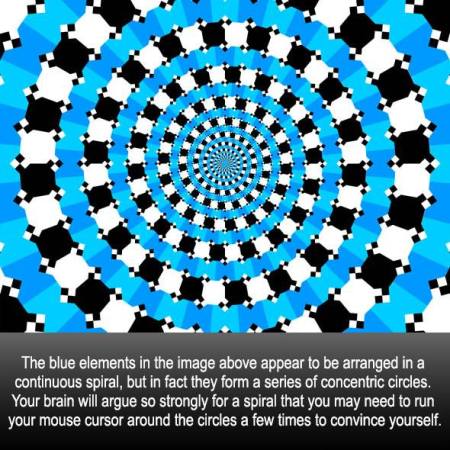
It’s a stunningly convincing optical illlusion. You can see how it works if you draw an horizontal line through the centre. The small black and white squares at the corners of the larger ones are aligned differently on the inside and outside of each ring and alternate in orientation as you go around. This creates a pattern of black squares that appears to bend, creating the impression of an anti-clockwise spiral.

Why? You endeavoured to embroil me with weomen…

Posted in History with tags , on April 10, 2016 by telescoper

Here’s a post about an episode in the life of Sir Isaac Newton which I first came across when reading about Samuel Pepys. Many assume that Newton’s behaviour was a result of mental illness on his part, but that’s by no means clear. I can think of many possible reasons why he might have acted the way he did, including that he just found the behaviour of other people too perplexing…

corpusnewtonicum's avatarCorpus Newtonicum

Why. It is a word that I frequently entertain when I study Isaac Newton. There is no scientist about whom so much is written, yet I feel that we only know so little about the man. Most Newton biographers provide us with detailed descriptions of his life and works, using the abundance of source materials available: Newton’s correspondence, descriptions by himself and others of various episodes of his life, Trinity College and Cambridge University attendance records, and so on. Every biographer, in his own way, tries to understand some of the more poignant moments in Newton’s life. Likewise, many struggle.

View original post 1,034 more words

Constructed Universe

Posted in Art, The Universe and Stuff with tags , , on April 10, 2016 by telescoper

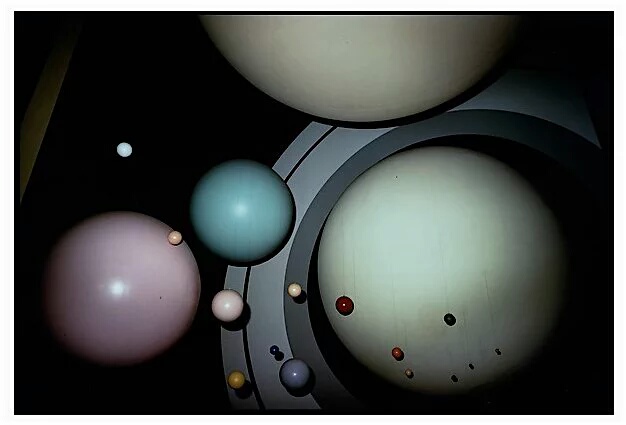
I saw this interesting piece “Constructed Universe” (1983) by Daniel Faust from the Metropolitan Museum of Art  via Twitter and it intrigued me enough to share it here, although some of you might think it’s just a load of balls.

image

Captain Black

Posted in Uncategorized on April 8, 2016 by telescoper

Too busy to blog today, so here’s a picture of Captain Black from the popular TV series Captain Scarlet.

image

If I understand my Twitter feed correctly he was on Newsnight tonight, using the pseudonym Conrad. Earth men, your time is at an end.

What does “Big Data” mean to you?

Posted in The Universe and Stuff with tags , , , , on April 7, 2016 by telescoper

On several occasions recently I’ve had to talk about Big Data for one reason or another. I’m always at a disadvantage when I do that because I really dislike the term.Clearly I’m not the only one who feels this way:

say-big-data-one-more-time

For one thing the term “Big Data” seems to me like describing the Ocean as “Big Water”. For another it’s not really just the how big the data set is that matters. Size isn’t everything, after all. There is much truth in Stalin’s comment that “Quantity has a quality all its own” in that very large data sets allow you to do things you wouldn’t even try with smaller ones, but it can be complexity rather than sheer size that also requires new methods of analysis.

Planck_CMB_large

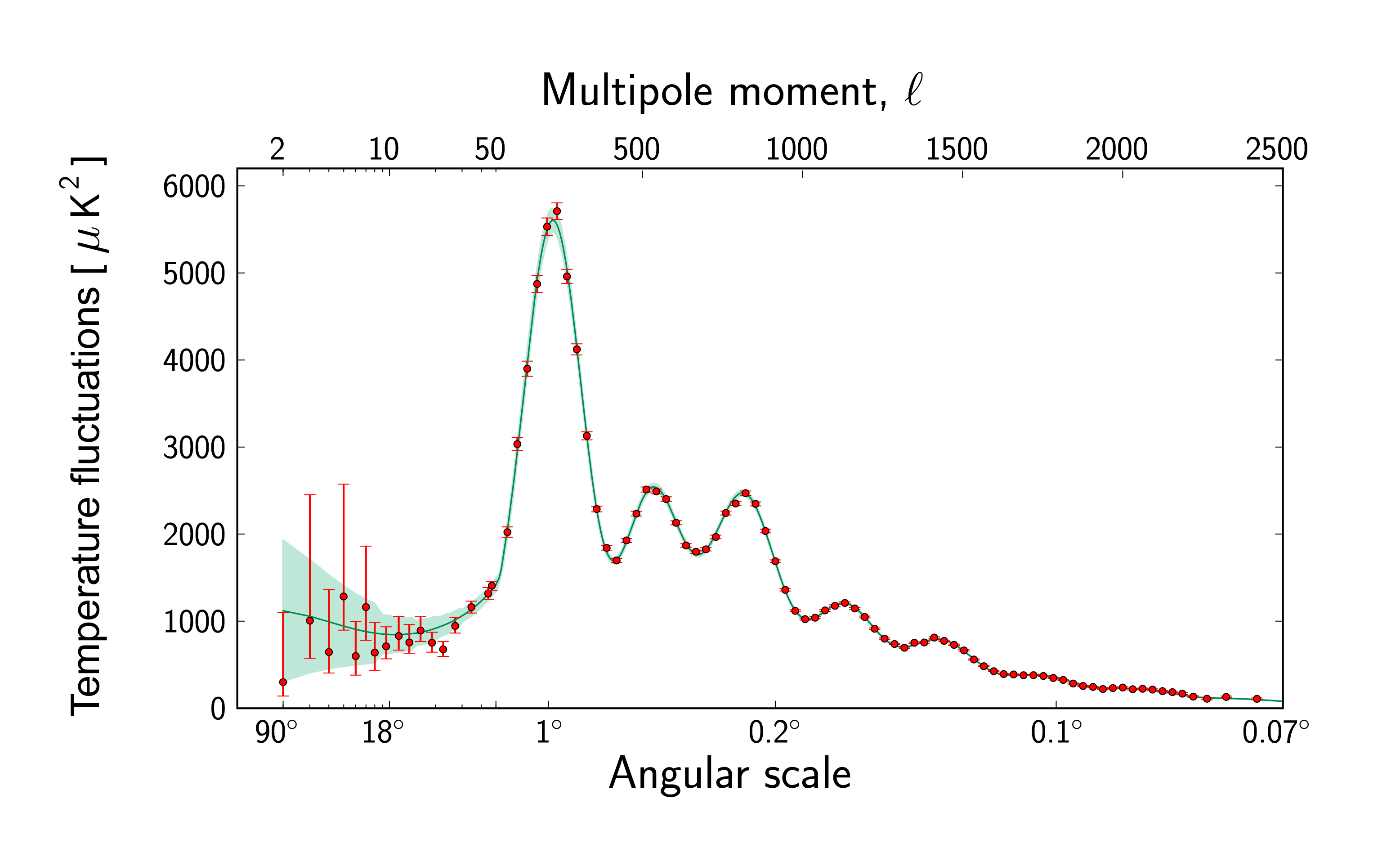
The biggest event in my own field of cosmology in the last few years has been the Planck mission. The data set is indeed huge: the above map of the temperature pattern in the cosmic microwave background has no fewer than 167 million pixels. That certainly caused some headaches in the analysis pipeline, but I think I would argue that this wasn’t really a Big Data project. I don’t mean that to be insulting to anyone, just that the main analysis of the Planck data was aimed at doing something very similar to what had been done (by WMAP), i.e. extracting the power spectrum of temperature fluctuations:

Planck_power_spectrum_origIt’s a wonderful result of course that extends the measurements that WMAP made up to much higher frequencies, but Planck’s goals were phrased in similar terms to those of WMAP – to pin down the parameters of the standard model to as high accuracy as possible. For me, a real “Big Data” approach to cosmic microwave background studies would involve doing something that couldn’t have been done at all with a smaller data set. An example that springs to mind is looking for indications of effects beyond the standard model.

Moreover what passes for Big Data in some fields would be just called “data” in others. For example, the Atlas Detector on the  Large Hadron Collider  represents about 150 million sensors delivering data 40 million times per second. There are about 600 million collisions per second, out of which perhaps one hundred per second are useful. The issue here is then one of dealing with an enormous rate of data in such a way as to be able to discard most of it very quickly. The same will be true of the Square Kilometre Array which will acquire exabytes of data every day out of which perhaps one petabyte will need to be stored. Both these projects involve data sets much bigger and more difficult to handle that what might pass for Big Data in other arenas.

Books you can buy at airports about Big Data generally list the following four or five characteristics:

  1. Volume
  2. Velocity
  3. Variety
  4. Veracity
  5. Variability

The first two are about the size and acquisition rate of the data mentioned above but the others are more about qualitatively different matters. For example, in cosmology nowadays we have to deal with data sets which are indeed quite large, but also very different in form.  We need to be able to do efficient joint analyses of heterogeneous data structures with very different sampling properties and systematic errors in such a way that we get the best science results we can. Now that’s a Big Data challenge!