Author Archive

Telescoping

Posted in The Universe and Stuff with tags , , , , , on October 2, 2011 by telescoper

I stumbled upon the following cartoon on Youtube and, since it’s about a mad astronomer, I thought I’d post it here.

It strikes me how  comic depictions of astronomical observatories, such as the example on the left,  always seem to show the telescope pointing out of the dome like the barrel of a gun poking out of a turret, which they never do. I venture to suggest that a great many members of the general public think that’s how they work also. I wonder why?

Perhaps it’s connected with the origins of the verb form of telescope which the OED gives as

a. trans. To force or drive one into another (or into something else) after the manner of the sliding tubes of a hand-telescope: usually said in reference to railway carriages in a collision. Also fig. to combine, compress, or condense (a number of things) into a more compact or concise form; to combine or conflate (several things, or one thing with another); to shorten by compression.

b. intr. To slide, run, or be driven one into another (or into something else); to have its parts made to slide in this manner (see quot. 1882 for telescoping n. and adj. at Derivatives, s.v. telescoping below); to collapse so that its parts fall into one another (quot. 1905).

The inference being that large astronomical telescopes must extend in the same way as the much smaller hand-held variety. Anyway, this idea is taken to a ludicrious extreme in the cartoon, with hilarious consequences…


Indian Summer, a Poem

Posted in Poetry with tags , , on October 2, 2011 by telescoper

These are the days when birds come back,
A very few, a bird or two,
To take a backward look.

These are the days when skies put on
The old, old sophistries of June, —
A blue and gold mistake.

Oh, fraud that cannot cheat the bee,
Almost thy plausibility
Induces my belief,

Till ranks of seeds their witness bear,
And softly through the altered air
Hurries a timid leaf!

Oh, sacrament of summer days,
Oh, last communion in the haze,
Permit a child to join,

Thy sacred emblems to partake,
Thy consecrated bread to break,
Taste thine immortal wine!

by Emily Dickinson (1830-1886).

Indian Summer

Posted in Jazz with tags , on October 1, 2011 by telescoper

A chance comment on Twitter  concerning the origin of the phrase Indian Summer (which, contrary to popular belief, has nothing to do with India) reminded me of this lovely old recording by the late great Sidney Bechet. So since we’re currently experiencing an Indian Summer, why not bask in its glow?

“You gotta be in the Sun to feel the Sun” – Sidney Bechet.

Ode to Joy

Posted in Music with tags , , , , , , , on October 1, 2011 by telescoper

A very busy week for me ended with a very busy Friday including a postgraduate induction event followed by our annual postgaduate conference. It was actually a very enjoyable day with some really excellent talks by research students about their ongoing projects, but by the end of the afternoon I was definitely flagging.

Fortunately I’d planned a reward at the end of this week in the form of a concert at St David’s Hall, Cardiff, by the BBC National Orchestra of Wales and the BBC National Chorus of Wales with conductor Thierry Fischer. I bought a group of tickets for myself and some colleagues from work, hoping that it would prove an uplifting experience. We weren’t disappointed.

Before the interval (of which more anon) we heard On the Transmigration of Souls by John Adams. Written as a response to the events of September 11th  2001, this is an unusual composition involving orchestra, chorus, children’s choir, and pre-recorded tape. Opinions about this piece are generally pretty divided and that also proved to be the case with the half-a-dozen of us who attended last night. All thought the orchestral music was very good indeed, but some found the recorded bits intrusive and the text, which includes phrases from missing-persons posters and memorials posted around Ground Zero to be a mixture of the banal and the mawkish. I wasn’t as negative about these aspects as some seem to have been, but at the same time I didn’t feel the pre-recorded segments actually added very much and they did sometimes make it difficult to hear the subtle textures in the orchestra. And as for the text being “banal”, that seems to me to be entirely the point. It’s the everdayness of loss that makes grief so overwhelming.

Anyway, I thought it was a fascinating  piece and it’s definitely the first time I’ve seen the violin section of an orchestra come on stage with two violins each. Some passages call for altered tunings, so they swapped instruments regularly throughout the performance. The orchestra played wonderfully well, I should say, and the performance was warmly received by the audience.

Then came the interval, during which the fire alarm went off and we had to evacuate the concert hall. Fortunately it was a sultry evening – we’re in the midst of an early autumn heatwave here –  and it wasn’t at all unpleasant to get a bit of fresh air while they figured out what had caused the alarm.

When we got back in it became obvious that quite a few people had left, possibly because they thought the performance wouldn’t resume. Those that didn’t return missed an absolute treat.

I’m not even going to attempt a description of  Beethoven’s  “Choral” Symphony No. 9 in D Minor. Suffice to say that it’s one of the pinnacles of human achievement, made all the more remarkable by the fact that Beethoven was profoundly deaf when it was written. It’s a masterpiece of such dimensions that words are completely unnecessary to describe it, even if one could find words that were appropriate in the first place.  Moreover, I think it’s a piece you really have to hear live for it to really live. Our seats were almost at the front of the stalls, very near the stage and close enough for me to to be able to feel the fortissimo passages through the soles of my feet. Perhaps that’s the only way Beethoven himself ever heard this piece?

And as for last night’s performance, what can I say? The first, Allegro, movement, an entire symphony in itself, found the orchestra at the very peak of its collective prowess. Their playing was passionate and vivid, yet tightly disciplined and the orchestra seemed to be pervaded by a sense that it was an absolute privilege to be playing an undisputed masterpiece. I was so carried away that at the end of that movement an involuntary tear fell from my eye.

I’ll just add one other observation about this piece, concerning the final movement, based around Beethoven’s setting of parts of Schiller’s poem Ode to Joy to which Beethoven himself added some material.  This is so famous that I suspect it’s the only part of the symphony that many people have heard. Hearing it in the context of the entire work, however, makes it all the more dramatic and inspirational. It’s not just that you have to wait so long for the choir (who have been sitting patiently behind the orchestra for three movements) to let rip, but also that you’ve experienced so much wonderful music by the time you get there that the final is virtually guaranteed to leave you completely overwhelmed.

Sincerest thanks to Thierry Fischer and the BBC National Orchestra and Chorus of Wales for an absolutely unforgettable experience. Uplifting? Not half!

P.S. The performance was recorded for broadcast by BBC Radio 3 on October 3rd 2011 in Afternoon on 3  and will presumably be on iPlayer for a week after that. Do listen to it if you get the chance. Even if only a small  fraction of the atmosphere inside St David’s Hall makes its way into the airwaves then it will still be worth a listen..

Desiderata

Posted in Poetry with tags , on September 30, 2011 by telescoper

I’m a bit surprised with myself for not posting this before now. I suppose one reason is that I feared it might be so well known that it would be considered a bit of cliché. However, at the end of a stressful week it seems a good time to post  Desiderata by Max Ehrmann, which I think contains much wisdom and which I always find a calming influence in anxious times. I know some people think this piece is nothing but a collection of platitudes, but I think it’s more than that. In any case,  if nothing else, it provides  useful advice for anyone serving  on a grants panel or waiting to learn the outcome…

Go placidly amid the noise and the haste,
and remember what peace there may be in silence.

As far as possible, without surrender,
be on good terms with all persons.
Speak your truth quietly and clearly;
and listen to others,
even to the dull and the ignorant;
they too have their story.
Avoid loud and aggressive persons;
they are vexatious to the spirit.

If you compare yourself with others,
you may become vain or bitter,
for always there will be greater and lesser persons than yourself.
Enjoy your achievements as well as your plans.
Keep interested in your own career, however humble;
it is a real possession in the changing fortunes of time.

Exercise caution in your business affairs,
for the world is full of trickery.
But let this not blind you to what virtue there is;
many persons strive for high ideals,
and everywhere life is full of heroism.
Be yourself. Especially do not feign affection.
Neither be cynical about love,
for in the face of all aridity and disenchantment,
it is as perennial as the grass.

Take kindly the counsel of the years,
gracefully surrendering the things of youth.
Nurture strength of spirit to shield you in sudden misfortune.
But do not distress yourself with dark imaginings.
Many fears are born of fatigue and loneliness.

Beyond a wholesome discipline,
be gentle with yourself.
You are a child of the universe
no less than the trees and the stars;
you have a right to be here.
And whether or not it is clear to you,
no doubt the universe is unfolding as it should.

Therefore be at peace with God,
whatever you conceive Him to be.
And whatever your labors and aspirations,
in the noisy confusion of life,
keep peace in your soul.

With all its sham, drudgery, and broken dreams,
it is still a beautiful world.
Be cheerful. Strive to be happy.

When is a Professor not a Professor?

Posted in Uncategorized with tags , , , on September 29, 2011 by telescoper

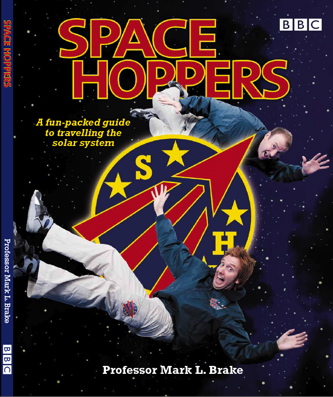
Now that I’m back from panel duty, I notice that Amazon have finally corrected the misleading information on the page advertising a book by Mark Brake. Until a couple of days ago this page stated that the “author” was a Professor at the University of Glamorgan, despite the fact that it’s over a year since he was dismissed from that position. I’m not sure why they have suddenly removed their misrepresentation but now it merely says that Brake is an “academic”. I think that’s misleading too, as to my knowledge he doesn’t have a job at any university; the OED’s definition of the noun academic is

A member of a college or university; a collegian. Now spec. a senior member of a university; a member of the academic staff of a university or college; also loosely, an academically-gifted person.

Does the loose definition apply?

Meanwhile, this is taken from the front page of Mark Brake’s personal website.

Which seems to demonstrate that although Amazon have corrected their error, Brake himself is content to continue passing himself off as a Professor. I wonder how long it will be until this turns into the version that’s advertised on Amazon?

Also, does anyone know what the “L” stands for in “Mark L Brake”?

Why go to University?

Posted in Education with tags , , on September 29, 2011 by telescoper

I’ve just got time this morning before the Astronomy Grants Panel reconvenes for another day of deliberations to put up a quick postette. I thought of this quote the other day when we were inducing inducting inductifying enrolling the new undergraduates. I think it encapsulates what I think a university actually is, specifically why it’s essential for a University education to be part of an environment that also encompasses research, and why even in the digital age (and beyond),  personal interaction between student and teacher will always be essential. Call me old-fashioned.

The general principles of any study you may learn by books at home; but the detail, the colour, the tone, the air, the life which makes it live in us, you must catch all these from those in whom it lives already.

From The Idea of a University, by Cardinal John H. Newman, Chapter 2.

The Autumn Collection

Posted in Biographical, Education on September 28, 2011 by telescoper

Up bright and early again this morning, ready for the return leg (and possible extra time/penalties) of the STFC Astronomy Grants Panel deliberations in Swindon. While I slurp my coffee and crunch my toast I thought I’d try to get my brain into gear by posting a brief something.

Yesterday was the first day of our induction period for new students. Lectures proper don’t start until next week but this week we have preliminary sessions with all the freshers to show them round the laboratories, tell them how the library learning resources unit works, sort out their access to computer facilities and so on. As I’ve blogged about before, this is a bumper year for us in terms of undergraduate intake so these sessions were busier than usual. Somewhat remarkably, however, at close of play we had managed to process nearly all the students we were expecting. Usually a few  turn up late, or don’t turn up at all, but this time there seems to be only one “no show”. That must be some kind of record.

At coffee time this morning, all staff were invited to a “meet and greet” session with the new students. I’m not really involved with the undergraduate induction process but went along anyway to show moral support (and help myself to free coffee). When I arrived at the session I immediately noticed the crowd of baffled and bewildered people struggling to figure out what was going on. But that was just the members of stafff;  the students  seemed fine with it all.

Over coffee I chatted with a few students who were very friendly and relaxed, raring to get started with their studies. Let’s see how long that lasts! One student asked me “What are physicists really like?”. All I could think of to say was “some of them resemble normal people”…

I doubt if any of the new students is a reader of this blog – especially during Fresher’s Week, in which there are many distractions on offer – but in any case I’d like to welcome them all to Cardiff. If any are reading this, I wish you well in your  studies, and hope you find your time here both fruitful and enjoyable!

Just as some students start on their course others are about to complete theirs. Such is the cycle of academic life. My main administrative role in the School of Physics & Astronomy actually concerns postgraduate students. The end of this week (September 30th) is the PhD thesis deadline for several of these, so there’s been a rush of paperwork relating to arrangements for examinations for me to deal with. I’m sure there’ll be more than a few people having a relaxing tipple on Friday evening after they’ve submitted their thesis.

All in all it was a very busy but actually quite pleasant day made all the more pleasant by an unexpected outbreak of nice sunshine. Now. To Swindon.

Wind turbines aren’t noisy!

Posted in Uncategorized with tags , on September 27, 2011 by telescoper

I read this morning that a petition to the Welsh Assembly Government has been raised demanding that wind farms be switched off from time to time to give local residents “some respite from the noise they make”.

In fact wind turbines, even big ones, make far less noise than people seem to think, and certainly less than motor vehicles. So if you’ve got an objection to wind farms, please make it an honest one.

Advanced Level Mathematics Examination, Vintage 1981

Posted in Education with tags , , , , , , on September 26, 2011 by telescoper

It’s been a while since I posted any of my old examination papers, but I wanted to put this one up before term starts in earnest. In the following you can find both papers (Paper I and Paper 2) of the Advanced Level Mathematics Examination that I sat in 1981.

Each paper is divided into two Sections: A covers pure mathematics while B encompasses applied mathematics (i.e. mechanics) and statistics. Students were generally taught only one of the two parts of Section B and in my case it was the mechanics bit that I answered in the examination. Paper I contains slightly shorter questions than Paper 2 and more of them..

Note that slide rules were allowed, but calculators had crept in by then. In fact I used my wonderful HP32-E, complete with Reverse Polish Notation. I loved it, not least because nobody ever asked to borrow it as they didn’t understand how it worked…

I also did Further Mathematics, and will post those papers in due course, but in the meantime I stress that this is just plain Mathematics.

If it looks a bit small you can use the viewer to zoom in.

I’ll be interested in comments from anyone who sat A-Level Mathematics more recently than 1981. Do you think these papers are harder than the ones you took? Is the subject matter significantly different?