Just got back from the St Patrick’s parade in Maynooth to find that I won the Beard of Ireland poll!
Thanks to everyone who voted for me! I’m going to celebrate this evening with a traditional Irish dinner of bacon and cabbage, with a parsley sauce.
Just got back from the St Patrick’s parade in Maynooth to find that I won the Beard of Ireland poll!
Thanks to everyone who voted for me! I’m going to celebrate this evening with a traditional Irish dinner of bacon and cabbage, with a parsley sauce.
One of the things I learnt during my sabbatical in Barcelona a couple of years ago is that un Puente (a Bridge) is a term used to describe a day in between a weekend and a public holiday. In Spain, it is quite normal to take such a day off work so as to create a long weekend. A sequence of such days is called un Aqueducte, the ideal version of which involves public holidays on Tuesday and Thursday leading to a whole week off!
Tomorrow being St Patrick’s Day (Tuesday 17th March), it is a public holiday in Ireland so I have decided to adopt Spanish practices and declared today La Puente de San Patricio. I am not going to campus (though I will be doing some work, including participating in a Euclid telecon). Officially this week is a Study Break, not a holiday (apart from tomorrow), but there are no lectures or labs or tutorials.
This reminds me to mention that I have made it to the final round of the annual St Patrick’s Day Beard of Ireland competition, which I actually won way back in 2020. The poll has been conducted mainly on Xitter in recent years, and I’ve hardly registered because I have had no presence there since 2023. This year, however, voting is possible via Bluesky (though I don’t think you have to be registered on Bluesky to vote). Last time I looked I was in the lead, but that’s by no means guaranteed to last. Here is a picture of me and my beard:

Anyway, if you feel like voting for me (or indeed any of the other candidates) you can do so here.
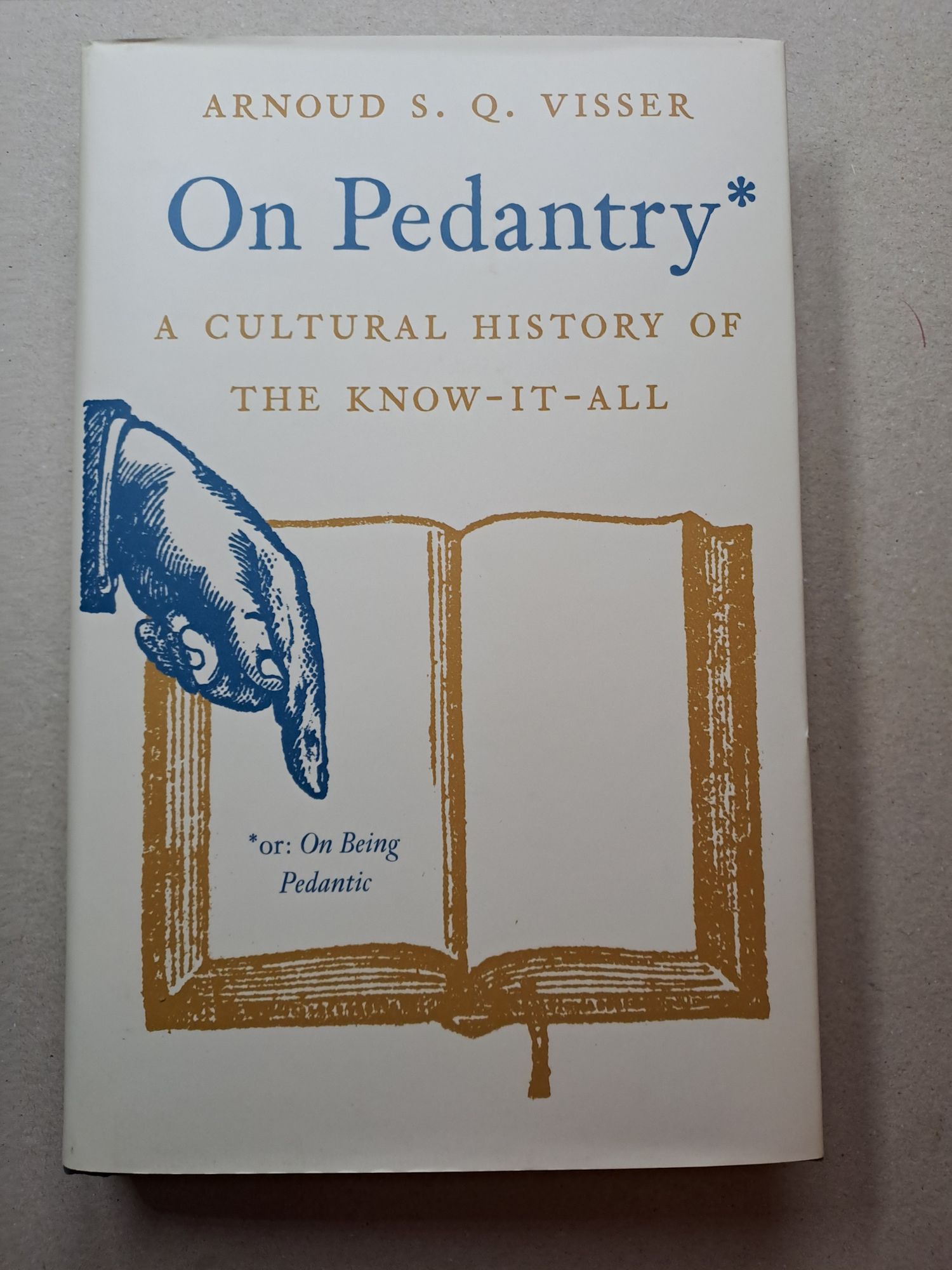
Regular readers of this blog will be surprised to learn that I have, from time to time, been accused of being somewhat pedantic, though not as often as I am accused of being a tad sarastic. Anyway, a certain person recently bought me a copy of On Pedantry (subtitled A Cultural History of the Know-it-all) by Arnoud S.Q. Visser, who is Professor of Textual Culture in the Renaissance at Utrecht University in the Netherlands. Whatever the reason for the gift, I found it a very enjoyable read and learnt a huge amount from it.
Working in a University it is hard to escape the stereotype of the Boffin or the Know-all. I suppose it is because it is part of the scholarly life that we tend to criticize the work of other academics – mostly with the intention of advancing knowledge – that we run the risk of being thought to be excessively assiduous in correction things we perceive to be incorrect or unclear – in other words, of being pedants – and irritating all kinds of people in the process. This book studies the long history of this sort of behaviour , in as part of the broader history of anti-intellectualism, a story of suspicion and deprecation of expertise that is highly relevant today. We have recently seen a widespread assault on universities, the removal of swathes of information (such as environmental data) from the websites of federal agencies, and the discrediting of the use of vaccines and of scientists engaged in vaccine research. The reader of On Pedantry will discover that this sort of hostility is by no means new.
The word “pedant” as such first appears as such in Renaissance Italy, with pedante being a name for private tutors who were hired by the wealthy to teach their children. Such teachers were of a lower social status than their students, so the word gained a negative connotation, especially when combined with the ostentatious display of knowledge with which these teachers were often associated – the new pedants soon found themselves satirised in sonnets and plays.
But although the word dates from much later, Visser identifies the original pedants in ancient Greece, among the Sophists, who emerged as a group of experts in the Athens of the fifth century BCE, with figures such as Protagoras and Prodicus becoming celebrities thanks to their novel approach to learning: they emphasised argumentation and speech, practices that became closely linked to the emergence of democracy. The Sophists gained a reputation, however, for competitive debate that was more about winning an argument than discovering the truth. The name “Sophist” comes from sophia, the greek word for knowledge, from which we get “Philosophy” but also “sophistry” (the use of clever but false arguments).
The philosopher Plato deplored the pedantic nature of Sophists in several of his dialogues and in his Republic, where they would rather “have a quarrel than a conversation”. The playwright Aristophanes went further, lampooning them in his play The Clouds, perhaps the first satire on intellectuals. In ancient Rome, this mistrust of the intellectual took on another aspect – a disdain the lack of practical use of much of Greek philosophy.
Incidentally, I learnt reading this book that the Emperor Hadrian, keen to demonstrate his own intellectual capacity and his admiration for Greek philosophy, forged the link between learning and social elite status by growing a beard, unusually for high status Romans of his time. Hadrian’s beard became much imitated – as a marker of intellectual capacity – but also lampooned as a sign of pretentiousness.
The next developments mapped out by Visser concern the rise of the scholar – in the middle ages and the Renaissance – whose world centred specifically on the Latin language, its literature and grammar. The learning of teachers and scholars was both celebrated and denigrated. John of Salisbury in the 12th century loathed “academics … poring over every syllable … expressing doubts about everything”. The French philosopher Michel de Montaigne wrote a famous essay On Pedantry, which is well worth reading; this is one of the few references in this book that I’ve actually read! Negative depictions of the intellectual subsequently appeared widely in literature, from Molière to Shakespeare. During the Enlightenment, pedantry was dismissed as a “vice of the mind”, with writers such asDiderot, in the prospectus to his famous Encyclopédie, writing that “he who claims to know everything only shows himself ignorant of the limits of his human mind”.
Closer to modern times, Visser switches his attention to America and the mistrust of scholars there, beginning with Thomas Paine, whose bestselling Common Sense provided a major influence on the American revolution. Paine identified refined language and classical erudition with a colonialist aristocratic mentality. Visser comments that “in a political culture of democratic machismo, politicians denounced colleagues who made an inordinate display of their education as elitist, overly sensitive, and effeminate”, I which is just as true of the 21st Century as the 19th. This American distrust of the expert even created a political party, the “Know Nothings”, in the early 19th century.
The final chapter of the book discusses attitudes towards intellectuals in popular culture, focussing on stereotypical portrayals of professors in Hollywood movies. I think more could have been made about the gendered nature of the pedant – until recently a stricly male stereotype. More recent versions are hardly more enlightened: just as male intellectuals are usually depicted as being “unmanly”, the focus on female academics in the movies is largely on their “mannish” looks.
I also think much more could be made of more recent phenomena, such as the annoying nitpicking of the anonymous internet troll and the rise of “mansplaining”. There’s also the emergence of generative AI. ChatGPT and other chatbots could have emerged as very irritating pedants, but instead they come across as servile and sycophantic, which some of us find even more irritating. And most most modern-day real-life pedants do not hallucinate or generate obvious untruths. Some of us who have been accused of being pedantic are at least trying to get things right, rather than pass off slop as truth.
As you might expect, this book involves many enjoyable digressions and asides. I especially appreciated the discussions of scholarly life and attitudes to education in mediaeval and early modern Europe. What you might not have expected for what is a scholarly work – with footnotes and whatnot – is that it is written in a very light and readable style and is frequently very funny.
Highly recommended.

Today is World Beard Day 2025. I refer you to this post by Keith Flett, Spokesbeard of the Beard Liberation Front for further information about this important annual celebration:
Regular readers of this blog will know that, way back in 2020, apparently as the result of some form of administrative error, I was voted St Patrick’s Day Beard of Ireland. Five years have passed and it is now time for Beard of Ireland 2025 and I am among the contenders. The voting is mainly on X/Twitter, on which I have no presence, so I don’t hold out much hope, but if you do want to vote for me please do so there, or elsewhere following the instructions in the attached post from Keith Flett in which he volunteers to be bombarded with direct messages…
P.S. For reference, here is a picture of my beard and I
So it’s St Patrick’s Day, a bank holiday here in Ireland. I shall probably observe the festivities in Maynooth later on, though it is pouring down at the moment and very likely to rain on the parade, which starts at 11am. That would be disappointing, as it hardly ever rains in Ireland.
I came second in the Beard of Ireland poll, by the way. Thanks to everyone who voted for me and congratulations to the winner, Aodhan Connolly. A few people have asked for an up-to-date picture of me and my beard, so here goes:
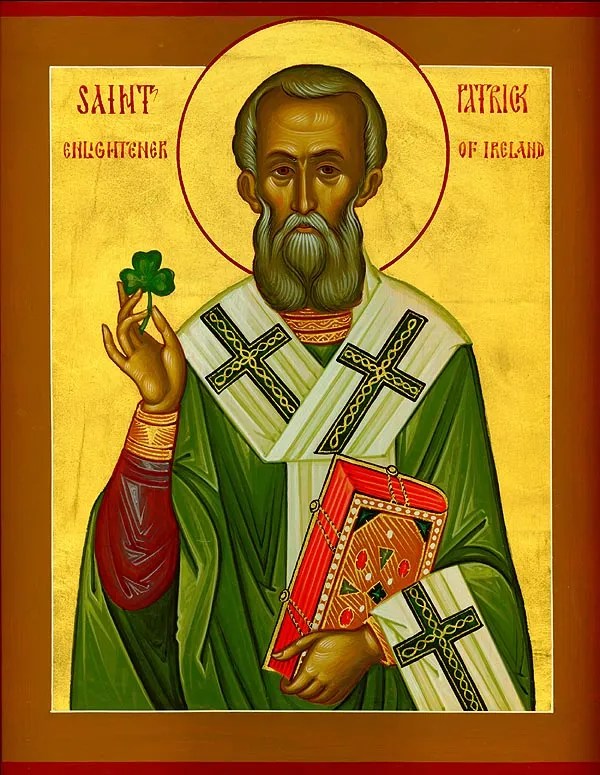
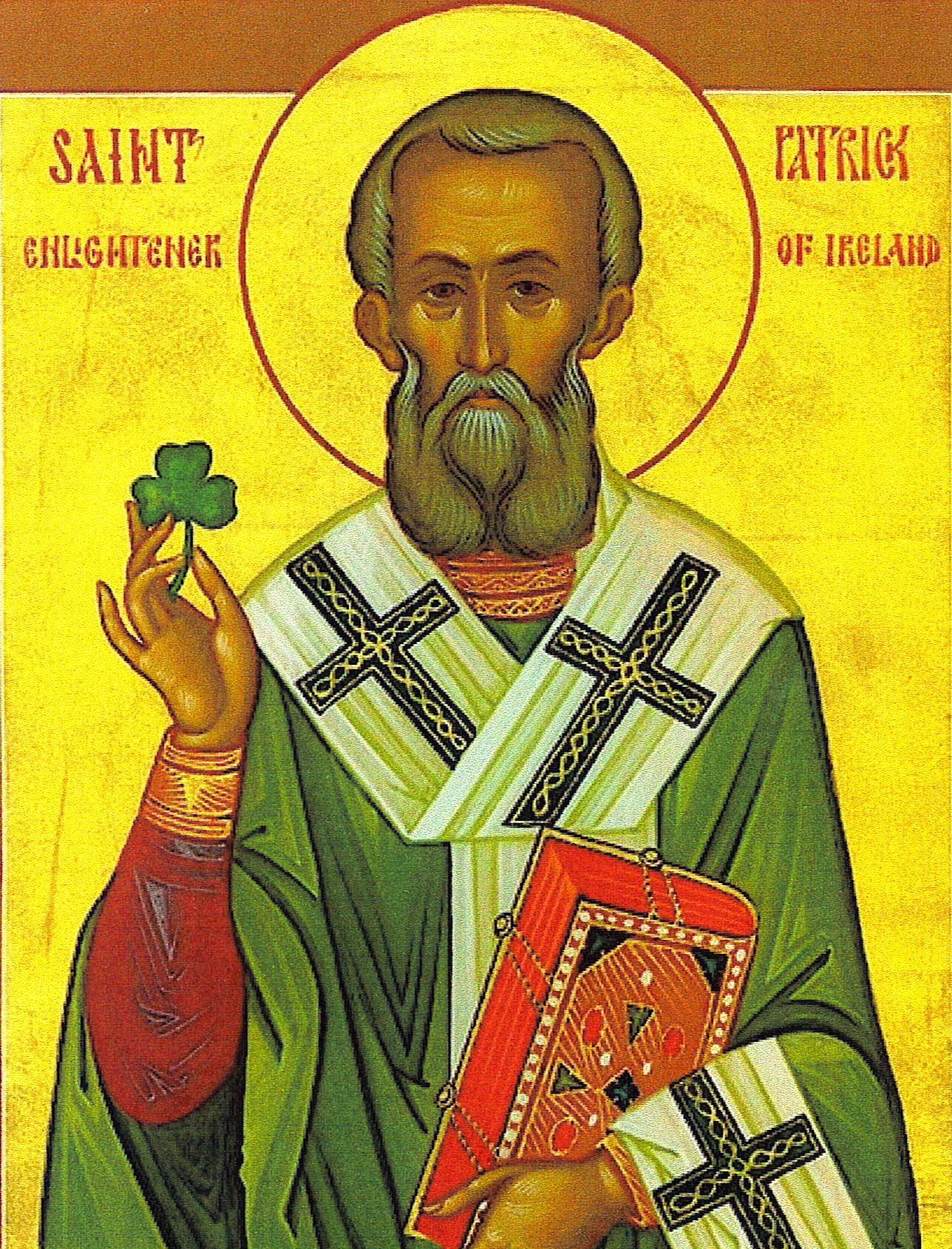
Not many facts are known about the life of St Patrick, but it seems he was born in Britain, probably in the late 4th Century AD, probably somewhere around the Severn Estuary and probably in Wales and according to virtually all artistic depictions of him he had a fine beard. It also appears that he didn’t know any Latin. When a young man, it seems he was captured by Celtic marauders coming up the River Severn and taken as a slave to Ireland. He eventually escaped back to Britain, but returned to Ireland as a missionary and succeeded somehow in converting the Irish people to Christianity.
Ireland was the first country to be converted to Christianity that had never been part of the Roman Empire. That made a big difference to the form of the early Irish Church. The local Celtic culture was very loose and decentralized. There were no cities, large buildings, roads or other infrastructure. Life revolved around small settlements and farms. When wars were fought they were generally over livestock or grazing land. The early Irish Church that grew in this environment was quite different from that of continental Europe. It was not centralized, revolved around small churches and monasteries, and lacked the hierarchical structure of the Roman Church. Despite these differences, Ireland was quite well connected with the rest of the Christian world.
Irish monks – and the wonderful illuminated manuscripts they created – spread across the continent, starting with Scotland and Britain. Thanks to the attentions of the Vikings few of these works survive but the wonderful Lindisfarne Gospels, dating from somewhere in the 8th Century were almost certainly created by Irish monks. The Book of Kells was probably created in Scotland by Irish Monks.
Saint Patrick’s Day is celebrated on March 17th, the reputed date of his death in 461 AD. Nobody really knows where St Patrick was born, though, so it would be surprising if the when were any better known.
In any case, it wasn’t until the 17th Century that Saint Patrick’s feast day was placed on the universal liturgical calendar in the Catholic Church. Indeed, St Patrick has never been formally canonized. In the thousand years that passed any memory of the actual date of his birth was probably lost, so the choice of date was probably influenced by other factors, specifically the proximity of the Spring Equinox (which is this year on Monday, March 20th).
The early Christian church in Ireland incorporated many pre-Christian traditions that survived until roughly the 12th century, including the ancient festival of Ēostre (or Ostara), the goddess of spring associated with the spring equinox after whom Easter is named. During this festival, eggs were used a symbol of rebirth and the beginning of new life and a hare or rabbit was the symbol of the goddess and fertility. In turn the Celtic people of Ireland probably adapted their own beliefs to absorb much older influences dating back to the stone age. St Patrick’s Day and Easter therefore probably both have their roots in prehistoric traditions around the Spring Equinox, although the direct connection has long been lost.
Lá Fhéile Pádraig sona daoibh go léir!
Update. I waited until it stopped raining before leaving the house, which meant that I missed the start of the Maynooth parade but there seemed to be a very good turnout. Here are some snaps of the bit I saw:





I’ve recently moved on to the part about Special Relativity in my module on Mechanics and Special Relativity and this afternoon I’m going to talk about the Lorentz-Fitzgerald contraction or, as it’s properly called here in Ireland, the Fitzgerald-Lorentz contraction.
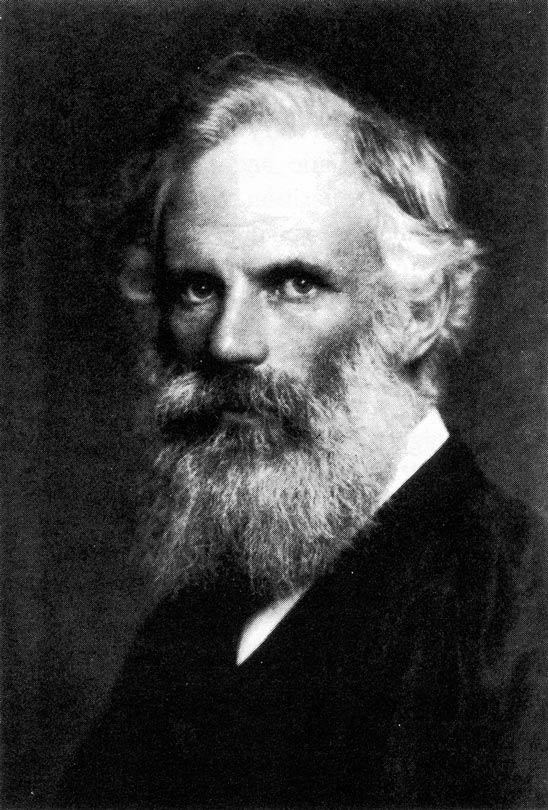
The first thing to point out is that the physicists George Francis Fitzgerald and Hendrik Lorentz, though of different nationality (the former Irish, the latter Dutch), both had fine beards:
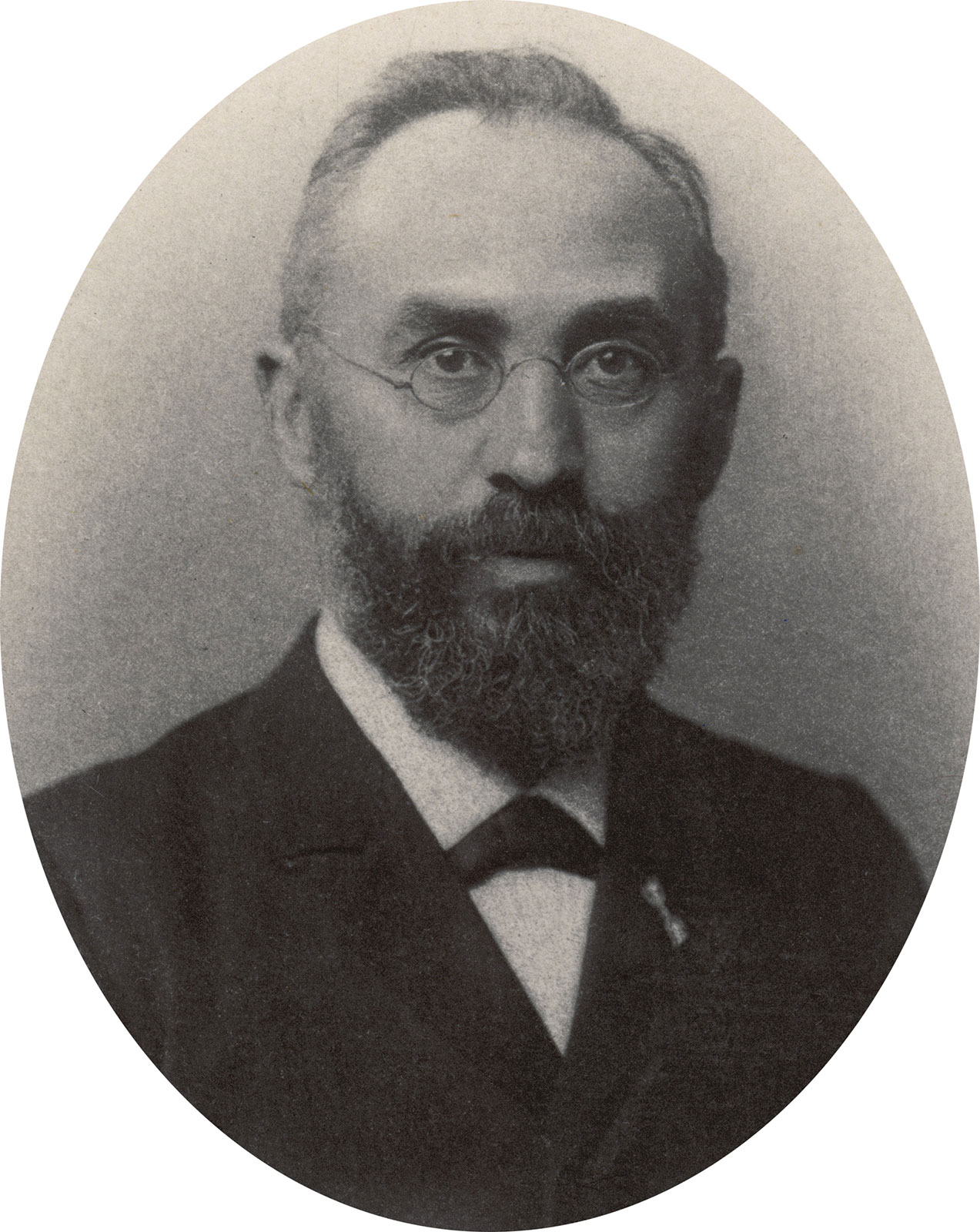
One of the interesting things you find if you read about the history of physics just before Albert Einstein introduced his theory of special relativity in 1905 was how many people seemed to be on the verge of getting the idea around about the same time. Fitzgerald and Lorentz were two who were almost there; Poincaré was another. It was as if special relativity was `in the air’ at the time. It did, however, take a special genius like Einstein to crystallize all that thinking into a definite theory.
Special relativity is fun to teach, not least because it throws up interesting yet informative paradoxes (i.e. apparent logical contradictions) arising from that you can use to start a discussion. They’re not really logical contradictions, of course. They just challenge `common sense’ notions, which is a good thing to do to get people thinking.
Anyway, I thought I’d mention one of my favorite such paradoxes arising from a simple Gedankenerfahrung (thought experiment) here.
Imagine you are in a railway carriage moving along a track at constant speed relative to the track. The carriage is dark, but at the centre of the carriage is a flash bulb. At one end (say the front) of the carriage is a portrait of Lorentz and at the other (say the back) a portrait of Fitzgerald; the pictures are equidistant from the bulb and next to each portrait is a clock.The two clocks are synchronized in the rest frame of the carriage.
At a particular time the flash bulb goes off, illuminating both portraits and both clocks for an instant.
It is an essential postulate of special relativity that the speed of light is the same to observers in any inertial frame, so that an observer at rest in the centre of the carriage sees both portraits illuminated simultaneously as indicated by the adjacent clocks. This is because the symmetry of the situation means that light has to travel the same distance to each portrait and back.
Now suppose we view the action from the point of view of a different inertial observer, at rest by the trackside rather than on the train, who is positioned right next to the centre of the carriage as the flash goes off. The light flash travels with the same speed in the second observer’s frame, but this observer sees* the back of the carriage moving towards the light signal and the front moving away. The result is therefore that this observer sees the two portraits light up at different times. In this case the portrait of Fitzgerald is lit up before the portrait of Lorentz.
Had the train been going in the opposite direction, Lorentz would have appeared before Fitzgerald. That just shows that whether its Lorentz-Fitzgerald contraction or Fitzgerald-Lorentz contraction is just a matter of your frame of reference…
But that’s not the paradoxical thing. The paradox is although the two portraits appear at different times to the trackside observer, the clocks nevertheless display the same time….
*You have to use your imagination a bit here, as the train has to be travelling at a decent fraction of the speed of light. It’s certainly not an Irish train.
Yes, I know there are far more important things to think about these days but if you want to take a break from doom scrolling then you might want to cast your vote in the St Patrick’s Day Beard of Ireland 2022 poll.
Owing no doubt to some form of administrative error, I actually won this in 2020 but sank without trace last year. I’m in the first round group this year and will no doubt be eliminated but I’d be happy if I could cling on to the fourth place (out of four) that I managed last year.

Beard Liberation Front
Press release 5th March
Contact Keith Flett 07803 167266
BEARD OF IRELAND 2022 POLL SEES COMPETITION BRISTLING
The Beard Liberation Front, the informal network of beard wearers, has said that competition for the Irish Beard of the Year 2022 is officially open
The 2017 winner was politician Colum Eastwood who bearded broadcaster William Crawley for the annual Award.
In 2018 the DUP’s Lee Reynolds shaved writer Dominic O’Reilly for the honour with Colum Eastwood in a steady third place.
In 2019 Lee Reynolds retained the title
The 2020 winner was Maynooth academic Peter Coles
In 2021 Aodhan Connolly shaved opponents to win the coveted title
The BLF says that while traditionally a land of predominantly clean-shaven cultures, Ireland has in recent times become something of a centre for stylish and trendy beards.
Contenders for the title in 2022 include a diverse range of the hirsute- a golfer…
View original post 161 more words

I found out today that this year an IgNobel Prize has been awarded for a paper on Impact Protection Potential of Mammalian Hair: Testing the Pugilism Hypothesis for the Evolution of Human Facial Hair which was actually published last April in the journal Integrative Organismal Biology. This seems to be a bona fide academic journal, though apparently not one that has very high standards.
Anyway, the abstract reads:
Because facial hair is one of the most sexually dimorphic features of humans (Homo sapiens) and is often perceived as an indicator of masculinity and social dominance, human facial hair has been suggested to play a role in male contest competition. Some authors have proposed that the beard may function similar to the long hair of a lion’s mane, serving to protect vital areas like the throat and jaw from lethal attacks. This is consistent with the observation that the mandible, which is superficially covered by the beard, is one of the most commonly fractured facial bones in interpersonal violence. We hypothesized that beards protect the skin and bones of the face when human males fight by absorbing and dispersing the energy of a blunt impact. We tested this hypothesis by measuring impact force and energy absorbed by a fiber epoxy composite, which served as a bone analog, when it was covered with skin that had thick hair (referred to here as “furred”) versus skin with no hair (referred to here as “sheared” and “plucked”). We covered the epoxy composite with segments of skin dissected from domestic sheep (Ovis aries), and used a drop weight impact tester affixed with a load cell to collect force versus time data. Tissue samples were prepared in three conditions: furred (n = 20), plucked (n = 20), and sheared (n = 20). We found that fully furred samples were capable of absorbing more energy than plucked and sheared samples. For example, peak force was 16% greater and total energy absorbed was 37% greater in the furred compared to the plucked samples. These differences were due in part to a longer time frame of force delivery in the furred samples. These data support the hypothesis that human beards protect vulnerable regions of the facial skeleton from damaging strikes.
E A Beseris, S E Naleway, D R Carrier
Integrative Organismal Biology, Volume 2, Issue 1, 2020
This study has attracted a number of silly headlines such as “Big manly beards evolved so we could take punches to the head, study says” and a rebuke from the Beard Liberation Front.
My main problem with the article are (i) that the study itself is very flawed and, worse, (ii) that the claims made of a link to evolution are clearly bullshit; the latter is especially disappointing because the connection to evolution was explicitly caimed by biologists, who really ought to know better.
On point (i) I’ll just point out that the experiment didn’t involve beards or punching. The team built models – sixty of them – made of fibres and epoxy resin to represent human bone, covered in sheepskin to mimic facial hair. Those models were either ‘furred’ (‘full beard’ with 8cm-long hairs), ‘sheared’ (0.5cm length ‘trimmed beard’) or ‘plucked’ (‘hairless’ shaven face). Human hair follicles are four times as thick as those from sheep, but five times less densely packed, so a fleece roughly approximates a beard. The biologists then used a mechanical striker to repeatedly drop a 4.7kg weight onto each model to measure the impact and record the damage.
The results showed that furred models were better than both sheared and plucked models at taking the ‘punch’: a beard will absorb 37% more energy than a shaven face, for example, partly because springy hairs serve as suspension to slow down and soften the blow. As the researchers explain, “the greatest advantage offered by the hair is that it distributes the force of impact over a longer time frame”.
The problem is that this experiment isn’t at all realistic. Dropping a load onto a solid object would simulate hitting a dummy rather than a person; the latter can roll with a punch, the former cannot. In addition, many punches thrown in fights – as opposed to the boxing ring – are not straight to the chin but some variation of the hook that hits the side of the head causing it to rotate. Now allowing the models to rotate is a significant flaw in the experiment.
But the bigger problem with the study is (ii), that its results are interpreted as evidence for evolution on the grounds that facial hair represents a form of ‘sexual dimorphism’ leading to the suggestion that certain facial features evolved as a result of competitive fighting between human males .There is then the idea is that, just as a lion’s thick mane covers vital regions such as the jugular vein, beards help protect against potentially lethal punches to the throat and jaw. This is the so-called ‘pugilism hypothesis’ (from the Latin pugil, pugilis meaning a boxer) and this study says nothing at all about whether or not this is true. Even if you think the experiment is realistic, its results shed no light on the pugilism hypothesis. That is not a matter that can be settled by biomechanics but has to involve evolutionary biology, and specifically how the trait in question might have evolved through natural selection.
Charles Darwin’s 1871 book The Descent of Man discusses hair in great detail but didn’t make the mistake of equating the lion’s mane with human hair: although he argued that the thick hair of various mammals might provide protection in fights between competing males, he believed that human facial hair is a ‘secondary sexual character’ that evolved as a result of female preferences, and rightly pointed out that human populations differ in their ability to grow thick beards — not something you would expect if facial hair has a protective function. Not every biological feature is the result of natural selection either: a given characteristic could be an adaptation that evolved for a specific function, but it could also have no “purpose:
Anyway in reading this silly article I became interested in beards in boxing, given that boxers are generally clean-shaven. A ban on beards in boxing has been in place in many forms of the sport and still is in, for example, the Olympics. There has been recent discussion about a beard ban being a form of discrimination against, say, Sikh boxers and the amateur sport. I think beards are only allowed in professional boxing if both sides agree.
So why would anyone forbid a boxer to wear a beard? I don’t buy the argument about a beard cushioning a punch, for the reasons outlined above and for the fact that the gloves play the role of “distributing the force of impact” far more effectively than a beard would. Some have argued that a full beard may make it difficult for an opponent to locate the line of the jaw and hence strike the wearer’s chin. Another suggestion is that a beard would conceal cuts and bleeding and possible hinder medical attention.
I’m not sufficiently expert to say whether any of these are reasonable, but reading an article like this one by promoter Frank Warren convinces me that the major factor in the beard ban is just an irrational aversion to beards among the boxing hierarchy. In other words, pogonophobia.
Although my primary research interest is in the area of astrophysics and cosmology I think it is important to get involved whenever possible in interdisciplinary scholarship. My latest such contribution was to use the “find” facility on the online version of Ulysses by James Joyce to establish that the word “beard” appears 59 times in that work. A thorough analysis of the role of beards in Ulysses would make an interesting PhD topic, in my opinion.

As former Beard of Ireland Peter Coles noted on twitter there are 59 references to beards in James Joyce’s Ulysses.
On Bloomsday 2021 the Beard Liberation Front salutes the hirsute canon of Joyce.
A typical Ulysses reference is below:
Mastiansky and Citron approach in gaberdines wearing long earlocks. They wag their beards at Bloom
(page 438)


 In the Dark