Archive for the Biographical Category

Cardiff Philharmonic Orchestra: Mahler Symphony No. 3

Posted in Biographical, Cardiff, Music with tags , , , , on June 18, 2018 by telescoper

Well, I’m back in Maynooth after a weekend in Cardiff, on the Sunday of which I went to St David’s Hall to see the Cardiff Philharmonic Orchestra playing Gustav Mahler’s Third Symphony. Actually this concert was originally scheduled to take place on the evening of Friday 15th June, which is why I booked a ticket to return from Bonn in time to see it instead of waiting for the formal close of the meeting. As it turns out, my flight was so late I would have missed it but fortunately the Rolling Stones intervened. Because Jagger et al were performing at the Principality Stadium in Cardiff on Friday (with all the consequent congestion and traffic disruption that implies) it was decided to shift the concert to Sunday 18th, but I couldn’t be bothered to change my flight.

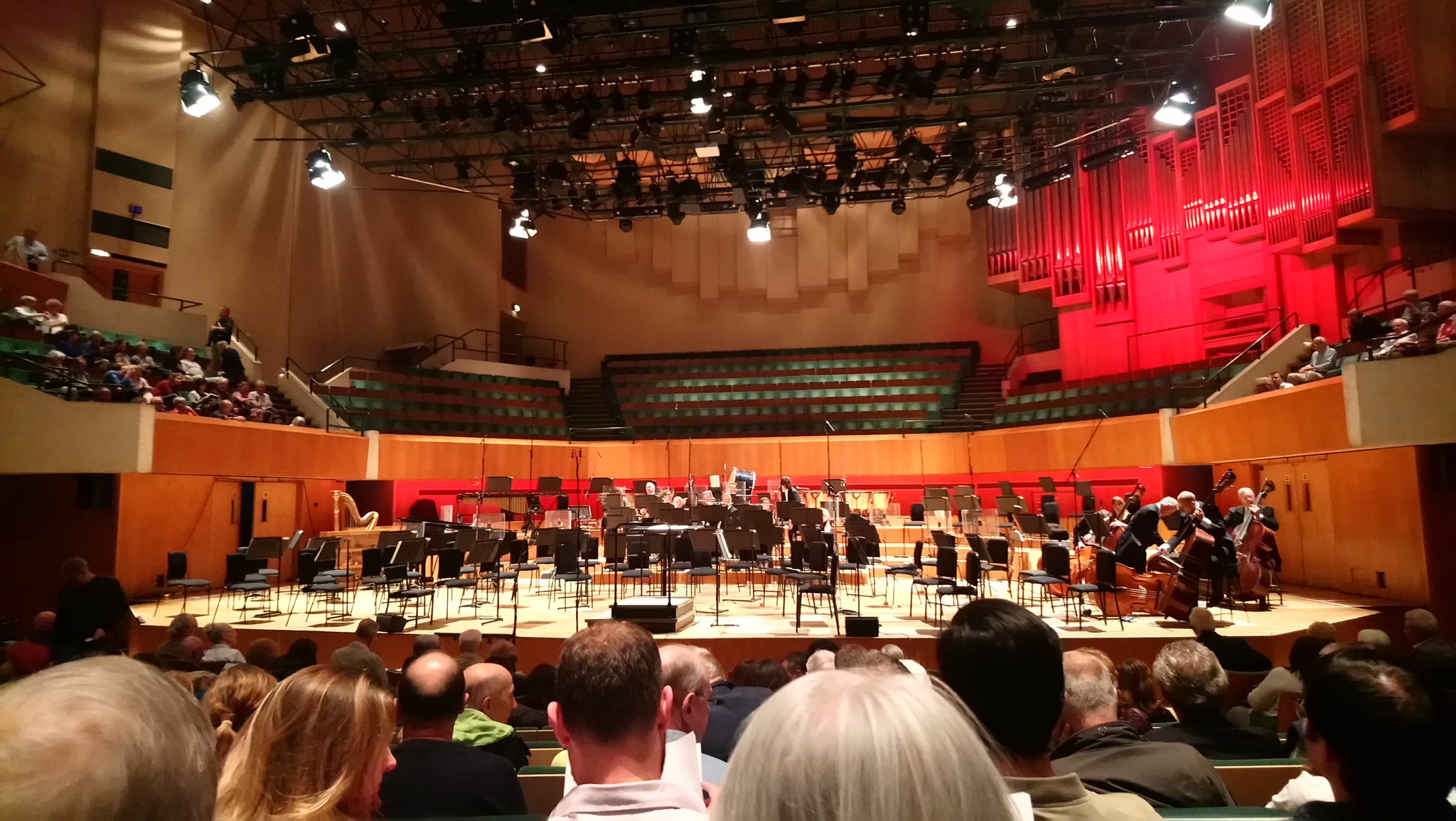
Anyway, it proved an excellent way to spend a Sunday afternoon. Gustav Mahler spoke of his Third Symphony as being “of such magnitude that it mirrors the whole world” and you can see what he was getting at by just looking at the scale of the forces arrayed on stage when it’s about to be performed live. For yesterday’s concert at St David’s Hall, the Cardiff Philharmonic Orchestra was augmented by the WNO Community Chorus and the Choristers of St David’s Metropolitan Cathedral Choir, as well as soloist mezzo soprano Kate Woolveridge.

The orchestra needed to perform this extravagant work is much larger than for a normal symphony, and it involves some unusual instrumentation: e.g. two harps, a contrabassoon, heaps of percussion (including tuned bells and double tympanists), etc. The string section was boosted by double-basses galore, and there’s also a part (for what I think was a flugelhorn) to be played offstage. The work is also extremely long, being spread over six movements of which the first is the longest (over 30 minutes). Yesterday the performance stretched to about 1 hour and 40 minutes overall, with no interval. I don’t know of any symphonic works longer than this, actually.

It’s worth pointing out that the orchestra and choir(s) tackling this immense work were non-professional. It’s also worth pointing out that the principal French Horn – who is given a lot to do in this piece – was none other than Dr Bernard Richardson, recently retired from the School of Physics & Astronomy at Cardiff University.

I have to admit I have always had lot of trouble getting to grips with the first movement, in which various themes are repeatedly played off against each other, punctuated by a series of extravagant crescendo passages in which the orchestra threatened to blow the roof off. It is, at times, thrilling but also manic and, to me, rather indecipherable. The second movement, in the form of a minuet, is elegant enough, and was beautifully played (especially by the strings), but in comparison with the wayward exuberance of the first movement it sounds rather conventional.

The third movement, however, is totally gorgeous, especially in the passages featuring the offstage flugelhorn (?) and the string section of the orchestra on stage. From this point this piece started to bring me under its spell. The solo vocalist and choir(s) were marvellous in the fourth and fifth movements, the former a setting of a poem by Nietzsche and the latter a mixture of traditional verse and Mahler’s own words, but it was in the majestic sixth and final movement that the orchestra really reached its peak. This is one of the most romantic movements to be found in all of Mahler, passionate, lyrical and supremely uplifting. At times before the sixth movement the orchestra (especially the brass) had struggled a bit with the demands of the score, but the finale was as good a performance as you’ll hear anywhere.

Mahler’s 3rd Symphony is an epic journey through a landscape filled with dramatic contrasts. At times you wonder where you are going, and sometimes feel in danger of getting completely lost, but by the time you arrive triumphantly at the final destination all those doubts had melted away. Congratulations to the Cardiff Philharmonic on a very fine performance, warmly received by the audience.

After the concert there was a collection on behalf of the Forget-Me-Not Chorus, which supports people with dementia and their families through weekly singing sessions. I think this is a great initiative and made a donation on the way out – if you feel like doing likewise you can do so here.

Well, that’s my concert-going at St David’s Hall over for another season. Indeed, it’s probably the last concert I’ll be attending there for the foreseeable future, as I’ll be relocating fully to Ireland this summer. I’ll have many fine memories of listening to music there.

Euclid 2018: Day 3

Posted in Biographical, Euclid, The Universe and Stuff with tags , , on June 14, 2018 by telescoper

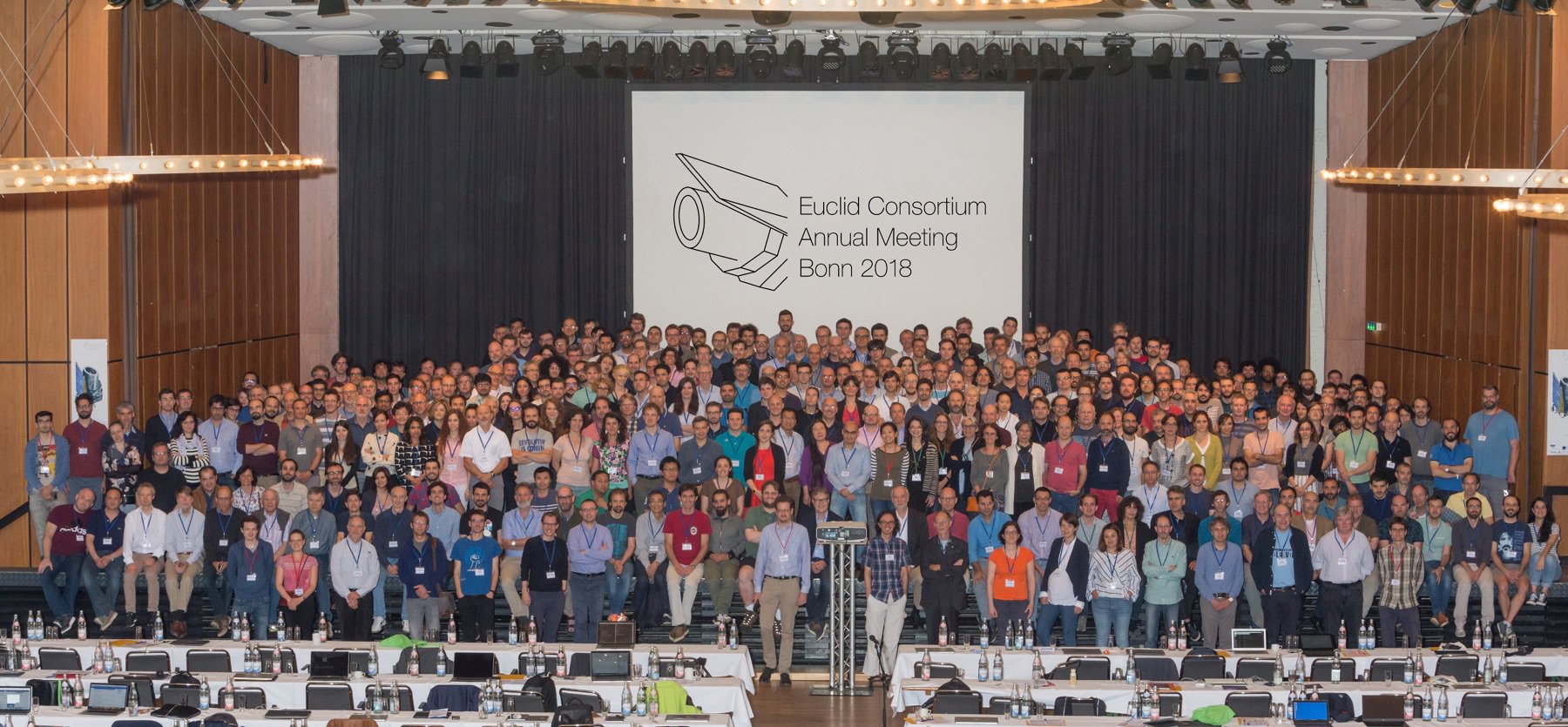
It’s the morning after the conference dinner the night before, so as Day 4 of the Euclid Consortium meeting gets under way I’ve just got the time and bandwidth to do a brief post about the events of yesterday. First of all, the conference photo arrived and is shown above. You’d be hard pressed to spot me in it, as there are a lot of people in it (and bear in mind that only about a quarter of the membership of the Euclid Consortium are actually present here in Bonn).

Yesterday I went to splinter meetings related to the working groups on cross-correlating Euclid with cosmic microwave background data (morning) and clusters of galaxies (afternoon). The latter session produced the following diagram, which makes everything clear:

After the day’s work was done I took a walk down to the western bank of the Rhine (just about 15 minutes’ walk from my hotel), on the way to the conference dinner at the . Sadly, I didn’t see any Rhine Maidens or find any gold to make into a ring.

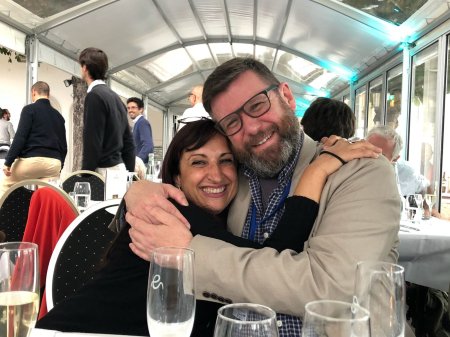
Anyway, the dinner was at the splendid Rhein Hotel Dreesen and I had the good fortune to sit with some Italian friends from way back – by which I mean over 20 years!

Fortunately I didn’t have far to go to get back to my hotel after the festivities!

Euclid2018: Highlights of Day 2

Posted in Biographical, Euclid, The Universe and Stuff with tags , , , on June 13, 2018 by telescoper

I’ve just had my breakfast so I thought I’d do a quick post before the start of play at Day 3 of the 2018 Euclid Consortium Meeting in Bonn.

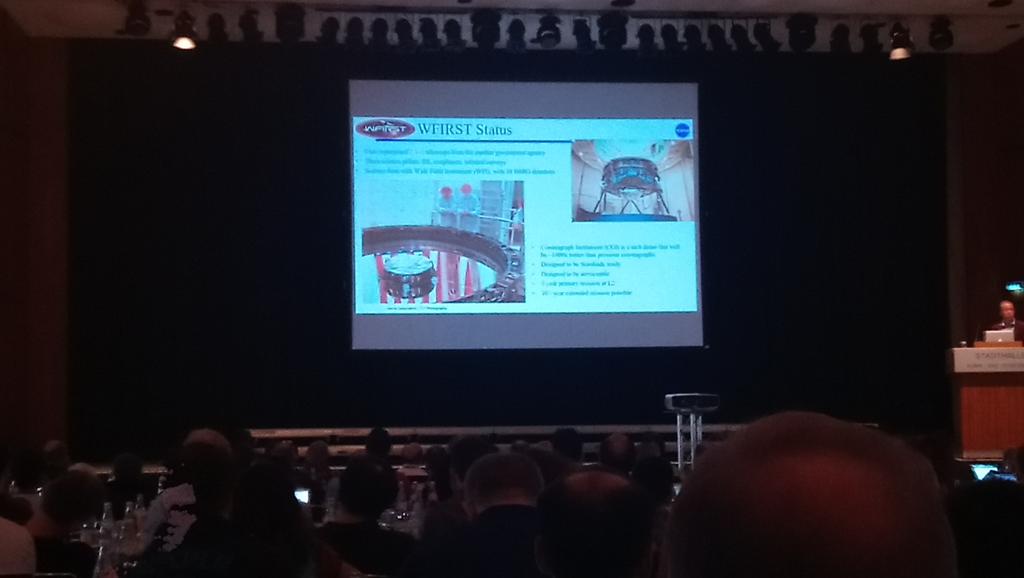
Day 2 was largely devoted to updates from the various Science Working Groups, but there was also an important presentation from Jason Rhodes about WFIRST, which is in some ways a rival to Euclid, or perhaps a complementary mission depending on how you look at it.


There was dismay in the global astronomy community last year when Donald Trump proposed taking the axe to WFIRST but it was good to hear that Congress not only reversed his decision but granted it additional funds over and above the original request.

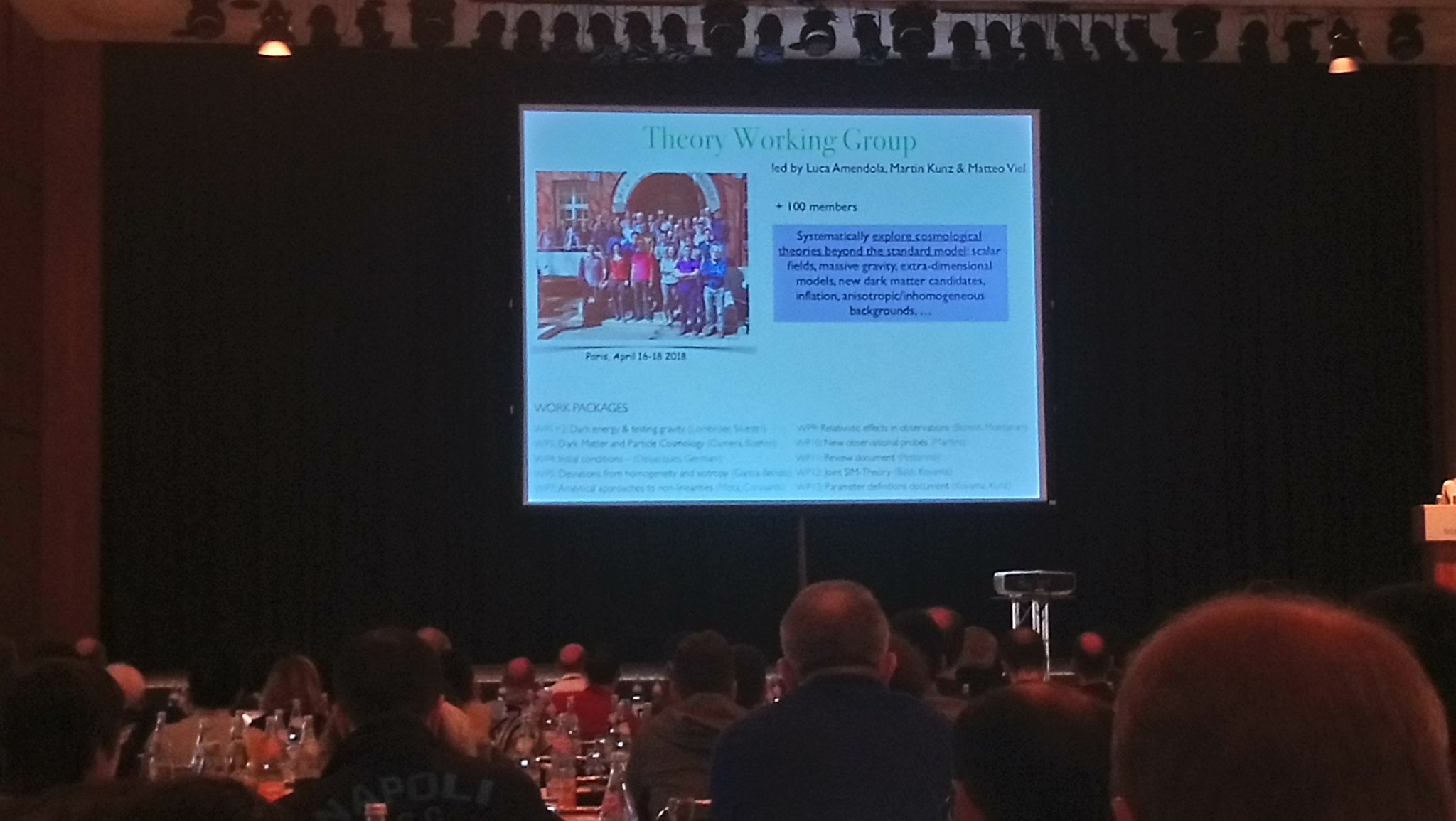
Among the SWG updates was one by Alessandra Silvestri from the Theory Working Group concentrating on how Euclid could be used to test cosmology beyond the standard model. She focussed quite a lot on Horndeski Gravity, which is the most general four-dimensional scalar-tensor theory that leads to equations of motion that have the form of second-order differential equations.

Towards the end of the day there was a session devoted to the award of the Euclid Star Prizes.

The individual awards went to Micaela Bagley, Carmelita Carbone, Teake Nutma, Bertrand Morin, and Stefanie Wachter; more details on the winners and the awards they won will be posted here. The team award was given to the Flagship simulation team. Coincidentally, I posted about the Flagship simulations last year. Much of the preparation for Euclid would be impossible without these simulations, and the award of a prize to the team is very well justified.

The day finished with short talks from each of the prizewinners. That brought to the end two days of plenary sessions in the big hall of the Stadthalle. The next two days will be the `Splinter sessions’ which are held in parallel.

Oh, and one other thing: the 2019 Euclid Consortium Meeting will be held in Helsinki from June 4-7. Looks like I’ll be spending my birthday in Finland next year!

P.S. Previous Euclid Consortium meetings were: Bologna (2011);  Copenhagen (2012); Leiden (2013); Marseille (2014);  Lausanne (2015); Lisbon (2016); and London (2017).

Bad Godesberg Goody Bag

Posted in Biographical, The Universe and Stuff with tags , , , , on June 12, 2018 by telescoper

So here I am, then, at the start of Day 2 of Euclid 2018 in Bad Godesberg. The morning session contains a number of talks giving updates from the various Science Working Groups related to Euclid. After yesterday’s talks had finished I checked into my hotel which is nice, and then headed off via the Stadtbahn (local underground system) to a pleasant reception of drinks and nibbles in the University of Bonn. I’m very impressed with the local public transport, by the way. With my hotel booking I received a pass giving free unlimited on all buses, trams, overground and underground trains in the area. I’ll post more about the meeting later if I get time, but in the meantime I thought I’d show the contents of the conference Goody Bag: I’ve got quite a collection of conference bags that I’ve accumulated over the years, but this is the first one I’ve got that’s a lurid green colour. There’s a mug and a bag of Haribo sweets (which, I’m told, originate in Bonn). There is also a book which I looked at last night. I found it rather lacking in both plot and character development, but that is largely attributable to the fact that all the pages are blank. The final item, which I originally thought was some form of specimen jar, turns out to be a glass for Kölsch, a kind of beer brewed in Cologne.
 

News from Euclid 2018

Posted in Biographical, Euclid, The Universe and Stuff on June 11, 2018 by telescoper

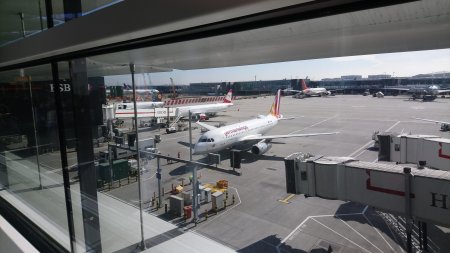
At the second attempt I managed to check in for my flight to Cologne (which is apparently near a place called) en route to Bonn for the Euclid 2018 Consortium Meeting.

I was mightily relieved when a plane actually arrived this time.

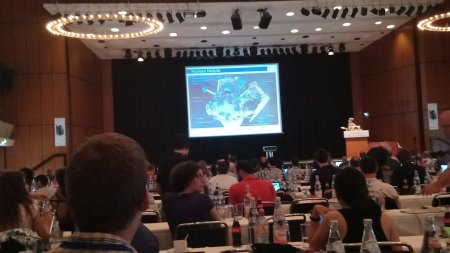
We got to our destination just about on time. I bumped into fellow Euclidean Tom Kitching in the airport and we made it to the conference venue in time for a spot of lunch, after which the afternoon session was kicked off by Mark Cropper:

I missed the morning session, during which the most important piece of news was an official announcement that the launch date of Euclid has been moved back from 2020 until 2022. This was not unexpected, and is largely driven by problems with on-board electronic system, but it will obviously impact the timetable of the mission significantly.

Since the flight of Euclid will be delayed for two years, I wonder which hotel it will be staying in at ESA’s expense?

Not Bad Godesberg

Posted in Biographical, Cricket with tags , , , , , , on June 10, 2018 by telescoper

Well, dear Readers, at this time I was supposed to be in Bad Godesberg, a municipal district of Bonn, in southern North Rhine-Westphalia in Germany for the 2018 Euclid Consortium Meeting which starts there tomorrow morning. To make sure I didn’t miss the opening sessions I booked a flight to Bonn/Cologne Airport from Heathrow at 8.50am today, and took the National Express Coach from Cardiff at 3.15am in order to make sure I arrived in good time for the flight.

Unfortunately, only 15 minutes after the Coach started on its way I got a text from the airline (a budget subsidiary of Lufthansa called `Eurowings’) had been cancelled. This was either to do with a strike of French Air Traffic Controllers or Thunderstorms; they never really got their story right. After a number of abortive attempts to rebook my flight using the coach’s wifi (e.g. to Frankfurt, whence by train to Bonn). I was advised that the system was overloaded and I should rebook at the airport.

Arriving at Heathrow Terminal 2 at 6.30, there was already a long line at the ticketing desk for Lufthansa/Eurowings. It got longer and longer as people arrived to find other flights had been cancelled too. When, after about 90 minutes in a queue, I finally got to a desk very few rebooking opportuninities were available, all of them involving silly routes (e.g. flying to Berlin, followed by a four and a half hour train trip to Bonn).

Exasperated, I suggested I could fly tomorrow instead if they offered to put me up in a hotel overnight. I didn’t fancy going back to Cardiff just so I could get up at stupid o’clock tomorrow to repeat the exercise. I’ll miss the first session of the meeting, but that’s not the end of the world.

So here I am, not in Bad Godesberg, but in the Holiday Inn at Heathrow Airport. I was booked in, given vouchers for lunch, dinner and breakfast tomorrow morning, and given two vouchers for the shuttle bus to and from Terminal 2. The hotel is characterless, but clean and the food is OK. I arrived about 10am and the room was available for me straight away, so I was able to catch up on a bit of sleep before watching most of Scotland’s memorable victory over England in today’s One Day International.

Now that I’ve had my free dinner (grilled Sea Bass) I am going to get some kip before getting up for my free breakfast and free trip back to the airport. The only question remains: will tomorrow’s flight be cancelled too?

BBC NOW: Tchaikovsky and Shostakovich at St David’s Hall

Posted in Biographical, Music with tags , , , , , on June 8, 2018 by telescoper

Last night I took my seat in St David’s Hall for a concert by the BBC National Orchestra of Wales under the direction of Principal Conductor Thomas Søndergård. It was an all-Russian menu, and very enjoyable it was.

The first course was the Violin Concerto by Pyotr Ilyich Tchaikovsky. It’s a familiar work but it was ravishingly played by Latvian soloist Baiba Skride, who seemed to revel in the virtuosic elements of this work, as well as bringing out the lyricism in the more romantic passages. The Orchestra were on top form too. I particularly enjoyed the way they dealt with the introduction of the famous `big tune’ in the first movement: brisker and with less of the tendency to wallow in it than you find in many performances.

Then, after the wine break, we had the main dish for the evening, the Symphony No. 5 by Dmitri Shostakovich. This is a very famous work and is perhaps the most accessible of all the Shostakovich symphonies. It was an immediate success with Soviet critics and public alike when it was first performed in 1937, and though it marked Shostakovich’s return to favour with the authorities after his denunciation by Stalin, this work has the composer’s very characteristic sense of things not being quite as they seem on the surface. Indeed, in this and many other of his compositions, he seems to manage to say one thing at the same time as saying the exact opposite of that thing; nowadays this might be called `constructive ambiguity’. This is especially in the finale, in which the sense of triumph is almost a parody of itself. Overall the Fifth Symphony is a sombre work, the dark undertone established right at the start with an imposing theme on the cellos and double basses, but it has passages of great beauty too, especially in the slow third movement. Like all great symphonies – and this is one of the greatest – it takes you on a journey full of of excitement and interest. The 45 minutes or so of this performance seemed to fly by, and its ending was greeted with rapturous applause and a standing ovation from many in the audience.

It’s interesting to consider that only 60 years had elapsed between the composition of these two pieces, but what different worlds they represent!

Anyway, the full strength National Orchestra of Wales, produced a gripping performance of this tremendous work with every section playing at the top of its form and the finale really brought the house down. But you don’t have to take my word for it – the whole concert will be broadcast on BBC Radio 3 next Tuesday, 12th June.

This concert is the last of the BBC National Orchestra of Wales season at St David’s Hall and indeed the last of at St David’s with Thomas Søndergård as Principal Conductor (though he will be conducting the Orchestra a couple of times at the Proms this summer). I wish him all the very best for his future musical adventures. It’s also the last concert by the BBC National Orchestra of Wales I’ll be attending before departing for Ireland. I don’t think I’ll get much chance to hear them after I’ve relocated, so let me take this opportunity to thank every single member of the Orchestra for the many performances I’ve enjoyed over the years, and to wish them well for the future.

Lá Saoire i mí Mheitheamh

Posted in Biographical, History, Maynooth, Uncategorized with tags , , , on June 4, 2018 by telescoper

So here I am, in Maynooth, on my birthday. I’ve made such an impression here in Ireland since I arrived that they’ve declared this day a national holiday so I’ve got the day off.

The June Bank Holiday (Lá Saoire i mí Mheitheamh) in Ireland is actually the equivalent of last week’s late May Bank Holiday in the UK, in that both have their origin in the old festival of Whitsuntide (or Pentecost) which falls on the 7th Sunday after Easter. Because the date of Easter moves around in the calendar so does Whit Sunday, but it is usually in late May or early June. When the authorities decided to fix a statutory holiday at this time of year, presumably to reduce administrative difficulties, the UK went for late May and Ireland for early June. Whit Sunday was actually on 20th May this year.

Incidentally, when I was a lad, ‘Whit Week’ was always referred to as ‘Race Week’. Geordie Ridley’s famous music hall song The Blaydon Races begins “I went to Blaydon Races, ’twas on the 9th of June, Eighteen Hundred and Sixty Two on a summer’s afternoon…”. Easter Sunday fell on 20th April in 1862, so Whit Sunday was on 8th June. After raucous scenes at the Blaydon Races, they were scrapped and replaced with a Temperance Festival on the Town Moor in Newcastle which evolved into one of the largest open-air funfairs in Europe, The Hoppings.

Anyway, with this birthday, I have now reached the minimum retirement age in the UK university pension scheme, so I could start drawing my pension when I leave Cardiff University next month. For a time I was planning to do that, but Ireland has given me a new lease of life, so to speak, so thoughts of retirement have receded.

Today also represents a short hiatus before our formal Exam Board meeting tomorrow, then I’ll be back in Cardiff for exam business there. And next week I’ll be in neither Cardiff nor Maynooth…

Maynooth Matters

Posted in Biographical, Education, Maynooth on May 31, 2018 by telescoper

Well, it’s another lovely day here in Maynooth and it feels even nicer that now that I’ve finished the stack of examination and project marking I had to do relating to the Computational Physics module I’ve been teaching for the past term.

I was feeling a bit guilty that I only just got the marks ready before today’s deadline, but it turns out that mine is far from being the last set to go into the database.

Tomorrow we have an internal meeting to discuss all the examination results and then on Tuesday next week we have the full formal meeting of the Exam Board complete with visiting External Examiner. It’s always a busy period preparing for these meetings as not only does everything have to be marked, but also all the marks need to be checked and double-checked, and various statistics produced ready for the forthcoming meetings. We take all these things very seriously because they’re so important.

I’m not sure students appreciate how much goes on behind the scenes at this time of year, but in this period they are finished with their academic work and probably out and about enjoying the sunshine. They were cooped up indoors sitting their examinations just a few days ago while we staff were in a state of comparative relaxation, and now it’s our turn to suffer.

Anyway, it’s at busy times of the year that we rely heavily on the efforts not only of administrative staff, without whom the whole business of examinations would grind to a halt. We rely on them all round the year, in fact, but their contribution is particularly obvious during exam season.

As it happens the Department of Theoretical Physics at Maynooth University will soon be losing an invaluable member of administrative staff who is retiring in a month or so. We have an advertisement already out for a (full-time) Executive Assistant with a deadline of 17th June to provide us with a replacement as soon as possible.

Anyway, Monday 4th June is a Bank Holiday in Ireland. It’s the equivalent holiday to the Late Spring Holiday in the UK (which is always on the last Monday of May), but here in the Emerald Isle it is always the first Monday in June. This year it happens to be on my birthday! So after the ordeal of tomorrow’s pre-Board meeting I have a long weekend to relax before the official meeting on Tuesday. I’m not sure if the fine weather will last, but I intend to do a bit of sightseeing if it does.

Peripheral Visions

Posted in Biographical, Mental Health with tags , , on May 29, 2018 by telescoper

A few days ago I came across the following video, and I thought I’d share it here for two reasons. The first reason is that you might find it surprising, possibly amusing and possibly also bit scary. Keep your eye on the cross in the centre of the screen and observe what happens to the faces either side:

Most people who I’ve shown this to report peculiar distortions of the (familiar) faces either side. This phenomenon is clearly related to the limitations of peripheral vision.

The second reason for posting this is much more personal and relates to my struggles over the years with a form of panic disorder (which I’ve blogged about before, e.g.,  here). The term `panic disorder’ has a very broad definition, so that different individuals experience different forms of panic attacks and they can also take very different forms for the same individual. For me, a “typical” panic episode begins with a  generalised feeling of apprehension or dread. Sometimes that’s as far as it goes. However, more often, there follows a period of increasingly heightened awareness of things moving  in my peripheral vision that I can’t keep track of,  accompanied by auditory and visual hallucinations.  I’ve tried to explain the latter in conversations with friends and colleagues and usually when I do so I describe how the faces of people around me become distorted in a grotesque and terrifying way. When that happens I usually run as fast as I can in whatever direction I can to get away.

On top of the effect of these attacks themselves, there is also the frustration, when they are over, of not really understanding what had happened. What is happening in my brain when a panic episode begins? What is going on with my peripheral vision when it goes awry like it does? Why do some particular places  or circumstances trigger an attack but other, apparently similar, ones don’t?

When I first saw the above video it struck me immediately that it might contain a big clue about these episodes, as the facial distortions that appear there are very similar to what I experience.  Perhaps what goes wrong is that peripheral vision takes over from central vision, i.e. a kind of opposite of tunnel vision,  as a result of some malfunction in the way my brain deals with peripheral data.

Most of the time we just discard data from outside our line-of-sight unless it’s something extremely dramatic and disturbing (whether good or bad); presumably we can’t process everything across our entire field of view so we usually filter out observations coming from the edges. What seems to happen with me is that something interferes with this filtering process so that almost everything gets flagged with a danger signal. My response to these is to look about manically trying to establish whether the threat is real before, usually, just getting out of there as quickly as I can when it becomes overwhelming.

Obviously, this isn’t a complete  answer to any of the many questions I’ve asked myself about this but somehow seeing the effect in the video makes me feel more comfortable with what happens because at least I can see that others can experience a similar phenomenon, even if in very different circumstances.

P.S.  I should say that although about two years ago I quit the medication I was taking to control them, I haven’t had any of these psychotic episodes since then. Reducing stress by leaving my job at Sussex was almost certainly a contributing factor.