Archive for the Biographical Category

Happy Retirement, Sally Church!

Posted in Biographical, Brighton with tags , , on April 28, 2016 by telescoper

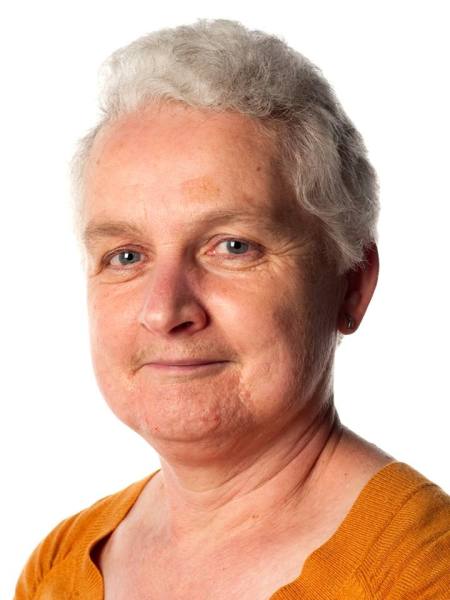
Today marks the end of an era for the Department of Physics and Astronomy at the University of Sussex. Sally Church, pictured below, is retiring today after over 27 years in the Department (and almost 29 in the University). No doubt there are many readers of this blog who have passed through Sussex at one time or another and met Sally. In fact, she arrived in the Department when I was here in a previous incarnation as a PhD student in the late Eighties and was still here when I returned in 2013 as Head of School. She recently received a long service award from the University in recognition of her loyalty and hard work.

Sally Church

Sally has been our Course Coordinator for Physics and Astronomy and, as such, has been a key member of our office team, providing administrative support for a huge range of teaching and other activities. She will be extremely hard to replace as her understanding of the University’s systems and procedures is second to none, but she’s definitely earned a rest and on behalf of everyone in the Department, the School and the University as a whole I wish her a very happy retirement!

P.S. Shortly, at 2.30pm, there’s going to be a farewell gathering, with speeches and gifts, at which I hope to take a few pictures which I’ll post here later.

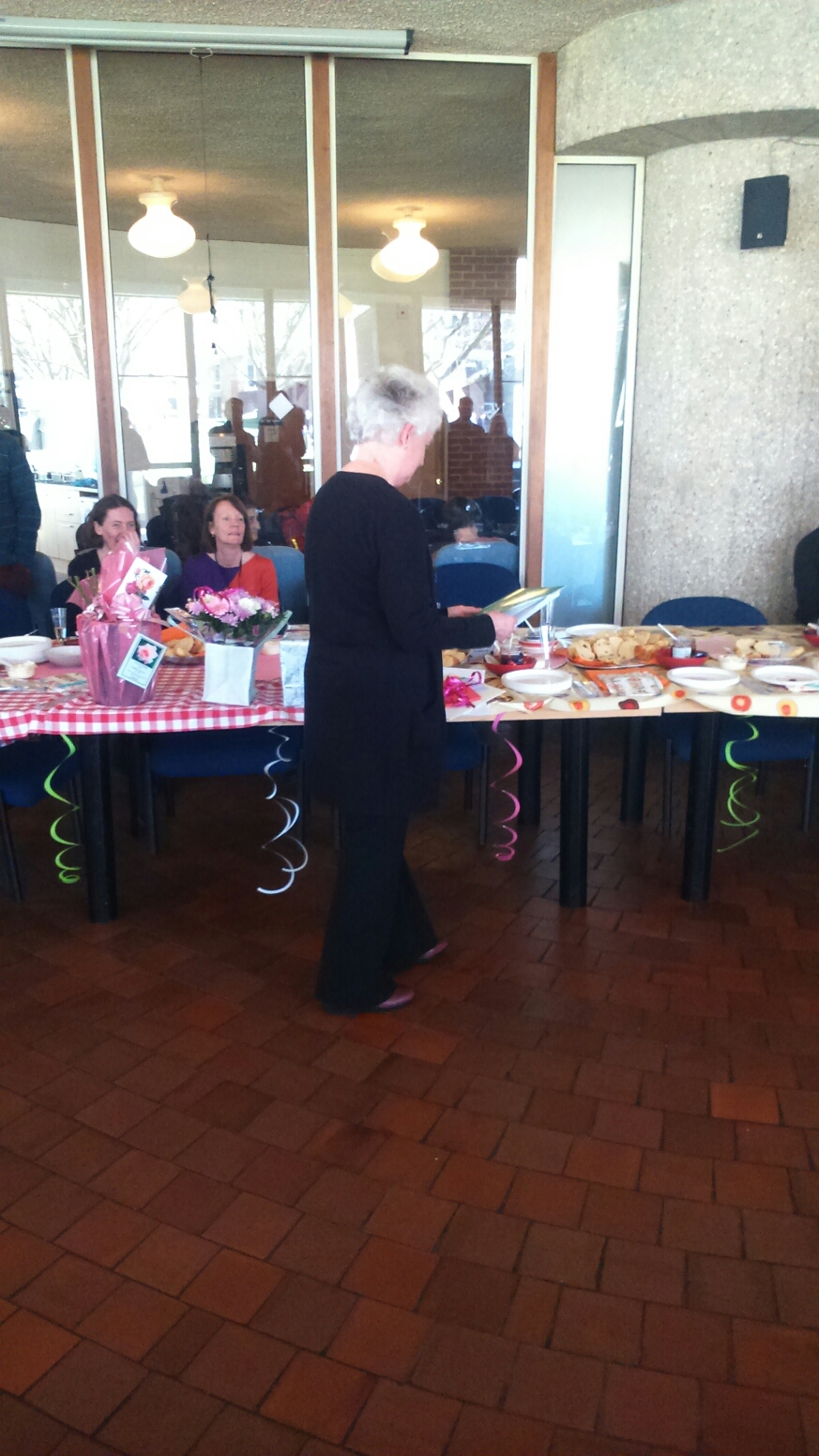
P.P.S. I only had time to take one picture, but here is Sally opening some of her gifts among the remains of the cakes and scones…

image

What’s the point of ResearchGate?

Posted in Biographical, The Universe and Stuff with tags on April 26, 2016 by telescoper

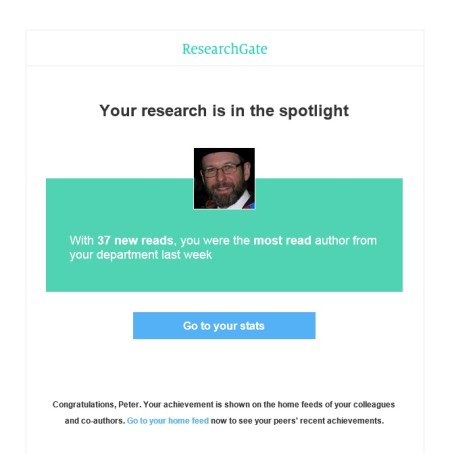
Some years ago, in a moment of weakness, I joined a website called ResearchGate. I’m not sure why, but it seemed a good idea at the time. I don’t visit the actual site very often, but it does send me large numbers of emails. Normally about things I’m not particularly interested in or asking me if I’m an author of a paper about biochemistry they’ve found somewhere on the net. Once a week I get one like this:

ResearchGate

I get a similar one every week without fail. It’s always flattering to be thought of as being in the spotlight, but the obvious inference to be made from the fact that I get such a message every week is that I am the only person in the Department silly enough to have joined ResearchGate.

Has anyone out there joined ResearchGate and found it worthwhile? Maybe there’s something worthwhile about it?

Do tell.

Nothing Compares

Posted in Biographical, Music with tags , , on April 25, 2016 by telescoper

For some reason I just remembered this morning that a song that is full of nostalgia for me was written by Prince, who died last week. The version I still have on vinyl was a huge hit for Sinead O’Connor in 1990:

Incidentally, I once saw Sinead O’Connor in person at the Zap Club in Brighton during my previous incarnation here as a research student and postdoc. I literally bumped into her trying to get to the bar to buy a drink. When she turned around I was staggered to see such a beautiful face looking at me, although to be honest I did for a moment assume she was a boy. It was, I should explain, a gay night at the club. Fortunately she was very nice and friendly and forgave my clumsiness with a gracious smile.

There aren’t many any other pop videos done like this, almost entirely in close-up. Can anyone think of any others?


In Praise of Natural Sciences

Posted in Biographical, Education with tags , , , , on April 24, 2016 by telescoper

The other day I was chatting with some students in the Department of Physics & Astronomy at the University of Sussex. One thing that came up was the fact that I’m basing the material for my Second Year Theoretical Physics module on the notes I took when I was a second-year undergraduate student at Cambridge over thirty years ago. I mentioned that to counter suggestions that are often made that the physics curriculum has been excessively “dumbed down” over the years. It may have been elsewhere, of course, but not on my watch. In fact, despite the misfortune of having me as a lecturer, many of the students in my class are picking up things far faster than I did when I was their age!

Anyway, that led to a general discussion of the changing nature of university education. One point was that in my day there weren’t any four-year “Integrated Masters” degrees, just plain three-year Bachelors. Teaching was therefore a bit more compressed than it is now, especially at Cambridge with its shorter teaching terms. We teach in two 12-week blocks here at Sussex. Week 11 of the Spring Term is about to start so we’re nearing the finishing line for this academic year and soon the examinations will be upon us.

The other thing that proved an interesting point of discussion was that the degree programme that I took was the Natural Sciences Tripos That meant that I did a very general first year comprising four different elements that could be chosen flexibly. I quickly settled on Physics, Chemistry and  Mathematics for Natural Sciences to reflect my A-level results but was struggling for the fourth. In the end I picked the one that seemed most like Physics, a course called Crystalline Materials. I didn’t like that at all, and wish I’d done some Biology instead – Biology of Cells and Biology of Organisms were both options – or even Geology, but I stuck with it for the first year.

Having to do such a wide range of subjects was very challenging. The timetable was densely packed and the pace was considerable. In the second year, however, I was able to focus on Mathematics and Physics and although it was still intense it was a bit more focussed. I ended up doing Theoretical Physics in my final year, including a theory project.

My best teacher at School, Dr Geoeff Swinden,  was a chemist (he had a doctorate in organic chemistry from Oxford University) and when I went to Cambridge I fully expected to specialise in Chemistry rather tha Physics. I loved the curly arrows and all that. But two things changed. One was that I found the Physics content of the first year far more interesting – and the lecturers and tutors far more inspiring – than Chemistry, and the other was that my considerable ineptitude at practical work made me doubt that I had a future in a chemistry laboratory. And so it came to pass that I switched allegiance to Physics, a decision I am very glad I made. It was only towards the end of my degree that I started to take Astrophysics seriously as a possible specialism, but that’s another story.

As we are now approaching examination season I’ve been dealing with some matters in my role as External Examiner for Natural Sciences (Physics) at Cambridge, a position I have held since last year. It’s certaintly extremely interesting to see things from the other side of the fence, thirty years on since my finals. In particular I was struck last year by how many senior physicists there are at Cambridge who actually came as undergraduates expecting, like I did, to do Chemistry but also then switched. No doubt some moved in the opposite direction too, but the point is that the system not only allowed this but positively encouraged it.

Looking back, I think  there were great educational advantages in delaying  the choice of speciality the way a Natural Sciences degree did. New students usually have very little idea how different the subject is at university compared to A-level, so it seems unfair to lock them into a programme from Year 1. Moreover – and this struck me particularly talking to current students last week – a Natural Sciences programme might well prove a way of addressing the gender imbalance in physics by allowing female students (who might have been put off Physics at school) to gravitate towards it. Only 20% of the students who take Physics A-level are female, and that’s roughly the same mix that we find in the undergraduate population. How many more might opt for Physics after taking a general first year?

Another advantage of this kind of degree is that it gives scientists a good grounding in  a range of subjects. In the long run this could encourage greater levels of interdisciplinary thinking. This is important, since some of the most exciting areas of physics research lie at the interfaces with, e.g. chemistry and biology. Unfortunately, adminstrative structures often create barriers that deter such cross-disciplinary activities.


Public Statement

Posted in Biographical, Books, Talks and Reviews on April 20, 2016 by telescoper

As a prominent public figure and in the interests of transparency and accountability I hereby publish my latest Royalty statement.

image

This is of course just a high-level summary. Subsequent pages give a more detailed breakdown.

I hope this clarifies the situation.

The 2016 Brighton Marathon

Posted in Biographical, Brighton with tags , , on April 17, 2016 by telescoper

Normally when I’m in Brighton on a Sunday I spent most of the day in my office in the School of Mathematical and Physical Sciences at the University of Sussex trying to keep the backlog of work under control. However, this morning buses to and from Falmer were disrupted by the 2016 Brighton Marathon so I decided to have a lie in, catch a bit of the action, and postpone coming up to campus until lunchtime.

I didn’t leave my flat until almost noon, and felt a bit guilty as I put a load of empty wine bottles into the communal recycling bin as runners laboured past on Marine Parade, the main road along the seafront on the eastern side of Brighton, where I live. Runners pass along Marine Parade at the end of my street twice, once at 6 miles heading East and then again at about 13 miles heading West. By the time I got there there were only people on the return part, and given the time these were mainly charity and fun runners:

Brighton Marathon_2

At thirteen miles the expression on quite a few faces was one of “Oh shit, I’m only halfway!”. Still, the weather was good for running: sunny but not too hot, and an occasional cooling breeze. I’d guess it never got hotter than about 10 degrees.

The marathon route is quite a strange one that doubles back on itself quite a few times:

marathon Course map 2016 AW 600

Anyway, proceeding in a westerly direction I found myself looking down from a point on Marine Parade near the finish line; the finish itself is at sea level. The elite race had finished by the time I got there but I saw quite a few runners chasing a sub-three hour time, some successfully and some not.

At bout three hours and fifteen minutes, when I took this picture, the frequency of arrivals had started to pick up and the crowd of spectators was increasing steadily.

Brighton Marathon

After about 3 hours and 30 minutes we were into the pack of less experienced runners, some of whom were definitely struggling at the end. I saw one chap whose legs had completely gone about 200 yards from the line. The crowd were giving as much vocal encouragement as they could, but he was out on his feet. Fortunately a steward realised he was in severe difficulty and helped him to the line. There was a huge cheer when he reached the finish, and medical assistance was promptly delivered.

I have run a few marathons in my life. I wish I could have carried on doing them, but my old knees won’t let me. There’s a great camaraderie amongst the runners and lots of support from the crowd, not to mention the huge amount of money raised for charity.

I’m writing this at 2.15pm, which is five hours from the start, and there’s probably quite a few still running. Congratulations to all those who finish. It’s a great experience running a marathon, but it feels even better when you stop!

Blog Paper

Posted in Biographical, The Universe and Stuff with tags , , on April 12, 2016 by telescoper

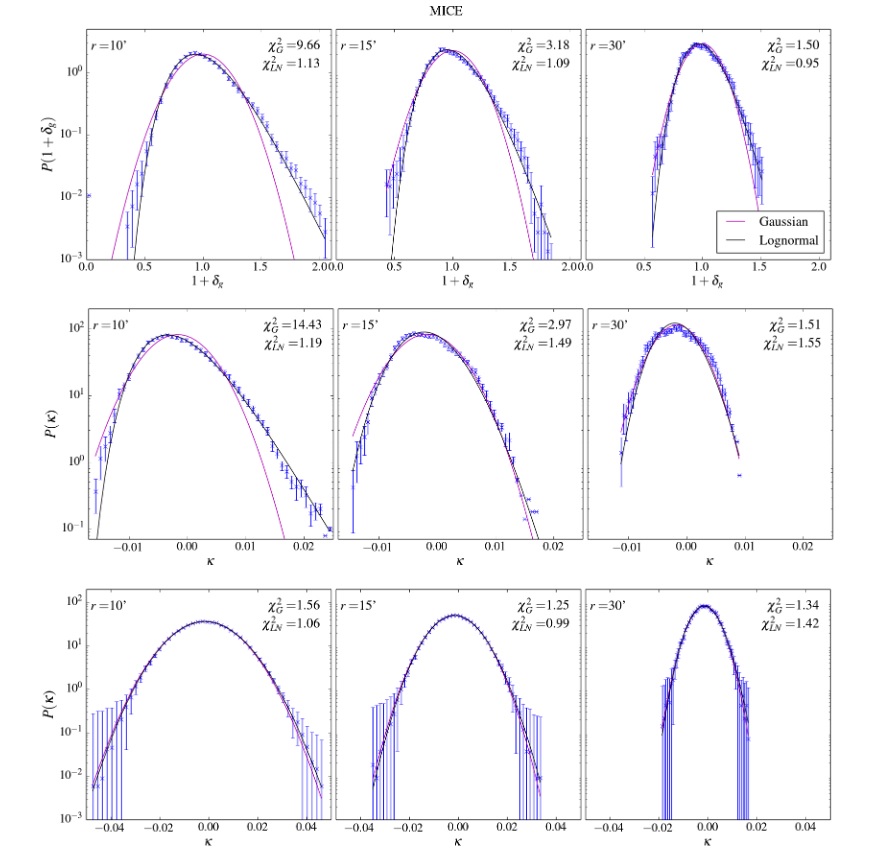
I don’t often blog about my own research. To be honest that’s partly because I don’t get much time to do any. Fortunately, however, I have an excellent postdoctoral research assistant (Dipak) and some excellent collaborators. Anyway, I just heard yesterday that the following paper has been accepted for publication in the Journal of Cosmology and Astroparticle Physics (JCAP):

Munshi

It’s not exactly a light read – it’s 32 pages long – but at least it gives the non-cosmology readers of this blog an idea of my research interests. Hopefully it won’t be too long before we can apply techniques such as those described in the above paper to real data!

Hopefully also in future I’ll be able to persuade my co-authors to submit to the Open Journal of Astrophysics!

Farewell, Independent, and thanks for all the dictionaries..

Posted in Biographical, Crosswords, Uncategorized with tags , , , , , on March 30, 2016 by telescoper

I thought I’d resume blogging activity rather gently with a short post to mark the end of an era. Both the Independent and the Independent on Sunday have ceased to exist, at least in their print editions.  It was about three years ago that I switched from the Observer to the Independent on Sunday, which involved switching from the Azed cryptic crossword to Beelzebub for my most testing weekly crossword challenge. I stopped doing the Saturday Prize Cryptic puzzle in the Saturday Guardian too, in favour of the Independent Saturday Prize crossword in the Independent which immediately paid dividends in terms of prizes!

For crossword aficianados both the Azed and Beelzebub crosswords are composed by strict adherents of the rules set by the great Ximenes and both feature grids with no black squares, in contrast to the more normal Everyman puzzle. Jonathan Crowther, who sets the Azed puzzles is the successor to Ximenes in the Observer; he’s been setting puzzles there since 1971.

Anyway, the last Independent on Sunday was published on Sunday 20th March and it included a list of the winners of the last two Beelzebub puzzles; the very final one was No. 1,358:

Beelzebub

It’s a nice way to mark the end of an era! One last dictionary to add to the collection. I’ve completely lost track of the number of books of words I’ve won from the weekly puzzles in the Independent, but it’s certainly more than 50. I’ve given many away but there’s still a large stack in Dorothy’s office.

Anyway, I spent some of my Easter weekend off doing the Guardian  prize crossword (extra-large size, but quite easy) followed by Everyman and Azed in the Observer. I guess that’s my diet from now on…


LIGO at the Royal Astronomical Society

Posted in Biographical, The Universe and Stuff with tags , , on February 12, 2016 by telescoper

image

My monthly trip to London for the Royal Astronomical Society Meeting allowed me not only to get out of the office for the day but also to attend a nice talk by Alberto Vecchio about yesterday’s amazing results.

I hear that we will be having champagne at the club later on to celebrate. In the meantime here’s a little Haiku I wrote on the theme:

Two black holes collide
A billion years ago.
LIGO feels the strain.

Out in STEM at the Royal Society

Posted in Biographical, LGBTQ+ with tags , , , on February 10, 2016 by telescoper

Last night I attended a very enjoyable meeting at the Royal Society in London called Out in STEM. In the 356 years that the Royal Society has been in existence this is the first event that has been devoted to a discussion of LGBT+ matters, so I feel honoured not only to have been present but to have been one of the panellists invited to start off the evening by talking about the question:

“Choosing to be out in the workplace or when studying – what influences that choice?”

In my five-minute answer to this I talked about my own personal decision to be open about my sexuality when I started as a research student at the University of Sussex way back in 1985. In fact, three of the nine panellists as well as a number of other participants did their doctorates at the University of Sussex, an institution has clearly been a kind of incubator of LGBT scientists and engineers! My decision was heavily influenced by the events of the time, chiefly the ongoing AIDS crisis and the infamous Section 28. I felt at the time that it was necessary to stand up and be counted in the face of so much prejudice, a decision which I have never regretted.

Having never really been “in” for my whole research career, coming out wasn’t really an issue for me and I have been openly at every insitution I have worked in – Sussex, Queen Mary, Nottingham and Cardiff. Although I have encounted some isolated examples of unpleasantness, I can’t say that my career has suffered any adverse consequences.

Getting back to the question, I think what influences the choice is a combination of personal factors and the environment of the institution in question. For early career researchers, the choice – and it should always be a choice – can be affected by the perception that one’s career depends on the patronage of persons higher up the hierarchy, be that PhD supervisor, research group leader or departmental head. The less hierarchical the department is, the less likely one is to feel suffocated by the need to conform. It also helps if senior managers make it clear that any bullying or harassment associated with sexual identity or other personal characteristics will not be tolerated. I have tried hard to create such an environment in the School of Mathematical and Physical Sciences, of which I am now the Head. I’ll leave it to others to judge whether or not I have succeeded.

In fact none of the nine panellists described any major adverse consequences of the decision to come out either, but stressed how positive it can be to feel liberated by being open about who you are.

After the nine short answers to the above question, we split up into small groups and discussed other questions. I enjoyed this part very much because the discussion was relaxed and wide-ranging. One theme that ran through many of the responses when groups were asked to feed back a summary of their deliberations was what a big difference it can make to have an LGBT staff network. I am proud to have played a role in the creation of such a network at the University of Sussex, although I am still saddened that it has taken so long for this institution to create one. I am also glad to say that the Institute of Physics is setting up an LGBT network of its own, with a particular emphasis on early career researchers, for whom the sense of isolation that is often involved in working on short-term contracts in highly competitive field can be exacerbated by the perceived need to conceal important aspect of their private life.

Once the discussion session was over we adjourned for wine and canapés, and informal chats. That was extremely pleasant, although I did perhaps have a bit too much wine before I dashed off to catch the train back to Brighton.

It was particularly nice to meet in person some of the people I’d previously known only through social media. I also met an old friend from my previous incarnation at Sussex, Tom Welton, who is now Dean for Natural Sciences at Imperial College. I haven’t seen Tom for over 20 years, actually. I hope we’ll be able to meet up again before too long.

Anyway, I’d like to thank the Royal Society for putting on this event, and especially to Lena Cumberbatch who did a lot of the organizing as well as trying to keep the panellists to time. I enjoyed it greatly and look forward to working with them again. I hope it’s not another 356 years until the next Out in STEM event!