Archive for the Biographical Category

The Origin of Mass

Posted in Biographical with tags on July 21, 2014 by telescoper

Back in Cardiff for the weekend I was looking for some documents and stumbled across this, my National Health Service Baby Weight Card (vintage 1963). I’m told that I even lost a bit of weight between my birth and the first entry on the card:

Birth_weight

Aside from my considerable mass two further facts about my birth are worth mentioning. One is that I emerged in the incorrect polarization state, with shoulders East-West instead of North-South; the result of this was that my left collarbone was broken during the delivery. I imagine this wasn’t exactly a comfortable experience for my mother either! I subsequently broke the same collarbone falling off a wall when I was a toddler and it never healed properly, hence I can’t rotate my left arm. If I try to do the front crawl when swimming I go around in circles! The other noteworthy fact of my birth was that when I was finally extricated I was found to be completely covered in hair, like a monkey…

IAU Symposium 308 – Conference Photo Caption Competition

Posted in Beards, Biographical, The Universe and Stuff with tags , , on July 16, 2014 by telescoper

Regular readers of this blog (Sid and Doris Bonkers) will recall that I recently attended IAU Symposium No. 308 in Tallinn, Estonia. To prove that I didn’t make it all up, here is the official conference photograph.

iau308 conference_photo 1 lres

You can see me three rows back on the right-hand-side of the picture; you can click on the image to make it largely should you wish. Behind me and to my left as I look at the camera you will see the esteemed cosmologist Carlos Frenk wearing an unusual facial expression.

I wonder if anyone might like to suggest an explanation for Prof. Frenk’s behaviour by way of a suitable caption for the photograph?

Awards Day at West Dean College

Posted in Art, Biographical, Education with tags , , , , , , on July 13, 2014 by telescoper

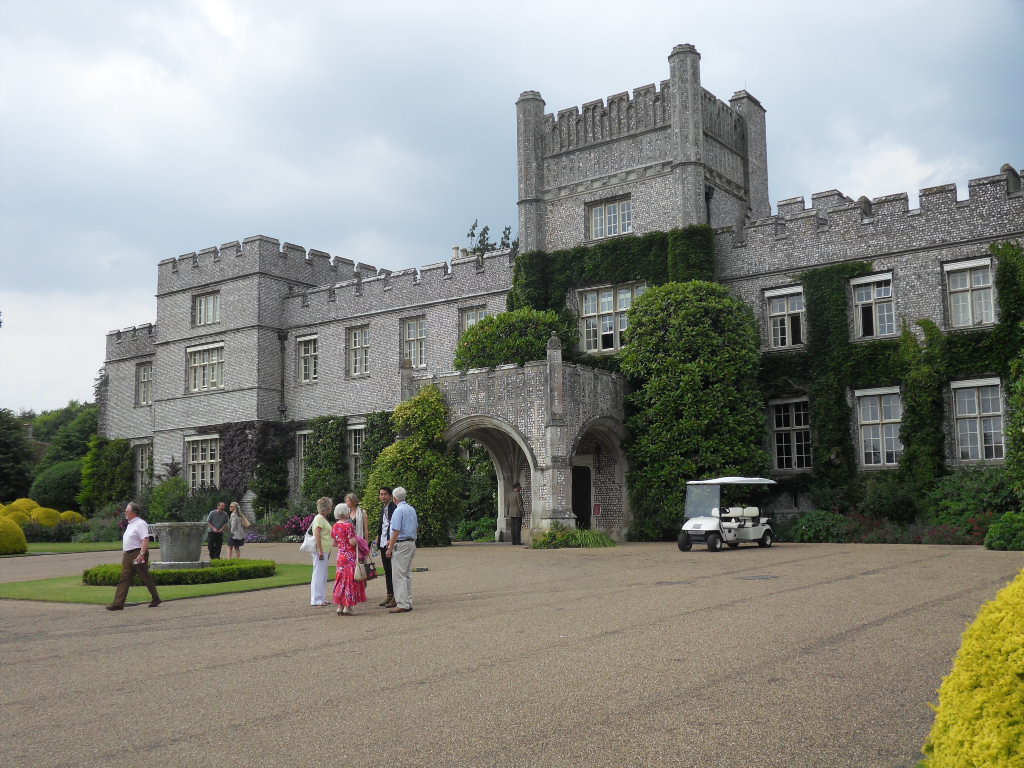
Last week was a very busy week at the University of Sussex (including the Graduation Ceremony for students in the School of Mathematical and Physical Sciences), and yesterday (Saturday) saw me attending another event on quasi-official business, this time at West Dean College, which is situated in West Sussex, a few miles North of Chichester.

The occasion for my visit there was Awards Day at the college, and I got the chance to go because one of our Pro-Vice Chancellors was unable to attend so I volunteered to go in her place. I didn’t know much about the College before yesterday, except that it is one of several institutions whose degree programmes are validated by the University of Sussex.

In fact, the College provides MA degrees, diplomas and short courses for students of all abilities, from the beginner to the advanced professional practitioner across a wide range of creative arts, design and conservation (including rare and old books, furniture, and clocks).  The various degree certificates, diplomas and other prizes were handed out to students of all ages, which was great to see. Before I go on I just like to congratulate them all again on their wonderful achievements, especially those creative arts students whose work we were able to view after the ceremony including prize-winning sculptures by Lotti V Closs. I even made a discreet inquiry about whether it was possible to buy some of the pieces…

Anyway, West Dean College is based in West Dean House, part of an ancient estate that was eventually inherited by the poet Edward James, a notable patron of the arts particularly famous for his support of the surrealist movement. The house was extensively modified during the late around about the turn of the twentieth century which presumably accounts for the distinctive arts-and-crafts look of some of the exterior.

SAMSUNG DIGITAL CAMERA

The house is surrounded by an estate of 6000 acres in beautiful countryside. Ownership of the house, the estate and the art collection housed therein was transferred to the Edward James Foundation, a charitable educational trust, in 1964.

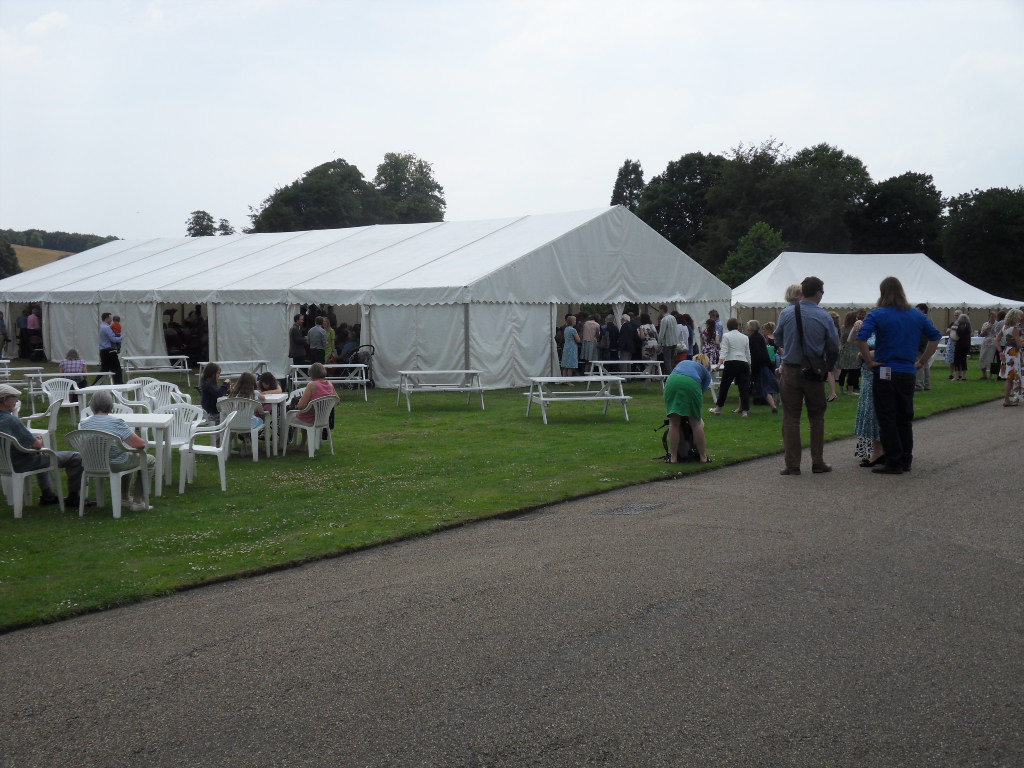
Many sheep were in attendance, although they didn’t come to the actual ceremony. To be honest, it was a much grander setting than I’d imagined it would be. In fact I think the last time I saw a place like West Dean House it was the site of a Country House Murder during an episode of Midsomer Murders or some such. The awards ceremony was held held in a Marquee on the lawns which, in the muggy weather, was a little uncomfortable though the programmes came in very useful as fans. Fortunately it all passed off peacefully without any murders although I did see a large group of crows in the fields, if that counts.

SAMSUNG DIGITAL CAMERA

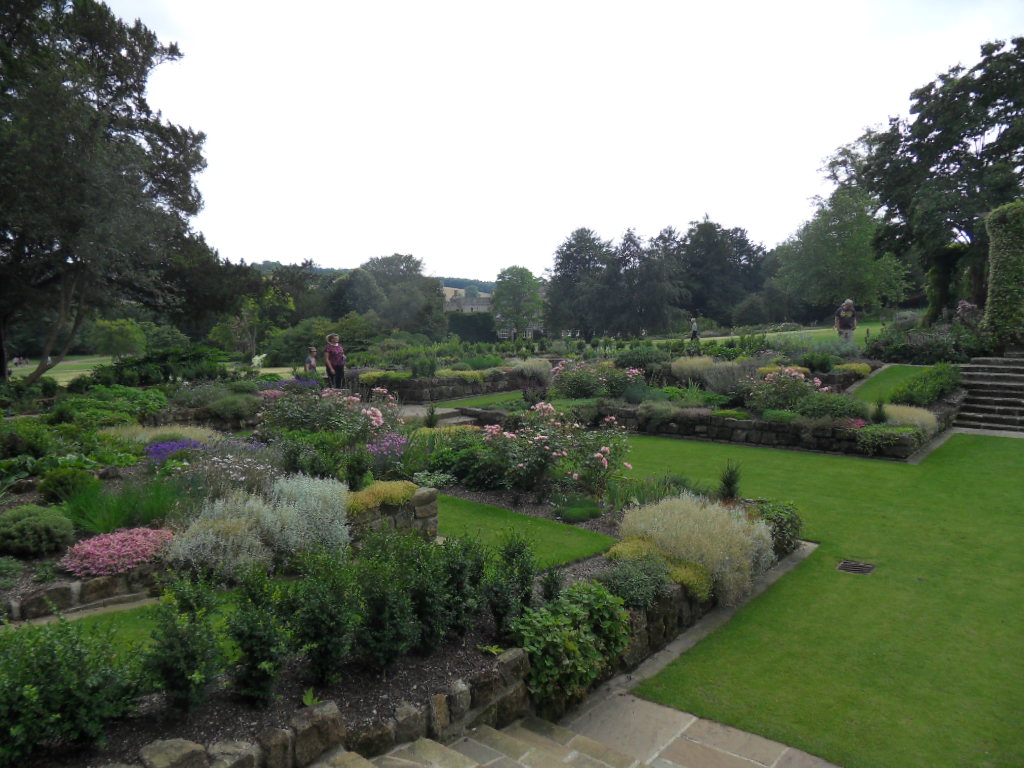
The manner of my arrival was much less grand than the location seemed to require. I took the train from Brighton to Chichester and then got a bus to West Dean. Being about half an hour early for the kickoff, I had time to walk around the grounds of the house. There’s a beautiful walled garden with many lovely flowers.

SAMSUNG DIGITAL CAMERA

I recognized  Crocosmia Lucifer and Phlox among the following..

SAMSUNG DIGITAL CAMERASAMSUNG DIGITAL CAMERASAMSUNG DIGITAL CAMERASAMSUNG DIGITAL CAMERASAMSUNG DIGITAL CAMERA

These curious but beautiful lantern-shaped flowers evidently belong to some type of lily, but I don’t know what kind. Any offers? (UPDATE: I am reliably informed that these are examples of Erythronium Pagoda
..)

SAMSUNG DIGITAL CAMERA

The walled garden is just one small part of the estate, which also comprises workshops and studios used by the students, a very nice dining room and bar area plus rooms for meetings and conferences. I enjoyed a quick tour of the facilities after the Awards Ceremony, but must go back some other time to have a proper look. The other gardens are fine too:

SAMSUNG DIGITAL CAMERA

And this pergola would put most garden varieties to shame!

SAMSUNG DIGITAL CAMERA

Anyway, since one of the Prizes presented yesterday was for blogging about conservation, I couldn’t resist advertising the West Dean College blogs. They have two, in fact, one for Conservation (here) and one for Visual Arts (here). These are both hosted on wordpress platforms, so if you’re following this blog on WordPress why not give them a follow too?

Commemorations

Posted in Biographical, Football, History with tags , , , , , , on July 9, 2014 by telescoper

This is a busy week in many ways and for many reasons, but the main activity revolves around Graduation at the University of Sussex. There are 7 ceremonies this week altogether; my School (Mathematical and Physical Sciences) is No. 4, which takes place tomorrow morning (Thursday).

Things are going to be a bit different this year. The Chancellor of the University, Sanjeev Bhaskar, is unable to preside owing to prior commitments (filming episodes of Doctor Who in Cardiff). This is sad because his informality and sense of humour usually brings an enormous amount to such occasions. After much discussion and debate it was eventually decided (on Monday) that the normal order of ceremonies would be changed so that the Head of the graduating School would stand in the centre of the platform, where the Chancellor would normally be situated, in order to shake hands with (and generally congratulate) the graduands as their names are read out and they cross the stage. Normally the Head of School simply reads out the list of names from a podium at one side, so it will be nice to be a bit more involved, although doubt that there will be as many students wanting to take selfies with me as there would have been had Sanjeev been there!

I also have the honour to present an honorary graduate at the ceremony, but I’ll probably say more about that in a future post.

This is a special graduation week for another reason too. It’s now fifty years since the first University of Sussex graduation ceremony in 1964. The University only received its Royal Charter in 1961 and there were only 38 graduates at the first ceremony. This week about 3000 will cross the stage.

Anyway, last night there was a special Commemoration Dinner to mark the 50th Anniversary in the Dining Room of Brighton Pavilion:

Brighton_Pavilion_Dining_room

The decor is a little understated for my tastes, but apart from that it was a splendid occasion. We didn’t sit at the central table, which is covered with period crockery and cutlery, and was roped off; we sat at smaller tables situated in the space around it. Owing to some sort of administrative error I was accidentally seated at a Table 1, along with a host of important people and the Vice-Chancellor. This turned out well for me as I was seated near Asa Briggs (now Lord Briggs) a famous historian who was the second Vice-Chancellor of the University. He’s now 93 years young and a bit frail but wonderfully interesting conversation ensued. The opportunity to talk to a true Sussex legend added to the fine food and wine to make for a wonderful evening.

There’s another point worth commemorating in the light of the forthcoming centenary of the start of the First World War. One thing I didn’t know before this week was that during World War 1, Brighton Pavilion was commandeered for use as a hospital for wounded soldiers, many of them from India. In fact, the first ever recipient of the Victoria Cross from the British Indian Army, Khudadad Khan, recovered there from wounds sustained in action in Belgium in 1914:

In October 1914, the Germans launched a major offensive in northern Belgium, in order to capture the vital ports of Boulogne in France and Nieuport in Belgium. In what came to be known as the First Battle of Ypres, the newly arrived 129th Baluchis were rushed to the frontline to support the hard-pressed British troops. On 31 October, two companies of the Baluchis bore the brunt of the main German attack near the village of Gheluvelt in Hollebeke Sector. The out-numbered Baluchis fought gallantly but were overwhelmed after suffering heavy casualties. Sepoy Khudadad Khan’s machine-gun team, along with one other, kept their guns in action throughout the day; preventing the Germans from making the final breakthrough. The other gun was disabled by a shell and eventually Khudadad Khan’s own team was overrun. All the men were killed by bullets or bayonets except Khudadad Khan, who despite being badly wounded, had continued working his gun. He was left for dead by the enemy but despite his wounds, he managed to crawl back to his regiment during the night. Thanks to his bravery, and that of his fellow Baluchis, the Germans were held up just long enough for Indian and British reinforcements to arrive. They strengthened the line, and prevented the German Army from reaching the vital ports. For his matchless feat of courage and gallantry, Sepoy Khudadad Khan was awarded the Victoria Cross.

We were honoured last night by the presence at dinner of Sergeant Johnson Beharry who, in 2005, became the first recipient of the Victoria Cross for over thirty years for acts of extreme courage when serving as Lance Corporal in Iraq.

On 1 May 2004, Beharry was driving a Warrior tracked armoured vehicle that had been called to the assistance of a foot patrol caught in a series of ambushes. The Warrior was hit by multiple rocket propelled grenades, causing damage and resulting in the loss of radio communications. The platoon commander, the vehicle’s gunner and a number of other soldiers in the vehicle were injured. Due to damage to his periscope optics, Pte. Beharry was forced to open his hatch to steer his vehicle, exposing his face and head to withering small arms fire. Beharry drove the crippled Warrior through the ambush, taking his own crew and leading five other Warriors to safety. He then extracted his wounded comrades from the vehicle, all the time exposed to further enemy fire. He was cited on this occasion for “valour of the highest order”.

While back on duty on 11 June 2004, Beharry was again driving the lead Warrior of his platoon through Al Amarah when his vehicle was ambushed. A rocket propelled grenade hit the vehicle six inches from Beharry’s head, and he received serious shrapnel injuries to his face and brain. Other rockets then hit the vehicle, incapacitating his commander and injuring several of the crew. Despite his life-threatening injuries, Beharry retained control of his vehicle and drove it out of the ambush area before losing consciousness. He required brain surgery for his head injuries, and he was still recovering in March 2005 when he was awarded the Victoria Cross.

It’s humbling to be in the presence of such a courageous fellow. I only wish our mendacious politicians hadn’t engineered the conflict that made his actions necessary in the first place.  Resplendent in his dress uniform, I’m glad to say that Sergeant Beharry seems fully recovered from his injuries.

I had forgotten to take my Blackberry with me when I left my flat to walk to the dinner so was unable to keep up with the World Cup semi-final. This came up in the conversation at the table. Lord Briggs concurred with my prediction that Germany would win comfortably. It was only when I left the Pavilion and walked past a pub on the way to the bus-stop that I saw the scale of the thrashing that Germany had administered. It was 7-0 when I stopped to look at the screen just in time to see Brazil score. I wouldn’t even describe it as a consolation goal. This amazing result will now be forever linked in my mind with the other events of the evening.

Anyway, must finish now. I have to write my speech for tomorrow’s ceremony!


Remembering the 7th of July

Posted in Biographical, History with tags , , on July 7, 2014 by telescoper

I was saddened and dismayed to read that the memorial for the victims of the terrorist attacks in London on 7th July 2005 has been defaced. We all know that Blair lied about the Iraq war but insulting the memories of the 52 innocent people who perished on that day doesn’t help one little bit to bring him to justice. Two wrongs don’t make a right. This is just sick.

I have my own reasons for remembering the 7th July. One summer morning in 2005 I rose early and left my house – I was living in Nottingham then – and took a train to London. I was quite excited. I was going to be interviewed later that day for a programme in the BBC TV series Horizon called The Hawking Paradox. The filming was to take place inside the Café de Paris near Piccadilly Circus, for the simple reason that it wasn’t used during the daytime, and would therefore be both quiet and cheap to hire. I was keen not to be late so I got a train that was due to arrive at St Pancras Station in London at about 9.30am.

On the train I dealt with a few bits of correspondence, filling in forms and writing out cheques to pay bills, so had a couple of  items of mail to post when I got to London. The train was on time, and it was a fine morning, so I decided to walk from the station down through Soho to the location of the shoot.

I crossed Euston Road and walked down towards Bloomsbury. Spying  a bright red Royal Mail postbox across the road  in Tavistock Square, I waited for a bus to go past, crossed the road and popped my letters into the box. I looked at my watch to see if I had time for coffee on the way to Piccadilly. It was exactly 9.45am, on July 6th 2005.

I enjoyed the filming, although it took quite a long time – as these things do. Breaking for lunch in a local pizzeria, we were surrounded by a hubbub of excitement when news broke that London had been awarded the right to stage the 2012 Olympics. We finished the filming and I headed back to Nottingham on the train. All in all it had been a very pleasant day.

The terrible events of 7th July 2005 took place the day after my trip. Here is a picture of the postbox in Tavistock Square taken on 7/7/2005. The bomb that tore the roof off the bus and killed 13 people went off at 9.47am, almost exactly 24 hours after I had been in precisely the same spot. What a difference a day makes.

The Zel’dovich Universe – Day 1 Summary

Posted in Biographical, History, The Universe and Stuff with tags , on June 24, 2014 by telescoper

I’m up possibly bright but definitely early to get ready for day two of IAU Symposium No. 308 The Zel’dovich Universe. The weather was a bit iffy yesterday, with showers throughout the day, but that didn’t matter much in practice as I was indoors most of the day attending the talks. I have to deliver the conference summary on Saturday afternoon so I feel I should make an effort to attend as much as I can in order to help me pretend that I didn’t write my concluding talk in advance of the conference.

Day One began with some reflections on the work and personality of the great Zel’dovich by two of his former students, Sergei Shandarin and Varun Sahni, both of whom I’ve worked with in the past.
zeldovichZel’dovich (left) was born on March 8th 1914. To us cosmologists Zel’dovich is best known for his work on the large-scale structure of the Universe, but he only started to work on that subject relatively late in his career during the 1960s. He in fact began his life in research as a physical chemist and arguably his greatest contribution to science was that he developed the first completely physically based theory of flame propagation (together with Frank-Kamenetskii). No doubt he also used insights gained from this work, together with his studies of detonation and shock waves, in the Soviet nuclear bomb programme in which he was a central figure, and which no doubt led to the chestful of medals he’s wearing in the photograph. In fact he was awarded the title of  Hero of Socialist Labour no less than three times.

My own connection with Zel’dovich is primarily through his scientific descendants, principally his former student Sergei Shandarin, who has a faculty position at the University of Kansas, but his work has had a very strong influence on my scientific career. For example, I visited Kansas back in 1992 and worked on a project with Sergei and Adrian Melott which led to a paper published in 1993, the abstract of which makes it clear the debt it owed to the work of Ze’dovich.

The accuracy of various analytic approximations for following the evolution of cosmological density fluctuations into the nonlinear regime is investigated. The Zel’dovich approximation is found to be consistently the best approximation scheme. It is extremely accurate for power spectra characterized by n = -1 or less; when the approximation is ‘enhanced’ by truncating highly nonlinear Fourier modes the approximation is excellent even for n = +1. The performance of linear theory is less spectrum-dependent, but this approximation is less accurate than the Zel’dovich one for all cases because of the failure to treat dynamics. The lognormal approximation generally provides a very poor fit to the spatial pattern.

The Zel’dovich Approximation referred to in this abstract is based on an extremely simple idea but which, as we showed in the above paper, turns out to be extremely accurate at reproducing the morphology of the “cosmic web” of large-scale structure.

Zel’dovich passed away in 1987. I was a graduate student at that time and had never had the opportunity to meet him. If I had done so I’m sure I would have found him fascinating and intimidating in equal measure, as I admired his work enormously as did everyone I knew in the field of cosmology. Anyway, a couple of years after his death a review paper written by himself and Sergei Shandarin was published, along with the note:

The Russian version of this review was finished in the summer of 1987. By the tragic death of Ya. B.Zeldovich on December 2, 1987, about four-fifths of the paper had been translated into English. Professor Zeldovich would have been 75 years old on March 8, 1989 and was vivid and creative until his last day. The theory of the structure of the universe was one of his favorite subjects, to which he made many note-worthy contributions over the last 20 years.

As one does if one is vain I looked down the reference list to see if any of my papers were cited. I’d only published one paper before Zel’dovich died so my hopes weren’t high. As it happens, though, my very first paper (Coles 1986) was there in the list. That’s still the proudest moment of my life!

reference

We then went into a Dick Bond Special, with a talk entitled: From Superweb Simplicity to Complex Intermittency in the Cosmic Web. The following pic will give you a flavour:

IMG-20140623-00347

It’s all very straightforward, really. Um…

The rest of the day consisted of a number of talks about the Cosmic Web of large-scale structure using techniques inspired by the work of Zel’dovich, particularly the Zel’dovich approximation which I’ve mentioned already. There were many fascinating talks but I had to single out Johan Hidding of Groningen for the best use of graphics. Here’s a video of his from Youtube as an example:

Well, I must get going for the start of Day Two. The first session starts at 9am (7am UK time) and the day ends at 19.30. Conferences like this are hard work!

PS. If anyone reading this either at the conference or elsewhere has any questions or issues they would like me to raise during the summary talk on Saturday please don’t hesitate to leave a comment below or via Twitter using the hashtag #IAU308.


Welcome Reception

Posted in Biographical, The Universe and Stuff with tags , on June 22, 2014 by telescoper

So I made it to Talinn, where it is fairly cold and rainy, for the IAU Symposium No 308 on the Zel’dovich Universe . Here is the description of the conference from the website

It will be 100 years since the birth of Yakov Zeldovich, whose seminal work paved the way towards a theoretical understanding of the complex weblike patterns that have been observed in our Universe.

Impressive progress of observational studies, of modelling and simulations and of analytical work has led to revolutionary new insights into the structure and emergence of the Cosmic Web. With the coming years marked by major observational developments – in terms of large new telescopes, instruments and corresponding versatile surveys – and with the continuing growth of computational resources, the window will be opened towards understanding the dynamics and observing the evolution of cosmic structure.

The symposium will focus on the subject of the structure, constituents, properties, dynamics and analysis of the cosmic web in the large-scale cosmic matter and galaxy distribution. The symposium will synthesize the insights obtained from many different observational and theoretical studies and set out the lines for the major upcoming scientific programs that will not only extend our view over a far larger fraction of the visible Universe but also allow the systematic investigation of the evolution of cosmic structure.

I’m looking forward to the meeting, which starts properly tomorrow morning but it was nice to have a reception event this evening to welcome those of us who made it to Estonia in time. Thp ere was plenty of wine on offer, and I had the chance to meet up with quite a few people I haven’t seen for ages:

IMG-20140622-00345

First impressions of Estonia are that the word for “Taxi” is “Tacso” and the word for “Big Bang” is also slightly different:

IMG-20140622-00346

Other than that the natives seem friendly and my hotel, though inexpensive, is positively luxurious. The crucial challenge, however, is the quality of the breakfast, which will have to wait until tomorrow morning!

The Bomb that wasn’t..

Posted in Biographical with tags , , , , on June 17, 2014 by telescoper

Yesterday I travelled back from Cardiff to Brighton via London. Nothing particularly remarkable about that usually, although I am a bit jinxed when it comes to rail travel, and the first half of the journey was indeed fairly straightforward. I left Cardiff at 13.25 and reached London just after 3.30. Not being in a hurry and the weather being reasonable I decided to find out how long it would take to walk from Paddington to Victoria instead of taking the Underground. The answer is about 30 minutes. It’s also quite a nice walk through Hyde Park along the side of the Serpentine and then down to Victoria via Grosvenor Place. I was there just after 4pm.

Anyway, when I got to Victoria there was a huge crowd of people standing outside the station. I thought it was a bit early for the rush hour, but entered the station anyway. All the departure screens were blank. No trains in or out of Victoria for the foreseeable future. Shit.

I asked a policeman in the station what was going on and he told me that an unexploded bomb had been found near the track at Battersea Park just over the river from Victoria. The emergency services were looking into it and until they’d declared it safe no trains could pass it. He advised me to get to London Bridge station and take a Brighton train from there, but the tube station was inaccessible owing to the crowds and when I checked on my mobile it was obvious that no trains were moving from there anyway. I decided I had no choice but to wait for the problem to clear.

I went outside and waited, chatting to some of the others who were stuck like I was. After about an hour I went back inside and almost immediately a Brighton train appeared on the display screen. Platform 17. Hundreds of passengers crowded onto it until it was absolutely packed, standing room only and not much of that. Then the lights went out. Ten minutes later we were all told to get off and get on the train on Platform 16 instead.  We did.

I had actually found a seat on the first train, which meant I was one of the last people off it when we had to move. I was standing on the second one as it trundled out of Victoria. Still, at least I was leaving. It was about 17.20, over an hour after I arrived in Victoria.

The train called at Clapham Junction, where more people tried to get on but couldn’t because we were already so full it was clearly dangerous. Similar story at East Croydon. Then we were approaching Gatwick Airport. We were held at a signal for about ten minutes when the driver announced that the train wouldn’t go to Brighton after all, but terminate at Gatwick.

When things like that happen you get the feeling that the train operators are deliberately making things as bad as possible. We were all heavily delayed already, so a decision was taken to make us even later. I was fuming.

Many people with flights to catch went into Gatwick airport, but I had to make my way against the tide to Platform 7, where the next train to Brighton was due just after six. It was an already overcrowded First Capital Connect train into which I had to squeeze. I stood all the way to Brighton, which took the best part of an hour. I got to Brighton station shortly before 7pm, almost three hours after I arrived at Victoria. People can cycle from London to Brighton in less time than that.

Now it transpires that the bomb at Battersea Park wasn’t a bomb at Battersea Park. It was a leaking gas cylinder. Had the police been confused or were they simply trying to make it seem more exciting than it was?

After I got home I continued to follow Southern Rail on Twitter. Although the bomb/gas cylinder was cleared by 5pm, the chaos on the railways continued until late at night, with cancellations across the entire network as the operations manager made panicky decisions that made a small emergency into a total implosion of the rail service. Heads should roll for this kind of screw-up, but I doubt they will.

Pass List Party

Posted in Biographical, Education with tags , , on June 13, 2014 by telescoper

Well, as I mentioned yesterday the pass lists for students in the School of Mathematical and Physical Sciences at the University of Sussex went up at noon. Students and staff started to gather a bit in advance and we also made a few preparations for the celebration ..

Pass list prep

When the results were wheeled out there was an immediate scrum accompanied by plentiful popping of Prosecco corks.

Pass list party

I’d just like to congratulate all our students on their success. The results were truly excellent this year. Enjoy the moment and be proud of their achievement. I suspect that many will have been enjoying the day out in the sunshine perhaps even with a small intake of alcoholic refreshment. I on the other hand have been at Senate all afternoon. But I’m not bitter…

The Busyness of Examination Time

Posted in Biographical, Education with tags , , , , , on June 12, 2014 by telescoper

Just time this evening for the briefest of brief posts. This is probably the busiest week of the year at the University of Sussex, and it’s not over yet. The main reason for this busyness is the business of examinations, assessment and degree classification.

This morning we had our meeting of the School Progression and Award Board for Years 3 and 4 at which, among other things, we sorted out the classification for honours of our graduating students. This involves distilling the marks gained over several years of assessments down to a final “Grand Mean”. It’s not a trivial process but I’m glad to say it went off very smoothly.

The pass lists have now gone to be officially signed off by the University administration. They will be posted tomorrow at noon, at which time we’ll have a celebratory drink or several ready for those getting their results.

One of my duties as Head of School is to chair this meeting, but I don’t take credit for the successful running of the meeting because all the hard work of preparation was done by our excellent office staff, especially Oonagh and Chrystelle.

That done there was time for a quick sandwich lunch before heading off to Stanmer House for a teaching “away afternoon” for the Department of Physics & Astronomy, at which we discussed ideas for improvements to the way we teach and assess students.

Stanmer

I’m actually in the group sitting under the parasol in the left foreground.

Stanmer House is set in beautiful parkland just a short walk from Sussex University. I took the more strenuous route over the hill, but am glad I did so because the view was so nice in the glorious sunshine and it made be realise I don’t make as much of the opportunity for walking around the campus as I should.

Tomorrow is going to be another busy day but, if you’ll excuse me, I’m now going to have a glass of chilled white wine and a bite to eat.