The world-famous British weather has been pulling out all the stops over the last few days. During a short break in the proceedings yesterday I did a bit of flat-hunting in Brighton. It was a lovely bright morning, with the winter sun low in the sky making the city look absolutely beautiful. Here’s a pic I took with my Blackberry of the Palace Pier from Marine Parade…
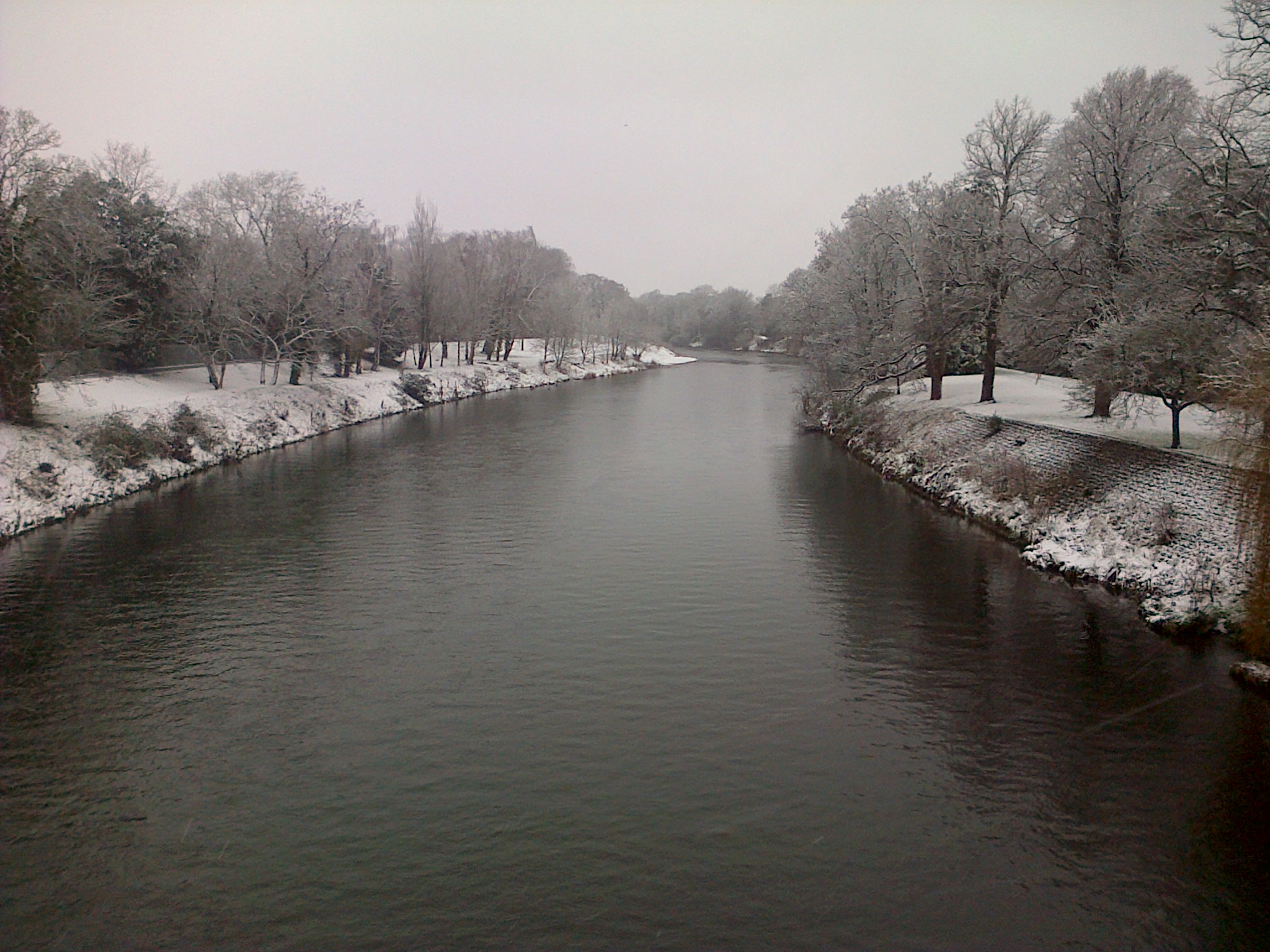
I managed to get away at a reasonable hour after the end of the interviews and made it home to Cardiff before the snow arrived, which it eventually did around one o’clock in the morning. It’s still snowing a bit, actually, but it’s now mixed with drizzle. The slushy streets are unusually quiet. There’s not all that much in Cardiff itself, but the examinations due to start at 9am this morning were delayed until 9.30 to allow students and staff extra time to get to the various venues. The main thing is that it’s very dark, with grey clouds filling the sky. Here’s another Blackberry pic, taken on my walk into work this morning..
The contrast with Brighton yesterday is considerable, except for the temperature. Bright and dry in Brighton, dark and damp in Cardiff and cold in both.
Still, at least the “red snow alert” broadcast by the BBC came to nothing. This lot is definitely white.
Back to the splendid Cavalaire Hotel after an exhausting day of lectureships interviews, following on from yesterday’s exhausting day of presentations by the candidates and the subsequent (much less exhausting) dinner with the candidates in the Coach House. It’s such a packed schedule because we’re appointing three lecturers at the same time, so have a bigger group of candidates than at a normal recruitment event. I’m going to go out with an old friend for a relaxing pint and a meal later on, but I thought I’d just put up a quick post before I go out into the chilly seaside air.
The first thing I have to say is that I’ve been completely blown away by the quality of the applicants we have to select from. In fact, watching the succession of excellent presentations and participating in today’s interviews made me wonder how I ever managed to get a permanent job at all. It’s a shame we’re going to have to disappoint some of them, as we clearly can’t appoint them all, but fortunately I’m sure they’ll all have other opportunities in the near future. Not that we’ve made any decisions yet. There’s another bunch of interviews tomorrow and then we’ll be locked in a room in Sussex House until we make a decision. It won’t be easy, but it’s a good problem to have: like a football manager having to pick a team from a very strong squad.
Other than that this trip has been a process of gradually rediscovering Brighton. One thing that has changed for the better since I lived here in the late 80s is the public transport system. The buses from the City Centre to the University Campus at Falmer are very frequent and quite cheap, only £2 for a single full-price and a lot cheaper if you buy a return or have a season ticket. Cardiff’s buses are expensive and poorly organized in comparison.
One other thing struck me last night as I walked through town to the Coach House for dinner. Large parts of Brighton try very hard to be quite posh. There are many fancy restaurants and upmarket boutiques all over the place. But however hard they try they can’t quite shake off that slightly seedy image that I think Brighton will always possess, and which makes it such a fun place to live. It’s a bit like how a dirty joke is always funnier when it’s told by someone dressed as a vicar.
Up early this morning as I have to chair my final meeting of the Board of Studies in the School of Physics and Astronomy at Cardiff University before heading off to the Sussex-by-the-Sea for a three days of lectureship interviews and related matters. I’ll therefore probably only have time for brief posts over the next week or so.
Today is also the start of our mid-year examination period which goes on for a fortnight at Cardiff University. It’s therefore a good opportunity to send a hearty “good luck” message to all students about to take examinations, whether in Cardiff or elsewhere, especially those who are further on in their courses and for whom these papers have greater importance.
I’m a bit too busy for anything new so I thought I’d just post a rehash of a rehash of an excerpt from something I posted a while ago on the subject of examinations.
My feelings about examinations agree pretty much with William Wordsworth, who studied at the same University as me, as expressed in this quotation from The Prelude:
Of College labours, of the Lecturer’s room
All studded round, as thick as chairs could stand,
With loyal students, faithful to their books,
Half-and-half idlers, hardy recusants,
And honest dunces–of important days,
Examinations, when the man was weighed
As in a balance! of excessive hopes,
Tremblings withal and commendable fears,
Small jealousies, and triumphs good or bad–
Let others that know more speak as they know.
Such glory was but little sought by me,
And little won.
It seems to me a great a pity that our system of education – both at School and University – places such a great emphasis on examination and assessment to the detriment of real learning. The biggest bane of physics education is the way modular degrees have been implemented in this respect…
Don’t get me wrong. I’m not opposed to modularisation in principle. I just think the way we teach modules in British universities fails to develop any understanding of the interconnection between different aspects of the subject. That’s an educational disaster because what is most exciting and compelling about physics is its essential unity. Splitting it into little boxes, taught on their own with no relationship to the other boxes, provides us with no scope to nurture the kind of lateral thinking that is key to the way physicists attempt to solve problems. The small size of each module makes the syllabus very “bitty” and fragmented. No sooner have you started to explore something at a proper level than the module is over. More advanced modules, following perhaps the following year, have to recap a large fraction of the earlier modules so there isn’t time to go as deep as one would like even over the whole curriculum.
Our students take 120 “credits” in a year, split into two semesters. These are usually split into 10-credit modules with an examination at the end of each semester. Laboratories, projects, and other continuously-assessed work do not involve a written examination, but the system means that a typical student will have 5 written examination papers in January and another 5 in May. Each paper is usually of two hours’ duration.
This means that the ratio of assessment to education has risen sharply over the last decades with the undeniable result that academic standards have fallen in physics. The system encourages students to think of modules as little bit-sized bits of education to be consumed and then forgotten. Instead of learning to rely on their brains to solve problems, students tend to approach learning by memorising chunks of their notes and regurgitating them in the exam. I find it very sad when students ask me what derivations they should memorize to prepare for examinations. A brain is so much more than a memory device. What we should be doing is giving students the confidence to think for themselves and use their intellect to its full potential rather than encouraging rote learning.
You can contrast this diet of examinations with the regime when I was an undergraduate. My entire degree result was based on six three-hour written examinations taken at the end of my final year, rather than something like 30 examinations taken over 3 years. Moreover, my finals were all in a three-day period. Morning and afternoon exams for three consecutive days is an ordeal I wouldn’t wish on anyone so I’m not saying the old days were better, but I do think we’ve gone far too far to the opposite extreme. The one good thing about the system I went through was that there was no possibility of passing examinations on memory alone. Since they were so close together there was no way of mugging up anything in between them. I only got through by figuring things out in the exam room.
I don’t want to denigrate the achievements of students who are successful under the current system. What I’m saying is that I don’t think the education we provide does justice to their talents. That’s our fault, not theirs…
When I checked into Twitter this morning I was perturbed to see a flurry of panicky messages from astronomers down under. No wonder. The bush fires that have been raging in New South Wales for some time yesterday threatened to engulf the world-famous Siding Spring Observatory – the largest optical observatory in Australia – where 12 important telescopes are located, not to mention the people that operate them.
I’ll direct you to Amanda Bauer’s blog piece for dramatic coverage of what was obviously a terrifying and exhausting night, as flames and smoke crept remorsely closer to the observatory buildings.
At about 3.30pm local time, the buildings were evacuated and soon afterwards the fire penetrated the perimeter of the Observatory itself and subsequently swept through the complex. Temperatures inside some of the domes went as high as 100 °C and a lot of the electrical equipment has clearly been damaged.
Scary stuff but, most importantly of all, at least nobody was hurt. It also seems that damage to the observatory buildings and equipment was relatively slight. That however is a preliminary assessment, and may well be revised when it’s safe to enter the area again. Wildfires of this sort are extremely frightening things, so this must have been a very difficult time for those involved but, fingers crossed, it seems not to have turned out as badly as some feared.
Coincidentally, I had a little fire drama at home myself last night, although I hasten to add it was not on the same scale as the goings-on in Siding Spring. The weather in Cardiff being rather inclement I decided to complete my Saturday afternoon shopping with the purchase of a sack of logs for the fire. I have central heating, so don’t actually need the open fire for warmth, but it does add an extra level of cosiness on a winter evening. It also provides something to look at which is more interesting than the television I no longer possess…
It’s not all that easy to get a fire started in my grate, but I managed at the first attempt yesterday. Wood has a tendency to spit and crackle while burning so I put the fireguard around..
(The flames weren’t actually that purple colour, more of a reddish orange; I think the flash on the camera is responsible for the change of hue.)
Anyway, I kept the fire going all through the evening which meant by the time I was ready for my nightcap I had no logs left. I then remembered a bit of wood (or, more accurately, MDF) that was left over when I had some shelves fitted. I found it in a cupboard and chucked it on the fire and left the room to make a drink.
A couple of minutes later my smoke alarm went off. Bemused, I ran back into the living room and found it filled with acrid smoke, produced by the veneer that coated the bit of surplus shelf, which was being produced in quantities too large for the chimney to cope with.
I hastily switched off the alarm and opened all the windows and doors on the ground floor, much to the amusement of the folk passing my house on the way home from the pub. Ironically my attempts to stay warm and cosy all through the evening had ended with arctic winds blowing through the house. The smoke cleared fairly soon, although the smell of it was still lingering this morning.
Still, nobody was hurt and there was no serious damage to buildings or equipment. And at least now I know my smoke alarm does actually work…
Just time for a very quick one before I scoot off to London for this month’s Royal Astronomical Society meeting (and subsequent Club dinner).
Today is the last day of “Revision Week” so I had a two-hour revision class this morning. I gave my final proper lecture at Cardiff University before Christmas, in fact, but this morning was the last teaching of any sort I’ll be doing here before I move to Sussex at the end of the month. If any of the students taking The Physics of Fields and Flows happens to read this, then I wish them the best of luck in next week’s examination!
I won’t be able to mark the scripts (and thus find out how well they’ve all done) until I return from a trip to Brighton next week to carry out interviews for three lectureships in astronomy at Sussex recently advertised. I’m looking forward to that, but I think the three days will be just as gruelling for the panel as for the candidates.
There were some sarcastic comments at the start of today’s class about the fact that I was wearing a suit and tie. It reminded me of an old joke: “Q: What do you call a ‹insert name of institution> graduate who’s wearing a suit? A: The Accused.” I think I can guess which institution most Cardiff students would pick as the butt of that one.
In fact the reason I’m wearing a suit today is that there’s a dress code for the RAS Club, which dines at the Athenaeum. It’s not very strict, actually, just jacket-and-tie, but I usually dust off one of my suits for the occasion as I don’t mind dressing up now and again. The only other clubs I’ve been to that operate a dress code have been very different, but I’ll draw a hasty veil over that.
The RAS Club isn’t particularly posh, actually, nor is it as stuffy as people seem to think. This evening is the Parish Dinner at which the Club elects new members. It’s nice to see quite a few youngsters among the candidates, but the election procedure is so dotty it’s impossible to predict who will get in!
Coincidentally, I got an email about the dress code for next week’s interviews. “Smart casual”, apparently. Since I don’t really know what that means I think I’ll wear a suit, which presumably most of the male candidates will too.
It always seems to me rather peculiar, this thing of dressing up for interviews. The default style of dress for academics is “scruffy”, so it’s a bit odd that we all seem to pretend that it’s otherwise for interviews. I suppose it’s just to emphasize that it’s a formal occasion from the point of view of the interview panel, and to show that the candidates are taking it seriously. I don’t really pay much attention to what interviewees wear, other than that if they look like they’ve just been dragged through a hedge one might infer that they’re a bit too disorganized even to be a member of the academic staff at a University or that they’re not really putting enough effort into the whole thing.
On the other hand, some people feel so uncomfortable in anything other than jeans and a T-shirt that putting on a suit would either be an unbearable ordeal for them or conflict with their self-image in some fundamental way. Neither of these are intended, so if that’s going to be the case for you, just dress as you normally do (but preferably with something reasonably clean).
This is the time of year that many undergraduate students are putting in their applications for PhD places too. I sometimes get asked (and did yesterday, in fact) whether a (male) candidate for a PhD place should wear a suit and tie for the interview. Having conducted interview days for many years at a number of different institutions, my experience is that a small proportion dress formally for PhD interviews than for job interviews. My advice to students asking about this is just to say that they should try to look reasonably presentable, but suit–and-tie are definitely not compulsory. It’s unlikely the staff interviewing you will dress formally, actually…
Anyway, my views may well differ from those of my readers so here’s a poll.
I realise this post is written from a male perspective, as women’s clothes are a mystery to me. I hope someone can explain through the comments box what the equivalent categories are for female persons? At least women are spared the choice of whether or not to wear a tie. Is there an equivalent quandary?
I thought I’d try out the WordPress app for my Blackberry by posting this old picture, taken in the Arena di Verona while we were waiting for the start of the sumptuous production of Verdi’s Aida on 30th July 2006. The Opera doesn’t start there until it gets dark, but the evening sun was glinting on the gold pyramid sitting in the centre of the stage, so I couldn’t resist getting a picture. The late start meant we enjoyed a nice dinner before the performance, along with a very nice bottle of Amarone…
I’m so excited to have won something other than a dictionary for a change!
I’ve just received delivery of the Little Sun that I was promised after entering a little competition on Twitter. It’s a solar-powered light that charges during daylight hours to provide a bright safe source of illumination at night. “Little Sun transforms the light that is for all of us into light that is for each of us…”
This gives me an excuse to mention that later this month my contribution to the Charter of Light will go live on the website. Please follow the campaign, which aims to improve light and energy access in the developing world.
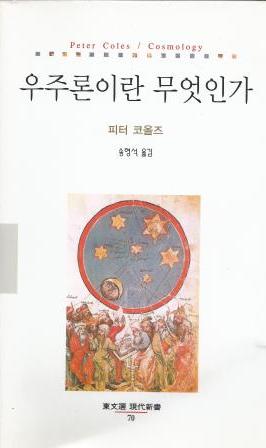
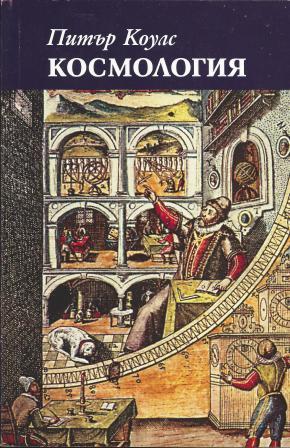
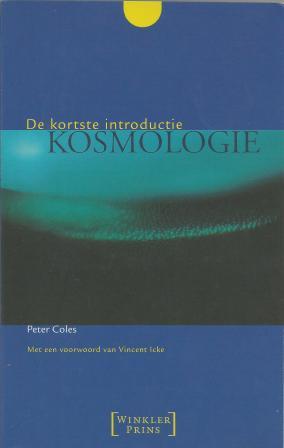
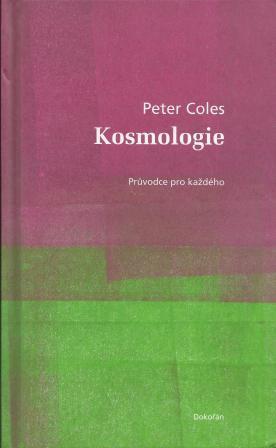
I was making a start at cleaning out some of the stuff in my office yesterday and came across a bunch of foreign editions of my book Cosmology: A Very Short Introduction. I’d forgotten I had these, and am not even certain what languages they are all in. Is the first in Japanese or Korean? I really can’t remember.
…still, it’s interesting to see how they’ve chosen different covers for the different translations, and at least I know what my name looks like in Russian Bulgarian!
With my move to Brighton imminent, I decided before Christmas to sort out a few things that I’ve been putting off for a while. One of them was to cancel the contract with Virgin Media at my house in Cardiff. Having made the decision to ditch them, I then received a letter from said company announcing that their “broadband” service would go up in price in February 2013 by almost 10%. That’s on top of a similar rise earlier in 2012. A price hike of 20% in a year is nothing short of a rip-off. I wouldn’t mind if the service was decent, but the broadband is particularly poor; I’m supposed to have a 20MB service but I rarely get even a tenth of that. I assume Virgin Media simply doesn’t have enough bandwith to deliver what it promises. And that’s not counting when the connection falls over completely, which is far from uncommon…
In 2012 Virgin Media announced that I was getting a “free” upgrade to 20MB – previously I had the cheapo 10MB service – which sounded great. Then, just over a month later, the cost of my broadband package went up by about 10%. That’s a clear misrepresentation, and I should have cancelled my account right away then. But for some reason I didn’t.
I also get a cable TV package from Virgin Media (which I very rarely watch). Cancelling that will probably mean I spend just a bit more time reading or listening to music, which is a good thing. The woeful state of TV generally, and the dire offerings available at Christmas in particular, make me confident that I can live quite happily without it. And I’ll save the license fee too. I also have a telephone land line which I hardly use either. So scrap it all, I thought.
Anyway, I picked up the phone and called Virgin Media on 8th December with the intention of cancelling my service. A very frustrating experience with automated responses followed. “You now have five options”, you know the sort of thing. After several sets of five options (none of which were to cancel my account), I got through to a vaguely humanoid life-form. Even that wasn’t the end of the story as instead of just following my request she asked dozens of irrelevant questions and tried to persuade me not to quit. In the end I got fed up and said “I’m not going to change my mind, please just cut the crap and cancel the account”. Finally I was told the account would close on 8th January and some packaging would be sent so I could return the box and modem to Virgin Media. Fair enough, I thought.
I was travelling before Christmas, but noticed when I got back that Virgin Media had made a number of attempt to phone me while I was away. Eventually they phoned when I was in. An operative told me he wanted to discuss “changes to my account” and asked for my password. I said there was nothing to discuss as I had cancelled it. He persisted. I put the phone down. When I got back from a Christmas break in Newcastle the same thing happened again, with the same response. Then again the same day. Then again. The third time it happened in the same morning, I’m afraid I lost my temper and told the Virgin Media representative to fuck off. That did the trick.
Yesterday I received a bill from Virgin Media including a charge for the period 8th January to 7th February 2013, being the month after my account was supposed to be cancelled. I picked up the phone and called Virgin Media, assuming that somehow the instruction to close the account had been lost. In fact it hadn’t. The person I spoke to said “yes, your account is to be closed on 8th January”. “Then why have you billed me for the following month?”, I asked. “That’s our standard practice.” was the reply.
Standard practice? Sounds to me like theft! Assuming it would be very difficult to get money back once Virgin Media had purloined it, I immediately cancelled my Direct Debit to stop them taking the funds from my bank account. If they send me a correct bill for what I actually owe, I’ll pay it of course. But I’m never having anything to do with Virgin Media ever again.
P.S. I won’t have internet at home for a while from 8th January, so probably won’t be doing much blogging at weekends. On the other hand, I will have a lot of other things to be getting on with as I gradually relocate to Brighton by the sea…
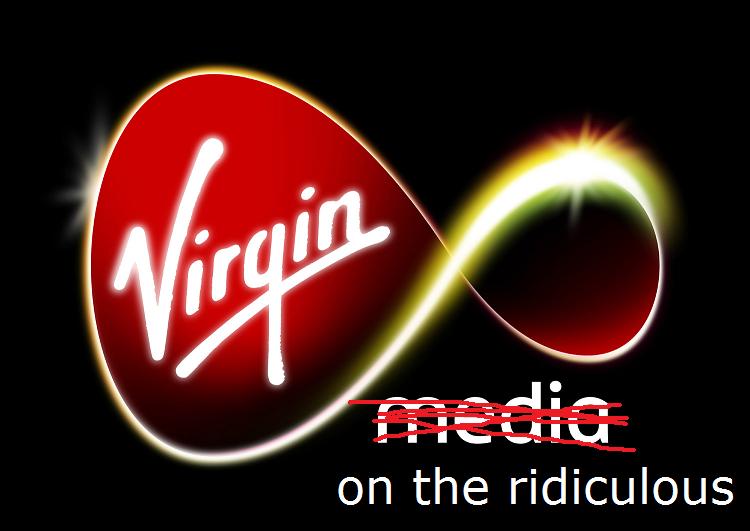
P.P.S. Just received an email from Virgin Media with the following header…
The views presented here are personal and not necessarily those of my employer (or anyone else for that matter).
Feel free to comment on any of the posts on this blog but comments may be moderated; anonymous comments and any considered by me to be vexatious and/or abusive and/or defamatory will not be accepted. I do not necessarily endorse, support, sanction, encourage, verify or agree with the opinions or statements of any information or other content in the comments on this site and do not in any way guarantee their accuracy or reliability.