Archive for the Biographical Category

A Shared Disservice

Posted in Biographical, Science Politics with tags , , , , , on February 5, 2012 by telescoper

If you’ve never heard of the Shared Services Centre then you’re a very lucky person. If you have heard of it, and especially if you’ve had any dealings with it, then the following excerpt  from the SSC website description of itself will make you either laugh or cry:

The UK’s seven Research Councils, working together as Research Councils UK (RCUK), set up a shared services centre to reduce spend on administration. Sharing and standardising processes simply frees more funds for keeping the UK at the forefront of research and innovation.

Each year the Research Councils invest around £2.8 billion in research into understanding and improving the world around us. They’re involved in everything from tackling superbugs or studying social trends to analysing the geo-climate of the Antarctic. So, operating efficiently benefits our whole society.

What is more, sharing services does not mean compromising quality. The RCUK Shared Services Centre Ltd (SSC) is dedicated to providing exceptional standards of service in Human Resources, Finance, Procurement, IT IS and Grants administration. Our people achieve this by sharing their skills, knowledge and our vision:

‘Professional people working together, delivering quality services for the benefit of the research community’

The italics are mine. I added them  to sections that made me laugh out loud.  In fact almost all the above description of the SSC is complete tripe. The organization is a  fiasco. It has cost more than twice its original budget to implement and since its inception the quality of research administration has deteriorated beyond all recognition. The only thing I’ll say about the statement quoted above is that George Orwell would have been very proud.

This has serious consequences for those dependent for funding on the Research Councils, including the Science and Technology Facilities Council (STFC), which has been forced to use the Shockingly Shambolic Catastrophe to administer the grants it issues.  The time taken to process and issue grants is now far longer than it was previously, when such tasks were done by people who actually knew (and cared about) what they were doing.

I’m told by reliable sources that the whole SSC debacle is such an embarrassment that staff employed by the Research Councils have been forbidden to say negative things about it and have instead to pretend everything is just hunky-dory lest the mess damages the reputations of their political masters in BIS.  The result of this strategy is that BIS now think the SSC is doing a fabulous job and are going to expand its activities across other departments. If nobody blows the whistle on it, the SSC behemoth will gradually take over the entire government and turn everything into crap. Or perhaps that has already happened?

Anyway, I’m far too old to play David versus Goliath in this particular battle. I’ll leave that to the continuing efforts of, e.g., Private Eye. But I will give you a tiny – and not particular important – illustration of how useless the SSC really is. I’m one of those people who has to fill in a self-assessment tax return every year. It’s not too difficult to do because I retain a chap to organize my accounts and in any case   income I receive on top of my main salary is usually documented in the various P60s I get at the end of each tax year. Except this year I didn’t get a P60 for the work I did for STFC on the Astronomy Grants Panel. Such payments are also administered by SSC, and it is their statutory responsibility to provide a P60, but despite repeated attempts to extract one, I didn’t get it  in time for the January 31st deadline. I therefore filed my return with estimated figures and an explanatory note.

Finally SSC replied. It seems they had decided to send my P60 to my old address in Nottingham, along with a number of other items of correspondence. Why they did so I have no idea, as I moved from there in 2008. I told STFC my new address at that time, and have been receiving various bits and bobs from them at my correct address since then. Moreover, SSC have been sending items here too, so they do have the right details. Only it seems I’ve been getting letters from Finance, whereas the tax stuff is dealt with by the dreaded Human Resources. As seems inevitable with large bureaucracies, the different parts clearly do not communicate with each other.

Anyway, to cut a very long story very short, after I filed my tax return I finally received an email from SSC explaining what had happened. It also said that it was not possible to issue a duplicate P60, but they were attaching a statement of earnings and tax paid. Only there was no attachment. I emailed back to ask what had happened to the attachment. Three days later I got a reply with the attachment. The email began “Dear Professor Collins…”.

Curiously the attachment – when it finally was sent – arrived in encrypted form “for security”. A bit of a waste of time, methinks, when they’ve been posting confidential documents to the wrong address for more than three years!

I’ve corrected my tax return in the light of the new information they sent, but I may still be liable for some sort of surcharge. It’s clearly the fault of the SSC, but there’s no symmetry in tax affairs. If Joe Bloggs is late or makes an error, he gets stamped on by the Inland Revenue. If a government agency messes up it probably gets away scot free.

This is all small potatoes of course, but the dire state of their record-keeping in a trivial case like mine makes me worry about what might be going wrong with more serious things…

I have the feeling that there might be one or two people out there with SSC stories of their own. Do feel free to share them via the comments box.

Random Memories

Posted in Biographical, Columbo with tags , , on January 24, 2012 by telescoper

I stumbled across a box of old photographs last night, so prepare for a post of pure self-indulgence as I take you on a walk down my memory lane:

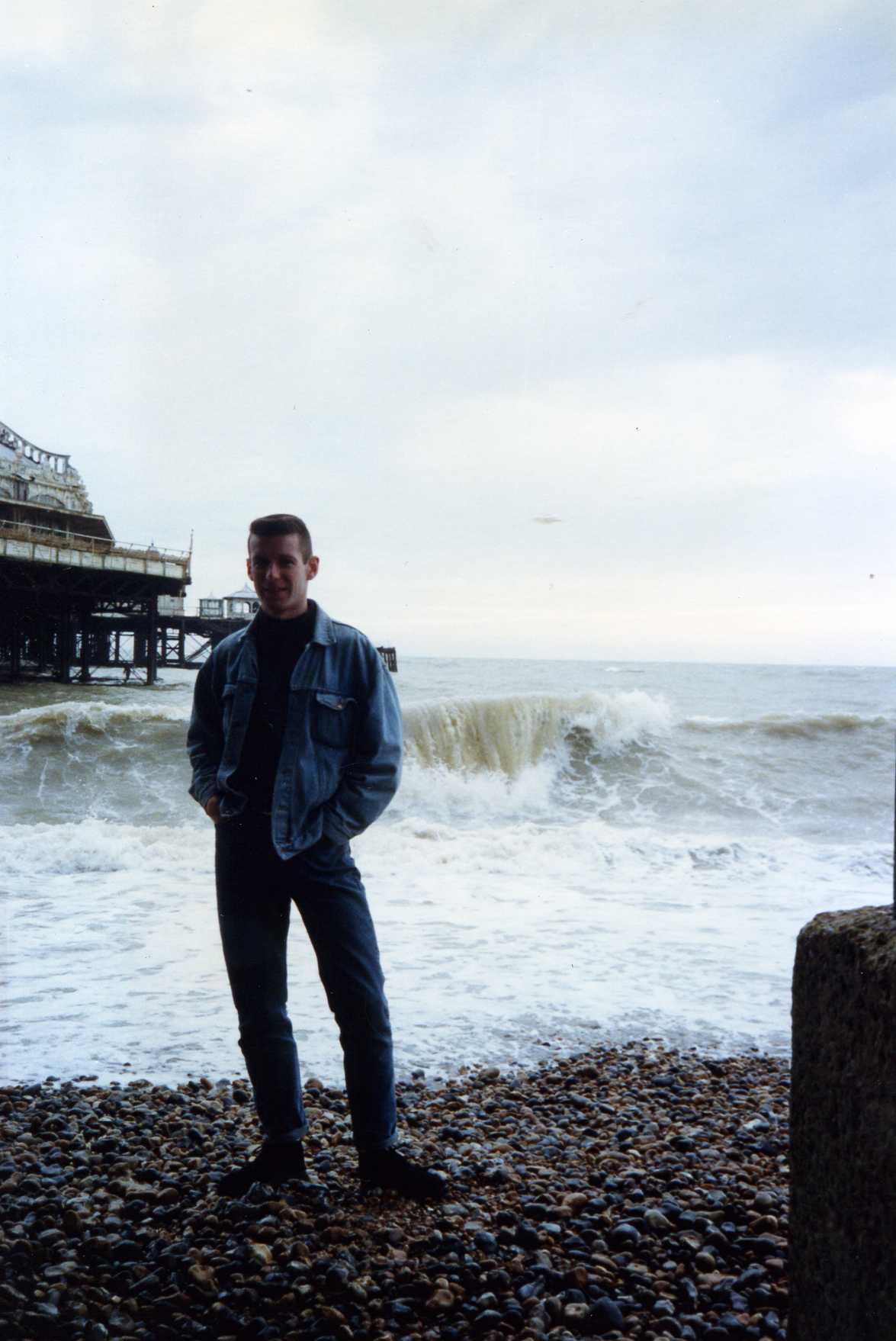
Brighton beach, winter 1990...

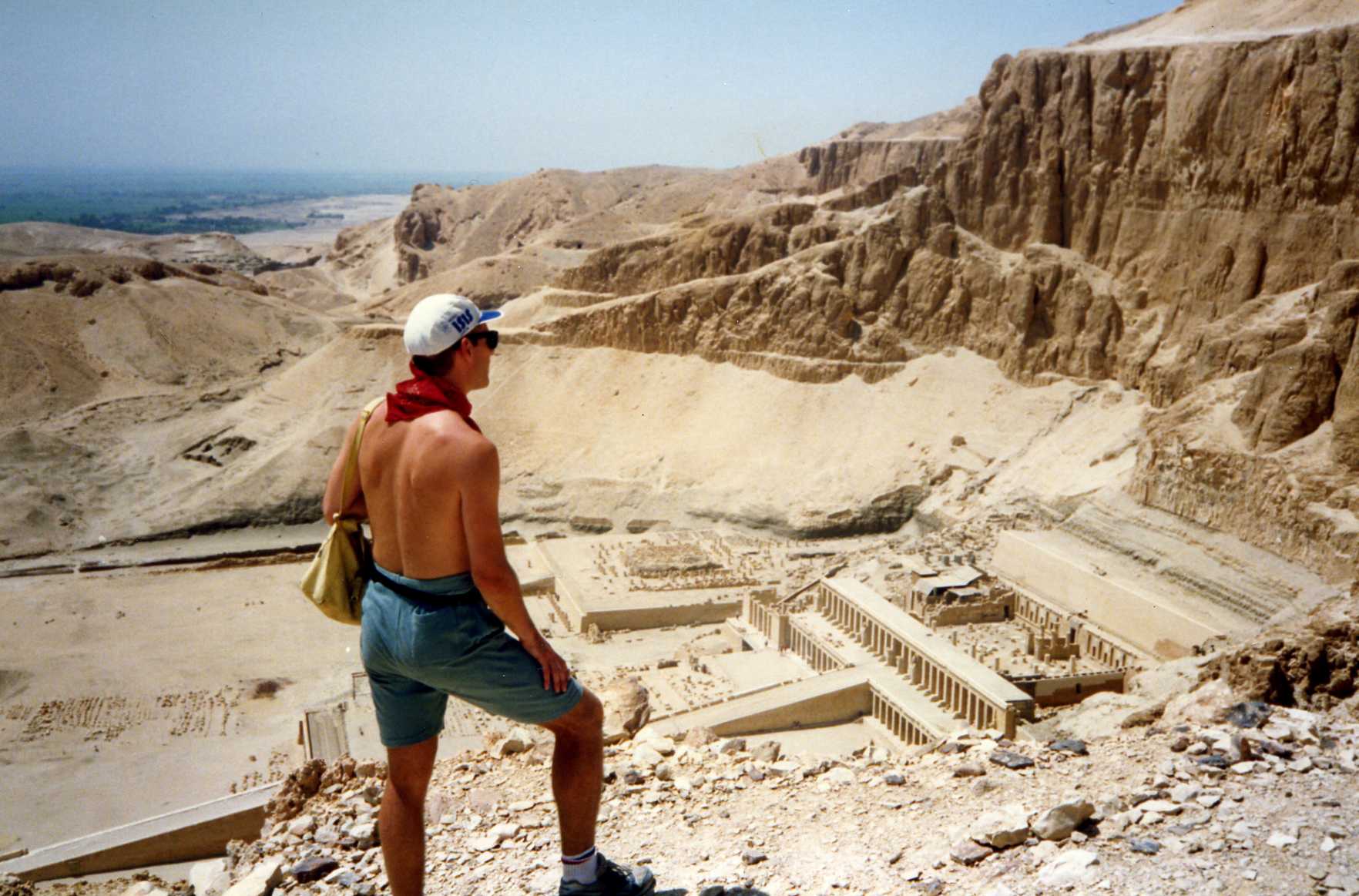
Me overlooking the Temple of Queen Hatshepsut, Deir-al-Bahari, Egypt, 1991

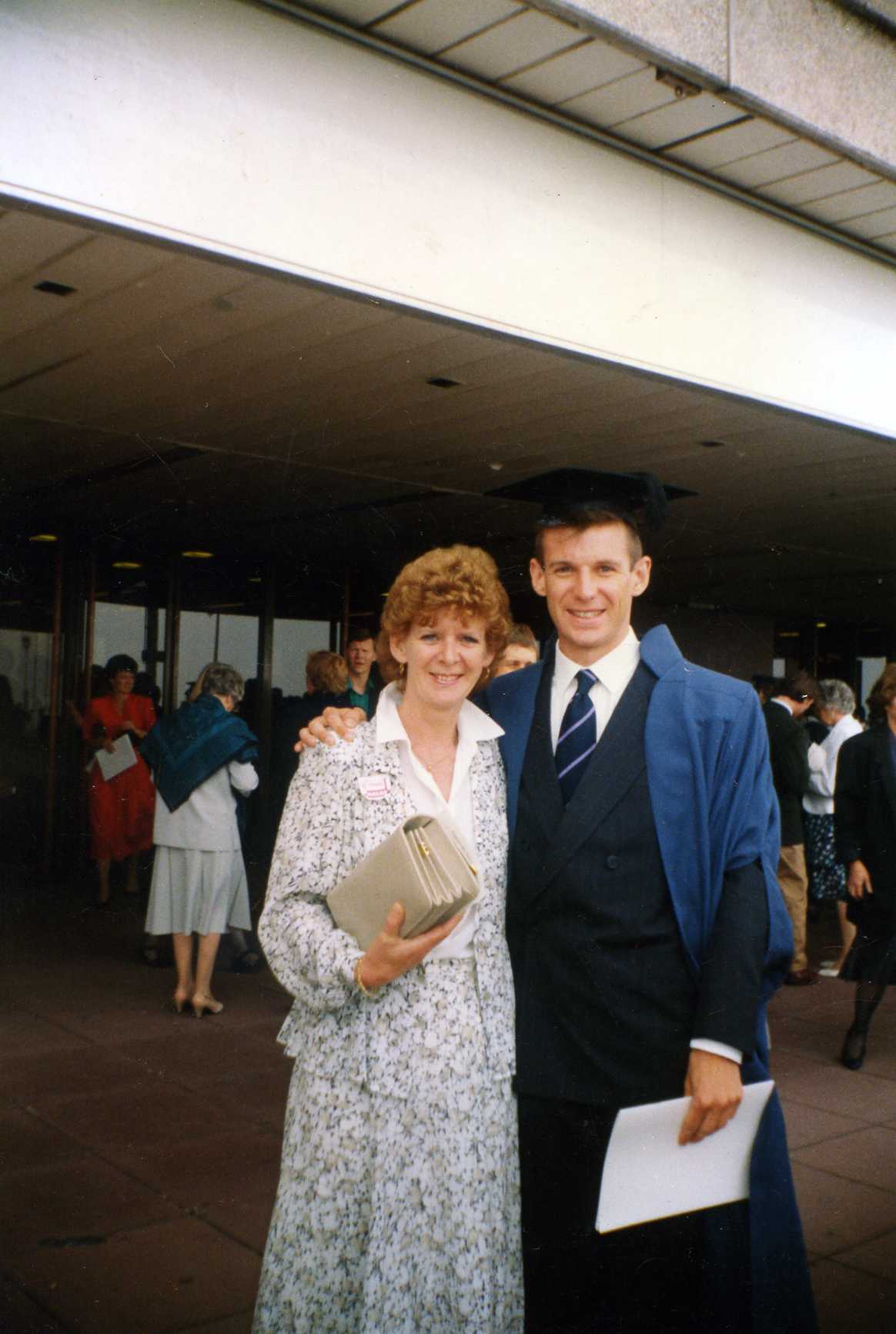
Me and my mum, just after I collected my DPhil at the post-graduation ceremony in Brighton, 1989.

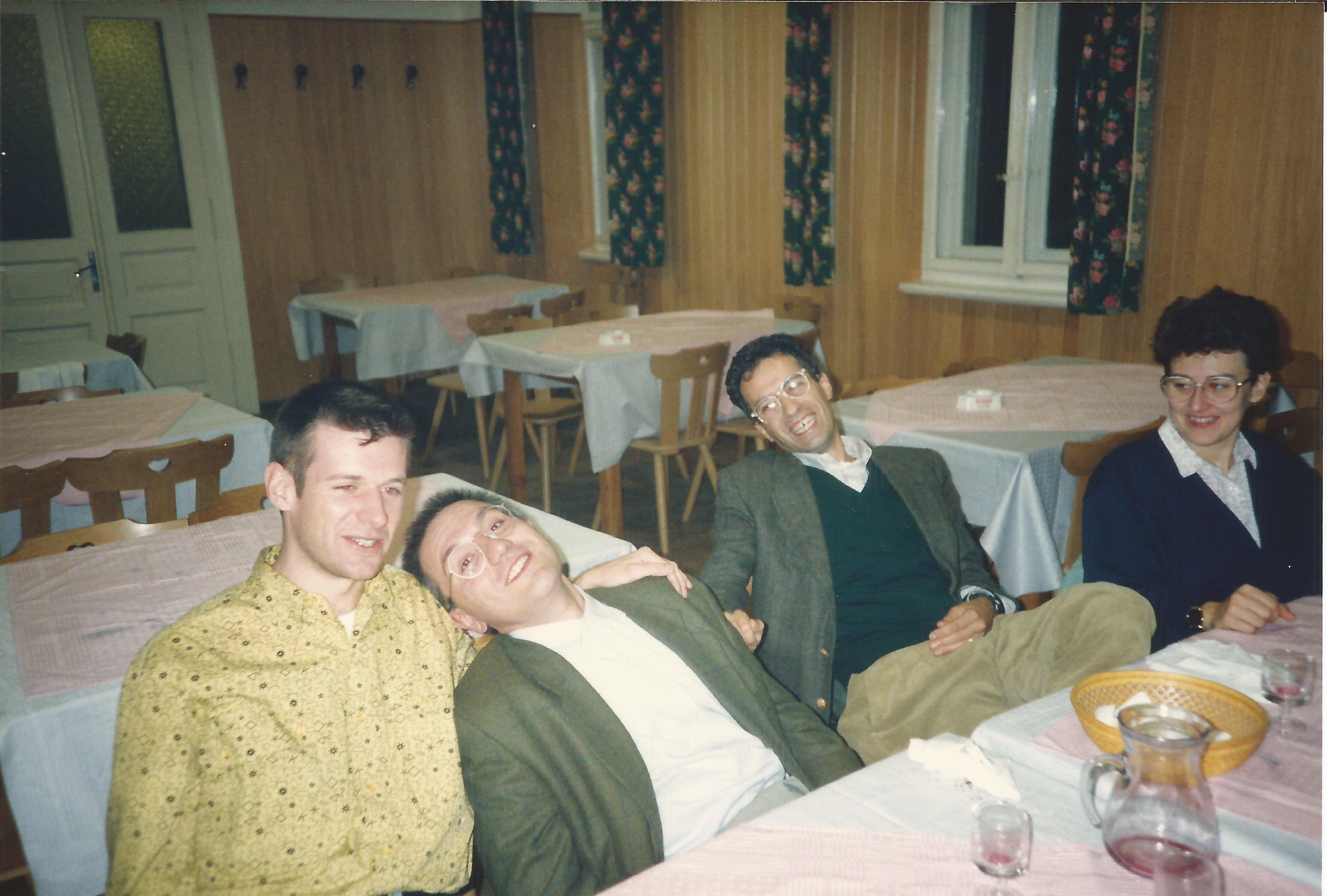
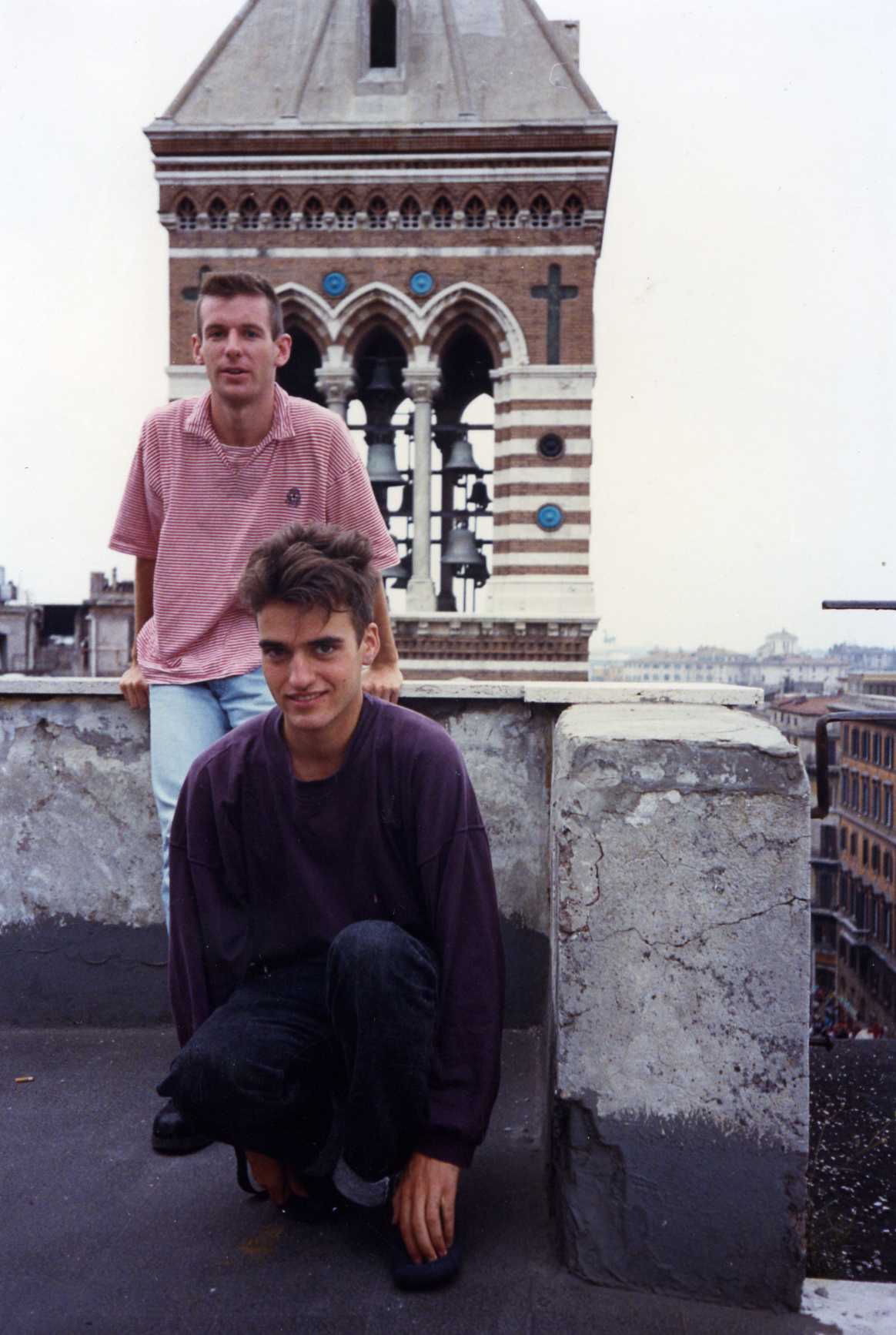
On a rooftop in Rome with a friend (now "an old friend", but still not as old as me!), also taken in 1989.

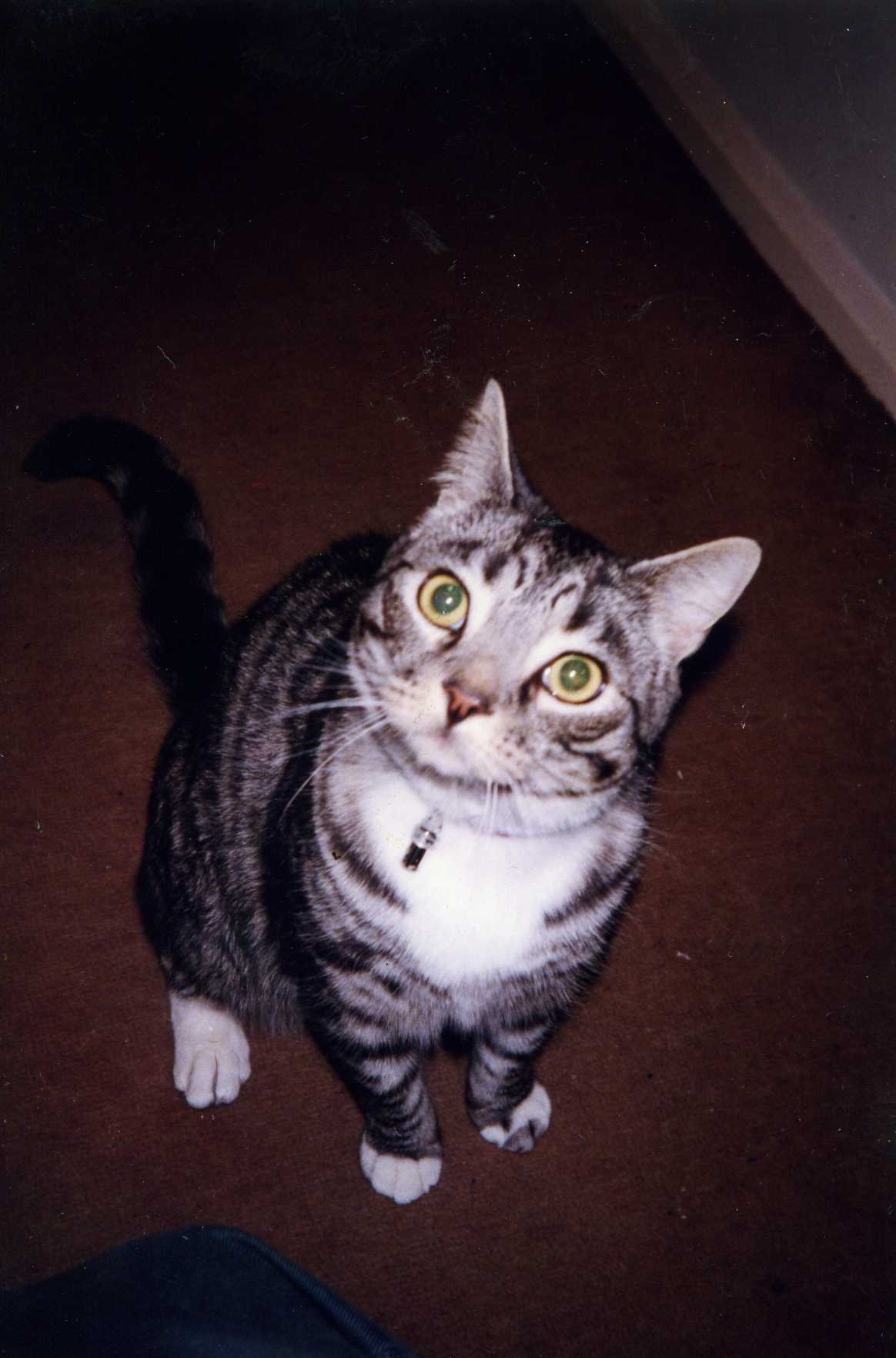
This last one was taken a bit later – not sure when, exactly. And for those of you who were wondering, yes I do still miss the little bugger…

Young Columbo

Examination Period

Posted in Biographical, Education with tags , , on January 16, 2012 by telescoper

Today is the start of our mid-year examination period which goes on for a fortnight at Cardiff University.It’s therefore a good opportunity to send a hearty “good luck” message to all students about to take examinations, especially those who are further on in their courses for whom these papers have greater importance.

I’m a bit too busy for anything particularly profound today, so I thought I’d just rehash an excerpt from something I posted a while ago on the subject of examinations.

My feelings about examinations agree pretty much with William Wordsworth, who studied at the same University as me, as expressed in this quotation from The Prelude:

Of College labours, of the Lecturer’s room
All studded round, as thick as chairs could stand,
With loyal students, faithful to their books,
Half-and-half idlers, hardy recusants,
And honest dunces–of important days,
Examinations, when the man was weighed
As in a balance! of excessive hopes,
Tremblings withal and commendable fears,
Small jealousies, and triumphs good or bad–
Let others that know more speak as they know.
Such glory was but little sought by me,
And little won.

It seems to me a great a pity that our system of education – both at School and University – places such a great emphasis on examination and assessment to the detriment of real learning. The biggest bane of physics education is the way modular degrees have been implemented.

Don’t get me wrong. I’m not opposed to modularisation in principle. I just think the way we teach modules in British universities fails to develop any understanding of the interconnection between different aspects of the subject. That’s an educational disaster because what is most exciting and compelling about physics is its essential unity. Splitting it into little boxes, taught on their own with no relationship to the other boxes, provides us with no scope to nurture the kind of lateral thinking that is key to the way physicists attempt to solve problems. The small size of each module makes the syllabus very “bitty” and fragmented. No sooner have you started to explore something at a proper level than the module is over. More advanced modules, following perhaps the following year, have to recap a large fraction of the earlier modules so there isn’t time to go as deep as one would like even over the whole curriculum.

Our students take 120 “credits” in a year, split into two semesters. These are usually split into 10-credit modules with an examination at the end of each semester. Laboratories, projects, and other continuously-assessed work do not involve a written examination, but the system means that a typical  student will have 5 written examination papers in January and another 5 in May. Each paper is usually of two hours’ duration.

This means that the ratio of assessment to education has risen sharply over the last decades with the undeniable result that academic standards have fallen in physics. The system encourages students to think of modules as little bit-sized bits of education to be consumed and then forgotten. Instead of learning to rely on their brains to solve problems, students tend to approach learning by memorising chunks of their notes and regurgitating them in the exam. I find it very sad when students ask me what derivations they should memorize to prepare for examinations. A brain is so much more than a memory device. What we should be doing is giving students the confidence to think for themselves and use their intellect to its full potential rather than encouraging rote learning.

You can contrast this diet of examinations with the regime when I was an undergraduate. My entire degree result was based on six three-hour written examinations taken at the end of my final year, rather than something like 30 examinations taken over 3 years. Moreover, my finals were all in a three-day period. Morning and afternoon exams for three consecutive days is an ordeal I wouldn’t wish on anyone so I’m not saying the old days were better, but I do think we’ve gone far too far to the opposite extreme. The one good thing about the system I went through was that there was no possibility of passing examinations on memory alone. Since they were so close together there was no way of mugging up anything in between them. I only got through  by figuring things out in the exam room.

I don’t want to denigrate the achievements of students who are successful under the current system.  What I’m saying is that I don’t think the education we provide does justice to their talents. That’s our fault, not theirs…

In a Physicist’s Mailbag…

Posted in Biographical, The Universe and Stuff with tags , , on January 10, 2012 by telescoper

Among the delights (?) of being a scientist are those priceless pieces of unsolicited mail from members of the public. When I went to collect my mail this morning I found a prime example waiting in my pigeonhole. I knew what it was going to be like before I even opened it because the envelope was addressed (rather inaccurately) using an old-fashioned typewriter. Only a certain kind of person uses a typewriter these days.

I particularly enjoyed the “Emeritus Prof. ” bit. And Cardiff isn’t in “Engand”, by the way. Or even “England”.

Inside were six pieces of paper – all of different sizes – on which fascinating things had been typed and later highlighted with red and black pens in order to enhance both their scientific and artistic impact.

I’m in the middle of a load  of project vivas today so haven’t had time to scan this masterpiece neatly, but it’s such a wonderful piece of correspondence that I couldn’t resist taking a few pictures of various elements for the edification of my vast readership. I think if you click on the images you might be able to read them more clearly but, if you do, I will not accept liability for the consequences.

Unfortunately I’m not sure whether I have them in the right order, as the logic that connects them together escapes me.

I have  a large collection of similar missives but, despite some obvious deficiencie, such as a lack of drawings,  this letter is one of the best and will now take pride of place in the bottom drawer of my filing cabinet. Perhaps one day I’ll write a book about them…

Impostor Syndrome

Posted in Biographical, Education with tags , , on January 6, 2012 by telescoper

I came across the phrase Impostor Syndrome the other day. As a phrase it was quite new to me, but the state of mind it describes is far from unfamiliar. Digging around to find out a bit more I chanced upon an article written by renowned MIT astrophysicist Ed Bertschinger who explains it thus:

Impostor Syndrome is the feeling of not deserving to be in the position you are, and of being afraid that advisors, instructors, or peers will come to realize that you are not as capable as you may seem. The effect can be harmful when it selectively reinforces negative messages and causes people to try less hard because they are convinced they are incompetent when they are not.

That someone as intelligent and capable as Ed Bertschinger could confess to having such feelings will surely help others counter the negative effects these self-doubts might have on their careers. In the piece he reveals figures that show that Impostor Syndrome is pretty commonplace in academia, though more prevalent among females than males. Sarah Kendrew has blogged about this from the perspective of a younger researcher.

Impostor Syndrome has certainly accompanied me all the way through my academic career. It started as early as the 11+ examination to get into the Royal Grammar School. I was quite a backward child when I was very young – I didn’t learn to speak until I was three – and assumed that taking the examination would be a waste of time and I would go to the local comprehensive along the rest of the kids. In fact, I passed, and got a scholarship without which I couldn’t have gone, but was convinced that I only got in because of some form of adminstrative error. During my first term at RGS I was overwhelmed by feelings of inferiority and struggled at almost every subject. I kept at it though and surprised both myself and my teachers by doing rather well in the examinations.

It was all very similar when I went to Cambridge. Nobody from my family had ever gone to university before, never mind Cambridge, and I assumed I’d fluked the entrance examination there as well. I took it for granted that everyone else was cleverer and better prepared than me, but I gradually realised that wasn’t true. Some were, of course, but I found that if I worked hard I could do OK. I admit I was a bit erratic as student, but I always thought it was better to be good at some things than average at everything. In parenthesis I’d say that I think the Cambridge style of examinations was kinder to people like me than the way things are done in most places now, in that it didn’t involve a straight average over papers.

The same pattern emerged when I began graduate studies at Sussex. I felt woefully unprepared to work in cosmology, especially since many of my supervisor’s other DPhil students had completed the fiendish Part III Maths at Cambridge before starting their postgraduate degree. I was fortunate in being given a problem that suited me – and I should say received excellent guidance and advice from my supervisor, John Barrow. Despite going through some frustrating periods when I thought I wasn’t going to get anywhere with my research, I completed in less than three years.

Thereafter I got postdoc position, an SERC Advanced Fellowship, a permanent position at Queen Mary, and then a Chair (at Nottingham) by the time I was 35. Looking back on all these successes the only thing I can attribute them to is outrageously good fortune. There are many cleverer people with far stronger technical skills than me who either took much longer to get a permanent job or who haven’t yet managed to do so. At times I marvel at my own good luck, at others I feel guilty about others who are clearly better than me but haven’t been so fortunate. I guess they probably resent people like me, but it’s best not to think of that.

If you compare yourself with others,
you may become vain or bitter,
for always there will be greater and lesser persons than yourself.

The bad thing about having feeling that you’re an impostor all the time is the constant fear that you’ll be found out and be subjected to all sorts of humiliation and, worse, that you’ll find someone relies on you for something that you’re unable to deliver. The latter is especially stress-inducing if you work a lot in collaborations.

However, there is a good side too.  I think a bit of self-doubt actually makes one a better person, in that knowing your own weaknesses helps appreciate better the qualities that others possess and instils a desire to help nurture the talents of  people around you, especially the younger ones.

When students ask me for advice about scientific careers I usually say the usual things: work hard, choose your problems wisely, make connections, believe in yourself. If I were being completely honest, however, I’d say that I really believe that the most important thing is to be lucky.

Ps. The wikipedia page on Impostor Syndrome also includes a reference to its converse, Dunning-Kruger Effect in which “incompetent people find it impossible to believe in their own incompetence”. I wonder if this might be even more prevalent in academia?

Stormy Weather

Posted in Biographical, Jazz with tags , , on January 3, 2012 by telescoper

The weather has been inclement since New Year’s Eve, but today it got even worse.  Things are even more scary elsewhere in the UK; I heard from friends in Edinburgh that gusts of 102 mph have been recorded at the Royal Observatory, for example. I hope they’ve battened down the hatches. Here in Cardiff its pretty windy too, but the main problem has been heavy rain. There are flood alerts all across South Wales, including on the River Taff very close to my house as I write this. Since I’ve got a few things to do I think I’ll go and take a peek. The last time such a thing happened, the city’s flood defences held but the Taff did break its banks on Pontcanna Fields (which is actually meant to happen, to take the strain off the flood barriers nearer the city). Anyway I’ve got a few things to do so I think I’ll take a walk to the river and see how it looks. If I don’t come back please send a lifeboat.

In the meantime, here’s a piece of music to calm the storms, by the great Ella Fitzgerald accompanied by the equally great Joe Pass on guitar. ..

Well, back from a short trip down the Taff Embankment, here are a few pics of the scene…

The SWALEC Stadium is to the left, water level about 2m above the pitch right now, but protected by the embankment

The trees are usually above the water level, the nursery beyond is about 2m above current water level

I have seen the Taff higher than this, but only once!

White Water with Weeping Willow

The Millennium Stadium is just beyond the Bridge

Rothbury Hills

Posted in Biographical, Music with tags , , on December 22, 2011 by telescoper

Well the old batteries are very nearly flat and I’ll shortly be heading up North for a Christmas break, after just one more meeting this afternoon about our consolidated grant application which is due in the new year. I can’t help getting a bit sentimental about the land of my birth at this time of year, especially the lovely countryside of Northumberland, so I thought I’d leave you for the holidays with this little clip I found on Youtube which also features the evocative sound of the Northumbrian Smallpipes played by Kathryn Tickell and her band.

Air is blown  through the smallpipes using bellows under the arm rather than the mouth. The  chanter – that’s the bit you finger to produce the notes – has a completely closed end, combined with the unusually tight fingering style (each note is played by lifting only one finger or opening one key) so that the style of playing is staccato; there are no grace notes in the Northumbrian smallpipes tradition. Their sound is also far quieter than most other bagpipes because the bores on both chanter and drones are very narrow. Anyway, I think it’s a beautiful sound and one that’s redolent with nostalgia, for me.

I don’t think I’ll be blogging while I’m up North, so let me take this opportunity to wish you all a very happy holiday!


Closer to Erdös…

Posted in Biographical with tags , , , , on December 18, 2011 by telescoper

After one of my  lectures a year or so ago, a student came up to me and asked whether I had an Erdős number and, if so, what it was.  I didn’t actually know what he was talking about but  tried to find out and eventually posted about it.

In case you didn’t know, Paul Erdős (who died in 1996) was an eccentric Hungarian mathematician who wrote more than 1000 mathematical papers during his life but never settled in one place for any length of time. He travelled between colleagues and conference, mostly living out of a suitcase, and showed no interest at all in property or possessions. His story is a fascinating one, and his contributions to mathematics were immense and wide-ranging.  The Erdős number is a tiny part of his legacy, but one that seems to have taken hold. Some mathematicians appear to take it very seriously, but most treat it with tongue firmly in cheek, as I certainly do.

So what is the Erdős number?

It’s actually quite simple to define. First, Erdős himself is assigned an Erdős number of zero. Anyone who co-authored a paper with Erdős has an Erdős number of 1. Then anyone who wrote a paper with someone who wrote a paper with Erdős has an Erdős number of 2, and so on. The Erdős number is thus a measure of “collaborative distance”, with lower numbers representing closer connections.

I say it’s quite easy to define, but it’s rather harder to calculate. Or it would be were it not for modern bibliographic databases. In fact there’s a website run by the American Mathematical Society which allows you to calculate your Erdős number as well as a similar measure of collaborative distance with respect to any other mathematician.

A list of individuals with very low Erdős numbers (1, 2 or 3) can be found here.

Given that Erdős was basically a pure mathematician, I didn’t expect first to show up as having any Erdős number at all, since I’m not really a mathematician and I’m certainly not very pure. However, his influence is clearly felt very strongly in  physics and a surprisingly large number of physicists (and astronomers) have a surprisingly small Erdős number.

Anyway, my erstwhile PhD supervisor John D. Barrow recently emailed to point out that he had written a paper with Robin Wilson, who once co-authored a paper (on graph theory) with Erdős himself. That means John’s Erdős number is now  2, mine is consequently no higher than 3, and  anyone I’ve ever written a paper with now has an Erdős number no greater than 4.

I’ll be making sure this new information is included in our forthcoming REF submission.

To Edinburgh and Back

Posted in Biographical, Education with tags , , , on November 10, 2011 by telescoper

I’m back home now after a trip to and from the fine city of Edinburgh which, in case you weren’t aware, is known to the locals as Auld Reekie. I wonder if there’s a local internet guide called Reekipedia?

The excuse for this trip was an invitation to take part in an exercise called a Teaching Programme Review in the School of Physics & Astronomy at the University of Edinburgh. The TPR is an exercise that looks at the courses on offer in the department, how they are taught, as well as the technical and administrative arrangements to back it all up. The Panel involved people from other departments inside the University and a couple of external advisers (both physicists), of which I was one. The Panel will be writing a detailed report on our findings which I hope will turn out to be useful, but it definitely wouldn’t be appropriate to comment on the details here.

What I will say here is that, although it was a very intense and busy few days, including face-to-face meetings with all kinds of academic and support staff, as well as current students, it was extremely interesting. As well as hopefully providing some input and suggestions to the TPR, it was also a chance for me to see the inner workings of another department and pick up a few ideas for the way we teach Physics courses in Cardiff.

One of the striking things about this visit was how similar are many of the problems facing Edinburgh to those we encounter in Cardiff. Another is how easy it is to recognize kindred spirits. It may not always be obvious to the students, but physicists are passionate about their subject, not only in terms of their research but also in terms of nurturing the talents of the students in their care. In the Brave New World of Higher Education we’re all supposed to see universities as businesses, competing ruthlessly in an unforgiving marketplace. In fact, most of us at the real business end of the university system (i.e. teaching and research as opposed to PR and marketing) see our competitors more as colleagues than as rivals. Long may that continue, in my opinion.

During the visit I was taken on a tour of the excellent facilities available at Edinburgh, including some really snazzy and impressive “teaching studios” the like of which I’d never seen before. I’d really love to have a go at teaching in one of those some day, as they offer a different style of education which I’m sure complements the more traditional lecture format. The students seem to like them a lot, which is the most important thing.

However, I have to say that the thing that I was most jealous about was the fact that most of their teaching rooms still have blackboards. Ours have all been replaced with horrible whiteboards that require expensive markers and are far less visible to a big audience. “Chalk and talk” is a tried and tested method and when it’s done well I still think it’s a very effective one. I’m all for innovation in teaching, but some traditional methods are actually pretty good!

Anyway, I’d like to thank everyone from Auld Reekie University for hosting this visit. It was hard work, but thoroughly enjoyable. If anyone from Edinburgh reads this I hope they will pass on my thanks to all the staff and students there for making it such a rewarding occasion! I’m just sorry I didn’t have the chance to see a bit more of the city, but the schedule was just too hectic.

What I did enjoy was staying in a nice hotel for 3 days that offered a truly splendid cooked breakfast in the mornings. I hadn’t started the day with kippers for a very long time! Might need to go on a diet for a few days though….

The Moon Doctor

Posted in Biographical, The Universe and Stuff with tags , , on November 4, 2011 by telescoper

I  worked all the way through my lunch break getting stuff ready for a short tripette that I have to make next week. My regular post-prandial blogpost  is consequently a bit later than usual, and also a bit shorter.

Anyway, the little orbital dynamics question I posted a couple of days ago, which seems to have attracted quite a number of responses, also reminded me of something that happened about 12 years ago,  just after I had moved to Nottingham to take up the position of Professor of Astrophysics at the University of Nottingham. I was sitting in my office, working – blogs hadn’t been invented then – when the phone rang and the voice at the other end said May I speak to Professor Coles please? When I replied that I was he, the caller went on to explain that he was a surgeon who worked at Queen’s Medical Centre, a hospital located right next to the University of Nottingham, with teaching staff working for the University.

It turned out that news of the setting up of the new Astronomy group there had made it into the University newsletter which my caller had seen. He asked if I had a few moments to answer a question about astrophysics which had been bothering him for some time and which he had just been discussing with some of his colleagues.  I said yes, and he asked: Does the Moon rotate?

I paused a bit, thinking how best to explain, and he went on to clarify his point, which was that if the Moon always has the same face towards the Earth does that mean it’s not rotating.

Understanding his question, I went on to explain that, yes, the Moon does rotate and that the reason it always shows the same face to the Earth (more-or-less, ignoring libration) is that the period of its rotation is the same as the Moon’s orbital period around the Earth. I also explained how to demonstrate this with two coffee mugs, moving one in a circle around the other and rotating the outer one so as to keep the handle pointing towards the central mug. Moreover, I explained the physics of this phenomenon, which is called tidal locking, and pointed out other examples in astrophysics.

After this spiel the caller said that was all very interesting but he had to go  now. Assuming I had bored him, as I fear I tend to do rather a lot, I apologized for going on about it for too long. He said no he wasn’t at all bored by the detail I had put in, he found it all absolutely fascinating. The reason for him needing to go was that he had to go back to tell the answer to the colleagues he had been discussing it with  just before phoning me.  They were all  in the operating theatre,  standing around a patient lying on the operating table, waiting  for him to return and complete the operation he had left in order to make the call…