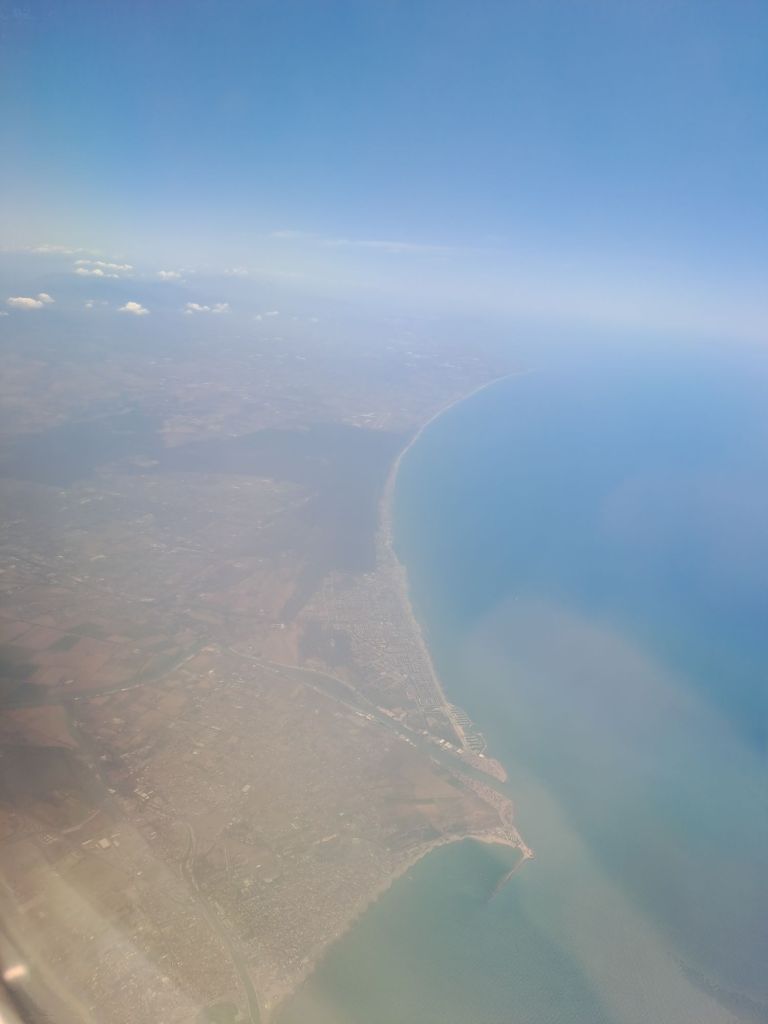
This morning, I took a short (~ 90 minute) flight from the pleasantly warm (23°C) Barcelona to the swelteringly hot (31°C) city of Rome. It’s actually forecast to be 39°C on Thursday and 40°C on Friday. Fortunately, I’m not staying that long!
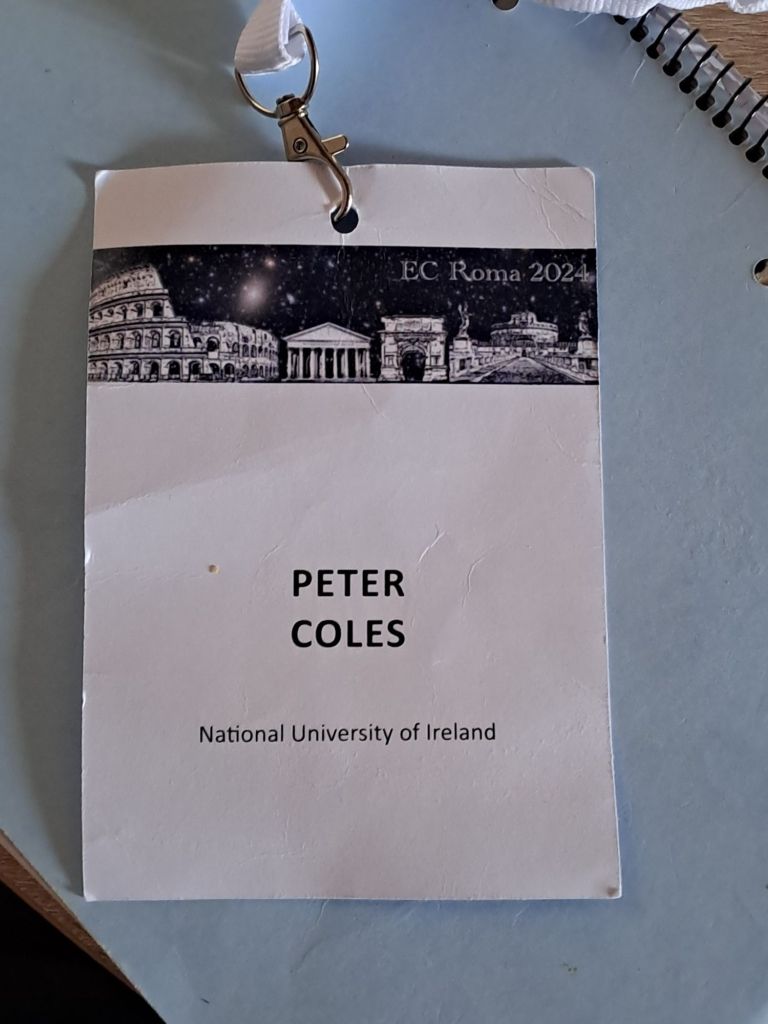
The occasion for this trip is the annual Euclid Consortium Meeting, which is being held at the Università degli Studi di Roma “La Sapienza“. The main sessions are in the splendid Aula Maxima thereof, with its imposing mural:
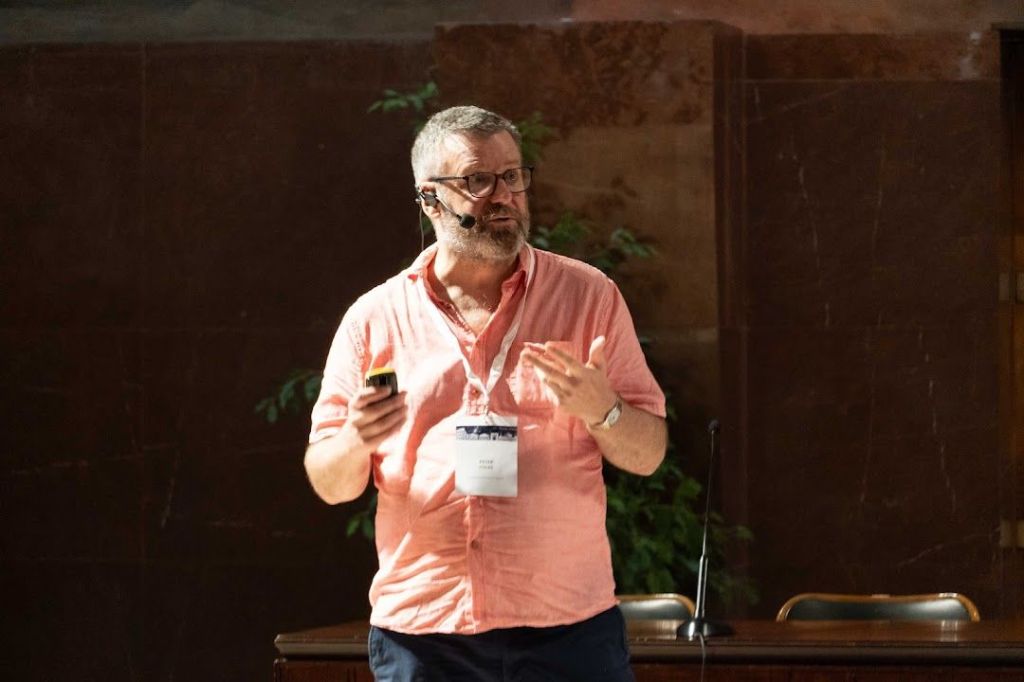
I’m giving a talk there in the first plenary session tomorrow…
Last night I arrived back in a very rainy Barcelona. Although I got a bit damp on the way back to my flat from the bus stop, the journey was otherwise uneventful. The one thing worthy of note is that although the approach to Barcelona Airport was a little bumpy owing to bad weather, the pilot managed to perform one of the softest of soft landings I’ve ever experienced. It was so well done that there was a spontaneous round of applause from the passengers. Clapping when the plane lands used to be fairly common, but nowadays is a rarity reserved for occasions such as this.
The end of my stint in Barcelona is now in sight so I plan to see the sights I haven’t yet seen, or at least as many of them as I can manage. Next week I have to travel to Rome for the 2024 Euclid Consortium Meeting, at which I’m doing a plenary talk on the first morning. The week after that I have to travel to Valencia to give a seminar, so it will be a busy second half of the month.
Talking of the Euclid Consortium, my term as Chair of the Euclid Consortium Diversity Committee (ECDC) closes at the end of June 2024, at which point I will also be leaving the Committee after 4 years on it. Hopefully I will find a bit more time to do research in the last two months of my sabbatical; I’ve spent about 50% of it so far on ECDC matters, and progress on writing papers has consequently been slower than I’d have liked. I hadn’t anticipated such a big increase in papers submitted to the Open Journal of Astrophysics, either but fortunately I’ve managed to get the most time-consuming aspects of that automated and since that it hasn’t taken up that much of my time.
As it happens, yesterday was the day of the Departmental Examination Board for the Department of Theoretical Physics at Maynooth. I haven’t been teaching this year, so wasn’t involved. I do know quite a few students who will be graduating this summer, though, and am a little sad I won’t be around to congratulate them. I might see some of them at their conferring ceremonies in September though.
And then there’s next academic year to look forward to. What will I be teaching, I wonder? I’m not going to think about that until I have to…
I’m briefly back in Maynooth in order to cast my vote in the Local and European Parliament Elections being held today, which I did earlier this morning. Both elections are held under Proportional Representation (Single Transferable Vote) which seems to me a very sensible system. One ranks the candidates in order of preference; you can rank all the candidates or just some. In the system employed here in Ireland, votes are progressively reallocated in various rounds until one ends up with the top n candidates to fill the n available seats. The STV system involves a quota for automatic election which is N/(m+1) + 1 votes, where N is the number of valid ballots cast and m is the number of seats in the constituency. To see why this is the case consider a four-seat constituency, where the quota would be 20% of the votes cast plus one. No more than four candidates can reach this level so anyone managing to get that many vote is automatically elected. Surplus votes from candidates exceeding quota, as well as those of eliminated candidates, are reallocated to lower-preference candidates in this process.
The Local Elections involve filling 40 seats on Kildare County Council, with five councillors representing Maynooth. The nine candidates are listed here, in case you’re interested. Some of the councillors applying for re-election have been diligent in dealing with local issues over the last five years and have in my opinion earned a vote. Other have only appeared since the election notice was given.
For the European Parliament Elections things are a bit more complicated. For the purposes of the EU elections Ireland is divided into three constituencies: Dublin, Ireland South and Midlands North West. I am in the latter, which elects four MEPs. There were 17 candidates for 4 MEPs in this constituency in 2019 but there are 27 this time round, for 5 MEPs, listed here. A sizeable fraction of these are sundry far-right loons, anti-vaxers, and general dickheads, whom I hope will be eliminated. The long list of candidates, however, means that it will take some time to complete the counting for the European elections, which won’t even start until Sunday. The Local election count will start tomorrow morning, and is expected to be completed by Sunday.
With an hour or so to waste in Heathrow Airport I thought I’d just mention that yesterday I attended the 27th Hintze Lecture on the topic of Understanding supernova explosions with sophisticated computer simulations delivered by Prof. Adam Burrows (in the very same lecture theatre in which I gave my lecture the day before). I was also on the guest list for a subsequent dinner in Christ Church College, which was very nice. Thanks to Stephen Smartt for that!
Anyway, I’m now on my way to Dublin (and then Maynooth) so I can vote in tomorrow’s Local and European Parliament elections before returning to Barcelona early next week after a (hopefully) restful weekend…
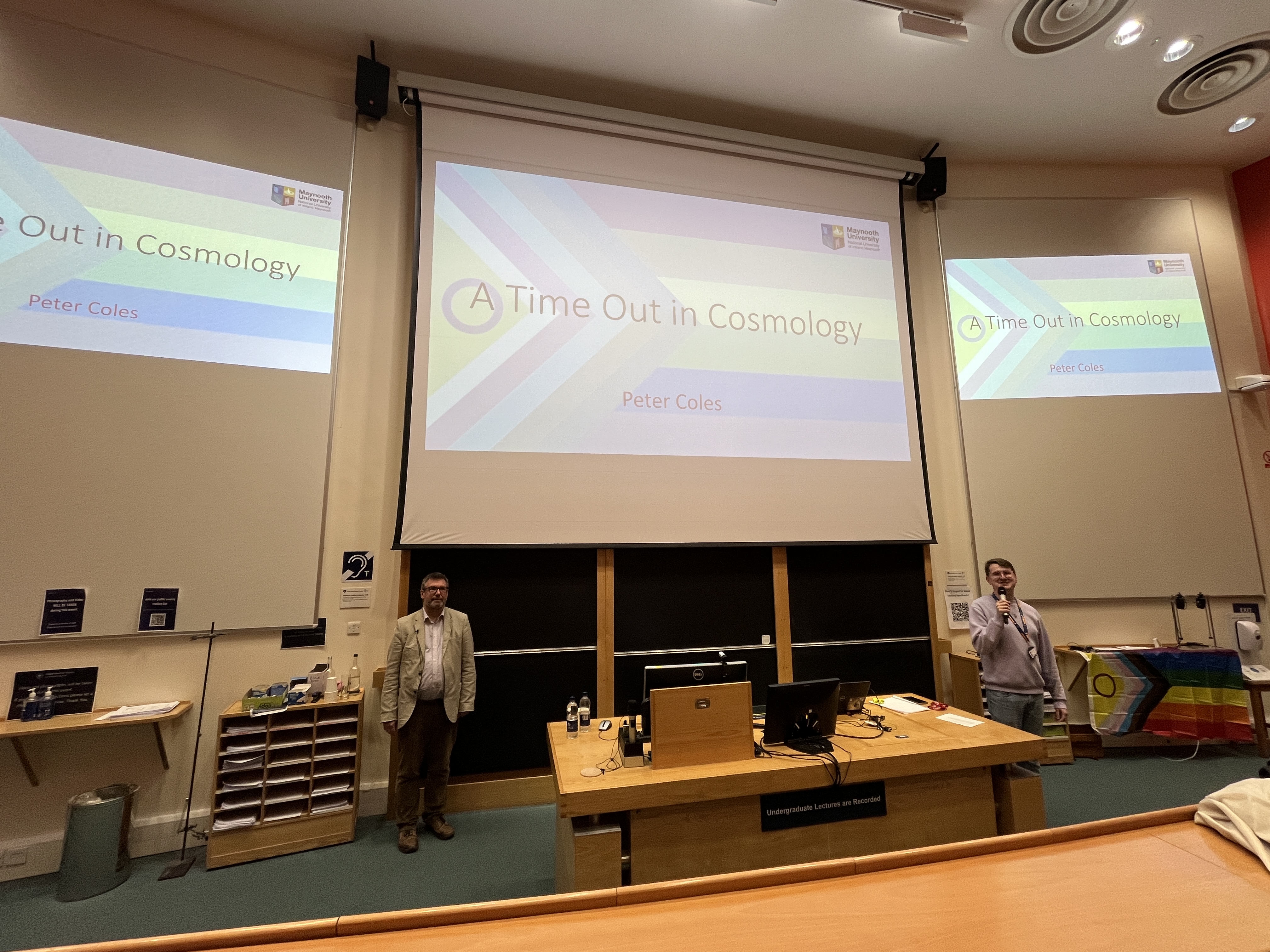
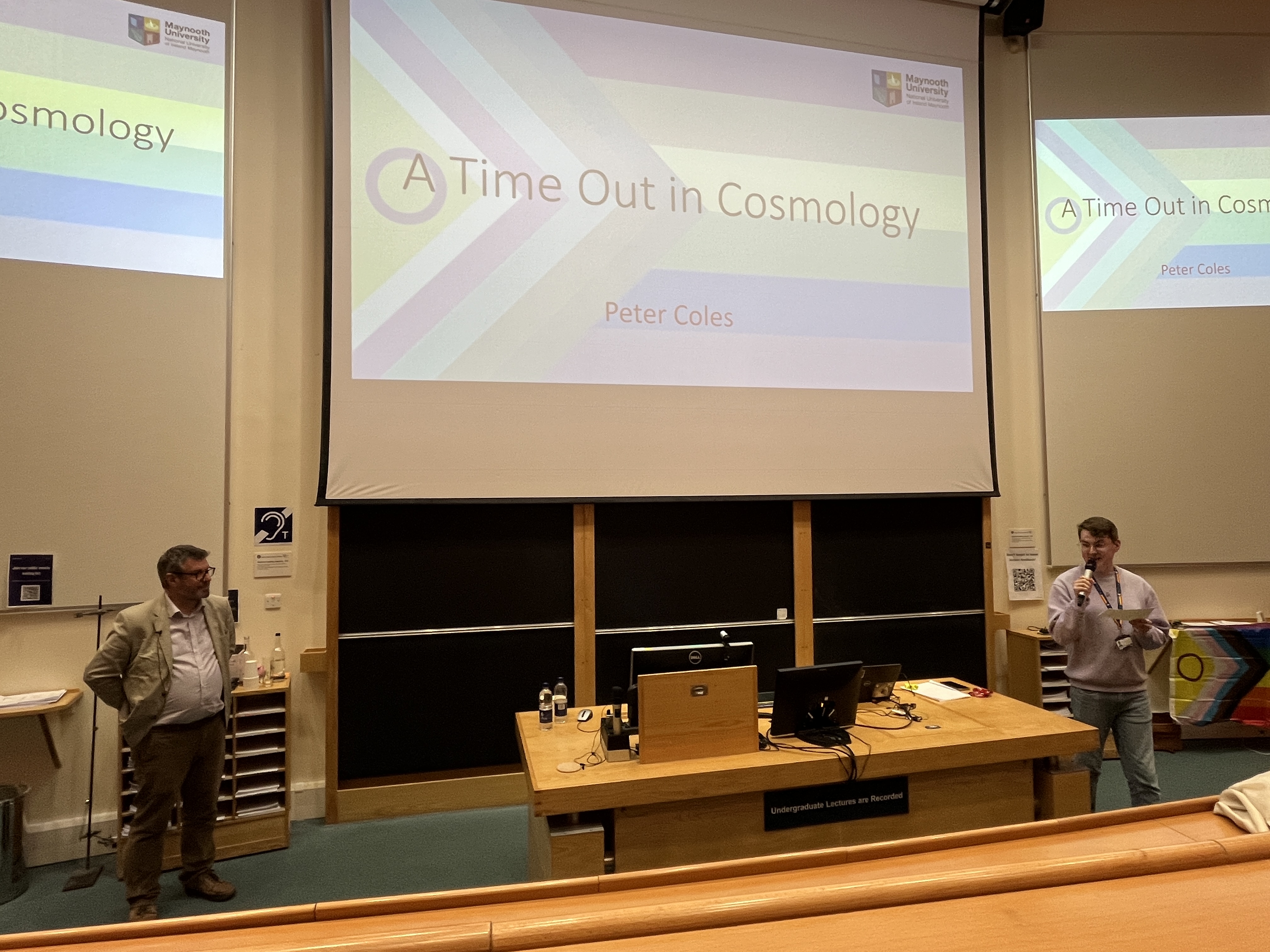
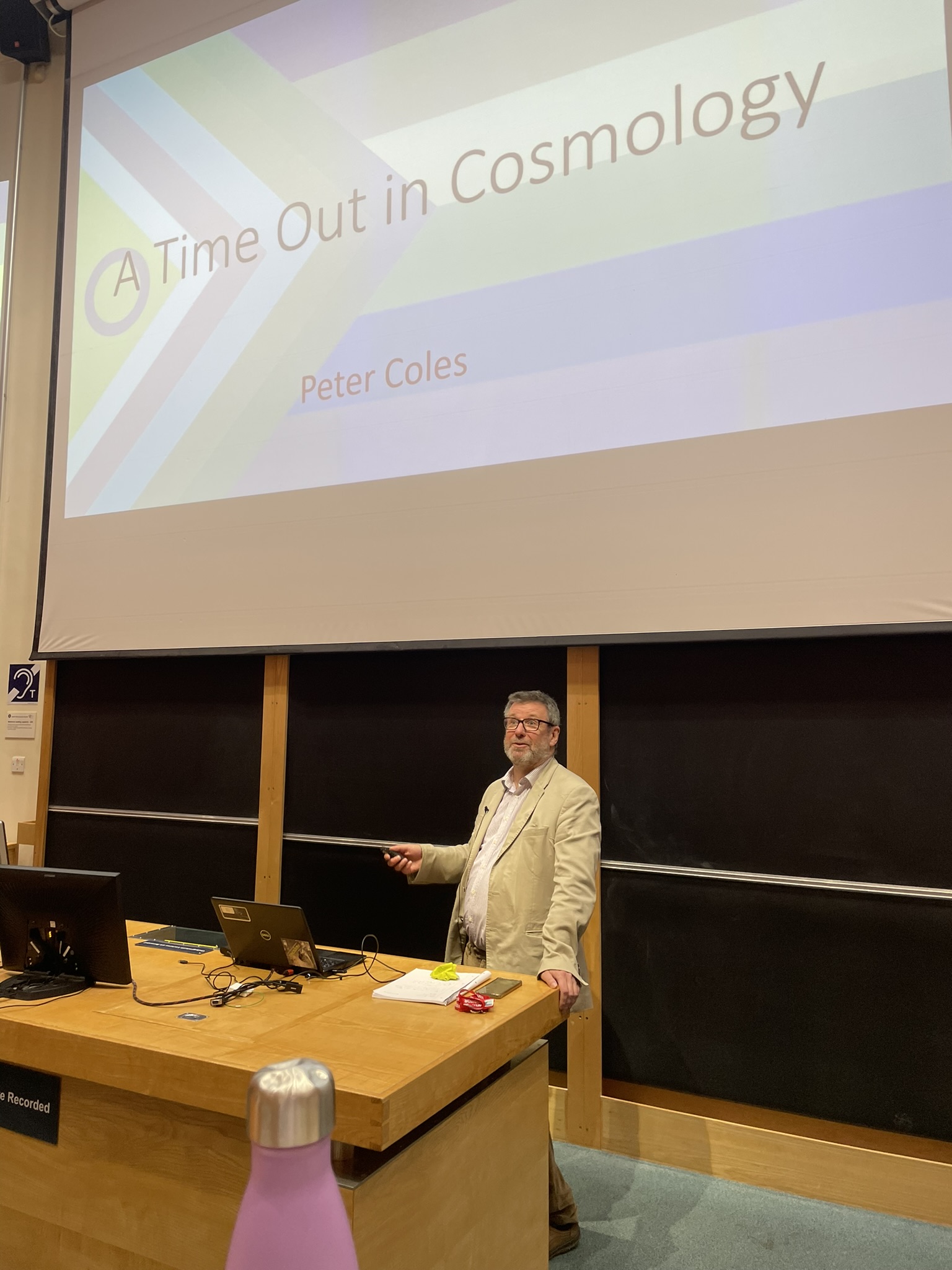
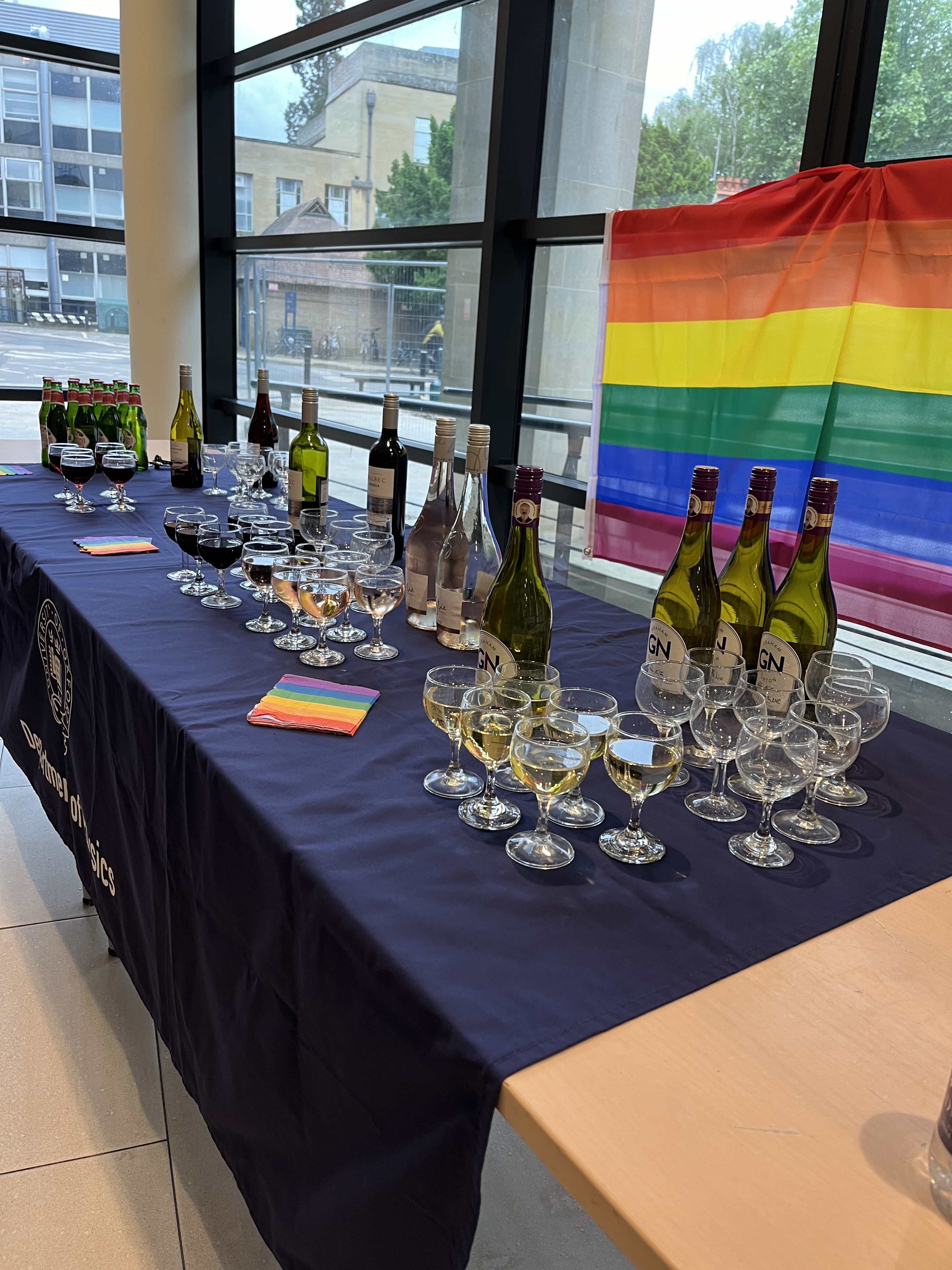
I gave my talk yesterday as planned. I think it went quite well, although it did involve a few things I’ve never spoken about in public before, so it wasn’t exactly an easy talk to give. I guess about 60 or 70 people attended, mostly from Astrophysics. There was then a drinks reception and then I adjourned with organizer Jake Taylor and a couple of others to the King’s Arms for a few beers and a bite to eat.
I was a little bit worried ahead of the talk because I came down with some sort of bug over the weekend which gave me a sore throat and a bad cough. Fortunately, though, that passed quickly and I got through the lecture OK although I probably sounded a little hoarse.
Anyway, a big thank you to everyone in the Department who helped organize this event, and who looked after me so nicely before and after!
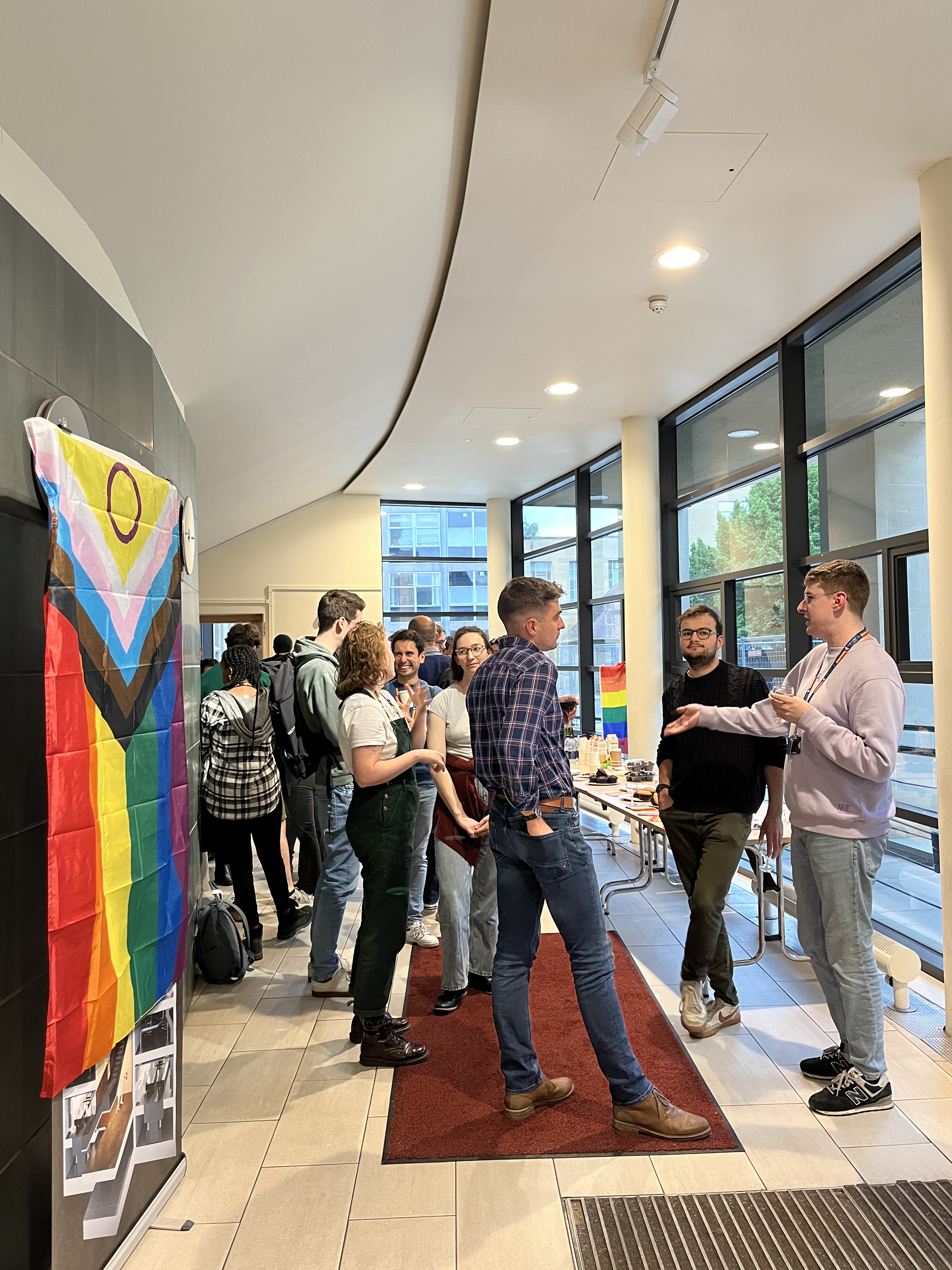
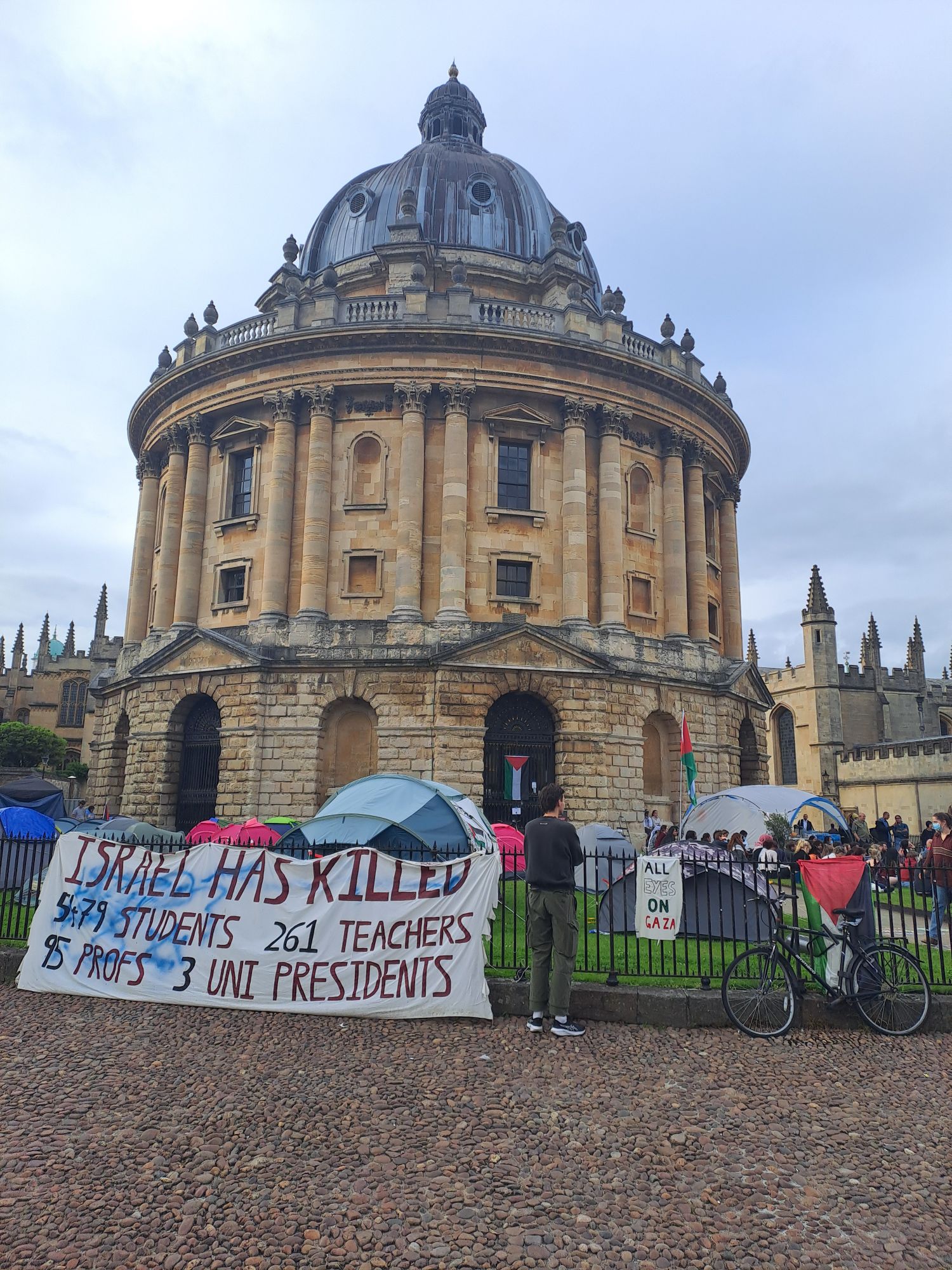
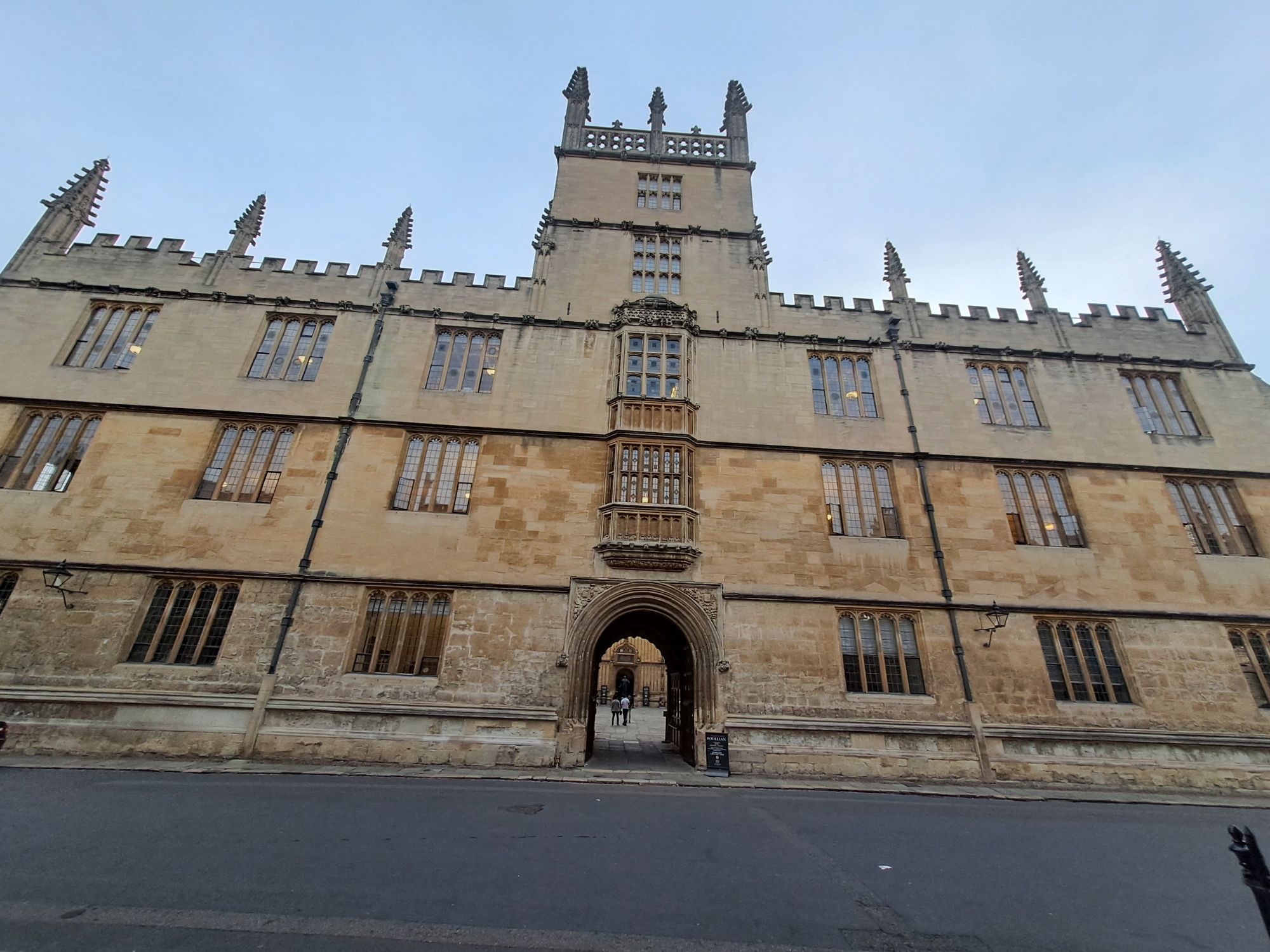
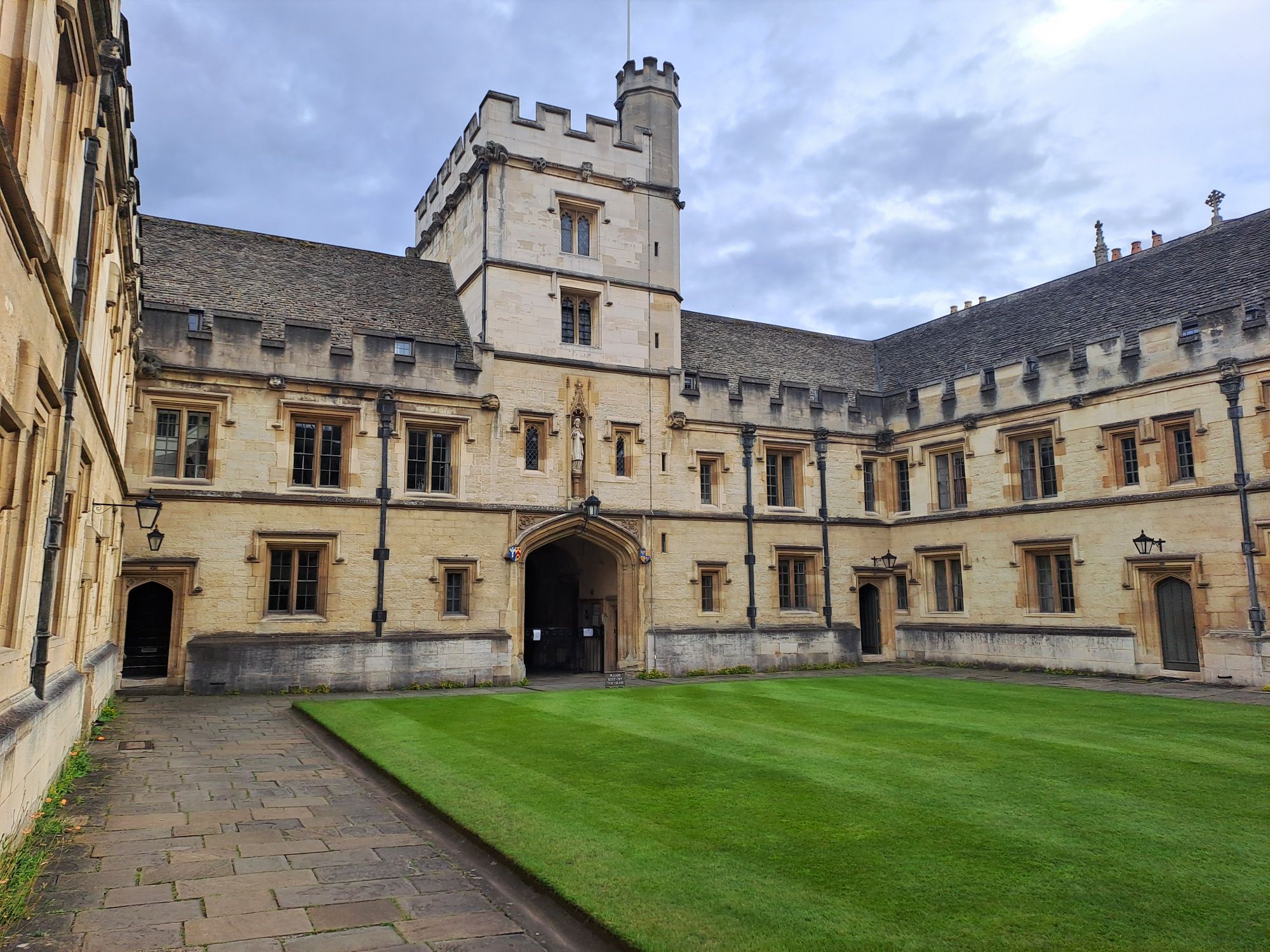
Radcliffe Camera and ProtestNot SureBodleian LibraryAll Souls
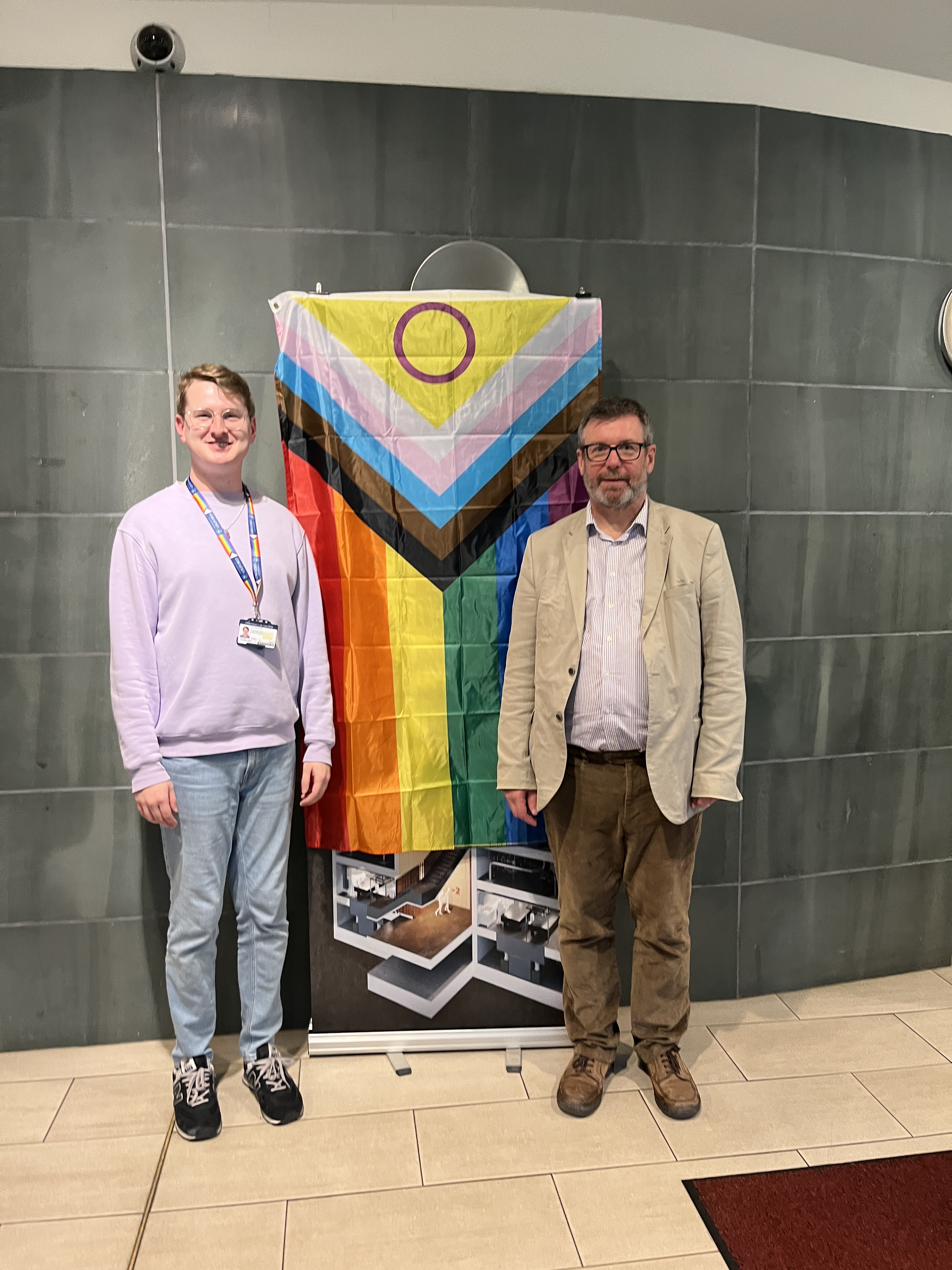
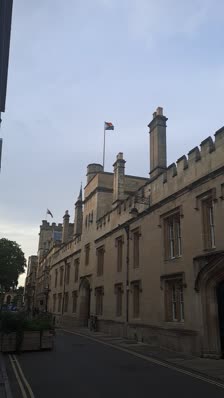
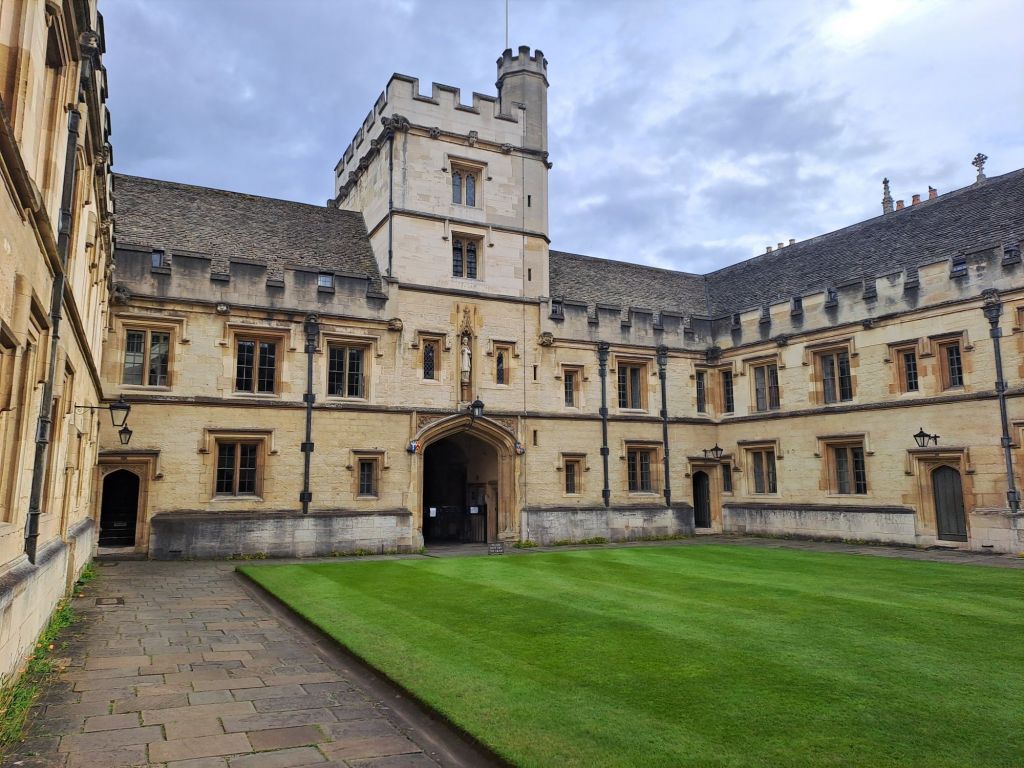
So here I am, among the dreaming spires of Oxford, although I’m not sure whether they are actually dreaming or just asleep. I had a short walk around before heading to the Physics Department this morning to put the finishing touches to my talk for this afternoon. It was nice to see the Pride Progress flags flying over Lincoln College on the way.
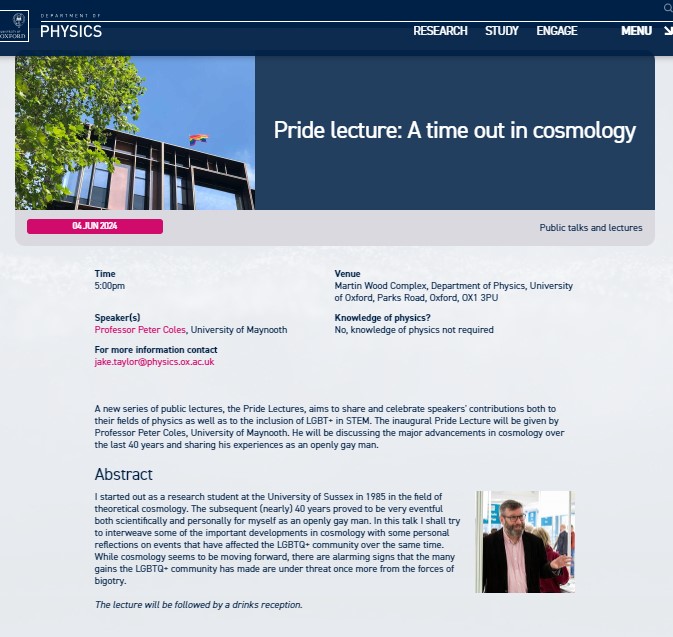
While en route to Oxford I thought I’d do a quick post about the purpose of my visit there, namely to give the inaugural Pride Lecture at the Department of Physics. I’m looking forward to it, and spending a couple of days as a guest of All Souls College. Here’s the promo for the lecture:
This is a public event. I’ve no idea how many people will be there, but I’ll find out tomorrow I suppose!
Let me take this opportunity to wish all of you a very happy Pride Month (which started on Saturday). With its origins as a commemoration of the Stonewall Riots of 1969, Pride remains both a celebration and protest. It’s more necessary than ever now, especially because of the sustained abuse being aimed at trans people from all quarters, from those in political power to those sad losers who have nothing better to do that spend all day tweeting their bigotry on social media.
Anyway, as well as a celebration and a protest, Pride is an opportunity for us all to show solidarity against those who seek to divide us.
Though many LGBTQIA+ people in many countries – even those that claim to be more liberal – still face discrimination, hostility and violence, Pride Month always reminds me of how far we’ve come in the past 50 years ago. As I get older, I find I have become more and more protective towards younger LGBTQIA+ people. I don’t want them to have to put up with the crap that I did when I was their age.
So here I am, not in Barcelona. On Thursday night I flew to the fine city of Newcastle upon Tyne to act as external examiner for a PhD candidate. Since I knew I would be arriving quite late I stayed in a hotel near Newcastle Airport. It was just as well I did so because, it being Ryanair, I arrived even later than expected. On Friday morning I took the Metro from the Airport to Haymarket and spent the morning in the School of Mathematics, Statistics and Physics at Newcastle University ahead of the viva voce examination.
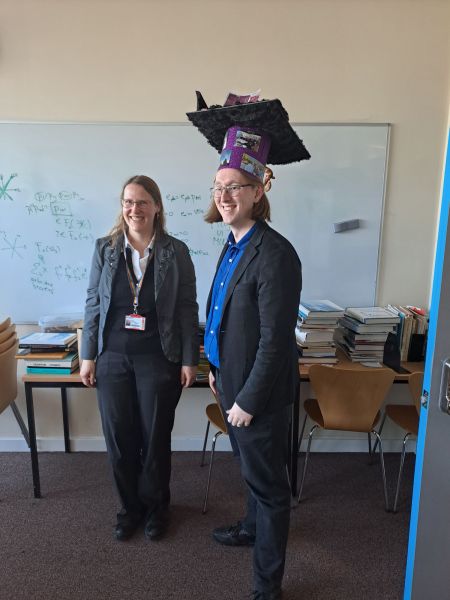
The PhD candidate was Alex Gough (pictured right, after the examination, with supervisor Cora Uhlemann). Cora being German we were treated to the tradition of successful PhD candidates having to wear a elaborate hat, after the examination (fortunately not during it). Some champagne was consumed, followed by dinner at a nice Indian restaurant on Clayton Street.
For those of you not familiar with how the PhD system works in the UK, it involves doing research into a particular topic and then writing up what you’ve done in a thesis. The thesis is a substantial piece of work, often in the region of 100,000 words (200 pages or so), which is then assessed by two examiners (one internal to the university at which the research was done, and one external). They read copies of the thesis and then the candidate has to defend it in an oral examination, which was what happened on Friday, after which they make a recommendation to the university about whether the degree should be awarded.
There aren’t many rules for how a viva voce examination should be conducted or how long it should last, but the can be as short as, say, 2 hours and can be as long as 5 hours or more. The examiners usually ask a mixture of questions, some about the details of the work presented and some about the general background. The unpredictable content of a viva voce examination makes it very difficult to prepare for, and it can be difficult and stressful for the candidate (as well as just tiring, as it can drag on for a long time). However, call me old-fashioned but I think if you’re going to get to call youself Doctor of Philosophy you should expect to have to work for it. Some might disagree.
Obviously I can’t give details of what went on in the examination except that it was quite long primarily because the thesis was very interesting and gave us lots to discuss. At the end internal examiner Danielle Leonard and I agreed to recommend the award of a PhD. In Newcastle as in other UK universities, the examiners simply make a recommendation to a higher authority (e.g. Board of Graduate Studies) to formally award the degree, but they almost always endorse the recommendation. I’ve never been sure exactly when a successful candidate is allowed to call themselves “Doctor”, actually, but congratulations to Dr Gough!
Anyway, the celebratory dinner ended just after Women’s International football match between England and France (which France won) had finished at St James’ Park and the Metro was consequently crammed full, but I got back to the hotel at a reasonable hour. Thank you to everyone in the group, especially Cora and Ian Moss, for being so friendly and making me feel so welcome during this brief visit.
Tomorrow I shall be heading to the part of not-Barcelona known as Oxford, where I believe there is a University of some sort, to give a lecture about which I’ll post more tomorrow.
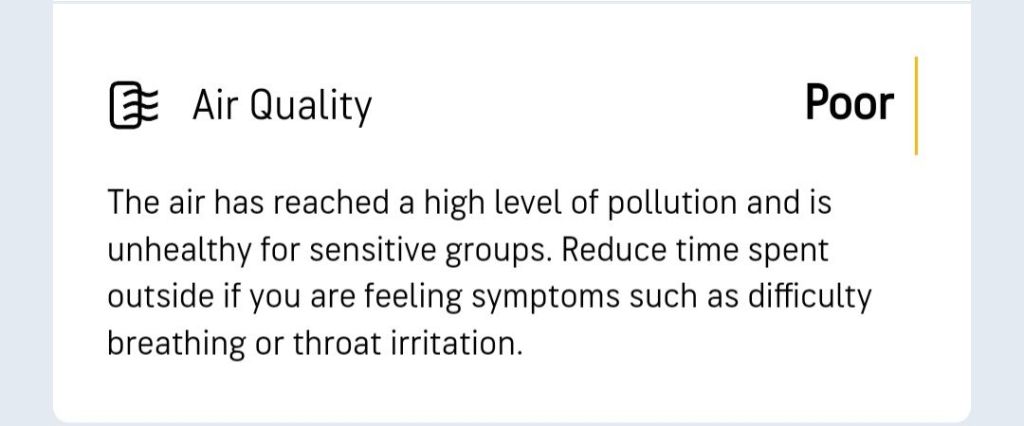
It’s been a warm and rather humid weekend in Barcelona. Yesterday was particularly stifling, with the heat and lack of breeze making things rather uncomfortable. The Air Quality indicator reached “Poor” largely due to high levels of NO2, no doubt from vehicle exhaust fumes. It surprises me that so many people sit out at the pavement tables outside restaurants having meals when it’s hot and the air is thick with nasty stuff. Al Fresco is supposed to mean “in the fresh air”! I much prefer to dine indoors, unless it’s very late at night.
Today was a little better except that there was resurfacing work going on outside my flat on RambladeCatalunya. I knew it was coming, as they’ve been doing other nearby roads over the past few weekends. It was a little noisy, even on the 6th floor, but that didn’t bother me as much as the tar fumes!
Anyway, all this has made me decide not to attempt to extend my stay here beyond my current lease, which expires at the end of June. I’ll take the last two months of my sabbatical somewhere a bit cooler!
I took my first degree in the Natural Sciences Tripos at the University of Cambridge. This involved doing a very general first year comprising four different elements that could be chosen flexibly. I quickly settled on Physics, Chemistry and Mathematics for Natural Sciences to reflect my A-level results but was struggling for the fourth. In the end I picked the one that seemed most like Physics, a course called Crystalline Materials. I didn’t like that at all, and wish I’d done some Biology instead – Biology of Cells and Biology of Organisms were both options – or even Geology, but I stuck with it for the first year.
Having to do such a wide range of subjects was very challenging. The timetable was densely packed and the pace was considerable. In the second year, however, I was able to focus on Mathematics and Physics and although it was still intense it was a bit more focussed. I ended up doing Theoretical Physics in my final year, including a theory project.
My best teacher at School, Dr Geoeff Swinden, was a chemist (he had a doctorate in organic chemistry from Oxford University) and when I went to Cambridge I fully expected to specialisze in Chemistry rather than Physics. I loved the curly arrows and all that. But two things changed. One was that I found the Physics content of the first year far more interesting – and the lecturers and tutors far more inspiring – than Chemistry, and the other was that my considerable ineptitude at practical work made me doubt that I had a future in a chemistry laboratory. And so it came to pass that I switched allegiance to Physics, a decision I am very glad I made.
(It was only towards the end of my degree that I started to take Astrophysics seriously as a possible specialism, but that’s another story…)
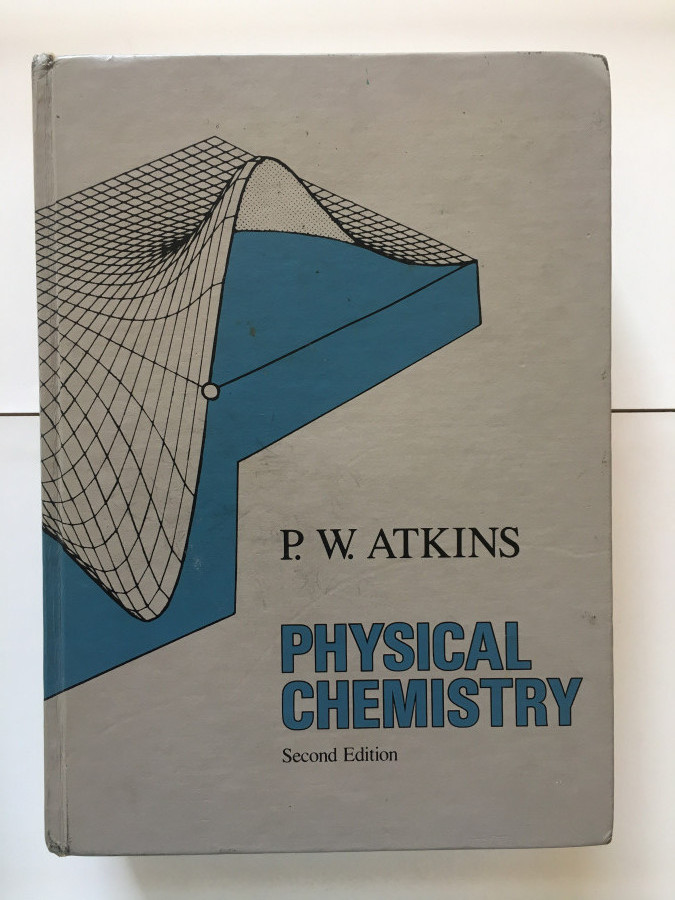
Anyway, when I turned up at Cambridge over 40 years ago to begin my course, and having Chemistry as a probable end point, I bought all the recommended text books, one of which was Physical Chemistry by P.W. Atkins. I found a picture (above) of the 1982 edition which may well be the one I bought (although I vaguely remember the one I had being in paperback). I thought it was a very good book, and it has gone into many subsequent editions. I also found the Physical part of Chemistry quite straightforward because it is basically Physics. I even got higher marks in Chemistry in the first year than I did in Physics but that didn’t alter my decision to drop Chemistry after the first year. When I did so, I followed tradition and sold my copy to a new undergraduate along with the other books relating to courses that I dropped.
Yesterday I found out that Peter Atkins has decided to make one of his books available to download. The book concerned is however not the compendious tome I bought, but a shorter summary called Concepts in Physical Chemistry, which was published in 1995. This is no doubt a very useful text for beginning Chemistry students so I thought I’d pass on this information. You can download it here, although you have to do it chapter by chapter in PDF files.
P.S. Chemistry in Spanish is ‘Química’. Since Physics and Chemistry share the same building in the University of Barcelona, where I am currently working, I frequently walk past rooms with doors marked ‘Quim’ (but I have never taken the opportunity to enter one).
The views presented here are personal and not necessarily those of my employer (or anyone else for that matter).
Feel free to comment on any of the posts on this blog but comments may be moderated; anonymous comments and any considered by me to be vexatious and/or abusive and/or defamatory will not be accepted. I do not necessarily endorse, support, sanction, encourage, verify or agree with the opinions or statements of any information or other content in the comments on this site and do not in any way guarantee their accuracy or reliability.







 In the Dark