Archive for the Biographical Category

Connections and Submissions

Posted in Biographical, Open Access on November 30, 2023 by telescoper

If I have one gripe to make about the otherwise excellent train service between Barcelona and Paris (and back) , it’s that the Wi-Fi connection was very unreliable and at times unusable. That mean that I couldn’t do some of the fairly complicated things I needed to do online because of frequent disconnections. The upside of being disconnected is that I have a good excuse for not attending telecons!

I did manage to publish one paper at the Open Journal of Astrophysics yesterday, because I did the necessary before leaving my hotel in Paris. Unfortunately, I had to wait until I got back to Barcelona to check that everything had been correctly registered with Crossref. Only then could I promote the paper on social media. I’ll probably do a post here tomorrow about it.

These connectivity problems yesterday resulted in me spending most of my first day back in Barcelona catching up with such things as writing Google Docs and editing things via Overleaf but mainly dealing with new OJAp submissions.

There have been three four new submissions today alone, adding to the little backlog that developed over the short periods I was offline. These days we’re getting an average of one paper per day so if I can’t afford to miss many days as then it is difficult to catch up.

The two talks I gave while I was away were both about Open Access publishing in general, and the Open Journal of Astrophysics in particular, but I don’t think today’s little surge in submissions is a direct consequence of me touting for trade as I don’t think any of the authors concerned attended either talk even virtually.

It’s gratifying to see the number of submissions steadily increasing. I am sometimes frustrated – as I’m sure the authors are – by the slowness of the refereeing process but at least that’s no different from other journals I suppose.

Anyway, that’s enough reflections. Hopefully I’ll be able to spend this evening and tomorrow doing some writing of my own. Apart from tomorrow afternoon, when I’ll have yet another telecon…

To Saclay

Posted in Biographical, Open Access, Talks and Reviews with tags , on November 28, 2023 by telescoper

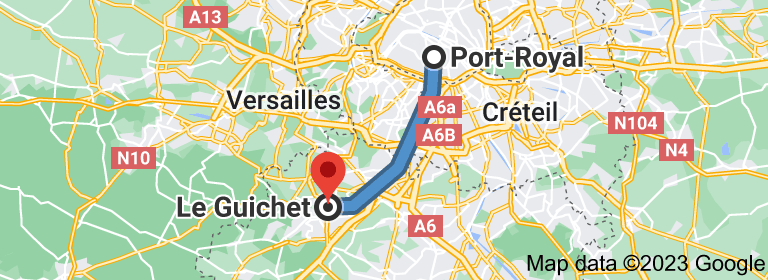
I am up early this morning ahead of a trip to Saclay, best known for CEA Saclay and the relatively new Paris-Saclay University, which involves an approximately 30-minute trip on an RER to Le Guichet, followed by road transport. It’s anomalous that Saclay itself is not served by either train or Metro, though I am told there are plans.

The only significant annoyance about yesterday’s journey was that the WIFI was hopeless, so I had to catch up with a lot of things last night and have more to do today. Still, my talk is this morning so I should have plenty time this afternoon and evening before heading back to Barcelona tomorrow.

Here are the slides I used for my talk, which was virtually identical to the one given at Montpellier last week.

Update: It has been a long day. I’m now back in the hotel in Port-Royal. The new Paris-Saclay campus is very impressive. The IPhT is a bit older and of a different style but is a nice working environment. Thanks to everyone there for their hospitality and especially for the splendid lunch after my talk!

Tour de France – Deuxième Étape

Posted in Biographical with tags , on November 26, 2023 by telescoper

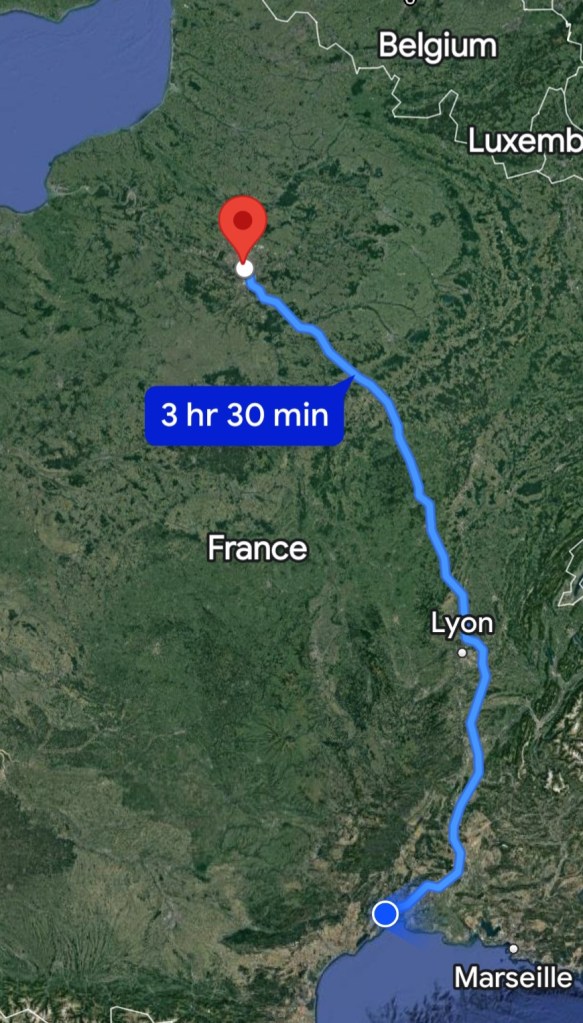
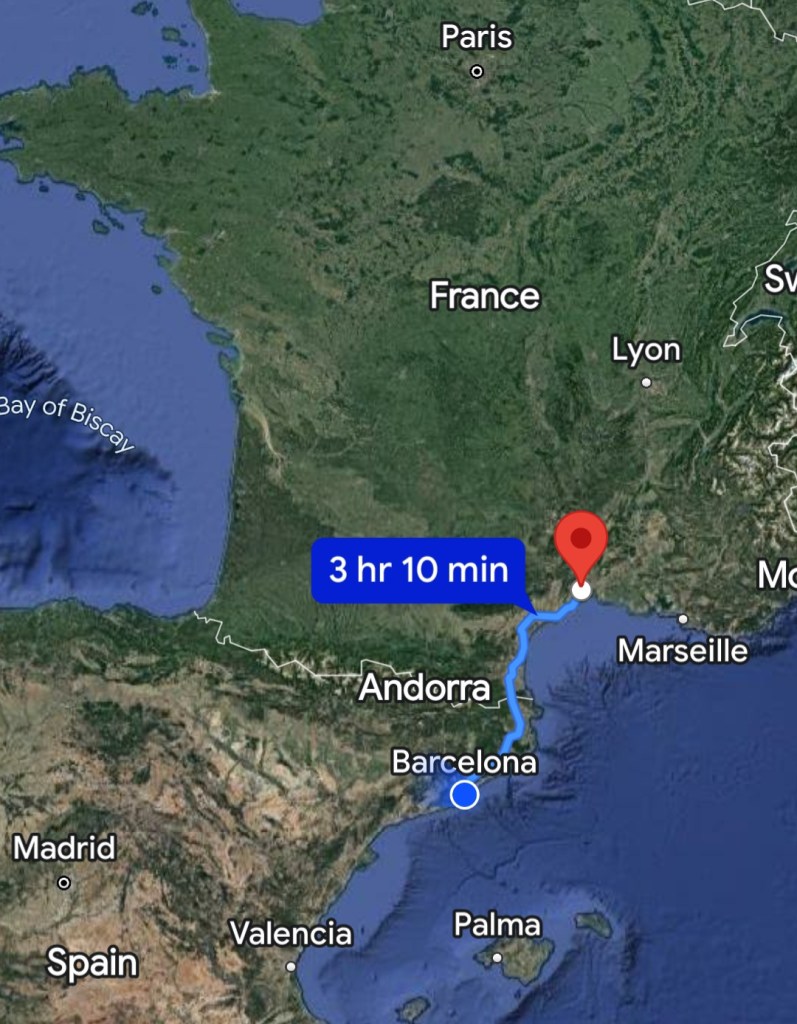
So here I am, then, in my room in Montpellier, about to have breakfast and then to depart for the train to Paris. Hopefully, I’ll get to my hotel there in time for the three consecutive hours of Zoom calls I have scheduled for this evening. I’ll be spending tomorrow at the Institut de Physique Théorique in Saclay, which will require a combination of trains and buses, but for today I just have to get the TGV from Montpellier Saint-Roch to Paris Gare De Lyon and an RER train from there to my hotel. What could possibly go wrong?

Thank you to everyone in Montpellier for their hospitality during this short visit. Au revoir!

Update: On my way on time. Momentary panic as I tried to embark because the OUIGO app refused to display my ticket so I couldn’t find out which seat I was supposed to sit in, but it worked eventually. This train isn’t as fancy as the one I got from Barcelona and is rather full but nevertheless comfortable enough.

Update to the Update: arrived in a very grey and misty Paris on schedule and managed to find my way to the hotel and even managed the whole check-in experience in French! Now I have three hours of telecons to complete before thinking about dinner…

Random Shots of Montpellier

Posted in Biographical, History with tags , , , , on November 25, 2023 by telescoper

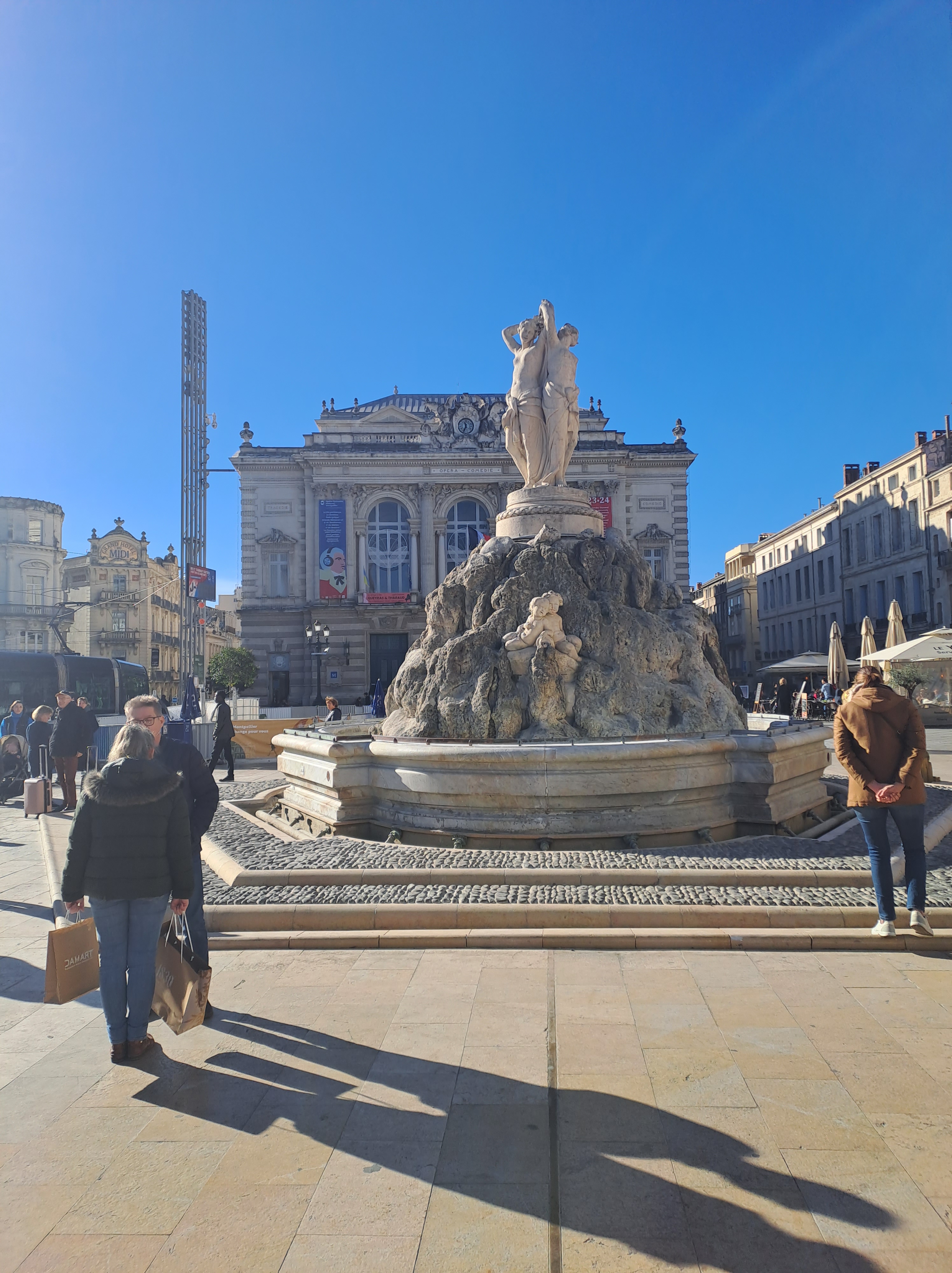
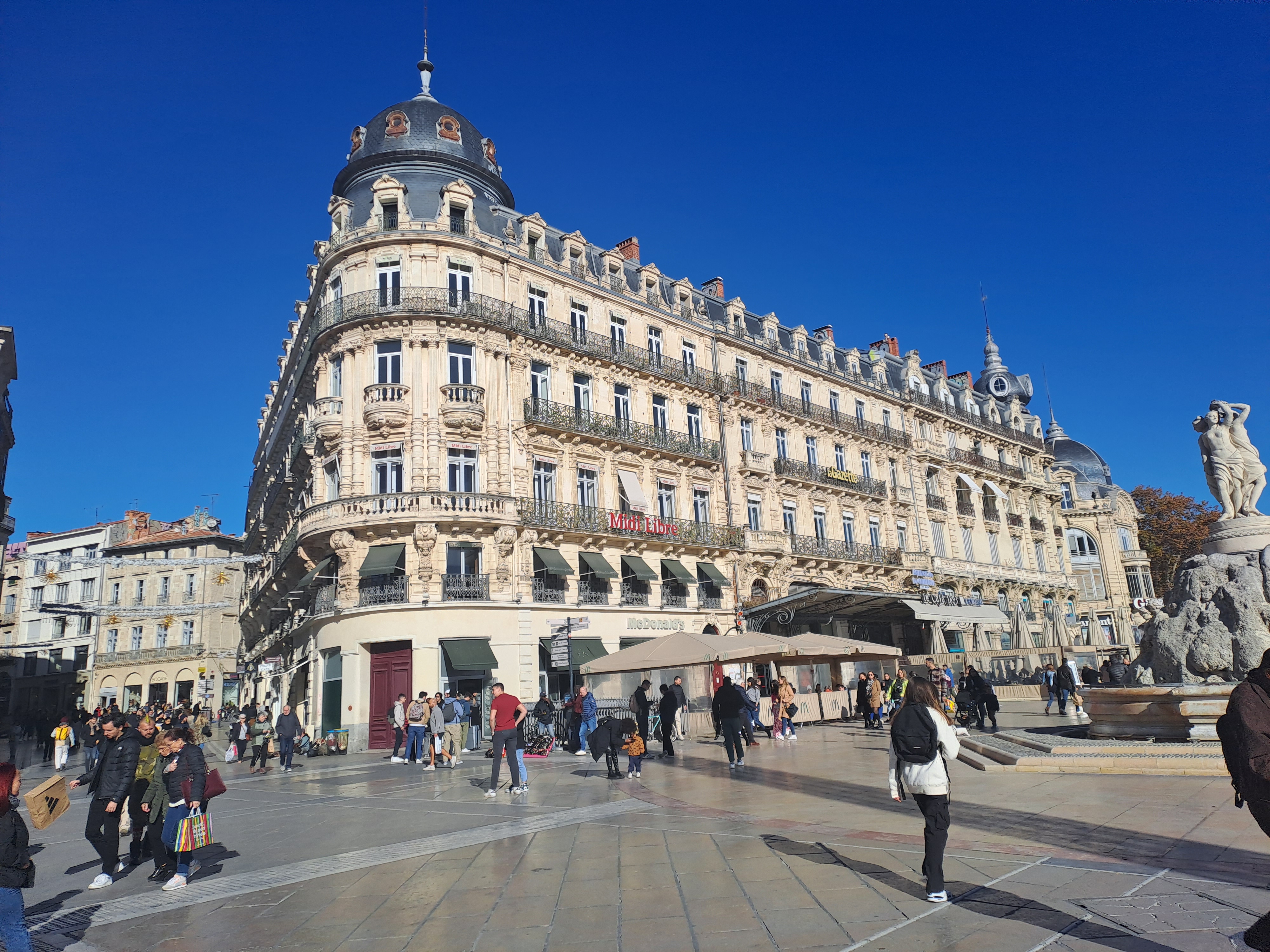
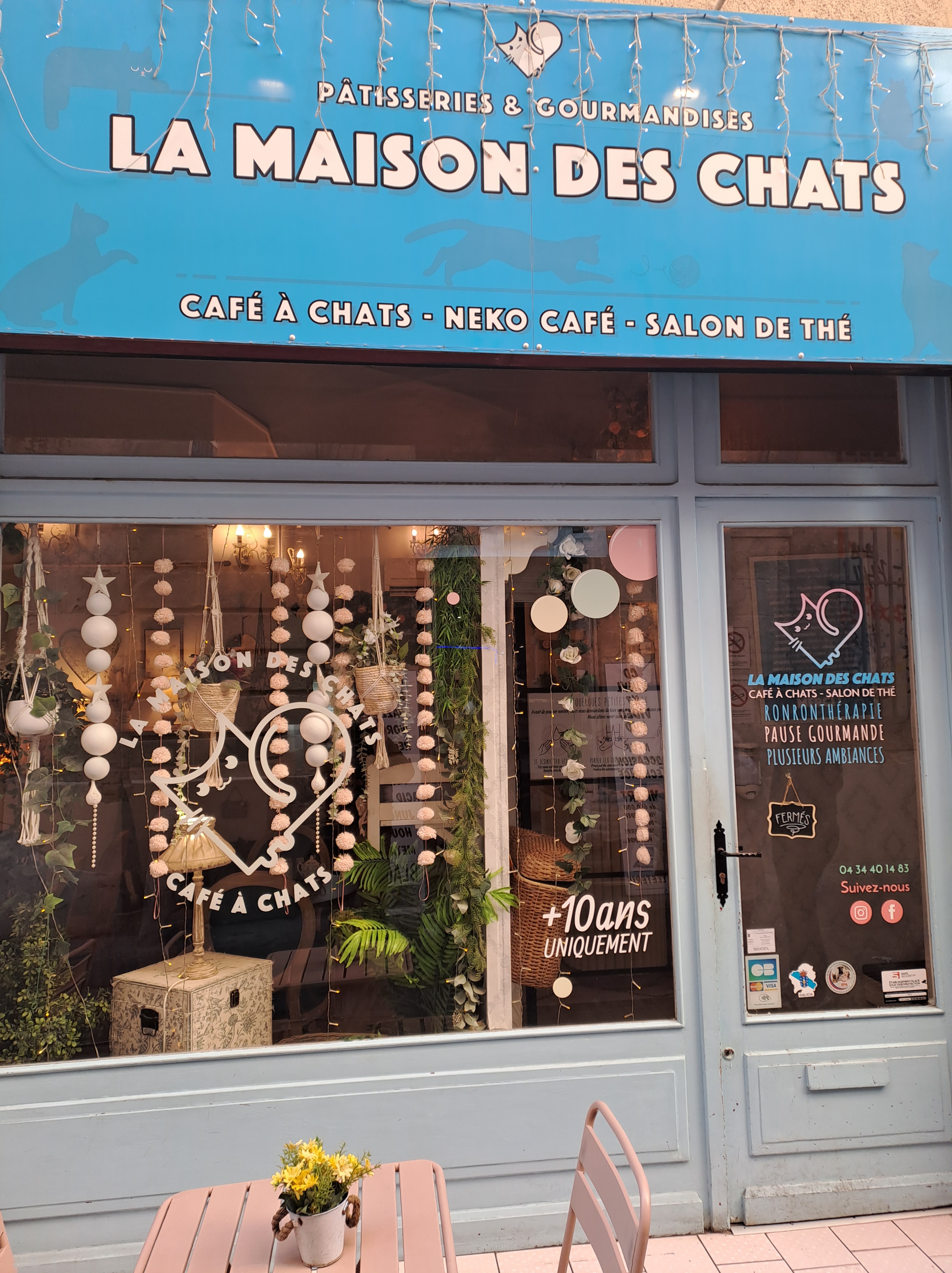
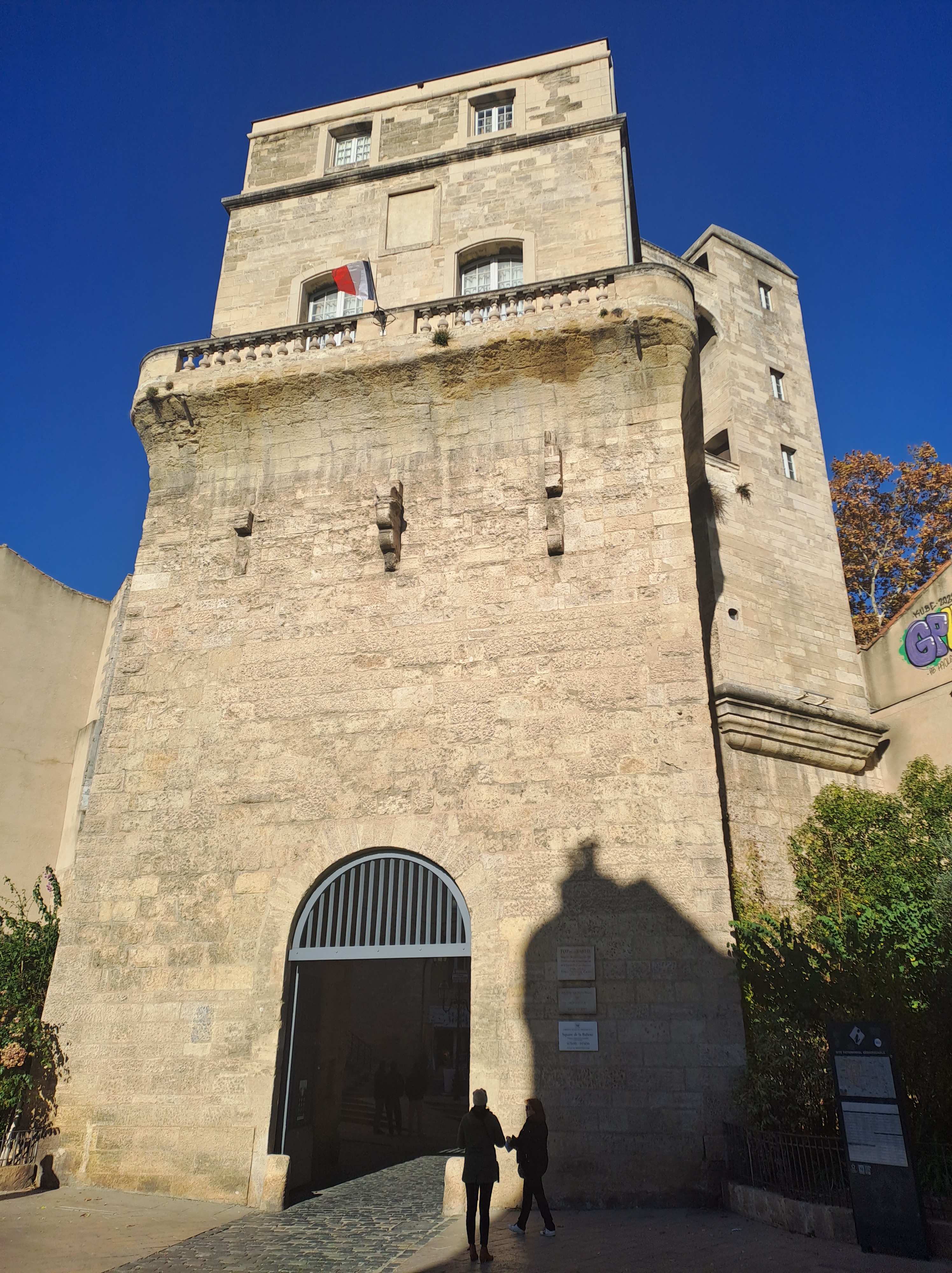
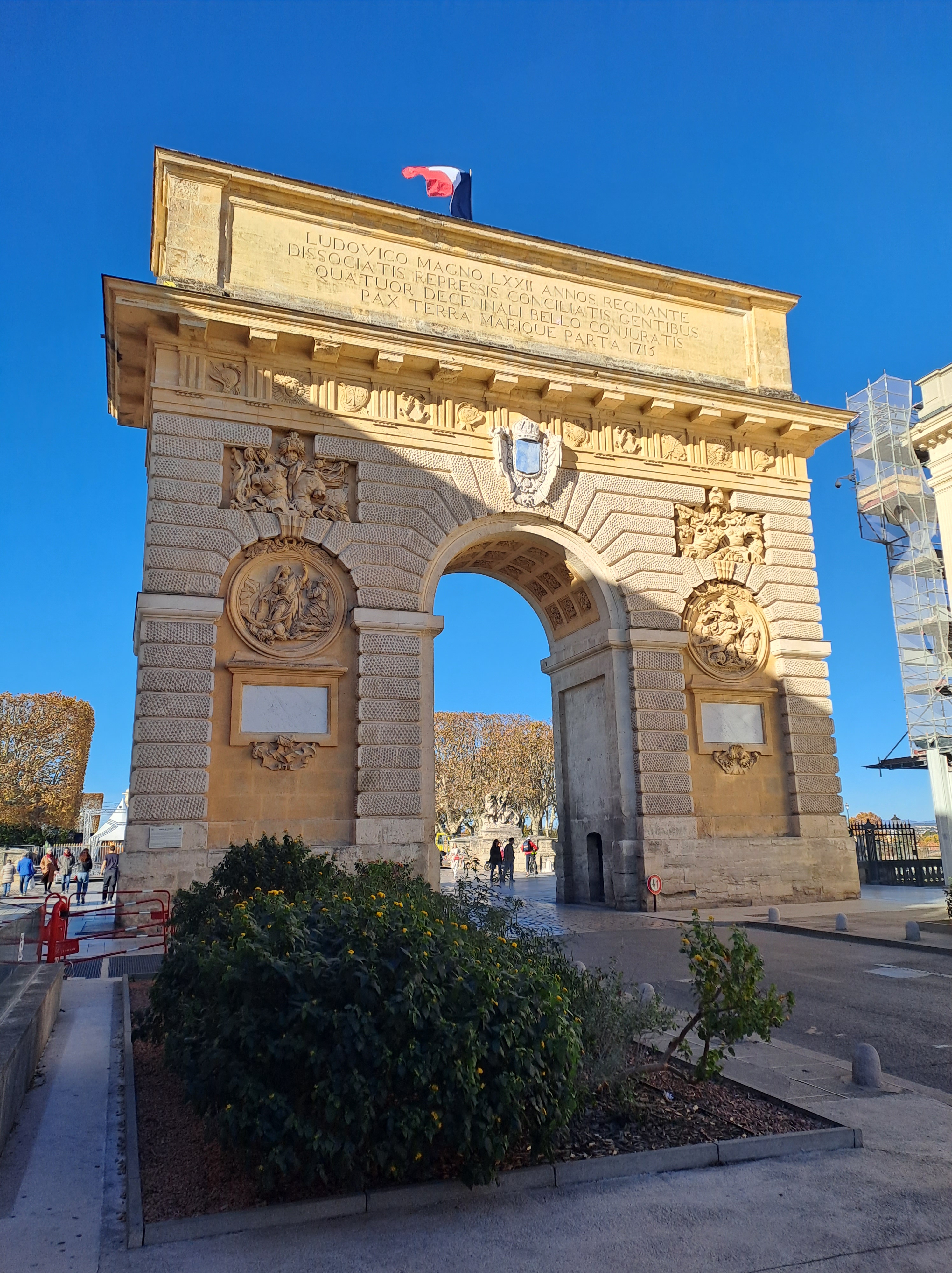
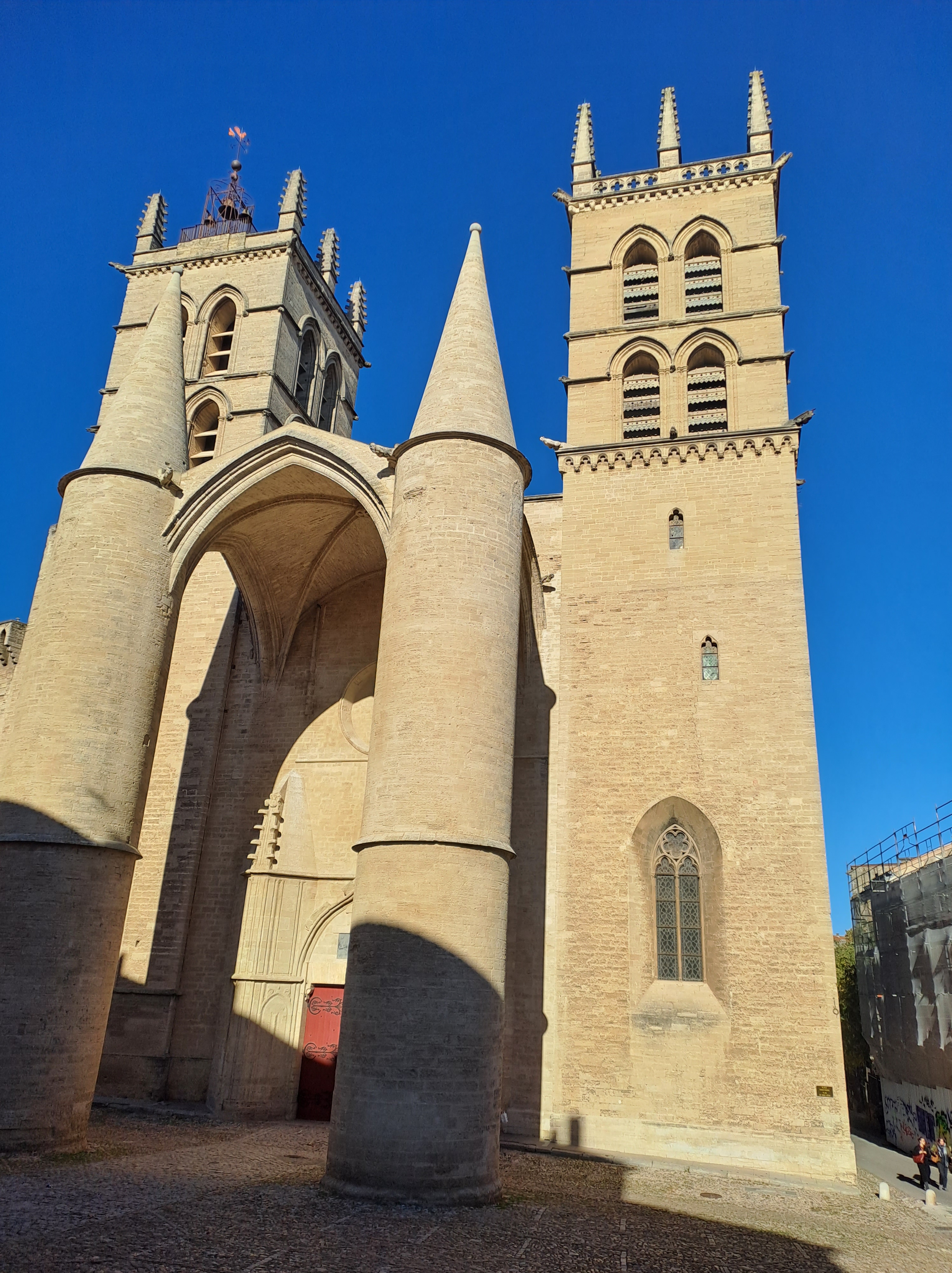
Having a few hours to spare this morning, I took a walk around Montpellier in the sunshine. I can tell you that the layout of the old part of the city, which hasn’t changed since mediaeval times, is a labyrinth in which it is very easy to get lost but if you’re not going anywhere in particular it’s fun wandering around. At night it’s very atmospheric too. Anyway, here are some random pics I took on the way. As you can see, the weather was lovely and you always get interesting shadows from the winter sun…

While I am on the blog, I thought I would mention one of Montpellier’s famous historical connections, Michel de Nostredame (1503-1566), more usually known as Nostradamus, who studied medicine at the University here for a while before he was expelled. I searched the Prophecies of Nostradamus which you can find online, and found no reference to my visit to Montpellier. Incidentally, the University of Montpellier was founded in 1220 so is one of the oldest universities in the world. La Tour de la Babotte was part of the fortifications of the old city and was later used for a time as an astronomical observatory.

P.S. the oldest remains in Montpellier are medieval. The Romans never settled here; the main settlement in the area was Maguelone, on the coast. The administrative centre of the region was moved to Montpellier, which is 10km inland, to avoid raids from pirates.

Université de Montpellier

Posted in Biographical with tags , on November 24, 2023 by telescoper
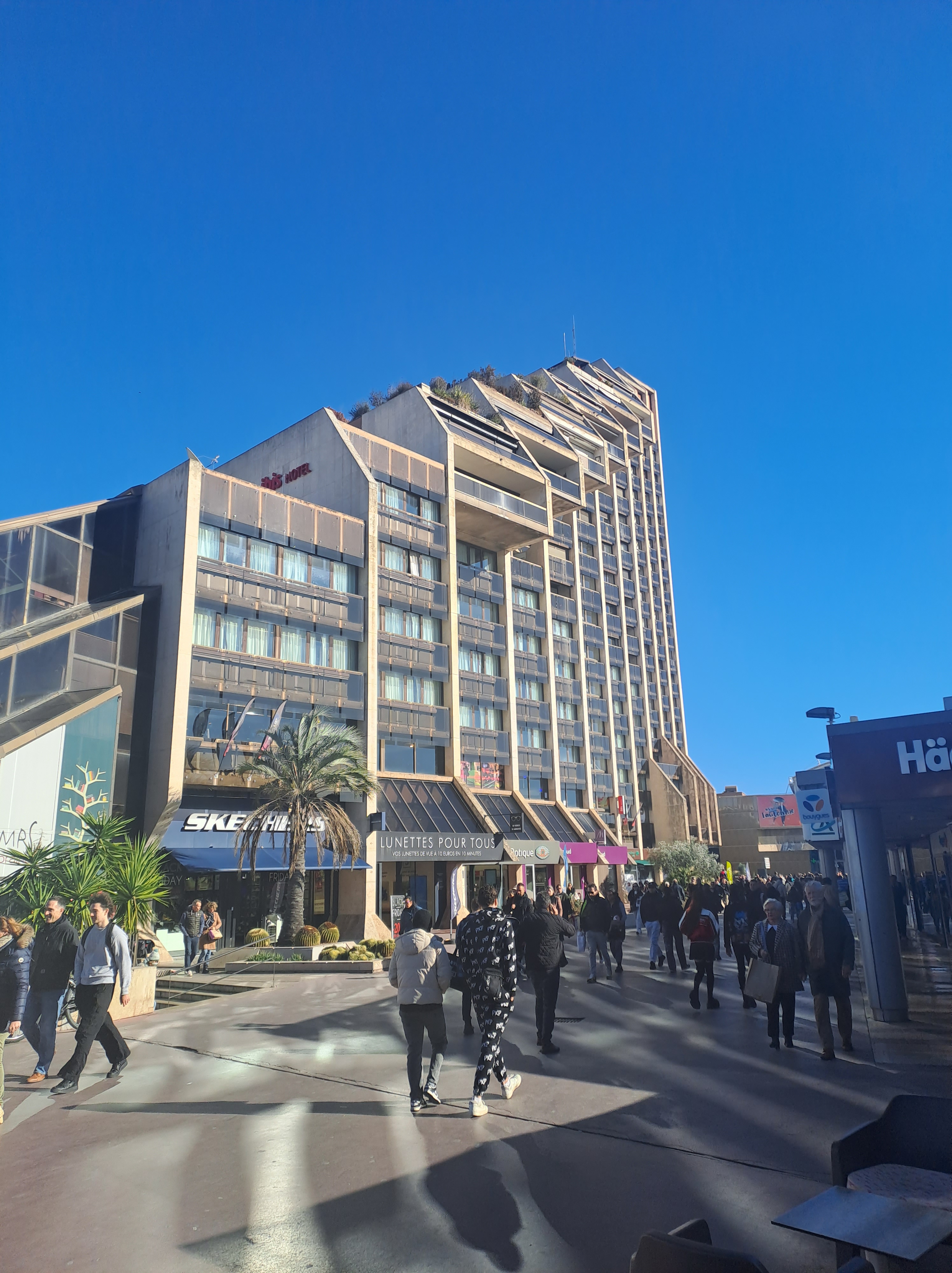
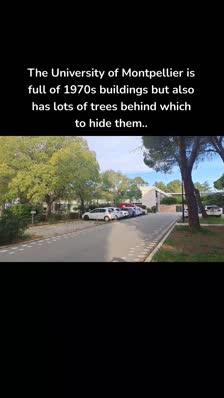
The University of Montpellier is full of 1970s buildings but also has lots of trees behind which to hide them..

Tour de France – Première Étape

Posted in Barcelona, Biographical with tags , on November 22, 2023 by telescoper
First Leg

I’m up reasonably early this morning to embark on the first leg of a visit to France. My first stop is at Montpellier on the French Riviera, where I’m giving a talk this afternoon at the Laboratoire Univers et Particules de Montpellier (LUPM) and will be staying for a few days before heading North to Paris and then back South again to Barcelona next week.

I’m looking forward to the trip as all three legs are on TGVs, which I’m told are comfortable, and I’ll hopefully get some nice views on the way. I’ve actually been to Montpellier before, to be on the jury for a PhD examination, but that was a long time ago and I don’t remember it very well.

Update: the travel went smoothly. It was a bit of an adventure getting the tram from Montpellier Saint-Roch railway station to the campus, and a bit more of an adventure navigating the building sites on the way to the seminar venue, but I got there in time and the talk went well. Now I have to find my hotel and then it will be necessary to consume alcoholic beverages.

Thoughts of Retirement

Posted in Barcelona, Biographical, Maynooth, Open Access, The Universe and Stuff with tags , , , on November 19, 2023 by telescoper

I’ve been reviewing my situation while here in Barcelona. One of the themes that keeps popping into my head is well expressed by part of a little speech by Colonel Nicholson in The Bridge on the River Kwai:

But there are times… when suddenly you realize you’re nearer the end than the beginning. And you wonder, you ask yourself, what the sum total of your life represents. What difference your being there at any time made to anything – or if it made any difference at all, really. Particularly in comparison with other men’s careers. I don’t know whether that kind of thinking’s very healthy, but I must admit I’ve had some thoughts on those lines from time to time.

Healthy or not I’ve also had thoughts along those lines, and sometimes feel I should step aside and create a job opportunity for someone younger. I know my employer wouldn’t mind if I did that either. They’d much prefer replacing me with someone cheaper and more compliant than me. I think if I asked for early retirement they would probably jump at the chance. I’d miss the teaching and the students, of course,

The fact of the matter is though that I can’t afford to retire yet. I have a mortgage to pay and I’ve only had five full years of pensionable service in the Irish system, so won’t get much of a pension. I have the frozen residue of my UK pension, of course, but that is subject to an actuarial reduction if I take the benefit before I’m 65, which is also the standard retirement age for academic staff in Ireland. I can’t be made to retire here until I’m 70, in fact, but I think I’ll be well beyond my best-before date by then and am not keen to overstay my welcome.

So it looks like I’ll have to stay until I’m 65 at the earliest. In fact I won’t be able to collect the State Pension (SPC) until I’m 66, so I’ll probably have to stay another year. That means that when I get back from sabbatical I will have four or five years left until I can retire. I don’t know what I’ll be teaching when I return but I hope I get a chance to teach a few new modules before the end. In particular some cosmology or astrophysics would be particularly nice. All this is predicated on: (a) me living long enough; and (b) Physics at Maynooth not being closed down; neither of these is certain.

When I moved to the Emerald Isle in 2017 I supposed that I would carry on living in Ireland after retiring. Now I’m having some doubts about that. I have been advised by medical experts that my arthritis would be more tolerable in a warmer climate. And there’s the cost of living in Ireland, which is much higher than Spain. I can imagine living here, actually, though I think Barcelona itself might be a bit expensive for a pensioner. Somewhere in the surrounding countryside, or along the coast, might be nice. I’ve got a few years to think about that.

Another thing in my mind is what will happen to the Open Journal of Astrophysics when I retire? I would like some larger organization or community to take it over in the long term. It’s not expensive to run, actually, but someone would have to take over as Managing Editor. Moreover, I don’t think it’s really fair to expect one small University in Ireland to bear the full cost of a global astrophysics journal indefinitely.

The Geometry of Barcelona

Posted in Architecture, Barcelona, Biographical with tags , , , on November 11, 2023 by telescoper

Having a lazy Saturday morning before going out to do some shopping I thought I’d do a silly post about a few random things that struck me about Barcelona. As I have mentioned before, I am resident in area of the city known as Eixample. Most of this zone was built in the 19th and early 20th centuries and its layout was very carefully planned, as you can see from this aerial picture:

I initially thought that the name Eixample related to the exemplary nature of the area, but in fact it means something like “extension”; the “ample” has a similar sense to the English “ample”.

To orient yourself, the Sagrada Familia is towards the bottom left. In the middle of the top you can see Plaza de Cataluña. Near that there is a junction of two wide tree-lined roads; the one running from SW to NE (relative to the picture) is the Gran Via de les Corts Catalanes (which is actually 8 miles long altogether); the one perpendicular to the Gran Via is Passeig de Gràcia. My apartment is a few blocks SW of this junction. You can see to the top left how the pattern of streets changes, as you approach the older part of town, the harbour and the sea.

Anyway, the street plan of Eixample is generally rectangular but if you look carefully you will note that the footprint of the blocks is not quite rectangular; the corners are shaved off to make them octagonal. This is a very nice feature because it means that visibility around the corners is very good and there is a lot of pavement space near the entrances. Many of these buildings now have a bar or restaurant on the ground floor and there is plenty of room for seated areas. Above all, combined with the wide boulevard-type roads, this gives this densely-populated area a much less claustrophobic feel than other cities with rectilinear street layouts, such as New York. Note also that each block encloses a communal space which contains private gardens, play areas, etc, though some appear to have been built over especially.

The road passing diagonally through the picture is called, um, Avenida Diagonal. It plays a rather similar role to Broadway in Manhattan.

As well as A. Diagonal, Barcelona has A. Parallel. In Spanish this is called Avenida del Paralelo; in Catalan it is Avinguda del Paral·lel. The signs on the Metro are all in Catalan so the one on the Metro station on this road says Paral·lel. I was puzzled for some time by the dot between the two letters “l” but it’s quite straightforward. In Catalan (and Spanish) the diagraph “ll” (which used to be listed a separate letter of the alphabet) is pronounced like the English letter “y”, e.g. in paella and amontillado. The dot in Paral·lel is there to indicate that it’s not the letter “ll” in the middle but two letters “l” next to each other and is pronounced para-lel rather than para-yel. The Spanish word “Paralelo” avoids this problem by simply dropping an “l”.

Now it’s nearly time to get ready to go out. The temperature here has fallen noticeably over the last few weeks. It was around 15° last week with a stiff westerly breeze. That was enough to persuade some of the locals to put on their winter coats, scarves and woolly hats although to me it still felt warm when in the sun. Today is about 19° C. The cooler weather makes it far less sweaty and much more pleasant to walk about. It’s also noticeable that there are fewer tourists around, which has two advantages: (a) one’s mean free path between people is longer and (b) it’s much easier to get into places of interest. I hope to ramp up my visits to museums and art galleries between now and Christmas.

Back to Barcelona!

Posted in Art, Barcelona, Biographical with tags , , on November 5, 2023 by telescoper

After a brief sojourn in not-Barcelona, I’m about to start the trip back. I have a busy week ahead so I hope the journey is relatively stress-free. I’ll be making another trip in a few weeks to a different part of not-Barcelona and I really need to finish a couple of things before then.

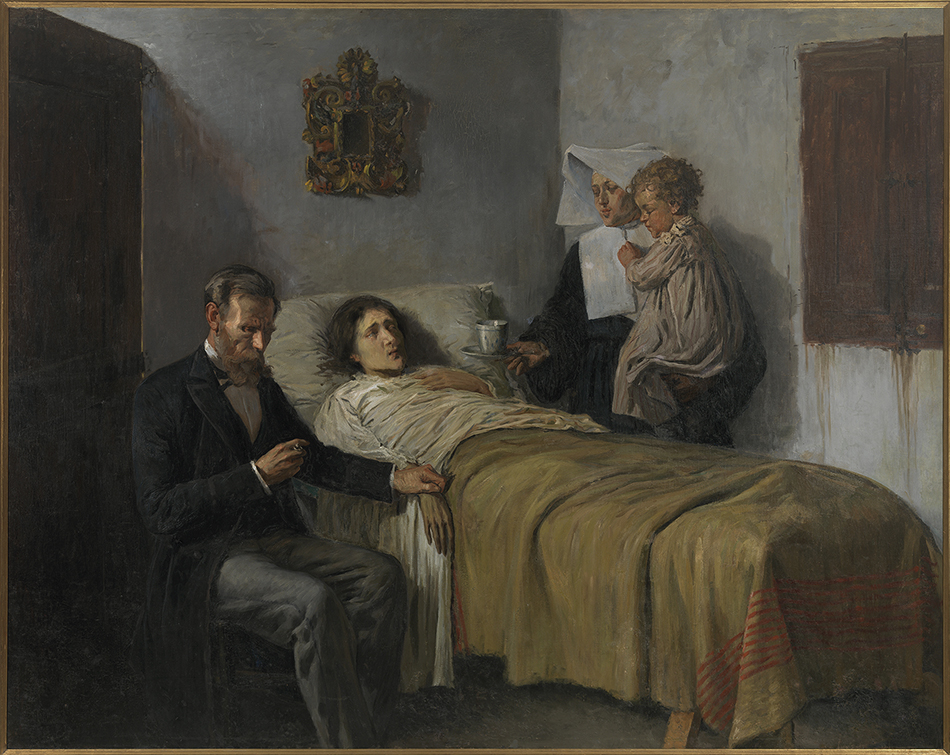
Anyway, lacking the time for a longer post, I thought I’d post a little art quiz. Without googling, or any other form of cheating, can you identify the artist who painted this:

Name the Artist

I’ll post the answer when I get back to Barcelona.

UPDATE 1: the journey wasn’t bad at all. My plane was a bit late but the arrivals process at Barcelona was super-efficient and I walked straight out of the Terminal building and onto the excellent Aerobus which took me to Plaça de Catalunya, which is a five-minute walk from my apartment. As I expected, it’s quite a lot warmer in Barcelona than in not-Barcelona.

UPDATE 2: The painting is called Science and Charity and it is attributed to Pablo Ruiz Picasso (although his father José Ruiz -also a painter – may have helped him. In any case, Picasso was only about 15 years old when he painted it. I don’t think it’s a really great painting – the composition looks a bit stiff and contrived to me – but it is interesting to see the young Picasso experimenting in a style that could be describe as social realism and which is very far from his later work. Incidentally, Picasso signed his early work Pablo Ruiz, but his signature subsequently evolved to Pablo Ruiz Picasso to Pablo R Picasso to Pablo Picasso and finally to Picasso. People have wondered why he did that, but it’s probably just because he wanted to be distinctive: Ruiz is a fairly common name in Spain whereas Picasso is not.

Luck, Privilege and Academia

Posted in Biographical with tags , , , on November 4, 2023 by telescoper

Quite a few times on this blog I have acknowledged the tremendous amount of luck I have had all the way through my career, not least that the opportunity which led to my current position in Maynooth came up when exactly when it did. Another thing that has played a role has been privilege, defined not only in terms of race and social class but also educational and institutional background. Those of us who have benefitted from this are often blind to its influence, preferring to think we achieve things purely on merit.

This morning I read a piece by Izzy Jayasinghe that articulates similar thoughts from the point of view of the author’s own personal experiences. It’s a piece that’s very well worth reading and puts things better than I’ve ever managed to do.

The main point of this post is to draw attention to Izzy’s article, but I thought I’d take the opportunity to pass on links to another couple of pieces I have mentioned on this blog over the years.

The first is a paper on the arXiv by Brian Skinner, which has the abstract:

One of the major benefits of belonging to a prestigious group is that it affects the way you are viewed by others. Here I use a simple mathematical model to explore the implications of this “prestige bias” when candidates undergo repeated rounds of evaluation. In the model, candidates who are evaluated most highly are admitted to a “prestige class”, and their membership biases future rounds of evaluation in their favor. I use the language of Bayesian inference to describe this bias, and show that it can lead to a runaway effect in which the weight given to the prior expectation associated with a candidate’s class becomes stronger with each round. Most dramatically, the strength of the prestige bias after many rounds undergoes a first-order transition as a function of the precision of the examination on which the evaluation is based.

arXiv: 1910.05813

You can read the full paper here. The author acknowledges the role that blind luck played in his own career but also develops a simple mathematical model of prestige bias. It’s an interesting paper, well worth a read.

Luck plays a definite role in winning grant funding. Having been on grants panels I’m away that many very good proposals are not funded. A scoring system is generally used that introduces some level of objectivity into the process, but the fact is that a lot of proposals come out with similar scores and the ranking of these is a bit arbitrary. A slightly different panel would produce slightly different scores, but perhaps a large difference in ranking would result.

This is one of the issues discussed in a paper on the arXiv (by Pluchino et al) with the title Talent vs Luck: the role of randomness in success and failure that discusses the role of good fortune in scientific careers. This is the abstract:

The largely dominant meritocratic paradigm of highly competitive Western cultures is rooted on the belief that success is due mainly, if not exclusively, to personal qualities such as talent, intelligence, skills, efforts or risk taking. Sometimes, we are willing to admit that a certain degree of luck could also play a role in achieving significant material success. But, as a matter of fact, it is rather common to underestimate the importance of external forces in individual successful stories. It is very well known that intelligence or talent exhibit a Gaussian distribution among the population, whereas the distribution of wealth – considered a proxy of success – follows typically a power law (Pareto law). Such a discrepancy between a Normal distribution of inputs, with a typical scale, and the scale invariant distribution of outputs, suggests that some hidden ingredient is at work behind the scenes. In this paper, with the help of a very simple agent-based model, we suggest that such an ingredient is just randomness. In particular, we show that, if it is true that some degree of talent is necessary to be successful in life, almost never the most talented people reach the highest peaks of success, being overtaken by mediocre but sensibly luckier individuals. As to our knowledge, this counterintuitive result – although implicitly suggested between the lines in a vast literature – is quantified here for the first time. It sheds new light on the effectiveness of assessing merit on the basis of the reached level of success and underlines the risks of distributing excessive honors or resources to people who, at the end of the day, could have been simply luckier than others. With the help of this model, several policy hypotheses are also addressed and compared to show the most efficient strategies for public funding of research in order to improve meritocracy, diversity and innovation.

arXiv: 1802.07068

Postscript: I remember a conversation I once had with Lev Kofman – a far more significant scientist than me – during which he called me a “fucking lucky bastard” because of some guesswork that led to a result in a paper of mine that turned out to be right. For a moment I thought he was being abusive but then, with a smile, he added “Welcome to (the)* Club”.

*Lev, like many Russians, never really got the hang of articles; the definite article in parentheses is my addition.

P.S. My good fortune in surviving academia, of course, pales into insignificance when compared to this.