Archive for the Biographical Category

The Joy of Latin

Posted in Biographical, Education, Politics with tags , , , on July 31, 2021 by telescoper

This morning I noticed a story in the Guardian that Latin is to be taught in 40 UK state secondary schools had provoked some rather extreme reactions on social media. I hesitated to comment on this lest it appear that I have any respect or confidence in Gavin Williamson (who is undoubtedly one of the stupidest politicians in living memory) or that I don’t think there may be better things on which to spend £4m, but I have to say that I don’t think this is as stupid an idea as many people seem to think.

For what it’s worth I think that learning Latin (which I did from age 11 to O-level at aged 16, where which it was my best subject. If you’re interested here is the examination paper I took way back in 1979:

I not only enjoyed it enormously but also found it useful for learning other languages as well as helping to understand English grammar. There are many aspects of the English language that I only understood when I learned about them in Latin, and that also helped me with French and German where things like the subjunctive are much more obvious than they are in English and also much more precise, which makes them easier to identify and understand.

Latin has important elements in common with a great many Indo-European languages besides the obvious Italian, Spanish and French, including the Germanic languages (which include English). I did French to O-level too, by the way, but only did one year of German because I wasn’t allowed to do three languages to O-level alongside the full complement of science and mathematics. I have managed to get by during my frequent visits to Italy pretty well without having formally studied any Italian, though I find it easier to read and listen to Italian than to speak it. I have to say, though, that Latin hasn’t helped me much at all in my struggles to learn Irish…

Above all, though, learning Latin taught me that as well as being a tool for communication, language is fascinating in itself. There are strong connections between linguistics and genetics, for example – ideas in genetics on how you can work backwards from common elements in current diverse populations to the “last common ancestor” came from historical linguistics.. Languages evolve through mutation and intermingling in much the same way that populations do.

The relationships between different languages are deep and mysterious but studying their common structures helps bring them to light. That’s how the physical sciences work too…

It has long been an intention of mine to try to re-learn Latin when I retire and have a go at translating some old texts into English. It’s much easier to learn new languages when you are young but hopefully having done it when I was young it might come back reasonably easy. I remember quite a lot actually, but need more practice. Perhaps I’ll get the time before too long.

P. S. I’ve heard it said that, instead of teaching the Latin language in schools, students would be better off learning Latin dance, e.g the tango. My response to that is that “tango” is the first person singular in the present indicative of the Latin verb “tangere” (to touch)…

Quinquennial Reflection

Posted in Biographical, Cardiff, Covid-19, Maynooth on July 29, 2021 by telescoper

One of the consequences of having written a blog for quite some time is that the back catalogue of posts provides reminders of significant anniversaries, and the opportunity to reflect on them. In this vein I noted that five years ago today, 29th July 2016 (a Friday), was my last day in office as Head of the School of Mathematical and Physical Sciences at Sussex University, a position I had held for three and a half years.

All I really remember of that last day was doing some packing and saying goodbye to some of the people I’d worked with there. I also broke down in tears twice. It’s not easy admitting defeat. Fortunately, it being summer, there were only a few people around to witness the waterworks.

I didn’t tell many people at Sussex of the main reason for my departure. There were work-related reasons – largely intense frustration with certain decisions made by Senior Management – but the main reason was that my Mam had been diagnosed with Alzheimer’s disease and her decline weighed too heavily on my mind for me to be able to function in that position. Although I think quite a few folk there feel I let them down by leaving before the end of my term, I still think it was the right decision. In fact I don’t think I really had any choice.

Incidentally, in summer 2016 there was a handover at the top of Sussex University. Michael Farthing had been V-chancellor when I arrived and he was replaced by Adam Tickell whom I met only once and only briefly before I departed. Now it seems he is stepping down after his 5-year term to become Vice-Chancellor at Birmingham University. There’ll no doubt be a new VC in post soon.

The first I knew about her final illness was at the end of 2015 when I visited Newcastle for Christmas and noticed how much her memory and behavior had changed. Shortly after that came the official diagnosis. Her condition deteriorated rapidly thereafter as dementia cruelly took hold and in 2018, being virtually completely incapacitated, she had to move into a care home. Fortunately she seemed relatively happy there. In the end it was pneumonia that took her, but at least she slipped away gently towards the end of 2019.

By leaving Sussex to go take up a part-time position, I had a notion that I might be able to help look after Mam, but I found the whole situation too painful and other things got in the way. In other words, I made excuses for myself. I wasn’t strong enough to contribute anything significant and the burden fell almost exclusively on the shoulders of others. I know I’ll never be able to put that right.

Having moved back to Cardiff it seemed my future was settled. I had a part-time position for a fixed term of three years. There was no guarantee (or indeed likelihood) of employment beyond that so I’d reconciled myself to taking early retirement in summer 2019 and disappearing into well-deserved obscurity. I fancied I might try my hand at setting crosswords to while away the time.

Then in 2017 I heard about a job opportunity at Maynooth, applied for it, and much to my surprise was offered it. I decided to accept it for reasons outlined here. I started here in December 2017, initial part-time alongside my part-time position at Cardiff. I resigned entirely from Cardiff in 2018 at which point my job here in Maynooth became full-time.

It seems no sooner I had I settled in as a full-time member of staff than I was made Head of Department of Theoretical Physics and no sooner had that happened than the Covid-19 pandemic struck. That not only increased my workload a lot (as it did for every member of staff) but made the logistics of buying a house and moving my possessions exceedingly difficult. If I’d known there was some urgency I might have been able to do it all in 2019 before the pandemic, but that didn’t happen. I did manage to buy a house in 2020 but my remaining belongings won’t be joining me from Cardiff until next month.

Despite the complications – and workload issues – I don’t regret the move to Maynooth. Whether the University feels the same is another question.

I often think the University would have been better off appointing a more junior Lecturer than a senior Professor given that so much of the workload in my current position involves teaching relatively introductory material and there is consequently very little time for research. Even less than I had at Sussex, actually. I have only published a few bits and pieces since 2017.

On the other hand, I am pleased at the steady progress being made by the Open Journal of Astrophysics and hope to have some further news on this front next month.

In summary, then, it has been a very strange five years altogether. Nothing has really gone the way I anticipated. Best laid plans and all that. The strangest thing, though, is that July 29th 2016 seems in the incredibly distant past. Perhaps that is because so many strange things have happened?

Having learnt a lesson from the last five years I’m not going to make predictions for the next five, nor even the next one! I hope we get through the pandemic sooner rather than later, and I hope the restructuring of Physics at Maynooth enables it to grow and prosper.

New Term Ahead!

Posted in Biographical, Covid-19, Education, Maynooth with tags , , on July 28, 2021 by telescoper

I know that there are quite a few people out there who think the summer is one long holiday for academic staff. Well, it may still be July but after my 10 days away that’s the holidays over as far as I’m concerned. Still, ten days’ summer holiday is ten days more holiday than I got last summer.

Next week the Repeat Examination period begins; it lasts from 4th August to 14th August. Once again these examinations are online and once again they have to be supervised by a member of academic staff. I have five paper scheduled and have to be at the screen for all of them. Then there’s the marking, checking, collation and uploading of the marks which must be done by 18th August. After that there’s an Examination Board before the final submission of all the repeat exams by August 23rd.

Incidentally, I was just checking over my Semester 1 repeat examinations and it seems like decades since I taught those modules last Autumn! The pandemic has played havoc with the perception of time!

After the Repeat Examinations are done, I have the unenviable task of preparing teaching for the next academic year. Although I’m stepping down as Head of Department of Theoretical Physics at the end of September I am still in that position until then so that task falls to me. Quite apart from the continuing uncertainty about what the Covid-19 situation will be like at the start of term (20th September), I have to deal with the fact that three out of our six full-time permanent lecturers are not available for next year. One is retiring this summer, one is departing for a position in Germany and another is on sabbatical.

The appointment of a temporary lecturer to provide sabbatical cover is normal, but the two other departures have not been replaced with permanent staff but by two one-year temporary lecturers. None of these new staff will be in post until 1st September but will have to teach a full complement of modules from 20th September onwards. Half our modules will therefore have to be reassigned, which means that the organization of teaching for the new academic year is not just the usual slight rearrangement of the previous year’s assignments but a major overhaul.

Losing two of our permanent staff to be replaced by temporary staff will of course have a negative impact on our research but that doesn’t seem to be important.

On top of al this the University is pressing ahead with a complete reorganization in the form of a merger of the Departments of Theoretical Physics and Experimental Physics which it intends to force through by 1st October 2021…

While glad that we may at last be emerging from the pandemic I’m dreading the next two months, not only because of the huge amount that has to be done by the end of September, but also because I think that period is going to set the scene for the longer-term future. I know I’m not the only academic who fears the massively increased workload dumped on us during the pandemic is going to become, to use a hackneyed phrase, “the new normal”.

Garden Flowers

Posted in Biographical, Maynooth with tags , , , , on July 25, 2021 by telescoper

It seems the weather is about to turn cooler and we may even have some rain this evening. I won’t be sorry at either of those eventualities as I’m not really cut out for the heat, and my garden could do with a bit of water on it.

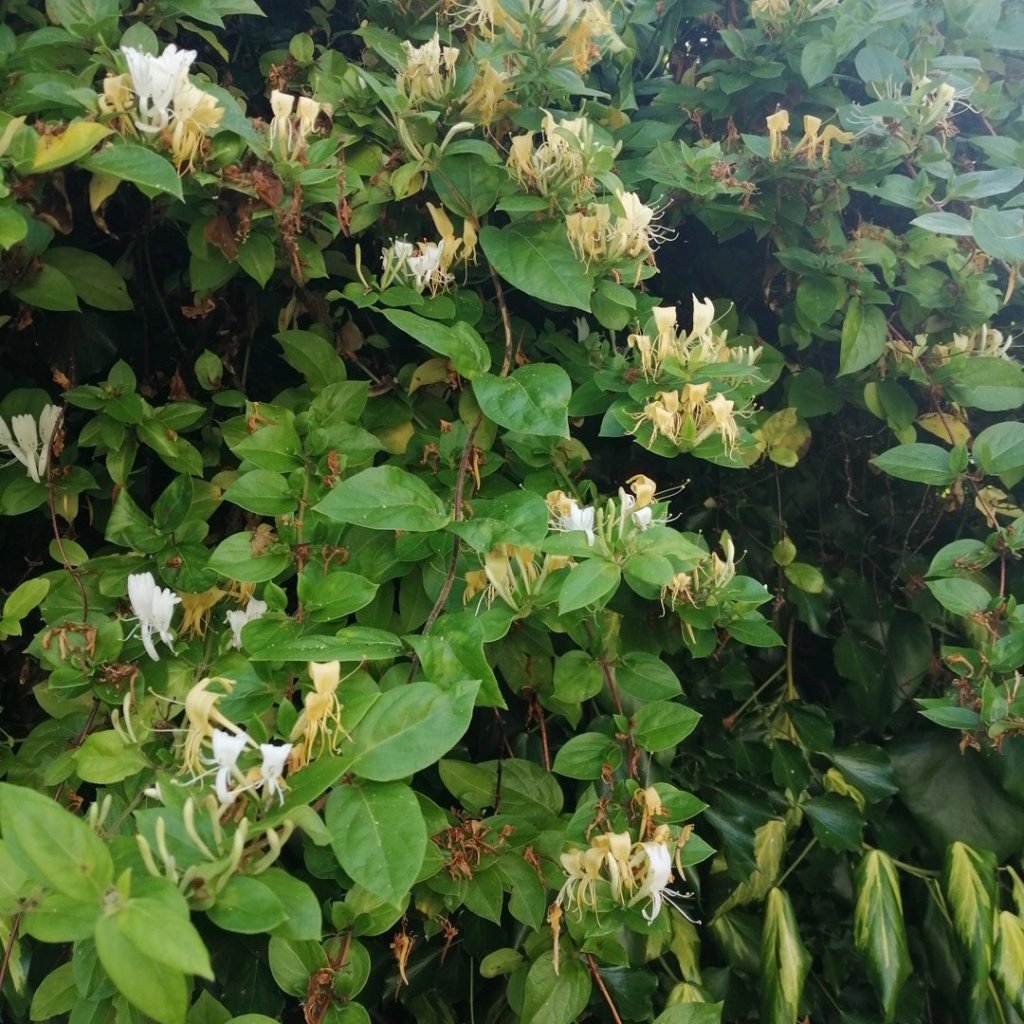
This honeysuckle is looking the worse for wear but has actually been flowering for several weeks already while still keeping its lovely fragrance. The bees like it too!

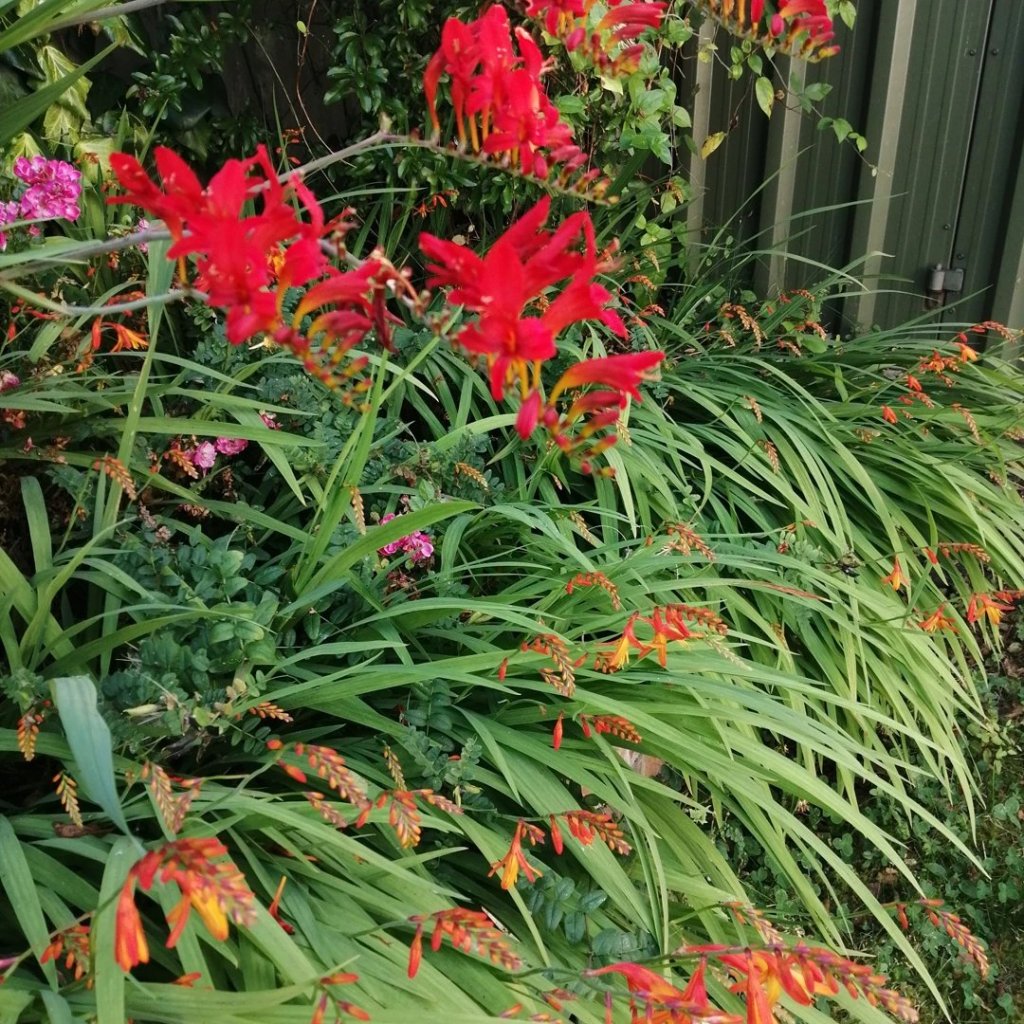
While I was out these started to flower. There’s a couple of different types of Montbretia in there:

I remember they were in flower last summer when I visited the house with a view to buying it. Was that really a year ago?

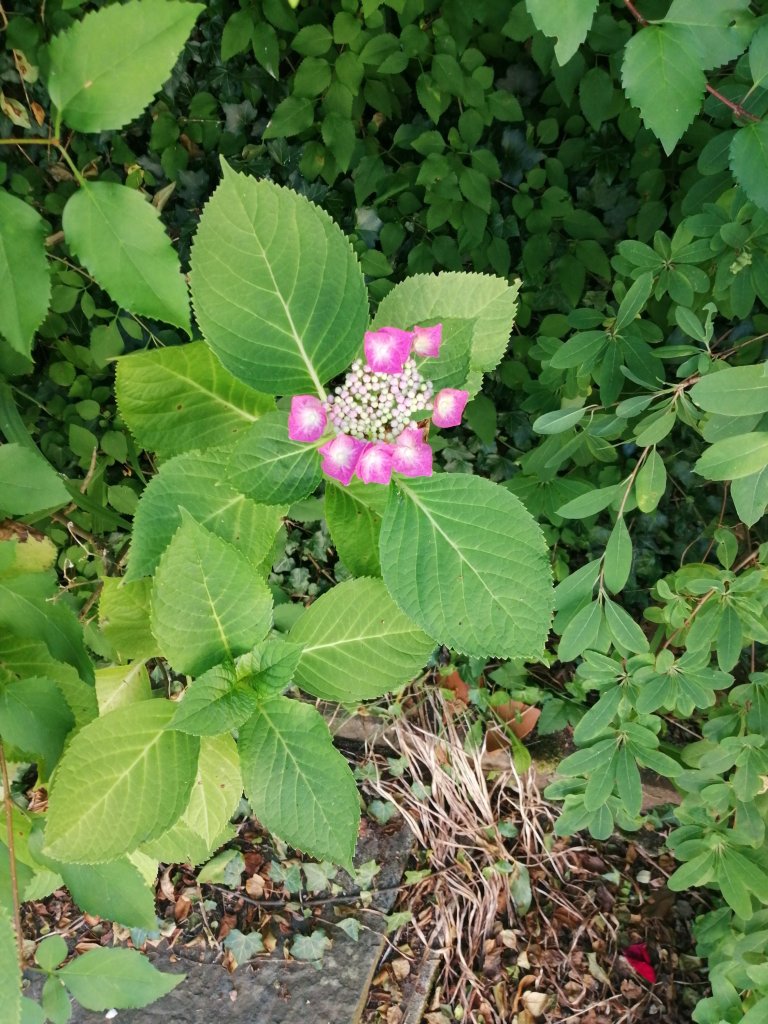
This Hydrangea also flowered while I was away. I don’t think it will last much longer so I almost missed it.

The dryness has probably made it difficult for the birds as well as the plants. A few weeks ago I found a dead blackbird on my garden table. It was just a youngster; there wasn’t a mark on it. I’m not sure why it died but it’s tough being a blackbird. They are born in several broods each year and only live a couple of weeks in the nest before being turfed out to fend for themselves. They like damp conditions and feed on worms and the like, so it’s difficult for them when it’s very dry. I guess sometimes they just don’t adapt quickly enough.

There is no shortage of live birds in the garden; there are plenty of bugs, berries and other things to eat. The dawn chorus is still rather loud but I think they tend to stay in the shade during the day. The one bird that seems to be out and about all the time is the robin.

R. I. P. Steven Weinberg (1933-2021)

Posted in Biographical, The Universe and Stuff with tags , , , on July 24, 2021 by telescoper

I just heard this morning via Twitter of the death at the age of 88 of the physicist Steven Weinberg. The news media don’t seem to have caught on yet but I’ll add links to appropriate tributes when they do.

UPDATE: You will find an appreciation from UT Austin here and an Associated Press article here.

Steven Weinberg is probably most famous in physics circles for his work on electroweak unification, together with Seldon Glashow and Abdus Salam, for which he jointly won the Nobel Prize for Physics in 1979. He did many other things besides, of course, and his influence is felt across huge swathes of particle physics, quantum field theory and cosmology. As well as a researcher he was a prolific writer, both of technical books – his Gravitational and Cosmology is a classic text on the principles and applications of the general theory of relativity – but also of works for the general public. He was an author of rare elegance and lucidity with some wonderful turns of phrase and a beautifully articulated secular view of the human condition. For example

If there is no point in the universe that we discover by the methods of science, there is a point that we can give the universe by the way we live, by loving each other, by discovering things about nature, by creating works of art. And that—in a way, although we are not the stars in a cosmic drama, if the only drama we’re starring in is one that we are making up as we go along, it is not entirely ignoble that faced with this unloving, impersonal universe we make a little island of warmth and love and science and art for ourselves. That’s not an entirely despicable role for us to play.

I bought Weinberg’s popular book The First Three Minutes about 40 years ago, and I still have a copy today. It’s no exaggeration to say that this book played a major part in my decision to continue a career in theoretical physics. I know I’m not the only physicist of my generation (or others) for whom this is the case. Although I never met Steven Weinberg in person, he was definitely an inspiration and he will be greatly missed.

Rest in peace, Steven Weinberg (1933-2021).

Back to Civilisation

Posted in Biographical, Cardiff, Covid-19, Cricket, GAA, Maynooth with tags , , , on July 24, 2021 by telescoper

So last night I returned safely from Cardiff to Ireland via Birmingham. Travel both ways was relatively uneventful. There can’t have been more than 30 people on the flight in either direction. I did however almost screw up the return flight by omitting to fill in the obligatory Covid-19 passenger locator form which I hadn’t realised is now online-only. I only found out that I had to do it before they would let me on the plane, resulting in a mad scramble with a poor phone connection to get it done. After a few goes and quite a bit of stress I succeeded and was allowed to board, conspicuously the last passenger to do so. We still managed to leave early though, and the short flight to Dublin – passing directly over Ynys Môn was relaxing and arrived on schedule; the immigration officer scanned my new-fangled Covid-19 vaccination certificate but wasn’t interested in the passenger locator form that caused me so much stress on departure.

I returned to Cardiff to take a bit of a break, to check up on my house and also prepare to move the rest of my belongings to Ireland. I was relieved when I got there last week that everything was basically in order, although there were lots of cobwebs and a very musty smell, which was hardly surprising since I hadn’t been there for 15 months. The inside of the fridge wasn’t a pretty sight either.

One night last week after meeting some friends for a beer in Cardiff I walked back via Pontcanna Fields and saw, much to my surprise, Camogie practice in progress in the twilight:

Camogie Practice, Pontcanna Fields, Cardiff.

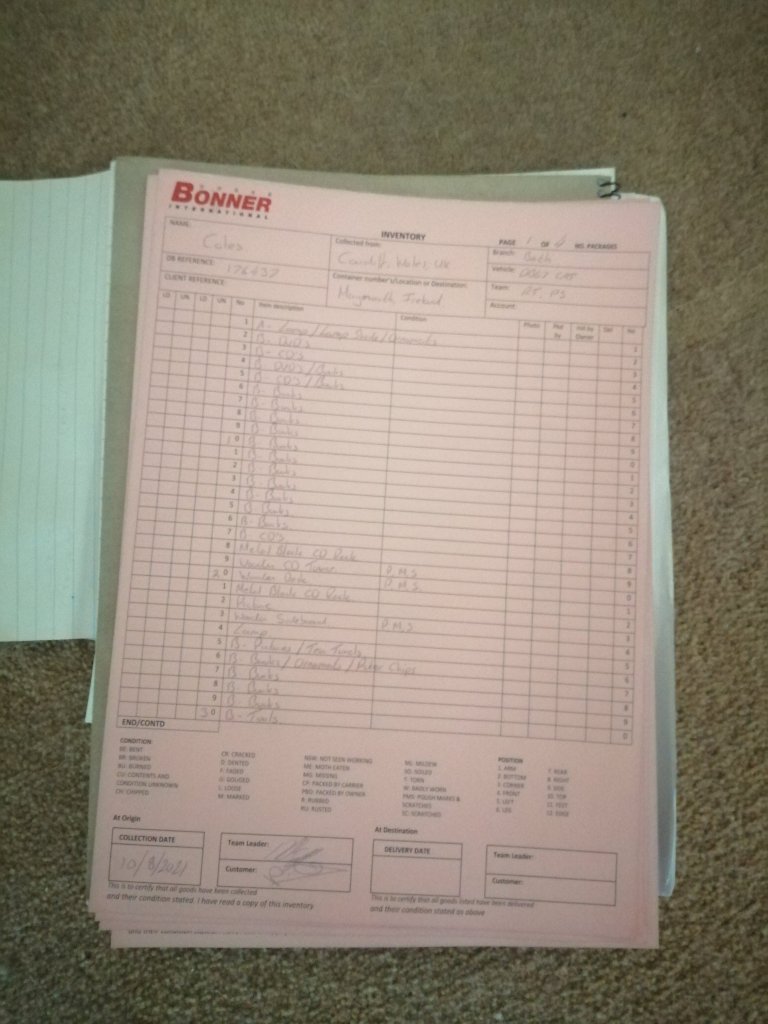
The logistics of my planned removal proved a bit more complicated than I expected but eventually I cracked it and all the arrangements are now in place. I should receive delivery here in Maynooth next month. I’m doing it on the cheap as a part-load, which is why it will take a bit longer than usual.

Cleaning and packing was very hard work owing to the intense heat over the last week or so – it was regularly over 30° C – during the day, so I took quite a few siestas. My neighbours tell me it’s been much the same here in Maynooth, although it is a bit cooler today, around 20° with a very pleasant breeze.

Despite the hard work it was nice to have a change of scenery for a bit and also to meet up with some old friends from Cardiff days. Everyone has been in a state of limbo for the last 18 months or so, and although we’re not out of the woods yet there are signs of things coming back to life. When I went to Bubs in Cardiff for a drink last week it was the first time I’d been inside a pub since February 2020!

Incidentally, most people I saw observed social distancing, wore masks, etc. The rules in Wales are still fairly strict. Although open for indoor service, bars and restaurants seem to have few customers. Some people on trains to and from Birmingham didn’t wear masks. One group of unmasked and obnoxious English passengers on my return journey were loudly boasting how backwards Wales was compared to England, where the rules have relaxed despite a huge surge in cases. I moved to another carriage.

The only other thing I managed to do was attend a Royal London One-Day Cup match at Sophia Gardens between Glamorgan and Warwickshire in the baking heat of Sophia Gardens. It turned out to be a good tight game, with Glamorgan winning by 2 wickets courtesy of two consecutive boundaries. Most of the time I was sitting there in the shade I was thinking how glad I was not to be fielding in such conditions.

One thing that was very noticeable during my stay in Wales was that it was very hard to get fresh salad vegetables and the like. That may be partly due to weather-related demand or it may be due to a shortage of lorry drivers or other staff owing to Covid-19 isolation requirements and may be a consequence of Brexit. Who knows? I’ll just say that there’s been hot weather in Ireland, where the Covid-19 pandemic is also happening but there are no reports of shortages of fresh food here. I’m very much looking forward to having a nice salad with my dinner this evening.

Anyway, I suppose that’s enough rambling. At some point I’ll have to open up my email box to see what horrors lurk therein. Still can’t be worse than the fridge I opened last week. Can it?

Why Do England Always Lose on Penalties?

Posted in Biographical, Football with tags , , , on July 12, 2021 by telescoper

I’m reblogging this post from a few years ago. It remains topical.

I thought I’d add my own (very limited) experience of taking penalties. In the period from 1988-90 or thereabouts I played for a team called the University Associates in the Sussex Sunday League (2nd Division). The League also had a cup competition, and one day we played a game that ended in a draw after extra time, so went to penalties. I used to play in midfield for that team, rather than as a striker and I scored only 2-3 goals a season. I wasn’t one of the five nominated penalty takers but after those it was 2-2 so it went to sudden death and my turn came up at 3-3 after one round. It was the only penalty I’ve ever taken (not counting 5-a-side). I wasn’t at all confident but my biggest fear was the ribbing I would undoubtedly get if I didn’t even hit the target, so I decided to hit it as hard as I could straight at the goal. I thought my natural level of inaccuracy might take the ball to one side or the other of the goalie.

So I paused, took a deep breath, ran up and blammed it as hard as I could. It went quite hard straight at the goalie. If he’d stayed where he was standing it would have hit him at chest level. Fortunately for me he dived out of the way and I scored. 4-3! So I have a 100% success rate at scoring penalties (based on a sample of one).

The story didn’t end entirely happily though. My opposite number scored to make it 4-4 and we ended up losing 5-4.

Andrew Chambers's avatarIB Maths Resources from Intermathematics

penalties2

Statistics to win penalty shoot-outs

With the World Cup nearly upon us we can look forward to another heroic defeat on penalties by England. England are in fact the worst country of any of the major footballing nations at taking penalties, having won only 1 out of 7 shoot-outs at the Euros and World Cup. In fact of the 35 penalties taken in shoot-outs England have missed 12 – which is a miss rate of over 30%. Germany by comparison have won 5 out of 7 – and have a miss rate of only 15%.

With the stakes in penalty shoot-outs so high there have been a number of studies to look at optimum strategies for players.

Shoot left when ahead

One study published in Psychological Science looked at all the penalties taken in penalty shoot-outs in the World Cup since 1982. What they found was pretty incredible – goalkeepers…

View original post 1,070 more words

The Morning After…

Posted in Biographical, Football with tags , , , , on July 12, 2021 by telescoper
Gareth Southgate consoles Bukayo Saka who missed the last penalty in the shootout against Italy

Well that’s that. Last year’s European Championship is over. Italy beat England in the final last night on penalties. England lost in the semi-final of the, World Cup in 2018. Many people suggested they would go a step further this time, and they did: they lost in a final.

It wasn’t a great game. Finals seldom are – there’s too much at stake for the players to play with any freedom. But it was tense and dramatic and in the end, for England fans and players, heartbreaking. Italy have been the most consistently impressive team in the tournament, and had a far more difficult draw than England (who, in my opinion were very lucky to beat Denmark in the semi-final thanks to a very dodgy penalty) and didn’t have home advantage.

Overall I think Italy deserved to win the tournament and happy for them, though sad a bit for Gareth Southgate who has proved himself the most gentlemanly of managers. The manner of this loss – on penalties yet again – must hurt him, but he will be gracious in defeat. I wish the same could be said of some of the England supporters.

People have been critical of Southgate’s rather defensive tactics for last night’s match. For what it’s worth I think his cautious approach was dictated by his awareness of the weaknesses in his side. He had good attacking players but lacked strength in midfield. Italy were much more tenacious and comfortable in possession. For large parts of last night’s match England were just unable to get the ball; the official possession stats were 65:35 in Italy’s favour. A playmaker in the centre of the park would make a huge difference to England’s chances of landing a major trophy.

The great thing about this young England football team is how it has managed to provide so many positive role models, through its dignified response to racism and embrace of inclusivity, while at the same time respecting the time-honoured English tradition of losing on penalties. They will no doubt be feeling awful right now but they have a lot to build on for the World Cup next year if they can pick themselves up, though they might not get such a favourable draw.

I have enjoyed the tournament. I didn’t watch all the games because I was too busy, but I watched most of the 8pm matches and found them a welcome distraction. As an émigré I no longer feel any obligation to support England, but I don’t feel any need to despise them either so I was able just to enjoy the football. As I said above, I think Italy performed most consistently at a high level throughout the competition but I also enjoyed watching Spain (who would be world-beating if they had a decent striker) and Belgium, either of whom would have been worthy finalists had the draw. I feel a bit sorry for Denmark given what happened in their first match. They can be very proud of the way they rallied to reach the semi-finals without their star player Christian Eriksen.

Anyway, well played Italy! I have quite a few Italian friends and colleagues and I know they’re all delighted. Il Calcio sta tornando a casa…

The Killing of Samuel Luiz: why do you straight men do this?

Posted in Biographical, Brighton, LGBTQ+ with tags , , on July 10, 2021 by telescoper

This is a picture of Samuel Luiz, a young gay man who was kicked and punched to death outside a nightclub in A Coruña, Galicia, Spain, on Saturday 3rd July 2021. At least 12 men were involved in the vicious assault and they were shouting the word maricón as they beat him. The word is a derogatory term in Spanish for a gay man, roughly equivalent to “faggot” in English. At least four men (all between the ages of 20 and 25) have been arrested for this murder. Let’s hope some justice is served. Demonstrations were held across Spain to protest Samuel’s killing.

This attack came just a few days after the end of Pride Month and if nothing else shows how far we still have to go. People sometimes ask why we still need Pride, after all we now have gay marriage? Well, Spain has gay marriage, but mobs still murder gay men. Anti-gay hate crime is reportedly on the increase in Spain and probably elsewhere. The Government of Hungary has enacted specifically homophobic legislation

There’s nothing new about this kind of homophobic violence. Queer-bashing was endemic in Brighton when I lived there in the 1980s. I know. I was on the receiving end of a beating myself. There were only four assailants in my case, and of course I didn’t die. My physical injuries were relatively superficial, but it was a life-changing experience and not in a good way. The word that was ringing in my eyes as I lapsed into unconsciousness then was “faggot”, so reading about Samuel Luiz brought it back. Sometimes things like this make me want to go and live off-grid somewhere far away from people to avoid such thoughts intruding again.

Anyway, that experience on Brighton sea front left me convinced that however much attitudes and laws change there will always be men – presumably straight – who for some reason despise gay men so much that they want to inflict violence on us. I can’t rid myself of the belief a very large number of straight men would behave in that way if they thought they would get away with it. It takes me a very long time to trust a heterosexual man enough to call him a friend.

I wish I could understand what causes so much hate. Believe me, if thought about it a lot and for a very long time and it remains incomprehensible to me. Perhaps it expresses some kind of need to assert dominance, much as misogynistic transphobic, and racist violence does? Or perhaps just a form of tribalism like football violence? The one firm conclusion I have reached is that the people who do this sort of thing are utter cowards. Why else would they need a gang to beat up one person? And the people who just look on and don’t intervene are cowards too.

In a piece a while ago I wrote about my experience in Brighton:

I have to say that for quite a long time in this period my general presumption was that a majority of heterosexual people were actively hostile to LGBT+ people, and that would always remain the case. There were quite a few gay people in Brighton who felt the same and their reaction was to become separatists. The logic was that straight people were always going to be horrible, so to hell with them. You could drink in gay bars, eat in gay restaurants, live in a gay part of the town, etc, and thereby minimize interaction with the hostile majority. This seemed an attractive lifestyle to me for some time, but I gradually began to feel that if there was ever going to be a chance of things changing for the better, LGBT+ people had to engage and form alliances. That strategy seems to have worked for the wider community, and I applaud the many straight people who have become allies.

It’s easy to say you’re an ally but are you willing to stand up and be counted?

A comment below objects to the “you” in the title of this post. I thought very carefully before including it. The response “not all straight men are like that” is unhelpful for lots of reasons.

First, I know that. All gay people do. We already know not every straight man is a murderer, or otherwise violent. We don’t need you to tell us. Second, it’s defensive. When people are defensive, they aren’t listening to the other person; they’re busy thinking of ways to defend themselves. It’s a classic social media response. Third, people saying it aren’t furthering the conversation, they’re sidetracking it. The discussion isn’t about the men who aren’t a problem. Fourth – and this the most important point – nobody can really know which straight men are “like that” and which aren’t until it’s too late.

I would genuinely love to live in a society without prejudice on the grounds of identity but we’re not there yet. I don’t think it does any harm to hold a mirror up to the kind of stereotyping that many groups have to deal with on an everyday basis. You may not like being included in a generalisation but at least you’re not put in mortal danger because of your identity. It’s not you who is a target.

Interaction in Lectures

Posted in Biographical, Education on July 6, 2021 by telescoper

There’s been dismay among many students at the University of Manchester at the news that said institution is planning to keep lectures online next year. If the reason for that decision were that campuses are likely to be closed again by September then I would consider it wise, but it seems this is to be a permanent thing; see the following excerpt.

The clear assumption here is that large lectures never involve interaction. I can think of many colleagues besides myself who would object to that most strongly. Even in a big lecture hall interaction is key to the learning experience. The thing the above statement misses entirely is the extent to which the presence of an audience actually helps the lecturer to improve the learning experience for the students. It’s astonishing to me that the person quoted above seems to think interaction only happens in one direction! On the contrary, a lecture is – or should be – a shared experience between lecturer and students.

If you think about it is a very strange situation when someone stands up in front of a bunch of students and lectures at them for an hour or more. I frequently have the best part of a 100 people watching, and occasionally listening to, me drone on about something or other. What’s strange is that all those people see basically the same thing, whereas the lecturer gets to see all their different facial expressions, at least the lecturer can when the lecture is in person not online with everyone’s video muted.

I’m one of those people who finds it very difficult to give a lecture without looking at the audience, which is why I’ve found the transition to online teaching so difficult. It’s partly to try to establish some kind of rapport with them, notably in order to encourage them to answer when I ask a question or to offer questions of their own, but also to try to figure out whether anyone at all is following what I’m saying. Not all students are helpful in this regard, but some have very responsive mannerisms, nodding when they understand and frowning when they don’t. When I’m teaching a class for the first time I usually look around a lot in an attempt to identify those students who are likely to help me gauge how well things are going. Usually,  there are only a few barometers like this but I would be lost without them. Fortunately most students seem to sit in the same place in the theatre for each lecture so you can usually locate the useful ones fairly easily, with a discreet look around before you  start.

Most other students seem to have a default lecture face.  The expressions range from a perpetual scowl to a vacant smile (each of which is in its own way a bit scary). There’s the “wish I wasn’t here” face of pure boredom,  not to mention those who are fast asleep; I don’t mind them as long as they don’t snore. There’s the Bookface of someone who’s not listening but messing around on Facebook, and the inscrutable ones whose faces are masks, even when not literally wearing a mask, yielding no clues as to what, if anything, is going on behind. The brightest students often seem to belong to the last group, although I haven’t done a statistical study of this so that must be taken as purely anecdotal.

Anyway, by way of a bit of audience participation if you can be bothered, here’s a poll. If you don’t know what your own lecture face is, then you could always ask, that is if you’re one of the lucky folks who’s actually been in a lecture at all as opposed to sitting in your room watching a recording.