Archive for the Cardiff Category

Cricket, Lovely Cricket – Ashes Victory in Cardiff

Posted in Cardiff, Cricket with tags , , , , on July 12, 2015 by telescoper

Last Wednesday (8th July 2015) I had the good fortune to be in the crowd at the SWALEC Stadium in Cardiff to see the first day’s play in the First Test between England and Australia of this summer’s Ashes series. I have to say that I was very apprehensive about how the game would go, but as I was in Wales anyway I couldn’t resist being there to watch it. I think I can say without fear of contradiction that it didn’t turn out too badly.

It wasn’t a very auspicious start to the day – light rain was falling as we walked to the ground and at the scheduled start time the England team were still in the pavilion:
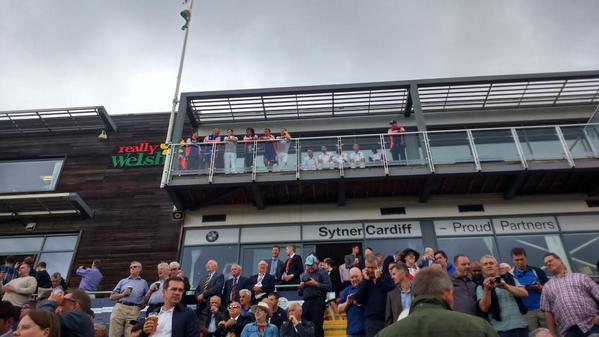
England

Play eventually got going about fifteen minutes late, though it could have started earlier had the Powers That Be dispensed with some of the silly preliminaries. It did rain a little before lunch too, but the players didn’t come off. Thereafter the weather steadily improved and we got a full day’s play, closing at about 6.45pm. I even had sunburnt knees as a souvenir, as I had decided to wear shorts for the day and the stand we were in offered no protection from the afternoon sun. Good job I had brought my sunhat.

England had won the toss and decided to bat. The desire to have first use of a good batting pitch must have been tempered in England Captain Alastair Cook’s mind by the likelihood that the overcast conditions would help the Aussie fast bowlers. England struggled early on with the bat, Lyth getting out cheaply playing across a straight one from Hazlewood (who was in the team to replace the injured Ryan Harris) to leave England at 7 for 1. Ballance battled hard at Number 3 but Cook at the other end looked relatively comfortable. Then Michael Clarke threw the ball to offspinner Nathan Lyon to have a go at the lefthanded Cook who seemed impatient to score off him. That proved his downfall as he was out for 20, caught at the wicket, trying to cut a short ball. Ian Bell came, scored one run off a nervous looking lofted drive and was then dismissed leg before wicket by a good inswinger from the excellent Mitchell Starc. At 43-3 England were on the brink, and could have fallen over it a few balls later when new batsman Joe Root played a strange shot at his second ball, a very full swinging delivery from Starc which resulted in an edge that went at a good height to wicket-keeper Brad Haddin diving (somewhat theatrically) to his right. Fortunately for England, Haddin spilled what looked a relatively straightforward chance; having seen the replay a number of times I don’t understand why Haddin didn’t go for it with both hands. At 43-4 England would have been in deep doo-doo, but as it happened Ballance and Root steadied the ship and after a tense morning England reached lunch at 88 for 3.

The ball certainly did swing in that morning session, but the predominant impression I got was that it was a very flat pitch, with very little bounce. Watching from a position square of the wicket to a batsman at the River Taff end, it was noticeable how many balls didn’t carry through to the wicket-keeper. Indeed, Warner’s excellent slip catch to take the wicket of Lyth was harder than it needed to have been because the slips were standing too deep for much of the game. Mitchell Starc was easily the pick of the Australian bowlers; the other Mitchell (Mitchell Johnson) laboured ineffectively on the kind of pitch he clearly doesn’t like to bowl on. He was expensive too. England’s Nemesis of the 13/14 Ashes Tour down under was to finish with 0-111 off 25 overs.

After lunch the sun came out and the character of the play changed. Root and Ballance completed partnership of 153 before Ballance fell for 61 with the score on 196 for 4. This ushered in the belligerent Stokes who didn’t have it all his own way – he got into a tangle trying to hook a Mitchell Johnson bouncer, sending it high over Haddin’s head for six – but Root at the other end had ridden his early luck and made an excellent century. Root is currently in unbelievably good form and it says something for his temperament that he looked bitterly disappointed when he eventually got out for a superb 134, shortly followed by Stokes who made 54. The score was then 293 for 6, by no means enough runs on a good batting pitch but a good recovery from 43-3. Buttler and Moeen Ali added another 50 partnership in quick time until Buttler fell nearly at the end of the day’s play. I was particularly impressed with Moeen’s batting late on and it was he who produced the short of the day for me – a magnificent sweep into the stands for six off the bowling of Lyon. Broad survived a torried couple of overs to leave England on 343-7 at the close of play.

I couldn’t help recalling that the closing score on the first day of corresponding fixture in 2009, which ended famously in a draw, was 336-7. On that occasion, England’s tail wagged brightly the following morning (when I was in the ground) to take their score to 435 all out. As things stood, I felt that the match was evenly poised. If England could do something similar to their feats of 2009 on the second day of this match then they would have a good chance of winning, but if Australia could take quick wickets they would have the edge.

Unfortunately I only had tickets for the first day so I ad to keep up with the rest of the match on the radio and via Twitter. On Day 2, England’s tail did wag – Moeen scoring an excellent 77 – to finish on 430 all out. So far the pattern remained similar to 2009, but that was about to change. Australia got a much better start to their first innings than England had, but lost wickets at the end of Day 2 to close on 264-5 – a far cry from the 248-1 which was their position at the end of Day 2 in 2009. The following morning they were all out for 308, a deficit of 122. England batted again on Day 3 and, not without moments of alarm, accumulated enough runs to build an imposing lead; they were eventually all out at the end of Day 3 for 289. Australia needed to score 412 to win with two days left, though the forecast for Day 5 was for heavy rain.

Clouds had returned to Cardiff for Day 4 (Saturday) and the Australian batsmen were in all sorts of difficulties against the swing on Anderson and Broad. Rogers fell cheaply, Warner was having trouble laying bat on ball, and the runs had dried up. Then Alastair Cook made I think his only tactical mistake of the match: he brough Moeen on to bowl too early. Warner seemed to relax and played some good shots. Moeen was withdrawn after just two expensive overs. The momentum had been handed back to Australia, who began scoring freely. In the last over before lunch they were 97-1, with two batsmen at the crease who were both perfectly capable of posting big scores. Then Cook brough Moeen back for one over before lunch, whereupon he trapped Warner lbw for 52. It was just the fillip England needed. After lunch Smith, Clarke and Voges fell in quick succession to leave Australia in the mire at 106-5. Neither Haddin not Watson stayed around long and Australia were soon 151 for 7. Mitchell Johnson batted defiantly in difficult circumstances, adding 72 for the 8th wicket with Mitchell Starc until their partnership was broken by none other than Joe Root, who as well as being a superb batsman is a spin bowler with an uncanny knack of taking important wickets. Root also took the catch, off the bowling of Moeen Ali, that sealed the game. Australia were all out for 242 about an hour after tea. England had won by 169 runs. Man of the Match: Joe Root, obviously.

So, first blood to England. Of course there are another four Tests to go, starting at Lord’s on Thursday where the pitch may well be much more helpful to the Australian quick bowlers, but this result is better than I imagined at the start of the game and if England can keep it up they at least have a chance of winning back the Ashes. Don’t expect the Aussies to roll over, though. They will be stung by this defeat, and I full expect them to come back hard.

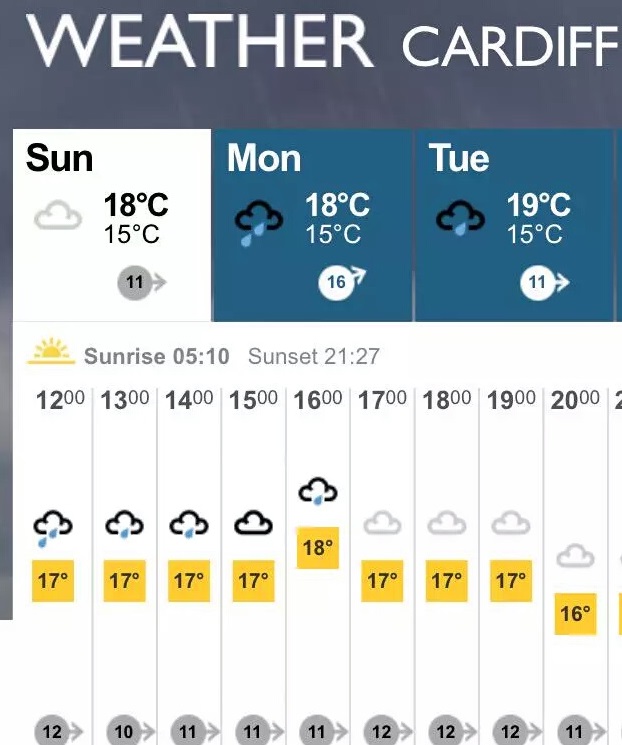
P.S. This was the weather situation in Cardiff earlier today, which would have been the fifth day.
Cardiff_weather

Had Australia batted through to the close on Day 4, it is quite possible that there would have been no play on Day 5, which means the game would have ended in a draw. Now I understand why this Test started on a Wednesday!

P.P.S. Only three members of the current England team played in the 2009 Ashes Test in Cardiff: Anderson, Broad and Cook.

Autumn Leaves In Cardiff

Posted in Biographical, Cardiff with tags , on September 27, 2014 by telescoper

Back in Cardiff for a couple of days to get some more writing done, I took a break to have a cup of tea in the garden. All the signs that summer is now over have now shown themselves: the start of undergraduate lectures (Monday); the Autumnal Equinox (Tuesday); the end of the County Championship on Friday; and so on.

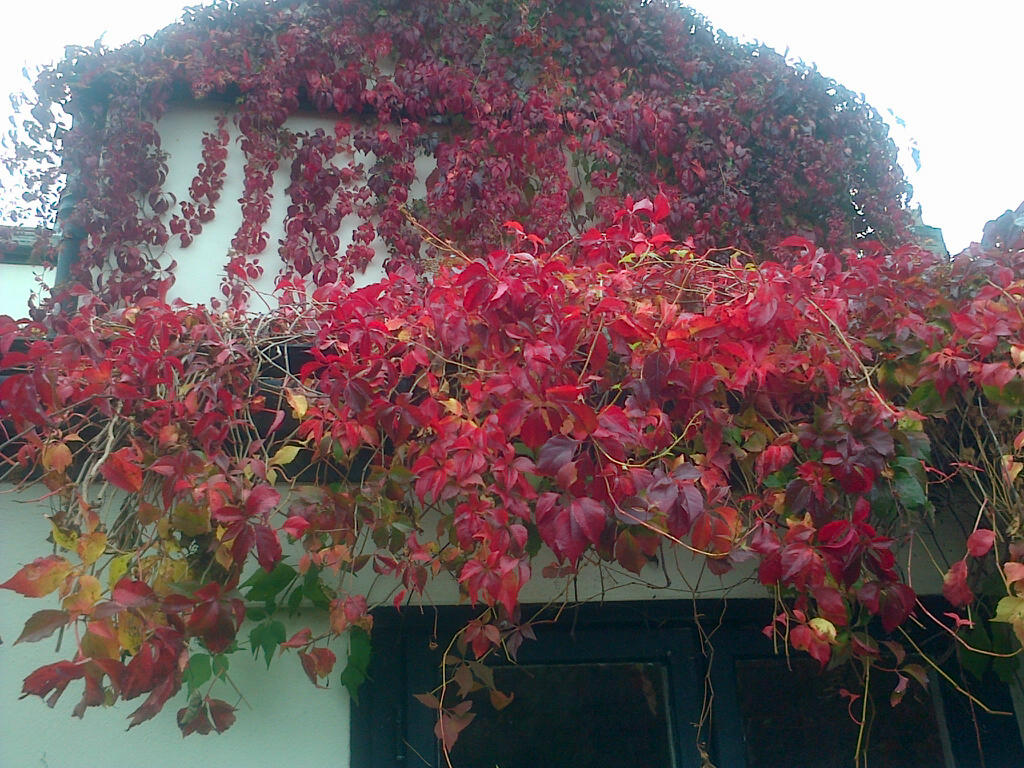
Here in Cardiff the weather is still warm, but the leaves are turning brown and starting to fall. Conkers too. And, most spectacularly, the Virginia Creeper growing at the back of my house has turned blood red. It does look pretty, but I’m sure it’s not good for the gutters or the chimney stack above..

Postcard from Cardiff

Posted in Biographical, Cardiff, Politics, Rugby with tags , , , on March 16, 2014 by telescoper

So here I am in Cardiff for the weekend, relaxing after a very busy and stressful week. It’s nice to have the option to get away like this, especially in the spring sunshine, so I’m glad I kept the Cardiff house going rather than try to sell it the moment I got the job at Sussex University. I have been working very long hours recently and with another month to go before the end of teaching term, I think I need to make better use of the weekends if I’m going to avoid a state of complete exhaustion.

On Friday I attended a meeting of the Council of the Royal Astronomical Society (of which I am an elected member) followed by a very interesting Open Meeting and a nice dinner with the RAS Club. After all that I took the late train to Cardiff instead of going back to Brighton.

During the journey I thought quite a lot about Tony Benn; the news of his death at the age of 88 was announced on Friday morning. Although I didn’t agree with his political views on some things, he was a person I admired enormously and I am very sad that he is no more.

I only ever met Tony Benn once, many years ago, as it happens, on a train from Brighton to London. It was one of those old-fashioned carriages, divided into compartments each with a door. I had almost missed the train and was so flustered when I got on that it took me some time to recognize the gentleman opposite who was just lighting his pipe.

I summoned up the nerve to speak, shook his hand, and introduced myself. We were the only occupants of the carriage and we talked for the entire journey – an experience I’ve never forgotten. In person Tony Benn was wonderful: charming, kindly, impeccably polite and above all absolutely fascinating to talk to. As I recall it, I did most of the listening. Not that I minded. I’m a man who likes talking to a man who likes to talk..

People also forget that Tony Benn was one of the very few politicians to champion LGBT rights. It’s now a fashionable thing, but it wasn’t then back in the dark days of Section 28.

So I’d just like to record a little personal farewell to Tony Benn. There’s nobody of his stature in current British politics, and none whose company I’d like to spend a train journey in, either.

Yesterday I was out and about in sunny Cardiff running various undemanding errands, in the course of which I came across an internet cafe. I’ve never actually used one of those before, and was quite surprised that an hour’s access cost just £1. I took the chance to sit down for a bit and wrote yesterday’s blog post there.

Saturday was the last day of the Six Nations rugby and Wales were hosting Scotland. The two sets of supporters were mingling and imbibing throughout the city. When it came to the match, Wales thrashed Scotland 51-3.

Earlier England had comfortably beaten Italy so were top of the table, but would only win the competition if Ireland lost the last game to France in Paris. It was an exciting finale, with stout Irish defence enabling them to cling on to a lead of just two points. So well played Ireland, who probably deserved the title, but also good signs for England whose young side have performed admirably this year. Better luck next year?

At least English supporters can now enjoy one of their favourite pastimes: blaming everything on the French.

It’s warm and sunny again today so I think I’ll take another walk around. I really miss Cardiff, but one has to follow one’s star wherever it leads.

The canals of old Cardiff

Posted in Cardiff, History with tags , , , , on January 8, 2013 by telescoper

I came across this old map of Cardiff the other day and thought I’d post it to make up for the fact that I’ve not posted much about the local history of this fascinating city over the years.

Old_cardiff

I can’t find a date for the map, but I guess it is from the early 20th Century.

The most interesting thing about the map is the pretty extensive network of canals. The Dock Feeder Canal still runs down from the top of the map then turns East and past the North side of the Castle, and then South again towards Cardiff Bay. Some of its route is now underground, including the section that used to be Edward Terrace and Pembroke Terrace, which now form the two sides of Churchill Way  under which the canal still flows.

It’s worth mentioning in passing that most of the present Cardiff Castle is basically a late 19th Century folly, but it is the site of much older buildings, including a Norman Keep and a Roman fort. When the Romans occupied the location, the area from the Castle down to the sea was basically a swamp, flanked by the flood plain of the Taff to the West, with the salt marshes of Cardiff Bay to the South. Almost all of present-day Cardiff is reclaimed land.

The Dock Feeder Canal was constructed around 1840 in order to supply water to the Docks in Cardiff Bay so that they could be operated even when the tide was out. This gave  Cardiff one of the world’s first 24-hour docks and led to a rapid expansion of commerce and population in the city during the mid-19th Century.

Among the quite surprising facts about the City of Cardiff is its spectacular population growth. The first official census was held in 1801 and it  showed Cardiff to have a population of 1,870 – much smaller than other Welsh towns like Merthyr Tydfil (7,700) and Swansea (6,000). Every ten years another census was carried out, with the figures for Cardiff growing as follows:

1801 – 1,870
1811 – 2,457
1821 – 3,251
1831 – 6,187
1841 – 10,079
1851 – 18,351
1861 – no data
1871 – 57,363
1881 – no data
1891 – 128,915
1901 – 164,333
1911 – 182,259
1921 – 222,827
1931 – 226,937
1941 – no data
1951 – 243,632
1961 – 283,998
1971 – 293,220
1981 – 286,740
1991 – 296,900
2001 – 305,353

The expansion of the docks in Cardiff Bay, driven by the export of coal from the valleys, seems to have been the main factor in driving the population increase, and this accelerated markedly from the middle of the 19th century until the early 20th century.

Early on in the industrial revolution the South Wales valleys were primarily concerned with the production of iron. In February 1794, the 25-mile-long Glamorganshire Canal was opened between Cardiff and Merthyr Tydfil to bring iron products down to the coast and for nearly 50 years was unchallenged as the main transport link between the two towns.  It was later to become the primary route for carrying coal to the Bay. The Glamorganshire Canal can be seen on the map too, but has now virtually vanished, the route it used to follow now just being marked by new roads; for example, the route it used to take to the East of Bute Park is now covered by North Road.

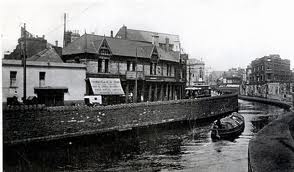
Here is an old photograph of Mill Lane, now the site of a number of not-very-salubrious eating and drinking establishments. I suspect not many Cardiff residents know that less than half a century ago, these were canalside properties..

Mill_Lane

In October 1839, the Bute West Dock covering 19 acres with 9,400 feet of quays was opened, and the construction of the Dock Feeder to regulate the water supply to the dock from the River Taff was completed.  Entirely paid for by the second Marquis of Bute, this new dock set in motion Cardiff’s amazing growth to become the world’s biggest coal exporting port. The Taff Vale Railway was opened in 1841 between Cardiff and Abercynon and soon overtook the Glamorganshire Canal in economic importance. Coal shipments from Cardiff exceeded one million tons for the first time in 1851. In December 1855, the first historical trainload of Rhondda steam coal arrived at Cardiff, where the Bute East Dock was opened. By 1883 the docks handled six million tons of coal and by 1913 this figure had grown to a staggering 10.7 million tons.

Much of the labour needed to handle this volume of coal came from immigrants, including very large numbers of Irish but also lots of other people from all around the world. By 1850 there were no less than 20 foreign consulates in Cardiff and the city quickly established the cosmopolitan reputation it has kept to this day.

After the end of the First World War the coal trade suffered because the market was flooded with cheap German coal used for war reparations. That, and the subsequent depression, led to a decline in Cardiff as a port, although it was very busy during the Second World War. About 75 per cent of the supplies for the American forces in Europe were shipped out through Cardiff docks following the D-Day landings in June 1944.  This was a short-lived renaissance; the last ever shipment of coal left Bute Dock in 1950.

Other random but possibly interesting points about the map are:

  • The site of the modern Cardiff University School of Physics & Astronomy is near the top right of the map, marked “Univers. Coll.”
  • Taff Vale Railway Station is now named Queen Street Station, and Great Western Station is now Cardiff Central.
  • Note that Cardiff Arms Park was actually surrounded by parkland when this map was drawn, but now the area around is built up (and of course the Millennium Stadium is now there too).
  • Much of central Cardiff has been replaced by modern malls and the like, but the Central Market is still there.

Cardiff – The Video

Posted in Bute Park with tags , on September 24, 2012 by telescoper

Here’s a nice video promoting Cardiff as a perfect place to be a student.  I presume it doesn’t mention the Opera because that’s for old fogeys like me rather than bright young things like them, but it does feature quite a few other things that might surprise you if you’ve never visited the city before, including Bute Park…

Parks and Prizes

Posted in Bute Park on July 22, 2012 by telescoper

It being a nice day I took myself off for a stroll through Bute Park this afternoon. It was actually a bit warmer than I’d expected so I confined myself to the shady tree-lined bits. It was nice to see so many people enjoying the open air, sitting on the grass, picnicking, playing sports and even just strolling around like me. Walking along by the river bank I saw this guy practising a tightrope walk.

That’s something you don’t see every day. Well done, that man.

Anyway, when I got home I checked my email and found an angry message complaining about Cardiff City Council’s ongoing campaign to win itself an award for what is known as the Bute Park Restoration Project. The link invites people to “vote” for the project, but gives no option to vote against it. One wonders how many Cardiff City Council employees have been busy hitting the vote button over the last few weeks.

I’ve added a few comments to the page, pointing out that the Bute Park Restoration Project has not involved restoration as much as over-development and exploitation. The loveliest parts of the Park, those I wandered around today, haven’t been touched by the Restoration and are all the better for it. What has happened elsewhere are new buildings and roads that are both unnecessary and damaging. I accept that the restoration of the animal wall is a positive move, but the damage to the rest of the park, especially Coopers’ Fields, caused by excessive deployment of heavy vehicles and temporary buildings far outweighs the benefit.

For much of the summer large parts of the park have been inaccessible to the general public, and the paths overrun with heavy vehicles:

Bute Park is beautiful, but it’s beautiful despite the Restoration Project and not because of it. It will be scandalous if it wins an award.

Still, at least it’s not as bad as London. A couple of weeks ago I travelled to London to participate in an event at the Royal Society. It was a nice day so I decided to walk from Paddington, an easy route through Hyde Park and down past Buckingham Palace. Unfortunately, I found Hyde Park almost entirely blocked by temporary buildings and maximum security fences owing to something to do with the Olympics. Later on, after negotiating a way through the resulting maze, I discovered that The Mall was also closed off to make way – believe it or not – for the beach volleyball. Whatever that is. Finding a route around all that added almost an hour to my journey. I wonder how long it will take them to reopen everything after the Olympics?

I wonder if next year the Hyde Park Restoration Project will be in line for an award?

Pictures in the Park

Posted in Bute Park, Cricket with tags , , , on June 28, 2012 by telescoper

We’re  approaching  the end of June, and the weather is for the most part typical for a British summer. Rain.

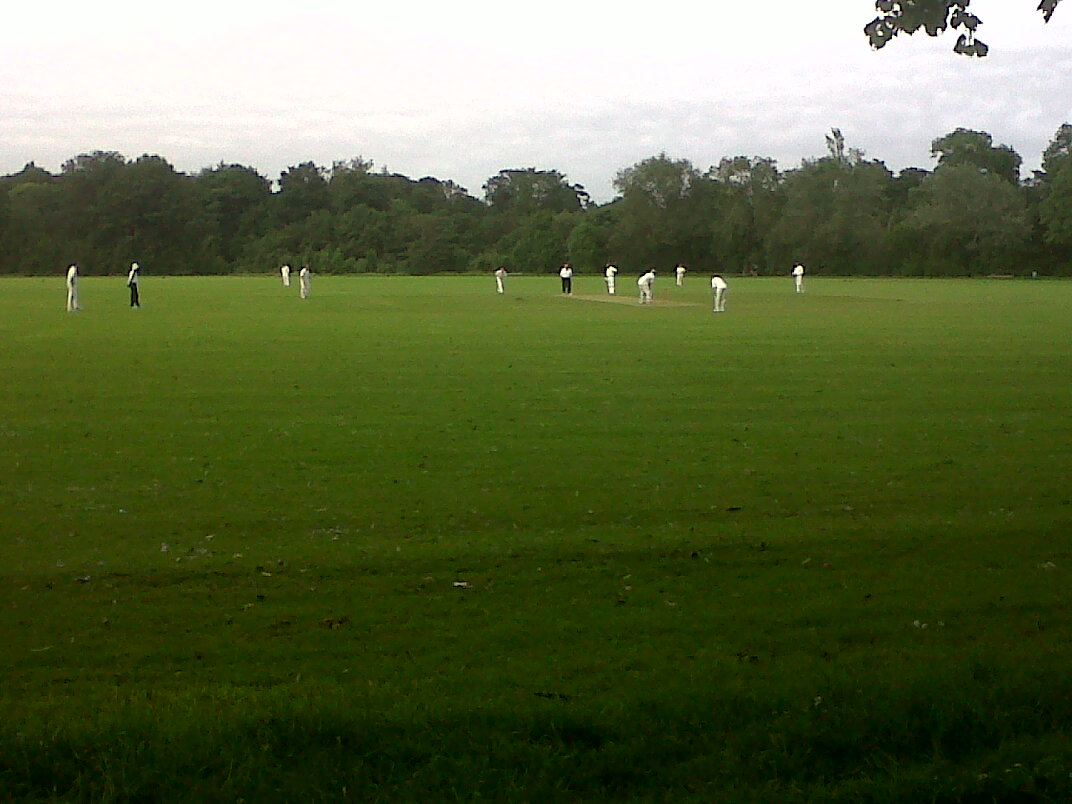
Yesterday evening, however, as I walked home through Bute Park, the weather was sufficiently clement to allow cricket on Pontcanna Fields, which lie on the west side of Bute Park, across the Taff from the city centre.

I stopped and watched for a while, taking in about ten overs. I don’t think there have been many occasions in the last month or so when play has been possible either here or in the nearby SWALEC stadium where Glamorgan play. Or try to;  they’re having a lousy season even when it’s not raining.

The pitches here are notoriously lively – the ball bouncing and darting all over the place makes them very difficult to bat on – and in the game I watched I saw three consecutive deliveries resulting in dropped catches. Let’s just say the fielders must have been out of practice…

Anyway it’s a lovely sight to see people out in the open air enjoying recreational activities in this part of the Park. It’s what a Park is for.

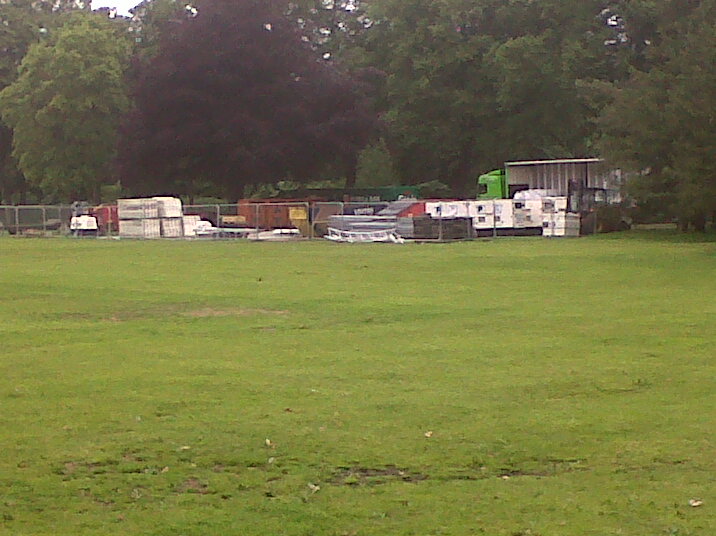
It’s a pity about the park on the other side of the river. Coopers Fields seem to be regarded by the Council as a lorry park and storage area for heavy equipment rather than a place of recreation.

…with the damage caused by all this traffic never repaired. Grass does eventually re-grow if it is given time, but sadly this doesn’t happen in Bute Park. No sooner has one set of temporary buildings been dismantled when another is set up. Indeed, preparations are already under way  for another “event” on this park, with trucks already churning it up again and fencing being deployed to deprive the public of access to it.

Sometimes I wonder  why they don’t just tarmac it all over and be done with it.

Operation Torch

Posted in Bute Park with tags , , , on May 24, 2012 by telescoper

Tomorrow, Friday 25th May 2012, the Olympic Torch Relay will arrive in Cardiff on its way across the United Kingdom to its eventual destination in London’s East End. Why this is so interesting I don’t know. I think it would be a lot more fun if they made a real race out of it; Olympic Torch versus Olympic Fire Extinguisher, for example. Instead the Bearer of the Torch (and associated entourage of security men) will head into Cardiff from the direction of Newport, run around randomly for a bit in the city to maximise traffic disruption, and then head into Bute Park where it will start off a “free” concert for 15,000 people.

Cardiff City Council has clearly gone a bit berserk in its desire to throw money around and try to create an event to bolster its sense of its own importance. Whatever happened to the age of austerity? We’ve obviously got money to burn!

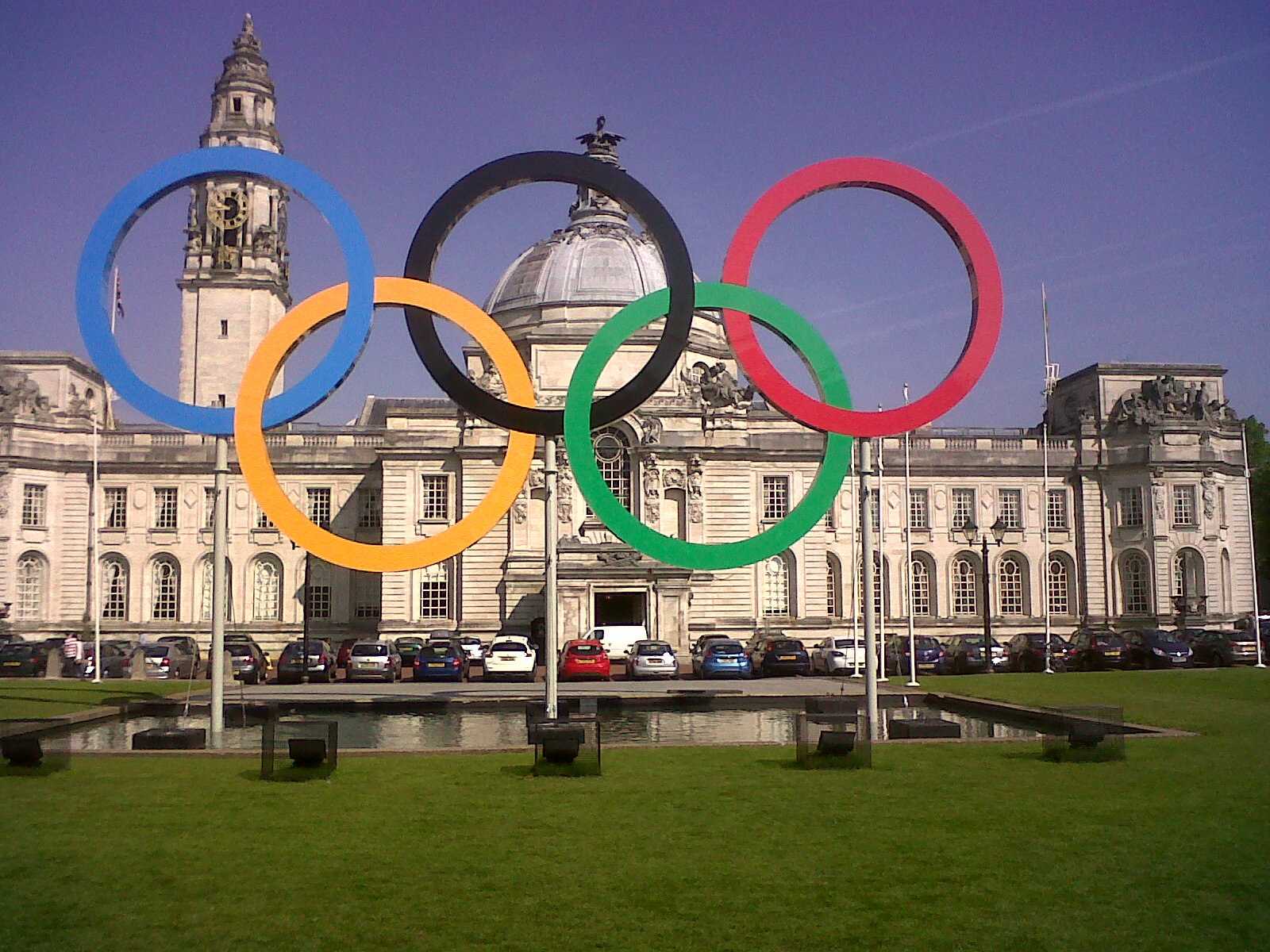
For example, these Olympic Rings were put up some weeks ago in Cathay’s Park, in front of Cardiff’s fine City Hall:

Quite nice. Very few Olympic events are actually happening in Cardiff, of course, and those that are seem to be attracting negligible interest, so one wonders why it is necessary. It also cost £300,000. That’s about £60,000 per ring.  Just saying.

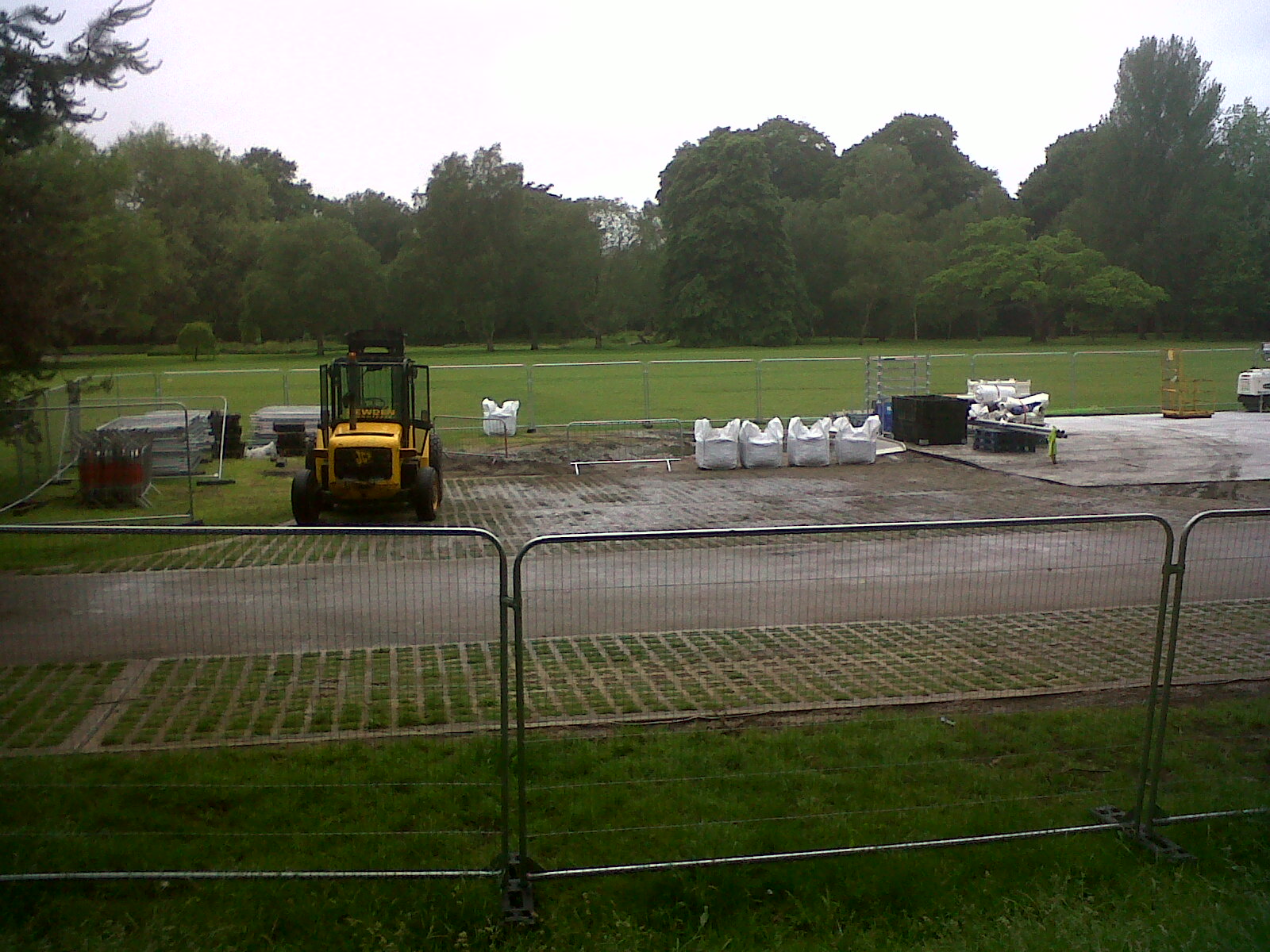
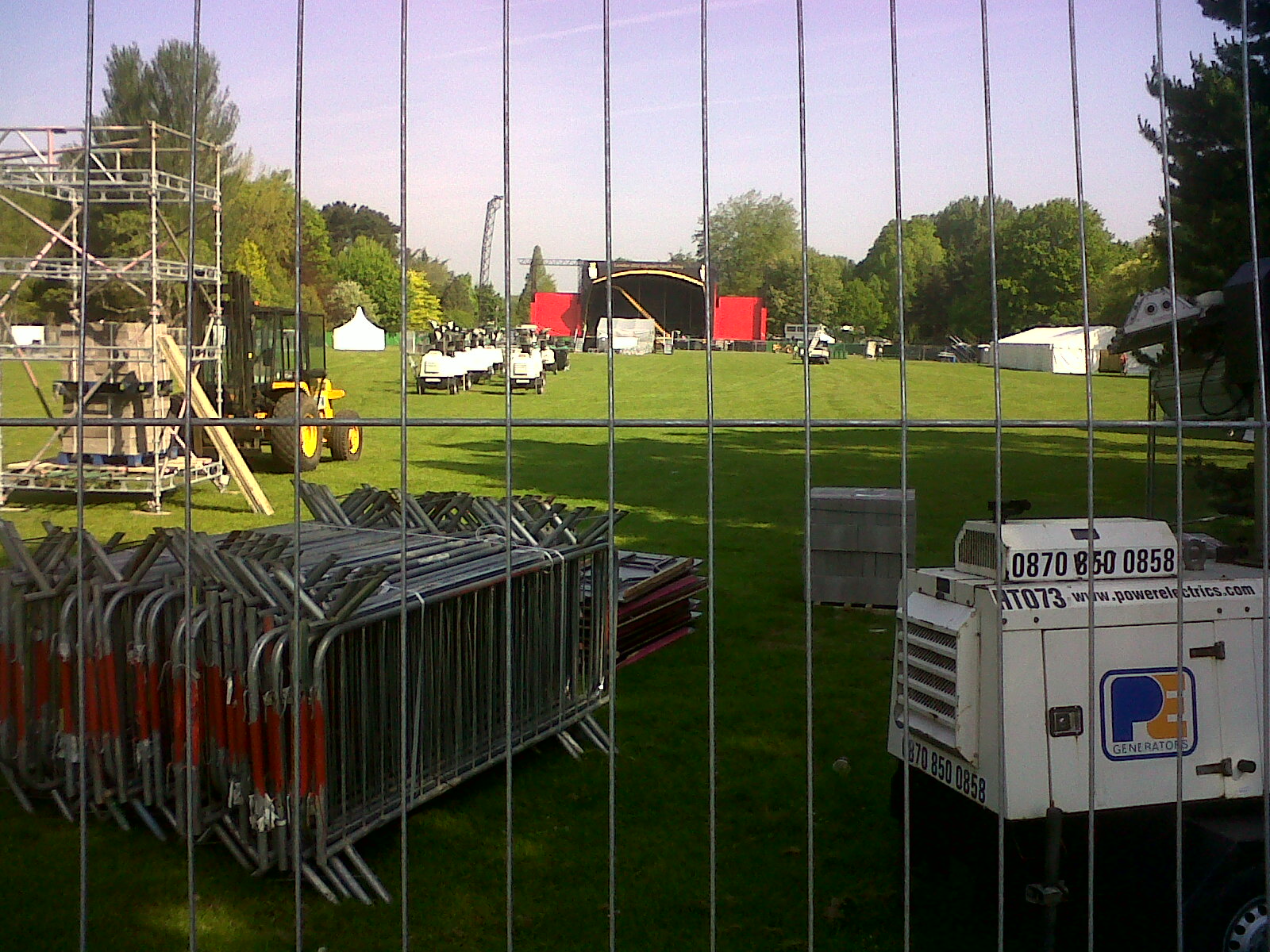
The preparations for tomorrow’s Bute Park extravaganza have been going on for two weeks, with a huge section (Coopers Fields) closed to the public, the intrusion of dozens of heavy vehicles carving up the turf, and the closure of the cycle paths.

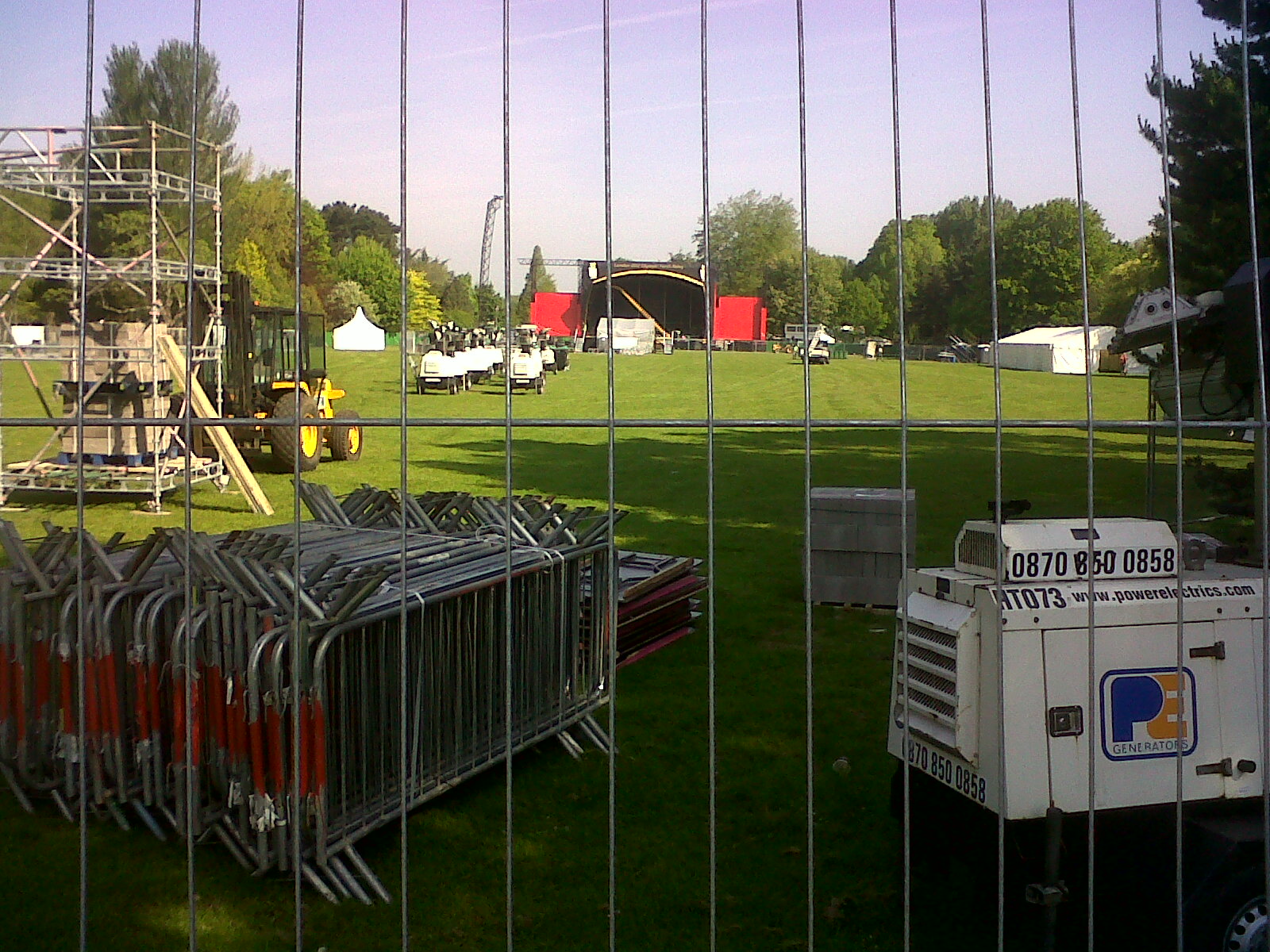
Here’s a view through the railings at the area chosen for the “free” pop concert. Of course it’s not actually free. It’s just the people who are going to it that don’t have to pay. Tickets were apparently distributed by some kind of ballot, although I don’t recall ever seeing it advertised. Nobody I know managed to get any tickets either. I wonder who did? One possible explanation is that there are 15,000 tickets, and the number of people employed by Cardiff City Council is..er…15,000. Coincidence?

The concert venue  is ringed with burger, pizza and chip vans and is sponsored by Coca Cola. Apparently the irony of marking a celebration of athletic achievement in this way seems to have escaped the organizers.

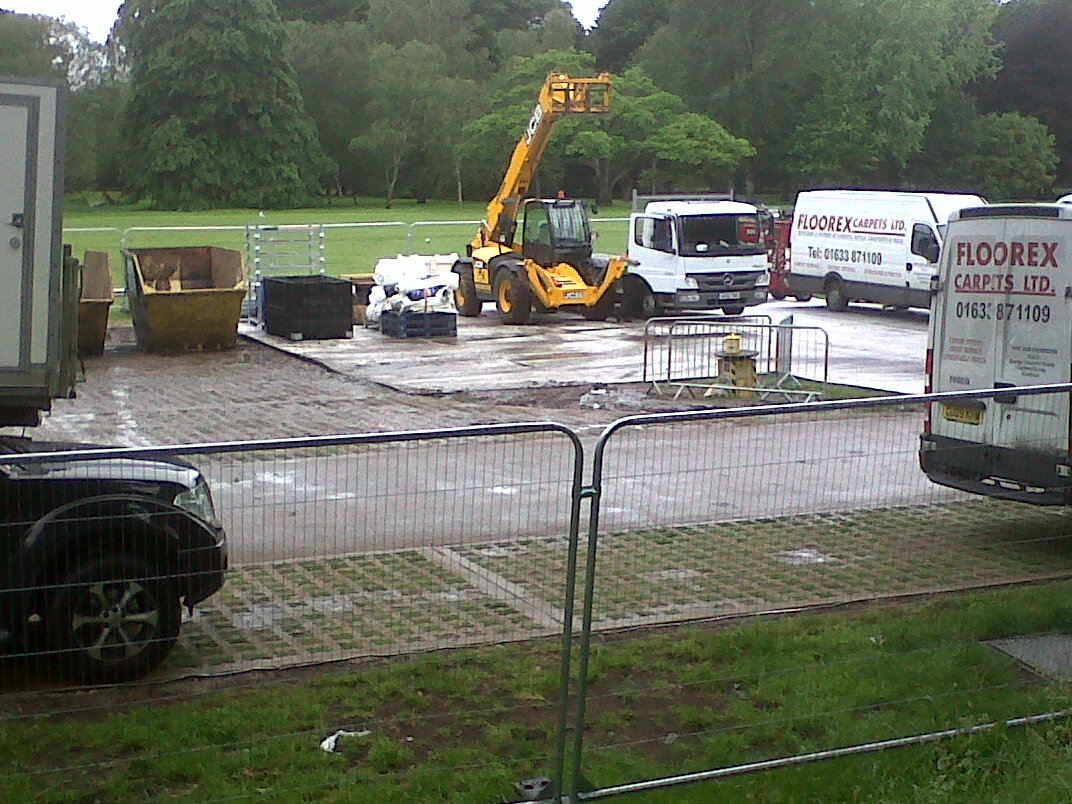
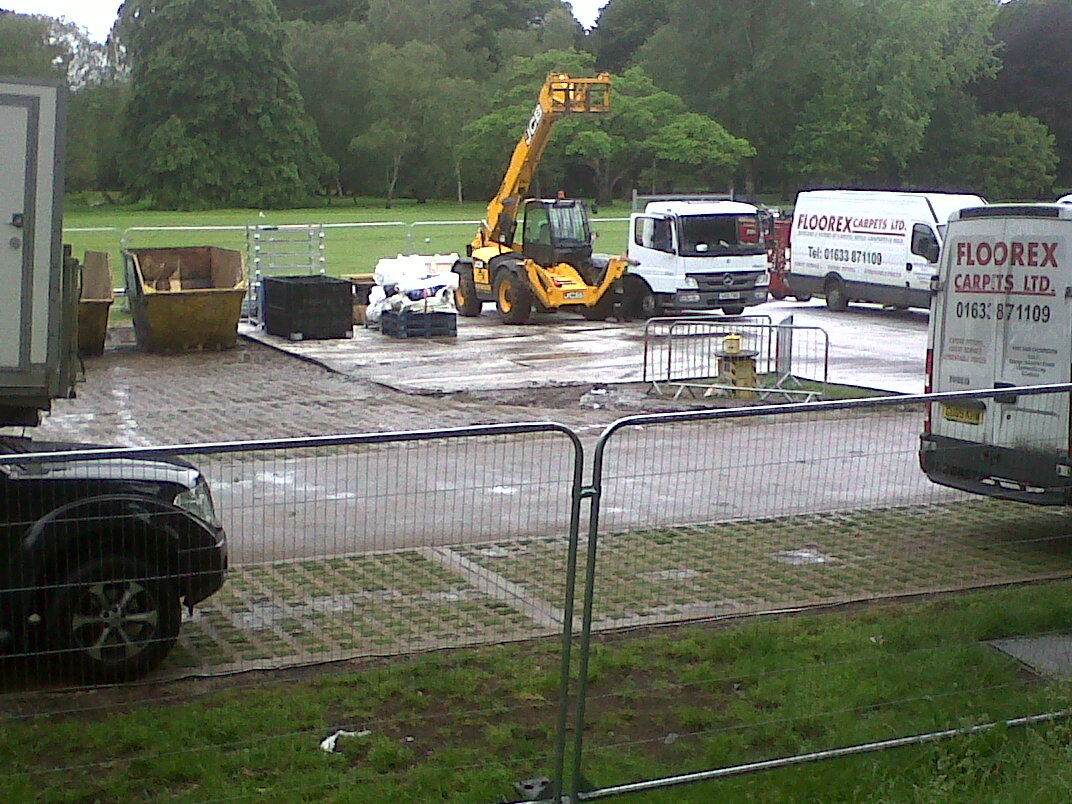
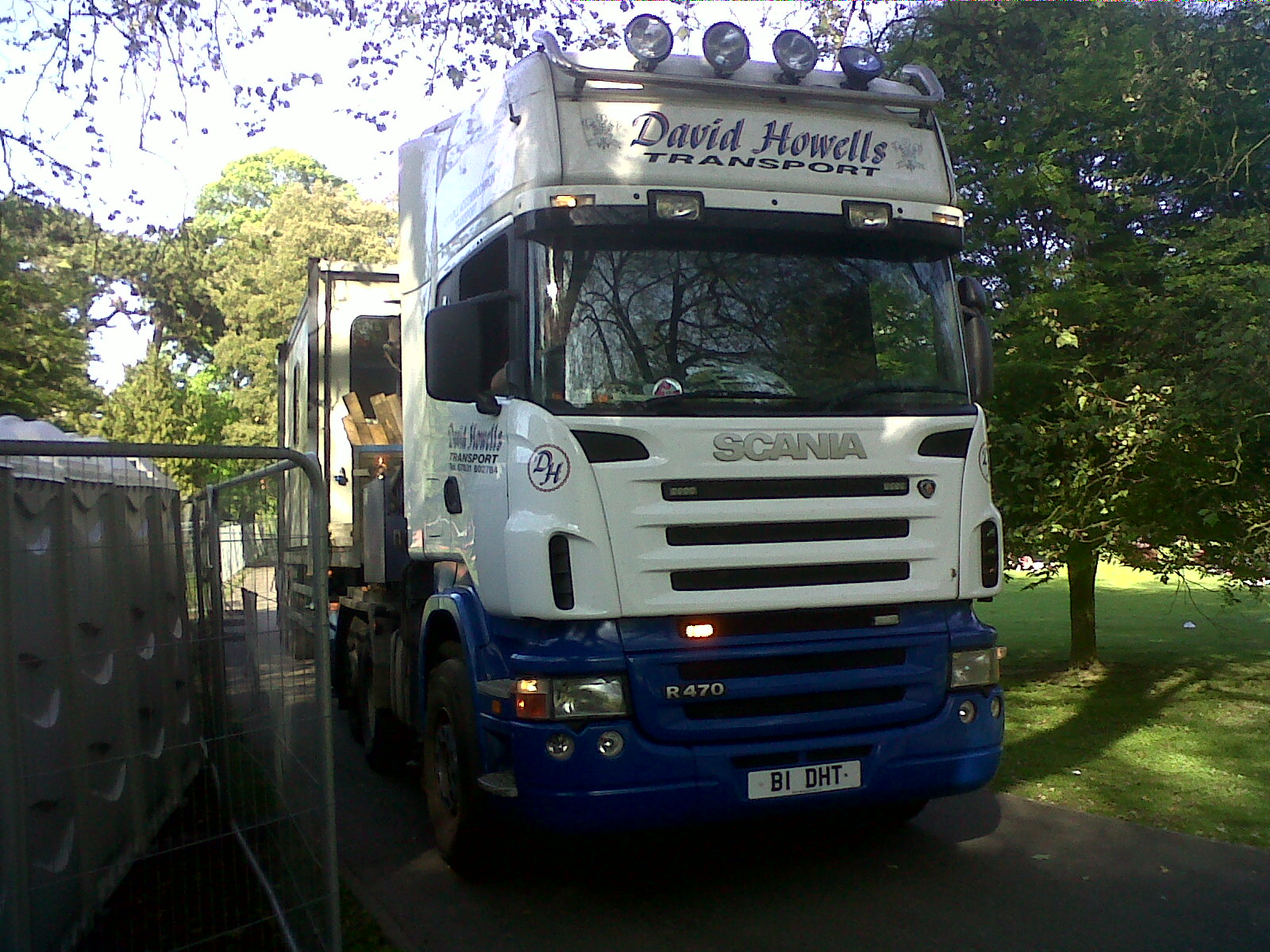
Last night I walked home through Bute Park. The weather was lovely and quite a few people were out in the Park enjoying the sunshine, crammed into the small part near the Castle that is still open to the public. Juggernauts like this were moving in and out of the Park along the footpaths:

Is this really the right way to treat a public park? You could say that it’s a special occasion, but a similar thing happened just a month ago, and no doubt other events will happen throughout the summer. It’s a park, for pity’s sake, not a building site!   The number of heavy vehicles thundering around the footpaths has increased enormously since the decision to build a new road entrance a few years back. The effect on the Park’s environment of all this traffic  has been devastating.

And then there’s this:

As this lorry turned to head towards the South exit of the Park – that’s the one that was supposed to have less traffic through it when they built the new road – there wasn’t enough clearance and it ploughed into the branches of a tree. The person who had been walking in front of the lorry saw me taking a picture and asked me to stop. They don’t want any evidence of the damage they’re doing, obviously.

You can bet your bottom dollar that Coopers Fields will be completely trashed by the 15,000 strong crowd tomorrow night. You can also bet that the Council will do all it can to conceal the cost of clearing up afterwards, even if it does bother to repair the damage. It’s very sad that beautiful Bute Park is being treated in such a way.

In fact I think it’s criminal.

Olympic Scale Disruption

Posted in Bute Park with tags , , , on May 18, 2012 by telescoper

Apparently the Torch is passing through Cardiff on 25th May 2012 ahead of the 2012 London Olympics. Some sort of celebration is going to happen in Bute Park that evening, and the preparations started earlier this week. Yet more heavy vehicle movements. Yet more temporary buildings. Yet more damage Cooper’s Fields (which will probably never be repaired). Yet more denial of public access to a public Park.

Any why on Earth does such a huge area have to be sealed off for two whole weeks just to make way for an event that will only last a few hours? What a waste of time! And I dread to think how much it’s going to cost…

Such a Shame

Posted in Bute Park with tags , , on March 29, 2011 by telescoper

Thanks to MaryCav for this ironic take on the ongoing destruction of Britain’s green spaces, including Bute Park. It was made by Friends of the Earth.


Share/Bookmark