Archive for the Education Category

The Age Thing

Posted in Biographical, Education with tags , , , , , on January 2, 2024 by telescoper

When I was younger, so much younger than today, I thought I would hate getting old. Now that I’m sixty though I have to say in all honesty that it’s not too bad at all. I could do without the arthritis, of course, but that’s more of an inconvenience than anything else. I am also fortunate to be comfortably off and in a secure job, with the prospect of a decent pension. When I was younger I was frequently under stress, with bouts of insomnia and other issues. Although I am subjected to a bit of aggravation now and then, I seem to have learnt to deal with it better.

I think part of this is that as I’ve got older I’ve become more resistant to peer pressure. Nowadays I go out only when I really want to, and do only what I want to do. Gone are the days when friends used to drag me out to places I didn’t really want to go to. I used to go because I thought people would label me as ‘boring’ if I didn’t. Nowadays, I don’t mind being called boring. I may be boring to you but I am rarely ever bored. I always find plenty to occupy myself.

Another thing that helps is working in a University, which is a good way of being surrounded by interesting young people. So many people of my age seem to resent the young, to the extent of criticizing virtually everything they do. I find the vast majority students friendly, hard-working and engaged, although they have to put up with much more than I had to when I was in their situation.

Teaching physics is interesting because the current generation of undergraduates has to learn a lot of what I had to when I was a student. Every year therefore provides a reminder of the time when I was the age of the new intake, as many of their educational and social experiences are similar. Of course not all. When I was an undergraduate we had no internet or anything like that. There were no social media, either. 

Students these days seem to like using Instagram. I do have an account on Instagram but it is very quiet, probably because I’m not very good at it. Some students follow me there, but I have been told that it would be “inappropriate” to follow them back. That’s probably fair, but I do worry that I appear rude for not following back. It’s not that I’m snobbish or anything. I just feel that I would be intruding, in much the same way as if I wandered into a bar full of students I know. It’s not that I don’t like them, just that I find it awkward (as I’m sure they do). Not having had Instagram when I was young, I suppose I just don’t really understand the etiquette.

One of the things about Instagram is that people do sometimes share quite personal things, and sometimes things that might be quite compromising in a work context, e.g. pictures of themselves in a  state of inebriation. I suppose that’s why it’s a rather contentious issue whether a member of academic staff in a University should or not be “friends” with their undergraduate students on social media. Indeed, this is the official advice given by some institutions to staff. Most wouldn’t have a problem with having social media interactions with their graduate students, though. The nature of the relationship between a PhD student and supervisor is different from that between an undergraduate and a lecturer.

There is a point on social media where professionalism might be compromised just as there is in other social interactions. The trouble is knowing precisely where that boundary lies, which is easy to misjudge. I’ve never felt that it was in any way improper to be friendly to students. Indeed I think that could well improve the students’ experience of education. If the relationship with staff is too distant students may not  feel comfortable asking for help with their work, or advice about wider things. Why should being “professional” mean not treating students as human beings? One can take friendliness too far, however. There have to be some boundaries, and intrusive or demanding behaviour that makes students uncomfortable should be avoided.

I realize I have digressed into social media. Aside from that, though, I’m sure much of student was similar in my day. I’m pretty sure that neither the subject of physics nor students of physics have changed that much over the years. The only difference from my perspective is that every year they look younger! That’s the other side of the coin: the students remind you of your younger self, but not in such a way as to delude you into thinking that you’re still the same person! I think that’s the one thing I’ll miss when I retire, hopefully in the not-too-distant future.

All of this is a roundabout way of saying that I don’t mind getting old. In fact, I feel that my whole life so far has been practice for this.

Bravo, Sorbonne University!

Posted in Education, Open Access with tags , , , on December 10, 2023 by telescoper

Here’s some good news for advocates of open research. Sorbonne University (Paris) has made an important announcement. I quote:

Sorbonne University has been deeply committed to the promotion and the development of  open science for many years. According to its commitment to open research information, it has decided to discontinue its subscription to the Web of Science publication database and Clarivate bibliometric tools in 2024. By resolutely abandoning the use of proprietary bibliometric products, it is opening the way for open, free and participative tools.

That’s the way to do it! Such a decision requires real intellectual leadership, so I’m not sure how many other universities will follow suit. Those paralyzed by managerialism probably won’t.

The Sorbonne statement goes on to explain:

This decision is in line with the University’s overall policy of openness, and it is now working to consolidate a sustainable, international alternative, in particular by using OpenAlex.

Both Web of Science and Clarivate are, of course, fronts for the academic publishing industry and are just as pointless, as they sell to subscribers a biased subset of information which is already in the public domain through services such as CrossRef.

While I’m congratulating Sorbonne for its leadership, I should do likewise (though in a different context) for Utrecht University, which refused to participate in this year’s Times Higher World Rankings. Among their reasons are

  • Rankings put too much stress on scoring and competition, while we want to focus on collaboration and open science.
  • The makers of the rankings use data and methods that are highly questionable, research shows. 

I hope more institutions join the fight back against the box-tickers in this regard too, although I’m not particularly hopeful here either.

Are Students Customers?

Posted in Education with tags , on December 6, 2023 by telescoper

When tuition fees were brought in to the UK higher education system many academics worried that the relationship between students and lecturers would be changed for the worse, as students would be encouraged to see themselves as customers. I haven’t taught in a UK university since 2018 but I have to say I never met any physics students who saw themselves as customers. On the other hand, over the years I have met many parents of students who saw themselves as customers. Maybe the tendency of students to think of themselves as customers has increased over the last six years. I don’t know.

These thoughts popped into my head when my attention was recently drawn to an advertisement for a job at the University of Bristol (which I used to think of as a good university):

Whether or not students see themselves as customers, there is clearly one University that seems to think that’s what they are; at least that’s what the advertisement says.

I have only two comments on this advertisement.

First, it set the ‘Bullshit Job” claxon* ringing very loudly. David Graeber’s book is full of testimonies from people whose job description is just like this! The third paragraph makes it clear that the plan is to bring in someone from outside the higher education system to impose private-sector methods where there is no reason to think they will be productive. I wonder how if the “human-centred approach to experience design” will include anything at all to do with teaching?

Second, I don’t think universities really see students this way at all. The reality is much worse. Students are not really customers, for the same reason that cattle are not customers. They are commodities, the income from which generates profit. A “cattle-centred approach” would have been a more honest form of words…

*If I had time I’d maintain a “Bullshit Jobs” folder in memory of David Graeber…

Six Years in Maynooth!

Posted in Biographical, Education, Maynooth with tags on December 1, 2023 by telescoper
Maynooth University Library, home of the famous cat

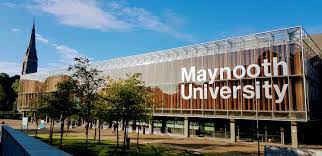
It is 1st December 2023, which means that it’s six years to the day since I started work at Maynooth University. (Obviously, I’m not there now, but you get the point.) So much has happened in that period it seems very much longer since I first arrived. Still, it does mean that I’ve now spent 10% of my life living in Ireland. I’m very happy that I made the move all those years ago.

I won’t deny that the past six years have had their frustrations. The major one is something I haven’t mentioned this on the blog before, but when I joined the University I was promised – in writing – that the Department of Theoretical Physics would be allocated part-time computer support. Despite many reminders, that has never happened. That’s a breach of contract. A less patient employee would have sued his employer already. It’s absurd that the Department is still having to run its own computer cluster without any professional technical support. I’m writing this now to make it clear that I haven’t forgotten. I hope that this issue is remedied by the time I return to Maynooth. Six years is long enough.

On top of that, the teaching and administrative workload, especially for the three years I was Head of Department, mostly during the Covid-19 pandemic with very little support from the University, was very heavy and has made it difficult to be very active in research. Fortunately, now I’m on sabbatical so am able to do a bit of catching up with projects. Obviously the big event this year was the launch of the European Space Agency’s Euclid mission. Performance verification is still under way and the Euclid survey proper won’t start until the new year, but things so far look very promising.

I took over as Chair of the Euclid Consortium Diversity Committee in July. That has been a lot of work, actually, with very frequent telecons. You might argue that this is a distraction from actual research, and there’s some truth in that. But the most important thing is that the Euclid mission is a success, and I think that making the Euclid Consortium as inclusive and supportive a working environment as possible is one way of contributing to that.


The thing I’m probably most proud of over the past six years is, with the huge help of staff at Maynooth University Library, getting the Open Journal of Astrophysics off the ground and attracting some excellent papers. This year has seen significant growth, with submissions and publications increasing by about a factor three since last year. We’re still smaller than many of the mainstream astrophysics journals, but we’re still growing.

So, after a few years of hard and at times dispiriting slog, things are now going pretty well from a personal point of view. I do still worry about the future, though. My biggest fear for the Irish Higher Education system is that it follows the “business model” of soulless teaching factories with courses delivered by demoralized staff on casual teaching contracts. Things are definitely going that way in Maynooth and this trend must be resisted, as must the never-ending diversion of resources away from teaching and research into useless layers of management. Every time I see a job advertisement for a new management post, I think how much less it would cost to fund the technical support I was promised six years ago. What drives the University’s policies is not lack of resources but ridiculously warped priorities.

The Atwood Machine

Posted in Barcelona, Cute Problems, Education, Maynooth with tags , , , on November 14, 2023 by telescoper

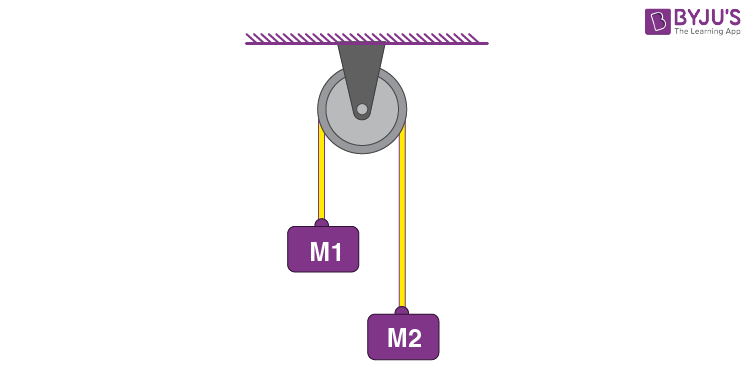
In the foyer of the Physics Department at the University of Barcelona you will find, as well as a fine refracting telescope, an example of the Atwood Machine. For some years before my current sabbatical I have been teaching Newtonian Mechanics to first-year students in Maynooth and used this as a simple worked example. I have to admit I’ve never seen an actual Atwood machine before, and what I’ve done in lectures is the simplified form on the right rather than the actual machine on the left.

The illustration on the right depicts the essential elements, but you can can see that the actual machine has a ruler which, together with a timing device, can be used to determine the acceleration of the suspended mass and how that varies with the other mass. You can work this out quite easily in the simplest case of a frictionless pulley by letting the tension in the string (which is light and inextensible) be T (say) and then eliminating it from the equations of motion for the two masses. I leave the rest as an exercise for the reader. A more interesting problem, for the advanced student, is when you have to take into account the rotational motion of the pulley wheel…

The Metamorphosis of Narcissism

Posted in Art, Education, Maynooth with tags on October 24, 2023 by telescoper

My attention was drawn today to a paper in the journal Research Policy. It’s an Elsevier journal so the article is behind a paywall, and the methodology looks very dodgy, but the abstract is worth reading for amusement value (the emphasis is mine):

Universities hold a prominent role in knowledge creation through research and education. In this study, we examine the effects of VC narcissism on university performance. We measure VC narcissism based on the size of the signature, in line with a methodological approach which has been widely used in the recent literature and repeatedly validated in laboratory experiments. We exploit a quasi-natural experiment of VC changes and employ a Difference-in-Difference research design, which alleviates concerns related to endogeneity and identification bias. We show that the appointment of a highly narcissistic VC leads to an overall deterioration in research and teaching performance and concomitantly league table performance. We further identify excessive financial risk taking and empire-building as possible mechanisms explaining the main results and provide evidence on the moderating role of university governance. Our findings are consistent with the view that narcissism is one of the most prominent traits of destructive leadership; they also have practical implications for leadership recruitment and the monitoring of leadership practices in the higher education sector. The results of this study extend prior research in several ways. Extant literature on executive leadership and narcissism yields inconclusive findings; this literature has mainly focused on for-profit organisations and has not considered universities. In addition, prior research in higher education on the determinants of university performance has not yet examined the role of leadership personality traits.

https://doi.org/10.1016/j.respol.2023.104901

I chose the title of this post – an allusion to a famous painting by Salvador Dalí that plays with the themes of hallucination and delusion – reading a sentence in the introduction to the paper:

Over the past few years the complexity and challenges of running a higher education institution have changed beyond recognition.

In other news, I am dismayed that, because of my absence from campus on sabbatical, I am unable to attend today’s long-awaited launch event for the brand new Maynooth University Strategic Plan (which will be accompanied by a protest by postgraduate students at Maynooth about low stipends and poor working conditions). The latter seems to me to be of far greater importance to the future of the University than the former.

Spanish Practices

Posted in Barcelona, Education, History, Maynooth with tags , , , , , on October 20, 2023 by telescoper

When I was a lad, during the 1970s, the term Spanish Practices was used pejoratively in a union-bashing sense to describe restrictive practices in the workplace. Until recently I thought it was a modern invention that relied on a stereotypical view of Spanish people as being lazy. In fact it seems the term dates back to Tudor times and is religious in origin, referring to Roman Catholic rites, in contrast to the simpler Protestant forms of worship. Anyway, none of that is what this post is about. I just used the title as clickbait.

I’ve been here in Barcelona, and working in the University of Barcelona, for four weeks now and I thought I’d share a few observations about differences in practice here and in the Ireland (and the UK).

The other night I went out for dinner with colleagues from the Department. The restaurant was much closer to the University than to my flat so instead of going home first I stayed in my office and walked straight there. My route out of the building takes me past a number of teaching rooms. During this warm weather, most of the rooms have the doors open so it’s easy to have a quick look at what’s going on inside. On my way out at about 7.30pm I was surprised to see a number of classes still going on, and they weren’t sparsely attended either.

In Maynooth the latest regular lectures finish at 6pm. Even during the 5pm to 6pm lectures, many students have to leave before the end to catch the one and only bus back to their place of residence. Here the public transport system is so good that isn’t really an issue even for those who don’t live near the campus. As far as I know lectures start at 9am, so students potentially have a very long day. They work hard.

I have to say that I wouldn’t like to have teach late in the evening. I used to do that on Fridays at Queen Mary for the MSc course and didn’t enjoy it. I don’t mind doing 9am lectures, though, but I don’t think students agree – partly because of the difficulty of getting to campus at that time.

In the Faculty of Physics, all the lecture halls, classrooms and laboratories are in one building rather than spread around the campus like they are in Maynooth (and many places in the UK). Fortunately, the building has been designed with students in mind and there is plenty of space for students to use socially or for private study between teaching sessions.

In this picture you can see the inner courtyard of the building occupied by the Faculties of Chemistry and Physics. It’s a big open space, with teaching rooms, etc, on either side. In the far right-hand corner there is a café/bar where one can buy lunch, a coffee, or even a beer, to be consumed either inside or in the seating area in the courtyard. Many students seem to prefer bring their own lunch and eat it in this space., although the food available is pretty good and cheap compared to back home.

As well as being able to eat and drink here, there is plenty of room for students simply to hang out or to study, either alone or in groups. If they don’t feel like that they can use the tram, bus or Metro to go home, and come back later if they have a long gap between classes. None of this is possible at Maynooth.

This particular kind of open space would not work so well in Ireland or the UK because of the weather, though you can probably see in the picture that there had been a bit of rain before I took the photograph, but I hope I’ve made the point that having social spaces makes a huge amount of difference to the student experience, not least because it feels that the University has thought about them. In the neoliberal system that dominates in the UK and Ireland, students are simply a commodity, a source of revenue, to be crammed into every available space and processed as cheaply as possible. In Maynooth students have been, and are being, forced to pay an extra levy for a notional student centre that will probably never be built.

The contrast is very disheartening.

Getting back to educational matters, another thing I’ve noticed walking past classrooms is that it’s not unusual to see a student standing at the blackboard in front of the class going through a problem. I’ve seen that a number of times with quite large classes. Sometimes we ask students to do that sort of thing in tutorials, but I’ve never done so in a full lecture. I think our students would be shocked if we asked, but it’s clearly not unexpected here. That’s a Spanish Practice I’d be quite happy to try.

The Land of Inadequate Research Stipends

Posted in Education with tags , , , on October 13, 2023 by telescoper

I noticed yesterday that the Irish Government has announced that the stipend for PhD research supported by Science Foundation Ireland (SFI) and the Irish Research Coucil (IRC) will increase by €3,000 a year. The increase will bring the rate of stipend to €22,000 a year for doctoral researchers from January 2024. While this is €3,000 less than the €25,000 recommended by a report published earlier this year, and the Government itself has already tacitly admitted that a level of €28,000 is needed to attract the best students, this is at least a step in the right direction.

Current levels of funding for research students are simply exploitative, forcing research students to take on extra work – often low-paid teaching duties – in order to make enough money to make ends meet. That is, unless they are students from affluent backgrounds. The discriminatory aspect of this policy is plain for all to see: should a career in research only be possible for the wealthy?

Of course this applies only to PhD students funded by SFI and IRC. It remains to be seen whether other funders – particularly Universities themselves – will match this increase. If they don’t, it will create an unhealthy division between students doing similar work but receiving vastly different levels of remuneration.

In related news I notice the Irish Universities Association has proudly announced a new agreement to fund Chilean students undertaking PhD and Research Masters courses in Ireland. Sounds great, I thought when I saw the announcement, astronomy being a likely area for research projects involving Chilean students.

Strangely (?) the website advertising this scheme doesn’t mention the level of stipend offered, but I found out independently that it is $15,000 per annum. That’s about €14,250, completely inadequate for a research student in Ireland, especially in the Dublin area, and especially for one who has travelled halfway round the world to get to Ireland. I certainly won’t be encouraging any students to apply for this scheme unless and until the miserly bursary is increased to the same level as SFI/IRC.

The IUA, of course, knows full well that this stipend is insupportable, so it is reprehensible for it to have agreed to these terms, the only possible outcome of them being to create an underclass within an underclass.

I had my university education for free, without tuition fees and with a full maintenance grant. The stipend I received for my PhD, although by no means luxurious, was adequate too. At times like this I wonder yet again why my generation spends so much time shitting on the young?

On Budgets

Posted in Education, Finance, Maynooth, Politics with tags on October 11, 2023 by telescoper

Yesterday was Budget Day in Ireland, when the Irish Government had to decide how to deal with an unprecedented fiscal surplus. Would it use the available funds to help the homeless and those in poverty? Would it provide much-needed investment in public services and infrastructure? Or would it use the funds to buy the next General Election? As far as I see it, the decision was mainly to go with the third option, paying only lip service to the other two. That’s not surprising, as it’s the sort of thing the sort of people in the current Government have tended to do over the years. Short-termism is the order of the day.

When it comes to third level education, there was some good news for students. Tuition fees currently €3K will be cut by €1K but, disappointingly, the reduction is for one year only. As far as I can understand the news, extra Government funding to universities will replace the loss of fee income, but not provide the general uplift that was hoped for.

A couple of weeks ago, the Leaderene President of Maynooth University sent around a letter written by the Irish Universities Association (IUA) to the Taoiseach. You can find the PDF here. The Government must have been unconvinced by the arguments presented therein, because despite having more than enough dosh to pay for the requested increase in funding, no such largesse was forthcoming.

Despite this setback, Maynooth University’s Management hiring frenzy continues unabated. The latest new position to be advertised is a Director of International Recruitment and Conversion. No, I have no idea what it means either. Perhaps someone in Government looked at how much money Maynooth has burned recently on so many new positions and decided that third level institutions must have plenty of cash already?

In reality of course, the horde of new managers have been funded by diverting funds away from teaching and research. Maynooth already has the highest student-staff ratio of the eight comparable universities, a situation which will only get worse. As funding for teaching gets squeezed to pay for ballooning bureaucracy, departments have no alternative but to employ casual staff instead of permanent academics. As a report produced by the union IFUT makes clear, precarity is endemic in the Irish third level system,as it overwork and job-related stress.

I hope this interpretation is wrong but, the way I see it, none of this is accidental. During the pandemic, University bosses saw teaching staff take on greatly increased workloads that enabled their institutions to generate large surpluses. Having established just how much they could exploit their workforce, the way ahead will be more of the same. The deliberate policy of understaffing, overwork, and casualization will only accelerate. The Irish University system is heading for a crisis on the same scale as that in the United Kingdom, and lack of public funding is only part of the reason…

The Meaningless University Rankings

Posted in Education with tags , , , on September 29, 2023 by telescoper
Photo by Pixabay on Pexels.com

I see that the Times Higher has now released this year’s outcomes of its annual exercise in numerology called the World University Rankings. The announcement is accompanied by narratives such as this:

China is edging closer to the top 10 and now has two institutions in the top 15 for the first time. Tsinghua and Peking universities both overtake the University of PennsylvaniaJohns Hopkins University and Columbia University to rank 12th and 14th respectively in this year’s 20th edition of the ranking. Meanwhile, Japan’s University of Tokyo now outperforms the University of EdinburghKing’s College London and the London School of Economics and Political Science, after rising 10 places to 29th.

Blah Blah Blah.

Such statements are rendered even more meaningless than they usually are by the fact that this year’s (2024) rankings are constructed using a very different methodology from previous years. How do we know, then, that the changes in rank described above are due simply to a change in methodology?

The answer is that we don’t.

As I pointed out last week, it would be a very simple task to answer that question. All the Rankers need to do is run last year’s methodology using this year’s data and/or last year’s methodology with this year’s data, and compare the result with this year’s rankings. Any differences so produced would demonstrate whether or not the methodology is more important that the data. This is the sort of test that anyone with a basic knowledge of the scientific method would perform. Over the years I’ve asked the Times Higher many times to do this exercise and they have always refused.

My theory is that actual institutional changes take place much more slowly, over a much longer timescale than a year. These rankings would be much harder to sell, and to construct commentaries that sell, if the rankers if nothing much happened between, say 2023 and 2024. That’s why they shake up the methodology every few years, to make it look like something is happening with which their “journalists” can fill column inches.

It seems to me a reasonable inference that the Times Higher doesn’t really care whether the results of its annual Rankfest actually mean anything or not. They just want to peddle the results to the world’s bureaucrats and politicians who lap it all up unquestioningly. Unfortunately the people in and around universities who make strategic decisions often believe this sort of nonsense and hold quite a lot of power, so the league tables aren’t merely irrelevant garbage – they’re potentially dangerous garbage.

Hats off, then, to Utrecht University in the Netherlands who have refused to participate in this year’s rankings. I quote:

UU has chosen not to submit data. A conscious choice:

  • Rankings put too much stress on scoring and competition, while we want to focus on collaboration and open science.
  • In addition, it is almost impossible to capture the quality of an entire university with all the different courses and disciplines in one number.
  • Also, the makers of the rankings use data and methods that are highly questionable, research shows.

Quite so. More of this please!