Archive for the Education Category

A Day of Offerings

Posted in Education, Maynooth with tags , , , , , , , on August 27, 2025 by telescoper

Today (27th August) is the day that students across Ireland receive offers of places at Third-Level Institutions to start next month. The offers for all courses and all institutions are available on the official CAO website here; they are also widely available elsewhere, including this searchable list.

The official numbers for Maynooth are here. Minimum points required for Maynooth’s – and indeed Ireland’s – most important course, MH206 Theoretical Physics and Mathematics, are 520 this year, up a little from 513 last year. MH204 Physics with Astrophysics is 385, up two points on last year’s 383. MH201 General Science (of which Physics is a part) is on 352 points, up two from 350 last year. Just for comparison, the points for these courses from 10 years ago were: MH206 550; MH204 480; and MH201 435, all significantly higher than this year.

Maynooth’s biggest course (by student numbers) – and indeed the biggest course in Ireland reckoned that way – is the Omnibus Arts programme MH101 which has an entry level this year of just 300 CAO points. Ten years ago it was 390.

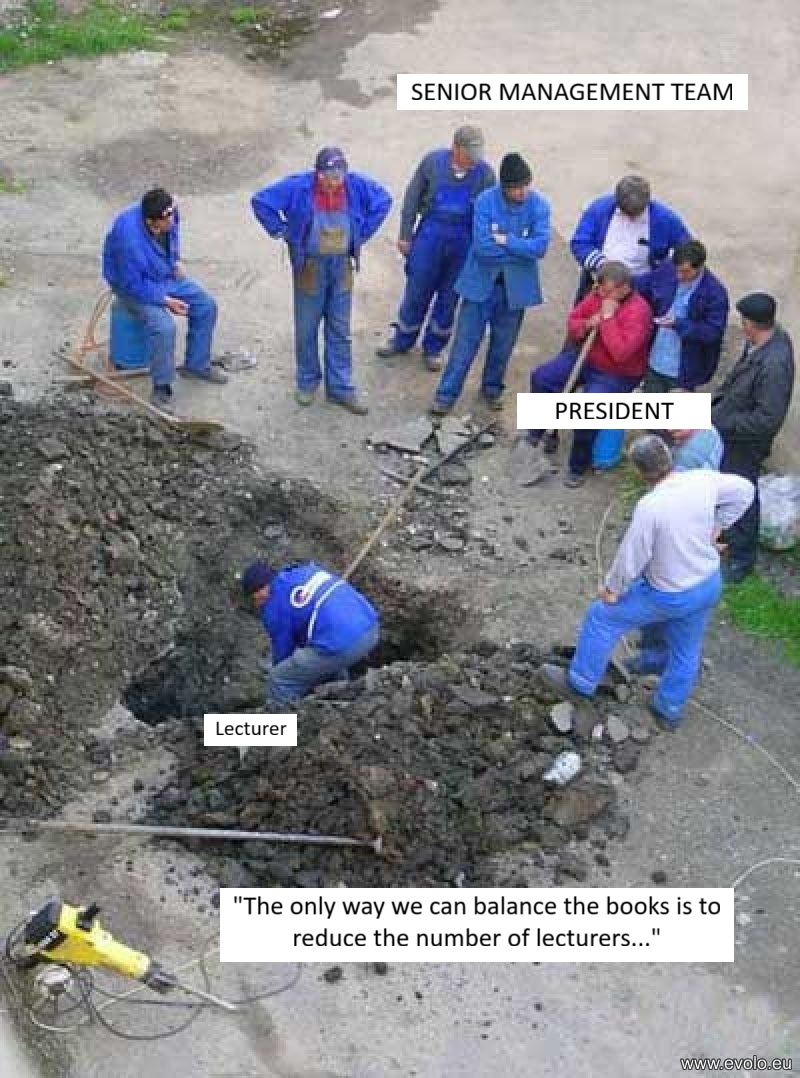
It seems the first-round entry points for most courses at Maynooth have not changed dramatically despite the reduction in Leaving Certificate grades this year after several years of artificial inflation over the Covid-19 years. Leaving Certificate results are just one factor in determining the CAO points for a particular course at a particular Institution. Overall the picture is rather complex. Across Ireland, points are up for about 50% of courses and down for about 42%. The CAO points needed for a course is largely a matter of demand versus capacity rather than academic performance. For the last few years Maynooth University has been recruiting more and more students, putting pressure on accommodation, teaching loads and campus space. This strategy will prevent any significant rise in CAO points for the foreseeable future. This is probably happening to some extent across the sector, though Maynooth has a more urgent need for more students: to pay for the legions of new managers it has appointed. Two new €100K managerial jobs have been advertised so far this week…

All this just concerns the first round of offers so things may change significantly over the next week or two. Students now have to decide whether to accept their first-round offer or try to change course. They have until next week to do this. Departments won’t know how many new students they have for a while yet.

Update: Thursday 28th August. Here is the traditional  Irish Times First Round Offers supplement.

Moving On

Posted in Education, Maynooth with tags , , , , , , , on August 22, 2025 by telescoper

Last week I wrote a post about the loose ends of the academic year, one of which concerned my PhD student Aoibhinn, who passed her viva voce examination way back in May, who had to submit a bound copy of the thesis to the relevant office by September 6th so that her degree could be ratified by Faculty and Academic Council. She has now done that, and in the process kindly made me an extra copy of the Authorized Version to put on my shelf:

It will be easy to find on my shelf because it’s a different colour from the others. Aoibhinn will be off to Germany for a postdoctoral fellowship after her conferring ceremony in October.

In subsequent post I mentioned a plethora of meetings to take place this week, all of which went off without much incident. The various Departmental Examination Boards did their business and students will receive their results on September 5th. Students involved in these will be moving on in various ways: some will be graduating, some progressing to the next year of their course and others – though not very many at all – will be leaving without qualifying.

Meanwhile, elsewhere in Ireland, students in the Class of 25 have today been receiving their school Leaving Certificate results. As expected, the proportion at the highest grade (H1) is down significantly compared 2024. On the other hand, the total number of students taking  Leaving Certificate examinations is significantly higher  than last year. You can find all the national statistics here.

How these nationwide effects  will work their way through to undergraduate admissions at Maynooth remains to be seen. Applicants will get offers through the CAO system next week; the points required by each higher education institution should be available online on Wednesday 27th. The Irish Times traditionally publishes a pull-out supplement showing all the offers for all courses at all universities across the sector the following day, i.e. on Thursday 28th September.

By the end of next week, therefore, we’ll have some sort of an idea how many students we will have entering the University in September 2025 and can begin moving on to the next academic year. One thing I’ve already got sorted out – way ahead of previous years – is my teaching timetable for Semester 1. Usually I’ve been happy if I had this before the first week of term! My new timetable makes Tuesdays and Thursdays my heaviest teaching days, but gives me Wednesday free for research and other things that I’ve started planning already.

The Week Ahead

Posted in Education, Maynooth with tags , , , , , on August 17, 2025 by telescoper

Another weekend is almost over so, after spending most of this afternoon in the garden, I’ve retreated indoors to look at my calendar for the forthcoming week. I find a plethora of Examination Board meetings, one (tomorrow) for our Masters students who did their presentations on Friday and two for undergraduates who took repeat examinations in August (one for Mathematical Physics and one for Engineering, as I happen to have been teaching Engineering Mathematics this year). The two undergraduate boards are both on Thursday. All three of these should be relatively brief, but you never know…

There is another meeting tomorrow, Monday, about organizing our computational physics teaching for the new academic year. The merger of theoretical and experimental physics has given us the chance to coordinate the different computational modules offered by the two previous departments, but we need to make sure the teaching rooms are big enough and the computers have the correct software, etc. Fortunately I’m not actually teaching Computational Physics again until Semester 2 but we have to get it sorted in time for other modules happening in Semester 1.

In between Monday and Thursday I have two whole days with no meetings and no grading to do. I might be able to get on with some research, or at least with writing up some research I’ve already done.

Friday is a big day for the Irish higher education system, in that it’s the day students get their Leaving Certificate results. This year the grade inflation introduced during the pandemic is supposed to begin to unwind, but none of us outside the examination system knows how this will be achieved or what the results will be. If I had to bet I’d say that the CAO points needed for most courses at Maynooth will go down substantially, partly because of the deflation mentioned previously but also because The Management has decided that the University has to recruit more and more students and will drop entry standards as low as it needs to in order to meet its targets.

I don’t know how many students we will end up with for Academic Year 2025/6 but I do know that I will have retired before most of them complete their course. I used to find it a bit scary thinking about retirement, but not any more.

Presentation Day

Posted in Education, mathematics, Maynooth with tags , , , on August 15, 2025 by telescoper

Today was the day of the last component of our MSc in Theoretical Physics and Mathematics here in Maynooth. The students handed in their dissertations on Monday and today they all gave presentations about their work. Listening to them all was very enjoyable, actually, as they were on a range of different topics, some purely mathematical, some statistical, and some more obviously physics. Moreover, they were all very good.

I often worry that assessing presentations is much more subjective than written work in physics and mathematics. In the event, however, we usually find good consistency in the scores awarded by staff in attendance. 

It also occurred to me during today’s presentations that we may make more use of such assessments to deal with the encroaching use of AI in project dissertations. One can get a good idea if someone has actually done and understood the work if they can present it in person and answer questions. That is, after all, the main reason we do viva voce examinations at PhD level.

Listening to talk after talk in a long session can be quite wearying – conferences are usually set up like that and they’re not often useful or interesting – but today’s session was fun. Not so much for the students I suppose, as there were a few signs of nerves. When all the talks were over the students trouped off en masse (presumably to the pub) as that was the end of their course. The staff remained behind to agree a set of marks and combine them with the other components of assessment, i.e. the marks for the dissertation. The examination board meets early next week, after which the final results will go forward to the University.

It was great to see the students all completing their course successfully, especially because it is (I think) such a demanding one. My only sadness is that we won’t see them until the conferring ceremonies in October. The Masters students have been regularly present in the Department throughout the whole year and I’ve had quite a lot of interest chats with them. I saw my own project student even more frequently, once a week for almost a year. We have to banish such thoughts now, though, as our thoughts turn to next year’s intake.

I don’t think any of the MSc students will read this – for all I know they’re still in the pub! – but in any case I’d like to say congratulations to them all and wish them all the very best for the future. They’ve earned it!

Loose Ends of the Academic Year…

Posted in Biographical, Education, Maynooth with tags , , , , , , , , , on August 13, 2025 by telescoper

I know most people outside academia thing university staff are on a long holiday between June and September, but that’s not the case. This week we have been trying to sort out some of the loose ends of Academic Year 2024/5 before we start on planning for 2025/6. The matters to be dealt with include undergraduate, taught postgraduate, and research posgraduate.

To start with I’ve had to mark my undergraduate repeat (resit) examinations. The grades need to be checked and uploaded before the appropriate examination board meeting next week. That will resolve a number of progression issues, as well as hopefully allowing some students to retrieve credit from their final year and thus be allowed to graduate.

Another set of tasks related to our taught MSc students. They submitted their dissertations on Monday which now need to be read and graded before another examination board (next Monday). They also have to do their presentations, which take place this Friday (15th August).

The following week, the School leaving certificate results come out, at which point we’ll start to get some idea of how many students we will have entering the first year in September.

Today I heard that my PhD student Aoibhinn, who passed her viva voce examination way back in May, has had her thesis corrections formally approved. She now has to submit a bound copy of the thesis along with an electronic version thereof by September 6th at the latest. Then her degree has to be approved by the Faculty of Science & Engineering (on September 16th) followed by Academic Council on (29th September). Assuming those formalities are observed, she can receive her doctorate at one of the conferring ceremonies at the end of October.

Another thing I heard today is that Aoibhinn has been awarded a prestigious research fellowship from the Alexander von Humboldt Foundation but she needs her degree certificate before she can start. That’s a stricter policy than elsewhere, but it is Germany. It’s a bit frustrating, but that particular loose end will definitely be tied soon enough, after which Aoibhinn will be off to Germany for two years. Fortunately the start date of the fellowship is flexible. Congratulations to Aoibhinn!

Generative AI in Physics?

Posted in Artificial Intelligence, Education, mathematics, Maynooth with tags , , , , , , , , , on August 11, 2025 by telescoper

As a new academic year approaches we are thinking about updating our rules for the use of Generative AI by physics students. The use of GenAI for writing essays, etc, has been a preoccupation for many academic teachers. Of course in Physics we ask our students to write reports and dissertations, but my interest in what we should do about the more mathematical and/or computational types of work. A few years ago I looked at how well ChatGPT could do our coursework assignments, especially Computational Physics, and it was hopeless. Now it’s much better, though still by no means flawless, and now there are also many other variants on the table.

The basic issue here relates to something that I have mentioned many times on this blog, which is the fact that modern universities place too much emphasis on assessment and not enough on genuine learning. Students may use GenAI to pass assessments, but if they do so they don’t learn as much as they would had they done the working out for themselves. In the jargon, the assessments are meant to be formative rather than purely summative.

There is a school of thought that has the opinion that formative assessments should not gain credit at all in the era of GenAI since “cheating” is likely to be widespread. The only secure method of assessment is through invigilated written examinations. Students will be up in arms if we cancel all the continuous assessment (CA), but a system based on 100% written examinations is one with which those of us of a certain age are very familiar.

Currently, most of our modules in theoretical physics in Maynooth involve 20% coursework and 80% unseen written examination. That is enough credit to ensure most students actually do the assignments, but the real purpose is that the students learn how to solve the sort of problems that might come up in the examination. A student who gets ChatGPT to do their coursework for them might get 20%, but they won’t know enough to pass the examination. More importantly they won’t have learnt anything. The learning is in the doing. It is the same for mathematical work as it is in a writing task; the student is supposed to think about the subject not just produce an essay.

Another set of issues arises with computational and numerical work. I’m currently teaching Computational Physics, so am particularly interested in what rules we might adopt for that subject. A default position favoured by some is that students should not use GenAI at all. I think that would be silly. Graduates will definitely be using CoPilot or equivalent if they write code in the world outside university so we should teach them how to use it properly and effectively.

In particular, such methods usually produce a plausible answer, but how can a student be sure it is correct? It seems to me that we should place an emphasis on what steps a student has taken to check an answer, which of course they should do whether they used GenAI or did it themselves. If it’s a piece of code to do a numerical integration of a differential equation, for example, the student should test it using known analytic solutions to check it gets them right. If it’s the answer to a mathematical problem, one can check whether it does indeed solve the original equation (with the appropriate boundary conditions).

Anyway, my reason for writing this piece is to see if anyone out there reading this blog has any advice to share, or even a link to their own Department’s policy on the use of GenAI in physics for me to copy adapt for use in Maynooth! My backup plan is to ask ChatGPT to generate an appropriate policy…

Good Luck in Your Repeat Exams!

Posted in Education, Maynooth with tags , , , on August 6, 2025 by telescoper

Since the repeat examination period at Maynooth University starts today, Wednesday 6th August, I thought’d I’d send a quick message for students taking one or more exams…

Autumn Repeats

Posted in Education, History, Maynooth with tags , , , , , on August 5, 2025 by telescoper

As I mentioned yesterday, it is almost time for the repeat examination period to begin once again. In fact the first papers are due tomorrow (6th August). A couple of years ago, Maynooth University produced this nice good luck message for those resitting so I’ll repeat it here:

I was a bit surprised when I first arrived here in Ireland that the August repeat examinations are called the Autumn Repeats. After all, they happen in August which is generally regarded as summer rather than Autumn. The term is, I think, a relic of the old Celtic calendar in which the start of Autumn coincides with the start of harvesting, the old festival of Lúnasa being when people celebrated the Celtic deity Lugh, who would bring a good harvest or who, if not satisfied, could bring his wrath to bear in storms that would mess everything up. Lúnasa is the name for August in modern Irish; Lá Lúnasa is 1st August, and the first Monday in August (Lá Saoire i mí Lúnasa) (yesterday) is a Bank Holiday.

Anyway, the repeat examinations start tomorrow and go on for ten days or so, I will have four different papers to grade, though I’m expecting only one candidate each for three of them.

Every year at this time I mention the difference between the system of repeats in Maynooth compared to other institutions with which I am familiar, especially in the UK. Elsewhere, students generally take resits when, because they have failed one or more examinations the previous May, they have not accumulated sufficient credits to proceed to the next year of their course. Passing the resit allows them to retrieve lost credit, but their mark is generally capped at a bare pass (usually 40%). That means the student gets the credit they need for their degree but their average (which determines whether they get 1st, 2nd or 3rd class Honours) is affected. This is the case unless a student has extenuating circumstances affecting the earlier examination, such as bad health or family emergency, in which case they take the resit as a `sit’, i.e. for the first time with an uncapped mark.

Here in Maynooth, however, the mark obtained in a repeat examination is usually not capped. Indeed, some students – though not many – elect to take the repeat examination even if they passed earlier in the summer, in order to increase their average mark.

Some people don’t like the idea of uncapped repeats because they feel that it would lead to many students playing games, i.e. deliberately not taking exams in May with the intention of spreading some of their examination  load into August. The Institute of Physics has decided to impose capped resits as part of its accreditation requirements. Some people here seem to think IOP accreditation is worth having so we’re being pushed into that requirement. I find it heavy-handed and unhelpful. It is also unimportant unless you want to do postgraduate study in physics in the UK. It doesn’t matter at all anywhere else.

If you think students have an unfair advantage if they don’t take a full diet of examinations in May, then the logical conclusion is that part-time students have an unfair advantage as do students taking micro-credentials consisting of just one or two modules. It’s the essence of the modular system that each module result should be considered on its own merit, not in relation to other modules a student may or may not have taken at the same time. One can of course argue whether the modular system is good or not, but if you have it then you should act consistently in accordance with it. You wouldn’t penalize students who have to work to support their study relative to those who don’t, would you?

And there’s no real evidence of students actually playing the system in the way the IOP thinks they do anyway. For one thing the results from the repeat examination period are not confirmed until early September so that students that deploy this strategy do not know whether they are going to be able to start their course until just a couple of weeks before term. That could cause lots of problems securing accommodation, etc, so it doesn’t seem to me to be a good ploy. Finallists adopting this strategy will not be able to graduate with the rest of their cohort and may miss several months of potential employment. I think most of our students are smart enough to realize that it’s a risky strategy.

Anyway, I’d welcome comments for or against whether resits/repeats should be capped/uncapped and on what practice is adopted in your institution.

Lá Saoire i mí Lúnasa

Posted in Biographical, Education, mathematics, Maynooth with tags , , , , on August 4, 2025 by telescoper

Today, Monday 4th August 2024, being the first Monday in August, is a Bank Holiday in Ireland. This holiday was created by the Bank Holiday Act of 1871 when Ireland was under British rule. While the August Bank holiday was subsequently moved to the end of August in England and Wales, it has remained at the start of August in Ireland.

We have had some proper Bank Holiday weather, in the form of Storm Floris. Although the worst of this passed to the West of Maynooth, the winds were powerful enough to blow one of my wheelie bins over.

As I mentioned last week, the first day of August marks the old pagan festival of Lughnasadh, named after the God Lugh, on which is celebrated the beginning of the harvest season. This coincides with the English Lammas Day, one of many Christian festivals with pagan origins. Traditionally this is the start of the harvest season and is celebrated accordingly, with rites involving the first fruit and bread baked from flour obtained from the first corn. It is also one of the cross-quarter days, lying roughly half-way between the Summer Solstice and the Autumnal Equinox (in the Northern Hemisphere).

I’m reminded that this time last year I was still on sabbatical. That seems like ages ago. When I resumed teaching last September I had to teach two modules I’d never taught before: a fourth-year Mathematical physics course on Differential Equations and Complex Analysis and a second-year Engineering Mathematics course. This time should be a bit easier as I get to do both of these again. Over the year I also had a final-year undergraduate project student and an MSc student. Both have been a pleasure to work with. The Masters course lasts a calendar year so that one isn’t quite finished, but the deadline for handing in their dissertation is close, next Monday (11th) in fact.

After I return to work tomorrow the next big item on the agenda is the repeat examination period, which starts on Wednesday August 6th. The fates have conspired to require me to be “on call” for four papers next Saturday (two of my own and two covering for a colleague): three of these are scheduled at 12.30 and the other one at 15.30 so I’l have to be by the phone all afternoon in case any matters arise. I also have three others scattered through the approximately ten days of the examination period.

After the repeat examinations are done, the marks uploaded, and the Examination Board has done its work, the next job will be to prepare for the new intake of students. This year’s Leaving Certificate results will be announced on Friday 22nd August, at which point we’ll see how many students (if any) we have studying Physics next academic year which, if all goes to plan, will be my antepenultimate…

Masters from Cambridge

Posted in Biographical, Education with tags , , , on July 23, 2025 by telescoper

A few weeks ago, after I posted an item about it being 40 years since I graduated from the University of Cambridge, I was talking to some students. The main subject was that the primary route for becoming a research student is to do an undergraduate degree (Bachelors) followed by a taught postgraduate programme (Masters) before starting a PhD or equivalent. In the course of that discussion I mentioned that I skipped the middle step and went straight from my (three-year) BA at Cambridge to my DPhil at Sussex. Nevertheless, I have got a Masters degree: MA (Cantab), to be precise.

I had to explain that if you graduate from the University of Cambridge then all you have to do is wait a few years and then your B.A. automatically becomes an M.A. In my memory I received news of this just a year or two after graduation but this evening I found the correspondence and it was later than that:

By December 1988 I’d already finished my DPhil thesis, though I wasn’t formally awarded the degree until the following July. I didn’t turn up to the graduation ceremony, of course. I had done at least some work for my B.A. but did nothing at all for my M.A. except survive for three and a half years. Neverthless, I still have the stiff ticket (right) which I show here alongside my B.A. certificate (left) to demonstrate that it looks just like a proper degree certificate even though it is, frankly, a bit of a fraud.

I bet our MSc students currently hard at work on their dissertations wish that theirs were so easy!

By the way, having an MA also gives you (limited) dining rights in College. I’ve never once availed myself of this privilege.