Against the backdrop of rapidly rising numbers of Covid-19 cases the Irish Government today announced the return of some restrictions, including the closure of hospitality venues no later than midnight and a return to working from home “unless absolutely necessary”. On the latter, however, it has said that “There will be no reintroduction of remote learning for schools and third-level institutions at this point”.
I think the key phrase is “at this point”. I don’t think the new measures go nearly far enough and they will have to be revisited in a week or two, at which point we will revert to remote (online) teaching. Although we haven’t been give guidance yet, I think we’ll be carrying on with in-person lectures and tutorials at Maynooth for the time being, but it’s no more than an even money bet that we’ll stay that way until the end of term. I would also suggest that the odds are very much against us actually having examinations on campus in January. We await further guidance from the University about this, so I don’t know. The timetable for the January examinations is due to be published next week so a decision will have to be made very quickly.
What I do know, though, is that my second vaccine dose was on June 8th. The Government has now announced that 50-59 year olds (which includes me) can now get a third (booster) dose six months from their last one. In my case that is December 8th. But the roll-out of boosters has been painfully slow in Ireland, and most of the over-60s haven’t had theirs yet. It’s likely to be weeks or months until I get an appointment for mine.
We might have to switch to remote teaching in a while anyway if the rules are changed but I have made the decision that if I haven’t got my booster by December 8th I’ll be working from home and switching all my lectures online. Term ends on December 17th so I’ll only have to give a few remote lectures, but for me it is a matter of principle.
By deciding that in person teaching is “absolutely essential” the Government has admitted that lecturers are frontline staff and we should accordingly get a booster dose at the appropriate time. I’ve worked countless hours of unpaid overtime during this pandemic and I’m not going to continue without adequate protection from infection.
So here I am, trying to plan my teaching for next week and wondering what’s going to happen between now and the end of term. Here at Maynooth University lectures finish on 17th December, five weeks from now. I’m just about on schedule to cover everything I’m supposed to, so I’m not worried about that.
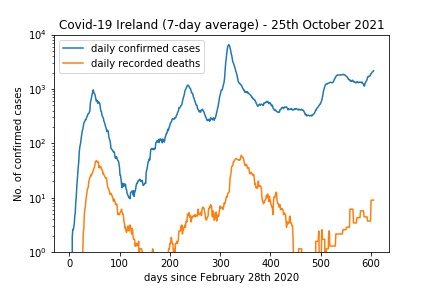
What I am worried about is that Covid-19 cases are continuing to climb. The latest 7-day rolling average of new cases is over 3900 per day and the increasing trend show no sign of slowing down. It will reach the 5000 mark in a week or two. Some daily figures have already passed that milestone. The death rate is still relatively low – 74 Covid-19 related deaths were recorded in the last week – but is edging up; over a hundred people with Covid-19 are being treated in ICU as of today.
The Irish Government seems to have no intention of introducing effective countermeasures and is instead just advising people to cut down the amount of socializing they do. I don’t think that will work. It seems very clear to me that the Government lost the room many weeks ago by frequently implying that the Covid-19 pandemic was over. They then caved in to the hospitality industry by allowing nightclubs to open. It is no doubt in such places that the virus is spreading. The Government keep stating that they are concerned but do nothing, blinking at the onrushing disaster like rabbits caught in the headlights of an approaching car.
Case numbers on campus at Maynooth remain fairly low, though the latest figure (69) is almost double last week’s figure (35). Students in my classes continue to wear face coverings and observe the other protocols and all the signs are that lecture halls and labs are pretty safe environments but we have no say in what happens off campus. As well as being concerned for the health of students and staff, I have particular worries about my Department. We’ve been short-staffed since the start of term and simply have no spare effort to provide cover for lectures or tutorials if anyone becomes sick.
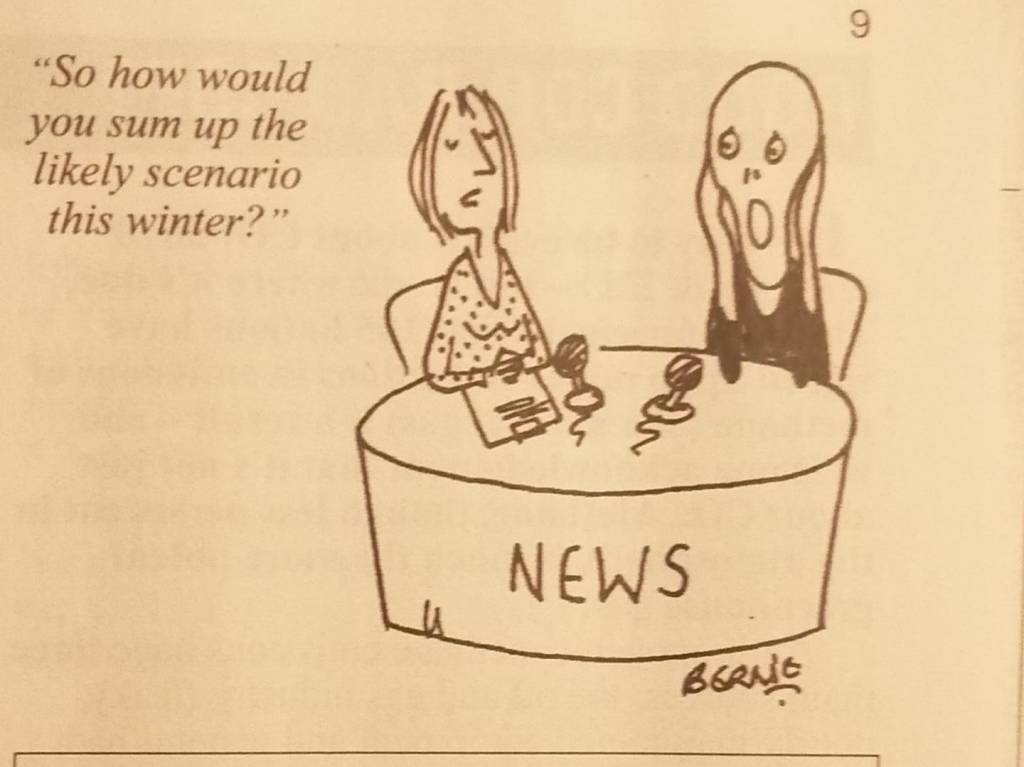
The Irish Health Service is under extreme pressure and the delivery of booster shots is being rolled out very slowly. I had my second Pfizer dose in June so should get a third shot in December but it is not clear that I will. I’m not going anywhere at Christmas anyway so that’s not a big deal but I’m worried by the broader picture. A cartoon in a recent issue of Private Eye is very apt:
Might we have to switch our lectures back online again before Christmas? Might our examinations be online again in January? Who knows. We’ll just have to wait and see but I think the blackboard in my study might be back in use very soon.
This morning we did the Astrophysics and Cosmology Masterclass advertised here. I think it went quite well. Apparently we had over sixty schools registered – at least one in every County – about a 1,000 schoolkids altogether. Certainly there were lots and lots of questions, which is a good sign!
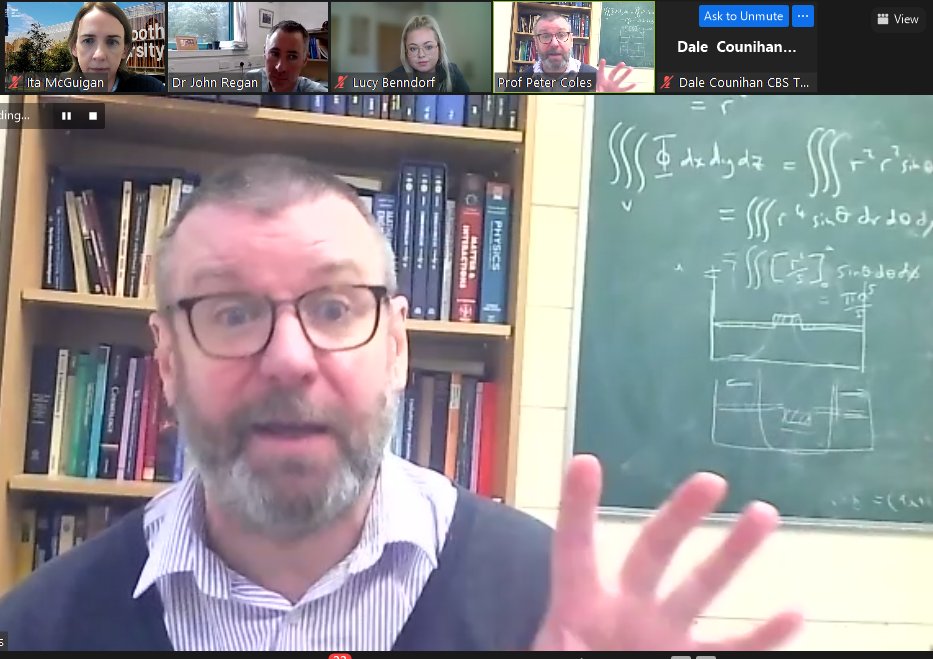
Here is a screen grab of part of the event. I didn’t realize my camera was a bit wonky!
In case anyone is interested here are the slides I used for my part of the talk:
I’ll post a recording of the whole event when it becomes available. Here is the recording of the workshop:
I had to leave before the end to go to a vector calculus lecture that was interrupted by the arrival of the Power Rangers, but that’s a different story…
Yesterday, on the way out of the lecture theatre after finishing a class, I was chatting with some of the students therein and the subject came up of how they should address me (and their lecturers in general).
One thing I’ve noticed since moving to Ireland is that, more so in England or Wales, first-year students often call me “Sir” if they want to attract my attention to something such as – to give a purely hypothetical example – a missing minus sign in a calculation. I suppose that me something to do with more of the schools perhaps being run on more traditional lines than in the UK.
For completeness I should point out that I went to an old-fashioned grammar school at which all the teachers were called “Sir” as they were all male. Some teachers were unbearably pompous in their insistence on that form of address, which is probably why I dislike it so much although I do appreciate the attempt to be polite.
I can understand why students – at least initially – carry on at university with behaviours that were deemed appropriate at school, but to my mind universities are really different because everyone is an adult. Of course I’m supposed to know more about the stuff that I’m teaching than the student, but the aim of the education is to eradicate that difference as effectively as possible. I think an important step on that journey is for the students to feel part of a joint venture than being talked at by some sort of authority figure. Formal titles do not encourage students to ask questions, which is an essential part of the teaching process.
Anyway, when a student asked me if he should call me “Sir” I said “No. Please don’t!”
“What should I call you then?”, he asked. “Professor?”
“My name is Peter, so that’s what you should call me” I replied. The student seemed quite shocked at the level of informality implied, but as far as I know I think all the teaching staff in the Department of Theoretical Physics are all comfortable with first-name terms.
I’ve never really thought about this before so I wonder what other university teachers think. Do any of you out there insist on using formal titles or is informality the norm?
We’ve now reached the halfway point in our teaching semester at Maynooth University. That means there are another six weeks of teaching before the end of term break. I was looking through the notes of my modules this morning in order to make a plan for the rest of term and was relieved to find that I’m roughly on track to finish on time. That is despite the first years starting a week late and lectures being 45 minutes long instead of 50.
At this point I’m still finding it very disconcerting talking to an audience of masked students, but it’s a heck of a lot better than just talking at a camera. Quite a few times I’ve been walking around campus and a student without a face covering has said “hello Peter” or words to that effect and I’ve smiled and said “hello” back while wondering who they were. Outside, you see, people take their masks off while, inside, I’m the only person whose face is uncovered.
Still, at least during lectures I get to make eye contact with the students. I don’t know why that matters so much to me, but it does. I remember as a student I had some lecturers who were pathologically incapable of making eye contact with the class, usually staring at a spot about six feet over the heads of the students. I found that most off-putting.
Although it still feels a bit weird, I’m glad that the mask-wearing protocol is being observed very well at least in lecture theatres. Unfortunately cases are skyrocketing right now – almost 4000 yesterday, as high as last January – which is all very worrying. Are we going to move to a Plan B? I doubt it, because the Government doesn’t seem to have one. Nevertheless I do think there’s still a significant possibility of our January exams being moved online yet again, but that hasn’t been decided yet.
Meanwhile, in the UK, University staff have been balloted over industrial action relating to the USS pension scheme and to various issues relating to terms and conditions. The majority of votes cast were in favour of strikes, but some institutions did not reach the 50% threshold required for strike action to be legal (some by just a handful of votes) and others achieved the threshold in only one of the disputes. I don’t know what will happen next, but I’d like to express my solidarity with those taking what I consider to be entirely justified action.
I couldn’t resist quoting this from the Universities UK statement on the dispute:
After a difficult 18 months, students do not deserve any further disruption.
Yes, it has been a difficult 18 months for students, but the absence of even a teeny bit of recognition that it has also been very difficult for staff is extremely telling.
I’m taking a particular interest in the disputes not only because I have friends and former colleagues in the UK but also because I have the best part of 30 years’ contributions locked into the USS pension scheme, plus some additional voluntary contribitions, and am relying on the benefits from those for my own retirement. If anything happens to that source of income I am financially screwed.
Apart from the USS scheme, the other side of the UCU dispute concerns ‘four fights‘ over:
Pay
Workload
Equality
Casualisation
These issues don’t only apply in the UK, of course. Workloads in my Department are at ridiculous levels – not only for me – and we have been forced by Management decisions into a situation in which half of our lecturing is being done by staff on short-term contracts. I suspect that the unpaid overtime we have put in during the pandemic is the expectation for the future, and I see no sign of the casualisation of our teaching staff being reversed in the immediate future. I hope I’m proved wrong, but in the meantime I’m keeping a close eye on my USS pension in case early retirement proves the only way to escape…
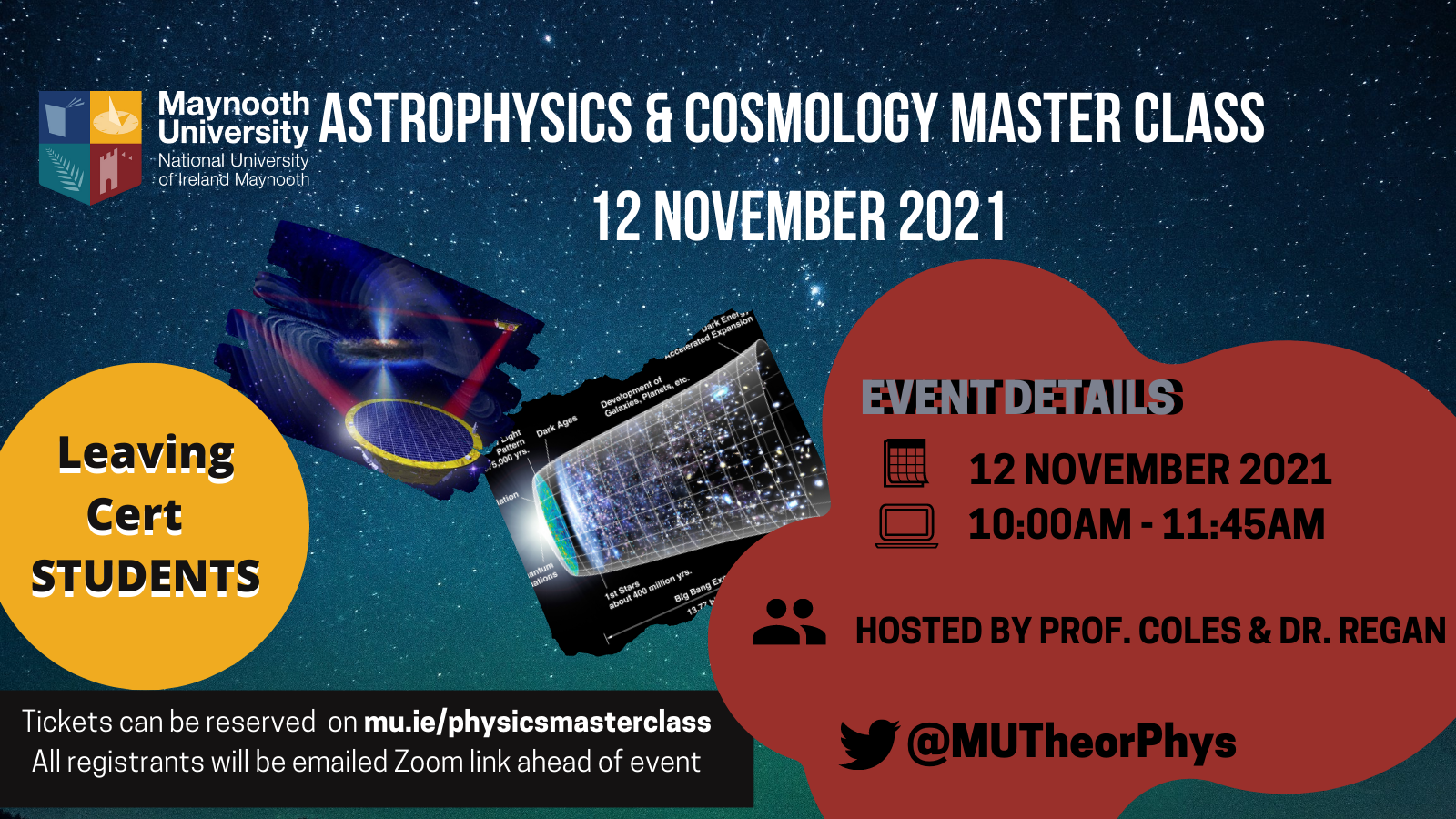
Regular readers of the blog – both of them – may remember that, after a couple of postponements due to Covid-19, we presented a Masterclass in Astrophysics & Cosmology in Maynooth on March 25th 2021. Well, owing to popular demand, we’ve decided to do a re-run of the event on Friday 12th November 2021 ahead of the forthcoming CAO cycle. That’s a week tomorrow!
This will be a half-day virtual event via Zoom. It’s meant for school students in their 5th or 6th year of the Irish system. There might be a few of them or their teachers who see this blog so I thought I’d share the news here. You can find more information, including instructions on how to book a place, here.
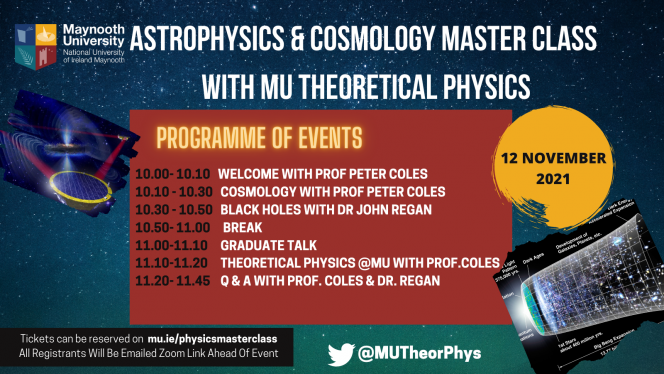
Here is the updated official poster and the programme:
I’ll be talking about cosmology early on, while John Regan will talk about black holes. After the coffee break one of our PhD students will talk about why they wanted to study astrophysics. Then I’ll say something about our degree programmes for those students who might be interested in studying astrophysics and/or cosmology as part of a science course. We’ll finish with questions either about the science or the study!
I’m told that with a week still to go we already have over 750 science students based in schools from An Daingean to Arranmore Island, from Monaghan to Mayo and many counties in-between. Fortunately it is online so no travelling is involved. Unfortunately the participants don’t get to see the wonderful campus so here’s a gratuitous picture!
(And at 12 noon I don’t turn into a pumpkin but do have to run off to give a lecture on vector calculus..)
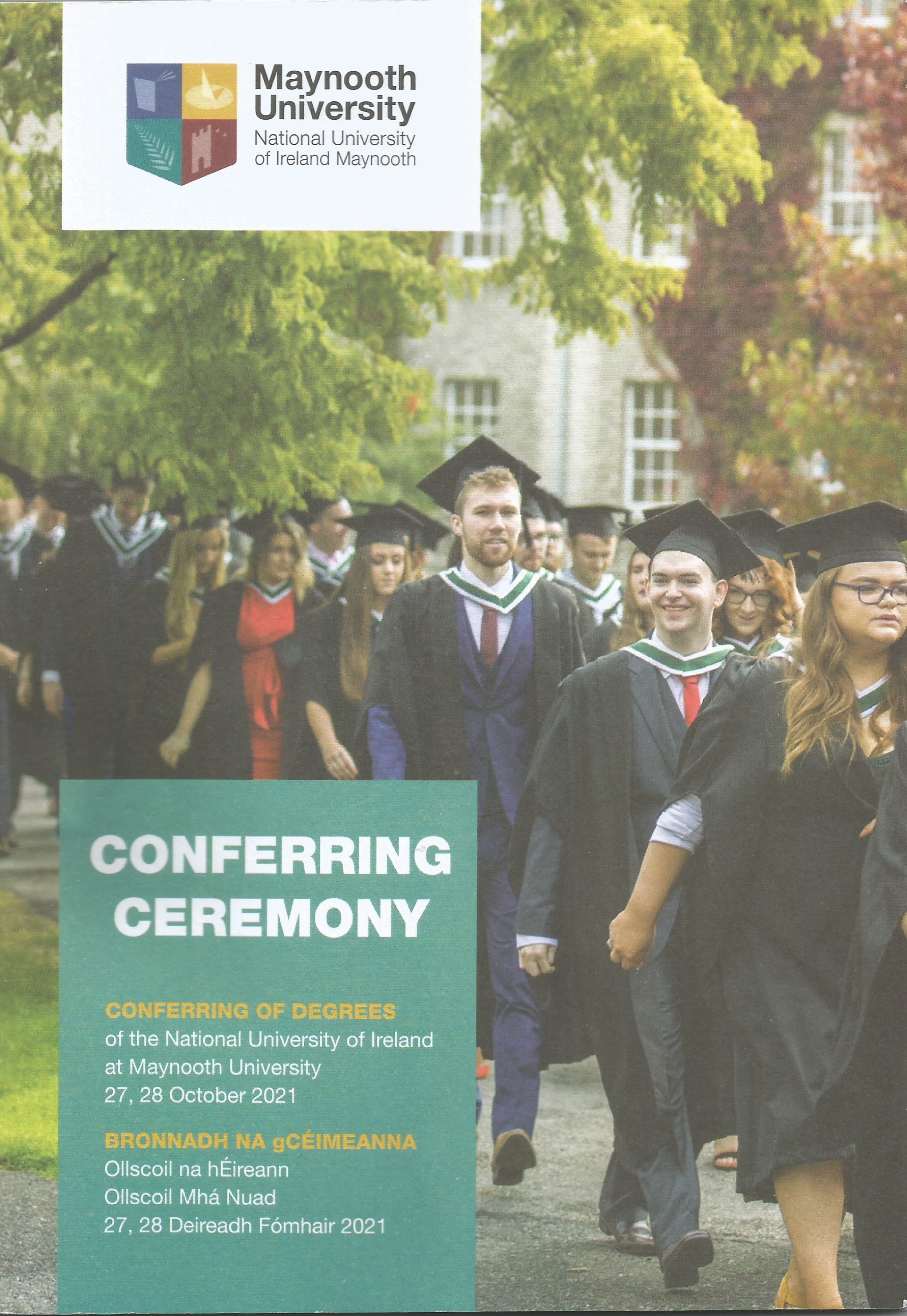
This morning I braved the inclement weather to attend a Conferring Ceremony at Maynooth University. This was the first Conferring Ceremony to be held in person since for about two years and the first ever featuring the new President of Maynooth University, Prof. Eeva Leinonen, presiding.
There were only four students from Theoretical Physics graduating this morning, and two of them graduated in absentia but I did get to see two students get their Master of Science by Research awards. If you’re interested their theses are available online here and here.
I wouldn’t say the ceremony went off without any hitches. There were quite a few late arrivals among the graduands. I think the bad weather elsewhere in Ireland caused some delays which led to some people being late for the ceremony (which was due to start at 10am, but didn’t get going until about 10.30). Then there were some last minute changes of order which led to one or two students initially getting the wrong scroll. I remember how nerve-wracking it was when that sort of reshuffling happened when I was involved in similar ceremonies at Sussex. It’s bad enough stressing over the correct pronunciation of the names! Anyway I was glad that these days all I have to do is sit there.
The last conferring ceremony I attended in person was on October 31st 2019. It was while I was en route to give a talk at DIAS that evening after the ceremony that I heard that my Mam had passed away. So much has happened between then and now that it is hard to accept that was only two years ago…
After a welcome break for yesterday’s traditional Hallowe’en Bank Holiday it’s time today to embark on the tradition of the Writing of the First Semester Examinations. I have to come up with four papers (two main exams for January and two repeat exams for next August) by next week, complete with solutions. I always find it very difficult writing examinations, perhaps for the same reason that I find devising clues for crosswords much harder than solving the puzzles. In this world there are setters and solvers and I definitely count myself among the latter.
Anyway, it has been decided that the exams in January will be of the traditional type, sat in person in an Examination Hall, as opposed to the online version we have been using since May 2020. I feel I should point out that was the plan this time last year too, but it didn’t work out that way in the end because of climbing Covid-19 cases. I wouldn’t rule out an abrupt volte-face this year either. The situation is not looking good at all. In fact it looks very much like last year…
I think the “open-book” style of our online examinations had much to recommend it, with an emphasis on problem solving. The one flaw is that we can’t really do anything about collusion when students are sitting remotely and can exchange messages with each other in the absence of an invigilator. I never saw any evidence of significant collusion in the exams I graded, but there’s no denying it was a possibility that we couldn’t negate.
Interestingly, the student representatives present at our Department Meeting a couple of weeks ago indicated that their discussions with other students came out heavily in favour of on-campus examinations. As a result only one of our examinations – for an advanced postgraduate module with very few students taking it – will be of the online “open-book” style. The rest, including my own, will be written and marked on paper. That’s the plan, anyway…
Making use of this Bank Holiday Monday morning to tidy up some things on my computer I realized I had bookmarked this short clip of Richard Feynman answering a question about teaching. I clearly intended to blog about it at some point but forgot to do so, so I’m correcting that now.
Feynman was of course a renowned lecturer both for university students and for public audiences. I think one of the things that made him so successful is that he liked talking about his subject and liked being the centre of attention; people who like neither of those things are unlikely to make good lecturers!
But the thing that really struck me about what he says in this clip is near the beginning where he says he thinks the way to approach teaching is “be chaotic” to “use every possible way of doing it”. Now some of us are occasionally chaotic by accident, but I think there is a great deal of truth in what he says. I also agree with him when he says “I really don’t know how to do it..” I don’t either
If you start from the premise that every student is different, and will consequently learn in a different way, then you have to accept that there is no one unique style of teaching that will suit everyone. It makes sense therefore to try different kinds of things: worked examples, derivations, historical asides, question-and-answer sessions, and so on. And we shouldn’t rely exclusively on lectures: there must be a range of activities: problems classes, tutorials, supplementary reading, etc. With a bit of luck the majority of your class will find something that stimulates and/or enlightens them.
The point about using every possible method at your disposal has become especially relevant now that we have had about 18 months’ experience of online teaching. I feel very strongly that we should make recordings of lectures routinely available to all students, not as a replacement for the “live” experience but to add to the set of resources a student can draw on. The same goes for other things which came into regular use doing our online period, such as printed lecture notes (again, not as a replacement for a student’s own notes but as a supplement).
I think it also helps to acknowledge that what you can actually achieve in a lecture is very limited: you shouldn’t be simply trying to “deliver” material for later regurgitation. You should be pointing out the particularly interesting aspects, explaining why they are particularly interesting, and what things students should follow up in private study where in textbooks and on the net they will find yet more different ways of approaching the subject.
After over thirty years of teaching have come to the conclusion that the main purpose of university education is to convince students that their brain is more than simply a memory device, i.e. that it can also be used for figuring things out. I’m not saying that a good memory is worthless. It can be extremely useful and memory skills are important. I’m just saying that the brain can do other things too. Likewise, examinations should not be simple memory tests. Sadly school education systems seem to be focussed on coaching students passing exams by rote learning.
We see particular evidence of this in physics, with many students afraid to even attempt to solve problems they haven’t seen before. One infers that they passed exams by simply memorizing answers to questions very similar to those on the paper. Our job is to remove that fear, not by pretending that physics is easy, but by giving students the confidence to start believing that they can do things that they previously thought were too difficult. In other words, university education is often about undoing some of the limitations imposed on students by their school education.
Back to lecturing, there are some obvious basics which lecturers need to do in order to teach competently, including being prepared, talking sufficiently loudly, writing clearly (if relevant), and so on. And of course turning up at the right theatre at the right time. But there are also those things that turn mere competence into excellence. Of course there are many ways to lecture, and you have to put your own personality into what you do, but the main tips I’d pass on to make your lectures really popular can be boiled down into the Three Es. I add that these are things that struck me while watching others lecture, rather than me claiming to be brilliant myself (which I know I’m not). Anyway, here we go:
Enthusiasm. The single most obvious response on student questionnaires about lecturing refers to enthusiasm. My take on this is that we’re all professional physicists, earning our keep by doing physics. If we can’t be enthusiastic about it then it’s clearly unreasonable to expect the students to get fired up. So convey the excitement of the subject! I don’t mean by descending into vacuous gee-whizz stuff, but by explaining how interesting things are when you look at them properly as a physicist, mathematics and all.
Engagement. This one cuts both ways. First it is essential to look at your audience, ask questions, and make them feel that they are part of a shared experience not just listening to a monologue. The latter might be fine for a public lecture, but if a teaching session is to be successful as a pedagogical exercise it can’t be passive. And if you ask a question of the audience, make your body language tell them that it’s not just rhetorical: if you don’t look like you want an answer, you won’t get one. More importantly, try to cultivate an atmosphere wherein the students feel they can contribute. You know you’ve succeeded in this when students point out mistakes you have made. On the other hand, you can’t take this too far. The lecturer is the person who is supposed to know the stuff so fundamentally there’s no symmetry between you and the audience. You have to be authoritative, though that doesn’t mean you have to behave like a pompous schoolmaster. Know your subject, explain it well and you’ll earn respect without needing to bluster.
Entertainment. As I said above, lecturing is very limited as a way of teaching physics. That is not to say that lectures don’t have a role, which I think is to highlight key concepts and demonstrate their applicability; the rest, the details, the nuts and bolts are best done by problem-based learning. I therefore think it does no harm at all if you make your lectures fairly light on detail and (with reason) enjoyable as pieces of entertainment. By all means introduce the odd joke, refer to surprising examples, amusing analogies, and so on. As long as you don’t overdo it, you’ll find that a bit of light relief will keep the attention levels up. A key element of this is spontaneity. A lecture should appear as if it develops naturally, in an almost improvised fashion. Of course your spontaneity will probably have to be very carefully rehearsed, but the sense of a live performance always adds value. A lecture should be a happening, not just a presentation. Lecture demonstrations also play this role, although they seem to be deployed less frequently nowadays than in the past. Being a showman doesn’t come naturally to everyone, and the audience will know if you’re forcing it so don’t act unnaturally, but at the very least try to move about. Believe me, watching a lecturer drone on for an hour while rooted to the spot is a very tedious experience (especially on a video recording). You’d be surprised how much difference it makes if you can convey at least the impression of being alive.
On this last point, I’ll offer a few quotes from a physicist who definitely knew a thing or two about lecturing, Michael Faraday. First, his opinion was that the lecturer should not be
…glued to the table or screwed to the floor. He must by all means appear as a body distinct and separate from the things around, and must have some motion apart from that which they possess.
Conventional wisdom nowadays suggests that one should take breaks in lectures to stop students losing concentration. I’m not sure I agree with this, actually. It’s certainly the case that attention will flag if you persist with a dreary monotone for an hour, but I think a lecture can have a natural dynamic to it which keeps the students interested by variation rather than interruption. Faraday also thought this.
A flame should be lighted at the commencement and kept alive with unremitting splendour to the end…I very much disapprove of breaks in the lecture.
Finally, here is one of my all-time favourite physics quotes, Faraday’s take on the need for lectures to be entertaining:
..for though to all true philosophers science and nature will have charms innumerable in every dress, yet I am sorry to say that the generality of mankind cannot accompany us one short hour unless the path is strewn with flowers.
The views presented here are personal and not necessarily those of my employer (or anyone else for that matter).
Feel free to comment on any of the posts on this blog but comments may be moderated; anonymous comments and any considered by me to be vexatious and/or abusive and/or defamatory will not be accepted. I do not necessarily endorse, support, sanction, encourage, verify or agree with the opinions or statements of any information or other content in the comments on this site and do not in any way guarantee their accuracy or reliability.






 In the Dark