Archive for the History Category

The Fifth Battle of Kharkiv

Posted in History with tags , , , on March 8, 2022 by telescoper
The ruins of the Regional Administration Building on Freedom Square, Kharkiv

When a speaker at yesterday’s vigil mentioned that his family were from Kharkiv, the scene of great destruction and heavily civilian casualties as a result of Russia’s invasion of Ukraine, I was reminded that this location was the scene of no fewer than four huge and bloody battles during the Second World War.

Kharkiv fell to German forces after the First Battle of Kharkiv took place in October 1941. The first attempt by the Soviets to take it back led to the Second Battle of Kharkiv, which took place in May 1942, and was a catastrophic defeat for the Red Army. Among other things this fiasco revealed Stalin to be a military leader of legendary incompetence. He had a huge numerical advantage in men, tanks, artillery and but most of his troops were poorly trained conscripts who were sent into a position from which they were easily outflanked, then encircled and finally destroyed. The losses were appalling: almost 300,000 casualties and the destruction of over a thousand tanks. This defeat left the way open for German forces to advance on Stalingrad (now Volgograd), where they were finally halted in 1943.

The Third Battle of Kharkiv of January 1943 was another German victory but resulted in a salient which was successfully attacked during the Battle of Kursk leading to a massive German defeat. Kharkiv was finally recaptured by the Soviets in August 1943 after a fourth major battle.

It seems in the Fifth Battle of Kharkiv, Putin is following Stalin’s policy of sacrificing the resource he values least – the lives of his young conscripts – but the big difference between then and now is that it is the Russian army is attacking a predominantly Russian-speaking part of Ukraine; Kharkiv is only 25km from the Russian border. If Putin’s army is prepared to behave so abominably to people he claims are his own, one can barely imagine the horrors he will inflict on the Ukrainian-speakers elsewhere in Ukraine. This isn’t just a war, it’s a genocide.

Calamity Again

Posted in Art, History, Maynooth, Poetry, Politics with tags , , on March 7, 2022 by telescoper

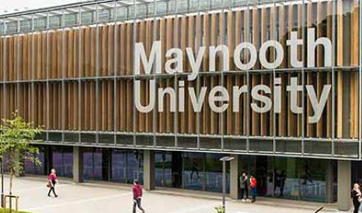
This lunchtime I attended a public vigil for Ukraine on Maynooth University campus. It was a moving experience, not least because of the presence of a Ukrainian PhD student, Oleg Chupryna, who addressed the gathering. Although he has lived in Ireland for over 20 years many members of his family are still in Ukraine. They were in Kharkiv when the invasion happened, having refused to leave because they didn’t think the Russians would actually invade, but then found themselves under relentless shelling by Russian artillery. His family managed to flee Kharkiv for the countryside a couple of days ago, but are still trapped in Ukraine, apart from one family member who has arrived safely in Dublin and who read the following poem (in Ukrainian) by Taras Shevchenko, followed by the English translation. you see below.

Shevchenko (who was a painter and illustrator as well as a poet) was born a serf, so the use of the word slavery is not metaphorical. Sales of artwork enabled him to be  bought out of his serfdom in 1838, but he spent a great deal of time imprisoned by the Russian authorities. He died in St Petersburg in 1861 at the age of 47.

The poem Calamity Again  was written in 1854, in the middle of the Crimean War, at which time Ukraine was part of the Russian Empire. The poem was written at Novopetrovsk Fortress, depicted in the above painting by Shevchenko himself.

Dear God, calamity again! …
It was so peaceful, so serene;
We but began to break the chains
That bind our folk in slavery …
When halt! … Again the people’s blood
Is streaming! Like rapacious dogs
About a bone, the royal thugs
Are at each other’s throat again.


Jazz Quiz – Spot the Link

Posted in History, Jazz with tags , , , , on February 11, 2022 by telescoper

Time, I think, for a quick lunchtime jazz quiz. Here are two great old records from the classical period of Jazz. Can you spot the link between them?

The first is a slow blues recorded in 1928 called Superstitious Blues featuring a formidable singer by the name of Hattie Burleson in the company of Don Albert (trumpet), Siki Collins (soprano saxophone), Allen Van (piano), John Henry Bragg (banjo) and Charlie Dixon (brass bass):

The second, an up-tempo stomp recorded a year earlier in 1927, is one of the hottest jazz records ever made – the way it catches fire for the last 45 seconds or so is absolutely sensational no matter how many times you listen to it. It is performed by the Johnny Dodds (on clarinet) and his Black Bottom Stompers, consisting of George Mitchell and Natty Dominique on cornets, John Thomas on trombone, Charlie Alexander piano, Bud Scott banjo and Johnny Dodds’s younger brother, Warren ‘Baby’ Dodds, drums.

So, what’s the connection?

Well, nobody tried to answer so I will: real name of Don Albert, the trumpet player in the first track, was Albert Dominique and he was the nephew of the more famous Natty Dominique who played on the second track. Not a lot of people know that.

First Light at L2 for JWST

Posted in History, The Universe and Stuff with tags , , , on February 5, 2022 by telescoper

After a successful launch, subsequent deployment of its sunshield and mirrors, and arrival at its orbit around the Second Lagrange Point, the goal now for the James Webb Space Telescope is to align the optical components of the telescope to the required accuracy. This is not a simple task – each of the segments of the main mirror has to be aligned to within a fraction of a wavelength of the light it will observe (in the near-infrared part of the electromagnetic spectrum) – and it will take several months to complete. However, we did hear yesterday that the telescope has now seen “first light”, in the sense that the first photons have landed on its detectors. The first images to be formed will be blurry and distorted, but these will be used to adjust the components until they reach the required sharpness.

For more details of this process see here.

Incidentally, it is worth saying a little bit about L2, the second Lagrange point of the Earth-Sun system. As the diagram below shows, this orbits the Sun at a greater distance from the Sun than the Earth. According to Kepler’s Laws, and ignoring the Earth’s gravitation, a test particle placed in a circular orbit at this radius would move more slowly than the Earth and would not therefore hold a fixed position relative to the Earth and Sun as it went around. The effect of the Earth’s gravity however is to supply an extra force to speed it up a bit, so it can keep up and thus remain in a fixed configuration relative to both Earth and Sun.

The opposite applies to L1: an object placed here would, in the absence of Earth’s gravity, move more quickly and thus pull ahead of the Earth. Having the Earth there holds it back by just the right amount to maintain a fixed position in the rotating frame.

The interesting thing about L1 & L2 is that while they are both equilibrium points, they are both unstable to radial perturbations. An object placed at either of these points would move away if disturbed slightly. JWST does not therefore just sit passively at L2 – it moves in a so-called halo orbit around L2 a process which requires some fuel. It’s not that there’s an actual mass at L2 for it to orbit around, but that its motion produces a Coriolis Force that keeps it from moving away. It’s very clever, but does require a bit of energy to keep it in this orbit.

Unlike L1 & L2, the Lagrange Points L4 & L5 are stable and therefore attract all kinds of space junk, such as asteroids, cometary debris, and preprints by Avi Loeb.

Another interesting Lagrange Point is that Joseph-Louis Lagrange was born in 1736 in Turin, but that does not mean that he was Italian. At that time Italy did not exist as a political entity; in 1736 Turin was part of the Kingdom of Sardinia. Although born in the part of the world now known as Italy, he was never an Italian citizen. In fact he lived most of his life in Berlin and Paris and died in 1813, long before the Kingdom of Italy was founded (in 1861).

Bloody Sunday Remembered

Posted in History, Politics with tags , , , on January 30, 2022 by telescoper

I’ve been a bit busy today catching up on the backlog caused by my recent incapacity so I’ll just post a quick item to mark the 50th anniversary of the Bogside Massacre which took place on Bloody Sunday (30th January 1972) in Derry as British paratroopers opened fire on a civil rights demonstration. For more information see here.

I’m old enough to remember the news of this at the time and the widespread coverage of this event on the media today brought back a lot of memories. I certainly didn’t think then that, fifty years on, none of the soldiers who murdered these civilians would have been brought to justice.

Thirteen people people died that day, and another died of his wounds some months later. Their names are:

Patrick (‘Paddy’) Doherty (31)
Gerald Donaghey (17)
John (‘Jackie’) Duddy (17)
Hugh Gilmour (17)
Michael Kelly (17)
Michael McDaid (20)
Kevin McElhinney (17)
Bernard (‘Barney’) McGuigan (41)
Gerald McKinney (35)
William (‘Willie’) McKinney (26)
William Nash (19)
James (‘Jim’) Wray (22)
John Young (17)
John Johnston (59) – shot twice and later died on 16 June 1972

May they rest in peace, and may their murderers not.

A New Bank Holiday in Ireland

Posted in Covid-19, History, Maynooth on January 20, 2022 by telescoper

Yesterday the Irish Government announced that there would be an additional Bank Holiday this year, on 18th March (which is the day after the existing St Patrick’s Day holiday on March 17th) to recognize the efforts of the great many people (including volunteers) who have worked so hard to counter the Covid-19 pandemic and to commemorate those who lost their lives to the coronavirus. It’s a good idea and hopefully it will occur at a time when there are many fewer restrictions than currently, which should make it a memorable occasion.

Interestingly, though, the new Bank Holiday is not a one-off but will become a permanent addition to the calendar, though on a different date: it will happen on or around 1st February from 2023 onwards. This is interesting because it corrects an anomaly in the distribution of public holidays, which I will explain here.

In the Northern hemisphere, from an astronomical point of view, the solar year is defined by the two solstices (summer, around June 21st, and winter, around December 21st) and the equinoxes (spring, around March 21st, and Autumn, around September 21st). These four events divide the year into four roughly equal parts of about 13 weeks each.

If you divide each of these intervals in two you divide the year into eight pieces of six and a bit weeks each. The dates midway between the astronomical events mentioned above are (roughly) :

  • 1st February: Imbolc (Candlemas)
  • 1st May: Beltane (Mayday)
  • 1st August: Lughnasadh (Lammas)
  • 1st November: Samhain (All Saints Day)

The names I’ve added in italics are taken from the Celtic/neo-Pagan and, in parenthesis the Christian terms),for these cross-quarter days. These timings are rough because the dates of the equinoxes and solstices vary from year to year. Imbolc is often taken to be the 2nd of February (Groundhog Day) and Samhain is sometimes taken to be October 31st, Halloween. But hopefully you get the point.

The last three of these also coincide closely with Bank Holidays in Ireland, though these are always on Mondays so may happen a few days away. I find it intriguing that the academic year for universities here in Ireland is largely defined by the above dates dates.

The first semester of the academic year 2021/22 started on September 20th 2021 (the Autumnal Equinox was on September 22nd) and finishes on 17th December (the Winter Solstice is on December 21st ).  Halloween (31st October) was actually a Sunday this year so the related bank holiday was on Monday 25th October; half term (study week) always includes the Halloween Bank Holiday. The term was pushed forward a bit because it finished on a Friday and it would not be acceptable to end it on Christmas Eve!

After the break for Christmas, and a three-week mid-year exam period, Semester Two starts 31st January 2022. Half-term is then from 14th to 18th March (the Vernal Equinox; is on March 20th) and teaching ends on May 6th.  More exams and end of year business take us to the Summer Solstice and the (hypothetical) vacation.

The new bank holiday will correct the anomaly that there has not been such a holiday to mark the first cross-quarter day (Imbolc). In Ireland this often referred to as St Brigid’s Day (after St Brigid of Kildare) rather than Candlemas.

The slight issue is that, in Maynooth, Semester Two of teaching usually begins around 1st February so there will be a holiday within a week or so of the start of teaching but I don’t imagine many students or staff will complain about that!

P.S. Imbolc is also sometimes called “The Quickening of the Year”. It looks like this year it will correspond to the quickening of relaxation of Covid-19 restrictions, though we still wait full details of what precisely all this means for our teaching plans…

Michael Collins and the Handover of Dublin Castle

Posted in Film, History with tags , , on January 16, 2022 by telescoper

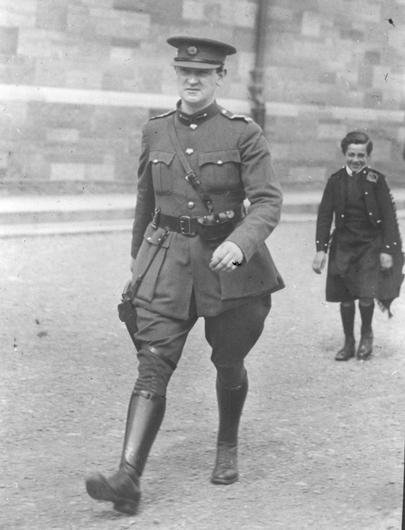
Today is the centenary of the formal handing over of Dublin Castle, on 16th January 1922, by British authorities to the Provisional Irish Government formed after the ratification of the Anglo-Irish Treaty. It was a significant event, but was not what many people (including until recently myself) thought it was.

I went to the Cinema to see the Neil Jordan film Michael Collins when it came out. I enjoyed the film but only subsequently discovered how many glaring historical inaccuracies there are in it, right from the scenes at the beginning of the film, of the Easter Rising in 1916, that show Michael Collins alongside Eamonn De Valera at the surrender of the GPO. In fact the GPO was evacuated long before the surrender and De Valera was never there anyway: his battalion was in the East of the City at Boland’s Mill. I suppose the Director thought it was more dramatic the way it was depicted in the film, but I just find it irritating.

Now to the handover at Dublin Castle. This is how it is portrayed in the film, with Liam Neeson as Michael Collins:

Almost nothing in this entire scene is historically accurate. Collins arrived 90 minutes late owing to a transport strike, so the famous line about “you can have your seven minutes” is a concoction (as is the rest of the dialogue). Moreover, Collins arrived in civilian dress not in military uniform. The handover happened in a private meeting inside the buildings, not outside in a grand ceremony. There was no lowering the Union flag either.

I suppose the cinematic version is more dramatic than what happened in reality, which was much more mundane, but I think this kind of deliberate manipulation is more than a little sinister. If you want to know history then you shouldn’t try to learn it from a movie but instead do a bit of reading of properly researched literature. That’s one of the reasons why we have historians.

A Memoir of Thomas Bewick

Posted in Art, Education, History, Politics with tags , , , on January 11, 2022 by telescoper

Thomas Bewick (1753-1828) was a superb illustrator and natural historian who lived in the North East of England. He is celebrated primarily for his fine engravings and woodcuts of wild animals and birds, and humorous vignettes, some of which are quite cheeky, such as this one called “Man Pissing”…

Man Pissing (c.1797, wood engraving on laid paper, 8.9 x 12.5 cm)

You can find many other examples of his fine work here.

Bewick also held radical political views in a time of great social unrest across the continent of Europe. His views were heavily influenced by the terrible conditions of the rural poor in his native Northumberland and the corruption of the Government. In 1822 he began to write his Memoir, which is absolutely fascinating, not least because part of it is devoted to his views about the British Government and the media of the time. Two hundred years later, many of his words still ring true.

Here’s an excerpt from a section covering the period from about 1818 to 1823, a period of domestic instability in Britain that led to acts of protest and brutal suppression, including the Peterloo Massacre of 1819:

The pen of literature was prostituted to overshade the actions of good men, and to gloss-over the enormities of the base. The energies of many members of both Houses of Parliament were unavailing against this compact confederacy of undeserving placemen and pensioners, who were bound together by fellow feelings of self-interest, in which all ideas of public trust were lost in private considerations. They had sinned themselves out of all shame. This phalanx have kept their ground, and will do so till, it is to be feared, violence from an enraged people breaks them up, or, perhaps, till the growing opinions against such a crooked order of conducting the affairs of this great nation becomes quite apparent to an immense majority, whose frowns may have the power of bringing the agents of government to pause upon the brink of the precipice on which they stand, and to provide in time, by wise and honest measures, to avert the coming storm.

A Memoir of Thomas Bewick, Written by himself, CHAPTER XVII.

Plus ça change

P.S. Not far from where I grew up in Newcastle upon Tyne there is a school for children and young adults with autism called the Thomas Bewick School. His name is well known in the Newcastle area for that reason and his artistic legacy, but I’m not sure his memory is as widely celebrated as it should be. He was a fascinating character.

After The Treaty

Posted in Biographical, History, Television with tags , , , , , on January 9, 2022 by telescoper

On Friday I saw a bit of a programme on RTÉ One called Treaty Live which covered the events of January 7th 1922 in the form of a modern live news broadcast. It was on that date that the Dáil Éireann voted on whether to ratify the Anglo-Irish Treaty (usually called “The Treaty”) negotiated between the British Government (led by Prime Minister David Lloyd George) and representatives of the Irish Government (led by Arthur Griffith) and signed on 6th December 1921. The Treaty was intended to end the Irish War of Independence and bring about the removal of Crown forces from Ireland, but it fell short of establishing a fully independent Irish Republic, instead creating an Irish Free State with the status of a British dominion rather like New Zealand or Australia (i.e. with its own government but with the British Monarch as Head of State). It also led to the partition of Ireland with six of the nine counties in the province of Ulster remaining under British rule.

Three days of debate preceded the momentous vote in the Dáil which, incidentally, took place in a room in a building in University College Dublin that is now the National Concert Hall. Here is some footage of TDs leaving the building after the debate:

It’s strange to think of the number of times I’ve walked up those steps to attend a concert without realizing this historic event took place there.

Anyway, in the end the vote was to ratify The Treaty by 64 votes to 57. It seems popular opinion at the time was in favour of ratification, and what was surprising was not the fact that the vote was carried but that the margin was so narrow: had just four TDs voted the other way it would have failed.

Éamonn de Valera, then President of the Irish Republic, was the most prominent opponent of ratification. Michael Collins, who was a member of the delegation of plenipotentiaries who negotiated The Treaty, was prominently in favour. Many questions can be asked about the conduct of the negotiations, including why de Valera did not conduct the negotiations himself. During the negotiations Lloyd George insisted that the Irish plenipotentiaries sign the agreement on the spot otherwise there would be “war within three days”. The Irish delegation clearly assumed he wasn’t bluffing so signed it. De Valera was unhappy that they did not consult more widely (especially with him) but then if that’s what he wanted he shouldn’t have sent “plenipotentiaries” – that word means “delegates having the full power to sign agreements” – but participated directly. Valera resigned as President on 9th January 1922 and was replaced by Arthur Griffith.

The anti-Treaty side considered it to be a betrayal of the sacrifices made during the War of Independence; the pro-Treaty side thought it was a stepping-stone towards the goal of independence. As it turned out a fully-independent Irish Republic was eventually established in 1949, though the partition of Ireland is still in place.

In retrospect the narrowness of the Dáil was an indication of what was to come. In June 1922 The Irish Civil War erupted between the two factions that lasted almost a year. All wars are dreadful, but there’s something about a Civil War that is particularly dreadful: people who had fought on the same side against British rule would now fight each other.

And that brings me to the point of this rather rambling post. I moved to Ireland at the end of 2017. Like most people born and educated in England I knew very little of Irish history before coming here; topics such as the Irish Famine are simply not taught in British schools, though they certainly are in Irish schools. I missed being here through the centennial commemorations of the 1916 Easter Rising, for example, but have followed subsequent events in the “decade of centenaries” and done the best I can to read about Irish history to gain some knowledge.

What’s interesting about this is that the events of the Easter Rising and the War of Independence, although commemorated with appropriate solemnity, do form a righteous narrative relating to the heroic birth of a new nation. As we approach the centenary of the outbreak of Civil War the issues are much more complex. An Irish friend told me that when he was taught history at school, it basically stopped at the Civil War. People generally are much less willing to talk about it than the events preceding. The Civil War left deep wounds, some of which have still not healed. Perhaps the centenary will provide an opportunity to confront some of the very difficult issues arising from this period of this nation’s history.

Il Mio Tesoro – John McCormack

Posted in History, Opera with tags , , , on December 19, 2021 by telescoper

The aria Il Mio Tesoro Intanto from Act II of Mozart’s great Opera Don Giovanni is widely regarded as a test piece for Operatic tenors because of its demanding mix of long flowing lines, big leaps and florid coloratura ornamentation. The other day I heard a performance by the great Irish tenor John McCormack which, despite being recorded over a hundred years ago (in 1916) completely blew me away. I thought I’d share it here.

John McCormack made over 800 records in his lifetime, the vast majority of them Irish songs and ballads that found a huge audience not only in Ireland but also in the Irish diaspora in the United States of America; this part of his career was extremely lucrative making him a millionaire. His first love was the Opera: a lyric tenor of the highest quality, his career overlapped with that of the great Enrico Caruso and the two became great friends after McCormack moved to the United States and became a regular at the Metropolitan Opera. It was Caruso who made the first ever million-selling record (Vesti La Giubba from I Pagliacci in 1902) and perhaps that’s what persuaded McCormack to embark on a recording career.

Before the 1920s gramophone recordings were entirely acoustic, made by a process exactly the reverse of a gramophone player. Musicians and singers would play into a horn at the sharp end of which was a needle that could leave an impression on the recording medium. In the early days the recording would be made on a wax cylinder, but this was soon replaced by plastic or acetate discs. It wasn’t possible to make recordings longer than a few minutes using this method.

Here’s an example of an early recording session showing what it was like. The chap with the moustache is Sir Edward Elgar:

Given this sort of arrangement it is no surprise that the sound of the Orchestra of the Met is muffled and distorted on the following recording. Almost certainly McCormack would have been standing right in front of the horn so his sizeable form would have acted as a kind of baffle. When I think of these old records it always seems a wonder that you can hear anything at all.

Despite the limitations of the recording technology the crystal clarity of McCormack’s voice and his superb control shine through. I listen to quite a lot of old jazz records made in a similar way so my ears are perhaps unusually forgiving but I think this is one of the greatest versions of this aria that I’ve ever heard – and I’ve heard quite a few. I hope you enjoy it too.

P.S. John McCormack was born in Athlone, which is about 100km due west of Maynooth.