Archive for the History Category

JULY 1914, by Anna Akhmatova

Posted in History, Poetry with tags , , , on August 5, 2014 by telescoper

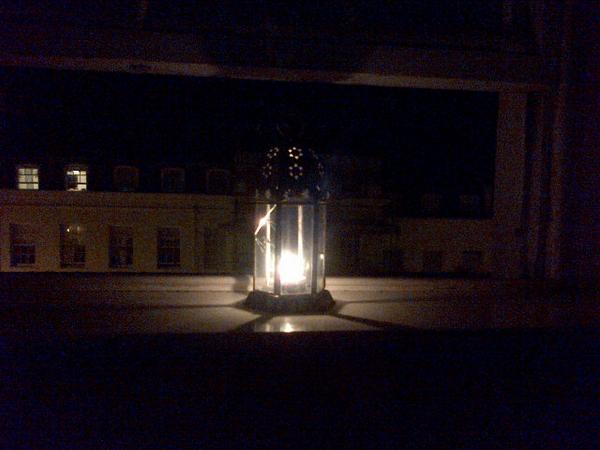
I heard a great poem on Radio 3 last night. It was part of a programme that preceded a late night promenade concert during which, at 10pm, people across the country were invited to turn their lights out and place a candle in their window as an act of remembrance. From what I could see, not many in my street bothered, but I did…

LightsOut


The poem I heard was written by Russian poet Anna Akhmatova on the eve of her country’s entry into World War 1. It’s actually just the first part of a poem called JULY 1914 (the capitalization is deliberate). It perfectly captures that sense of foreboding she felt as the clouds gathered, and the hot weather we’ve been having made it all the more effective:

It smells of burning. For four weeks
The dry peat bog has been burning.
The birds have not even sung today,
And the aspen has stopped quaking.

The sun has become God’s displeasure,
Rain has not sprinkled the fields since Easter.
A one-legged stranger came along
And all alone in the courtyard he said:

“Fearful times are drawing near. Soon
Fresh graves will be everywhere.
There will be famine, earthquakes, widespread death,
And the eclipse of the sun and the moon.

But the enemy will not divide
Our land at will, for himself;
The Mother of God will spread her white mantle
Over this enormous grief.”

by Anna Akhmatova (1889-1966).


This Land is Mine

Posted in Art, History, Politics with tags , , on July 11, 2014 by telescoper

Brilliant video by Nina Paley on the tragedy and absurdity of armed conflict…


Commemorations

Posted in Biographical, Football, History with tags , , , , , , on July 9, 2014 by telescoper

This is a busy week in many ways and for many reasons, but the main activity revolves around Graduation at the University of Sussex. There are 7 ceremonies this week altogether; my School (Mathematical and Physical Sciences) is No. 4, which takes place tomorrow morning (Thursday).

Things are going to be a bit different this year. The Chancellor of the University, Sanjeev Bhaskar, is unable to preside owing to prior commitments (filming episodes of Doctor Who in Cardiff). This is sad because his informality and sense of humour usually brings an enormous amount to such occasions. After much discussion and debate it was eventually decided (on Monday) that the normal order of ceremonies would be changed so that the Head of the graduating School would stand in the centre of the platform, where the Chancellor would normally be situated, in order to shake hands with (and generally congratulate) the graduands as their names are read out and they cross the stage. Normally the Head of School simply reads out the list of names from a podium at one side, so it will be nice to be a bit more involved, although doubt that there will be as many students wanting to take selfies with me as there would have been had Sanjeev been there!

I also have the honour to present an honorary graduate at the ceremony, but I’ll probably say more about that in a future post.

This is a special graduation week for another reason too. It’s now fifty years since the first University of Sussex graduation ceremony in 1964. The University only received its Royal Charter in 1961 and there were only 38 graduates at the first ceremony. This week about 3000 will cross the stage.

Anyway, last night there was a special Commemoration Dinner to mark the 50th Anniversary in the Dining Room of Brighton Pavilion:

Brighton_Pavilion_Dining_room

The decor is a little understated for my tastes, but apart from that it was a splendid occasion. We didn’t sit at the central table, which is covered with period crockery and cutlery, and was roped off; we sat at smaller tables situated in the space around it. Owing to some sort of administrative error I was accidentally seated at a Table 1, along with a host of important people and the Vice-Chancellor. This turned out well for me as I was seated near Asa Briggs (now Lord Briggs) a famous historian who was the second Vice-Chancellor of the University. He’s now 93 years young and a bit frail but wonderfully interesting conversation ensued. The opportunity to talk to a true Sussex legend added to the fine food and wine to make for a wonderful evening.

There’s another point worth commemorating in the light of the forthcoming centenary of the start of the First World War. One thing I didn’t know before this week was that during World War 1, Brighton Pavilion was commandeered for use as a hospital for wounded soldiers, many of them from India. In fact, the first ever recipient of the Victoria Cross from the British Indian Army, Khudadad Khan, recovered there from wounds sustained in action in Belgium in 1914:

In October 1914, the Germans launched a major offensive in northern Belgium, in order to capture the vital ports of Boulogne in France and Nieuport in Belgium. In what came to be known as the First Battle of Ypres, the newly arrived 129th Baluchis were rushed to the frontline to support the hard-pressed British troops. On 31 October, two companies of the Baluchis bore the brunt of the main German attack near the village of Gheluvelt in Hollebeke Sector. The out-numbered Baluchis fought gallantly but were overwhelmed after suffering heavy casualties. Sepoy Khudadad Khan’s machine-gun team, along with one other, kept their guns in action throughout the day; preventing the Germans from making the final breakthrough. The other gun was disabled by a shell and eventually Khudadad Khan’s own team was overrun. All the men were killed by bullets or bayonets except Khudadad Khan, who despite being badly wounded, had continued working his gun. He was left for dead by the enemy but despite his wounds, he managed to crawl back to his regiment during the night. Thanks to his bravery, and that of his fellow Baluchis, the Germans were held up just long enough for Indian and British reinforcements to arrive. They strengthened the line, and prevented the German Army from reaching the vital ports. For his matchless feat of courage and gallantry, Sepoy Khudadad Khan was awarded the Victoria Cross.

We were honoured last night by the presence at dinner of Sergeant Johnson Beharry who, in 2005, became the first recipient of the Victoria Cross for over thirty years for acts of extreme courage when serving as Lance Corporal in Iraq.

On 1 May 2004, Beharry was driving a Warrior tracked armoured vehicle that had been called to the assistance of a foot patrol caught in a series of ambushes. The Warrior was hit by multiple rocket propelled grenades, causing damage and resulting in the loss of radio communications. The platoon commander, the vehicle’s gunner and a number of other soldiers in the vehicle were injured. Due to damage to his periscope optics, Pte. Beharry was forced to open his hatch to steer his vehicle, exposing his face and head to withering small arms fire. Beharry drove the crippled Warrior through the ambush, taking his own crew and leading five other Warriors to safety. He then extracted his wounded comrades from the vehicle, all the time exposed to further enemy fire. He was cited on this occasion for “valour of the highest order”.

While back on duty on 11 June 2004, Beharry was again driving the lead Warrior of his platoon through Al Amarah when his vehicle was ambushed. A rocket propelled grenade hit the vehicle six inches from Beharry’s head, and he received serious shrapnel injuries to his face and brain. Other rockets then hit the vehicle, incapacitating his commander and injuring several of the crew. Despite his life-threatening injuries, Beharry retained control of his vehicle and drove it out of the ambush area before losing consciousness. He required brain surgery for his head injuries, and he was still recovering in March 2005 when he was awarded the Victoria Cross.

It’s humbling to be in the presence of such a courageous fellow. I only wish our mendacious politicians hadn’t engineered the conflict that made his actions necessary in the first place.  Resplendent in his dress uniform, I’m glad to say that Sergeant Beharry seems fully recovered from his injuries.

I had forgotten to take my Blackberry with me when I left my flat to walk to the dinner so was unable to keep up with the World Cup semi-final. This came up in the conversation at the table. Lord Briggs concurred with my prediction that Germany would win comfortably. It was only when I left the Pavilion and walked past a pub on the way to the bus-stop that I saw the scale of the thrashing that Germany had administered. It was 7-0 when I stopped to look at the screen just in time to see Brazil score. I wouldn’t even describe it as a consolation goal. This amazing result will now be forever linked in my mind with the other events of the evening.

Anyway, must finish now. I have to write my speech for tomorrow’s ceremony!


Remembering the 7th of July

Posted in Biographical, History with tags , , on July 7, 2014 by telescoper

I was saddened and dismayed to read that the memorial for the victims of the terrorist attacks in London on 7th July 2005 has been defaced. We all know that Blair lied about the Iraq war but insulting the memories of the 52 innocent people who perished on that day doesn’t help one little bit to bring him to justice. Two wrongs don’t make a right. This is just sick.

I have my own reasons for remembering the 7th July. One summer morning in 2005 I rose early and left my house – I was living in Nottingham then – and took a train to London. I was quite excited. I was going to be interviewed later that day for a programme in the BBC TV series Horizon called The Hawking Paradox. The filming was to take place inside the Café de Paris near Piccadilly Circus, for the simple reason that it wasn’t used during the daytime, and would therefore be both quiet and cheap to hire. I was keen not to be late so I got a train that was due to arrive at St Pancras Station in London at about 9.30am.

On the train I dealt with a few bits of correspondence, filling in forms and writing out cheques to pay bills, so had a couple of  items of mail to post when I got to London. The train was on time, and it was a fine morning, so I decided to walk from the station down through Soho to the location of the shoot.

I crossed Euston Road and walked down towards Bloomsbury. Spying  a bright red Royal Mail postbox across the road  in Tavistock Square, I waited for a bus to go past, crossed the road and popped my letters into the box. I looked at my watch to see if I had time for coffee on the way to Piccadilly. It was exactly 9.45am, on July 6th 2005.

I enjoyed the filming, although it took quite a long time – as these things do. Breaking for lunch in a local pizzeria, we were surrounded by a hubbub of excitement when news broke that London had been awarded the right to stage the 2012 Olympics. We finished the filming and I headed back to Nottingham on the train. All in all it had been a very pleasant day.

The terrible events of 7th July 2005 took place the day after my trip. Here is a picture of the postbox in Tavistock Square taken on 7/7/2005. The bomb that tore the roof off the bus and killed 13 people went off at 9.47am, almost exactly 24 hours after I had been in precisely the same spot. What a difference a day makes.

The Zel’dovich Universe – Days 5 & 6 Summary

Posted in History, The Universe and Stuff with tags , , , , , on June 29, 2014 by telescoper

Well, it’s Sunday morning and it’s raining in Tallinn. I’ve got a few hours to kill but fortunately don’t have to check out of the hotel until noon so I thought I’d briefly summarize Days Five and Six of IAU Symposium No. 308, The Zel’dovich Universe just to complete the story.

Day Five (Friday) began with a talk by Jaan Einasto, recent winner of the Gruber Prize for Cosmology. As you can see from this picture I took before his talk commenced,  the topic was Yakov Zel’dovich and the Comic Sans Cosmic Web Paradigm:

IMG-20140627-00354

The following talk was by the ebullient Rashid Sunyaev, whose name is associated with Zel’dovich in so many contexts, including the Sunyaev-Zeld’ovich effect. Sunyaev is such a big personality that he is unconstrained by the banal notions of time, and his talk set the schedule back for the rest of the morning. Among the things I remember from his contribution was a discussion of the Berkeley-Nagoya distortion. This was a hot topic during the time I was a graduate student, as it was a measurement that suggested the spectrum of the cosmic microwave background departed significantly from a black-body (Planck) curve in the Wien part of the spectrum; this is now usually known as a y-distortion. Anyway, lots of theorists wrote papers explaining the measured excess in terms of this that and the other and then it was shown to be an error; the excess emission came not from the Big Bang but from the exhaust of the rocket carrying the measurement. The thing I remember most strongly about this was that as soon as the error was identified it ceased to be the Berkeley-Nagoya distortion and became instead the Nagoya-Berkeley distortion…

Rashid Sunyaev was himself a winner of the Gruber prize some years ago, as indeed were Dick Bond and Brent Tully who spoke erlier in the conference, so the organizers decided to form a Gruber-panel to discuss various topics suggested by the audience. Here is Sunyaev, hogging the microphone:

IMG-20140627-00355

Carlos Frenk is also a Gruber prize winner, but he only arrived after lunch so wasn’t part of this discussion. The afternoon was all about cosmological simulations of various aspects of the Cosmic Web. This gives me an opportunity to repeat how the Oxford English Dictionary defines “simulation”:

1. a. The action or practice of simulating, with intent to deceive; false pretence, deceitful profession.

b. Tendency to assume a form resembling that of something else; unconscious imitation.

In the World Cup players can even get sent off for simulation, although regrettably they seldom are.

Anyway, Friday evening found us at the famous House of Blackheads (aptly on Pikk Street) for an evening of very long speeches punctuated by small amounts of food and wine (and of course some very lovely music as I described yesterday). When the party was over a group of us adjourned to a local bar, from which I returned to my hotel at about 2am.

Day Six was a half-day, with some very interesting talks about gravitational len-sing in the first session and “superstructures” in the cosmic web. Then we were into the final furlong as it were. Nick Kaiser was put in Session (No. 21) all of his own. As usual, given how annoyingly brilliant he is, Nick gave  fabulously interesting talk full of insights and ideas. The organizers had definitely saved the best for second-to-last.

Then, after five-and-a-half days and almost 100 talks, it was down to me to give the conference summary. Obviously I couldn’t really summarize all that such I just picked up a few things that occurred to me during the course of the conference (some of which I’ve written about over the last week or so on this blog) and made a few jokes, primarily at the expense of Carlos Frenk. I was interested to see that signs like this had been put up around Tallinn advertising my talk:

IMG-20140628-00356

The OMG and WOW are self-explanatory, but I was a bit confused about the SAH so I googled it and found that it means the Society of Architectural Historians. I’ve never heard it put quite like that before, but I guess that’s what we cosmologists are: trying to understanding the origins and time evolution of the architecture of the Universe.

A number of speakers at this conference referred to a conference in Hungary in 1987 at which they had met Zel’dovich (who died later that year). I was a graduate student (at Sussex) at that time and owing the shortage of travel funds I wasn’t able to go; I went to a meeting in Cambridge called The Post-Recombination Universe instead. If memory serves that’s when I gave my first conference talk. Anyway, Carlos Frenk gave a talk at that meeting in Hungary which he decribed in his talk at this conference on Friday afternoon. Somebody back in 1987 had written a series of limericks to describe that meeting, so I was challenged to come up with one to conclude this one. Here’s my effort, which is admittedly pretty feeble, but at least the sentiments behind it are genuine..

In Tallinn (IAU 308)
The sessions invariably ran late
But despite being tired
We still much inspired
By Yakov Zel’dovich (the Great).

Mu süda, ärka üles

Posted in History, Music with tags , , , on June 28, 2014 by telescoper

Well, the conference is over. I did my summary talk this afternoon and most of the conference attendees have already begun their journey home. I’m coming back to England tomorrow so I spent the early evening doing a bit of exploration. The conference schedule has been so packed that this is the first time I’ve been able to act like a tourist. I have to say the old town of Tallinn really is exceptionally beautiful, especially in the bright summer sunshine. Here’s a couple of pictures I took on my stroll.

SAMSUNG DIGITAL CAMERASAMSUNG DIGITAL CAMERASAMSUNG DIGITAL CAMERA

On Friday we had the conference dinner at the House of the Blackheads, which doesn’t sound so promising in English but is in fact a spending old building in the centre of Tallinn. To my delight we were serenaded by a choir (The Estonian Girls’ TV Choir). Estonia is a small country, with a population of only 1.3 Million, but it has an exceptionally strong musical tradition especially in choral music. Estonia has more choirs per unit population than any other country in the world, or so I’m told. Even more than Wales!

Anyway, this is the folk hymn they started with last night; the lights were dimmed in the ancient hall and the girls stood around the dining hall holding candles as they sang. The effect was stunning. Mu süda, ärka üles which means Awake, my heart is a traditional song, but the wonderful arrangement is by a composer who is quite new to me, Cyrillus Kreek.

I’ll complete my series of summaries of the conference tomorrow morning.

The Fractal Universe, Part 2

Posted in History, The Universe and Stuff with tags , , , , , , on June 27, 2014 by telescoper

Given the recent discussion in comments on this blog I thought I’d give a brief update on the issue of the scale of cosmic homogeneity; I’m going to repeat some of the things I said in a post earlier this week just to make sure that this discussion is reasonable self-contained.

Our standard cosmological model is based on the Cosmological Principle, which asserts that the Universe is, in a broad-brush sense, homogeneous (is the same in every place) and isotropic (looks the same in all directions). But the question that has troubled cosmologists for many years is what is meant by large scales? How broad does the broad brush have to be? A couple of presentations discussed the possibly worrying evidence for the presence of a local void, a large underdensity on scale of about 200 MPc which may influence our interpretation of cosmological results.

I blogged some time ago about that the idea that the Universe might have structure on all scales, as would be the case if it were described in terms of a fractal set characterized by a fractal dimension D. In a fractal set, the mean number of neighbours of a given galaxy within a spherical volume of radius R is proportional to R^D. If galaxies are distributed uniformly (homogeneously) then D = 3, as the number of neighbours simply depends on the volume of the sphere, i.e. as R^3, and the average number-density of galaxies. A value of D < 3 indicates that the galaxies do not fill space in a homogeneous fashion: D = 1, for example, would indicate that galaxies were distributed in roughly linear structures (filaments); the mass of material distributed along a filament enclosed within a sphere grows linear with the radius of the sphere, i.e. as R^1, not as its volume; galaxies distributed in sheets would have D=2, and so on.

We know that D \simeq 1.2 on small scales (in cosmological terms, still several Megaparsecs), but the evidence for a turnover to D=3 has not been so strong, at least not until recently. It’s just just that measuring D from a survey is actually rather tricky, but also that when we cosmologists adopt the Cosmological Principle we apply it not to the distribution of galaxies in space, but to space itself. We assume that space is homogeneous so that its geometry can be described by the Friedmann-Lemaitre-Robertson-Walker metric.

According to Einstein’s theory of general relativity, clumps in the matter distribution would cause distortions in the metric which are roughly related to fluctuations in the Newtonian gravitational potential \delta\Phi by \delta\Phi/c^2 \sim \left(\lambda/ct \right)^{2} \left(\delta \rho/\rho\right), give or take a factor of a few, so that a large fluctuation in the density of matter wouldn’t necessarily cause a large fluctuation of the metric unless it were on a scale \lambda reasonably large relative to the cosmological horizon \sim ct. Galaxies correspond to a large \delta \rho/\rho \sim 10^6 but don’t violate the Cosmological Principle because they are too small in scale \lambda to perturb the background metric significantly.

In my previous post I left the story as it stood about 15 years ago, and there have been numerous developments since then, some convincing (to me) and some not. Here I’ll just give a couple of key results, which I think to be important because they address a specific quantifiable question rather than relying on qualitative and subjective interpretations.

The first, which is from a paper I wrote with my (then) PhD student Jun Pan, demonstrated what I think is the first convincing demonstration that the correlation dimension of galaxies in the IRAS PSCz survey does turn over to the homogeneous value D=3 on large scales:

correlations

You can see quite clearly that there is a gradual transition to homogeneity beyond about 10 Mpc, and this transition is certainly complete before 100 Mpc. The PSCz survey comprises “only” about 11,000 galaxies, and it relatively shallow too (with a depth of about 150 Mpc),  but has an enormous advantage in that it covers virtually the whole sky. This is important because it means that the survey geometry does not have a significant effect on the results. This is important because it does not assume homogeneity at the start. In a traditional correlation function analysis the number of pairs of galaxies with a given separation is compared with a random distribution with the same mean number of galaxies per unit volume. The mean density however has to be estimated from the same survey as the correlation function is being calculated from, and if there is large-scale clustering beyond the size of the survey this estimate will not be a fair estimate of the global value. Such analyses therefore assume what they set out to prove. Ours does not beg the question in this way.

The PSCz survey is relatively sparse but more recently much bigger surveys involving optically selected galaxies have confirmed this idea with great precision. A particular important recent result came from the WiggleZ survey (in a paper by Scrimgeour et al. 2012). This survey is big enough to look at the correlation dimension not just locally (as we did with PSCz) but as a function of redshift, so we can see how it evolves. In fact the survey contains about 200,000 galaxies in a volume of about a cubic Gigaparsec. Here are the crucial graphs:

homogeneity

I think this proves beyond any reasonable doubt that there is a transition to homogeneity at about 80 Mpc, well within the survey volume. My conclusion from this and other studies is that the structure is roughly self-similar on small scales, but this scaling gradually dissolves into homogeneity. In a Fractal Universe the correlation dimension would not depend on scale, so what I’m saying is that we do not live in a fractal Universe. End of story.

The Zel’dovich Universe – Day 4 Summary

Posted in History, The Universe and Stuff with tags , , , , , , , on June 27, 2014 by telescoper

And on the fourth day of this meeting about “The Zel’dovich Universe”  we were back to a full schedule (9am until 7.30pm) concentrating on further studies of the Cosmic Web. We started off with a discussion of the properties of large-scale structure at high redshift. As someone who’s old enough to remember the days when “high redshift” meant about z~0.1 the idea that we can now map the galaxy distribution at redshifts z~2. There are other measures of structure on these huge scales, such as the Lyman alpha forest, and we heard a bit about some of them too.

The second session was about “reconstructing” the Cosmic Web, although a more correct word have been “deconstructing”. The point about this session is that cosmology is basically a backwards subject. In other branches of experimental science we set the initial conditions for a system and then examine how it evolves. In cosmology we have to infer the initial conditions of the Universe from what we observe around us now. In other words, cosmology is an inverse problem on a grand scale.  In the context of the cosmic web, we want to infer the pattern of initial density and velocity fluctuations that gave rise to the present network of clusters, filaments and voids. Several talks about this emphasized how proper Bayesian methods have led to enormous progress in this field over the last few years.

All this progress has been accompanied by huge improvements in graphical visualisation techniques. Thirty years ago the state of the art in this field was represented by simple contour plots, such as this (usually called the Cosmic Chicken):

chicken

You can see how crude this representation is by comparing it with a similar plot from the modern era of precision cosmology:

chicken

Even better examples are provided by the following snapshot:

IMG-20140626-00352

It’s nice to see a better, though still imperfect,  version of the chicken at the top right, though I found the graphic at the bottom right rather implausible; it must be difficult to skate at all with those things around your legs.

Here’s another picture I liked, despite the lack of chickens:

IMG-20140626-00353

Incidentally, it’s the back of Alar Toomre‘s head you can see on the far right in this picture.

The afternoon was largely devoted to discussions of how the properties of individual galaxies are influenced by their local environment within the Cosmic Web. I usually think of galaxies as test particles (i.e. point masses) but they are interesting in their own right (to some people anyway). However, the World Cup intervened during the evening session and I skipped a couple of talks to watch Germany beat the USA in their final group match.

That’s all for now. Tonight we’ll have the conference dinner, which is apparently being held in the “House of Blackheads” on “Pikk Street”. Sounds like an interesting spot!

The Zel’dovich Universe – Day 3 Summary

Posted in History, The Universe and Stuff with tags , , , , , , on June 26, 2014 by telescoper

Day Three of this meeting about “The Zel’dovich Universe” was slightly shorter than the previous two, in that it finished just after 17.00 rather than the usual 19.00 or later. That meant that we got out in time to settle down for a beer in time the World Cup football. I watched an excellent game between Nigeria and Argentina, which ended 3-2 to Argentina but could have been 7-7. I’ll use that as an excuse for writing a slightly shorter summary.

Anyway we began with a session on the Primordial Universe and Primordial Signatures led off by Alexei Starobinsky (although there is some controversy whether his name should end -y or -i). Starobinsky outlined the theory of cosmological perturbations from inflation with an emphasis on how it relates to some of Zel’dovich’s ideas on the subject. There was then a talk from Bruce Partridge about some of the results from Planck. I’ve mentioned already that this isn’t a typical cosmology conference, and this talk provided another unusual aspect in that there’s hardly been any discussion of the BICEP2 results here. When asked about at the end of his talk, Bruce replied (very sensibly) that we should all just be patient.

Next session after coffee was about cosmic voids, kicked off by Rien van de Weygaert with a talk entitled “Much Ado About Nothing”, which reminded me of the following quote from the play of the same name:

“He hath indeed better bettered expectation than you must expect of me to tell you how”

The existence of voids in the galaxy distribution is not unexpected given the presence of clusters and superclusters, but they are interesting in their own right as they display particular dynamical evolution and have important consequences on observations. In 1984, Vincent Icke proved the so-called “Bubble Theorem” which showed that an isolated underdensity tends to evolve to a spherical shape.Most cosmologists, including myself, therefore expected big voids to be round, which turns out to be wrong; the interaction of the perimeter of the void with its surroundings always plays an important role in determining the geometry. Another thing that sprang into my mind was a classic paper by Simon White (1979) with the abstract:

We derive and display relations which can be used to express many quantitative measures of clustering in terms of the hierarchy of correlation functions. The convergence rate and asymptotic behaviour of the integral series which usually result is explored as far as possible using the observed low-order galaxy correlation functions. On scales less than the expected nearest neighbour distance most clustering measures are influenced only by the lowest order correlation functions. On all larger scales their behaviour, in general, depends significantly on correlations of high order and cannot be approximated using the low-order functions. Bhavsar’s observed relation between density enhancement and the fraction of galaxies included in clusters is modelled and is shown to be only weakly dependent on high-order correlations over most of its range. The probability that a randomly placed region of given volume be empty is discussed as a particularly simple and appealing example of a statistic which is strongly influenced by correlations of all orders, and it is shown that this probability may obey a scaling law which will allow a test of the small-scale form of high-order correlations.

The emphasis is mine. It’s fascinating and somewhat paradoxical that we can learn a lot about the statistics of where the galaxies are fom the regions where galaxies are not.

Another thing worth mentioning was Paul Sutter’s discussion of a project on cosmic voids which is a fine example of open science. Check out the CosmicVoids website where you will find void catalogues, identification algorithms and a host of other stuff all freely available to anyone who wants to use them. This is the way forward.

After lunch we had a session on Cosmic Flows, with a variety of talks about using galaxy peculiar velocities to understand the dynamics of large-scale structure. This field was booming about twenty years ago but which has been to some extent been overtaken by other cosmological probes that offer greater precision; the biggest difficulty has been getting a sufficient number of sufficiently accurate direct (redshift-independent) distance measurements to do good statistics. It remains a difficult but important field, because it’s important to test our models with as many independent methods as possible.

I’ll end with a word about the first speaker of this session, the Gruber prize winner Marc Davis. He suffered a stroke a few years ago which has left him partly paralysed (down his right side). He has battled back from this with great courage, and even turned it to his advantage during his talk when he complained about how faint the laser pointer was and used his walking stick instead.

IMG-20140625-00351

The Zel’dovich Universe – Day 2 Summary

Posted in History, The Universe and Stuff with tags , , , on June 25, 2014 by telescoper

IMG-20140624-00349

Day Two of this enjoyable meeting involved more talks about the cosmic web of large-scale structure of the Universe. I’m not going to attempt to summarize the whole day, but will just mention a couple of things that made me reflect a bit. Unfortunately that means I won’t be able to do more than merely mention some of the other fascinating things that came up, as phase-space flip-flops and one-dimensional Origami.

One was a very nice review by John Peacock in which he showed that a version of Moore’s law applies to galaxy redshift surveys; since the first measurement of the redshift of an extragalactic object by Slipher in 1912, the number of redshifts has doubled every 2-3 years ago. This exponential growth has been driven by improvements in technology, from photographic plates to electronic detectors and from single-object spectroscopy to multiplex technology and so on. At this rate by 2050 or so we should have redshifts for most galaxies in the observable Universe. Progress in cosmography has been remarkable indeed.

The term “Cosmic Web” may be a bit of a misnomer in fact, as a consensus may be emerging that in some sense it is more like a honeycomb. Thanks to a miracle of 3D printing, here is an example of what the large-scale structure of the Universe seems to look like:

IMG-20140624-00350

One of the issues that emerged from the mix of theoretical and observational talks concerned the scale of cosmic homogeneity. Our standard cosmological model is based on the Cosmological Principle, which asserts that the Universe is, in a broad-brush sense, homogeneous (is the same in every place) and isotropic (looks the same in all directions). But the question that has troubled cosmologists for many years is what is meant by large scales? How broad does the broad brush have to be? A couple of presentations discussed the possibly worrying evidence for the presence of a local void, a large underdensity on scale of about 200 MPc which may influence our interpretation of cosmological results.

I blogged some time ago about that the idea that the Universe might have structure on all scales, as would be the case if it were described in terms of a fractal set characterized by a fractal dimension D. In a fractal set, the mean number of neighbours of a given galaxy within a spherical volume of radius R is proportional to R^D. If galaxies are distributed uniformly (homogeneously) then D = 3, as the number of neighbours simply depends on the volume of the sphere, i.e. as R^3, and the average number-density of galaxies. A value of D < 3 indicates that the galaxies do not fill space in a homogeneous fashion: D = 1, for example, would indicate that galaxies were distributed in roughly linear structures (filaments); the mass of material distributed along a filament enclosed within a sphere grows linear with the radius of the sphere, i.e. as R^1, not as its volume; galaxies distributed in sheets would have D=2, and so on.

We know that D \simeq 1.2 on small scales (in cosmological terms, still several Megaparsecs), but the evidence for a turnover to D=3 has not been so strong, at least not until recently. It’s just just that measuring D from a survey is actually rather tricky, but also that when we cosmologists adopt the Cosmological Principle we apply it not to the distribution of galaxies in space, but to space itself. We assume that space is homogeneous so that its geometry can be described by the Friedmann-Lemaitre-Robertson-Walker metric.

According to Einstein’s theory of general relativity, clumps in the matter distribution would cause distortions in the metric which are roughly related to fluctuations in the Newtonian gravitational potential \delta\Phi by \delta\Phi/c^2 \sim \left(\lambda/ct \right)^{2} \left(\delta \rho/\rho\right), give or take a factor of a few, so that a large fluctuation in the density of matter wouldn’t necessarily cause a large fluctuation of the metric unless it were on a scale \lambda reasonably large relative to the cosmological horizon \sim ct. Galaxies correspond to a large \delta \rho/\rho \sim 10^6 but don’t violate the Cosmological Principle because they are too small in scale \lambda to perturb the background metric significantly.

The discussion of a fractal universe is one I’m overdue to return to. In my previous post I left the story as it stood about 15 years ago, and there have been numerous developments since then, not all of them consistent with each other. I will do a full “Part 2” to that post eventually, but in the mean time I’ll just comment that current large surveys, such as those derived from the Sloan Digital Sky Survey, do seem to be consistent with a Universe that possesses the property of large-scale homogeneity. If that conclusion survives the next generation of even larger galaxy redshift surveys then it will come as an immense relief to cosmologists.

The reason for that is that the equations of general relativity are very hard to solve in cases where there isn’t a lot of symmetry; there are just too many equations to solve for a general solution to be obtained. If the cosmological principle applies, however, the equations simplify enormously (both in number and form) and we can get results we can work with on the back of an envelope. Small fluctuations about the smooth background solution can be handled (approximately but robustly) using a technique called perturbation theory. If the fluctuations are large, however, these methods don’t work. What we need to do instead is construct exact inhomogeneous model, and that is very very hard. It’s of course a different question as to why the Universe is so smooth on large scales, but as a working cosmologist the real importance of it being that way is that it makes our job so much easier than it would otherwise be.

PS. If anyone reading this either at the conference or elsewhere has any questions or issues they would like me to raise during the summary talk on Saturday please don’t hesitate to leave a comment below or via Twitter using the hashtag #IAU308.