Archive for the History Category

The Royal Observatory Bomb and the Rise of Unreason

Posted in History, Literature, Politics, Science Politics with tags , , , , , , , , , , on February 16, 2014 by telescoper

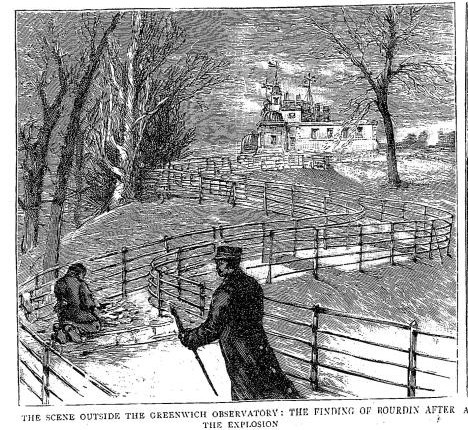
I missed the anniversary by a day but I thought I’d pass on a fascinating but very sad little bit of history. One hundred and twenty years ago yesterday, on February 15th 1894, a 26-year old Frenchman by the name of Martial Bourdin blew himself up near the Royal Observatory in Greenwich. His death seems to have been an accident caused by the bomb he was carrying going off prematurely. It is not really known either whether the bomb was meant for the Royal Observatory or somewhere else. Anarchist attacks involving bombs were not uncommon in the 1890s and the range of targets was very wide.
Greenwich_Observatory_Bomb

Bourdin was found alive, though very seriously injured, by people who heard the blast. Though able to speak he did not offer any explanation for what had happened. He died about half an hour later.

This sad and perplexing story inspired Joseph Conrad‘s famous novel The Secret Agent. Conrad added an “Author’s Note” to the manuscript of his book:

The attempt to blow up the Greenwich Observatory: a blood-stained inanity of so fatuous a kind that is is impossible to fathom its origin by any reasonable or even unreasonable process of thought. For perverse unreason has its own logical processes. But that outrage could not be laid hold of mentally in any sort of way, so that one remained faced by the fact of a man blown to pieces for nothing even most remotely resembling an idea, anarchistic or other. As to the outer wall of the Observatory, it did not show as much as the faintest crack.

We’ll never know what Bourdin’s motivations were; perhaps he didn’t really know himself. He is usually described as an “anarchist” although that term describes such a wide spectrum of political beliefs that it doesn’t really explain Bourdin’s actions; not all anarchists embrace violence and aggression, for example, although some – such as the members of Class War – clearly do. At one end of the anarchist spectrum there are the violent thugs who are nothing more than the mirror image of fascism and at the other there are reasonable intelligent people who simply don’t believe in hierarchical structures.

Brighton has its share of anarchists and the thing that’s most noticeable about them to an outsider like me is their conformity; the dress code is apparently very strictly enforced. The obvious irony aside, this suggests to me that much of the attraction of being an anarchist is not really the existence of a compelling political philosophy, but simply to fulfill the need to belong to something.

The main thing that occurred to me yesterday while I was reading about the Greenwich Observatory bomb plot concerns the implications of the location. If the Royal Observatory was the intended target then why was it so? The simple answer is that a core belief for most varieties of anarchist is their opposition to “the State”. A powerful symbol of the British state in 1894 was the Royal Navy; it was Britain’s maritime traditions that led to the founding of the Royal Observatory in the first place and most of the work carried out there involved accurate positional measurements designed to help with navigation. Or maybe it was to do with the role of the Observatory in defining the time? Insofar as acts like this make any sense at all, these seem reasonable interpretations. 

I’m tempted to suggest that the adoption of Greenwich as the Prime Meridian in 1884 may have given a young Frenchman additional grounds for resentment..

A different answer from the suggestion that it was an anti-establishment gesture stems from  the conflict between anarchism and the nature of scientific knowledge. Anarchists usually express their beliefs in terms of the desire to make society more “equal” and “democratic”, so that decisions should be made collectively for the common good. I’m happy with that line of argument, and agree that we should all enjoy equal rights versus the government and other institutions, and in relation to one another. However, having equal rights does not mean having equal knowledge and it doesn’t mean that any person’s opinion about anything is as good as anyone else’s. What I mean is that there are scientific experts, and the knowledge they possess has demonstrable value.

The approach of some to this challenge is simply to deny the value of scientific knowledge, and assert instead that it’s just a social construct like anything else. I am aware of a number of so-called social scientists at the University of Sussex and elsewhere who hold this view; my usual response is to ask them whether they regard witchcraft or crystal healing as equal to orthodox medicine.

CLARIFICATION: Please note I do not mean to imply that all social scientists hold the opinions described above. I’m fully aware that they are fringe views. The phrase “so-called social scientists” does not refer to all social scientists, just the fringe in much the same way I’d use “so-called geographers” to describe the Flat Earth Society.

I’m not trying to suggest that members of the Department of Sociology are plotting to blow up the Astronomy Centre! What I do think that while we should always strive to be as democratic as possible there are always limits, not just because of what is practically possible but also what is socially desirable. Any organization in which everyone votes about every decision that has to be made would struggle to function at all. We have to find ways of working that make best use of the different skills and knowledge we all possess.

A constructive approach is to argue that if we are to build  a more democratic society it is first necessary to greatly increase the level of scientific literacy in the population, so that more people can make informed decisions about the big issues facing the future, such as how we fulfill our energy requirements for the next 30 years and how we cope with global warming. That will not be an easy thing to do given the dearth of scientists in Parliament and in the media, but that’s not an argument for not trying.

Symptomatic of the widespread rejection of science among the politically disaffected is the lamentable state of Green politics in the United Kingdom. In my opinion there is huge potential for a scientifically-informed political movement focussed on environmental issues. Unfortunately the current Green Party is anti-science to the core, which would doom it to perpetual marginalization even without the loss of credibility stemming from the childish antics of the only Green MP, Caroline Lucas. I know that many will argue with me about whether the Green Party should be included in “The Left”, but since both Labour and Conservative parties now belong to the Centre-Right it seems a sensible classification to me.

It hasn’t always been like this. As Alice Rose Bell pointed out in a Guardian piece some time ago, there have been examples of constructive engagement between science and left-wing politics. This seems to me to have largely evaporated. I don’t think that’s so much because scientists have rejected the left. It’s more that the left has rejected science.

The Queen’s Agent

Posted in History, Literature with tags , , , , , on February 9, 2014 by telescoper

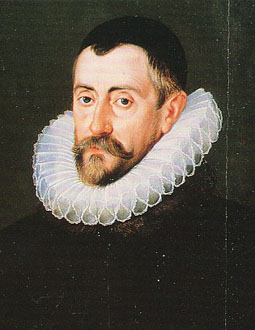
francis-walsinghamI’ve just finished reading The Queen’s Agent: Francis Walsingham at the Court of Elizabeth I by John Cooper and thought I’d post a quick review before settling down to an afternoon of work in the office. Sir Francis Walsingham (left) has acquired an almost mythical status as chief “spymaster” for the Crown during a time when Queen Elizabeth I was beset on all sides by plots and intrigues; The Queen’s Agent tries to find the man behind the legend. Not surprisingly, as Walsingham was as secretive as his trade might suggest, it doesn’t always succeed, but it does at least explode a few myths and give some insights into the character of a very complex man who was capable of great compassion as well as terrible ruthlessness.

Apart from anything else this book allowed me to indulge a longstanding interest in codes and ciphers; specifically, there are many interesting parallels between the story of the Spanish Armada and the breaking of the Enigma code at Bletchley Park during World War II, of which more shortly.

My first encounter with Sir Francis Walsingham came during history lessons at School, especially concerning his role in the infamous Babington Plot of 1586, which resulted in the execution for treason of Mary Stuart (Mary Queen of Scots). Mary had been officially under arrest for 18 years, and had been moved around the country for much of that time with her retinue lest she become a focus for a Catholic plot to put her on the throne of England. In fact for much of her time in captivity, Mary had been communicating in secret with various individuals for precisely that purpose but, unknown to her, most of her letters were being read by Walsingham and his expert team of code-breakers, including  Thomas Phelippes. By 1586 Walsingham already had more than enough evidence to have Mary Stuart tried for treason, but he hit on a plan that if it worked would lead to the entrapment of a large number of her supporters as well as ensuring that he knew the full extent of the conspiracy surrounding Mary Stuart. And so the Babington plot was hatched.

In late 1585, Mary Stuart was moved to Chartley Hall in Staffordshire. A young man called Gilbert Gifford with impeccable Catholic credentials, and apparently sympathetic to the Stuart cause, starting working for the household.  Gifford was in fact a double agent, placed there by Walsingham. Mary was shown a new way to communicate with the outside world, by concealing letters in the beer barrels that were brought regularly in and out of the Hall. She was eventually persuaded to try this channel, but was reluctant to take too many risks; her caution led her to commit a terrible error.

The encryption system used by Mary Stuart was widespread in Europe at that time. It was a form of substitution cipher known as a nomenclator. This consisted of a large alphabet with symbols (some made up, some from other languages) standing sometimes for individual letters, and sometimes for the names of individuals or places. Interesting devices were also deployed to try to confound the frequency analysis that was already being used in code-breaking at this time: symbols were included in the alphabet to instruct the recipient to “repeat the next letter”, for example.

In fact the Babington cipher (or at least a copy of it) still exists:

443px-Mary-cipher-code

Incidentally, in the nomenclators in use by Spain during the time of the Spanish Armada the symbol for Sir Francis Drake was “22”. I’m tempted to suggest that this is the origin of the Bingo call “two little ducks, quack quack”!

As is the case with most ciphers of this type, both sender and receiver would have to have a copy of the agreed alphabet and it is in the possibility of intercepting the key that such methods are most vulnerable . Nomenclators are not impossible to break without the key but not easy either; some 16th century codes of this type remain unbroken to this day. Mary did not know that the communication channel that had opened up was compromised at the very outset, so it probably seemed a sensible move for her to use it first to send a new cipher alphabet to Babington. Of course that decision was an enormous stroke of luck for Elizabeth’s agents because it meant that Phelippes and Walsingham could immediately read every single word of her subsequent messages all of which were intercepted and transcribed, before being replaced in the beer barrels and delivered to their recipient. Her fate, and that of a dozen or so co-conspirators, was quickly sealed. A transcript of the crucial item of correspondence, in which Mary discussed openly the strategy for the planned coup, was forwarded to Walsingham after decryption with a macabre addition: a picture of a gallows drawn in Phelippes’ own hand.

Another dimension that emerges from this story relates to just how difficult it must have been to know who was really on what side. Double agents abounded, and Walsingham must have known that some of his own men were actually working for the enemy at least some of the time; he apparently kept them going despite knowing that they had been turned in order to feed them with false information for the purposes of deception. That’s a very dangerous game to play, but they were dangerous times.

A couple of years after the Babington Plot came the Spanish Armada. The English army was so tiny in comparison with the huge force that planned to invade in 1588 that there was no way it could defend the entire coastline of England. Walsingham relied on intelligence in order to come to the conclusion that the invasion (if it came) would be in Essex. The Spanish would have wanted to get to London as quickly as possible, so this was far more likely to be the landing place than Sussex or the Isle of Wight, both of which were touted as possibilities. An English army of 16,500 was therefore assembled at Tilbury. It’s by no means clear how they would have fared against the Spanish, who outnumbered them by more than two-to-one and who were vastly more experienced and better equipped, but at least they would have had a chance. Walsingham must have been vastly relieved when he received news that the Armada had passed Portsmouth without attempting a landing, because had they done so they would not have met with any meaningful opposition.

Of course we all know what actually happened: harried but not seriously disrupted by a much smaller English naval force, the Armada proceeded up the English channel to Gravelines where it was planned to link up with Spanish ground forces encamped in the Netherlands. There they were attacked by Drake’s Fire Ships and fled into the North Sea in panic. The bulk of the Armada foundered on the coasts of Scotland and Ireland trying to find its way back to Spain in terrible weather.

We’re all taught at school that this was a defining period in English history, when our island nation was saved from Spanish tyranny and emerged into an age of unparalleled peace and prosperity. That’s the narrative we like to hear over and over again, perhaps because it provides us with a sense of moral certainty. A truer picture perhaps emerges when you look at it through the eyes of a man like Walsingham. This is history in all its cloak-and-dagger brutality, fascinating but at the same time profoundly unsettling because it reveals that all that ever really happens is that one side is slightly cleverer and more ruthless than the other.

So what was Walsingham really like as  a man? Obviously we’ll never know. But I’m glad I’ll never have him as an enemy…

Happy Birthday, Harry Nyquist!

Posted in History, The Universe and Stuff with tags , on February 7, 2014 by telescoper

Harry_NyquistThis morning I learned via Twitter that today is the 125th anniversary of the birth of Harry Nyquist, a physicist and electrical engineer, who was a prolific inventor who made fundamental theoretical and practical contributions to the field of telecommunications. He also gave his name to the Nyquist frequency and the Nyquist sampling theorem, now usually known as the Nyquist-Shannon sampling theorem.

Harry Nyquist (left) was born on February  7, 1889, in Nilsby, Sweden but moved to the United States in 1907. In 1917, after earning a Ph.D. in physics from Yale University, he joined the American Telephone and Telegraph Company (AT&T). There he remained until his retirement in 1954, working in the research department and then (from 1934) at Bell Laboratories.  Apparently he didn’t have a beard, but he seems to have overcome this obstacle and had an illustrious career in research.

In my opinion, Harry Nyquist’s achievements are not sufficiently appreciated either by physicists or by the wider world, so here’s a quick summary of some of his greatest hits:

Some of Nyquist’s best-known work was done in the 1920s and was inspired by telegraph communication problems of the time. Because of the elegance and generality of his writings, much of it continues to be cited and used. For example, his 1928 paper Certain Topics in Telegraph Transmission Theory refined his earlier results and established the principles of sampling continuous signals to convert them to digital signals. The Nyquist sampling theorem showed that the sampling rate must be at least twice the highest frequency present in the sample in order to reconstruct the original signal. These two papers by Nyquist, along with one by R.V.L. Hartley, are cited in the first paragraph of Claude Shannon’s classic essay The Mathematical Theory of Communication (1948), where their seminal role in the development of information theory is acknowledged.

In 1927 Nyquist provided a mathematical explanation of the unexpectedly strong thermal noise studied by J.B. Johnson. The understanding of noise is of critical importance for communications systems. Thermal noise is sometimes called Johnson noise or Nyquist noise because of their pioneering work in this field.

In 1932 Nyquist discovered how to determine when negative feedback amplifiers are stable. His criterion, generally called the Nyquist stability theorem, is of great practical importance. During World War II it helped control artillery employing electromechanical feedback systems.

I think that demonstrates the tremendous debt the modern world of telecommunications owes to Harry Nyquist, and why we should remember him on his 125th birthday..

The Medical Case for Beards in the 19th Century

Posted in Beards, History on January 13, 2014 by telescoper

Fascinating article by historian of medicine, Dr Alun Withey, about the medical benefits of facial hair. ..

Dr Alun Withey's avatarDr Alun Withey

As Christopher Oldstone-Moore has argued in his excellent article about the Victorian ‘beard movement’, the middle years of the nineteenth century witnessed an abrupt volte-face in attitudes towards facial hair. The eighteenth century had been one where men were almost entirely clean-shaven. The face of the enlightened gentleman was smooth, his face youthful and his countenance clear, suggesting a mind that was also open. Growing a beard at this point would have been a deliberate act done purposefully to convey a message. John Wroe, for example, leader of the Christian Israelite group, let his beard grow wild to signify his withdrawal from society.

By the mid-Victorian period, however, the beard came back into fashion with remarkable swiftness. Part of the reason for this was changing ideals of masculinity. This was the age of exploration, of hunters, climbers and explorers. As rugged adventurers began to tackle the terra incognita of far-flung…

View original post 633 more words

The Flowers of January

Posted in Art, Biographical, History with tags , , , , on January 12, 2014 by telescoper

Today’s tourist itinerary  took me first to the Tokugawa Art Museum, which contains family treasures from the Owari Tokugawa family, one of the families from which the Shogun was chosen during the Edo period (which lasted from 1603 until 1867 and is sometimes called the Tokugawa period). The collection is magnificent, comprising arms and armour of the elite Samurai warriors as well as art, garments, furniture, and household objects of the period, all made to a standard befitting a Japanese noble family. The highlight for me was the wonderful display of maps and books illustrated with exquisite ink drawings. What struck me most is how stable was the general form of artistic expression in the period covered by the museum, in contrast with what you would find in a European collection over a similar timescale. Japan was very much a closed country during the Edo period  and consequently did not experience foreign influences on its culture in the same way as Britain did in the 17th-19th centuries.

The Tokugawa Art Museum is adjacent to the Tokugawaen, a formal Japanese garden originally built in 1695. January is probably not the best time to visit this place – the numerous cherry trees must look beautiful when covered in blossom – but I was quite surprised to see a significant number of flowering plants even at this time of year.

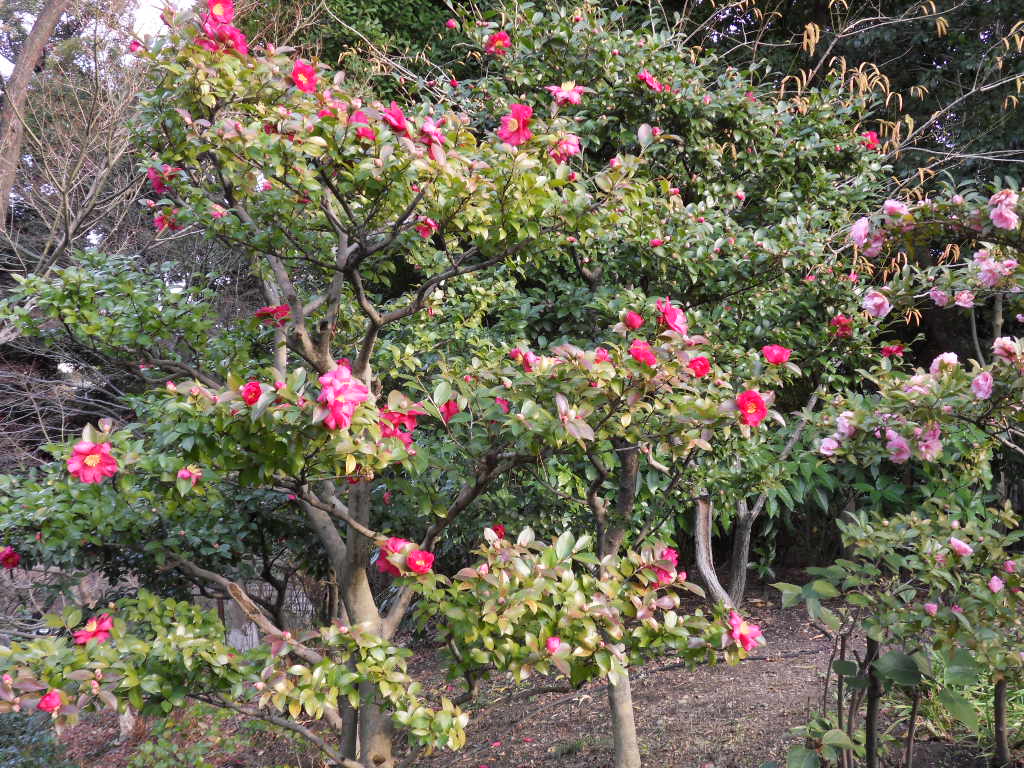
I’m no botanical expert but these look like Camellias to me:

SAMSUNG DIGITAL CAMERA

SAMSUNG DIGITAL CAMERA

These are Peonies:
SAMSUNG DIGITAL CAMERA

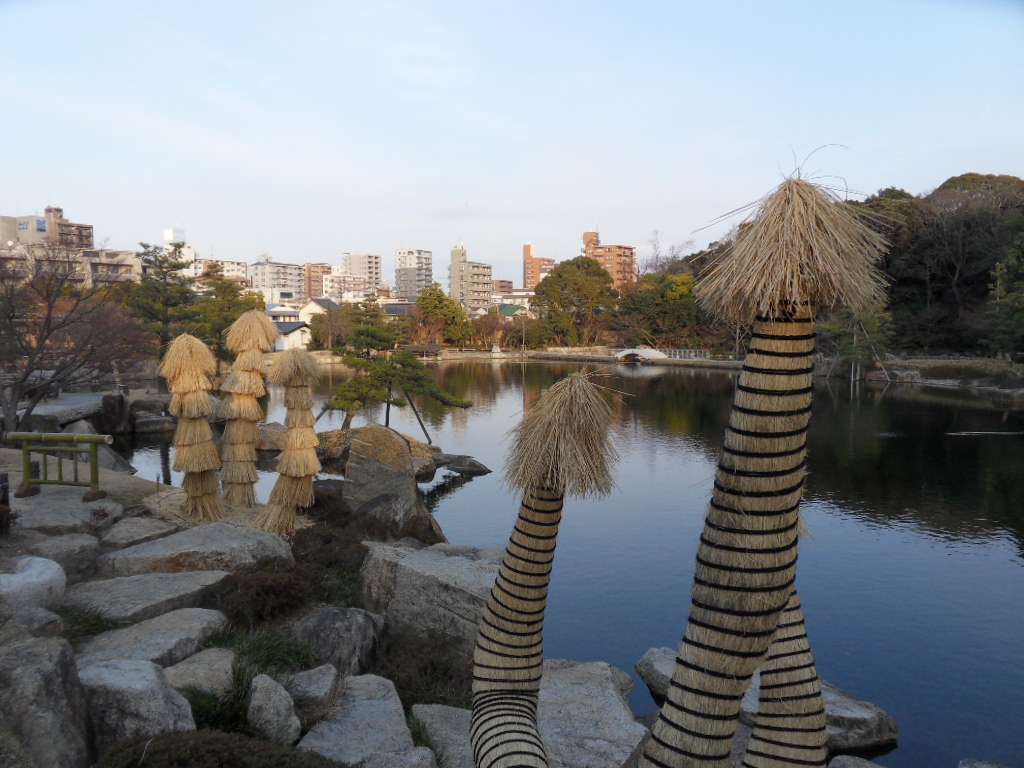
Some of the trees are still wrapped in their winter bamboo coats for protection from the frost:

SAMSUNG DIGITAL CAMERA
The lake contains an impressive collection of multi-coloured carp

SAMSUNG DIGITAL CAMERA

The Tokugawaen is worth a visit even in the off-season, but I really must find an excuse to come back in April or May when the cherry blossom will be out and, according to the literature handed out to visitors, thousands of Peonies will be in bloom all around the lake. That must look amazing!

Anyway, after that I travelled across town to visit the famous Atsuta Shrine, a holy place for the Shinto religion:

SAMSUNG DIGITAL CAMERA

Light was fading and I was already feeling a bit tired, but I did the necessary ritual ablutions, and had a quick look around. Visitors are allowed to make a wish after throwing a coin in the appropriate place, then bowing and clapping twice. I wished for a beer, and lo and behold on the way home I found a bar in which my wish was granted!

Out and about in Nagoya

Posted in Biographical, History with tags , , , , on January 11, 2014 by telescoper

I spent an enjoyable morning wandering about Nagoya, so I thought I’d post a few pictures before settling down to do some work (which is, after all, what I’m here for…)

First off, here’s the place I am officially visiting. This is the central building of the Graduate School of Science and Engineering, the top two floors of which comprise the Kobayashi-Maskawa Institute, which covers particle physics and astrophysics.

SAMSUNG DIGITAL CAMERA

I’ll be giving a talk there next week, in fact. I’m staying on the campus about 5 minutes’ walk away from this building in a pleasant guest room in the Green Salon Higashiyama which is not green and is not a hairdresser’s shop.

The nearest Metro station is a very short walk from the Department building and the first thing I discovered when I entered was surprising evidence that the Japanese have an interest in cricket:

SAMSUNG DIGITAL CAMERA

Given that I posted a picture of the place before embarking on my travels I decided to visit Nagoya Castle. This enormous complex of buildings and fortifications was constructed in the early 17th Century, but a visit by American B29 bombers on 18th May 1945 dropping thousands of incendiary bombs destroyed everything except the massive stone walls; the other buildings were made of wood and would have burned easily in such an attack. At the time the Castle was being used as an army base, so it was inevitable that it would be a target.

The perimeter of the Castle is defined by massive stone walls surround by a wide moat. Similar stone fortifications surround the central buildings and the only approach to the centre of the Castle by water is surrounded on both sides by similarly formidable structures from which missiles would no doubt rain down on unwelcome visitors. The central buildings are also ringed by a deep ditch which was clearly designed to be flooded when necessary; today there are deer grazing at the bottom of it.

The two main keeps or donjons of the castle have been reconstructed and now house very interesting museums containing not only military artefacts but also lovely screen prints and pieces of furniture from the Edo period, during which the castle was constructed.

Here are a few pictures just to prove that I was there!

One of the smaller buildings inside the perimeter of the Castle:

SAMSUNG DIGITAL CAMERA

Approaching the main keep:

SAMSUNG DIGITAL CAMERA

Entrance to the main keep:

SAMSUNG DIGITAL CAMERA

Main keep, with walls and ditch..

SAMSUNG DIGITAL CAMERA

This is the view from the gallery at the top…
SAMSUNG DIGITAL CAMERA

40 years since the beginning of the ‘three day week’

Posted in History, Politics with tags , , , on January 4, 2014 by telescoper

Is it really 40 Years ago?
I wonder how many of you are old enough to remember the “Three Day Week”? I am. In fact I remember sitting my 11+ examination right in the middle of the period (from January to March 1974) in which electricity supplies across the UK were restricted to three days per week. Although it meant reading books by candlelight, it wasn’t as bad as it may sound to younger readers because we didn’t have that many electrical gadgets in those days and at least our house was heated by coal, not electricity. I dread to think what would happen nowadays if we should experience  problems with fuel supplied similar to those caused by the Oil Crisis of 1974. But such an event is not altogether impossible…

hatfulofhistory's avatarNew Historical Express


This week marks the 40th anniversary of the beginning of the ‘three day week’, which lasted from 1 January to 6 March 1974. The ‘three day week’ was an initiative by the Heath Government to avoid the stand-still of Britain’s industry in response to the Oil Crisis of late 1973 and the threat of a strike by the National Union of Mineworkers (who were on a ‘work to rule’ basis at the time). It involved cutting electricity supplies to three consecutive days per week to conserve coal stocks, which was threatened by a strike by mineworkers.

A search of the digitised Cabinet Papers available through the National Archives show how the Heath Government approached the looming threat of a strike by the NUM and the energy crisis faced by Britain in 1973-74. One Cabinet meeting from 20 December, 1973 outlined the problem facing the Heath Government and the…

View original post 1,175 more words

Boxing Day in Warkworth

Posted in History with tags , , , on December 26, 2013 by telescoper

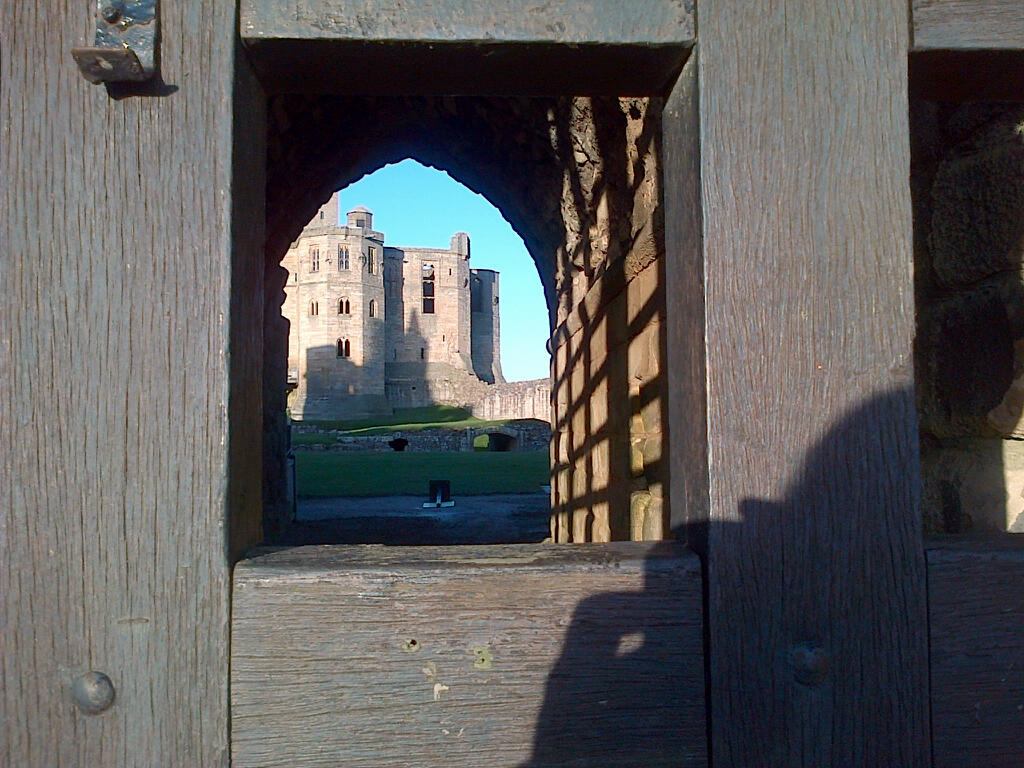
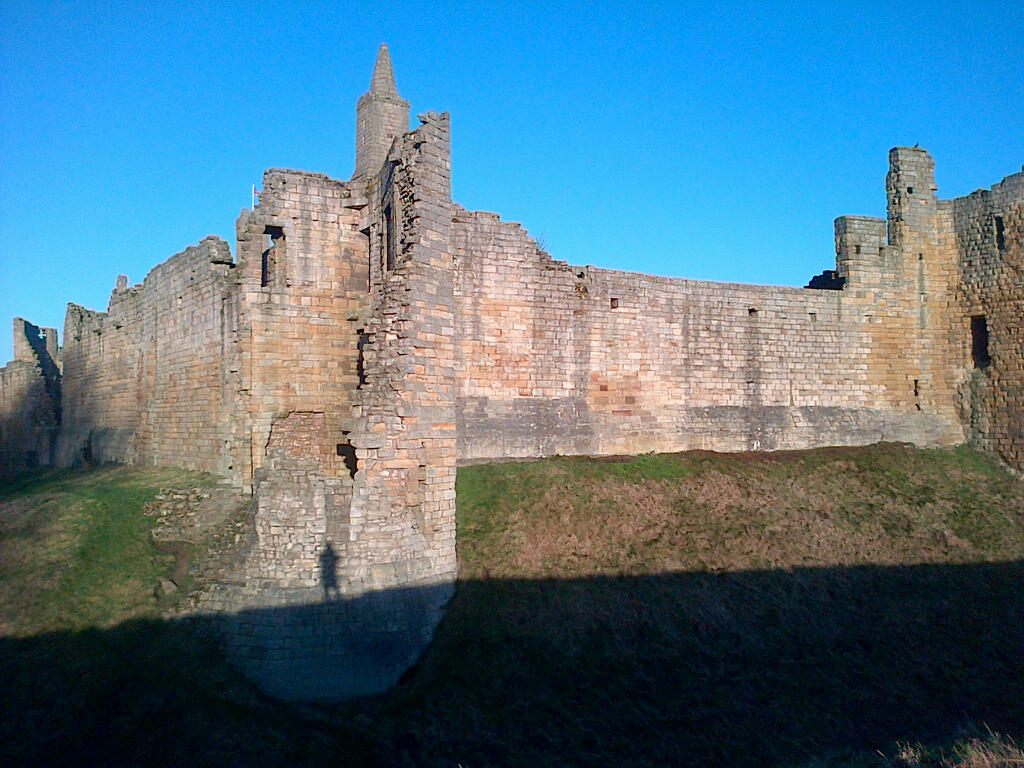
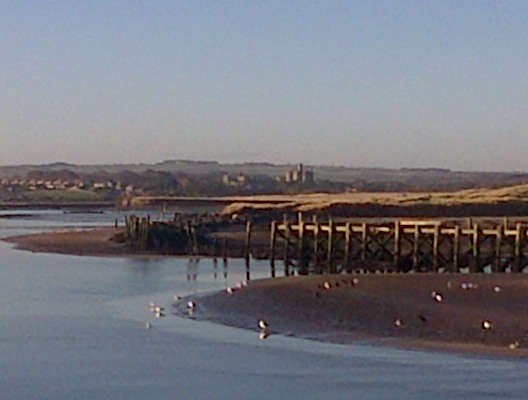
So the traditional Boxing Day spin around Northumberland took place this year in very nice weather (for change). Here are a few pictures of Warkworth Castle..

Incidentally, the decaying wooden structures that you see in the foreground of the last picture are the remains of disused coal staithes that were used to transfer coal onto ships. Amble (where the picture was taken from, with Warkworth Castle in the distance) was once a fairly busy coal port serving numerous local collieries, including Broomhill, Radcliffe, Shilbottle, Widdrington, Whittle, Togston and Hauxley. All are now closed and the harbour at Amble is now only used for fishing and leisure craft.

On Monsieur’s Departure

Posted in History, Poetry with tags , on December 16, 2013 by telescoper

I grieve and dare not show my discontent,
I love and yet am forced to seem to hate,
I do, yet dare not say I ever meant,
I seem stark mute but inwardly to prate.
I am and not, I freeze and yet am burned.
Since from myself another self I turned.

My care is like my shadow in the sun,
Follows me flying, flies when I pursue it,
Stands and lies by me, doth what I have done.
His too familiar care doth make me rue it.
No means I find to rid him from my breast,
Till by the end of things it be supprest.

Some gentler passion slide into my mind,
For I am soft and made of melting snow;
Or be more cruel, love, and so be kind.
Let me or float or sink, be high or low.
Or let me live with some more sweet content,
Or die and so forget what love ere meant.

by Elizabeth I (1533-1603)

Strange Meeting – A Poem for Armistice Day

Posted in History, Poetry on November 11, 2013 by telescoper

I’ve been travelling all morning, but managed to observe the Armistice Day minute’s silence, standing outside the station in the pouring rain, while I was waiting for a connecting train.

Anyway, this poem, Strange Meeting was written by Wilfred Owen, who died just a few days before the Armistice came into effect in 1918. It’s a poem that needs to be read repeatedly to be fully appreciated, but there is one line that is utterly devastating straight away: “I am the enemy you killed, my friend”..

 It seemed that out of the battle I escaped
Down some profound dull tunnel, long since scooped
Through granites which Titanic wars had groined.
Yet also there encumbered sleepers groaned,
Too fast in thought or death to be bestirred.
Then, as I probed them, one sprang up, and stared
With piteous recognition in fixed eyes,
Lifting distressful hands as if to bless.
And by his smile, I knew that sullen hall;
By his dead smile, I knew we stood in Hell.
With a thousand fears that vision’s face was grained;
Yet no blood reached there from the upper ground,
And no guns thumped, or down the flues made moan.
“Strange, friend,” I said, “Here is no cause to mourn.”
“None,” said the other, “Save the undone years,
The hopelessness. Whatever hope is yours,
Was my life also; I went hunting wild
After the wildest beauty in the world,
Which lies not calm in eyes, or braided hair,
But mocks the steady running of the hour,
And if it grieves, grieves richlier than here.
For by my glee might many men have laughed,
And of my weeping something has been left,
Which must die now. I mean the truth untold,
The pity of war, the pity war distilled.
Now men will go content with what we spoiled.
Or, discontent, boil bloody, and be spilled.
They will be swift with swiftness of the tigress,
None will break ranks, though nations trek from progress.
Courage was mine, and I had mystery;
Wisdom was mine, and I had mastery;
To miss the march of this retreating world
Into vain citadels that are not walled.
Then, when much blood had clogged their chariot-wheels
I would go up and wash them from sweet wells,
Even with truths that lie too deep for taint.
I would have poured my spirit without stint
But not through wounds; not on the cess of war.
Foreheads of men have bled where no wounds were.
I am the enemy you killed, my friend.
I knew you in this dark; for so you frowned
Yesterday through me as you jabbed and killed.
I parried; but my hands were loath and cold.
Let us sleep now . . .”

Lest we forget.