Archive for the Literature Category

On Pedantry, by Arnoud S.Q. Visser

Posted in Beards, History, Literature, Pedantry with tags , , , , , , , on March 5, 2026 by telescoper

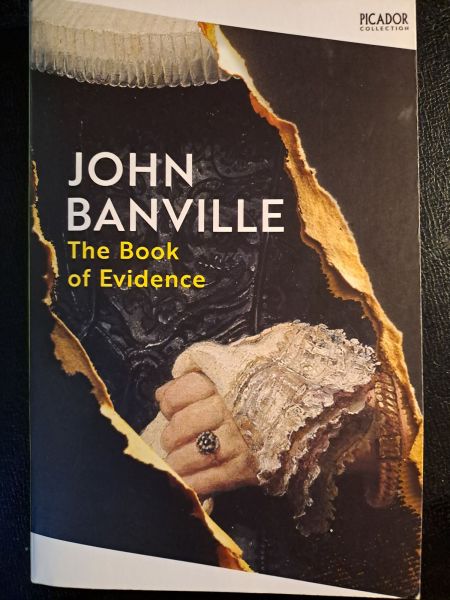
Regular readers of this blog will be surprised to learn that I have, from time to time, been accused of being somewhat pedantic, though not as often as I am accused of being a tad sarastic. Anyway, a certain person recently bought me a copy of On Pedantry (subtitled A Cultural History of the Know-it-all) by Arnoud S.Q. Visser, who is Professor of Textual Culture in the Renaissance at Utrecht University in the Netherlands. Whatever the reason for the gift, I found it a very enjoyable read and learnt a huge amount from it.

Working in a University it is hard to escape the stereotype of the Boffin or the Know-all. I suppose it is because it is part of the scholarly life that we tend to criticize the work of other academics – mostly with the intention of advancing knowledge – that we run the risk of being thought to be excessively assiduous in correction things we perceive to be incorrect or unclear – in other words, of being pedants – and irritating all kinds of people in the process. This book studies the long history of this sort of behaviour , in as part of the broader history of anti-intellectualism, a story of suspicion and deprecation of expertise that is highly relevant today. We have recently seen a widespread assault on universities, the removal of swathes of information (such as environmental data) from the websites of federal agencies, and the discrediting of the use of vaccines and of scientists engaged in vaccine research. The reader of On Pedantry will discover that this sort of hostility is by no means new.

The word “pedant” as such first appears as such in Renaissance Italy, with pedante being a name for private tutors who were hired by the wealthy to teach their children. Such teachers were of a lower social status than their students, so the word gained a negative connotation, especially when combined with the ostentatious display of knowledge with which these teachers were often associated – the new pedants soon found themselves satirised in sonnets and plays.

But although the word dates from much later, Visser identifies the original pedants in ancient Greece, among the Sophists, who emerged as a group of experts in the Athens of the fifth century BCE, with figures such as Protagoras and Prodicus becoming celebrities thanks to their novel approach to learning: they emphasised argumentation and speech, practices that became closely linked to the emergence of democracy. The Sophists gained a reputation, however, for competitive debate that was more about winning an argument than discovering the truth. The name “Sophist” comes from sophia, the greek word for knowledge, from which we get “Philosophy” but also “sophistry” (the use of clever but false arguments).

The philosopher Plato deplored the pedantic nature of Sophists in several of his dialogues and in his Republic, where they would rather “have a quarrel than a conversation”. The playwright Aristophanes went further, lampooning them in his play The Clouds, perhaps the first satire on intellectuals. In ancient Rome, this mistrust of the intellectual took on another aspect – a disdain the lack of practical use of much of Greek philosophy.

Incidentally, I learnt reading this book that the Emperor Hadrian, keen to demonstrate his own intellectual capacity and his admiration for Greek philosophy, forged the link between learning and social elite status by growing a beard, unusually for high status Romans of his time. Hadrian’s beard became much imitated – as a marker of intellectual capacity – but also lampooned as a sign of pretentiousness.

The next developments mapped out by Visser concern the rise of the scholar – in the middle ages and the Renaissance – whose world centred specifically on the Latin language, its literature and grammar. The learning of teachers and scholars was both celebrated and denigrated. John of Salisbury in the 12th century loathed “academics … poring over every syllable … expressing doubts about everything”. The French philosopher Michel de Montaigne wrote a famous essay On Pedantry, which is well worth reading; this is one of the few references in this book that I’ve actually read! Negative depictions of the intellectual subsequently appeared widely in literature, from Molière to Shakespeare. During the Enlightenment, pedantry was dismissed as a “vice of the mind”, with writers such asDiderot, in the prospectus to his famous Encyclopédie, writing that “he who claims to know everything only shows himself ignorant of the limits of his human mind”.

Closer to modern times, Visser switches his attention to America and the mistrust of scholars there, beginning with Thomas Paine, whose bestselling Common Sense provided a major influence on the American revolution. Paine identified refined language and classical erudition with a colonialist aristocratic mentality. Visser comments that “in a political culture of democratic machismo, politicians denounced colleagues who made an inordinate display of their education as elitist, overly sensitive, and effeminate”, I which is just as true of the 21st Century as the 19th. This American distrust of the expert even created a political party, the “Know Nothings”, in the early 19th century.

The final chapter of the book discusses attitudes towards intellectuals in popular culture, focussing on stereotypical portrayals of professors in Hollywood movies. I think more could have been made about the gendered nature of the pedant – until recently a stricly male stereotype. More recent versions are hardly more enlightened: just as male intellectuals are usually depicted as being “unmanly”, the focus on female academics in the movies is largely on their “mannish” looks.

I also think much more could be made of more recent phenomena, such as the annoying nitpicking of the anonymous internet troll and the rise of “mansplaining”. There’s also the emergence of generative AI. ChatGPT and other chatbots could have emerged as very irritating pedants, but instead they come across as servile and sycophantic, which some of us find even more irritating. And most most modern-day real-life pedants do not hallucinate or generate obvious untruths. Some of us who have been accused of being pedantic are at least trying to get things right, rather than pass off slop as truth.

As you might expect, this book involves many enjoyable digressions and asides. I especially appreciated the discussions of scholarly life and attitudes to education in mediaeval and early modern Europe. What you might not have expected for what is a scholarly work – with footnotes and whatnot – is that it is written in a very light and readable style and is frequently very funny.

Highly recommended.

Barddoniaeth ar gyfer Dydd Gŵyl Dewi

Posted in History, Poetry with tags , , , , , , , on March 1, 2026 by telescoper

Well, today is St David’s Day so let me first offer a hearty “Dydd Gwŷl Dewi Sant hapus i chi gyd” (Happy St David’s Day to you all). Here is a picture of some daffodils amid the undergrowth in my garden:

Over the years, I seem to have established a tradition of posting a bit of poetry to mark this special day for Wales and the Welsh and given current events I chose this one which I have posted before, about 9 years ago. It was written in Welsh by Hedd Wyn (born Ellis Humphrey Evans) who lived from 1887 to 1917; Hedd Wyn was his bardic name and it translates (roughly) as “pure peace”.

Hedd Wyn was a non-conformist Christian and a pacifist who was conscripted into the British Army to serve in World War 1. He was posted to Flanders and was killed in action on 31st July 1917, the first day of the 3rd Battle of Ypres. He was hit in the stomach by a shell and died later of his wounds. The battle stumbled on for months of horrific slaughter as the planned Allied offensive foundered in the mud of Passchendaele and ended, as had the Battle of the Somme a year earlier, in a bloody stalemate.

A few weeks before his death, Hedd Wyn wrote a poem called Yr Arwr (‘The Hero’) which was submitted for the prestigious Bard’s Chair at that year’s National Eisteddfod. It was announced on 6th September 1917 that  he  had won the prize, posthumously. The bard not being able to sit in the the chair, it was draped in black cloth. The Prime Minister, David Lloyd George, was present at the ceremony.

The poem Yr Arwr is a very long work, running to 13 pages of manuscript, which is not practicable to post here, but here’s another poem by Hedd Wyn. This is called Rhyfel (‘War’). I only have a few words of Welsh, but because of the occasion,  it seems appropriate to post this in its original language. You can find English translations here and on the Wikipedia page here. Translating poetry is always very difficult, but the sense of the poem is of a world in chaos that has been abandoned by God.

Gwae fi fy myw mewn oes mor ddreng
 A Duw ar drai ar orwel pell;
 O'i ôl mae dyn, yn deyrn a gwreng,
 Yn codi ei awdurdod hell.

Pan deimlodd fyned ymaith Dduw
 Cyfododd gledd i ladd ei frawd;
 Mae swn yr ymladd ar ein clyw,
 A'i gysgod ar fythynnod tlawd.

Mae'r hen delynau genid gynt
 Ynghrog ar gangau'r helyg draw,
 A gwaedd y bechgyn lond y gwynt,
 A'u gwaed yn gymysg efo'r glaw.

Via Negativa, by R.S. Thomas

Posted in Poetry with tags , , , , , on February 23, 2026 by telescoper
Why no! I never thought other than
That God is that great absence
In our lives, the empty silence
Within, the place where we go
Seeking, not in hope to
Arrive or find. He keeps the interstices
In our knowledge, the darkness
Between stars. His are the echoes
We follow, the footprints he has just
Left. We put our hands in
His side hoping to find
It warm. We look at people
And places as though he had looked
At them, too; but miss the reflection.

by R.S. Thomas (1913-2000)

Although he was an Anglican minister, the poems of R.S. Thomas – most famously The Absence – often speak of God as absent rather than present, and the religious experience as being one of negation rather than affirmation. These views seem strange and rather comfortless coming from a priest, but as an atheist what do I know? None of that detracts from the austere beauty of his verse.

Man was Made to Mourn – Robert Burns

Posted in Poetry with tags , , , , on January 25, 2026 by telescoper
When chill November's surly blast 
Made fields and forests bare,
One ev'ning, as I wander'd forth
Along the banks of Ayr,
I spied a man, whose aged step
Seem'd weary, worn with care;
His face was furrow'd o'er with years,
And hoary was his hair.

"Young stranger, whither wand'rest thou?"
Began the rev'rend sage;
"Does thirst of wealth thy step constrain,
Or youthful pleasure's rage?
Or haply, prest with cares and woes,
Too soon thou hast began
To wander forth, with me to mourn
The miseries of man.

"The sun that overhangs yon moors,
Out-spreading far and wide,
Where hundreds labour to support
A haughty lordling's pride; -
I've seen yon weary winter-sun
Twice forty times return;
And ev'ry time has added proofs,
That man was made to mourn.

"O man! while in thy early years,
How prodigal of time!
Mis-spending all thy precious hours-
Thy glorious, youthful prime!
Alternate follies take the sway;
Licentious passions burn;
Which tenfold force gives Nature's law.
That man was made to mourn.

"Look not alone on youthful prime,
Or manhood's active might;
Man then is useful to his kind,
Supported in his right:
But see him on the edge of life,
With cares and sorrows worn;
Then Age and Want - oh! ill-match'd pair -
Shew man was made to mourn.

"A few seem favourites of fate,
In pleasure's lap carest;
Yet, think not all the rich and great
Are likewise truly blest:
But oh! what crowds in ev'ry land,
All wretched and forlorn,
Thro' weary life this lesson learn,
That man was made to mourn.

"Many and sharp the num'rous ills
Inwoven with our frame!
More pointed still we make ourselves,
Regret, remorse, and shame!
And man, whose heav'n-erected face
The smiles of love adorn, -
Man's inhumanity to man
Makes countless thousands mourn!

"See yonder poor, o'erlabour'd wight,
So abject, mean, and vile,
Who begs a brother of the earth
To give him leave to toil;
And see his lordly fellow-worm
The poor petition spurn,
Unmindful, tho' a weeping wife
And helpless offspring mourn.

"If I'm design'd yon lordling's slave,
By Nature's law design'd,
Why was an independent wish
E'er planted in my mind?
If not, why am I subject to
His cruelty, or scorn?
Or why has man the will and pow'r
To make his fellow mourn?

"Yet, let not this too much, my son,
Disturb thy youthful breast:
This partial view of human-kind
Is surely not the last!
The poor, oppressed, honest man
Had never, sure, been born,
Had there not been some recompense
To comfort those that mourn!

"O Death! the poor man's dearest friend,
The kindest and the best!
Welcome the hour my aged limbs
Are laid with thee at rest!
The great, the wealthy fear thy blow
From pomp and pleasure torn;
But, oh! a blest relief for those
That weary-laden mourn!"

by Robert Burns (1759-1796); in case you hadn’t realised, tonight is Burns Night, marking the Poet’s birthday on 25th January 1759.

Greenland’s Icy Mountains – William Topaz McGonagall

Posted in Poetry with tags , , , on January 9, 2026 by telescoper
Photo by Jean-Christophe Andru00e9 on Pexels.com
Greenland's icy mountains are fascinating and grand,
And wondrously created by the Almighty's command;
And the works of the Almighty there's few can understand:
Who knows but it might be a part of Fairyland?

Because there are churches of ice, and houses glittering like glass,
And for scenic grandeur there's nothing can it surpass,
Besides there's monuments and spires, also ruins,
Which serve for a safe retreat from the wild bruins.

And there's icy crags and precipices, also beautiful waterfalls,
And as the stranger gazes thereon, his heart it appals
With a mixture of wonder, fear, and delight,
Till at last he exclaims, Oh! what a wonderful sight!

The icy mountains they're higher than a brig's topmast,
And the stranger in amazement stands aghast
As he beholds the water flowing off the melted ice
Adown the mountain sides, that he cries out, Oh! how nice!

Such sights as these are truly magnificent to be seen,
Only that the mountain tops are white instead of green,
And rents and caverns in them, the same as on a rugged mountain side,
And suitable places, in my opinion, for mermaids to reside.

Sometimes these icy mountains suddenly topple o'er
With a wild and rumbling hollow-starting roar;
And new peaks and cliffs rise up out of the sea,
While great cataracts of uplifted brine pour down furiously.

And those that can witness such an awful sight
Can only gaze thereon in solemn silence and delight,
And the most Godfearless man that hath this region trod
Would be forced to recognise the power and majesty of God.

Oh! how awful and grand it must be on a sunshiny day
To see one of these icy mountains in pieces give way!
While, crack after crack, it falls with a mighty crash
Flat upon the sea with a fearful splash.

And in the breaking up of these mountains they roar like thunder,
Which causes the stranger no doubt to wonder;
Also the Esquimaux of Greenland betimes will stand
And gaze on the wondrous work of the Almighty so grand.

When these icy mountains are falling, the report is like big guns,
And the glittering brilliancy of them causes mock-suns,
And around them there's connected a beautiful ring of light,
And as the stranger looks thereon, it fills his heart with delight.

Oh! think on the danger of seafaring men
If any of these mighty mountains where falling on them;
Alas! they would be killed ere the hand of man could them save
And, poor creatures, very likely find a watery grave!

'Tis most beautiful to see and hear the whales whistling and blowing,
And the sailors in their small boats quickly after them rowing,
While the whales keep lashing the water all their might
With their mighty tails, left and right.

In winter there's no sunlight there night or day,
Which, no doubt, will cause the time to pass tediously away,
And cause the Esquimaux to long for the light of day,
So as they will get basking themselves in the sun's bright array.

In summer there is perpetual sunlight,
Which fill the Esquimaux's hearts with delight;
And is seen every day and night in the blue sky,
Which makes the scenery appear most beautiful to the eye.

During summer and winter there the land is covered with snow,
Which sometimes must fill the Esquimaux' hearts with woe
As they traverse fields of ice, ten or fifteen feet thick,
And with cold, no doubt, their hearts will be touched to the quick.

And let those that read or hear this feel thankful to God
That the icy fields of Greenland they have never trod;
Especially while seated around the fireside on a cold winter night,
Let them think of the cold and hardships Greenland sailors have to fight.

by William Topaz McGonagall (1825-1902)

December 31st – Richard Hoffman

Posted in Art, Poetry with tags , , , , , , on December 31, 2025 by telescoper
All my undone actions wander
naked across the calendar,

a band of skinny hunter-gatherers,
blown snow scattered here and there,

stumbling toward a future
folded in the New Year I secure

with a pushpin: January’s picture
a painting from the 17th century,

a still life: Skull and mirror,
spilled coin purse and a flower.

by Richard Hofmann (b. 1949) from his collection Emblem.

I don’t know precisely which picture the poet is referring to for January in his calendar, nor which artist, but it it is undoubtedly an example of a Vanitas or Memento Mori, a genre symbolizing the transience of life, the futility of pleasure, and the certainty of death, and thus the vanity of ambition and all worldly desires. The paintings involved still life imagery of items suggessting the transitory nature of life.

A couple of examples are here:

Between them you find all the elements mentioned in the poem: the skull represents death, the flowers impermanence, the coins personal wealth and the other items worldly knowledge and pleasure. There’s an interesting WordPress blog about the symbolism this genre here:

P.S. My own calendar has pictures of tractors in it.

Stardust – Michael D. Higgins

Posted in Poetry with tags , , , , on November 20, 2025 by telescoper

by Michael D. Higgins (b. 1941), former President of the Republic of Ireland.

Here he is reading the poem from the President’s Office.

Graduation – Jacob Lawrence

Posted in Art, Poetry with tags , , , , on October 28, 2025 by telescoper

by Jacob Lawrence (1948, ink over graphite on paper, 72 × 49.8 cm, Art Institute of Chicago, USA)

This work, Graduation, is one of six drawings that Jacob Lawrence made as illustrations for Langston Hughes’s 1949 book of poetry, One-Way Ticket

“Who was Mr. W.H.”? – and Other Questions

Posted in LGBTQ+, Poetry with tags , , , , , , , on October 2, 2025 by telescoper

Today is National Poetry Day in the UK and Ireland but, instead of posting a poem like I usually do on this occasion, I thought I’d do a bit of reflecting on Shakespeare’s Sonnets. What prompted this is an article in the Times Literary Supplement I mentioned in a post on Monday. The cover picture shows a newly-discovered miniature by Nicholas Hilliard that is claimed to be of Henry Wriothesley, 3rd Earl of Southampton, and patron of William Shakespeare:

On the 20th May 1609, a collection of 154 Sonnets by William Shakespeare was published, which arguably represents at least as high a  level of literary achievement as his plays. The “Master Mistress” in the title of the TLS article is a reference to Sonnet No. 20 in the collection, published on 20th May 1609, of 154 Sonnets by William Shakespeare, which arguably represents at least as high a  level of literary achievement as his plays. Here is Sonnet No. 20 in the form usually printed nowadays:

A woman’s face with nature’s own hand painted,
Hast thou the master mistress of my passion,
A woman’s gentle heart but not acquainted
With shifting change as is false women’s fashion,
An eye more bright than theirs, less false in rolling:
Gilding the object whereupon it gazeth,
A man in hue all hues in his controlling,
Which steals men’s eyes and women’s souls amazeth.
And for a woman wert thou first created,
Till nature as she wrought thee fell a-doting,
And by addition me of thee defeated,
By adding one thing to my purpose nothing.
But since she pricked thee out for women’s pleasure,
Mine be thy love and thy love’s use their treasure.

The somewhat androgynous facial appearance of Henry Wriothesley – seen in other portraits – has led some to suggest that the above Sonnet was addressed to him. Others think that the poem was addressed to a young male actor (a “boy player“) who played female roles on the stage, as was usual in Shakespeare’s time. It was illegal for women to perform on stage until 1660.

The dedication in the First Folio edition of the Sonnets, published in 1609, is shown on the left. The initials “T.T.” are accepted to stand for the name of the publisher Thomas Thorpe but the identity of “Mr. W.H.” is unknown. Of course “W.H.” is a reversal of the “H.W. ” that could be Henry Wriothesley, but would the publisher really use “Mr” to refer to a member of the nobility? Another curiosity is the prevalence of full stops, which is more characteristic of inscriptions carved in stone than on printed pages.

The First Folio edition was the only edition of the Sonnets published in Shakespeare’s lifetime and the circumstances of its publication remain uncertain to this day and not only because of identity of “Mr W.H.” For example, if it was authorised by Shakespeare, why did Shakespeare himself not write the dedication? Some have argued that it must have been published posthumously, so Shakespeare must have been dead in 1609, whereas most sources say he died in 1616.

Most of the poems (126 out of 154) contain poetic statements of love for a young man,  often called the “Fair Youth”. However, there is also a group of sonnets addressed to the poet’s mistress, an anonymous “dark lady”, which are far much more sexual in content than those addressed to the “Fair Youth”. The usual interpretation of this is that the poet’s love for the boy was purely Platonic rather than sexual in nature.  If Mr W.H. was a boy player then he would have been very young indeed, i.e. 13-17 years old…

Anyway, it was certainly a physical attraction: verse after verse speaks of the young man’s beauty. The first group of sonnets even encourage him to get married and have children so his beauty can continue and not die with his death. Sonnet 20 laments that the youth is not a woman, suggesting that this ruled out any sexual contact.  These early poems seem to suggest a slightly distant relationship between the two as if they didn’t really know each other well. However, as the collection goes on the poems become more and more intimate and it’s hard for me to accept that there wasn’t some sort of involvement between the two.  Although homosexual relationships were not officially tolerated in 17th Century England, they were not all that rare especially in the theatrical circles in which Shakespeare worked.

Oscar Wilde wrote a story called “A Portrait of Mr. W.H.” which suggests he is a young actor by the name of “Will Hughes”. The main evidence for this is Sonnet 20.

Look at the First Folio version:

The initial capital and emphasis of “Hews” seen in line 7 is very unusual and suggests that it is a joke (one of many in this poem), in the form of a pun on the preceding “hew”. It is suggested that “Hews” is actually “Hughes”. Ingenious, but I’m not convinced. There were many other meanings of “hew” in use in Shakespeare’s time; it was a variant spelling of “ewe” for example.

We’ll probably never know who Mr W.H. was – presumably not Smith – or indeed what was the real nature of his relationship to Shakespeare but we do not need to know that to read and enjoy the poems.

I do have a fundamental misgiving, though, about the assumption that the “Onlie begetter” of these sonnets means the person to whom they are addressed, or who inspired them. That assumption entirely disregards the “Dark Lady” sequence. There are at least two addressees so neither can be the only begetter, if that is what begetter is supposed to mean.

I think it more likely Mr W.H., whoever he was, is the person who caused the collection to be created and/or published, perhaps by sponsoring the First Folio. It’s also possible that these poems may have been commissioned over the years by Mr. W.H. and/or others – experts think they were written over a period of at least 16 years – and only published together at much later date. It is indeed said that some of verses were circulated in private well before they were published, though they may perhaps have been edited or otherwise tidied up for the 1609 edition. Perhaps Shakespeare supplemented his income by writing sonnets to order?

This line of thought also took me to another question: why does everyone assume that all 126 of the “Fair Youth” sonnets are about the same person? That person is never named and only occasionally described. Some of the 126 are thematically linked, but overall it is a collection rather than a sequence. Some are humorous and some are very serious indeed. Some are downright cryptic. I think it quite possible, especially if the poems really were written over a period of 16 years, that they not all addressed to the same individual. Once you accept the evident truth that there is more than one recipient, then why not more than two?

Some have taken this even further and asked: do we really know that all 154 sonnets were written by the same person? The same question is asked about Shakespeare’s work generally. Was there really one person behind his plays, or were they collaborative efforts.

Finally, I wonder for what purpose these sonnets were written. Were they actually sent to the addressee(s) as expressions of love, like letters, or were they private meditations, like one might write in a journal?

I don’t suppose we’ll ever really know the answers to these questions, but I find it fascinating that the origin of such a famous collection is enshrouded in so many mysteries! I promise to post more of them here in due course.

Supplementary Information

Posted in Biographical, Crosswords, Literature with tags , , on September 29, 2025 by telescoper

Regular readers of this blog know that I have a habit of reading the Times Literary Supplement which I buy not only for the book reviews, but also for its excellent crossword. I’ve even won the crossword competition prize a few times. You can find an assortment of posts related to the TLS here.

Recently the Times Literary Supplement underwent something of a makeover, changing the design and switching from a weekly to fortnightly publication. The first new-style issue was published on September 5th. Here is the cover:

The cover article is about the possible identity of the “Mr W.H.” to whom William Shakespeare dedicated his collection of Sonnets; see here. I may write something about that in the not too distant future, as I’ve been reading these again recently.

Anyway, my subscription definitely specifies a “weekly print edition delivered to my door”, so that has gone out the window. I wasn’t best pleased to have the terms of my subscription changed unilaterally like that. Of course I could just read the online edition, but I don’t like reading too much on a screen. I’ve never adapted to reading books on a Kindle either. And crosswords are impossible that way. The old format TLS was rather like a tabloid newspaper, which I found easy to read and handle, and of 28 pages per edition. The new format has 48 pages (which is not 2 times 28) and is rather cramped and crowded and with heavier paper to make it look there’s more to it than there is.

The look and feel they seem to have gone for is “Generic Weekend Supplement”, as you can see if you compare it with last week’s Irish Times Weekend Magazine:

The latter supplement has 52 pages instead of 48 and has more advertisements inside but is otherwise similar.

So why mention this? Well one thing is that the number of crosswords provided by the TLS per year has now reduced by half, which to me reduces the value of the subscription significantly. Moreover, the first issue of the new style supplement was published on September 5th, but didn’t arrive through my letterbox until 24th September. That’s 19 days. The deadline for entries to the crossword competition was September 15th.

Now the old-style issues used to take about 10 days to cross the Irish Sea, which I thought was bad, but 19 days is just awful. One theory of this is that the TLS launches issues with the same momentum, so that the new edition, having about twice the mass, has half the speed and therefore takes roughly twice as long to reach the subscriber. Checking the envelope, incidentally, I see that it was postmarked Bratislava. There must be a very cheap – but slow – way of sending post from the UK to Ireland via Slovakia.

Anyway, I’ve decided not to renew my subscription to the TLS, as I did with Private Eye recently. I cancelled my subscription to the Eye not because I was offended by anything in it, but because it was taking a ridiculously long time to arrive. I can still pick up copies of both publications in the local newsagent. I’m sure Paddy will keep copies of both to one side if I ask him.

Alternatively, I might switch from the TLS to the London Review of Books or some similar. Does anyone have recommendations?