Archive for the Literature Category

Twelfth Night – Louis MacNeice

Posted in Maynooth, Poetry with tags , , , on January 6, 2025 by telescoper
Snow-happy hicks of a boy’s world –
O crunch of bull’s-eyes in the mouth,
O crunch of frost beneath the foot –
If time would only remain furled
In white, and thaw were not for certain
And snow would but stay put, stay put!

When the pillar-box wore a white bonnet –
O harmony of roof and hedge,
O parity of sight and thought –
And each flake had your number on it
And lives were round for not a number
But equalled nought, but equalled nought!

But now the sphinx must change her shape –
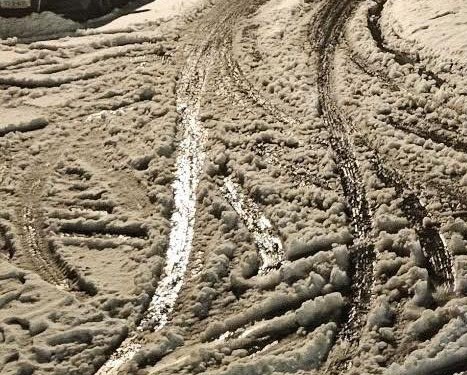
O track that reappears through slush,
O broken riddle, burst grenade –
And lives must be pulled out like tape
To measure something not themselves,
Things not given but made, but made.

For now the time of gifts is gone –
O boys that grow, O snows that melt,
O bathos that the years must fill –
Here is dull earth to build upon
Undecorated; we have reached
Twelfth Night or what you will … you will.

by Louis MacNeice (1907-1963)

A Childhood Christmas – Patrick Kavanagh

Posted in Poetry with tags , , on December 24, 2024 by telescoper
One side of the potato-pits was white with frost -
How wonderful that was, how wonderful!
And when we put our ears to the paling-post
The music that came out was magical.

The light between the ricks of hay and straw
Was a hole in Heaven's gable. An apple tree
With its December-glinting fruit we saw -
O you, Eve, were the world that tempted me.

To eat the knowledge that grew in clay
And death the germ within it! Now and then
I can remember something of the gay
Garden that was childhood's. Again.

The tracks of cattle to a drinking-place,
A green stone lying sideways in a ditch,
Or any common sight, the transfigured face
Of a beauty that the world did not touch.

My father played the melodion
Outside at our gate;
There were stars in the morning east
And they danced to his music.

Across the wild bogs his melodion called
To Lennons and Callans.
As I pulled on my trousers in a hurry
I knew some strange thing had happened.

Outside in the cow-house my mother
Made the music of milking;
The light of her stable-lamp was a star
And the frost of Bethlehem made it twinkle.

A water-hen screeched in the bog,
Mass-going feet
Crunched the wafer-ice on the pot-holes,
Somebody wistfully twisted the bellows wheel.

My child poet picked out the letters
On the grey stone,
In silver the wonder of a Christmas townland,
The winking glitter of a frosty dawn.

Cassiopeia was over
Cassidy's hanging hill,
I looked and three whin bushes rode across
The horizon — the Three Wise Kings.

And old man passing said:
‘Can't he make it talk -
The melodion.' I hid in the doorway
And tightened the belt of my box-pleated coat.

I nicked six nicks on the door-post
With my penknife's big blade -
there was a little one for cutting tobacco.
And I was six Christmases of age.

My father played the melodion,
My mother milked the cows,
And I had a prayer like a white rose pinned
On the Virgin Mary's blouse.

by Patrick Kavanagh (1904-1967)

Here is the poem, beautifully read by Stephen Rea:

The Hunters in the Snow – Pieter Bruegel the Elder

Posted in Art, Poetry with tags , , on December 17, 2024 by telescoper

by Pieter Bruegel the Elder (1565, oil on panel, 117×162 cm, Kunsthistorisches Museum, Vienna).

This very famous painting is the subject of this ekphrastic poem, written in 1962, by William Carlos Williams:

The over-all picture is winter
icy mountains
in the background the return

from the hunt it is toward evening
from the left
sturdy hunters lead in

their pack the inn-sign
hanging from a
broken hinge is a stag a crucifix

between his antlers the cold
inn yard is
deserted but for a huge bonfire

that flares wind-driven tended by
women who cluster
about it to the right beyond

the hill is a pattern of skaters
Brueghel the painter
concerned with it all has chosen

a winter-struck bush for his
foreground to
complete the picture


It seems strange to me that the poem misses what I think is the most important feature of the painting: that the hunters are returning empty-handed. It’s that that makes the image so bleak.

Letter in November – Sylvia Plath

Posted in Poetry with tags , , , , , on November 15, 2024 by telescoper
Love, the world
Suddenly turns, turns color. The streetlight
Splits through the rat's tail
Pods of the laburnum at nine in the morning.
It is the Arctic,

This little black
Circle, with its tawn silk grasses - babies hair.
There is a green in the air,
Soft, delectable.
It cushions me lovingly.

I am flushed and warm.
I think I may be enormous,
I am so stupidly happy,
My Wellingtons
Squelching and squelching through the beautiful red.

This is my property.
Two times a day
I pace it, sniffing
The barbarous holly with its viridian
Scallops, pure iron,

And the wall of the odd corpses.
I love them.
I love them like history.
The apples are golden,
Imagine it ----

My seventy trees
Holding their gold-ruddy balls
In a thick gray death-soup,
Their million
Gold leaves metal and breathless.

O love, O celibate.
Nobody but me
Walks the waist high wet.
The irreplaceable
Golds bleed and deepen, the mouths of Thermopylae.

by Silvia Plath (1932-1963)

Penny Dreadful

Posted in Literature, Television with tags , , , , , , , , on October 1, 2024 by telescoper

The other day I was in the local library and walked past the DVD collection on the way to checking out a couple of books. I noticed the boxed set of the first series of Penny Dreadful which was first broadcast in 2014. Ten years is quite a short time for me to catch up with things so I decided to borrow it. I’m glad I did because I thought it was excellent.

It’s hard to describe what Penny Dreadful is about without making it seem absurd, but it’s a horror drama based in Victorian London that features many characters from fiction of that period, including Mary Shelley’s Frankenstein, Oscar Wilde’s Dorian Gray, and numerous others from Bram Stoker’s Dracula including Professor van Helsing and Mina Harker. There are some originals too: Ethan Chandler, a rodeo performer, and the enigmatic Vanessa Ives. These characters join forces with Malcolm Murray who is attempting to find his daughter Mina (the name of the principal female character in Dracula). Mina is the MacGuffin but the quest to find her is mostly sidelined by other plots.

The title of course refers to the “Penny Dreadful“, a form of cheap fiction that was very popular in Victorian London and which often included a supernatural element, as well as lots of gory violence, as does the TV series. Oscar Wilde’s A Picture of Dorian Gray wasn’t a penny dreadful (nor were Frankenstein and Dracula for that matter) but the mix of characters, both mundane and supernatural, is a very ingenious concoction. It was fun trying to spot the literary references and quotations.

It’s also a bit raunchy in places, although when Dorian Gray was about to get it on with hunky cowboy Ethan Chandler, it cut immediately to the closing credits so, disappointingly, we didn’t see any actual rumpy pumpy.

Anyway, it’s a superb cast including Timothy Dalton as Malcolm Murray, Rory Kinnear as The Creature (from the Frankenstein story), and Eva Green as Vanessa Ives. A young Olly Alexander plays the vampire’s familiar Fenton. It’s beautifully photographed, and the sets are a visual feast for lovers of Victoriana. There are one or two anachronisms in the language and setting, but you have to cut a story like this a bit of slack. For example, the Grand Guignol, which supplies a subplot, was really a Parisian phenomenon.

I’ve seen some criticisms of the plotting, as the episodes don’t really resolve: the next one often starts a new thread rather than tying up the existing loose ends. I didn’t actually mind that at all. It seemed to me that this gives it a dreamlike or rather nightmarish quality.

Anyway, I enjoyed this series a lot and I’ll definitely look out for the other two series, as they may well offer excellent binge viewing during the dark autumn months.

Close of Play

Posted in Cricket, Poetry with tags , , , , , , on September 29, 2024 by telescoper

Today saw the end of this year’s County Championship cricket season, which I take to be definition of the official end of summer.  It seems to have come very late this year, and the weather not particularly clement for the last day.

I like county cricket, and hope to be able to see more when I retire and have the time, but I haven’t followed many games this year. I was away for much of the season and a bit busy to pay too much attention for the rest. I still keep an eye on how Glamorgan are doing, though, because of the time I spent living in Cardiff. In fact they won their last game against Gloucestershire yesterday to finish 6th  in the 2nd Division. The match had been affected by rain but both captains decided to try to make a game of it by each forfeiting an innings after Glamorgan declared their first innings 381/4with the best part of two days to play. Gloucestershire never looked like reaching that total and were bowled out for 189. The other Championship game between these two teams, in June, ended in a remarkable tie as Glamorgan were bowled out for 592 needing 593 to win. Of course the great success of the year for Glamorgan was winning the One Day Trophy, beating Somerset in a final deferred by a day and truncated by rain.

Elsewhere in the County Championship, Surrey won the 1st Division while Lancashire and Kent were relegated. Sussex won the 2nd division title and they and Yorkshire were promoted to Division 1 for next season. With Lancs and Yorks in different divisions, there wasn’t be a Roses match this summer, and there won’t be one next season either!

Anyway, as I’ve done before,  it seems apt to mark the end of the County Championship with one of the classic cricket poems, Close of Play  by Thomas Moult.

How shall we live, now that the summer’s ended,
And bat and ball (too soon!) are put aside,
And all our cricket deeds and dreams have blended —
The hit for six, the champion bowled for none,
The match we planned to win and never won? …
Only in Green-winged memory they abide.

How shall we live, who love our loveliest game
With such bright ardour that when stumps are drawn
We talk into the twilight, always the same
Old talk with laughter round off each tale —
Laughter of friends across a pint of ale
In the blue shade of the pavilion.

For the last time a batsman is out, the day
Like the drained glass and the dear sundown field
is empty; what instead of Summer’s play
Can occupy these darkling months ere spring
Hails willows once again the crowned king?
How shall we live so life may not be chilled?

Well, what’s a crimson hearth for, and the lamp
Of winter nights, and these plump yellow books
That cherish Wisden’s soul and bear his stamp —
And bat and ball (too soon!) are put aside,
Time’s ever changing, unalterable score-board,
Thick-clustered with a thousand names adored:
Half the game’s magic in their very looks!

And when we’ve learnt those almanacs by heart,
And shared with Nyren … Cardus ….the distant thrill
That cannot fade since they have had their part,
We’ll trudge wet streets through fog and mire
And praise our heroes by the club-room fire:
O do not doubt the game will hold us still!


September – Herman Hesse

Posted in Music, Poetry with tags , , , on September 2, 2024 by telescoper

Der Garten trauert,
kühl sinkt in die Blumen der Regen.
Der Sommer schauert
still seinem Ende entgegen.

Golden tropft Blatt um Blatt
nieder vom hohen Akazienbaum.
Sommer lächelt erstaunt und matt
in den sterbenden Gartentraum.

Lange noch bei den Rosen
bleibt er stehen, sehnt sich nach Ruh.
Langsam tut er die großen
müdgewordnen Augen zu.

by Hermann Hesse (1877-1962)

This poem was set to music in September 1948 by Richard Strauss and became one of his famous Four Last Songs. It was in fact the last of these songs he composed, although it is usually performed as the second song in the sequence. Strauss died in September 1949.

The first verse translates roughly as:

The garden is mourning,
cool sinks the rain sinks into the flowers.
Summer shudders
as it meets its end.

Requiem for the Croppies – Seamus Heaney

Posted in History, Poetry with tags , , , , , , , , on August 26, 2024 by telescoper

“The Croppy Boy”, a monument in Tralee, County Kerry. Created by Kglavin, CC BY-SA 3.0 <http://creativecommons.org/licenses/by-sa/3.0/&gt; via Wikimedia Commons

The pockets of our greatcoats full of barley…
No kitchens on the run, no striking camp…
We moved quick and sudden in our own country.
The priest lay behind ditches with the tramp.
A people hardly marching… on the hike…
We found new tactics happening each day:
We’d cut through reins and rider with the pike
And stampede cattle into infantry,
Then retreat through hedges where cavalry must be thrown.
Until… on Vinegar Hill… the final conclave.
Terraced thousands died, shaking scythes at cannon.
The hillside blushed, soaked in our broken wave.
They buried us without shroud or coffin
And in August… the barley grew up out of our grave.

by Seamus Heaney (1939-2013)

This poem is about the Battle of Vinegar Hill which took place outside Enniscorthy in County Wexford on 21st June 1798. It was part of the Rebellion of the United Irishmen. The term “croppy” refers to the short cropped hair worn by the rebels, most of whom went into battle carrying only pikes against the artillery and muskets of the crown forces. The battle was a heavy defeat for the United Irishmen over a thousand of whom were killed in what Heaney calls the “final conclave” where the last hopes for the rebellion to succeed were finally crushed. The poem’s final line depicts the barley in the pockets of dead rebels growing through the soil used to bury them, suggesting that the dream of independence would live on.

On a French Letter

Posted in Literature, Pedantry with tags , , on August 22, 2024 by telescoper

Although I studied French for five years at school I never learned the correct way to end an item of private correspondence in that language. It’s quite a subtle business in English whether to use “Yours Sincerely”, “Yours Faithfully”, or “Best Regards”, or some other alternative. Anyway, I stumbled across an old example of a French letter the other day which reveals what the French do write at the end …

Barabbas was a Publisher

Posted in Literature, Television with tags , , , on August 17, 2024 by telescoper

I couldn’t resist sharing the following, which I found here.

One day Lord Byron gave his publisher, John Murray, a handsomely bound Bible, its cover graced with a flattering inscription. Murray proudly displayed the book on a table where it would be seen by his many guests.

One day a visitor, admiring the book, noticed that at John 18:40, in the line ‘Now Barabbas was a robber,’ Byron had crossed out the word ‘robber’ and substituted… ‘publisher’.

You can probably figure out why I found it amusing!

The post from which I got the quote cites anecdotage.com as the source, but other websites dispute the attribution to Bryon. The Oxford Book of Essential Quotations, for example, gives:

Now Barabbas was a publisher.

also attributed, wrongly, to Byron

Thomas Campbell 1777–1844 Scottish poet: attributed, in Samuel Smiles A Publisher and his Friends: Memoir and Correspondence of the late John Murray (1891) vol. 1, ch. 14; see Bible

This goes to show two things: one is that not everything you find on the internet is true; the other is that very often the things that aren’t true really should be.

P.S. Fans of the classic TV series Tinker Tailor Soldier Spy will no doubt remember in Episode 1 that George Smiley uses the variation “Barabbas was a bookseller” when he is making a purchase in an antiquarian bookshop before he notices that he is being followed by Peter Guillam…