Archive for the Literature Category

An Island of Strangers

Posted in Literature, Politics with tags , , , on May 13, 2025 by telescoper

In the light of Keir Starmer’s deplorable Faragist rhetoric about Britain becoming an ‘Island of Strangers’, and the obscene deportations and detentions without legal process of immigrants in the United States, I thought I’d repost this speech from the play Sir Thomas More which is widely attributed to William Shakespeare. It’s from Act 2 Scene 4, at which point in the drama Thomas More (who was then London’s Deputy Sheriff) is called upon to put down an anti-immigration riot in the Parish of St Martin Le Grand, that took place on 1st May 1517. In reality  More’s intevention wasn’t effective, and it took the arrival of 5000 troops to disperse the mob.

As well as being powerful for many other reasons, this speech especially fascinating because a hand-written manuscript (thought to be by Shakespeare himself) survives and is kept in the British Library.

The backdrop to this story is that, between 1330 and 1550 about 64,000 immigrants from all across Europe came to England in search of better lives. Locals blamed them for taking their jobs and threatening their culture. Tensions reached breaking point in 1517 and a mob armed with stones, bricks, bats, boots and boiling water attacked the immigrants and looted their homes.  Five hundred years on, and we still haven’t learned.

Here is the text of the opening part of the speech ‘This is the strangers case’.

Grant them removed, and grant that this your noise
Hath chid down all the majesty of England;
Imagine that you see the wretched strangers,
Their babies at their backs and their poor luggage,
Plodding to the ports and coasts for transportation,
And that you sit as kings in your desires,
Authority quite silent by your brawl,
And you in ruff of your opinions clothed;
What had you got? I’ll tell you: you had taught
How insolence and strong hand should prevail,
How order should be quelled; and by this pattern
Not one of you should live an aged man,
For other ruffians, as their fancies wrought,
With self same hand, self reasons, and self right,
Would shark on you, and men like ravenous fishes
Would feed on one another….

Say now the king
Should so much come too short of your great trespass
As but to banish you, whither would you go?
What country, by the nature of your error,
Should give you harbour? go you to France or Flanders,
To any German province, to Spain or Portugal,
Nay, any where that not adheres to England,
Why, you must needs be strangers: would you be pleased
To find a nation of such barbarous temper,
That, breaking out in hideous violence,
Would not afford you an abode on earth,
Whet their detested knives against your throats,
Spurn you like dogs, and like as if that God
Owed not nor made not you, nor that the claimants
Were not all appropriate to your comforts,
But chartered unto them, what would you think
To be thus used? this is the strangers case;
And this your mountainish inhumanity.

Better an Island of Strangers than an Island of Starmers, I’d say…

May and the Poets – Leigh Hunt

Posted in Poetry with tags , , , , on May 1, 2025 by telescoper

I almost forgot that today is Poetry Day Ireland which this year has a theme of “May Day” so here’s a romantic yet whimsical offering that seems tailor-made to mark the start of the month of May.

There is May in books forever;
May will part from Spenser never;
May's in Milton, May's in Prior,
May's in Chaucer, Thomson, Dyer;
May's in all the Italian books:—
She has old and modern nooks,
Where she sleeps with nymphs and elves,
In happy places they call shelves,
And will rise and dress your rooms
With a drapery thick with blooms.
Come, ye rains, then if ye will,
May's at home, and with me still;
But come rather, thou, good weather,
And find us in the fields together.

by James Henry Leigh Hunt (1784-1859)

Easter Monday (In Memoriam E.T.) – Eleanor Farjeon

Posted in Poetry with tags , , , , , , on April 21, 2025 by telescoper
In the last letter that I had from France
You thanked me for the silver Easter egg
Which I had hidden in the box of apples
You liked to munch beyond all other fruit.
You found the egg the Monday before Easter,
And said, 'I will praise Easter Monday now -
It was such a lovely morning'. Then you spoke
Of the coming battle and said, 'This is the eve.
Good-bye. And may I have a letter soon.'

That Easter Monday was a day for praise,
It was such a lovely morning. In our garden
We sowed our earliest seeds, and in the orchard
The apple-bud was ripe. It was the eve.
There are three letters that you will not get.

by Eleanor Farjeon (1881-1965)

Eleanor Farjeon, who is probably best known for having written the words to the hymn Morning has Broken, wrote this poem shortly after she heard news of the death of her close friend the poet Edward Thomas (the E.T. in the title) who was killed in action at the Battle of Arras on Easter Monday, 9th April 1917.

Sonnet No. 19

Posted in Poetry with tags , , , , on April 11, 2025 by telescoper
Devouring time, blunt thou the lion's paws
And make the earth devour her own sweet brood,
Pluck the keen teeth from the fierce tiger's jaws
And burn the long-liv'd phoenix in her blood,
Make glad and sorry seasons as thou fleet'st,
And do what e'er thou wilt, swift-footed time,
To the wide world and all her fading sweets:
But I forbid thee one most heinous crime,
O carve not with thy hours my love's fair brow,
Nor draw no lines there with thine antique pen,
Him in thy course untainted do allow
For beauty's pattern to succeeding men.
Yet do thy worst, old time, despite thy wrong,
My love shall in my verse ever live young.

by William Shakespeare (1564-1616)

(I don’t know why it’s been such a long time since I last posted one of Shakespeare’s sonnets.)

The Market-Place – Walter de la Mare

Posted in Poetry with tags , , , on April 4, 2025 by telescoper
My mind is like a clamorous market-place.
All day in wind, rain, sun, its babel wells;
Voice answering to voice in tumult swells.
Chaffering and laughing, pushing for a place,
My thoughts haste on, gay, strange, poor, simple, base;
This one buys dust, and that a bauble sells:
But none to any scrutiny hints or tells
The haunting secrets hidden in each sad face.

The clamour quietens when the dark draws near;
Strange looms the earth in twilight of the West,
Lonely with one sweet star serene and clear,
Dwelling, when all this place is hushed to rest,
On vacant stall, gold, refuse, worst and best,
Abandoned utterly in haste and fear.

by Walter de la Mare (1873-1956)

In the Good Books

Posted in Biographical, Literature with tags , , , , on March 25, 2025 by telescoper

It seems like eternity since I was on sabbatical and had enough time to get stuck in to some reading not related to work. Since I got back from Barcelona last September I’ve lapsed and haven’t read many books since then. I keep reading reviews in the Times Literary Supplement but that’s as close as I generally get.

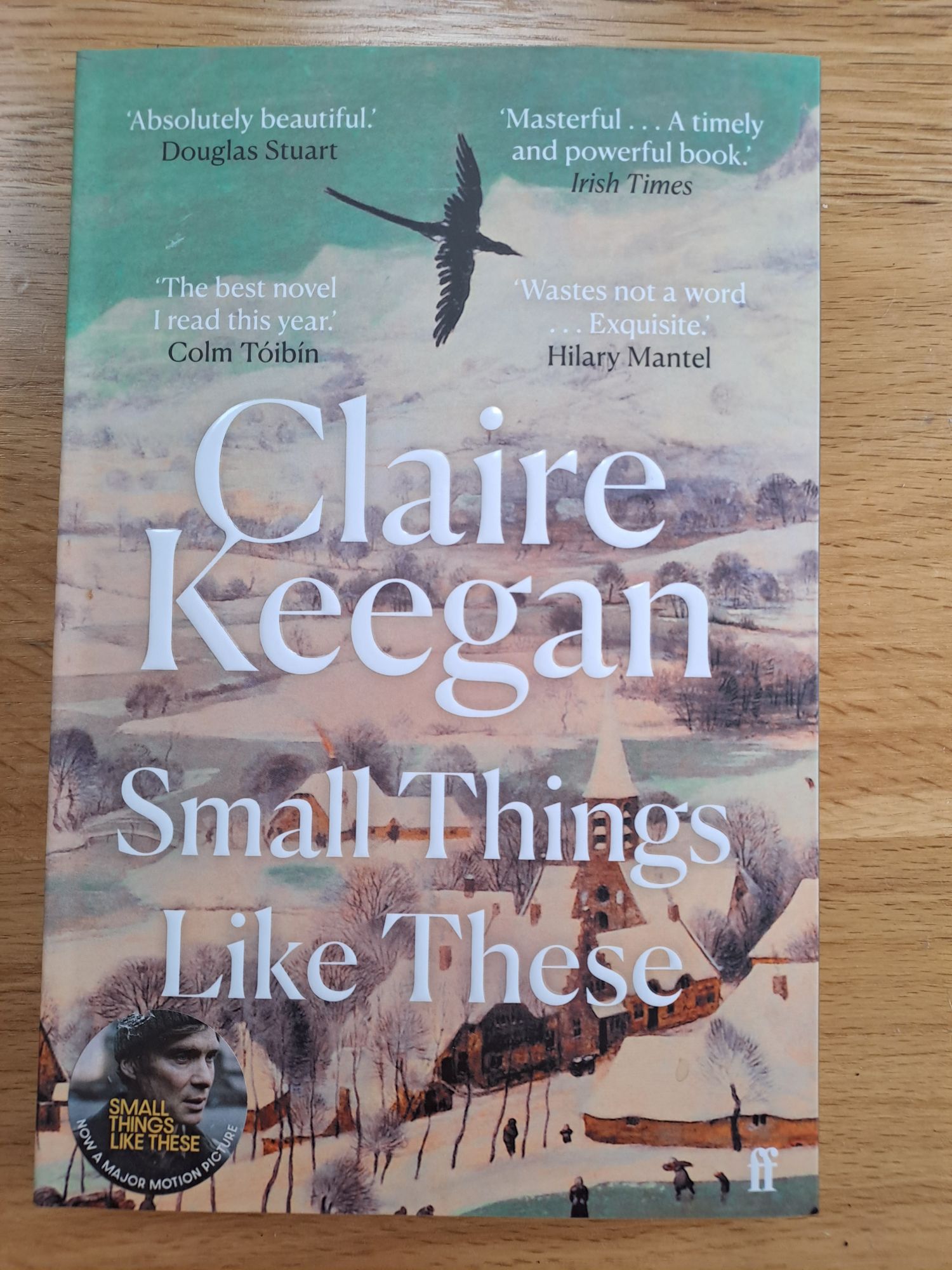
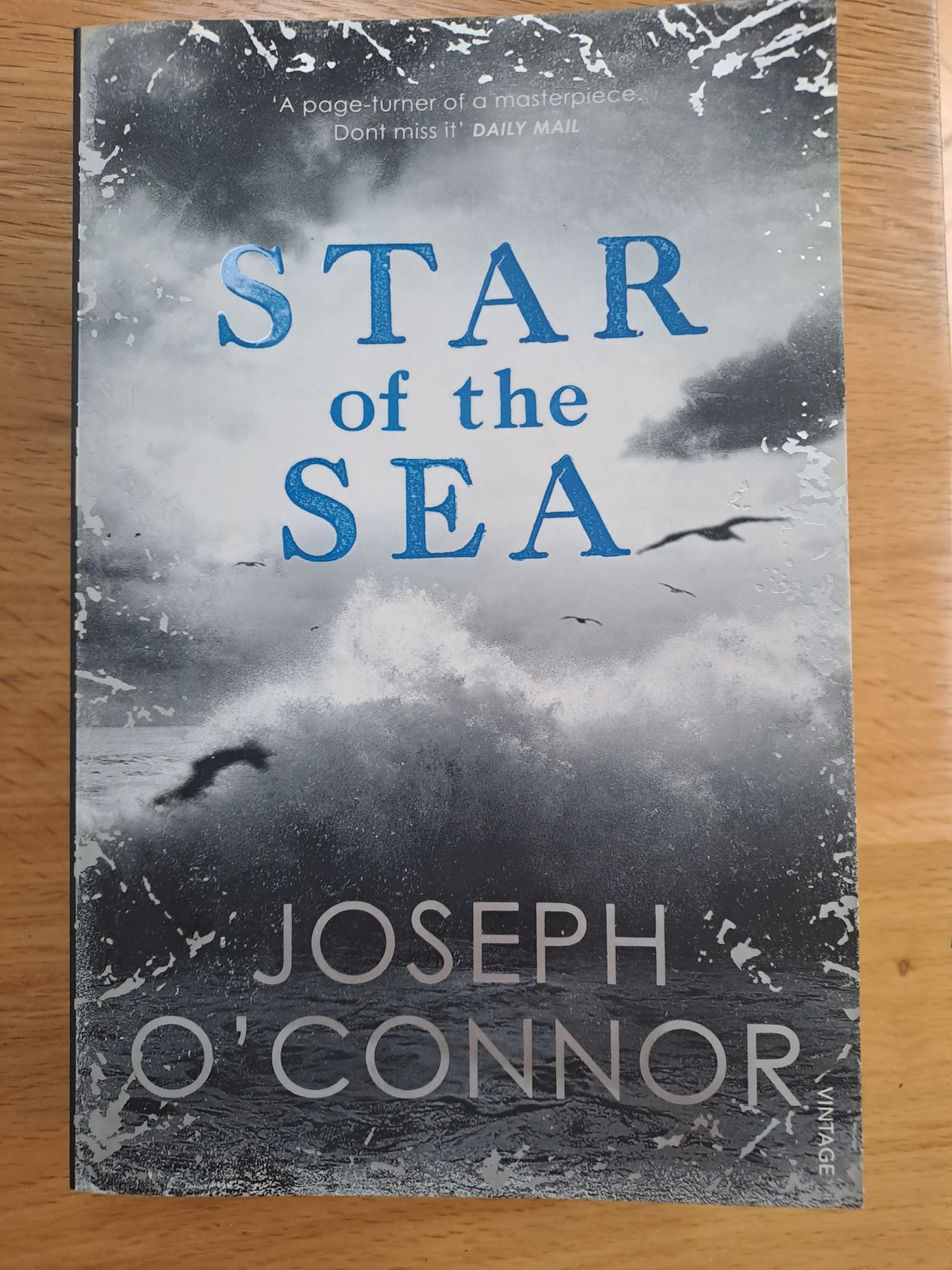
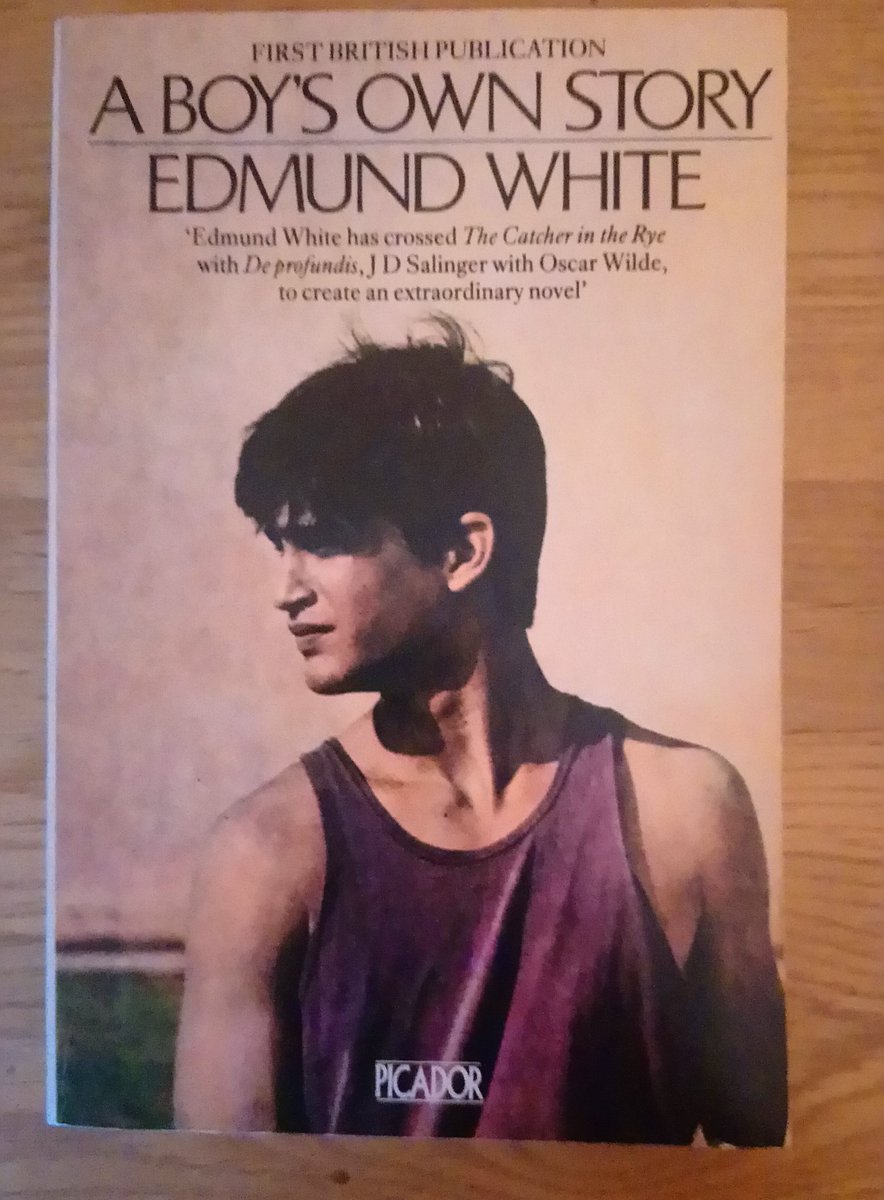
It’s been in my mind for a while to rejuvenate my interest in literature but last week I had two specific triggers. One was the news that Amazon has opened a dedicated website in Ireland. I view that as a trigger not in a positive way but because it will make life even harder for our excellent local bookshop in Maynooth so I felt I should do more to support them. The other trigger was that the Irish Times published a list of the “best” 100 Irish novels of the 21st Century. When I saw I had only read a few of them, and feel I should read more contemporary literary fiction emanating from Ireland, I decided I should use the list as a guide to help me get back into a reading habit. Anyway, I went to the bookshop last week and bought these six to start with:

These aren’t the top six, by the way. They’re just the ones that caught my fancy while I was browsing in the store.

I’m going to start with Claire Keegan’s novella Foster, as it was this work that inspired the beautiful Irish language film An Cailín Ciúin which I blogged about here. It’s quite short, so it should provide me with a relatively gentle re-introduction to reading. I have’t decided in what sequence I will read the others. It remains to be seen when I can get another six let alone how long it will take for me to read all the books on the list!

Any comments on these books, or indeed any others either on the top 100 list or not would be welcome!

A Poem for St David’s Day

Posted in Poetry with tags , , , , on March 1, 2025 by telescoper
Daffodils photographed yesterday at Maynooth University

It’s St David’s Day so, notwithstanding the fact that I’ve just watched Leinster beat Cardiff 42-24 at Rugby,

Dydd Gŵyl Dewi Hapus!

On this day I usually post a poem by a Welsh poet. This, by Dylan Thomas, which was published in 1936 and seems to me to be rather topical, featured in the concert I went to about a month ago.

The hand that signed the paper felled a city;
Five sovereign fingers taxed the breath,
Doubled the globe of dead and halved a country;
These five kings did a king to death.

The mighty hand leads to a sloping shoulder,
The finger joints are cramped with chalk;
A goose's quill has put an end to murder
That put an end to talk.

The hand that signed the treaty bred a fever,
And famine grew, and locusts came;
Great is the hand that holds dominion over
Man by a scribbled name.

The five kings count the dead but do not soften
The crusted wound nor pat the brow;
A hand rules pity as a hand rules heaven;
Hands have no tears to flow.

Aubade – Louis MacNeice

Posted in Poetry with tags , , , on February 11, 2025 by telescoper
Having bitten on life like a sharp apple 
Or, playing it like a fish, been happy,

Having felt with fingers that the sky is blue,
What have we after that to look forward to?

Not the twilight of the gods but a precise dawn
of sallow and grey bricks, and newsboys crying war.

by Louis MacNeice (1907-1963)

The Celestial Stranger – Thomas Traherne

Posted in History, Music, Poetry with tags , , on February 2, 2025 by telescoper

I promised yesterday that I would post the poem that gives its title to the song cycle, The Celestial Stranger, which was performed at the National Concert Hall on Friday night, so here it is as it appeared in the programme:

It’s very interesting to see such thoughts expressed in the mid-17th Century!

Thomas Traherne is an interesting poet in many ways and the associated story of his poetical manuscripts is strange and fascinating. The son of  a cobbler, Traherne was a devoutly religious man who lived most of his short life (1637-1674) in relative obscurity as a clergyman and theologian. He was a prolific writer of both prose and poetry, but very little of his work was published during his lifetime. A vast number of handwritten manuscripts survived his death, however, and many of these remained in the safekeeping of a local family in his native Herefordshire. However, in 1888 the estate of this family was wound up, sold, and the manuscripts became dispersed. Eventually, in 1897, one set of papers was  accidentally discovered in a bookstall. Traherne’s first volume of verse was published in 1903 and a second collection followed in 1908.

When these poems finally found their way into the literary world they were greeted with astonishment as well as deep appreciation and they were widely  influential: T.S. Eliot was a great admirer of Traherne, as was Dorothy L Sayers. There are also truly wonderful musical settings of some of Traherne’s poetry made by a young Gerald Finzi in his cantata Dies Natalis.

Over the years further manuscripts  have also come to light – literally, in one case, because in 1967 another lost Traherne manuscript was found, on fire, in a  rubbish dump and rescued in the nick of time! As late as 1997 more works by Traherne were discovered among 4,000 manuscripts in the Library of Lambeth Palace, the London residence of the Archbishop of Canterbury. The Lambeth manuscripts, from which the above poem is taken, are mostly prose writings, actually, but there are many poems in there too.

Traherne is sometimes described as the last metaphysical poet. However, it seems to me he might equally be described as the first romantic poet. The themes he tackles – love of nature and loss of childhood innocence – and his visionary, rhapsodic style have as much in common with William Blake and, especially, William Wordsworth as they do with better known metaphysical poets such as John Donne.

Cut – Sylvia Plath

Posted in Poetry with tags , , , on January 29, 2025 by telescoper
What a thrill -
My thumb instead of an onion.
The top quite gone
Except for a sort of hinge

Of skin,
A flap like a hat,
Dead white.
Then that red plush.

Little pilgrim,
The Indian's axed your scalp.
Your turkey wattle
Carpet rolls

Straight from the heart.
I step on it,
Clutching my bottle
Of pink fizz. A celebration, this is.
Out of a gap
A million soldiers run,
Redcoats, every one.

Whose side are they on?
O my
Homunculus, I am ill.
I have taken a pill to kill

The thin
Papery feeling.
Saboteur,
Kamikaze man -

The stain on your
Gauze Ku Klux Klan
Babushka
Darkens and tarnishes and when
The balled
Pulp of your heart
Confronts its small
Mill of silence

How you jump -
Trepanned veteran,
Dirty girl,
Thumb stump.

by Sylvia Plath (1932-1963)