When chill November's surly blast
Made fields and forests bare,
One ev'ning, as I wander'd forth
Along the banks of Ayr,
I spied a man, whose aged step
Seem'd weary, worn with care;
His face was furrow'd o'er with years,
And hoary was his hair.

"Young stranger, whither wand'rest thou?"
Began the rev'rend sage;
"Does thirst of wealth thy step constrain,
Or youthful pleasure's rage?
Or haply, prest with cares and woes,
Too soon thou hast began
To wander forth, with me to mourn
The miseries of man.

"The sun that overhangs yon moors,
Out-spreading far and wide,
Where hundreds labour to support
A haughty lordling's pride; -
I've seen yon weary winter-sun
Twice forty times return;
And ev'ry time has added proofs,
That man was made to mourn.

"O man! while in thy early years,
How prodigal of time!
Mis-spending all thy precious hours-
Thy glorious, youthful prime!
Alternate follies take the sway;
Licentious passions burn;
Which tenfold force gives Nature's law.
That man was made to mourn.

"Look not alone on youthful prime,
Or manhood's active might;
Man then is useful to his kind,
Supported in his right:
But see him on the edge of life,
With cares and sorrows worn;
Then Age and Want - oh! ill-match'd pair -
Shew man was made to mourn.

"A few seem favourites of fate,
In pleasure's lap carest;
Yet, think not all the rich and great
Are likewise truly blest:
But oh! what crowds in ev'ry land,
All wretched and forlorn,
Thro' weary life this lesson learn,
That man was made to mourn.

"Many and sharp the num'rous ills
Inwoven with our frame!
More pointed still we make ourselves,
Regret, remorse, and shame!
And man, whose heav'n-erected face
The smiles of love adorn, -
Man's inhumanity to man
Makes countless thousands mourn!

"See yonder poor, o'erlabour'd wight,
So abject, mean, and vile,
Who begs a brother of the earth
To give him leave to toil;
And see his lordly fellow-worm
The poor petition spurn,
Unmindful, tho' a weeping wife
And helpless offspring mourn.

"If I'm design'd yon lordling's slave,
By Nature's law design'd,
Why was an independent wish
E'er planted in my mind?
If not, why am I subject to
His cruelty, or scorn?
Or why has man the will and pow'r
To make his fellow mourn?

"Yet, let not this too much, my son,
Disturb thy youthful breast:
This partial view of human-kind
Is surely not the last!
The poor, oppressed, honest man
Had never, sure, been born,
Had there not been some recompense
To comfort those that mourn!

"O Death! the poor man's dearest friend,
The kindest and the best!
Welcome the hour my aged limbs
Are laid with thee at rest!
The great, the wealthy fear thy blow
From pomp and pleasure torn;
But, oh! a blest relief for those
That weary-laden mourn!"
by Robert Burns (1759-1796); in case you hadn’t realised, tonight is Burns Night, marking the Poet’s birthday on 25th January 1759.
Greenland's icy mountains are fascinating and grand,
And wondrously created by the Almighty's command;
And the works of the Almighty there's few can understand:
Who knows but it might be a part of Fairyland?

Because there are churches of ice, and houses glittering like glass,
And for scenic grandeur there's nothing can it surpass,
Besides there's monuments and spires, also ruins,
Which serve for a safe retreat from the wild bruins.

And there's icy crags and precipices, also beautiful waterfalls,
And as the stranger gazes thereon, his heart it appals
With a mixture of wonder, fear, and delight,
Till at last he exclaims, Oh! what a wonderful sight!

The icy mountains they're higher than a brig's topmast,
And the stranger in amazement stands aghast
As he beholds the water flowing off the melted ice
Adown the mountain sides, that he cries out, Oh! how nice!

Such sights as these are truly magnificent to be seen,
Only that the mountain tops are white instead of green,
And rents and caverns in them, the same as on a rugged mountain side,
And suitable places, in my opinion, for mermaids to reside.

Sometimes these icy mountains suddenly topple o'er
With a wild and rumbling hollow-starting roar;
And new peaks and cliffs rise up out of the sea,
While great cataracts of uplifted brine pour down furiously.

And those that can witness such an awful sight
Can only gaze thereon in solemn silence and delight,
And the most Godfearless man that hath this region trod
Would be forced to recognise the power and majesty of God.

Oh! how awful and grand it must be on a sunshiny day
To see one of these icy mountains in pieces give way!
While, crack after crack, it falls with a mighty crash
Flat upon the sea with a fearful splash.

And in the breaking up of these mountains they roar like thunder,
Which causes the stranger no doubt to wonder;
Also the Esquimaux of Greenland betimes will stand
And gaze on the wondrous work of the Almighty so grand.

When these icy mountains are falling, the report is like big guns,
And the glittering brilliancy of them causes mock-suns,
And around them there's connected a beautiful ring of light,
And as the stranger looks thereon, it fills his heart with delight.

Oh! think on the danger of seafaring men
If any of these mighty mountains where falling on them;
Alas! they would be killed ere the hand of man could them save
And, poor creatures, very likely find a watery grave!

'Tis most beautiful to see and hear the whales whistling and blowing,
And the sailors in their small boats quickly after them rowing,
While the whales keep lashing the water all their might
With their mighty tails, left and right.

In winter there's no sunlight there night or day,
Which, no doubt, will cause the time to pass tediously away,
And cause the Esquimaux to long for the light of day,
So as they will get basking themselves in the sun's bright array.

In summer there is perpetual sunlight,
Which fill the Esquimaux's hearts with delight;
And is seen every day and night in the blue sky,
Which makes the scenery appear most beautiful to the eye.

During summer and winter there the land is covered with snow,
Which sometimes must fill the Esquimaux' hearts with woe
As they traverse fields of ice, ten or fifteen feet thick,
And with cold, no doubt, their hearts will be touched to the quick.

And let those that read or hear this feel thankful to God
That the icy fields of Greenland they have never trod;
Especially while seated around the fireside on a cold winter night,
Let them think of the cold and hardships Greenland sailors have to fight.
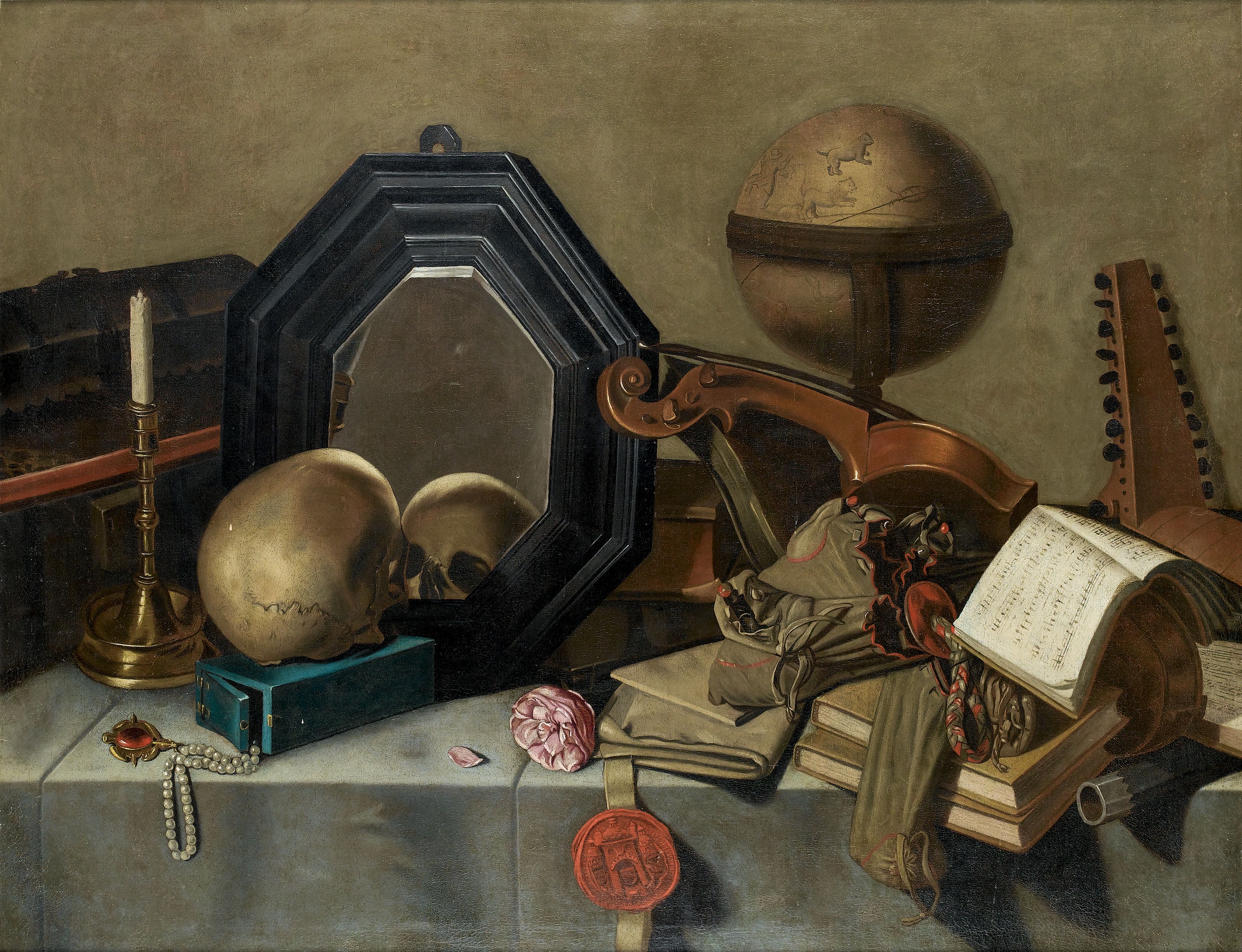
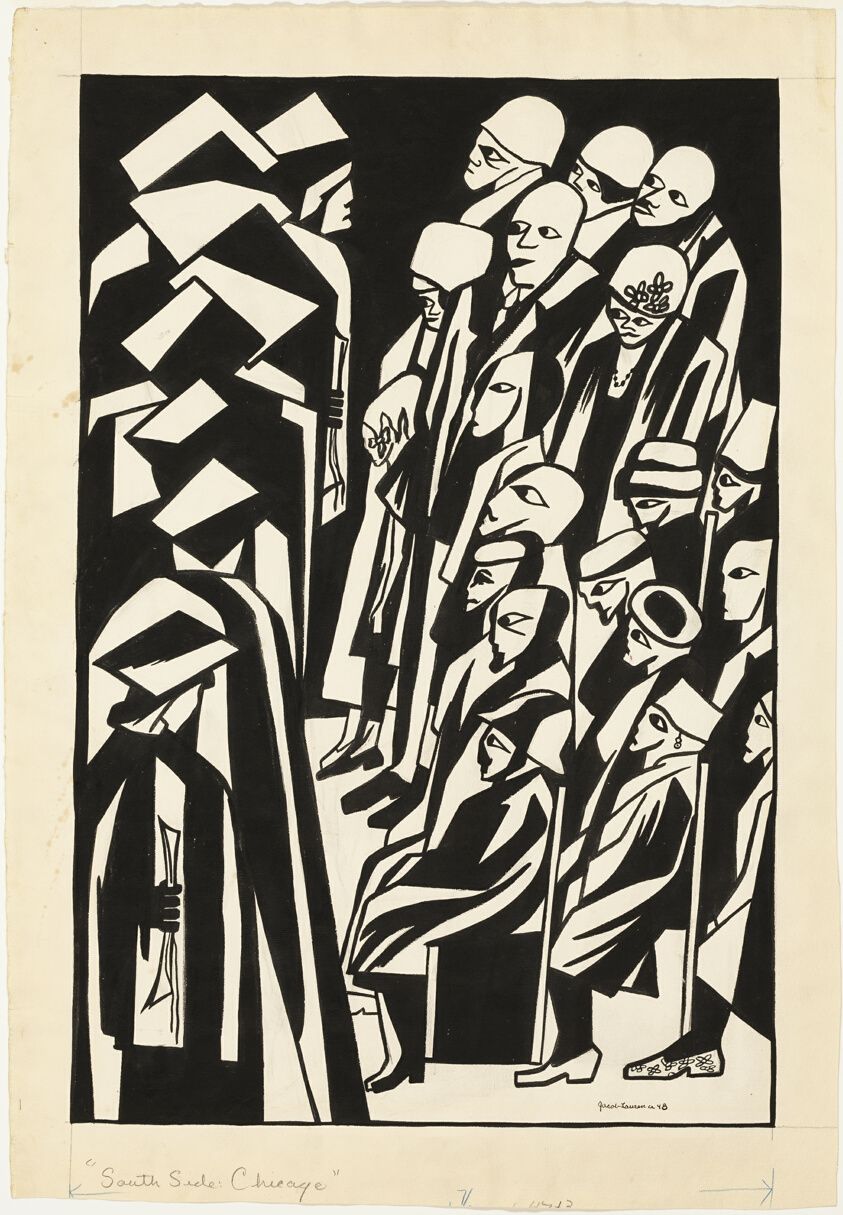
I don’t know precisely which picture the poet is referring to for January in his calendar, nor which artist, but it it is undoubtedly an example of a Vanitas or Memento Mori, a genre symbolizing the transience of life, the futility of pleasure, and the certainty of death, and thus the vanity of ambition and all worldly desires. The paintings involved still life imagery of items suggessting the transitory nature of life.
A couple of examples are here:
Between them you find all the elements mentioned in the poem: the skull represents death, the flowers impermanence, the coins personal wealth and the other items worldly knowledge and pleasure. There’s an interesting WordPress blog about the symbolism this genre here:
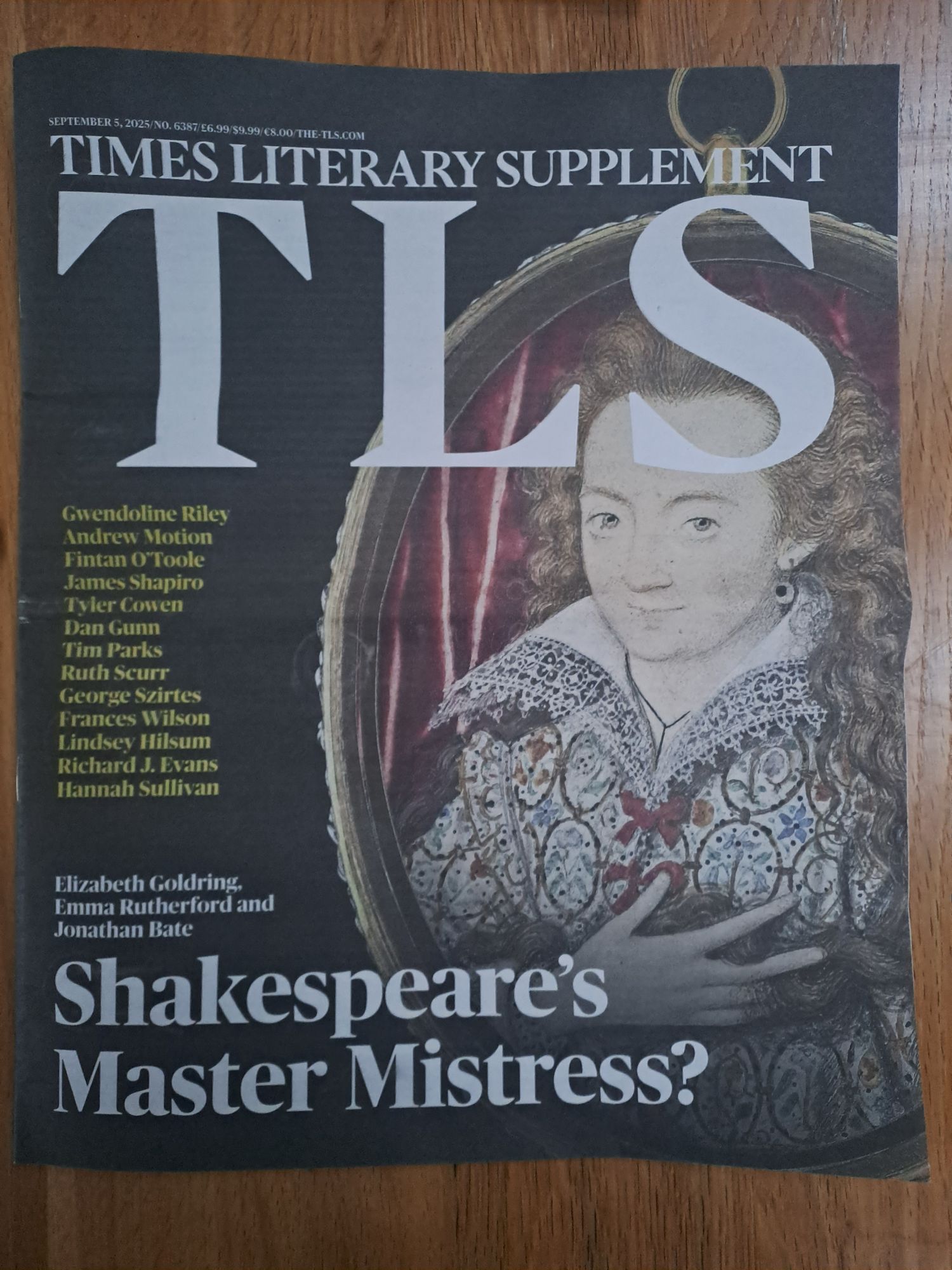
Today is National Poetry Day in the UK and Ireland but, instead of posting a poem like I usually do on this occasion, I thought I’d do a bit of reflecting on Shakespeare’s Sonnets. What prompted this is an article in the Times Literary Supplement I mentioned in a post on Monday. The cover picture shows a newly-discovered miniature by Nicholas Hilliard that is claimed to be of Henry Wriothesley, 3rd Earl of Southampton, and patron of William Shakespeare:
On the 20th May 1609, a collection of 154 Sonnets by William Shakespeare was published, which arguably represents at least as high a level of literary achievement as his plays. The “Master Mistress” in the title of the TLS article is a reference to Sonnet No. 20 in the collection, published on 20th May 1609, of 154 Sonnets by William Shakespeare, which arguably represents at least as high a level of literary achievement as his plays. Here is Sonnet No. 20 in the form usually printed nowadays:
A woman’s face with nature’s own hand painted,
Hast thou the master mistress of my passion,
A woman’s gentle heart but not acquainted
With shifting change as is false women’s fashion,
An eye more bright than theirs, less false in rolling:
Gilding the object whereupon it gazeth,
A man in hue all hues in his controlling,
Which steals men’s eyes and women’s souls amazeth.
And for a woman wert thou first created,
Till nature as she wrought thee fell a-doting,
And by addition me of thee defeated,
By adding one thing to my purpose nothing.
     But since she pricked thee out for women’s pleasure,
     Mine be thy love and thy love’s use their treasure.
The somewhat androgynous facial appearance of Henry Wriothesley – seen in other portraits – has led some to suggest that the above Sonnet was addressed to him. Others think that the poem was addressed to a young male actor (a “boy player“) who played female roles on the stage, as was usual in Shakespeare’s time. It was illegal for women to perform on stage until 1660.
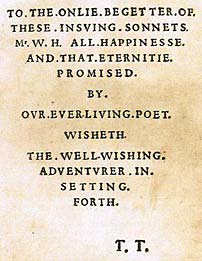
The dedication in the First Folio edition of the Sonnets, published in 1609, is shown on the left. The initials “T.T.” are accepted to stand for the name of the publisher Thomas Thorpe but the identity of “Mr. W.H.” is unknown. Of course “W.H.” is a reversal of the “H.W. ” that could be Henry Wriothesley, but would the publisher really use “Mr” to refer to a member of the nobility? Another curiosity is the prevalence of full stops, which is more characteristic of inscriptions carved in stone than on printed pages.
The First Folio edition was the only edition of the Sonnets published in Shakespeare’s lifetime and the circumstances of its publication remain uncertain to this day and not only because of identity of “Mr W.H.” For example, if it was authorised by Shakespeare, why did Shakespeare himself not write the dedication? Some have argued that it must have been published posthumously, so Shakespeare must have been dead in 1609, whereas most sources say he died in 1616.
Most of the poems (126 out of 154) contain poetic statements of love for a young man, often called the “Fair Youth”. However, there is also a group of sonnets addressed to the poet’s mistress, an anonymous “dark lady”, which are far much more sexual in content than those addressed to the “Fair Youth”. The usual interpretation of this is that the poet’s love for the boy was purely Platonic rather than sexual in nature. If Mr W.H. was a boy player then he would have been very young indeed, i.e. 13-17 years old…
Anyway, it was certainly a physical attraction: verse after verse speaks of the young man’s beauty. The first group of sonnets even encourage him to get married and have children so his beauty can continue and not die with his death. Sonnet 20 laments that the youth is not a woman, suggesting that this ruled out any sexual contact. These early poems seem to suggest a slightly distant relationship between the two as if they didn’t really know each other well. However, as the collection goes on the poems become more and more intimate and it’s hard for me to accept that there wasn’t some sort of involvement between the two. Although homosexual relationships were not officially tolerated in 17th Century England, they were not all that rare especially in the theatrical circles in which Shakespeare worked.
Oscar Wilde wrote a story called “A Portrait of Mr. W.H.” which suggests he is a young actor by the name of “Will Hughes”. The main evidence for this is Sonnet 20.
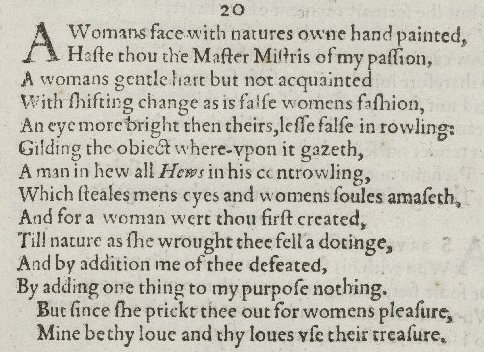
Look at the First Folio version:
The initial capital and emphasis of “Hews” seen in line 7 is very unusual and suggests that it is a joke (one of many in this poem), in the form of a pun on the preceding “hew”. It is suggested that “Hews” is actually “Hughes”. Ingenious, but I’m not convinced. There were many other meanings of “hew” in use in Shakespeare’s time; it was a variant spelling of “ewe” for example.
We’ll probably never know who Mr W.H. was – presumably not Smith – or indeed what was the real nature of his relationship to Shakespeare but we do not need to know that to read and enjoy the poems.
I do have a fundamental misgiving, though, about the assumption that the “Onlie begetter” of these sonnets means the person to whom they are addressed, or who inspired them. That assumption entirely disregards the “Dark Lady” sequence. There are at least two addressees so neither can be the only begetter, if that is what begetter is supposed to mean.
I think it more likely Mr W.H., whoever he was, is the person who caused the collection to be created and/or published, perhaps by sponsoring the First Folio. It’s also possible that these poems may have been commissioned over the years by Mr. W.H. and/or others – experts think they were written over a period of at least 16 years – and only published together at much later date. It is indeed said that some of verses were circulated in private well before they were published, though they may perhaps have been edited or otherwise tidied up for the 1609 edition. Perhaps Shakespeare supplemented his income by writing sonnets to order?
This line of thought also took me to another question: why does everyone assume that all 126 of the “Fair Youth” sonnets are about the same person? That person is never named and only occasionally described. Some of the 126 are thematically linked, but overall it is a collection rather than a sequence. Some are humorous and some are very serious indeed. Some are downright cryptic. I think it quite possible, especially if the poems really were written over a period of 16 years, that they not all addressed to the same individual. Once you accept the evident truth that there is more than one recipient, then why not more than two?
Some have taken this even further and asked: do we really know that all 154 sonnets were written by the same person? The same question is asked about Shakespeare’s work generally. Was there really one person behind his plays, or were they collaborative efforts.
Finally, I wonder for what purpose these sonnets were written. Were they actually sent to the addressee(s) as expressions of love, like letters, or were they private meditations, like one might write in a journal?
I don’t suppose we’ll ever really know the answers to these questions, but I find it fascinating that the origin of such a famous collection is enshrouded in so many mysteries! I promise to post more of them here in due course.
Regular readers of this blog know that I have a habit of reading the Times Literary Supplement which I buy not only for the book reviews, but also for its excellent crossword. I’ve even won the crossword competition prize a few times. You can find an assortment of posts related to the TLShere.
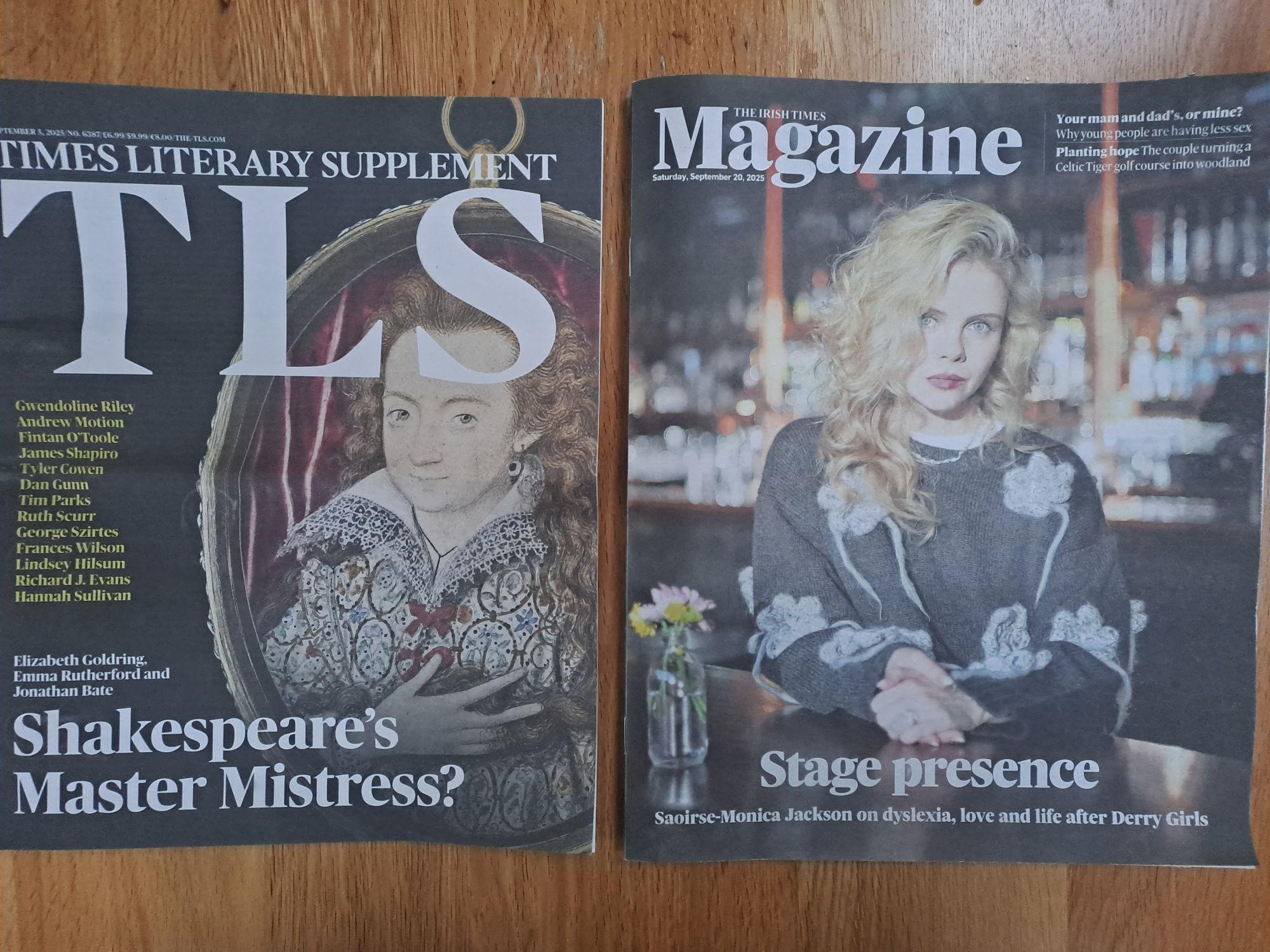
Recently the Times Literary Supplement underwent something of a makeover, changing the design and switching from a weekly to fortnightly publication. The first new-style issue was published on September 5th. Here is the cover:
The cover article is about the possible identity of the “Mr W.H.” to whom William Shakespeare dedicated his collection of Sonnets; see here. I may write something about that in the not too distant future, as I’ve been reading these again recently.
Anyway, my subscription definitely specifies a “weekly print edition delivered to my door”, so that has gone out the window. I wasn’t best pleased to have the terms of my subscription changed unilaterally like that. Of course I could just read the online edition, but I don’t like reading too much on a screen. I’ve never adapted to reading books on a Kindle either. And crosswords are impossible that way. The old format TLS was rather like a tabloid newspaper, which I found easy to read and handle, and of 28 pages per edition. The new format has 48 pages (which is not 2 times 28) and is rather cramped and crowded and with heavier paper to make it look there’s more to it than there is.
The look and feel they seem to have gone for is “Generic Weekend Supplement”, as you can see if you compare it with last week’s Irish Times Weekend Magazine:
The latter supplement has 52 pages instead of 48 and has more advertisements inside but is otherwise similar.
So why mention this? Well one thing is that the number of crosswords provided by the TLS per year has now reduced by half, which to me reduces the value of the subscription significantly. Moreover, the first issue of the new style supplement was published on September 5th, but didn’t arrive through my letterbox until 24th September. That’s 19 days. The deadline for entries to the crossword competition was September 15th.
Now the old-style issues used to take about 10 days to cross the Irish Sea, which I thought was bad, but 19 days is just awful. One theory of this is that the TLS launches issues with the same momentum, so that the new edition, having about twice the mass, has half the speed and therefore takes roughly twice as long to reach the subscriber. Checking the envelope, incidentally, I see that it was postmarked Bratislava. There must be a very cheap – but slow – way of sending post from the UK to Ireland via Slovakia.
Anyway, I’ve decided not to renew my subscription to the TLS, as I did with Private Eye recently. I cancelled my subscription to the Eye not because I was offended by anything in it, but because it was taking a ridiculously long time to arrive. I can still pick up copies of both publications in the local newsagent. I’m sure Paddy will keep copies of both to one side if I ask him.
Alternatively, I might switch from the TLS to the London Review of Books or some similar. Does anyone have recommendations?
So are you to my thoughts as food to life,
Or as sweet-season'd showers are to the ground;
And for the peace of you I hold such strife
As 'twixt a miser and his wealth is found.
Now proud as an enjoyer, and anon
Doubting the filching age will steal his treasure;
Now counting best to be with you alone,
Then better'd that the world may see my pleasure:
Sometime all full with feasting on your sight,
And by and by clean starved for a look;
Possessing or pursuing no delight
Save what is had, or must from you be took.
   Thus do I pine and surfeit day by day,
   Or gluttoning on all, or all away.
Your love and pity doth the impression fill
Which vulgar scandal stamp’d upon my brow;
For what care I who calls me well or ill,
So you o’er-green my bad, my good allow?
You are my all the world, and I must strive
To know my shames and praises from your tongue;
None else to me, nor I to none alive,
That my steel’d sense or changes right or wrong.
In so profound abysm I throw all care
Of others’ voices, that my adder’s sense
To critic and to flatterer stopped are.
Mark how with my neglect I do dispense:
    You are so strongly in my purpose bred
    That all the world besides methinks are dead.
I find myself returning once again to Shakespeare’s sonnets, especially to the sequence of 126 poems that the poet addressed to a “Fair Youth“. This one is written in quite difficult language (for me) with some obscure words and phrases such as “adder’s sense”, “o’er-green” and “steel’d sense”. It’s almost as if parts of it are written in code. Nevertheless the overall meaning of the poem is clear: it revolves around the beautiful “You are my all the world” in line 5, shining out through the thickets, with “all the world” repeated in the last line for extra effect. The poet is saying that nobody’s opinion of him matters at all except that of his beloved. Know the feeling?
The last episode of Simon Schama‘s BBC TV series A History of Britain, called “The Two Winstons”, follows the story of the Second World War and its immediate aftermath through the eyes of two very different Englishmen, George Orwell and Winston Churchill. Near the end of the programme Schama talks about the year 1948, when a very sick Orwell wrote his last major novel, Nineteen Eighty-Four. I’ve reconstructed this section from the subtitles on my DVD of the series.
It starts with a direct quote from 1984
In our world there will be no love but the love of Big Brother, no laughter but that of triumph. No art, no science, no literature, no enjoyment, but always and only, Winston, there will be the thrill of power. If you want a picture of the future, imagine a boot stamping on a human face forever.
It continues with the voice of Simon Schama as narrator
To clear his head of the static hum of postwar London, Orwell went as far away as he could without actually leaving Britain, to the very edge of the kingdom – the Hebridean island of Jura. No electricity, no telephone, post twice a week, maybe.
And it was here, in the remotest cottage he could find, typing in bed with the machine on his knees, knowing he hadn’t long to live, that Orwell concentrated on what mattered most to him, and to Britain – the fate of freedom in the age of superpowers. As Churchill issued his grim warnings, Orwell created a common or garden plain man’s Winston – Winston Smith. The year was 1948.
When we think of 1984, most of us think of the tyranny of drabness and mass obedience ruled by Big Brother, a world of doublespeak where war is peace and lies are truth. But Orwell’s last masterpiece is most powerful and most lyrical when it describes Winston’s resistance to dictatorship, a guerrilla action fought, not with guns and barricades, but by literally taking liberties, a walk in the country, an act of love, the singing of an old nursery rhyme.
Winston Smith did all these forbidden things, prompted by a dim memory of a time when they were absolutely normal. The last refuge of freedom against Big Brother is memory. The greatest horror of 1984 is the dictator’s attempt to wipe out history.
I thought of the last sentence when I read about Donald Trump’s plan to rewrite American history for the 250th anniversary of the Declaration of Independence, but that’s just one example amid the rise of authoritarian regimes around the world. In the context of the TV programme, Schama was making a case for the importance of history as a discipline, but there is something else important to say: we should not forget the past but, perhaps even more importantly, neither should we forget about the future we wanted to see. The present is not the future I hoped for when I was younger, even in 1984, but the story isn’t over yet.
The views presented here are personal and not necessarily those of my employer (or anyone else for that matter).
Feel free to comment on any of the posts on this blog but comments may be moderated; anonymous comments and any considered by me to be vexatious and/or abusive and/or defamatory will not be accepted. I do not necessarily endorse, support, sanction, encourage, verify or agree with the opinions or statements of any information or other content in the comments on this site and do not in any way guarantee their accuracy or reliability.