Archive for the Literature Category

Two Poems by Sir Thomas Wyatt

Posted in History, Poetry with tags , , , , , , , on April 3, 2024 by telescoper

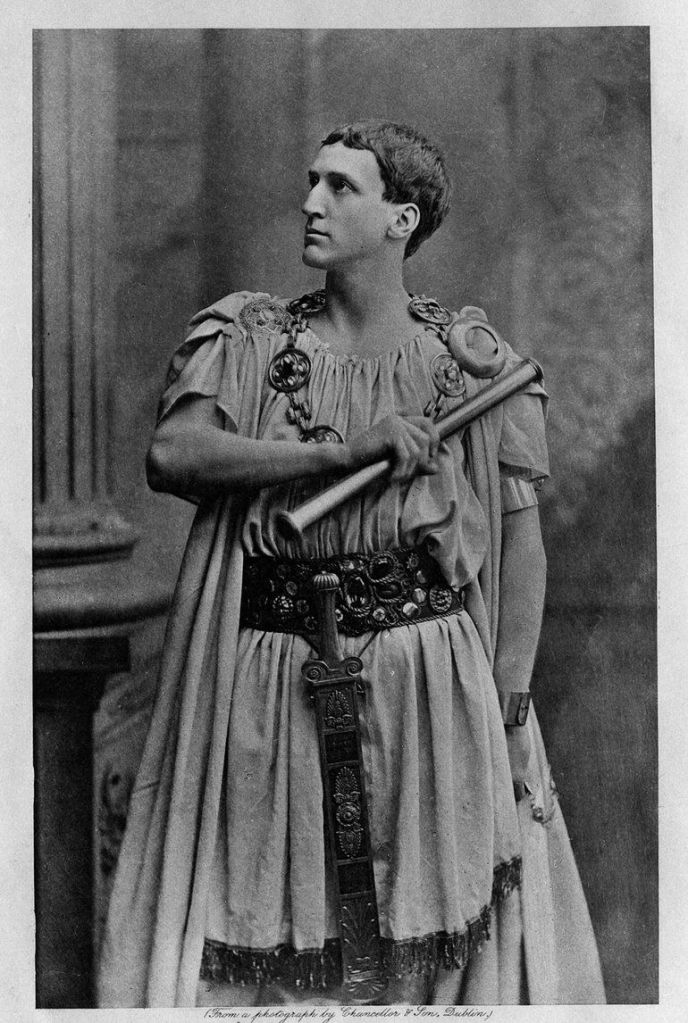
Another character who appears in Hilary Mantel’s novel Wolf Hall is Sir Thomas Wyatt (1503-1542) who was a diplomat and member of the Court of Henry VIII, as well as being a fine poet. I thought I would post two of his famous poems.

The first is a sonnet, written some time in the 1530s, is ostensibly a (loose) translation of Petrarch’s Una Candida Cerva and thus one of the first examples of a Petrarchan Sonnet written in English. That makes it interesting in its own right, but many people think that it is actually about Anne Boleyn. The use of hunting as a metaphor for courtly love was widespread and, despite being married, Wyatt seems to have had his eye on Anne Boleyn. As far as is known, however, they didn’t have a sexual relationship. Wyatt wisely backed off when he realized he was competing with Henry VIII (thinly disguised as “Caesar”) in the penultimate line; Noli me tangere means “do not touch me” in Latin.

Whoso list to hunt, I know where is an hind,
But as for me, hélas, I may no more.
The vain travail hath wearied me so sore,
I am of them that farthest cometh behind.
Yet may I by no means my wearied mind
Draw from the deer, but as she fleeth afore
Fainting I follow. I leave off therefore,
Sithens in a net I seek to hold the wind.
Who list her hunt, I put him out of doubt,
As well as I may spend his time in vain.
And graven with diamonds in letters plain
There is written, her fair neck round about:
Noli me tangere, for Caesar’s I am,
And wild for to hold, though I seem tame.

Wyatt was in fact confined to the Tower of London in 1536 on suspicion of having committed adultery with Anne Boleyn; adultery with the King’s wife was considered treason, a capital offence. While in the Tower, where he witnessed executions, possibly including that of Anne Boleyn herself and others accused of treason with her, he wrote this other famous poem

Who list his wealth and ease retain,
Himself let him unknown contain.
Press not too fast in at that gate
Where the return stands by disdain,
For sure, circa Regna tonat.

The high mountains are blasted oft
When the low valley is mild and soft.
Fortune with Health stands at debate.
The fall is grievous from aloft.
And sure, circa Regna tonat.

These bloody days have broken my heart.
My lust, my youth did them depart,
And blind desire of estate.
Who hastes to climb seeks to revert.
Of truth, circa Regna tonat.

The bell tower showed me such sight
That in my head sticks day and night.
There did I learn out of a grate,
For all favour, glory, or might,
That yet circa Regna tonat.

By proof, I say, there did I learn:
Wit helpeth not defence too yerne,
Of innocency to plead or prate.
Bear low, therefore, give God the stern,
For sure, circa Regna tonat.

The repeated Latin phrase circa Regna tonat is usually translated “Thunder rolls around the Throne”, a reference to the dangerous temperament of the King.

Wyatt was not executed in 1536, but released after the intervention of none other than Thomas Cromwell. It seems he had a habit of sailing rather close to the wind, and was in and out of trouble with the King, being charged again with treason in 1541 and again released. He died, apparently of natural causes, in 1541, at the age of 39.

Wolf Hall by Hilary Mantel

Posted in History, Literature, Uncategorized with tags , , , , , , , on March 31, 2024 by telescoper

Still trying to use the spare time during my sabbatical to catch up on long-neglected reading, this Easter weekend – helped by the rainy weather – I finished Wolf Hall by Hilary Mantel, the first of her novels that I’ve read. This “historical novel” won the Booker Prize in 2009 and I understand was made into a play and a TV series, neither of which I have seen.

The novel is set in Tudor England in the reign of Henry VIII and revolves around Thomas Cromwell, who rose from lowly beginnings in Putney to be one of the powerful men in the country. Cromwell gets a surprisingly sympathetic treatment, at odds with most of the historical record which treats him largely as a cruel and unscrupulous character, undoubtedly clever but given to threats and torture if appeals to reason failed. From a 21st century perspective, it’s hard to find redeeming features in Cromwell. Or anyone else in this story, to be honest.

The historical events of the period covered by the book are dominated by Henry’s attempts to have his marriage of 24 years to Catherine of Aragon annulled so he could marry Anne Boleyn, along the way having himself declared the Supreme Governor of the Church in England, causing a split with Rome. Henry does marry Anne, and she bears him a daughter, destined to become Elizabeth I, though her second pregnancy ends in a miscarriage. The book ends in 1535 just after the execution of Thomas More, beheaded for refusing to swear the Oath of Supremacy.

(More was portrayed sympathetically in the play and film A Man For All Seasons though he was much disposed to persecution of alleged heretics, many of whom he caused to be burned at the stake for such terrible crimes as distributing copies of the Bible printed in English. Significant chunks of the penultimate chapter are lifted from the script of A Man For All Seasons but given a very different spin.)

Henry VIII is also portrayed in a somewhat flattering light; Anne Boleyn rather less so. Mary Tudor, Henry’s eldest daughter by Catherine of Aragon, cuts an unsurprisingly forlorn and intransigent. There are also significant appearances from other figures familiar from schoolboy history: Hugh Latimer, Cardinal Wolsey, and Thomas Cranmer; as well as those whose story is not often told, such as Mary Boleyn (Anne’s older sister). I have a feeling that Hilary Mantel was being deliberately courting controversy with her heterodox approach to characterization. She probably succeeded, as many professional historians are on record as hating Wolf Hall as much of it is of questionable accuracy and some is outright fiction.

Incidentally, one of the most negative reactions to this book that I’ve seen is from Eamon Duffy who is on record as detesting the historical figure of Thomas Cromwell and was “mystified by his makeover in Hilary Mantel’s Wolf Hall from a thuggish ruthless commoner to a thoughtful sensitive figure”. I mention this particularly because Eamon Duffy, an ecclesiastical historian, was my tutor when I was an undergraduate at Magdalene College, Cambridge.

On the other hand, Wolf Hall not meant to be a work of scholarly history: it is a novel and I think you have to judge it by the standards of whether it succeeds as a work of fiction. I would say that it does. Although rather long-winded in places – it’s about 640 pages long – it is vividly written and does bring this period to life with colour and energy, and a great deal of humour, while not shying away from the brutality of the time; the execution scenes are unflinchingly gruesome. The book may not be accurate in terms of actual history, but it certainly creates a credible alternative vision of the time.

It’s interesting that the title of this book is Wolf Hall when that particular place – the seat of the Seymour family – hardly figures in the book. However, one character does make a few appearances, Jane Seymour, who just a year after the ending of this book would become the third wife of Henry VIII. It also happened that Thomas Cromwell’s son, Gregory, married Jane’s sister, Elizabeth. I suppose I will have to read the next book in the trilogy, Bring Up The Bodies, to hear Mantel’s version of those events…

Good Friday – Edwin Morgan

Posted in Poetry with tags , , on March 29, 2024 by telescoper

by Edwin Morgan (1920-2010)

Lullaby – W.H. Auden

Posted in Poetry with tags , , , , on March 22, 2024 by telescoper

Lay your sleeping head, my love,
Human on my faithless arm;
Time and fevers burn away
Individual beauty from
Thoughtful children, and the grave
Proves the child ephemeral:
But in my arms till break of day
Let the living creature lie,
Mortal, guilty, but to me
The entirely beautiful.

Soul and body have no bounds:
To lovers as they lie upon
Her tolerant enchanted slope
In their ordinary swoon,
Grave the vision Venus sends
Of supernatural sympathy,
Universal love and hope;
While an abstract insight wakes
Among the glaciers and the rocks
The hermit’s carnal ecstasy.

Certainty, fidelity
On the stroke of midnight pass
Like vibrations of a bell,
And fashionable madmen raise
Their pedantic boring cry:
Every farthing of the cost,
All the dreaded cards foretell,
Shall be paid, but from this night
Not a whisper, not a thought,
Not a kiss nor look be lost.

Beauty, midnight, vision dies:
Let the winds of dawn that blow
Softly round your dreaming head
Such a day of welcome show
Eye and knocking heart may bless,
Find the mortal world enough;
Noons of dryness find you fed
By the involuntary powers,
Nights of insult let you pass
Watched by every human love.

by Wystan Hugh Auden (1907-1973)

A Poem for World Poetry Day: Black March – Stevie Smith

Posted in Poetry with tags , , , on March 21, 2024 by telescoper

I almost forgot that it is World Poetry Day  (March 21st). I’ve posted this before, but it seems apt for March: it is by Stevie Smith and is called  Black March.

I have a friend
At the end
Of the world.
His name is a breath

Of fresh air.
He is dressed in
Grey chiffon. At least
I think it is chiffon.
It has a
Peculiar look, like smoke.

It wraps him round
It blows out of place
It conceals him
I have not seen his face.

But I have seen his eyes, they are
As pretty and bright
As raindrops on black twigs
In March, and heard him say:

I am a breath
Of fresh air for you, a change
By and by.

Black March I call him
Because of his eyes
Being like March raindrops
On black twigs.

(Such a pretty time when the sky
Behind black twigs can be seen
Stretched out in one
Uninterrupted
Cambridge blue as cold as snow.)

But this friend
Whatever new names I give him
Is an old friend. He says:

Whatever names you give me
I am
A breath of fresh air,
A change for you.

by Stevie Smith (1902-1971)

Desktop – John J. Ronan

Posted in Poetry with tags , , on March 14, 2024 by telescoper

I’m a bit jetlagged and have a busy day ahead, but fortunately I found this interesting and vaguely relevant poem in an old copy of the TLS last night, so will share it in lieu of a proper post.

A Poem for St David’s Day

Posted in Poetry with tags , , , , on March 1, 2024 by telescoper

It’s St David’s Day today, so although I’m still Down Under and far from any daffodils, I wish you all a big

Dydd Gŵyl Dewi Hapus!


Gratuitous Picture of some Daffodils near the Maynooth University Library.

It has become a bit of a St David’s Day tradition on this this blog to post a piece of verse by the great Welsh poet R.S. Thomas. This is The Bright Field.

I have seen the sun break through
to illuminate a small field
for a while, and gone my way
and forgotten it. But that was the pearl
of great price, the one field that had
treasure in it. I realize now
that I must give all that I have
to possess it. Life is not hurrying

on to a receding future, nor hankering after
an imagined past. It is the turning
aside like Moses to the miracle
of the lit bush, to a brightness
that seemed as transitory as your youth
once, but is the eternity that awaits you.

Death Comes to Pemberley by P.D. James

Posted in Literature with tags , , , on February 27, 2024 by telescoper

The latest book on my reading list is Death Comes to Pemberley, by P.D. James, which was published in 2011. The author was 90 years old when she began writing it and in her author’s note she admits that the book gave her a chance to indulge herself by combining her flair as a mystery writer with a love of the books of Jane Austen. This book is a skillful pastiche of the style of Jane Austen set in the world of Pride and Prejudice; this is why I re-read that book before departing for Sydney. It has however taken longer than I thought to get around to reading the P.D. James book as I have been rather busy.

It’s interesting to remark that Pride and Prejudice was actually written between 1796 and 1797, but not published until 1813 (and in a revised form). Jane Austen is a wonderful writer, with an elegant and witty style. It’s a hard act to follow, but P.D. James does a fine job. I’ll also remark that the original novel was written at the height of the Napoleonic Wars, and is set in England at a time when the threat of invasion from France was very real, but this barely registers in the plot.

I’ll let the author herself describe the setting

In Death Comes to Pemberley, I have chosen the earlier date of 1797 for the marriages of both Elizabeth and her older sister Jane, and the book begins in 1803 when Elizabeth and Darcy have been happily together for six years and are preparing for the annual autumn ball which will take place the next evening.

With their guests, which include Jane and her husband Bingley, they have been enjoying an informal family dinner followed by music and are preparing to retire for the night when Darcy sees from the window a chaise being driven at seed down the road from the wild woodlands. When the galloping horses have been pulled to a standstill, Lydia Wickham, Elizabeth’s youngest sister, almost falls from the chaise, hysterically screaming that her husband has been murdered. Darcy organises a search party and, with the discovery of a blood-smeared corpse in the woodland, the peace both of the Darcys and of Pemberley is shattered as the family becomes involved in a murder investigation.

P.D. James, Author’s Note, Death Comes to Pemberley

As this is a mystery novel, I will refrain from saying too much about the plot as that would spoil the book for readers. I will say that it is unusual for P.D. James that it isn’t a detective story as such because there isn’t actually a detective. The mystery of the murder is solved in the end by a spontaneous confession.

I get the impression that P.D. James wanted to use this book to add her own explanation of some of the events in Pride and Prejudice so there is a lengthy section at the end that functions to explain the back story. Most of the characters from Pride and Prejudice appear in the present book as bystanders, but they are well described and the overall atmosphere of the book is convincing. Darcy and Elizabeth have changed, but I imagine six years of marriage will do that. Although it’s a pastiche, this book is not at all superficial; the author seems to understand Austen’s characters and, rather than being merely imitative, the result is a genuine homage.

P.D. James passed away in 2014 at the age of 94. I bought Death Comes to Pemberley in 2014 too. The fact that it has taken me a decade to get around to reading it tells you something of how far I had got out of the reading habit. There’s also the point that I knew this was her last book and I was a bit reluctant to finish it knowing that there would be no more. Still, better late than never. I’m very glad I have read it at last as I enjoyed it greatly.

There’s something distinctively English about the novels of P.D. James, although that something is a something that clearly tends to polarize people. Some find her approach a bit too detached and genteel, some find it, “cosy”, snobbish and class-ridden, and some think that she was just an anachronism, harking back too much to the era of Agatha Christie and Dorothy L. Sayers. Yet others can’t understand the attraction of the genre at all. People are welcome to their opinions of course, but I think that the best detective fiction is not just about setting a puzzle for the reader to solve, but also posing questions about the nature of a society in which such crimes can happen. Far from being “cosy”, great crime writing actually unsettles complacent bourgeois attitudes. The solution of the mystery may offer us a form of comfort, but the questions exposed by the investigation do not go away. This is just as true for books set in the present as it is for those set two centuries ago in the world of stately homes and the threat of invasion from Napoleon.

In the Park – Gwen Harwood

Posted in Poetry with tags , , , on February 10, 2024 by telescoper

Victoria Park, Sydney

She sits in the park. Her clothes are out of date.
Two children whine and bicker, tug her skirt.
A third draws aimless patterns in the dirt
Someone she loved once passed by – too late

to feign indifference to that casual nod.
“How nice” et cetera. “Time holds great surprises.”
From his neat head unquestionably rises
a small balloon…”but for the grace of God…”

They stand a while in flickering light, rehearsing
the children’s names and birthdays. “It’s so sweet
to hear their chatter, watch them grow and thrive, ”
she says to his departing smile. Then, nursing
the youngest child, sits staring at her feet.
To the wind she says, “They have eaten me alive.”

by Gwen Harwood (1920-1995)

The Reinvention of Science

Posted in History, Literature, The Universe and Stuff with tags , , , , , on January 28, 2024 by telescoper

I’ve known about the existence of this new book for quite a long time – the first two of the authors are former collaborators of mine and I’m still in fairly regular touch with them – but I only received a copy a few weeks ago. Had I been less busy when it was in proof stage I might have been in a position to add to the many generous comments on the back cover from such luminaries as Martin Rees, Jim Peebles, Alan Heavens and, my hosts in Barcelona, Licia Verde and Raúl Jiménez. Anyway, now that I’ve read it I’m happy to endorse their enthusiastic comments and to give the book a plug on this blog.

One can summarize The Reinvention of Science as a journey through the history of science from ancient times to modern, signposted by mistakes, fallacies and dogma that have hindered rather than facilitated progress. These are, in other words, not so much milestones as stumbling blocks. Examples include the luminiferous aether and phlogiston to name but two. These and many other case studies are used to illustrate, for example, how supposedly rational scientists sometimes hold very irrational beliefs and act accordingly on them. The book presents a view of the evolution of science in spite of the suppression of heterodox ideas and the desire of establishment thinkers to maintain the status quo.

The volume covers a vast territory, not limited to astrophysics and cosmology (in which fields the authors specialize). It is a very well-written and enjoyable read that is strong on accuracy as well as being accessible and pedagogical. I congratulate the authors on a really excellent book.

P.S. I am of course sufficiently vain that I looked in the index before reading the book to see if I got a mention and was delighted to see my name listed not once but twice. The first time is in connection with the coverage of the BICEP2 controversy on this very blog, e.g. here. I am pleased because I did feel I was sticking my head above the parapet at the time, but was subsequently vindicated. The second mention is to do with this article which the authors describe as “beautiful”. And I didn’t even pay them! I’m truly flattered.