Archive for the Poetry Category

The Little Red Book Revisited

Posted in Biographical, Poetry with tags , , , , on September 15, 2013 by telescoper

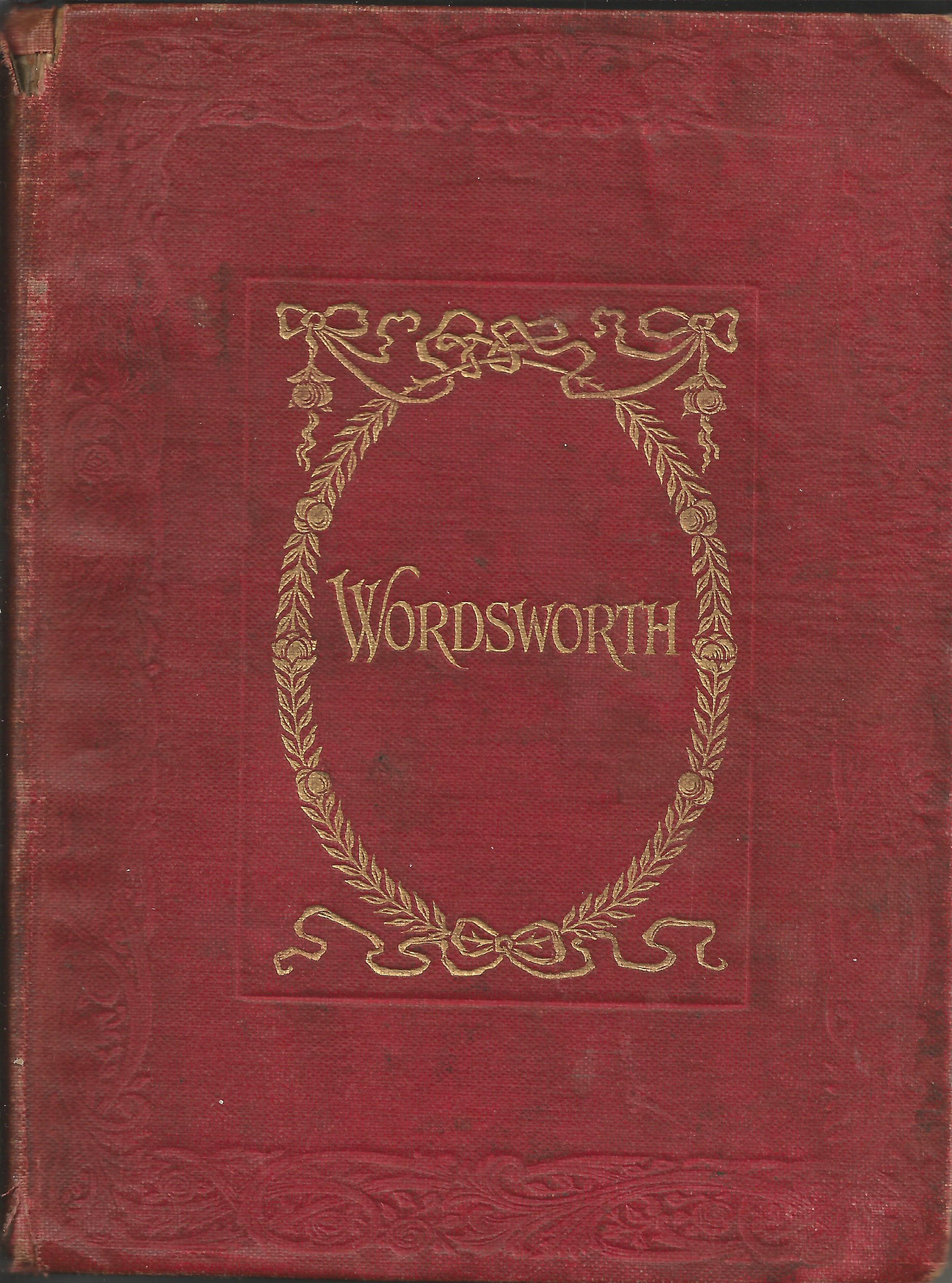
I can hardly believe it, but tomorrow this blog will be five years old; my first ever post was on September 16th 2008. I’ve decided to use this occasion as an excuse to wallow in self-indulgence by reposting some vintage items, with appropriate updates. This one was originally posted on 27th September 2008, but I’ve updated it with a picture of the eponymous little red book and a scan from one of its pages.

–0–


It’s now late September and there’s no sign that the Indian summer we’ve been having is going to fade. Once again, I’m sitting outside in the sunshine while Columbo daydreams. In the newspapers there’s yet more panic about the global financial crisis and the US Government’s attempts to persuade Congress to bail out the profligate bankers. The Republicans don’t want to play along, apparently because they don’t like the idea of government getting involved in the markets. I’m opposed to it for the opposite reason, which is I think those who have caused the problem should be the ones that pay for it. If the UK government decides to bail out any banks, I hope it will be at the price of public representation on their boards or even nationalisation.

Not long ago there was talk about energy companies having a windfall tax levied upon them owing to the sudden leap in their profits arising from high oil and gas prices. This seemed like a good idea to me. A retrospective windfall tax on city bonuses to pay for any packages cobbled together to pay the financial sector’s debts appears at least as justifiable as that proposed for the energy sector.

It’s now about a year since my father died. He hadn’t left a will so I had to travel to Weymouth to tidy up his things and organise a funeral. I hadn’t seen him much in recent years and was never particularly close, since my parents split up when I was about 12 and I went to live with my mother when that happened.

My dad never really came to terms with life after the break up of the family. His business eventually went down the tubes and he left Newcastle to live in Weymouth near his sister, my Auntie Ann, who had lived there for quite a while. He had a history of heart problems so his death wasn’t really a shock, but it did bring feelings of guilt to me, for not having kept in touch very well, as well sudden and unpredictable pangs of nostalgia which I’m still a bit prone to.

Among the memories that popped uncontrollably into my mind last year was a visit we made as a family to the house of my late Auntie Vi, who I don’t think I ever met. I don’t remember when this was but it was just after she died, when I guess I was probably about seven or eight which would make it around 1970 or so. My dad was among those invited to the house to help clear it by taking away anything they wanted.

I don’t remember the house very well except that it was rather dark, decorated with Victorian designs, and cluttered with heavy old-fashioned furniture. I imagined Auntie Vi (or “Violetta”, which was her real name) to be quite scary, perhaps like a governess in some gothic novel. I don’t know much about her except that she wasn’t well liked by the rest of the family. There was talk of some scandal, but I never found out what it was. I was just intrigued how she got the name Violetta. Perhaps her parents liked opera.
Wordsworth

The only relic from that visit that I still know about was a little red book that we took home with us. It was a book of Poems by Wordsworth which my mum kept when she split up with my dad and moved out. I asked her about it last year, after my dad’s funeral, and was quite surprised to find she still had it. She gave it to me to keep, and it is on the table beside me now as I write this.

Out of curiosity last year I looked for the date the little book was published, but couldn’t find one anywhere inside. I don’t know why, but the lack of that little bit of information bothered me. I looked on the web to see if there was information about this or similar books was to be found. No luck.

I turned instead to the task of finding out whatever I could about the publisher. The book is in a series called “Canterbury Poets” which was published by the Walter Scott Publishing company (London, New York and Felling). That made be laugh. As if anyone could ever have imagined Felling to be on a par with New York or London!

I had assumed that Sir Walter Scott was the famous novelist of Ivanhoe and the Waverley novels, but digging about a little I found out that it was named for someone else entirely. This particular Sir Walter Scott was born in 1826. He had very little formal education, but became a highly successful businessman. By the 1880s he owned a large network of business interests in the North East, primarily involving engineering and construction companies. In 1882 Scott expanded his empire by buying a publishing company “The Tyne Publishing Company”, which had just gone bust. Scott built a new factory (at Felling) and established a new office in London for his new publishing house, and the Walter Scott Publishing Company was born.

I think Scott must have been a very shrewd entrepreneur because the printing business grew rapidly, primarily through its list of editions of classic works of literature that were out of copyright. The Canterbury Poets series was first published in 1884, which is also the date of their first edition of the Wordsworth. These books were extremely well made, with hard covers, fine quality paper and good stitching . They sold for a shilling, which is an astonishingly low price for books of this quality. I can’t be sure, but have a feeling that a lot of them were given as “rewards” , for good behaviour at sunday schools and the like. That market accounted for a lot of the book trade in those days.Sir Walter Scott died in 1910 and the company ceased trading in 1931. At its peak it did indeed have offices in New York, and also sold large quantities of books in Australia.

I found this all out quite easily, because the Walter Scott Company turned out to be quite famous for the role it played in the story of working class literacy, but it didn’t tell me about the specific edition I had. However, I did discover that a scholarly work had been published in 1997 that contained a complete biliography of all the works it published until the company finally went down the tubes. Quite apart from the connection with my peculiar Aunt, I found the whole story quite fascinating. I sent off for the bibliography, which is basically a kind of catalogue that painstakingly records the size, typeface, cover design, and printers colophons for all known editions. (It’s quite boring to read, as you can imagine). I searched through it to find references to William Wordsworth. Number 99c is the entry for the “Poems” of William Wordsworth.

With a bit of work I established that the specific edition I have was first published in 1892 but reprinted many times after that. Details of the book, however, indicate that my version was actually printed in 1902. Among the clues is the fact that the colophon states “The Walter Scott Publishing Co, Ltd.” and it didn’t become a limited company until 1902. The company also moved its London and New York offices a couple of times which helps pin down the date, as these changes are noted on the imprint.

So there you have it. The little red book was printed in Felling in 1902, which happens to be the same year that my little house in Pontcanna was built, just after the death of Queen Victoria. I don’t know how old Auntie Vi was when she died, but she must have been a young girl when she got it and had obviously kept it all the rest of her life. That fits with the way her name is written in pencil, in what looks like a child’s hand, inside the front cover.

The book isn’t particularly valuable. A lot were printed and it’s not particularly rare. I’m not sure Wordsworth is very collectible nowadays either. I am still amazed, though, how well it had withstood the passage of time. Today’s books are cheaply bound and printed on chatty paper. Most modern paperbacks are in bad condition only a few years after you buy them. They made things to last in those days.

It seems appropriate to end with one of Wordsworth’s poems, of which (I forgot to mention) I’m very fond indeed. I’ve picked the start of the Ode “Intimations of Immortality from Recollections of Early Childhood”, partly because there’s a wonderful setting of this work to music by Gerald Finzi which was performed at this years Proms.

I think it’s apt enough. Here is the first verse as it appears in the Little Red Book:

wordsworth_intiminations


Lines on the Death of David Frost

Posted in Poetry with tags , , on September 1, 2013 by telescoper

So farewell, then,
Sir David Frost.

Now that you have
Died, I thought
I would write
A silly poem about
You.

And, no doubt, soon
There’ll also be
One in the Eye.

Keith’s Mum says
She used to like
Breakfast with Frost.

But I’ve never been
All that keen
On Frosties.

by Peter Coles (aged 50 ¼).

Mid-term Break

Posted in Poetry with tags , on August 31, 2013 by telescoper

I sat all morning in the college sick bay
Counting bells knelling classes to a close.
At two o’clock our neighbors drove me home.

In the porch I met my father crying–
He had always taken funerals in his stride–
And Big Jim Evans saying it was a hard blow.

The baby cooed and laughed and rocked the pram
When I came in, and I was embarrassed
By old men standing up to shake my hand

And tell me they were ‘sorry for my trouble,’
Whispers informed strangers I was the eldest,
Away at school, as my mother held my hand

In hers and coughed out angry tearless sighs.
At ten o’clock the ambulance arrived
With the corpse, stanched and bandaged by the nurses.

Next morning I went up into the room. Snowdrops
And candles soothed the bedside; I saw him
For the first time in six weeks. Paler now,

Wearing a poppy bruise on his left temple,
He lay in the four foot box as in his cot.
No gaudy scars, the bumper knocked him clear.

A four foot box, a foot for every year.

by Seamus Heaney (1939–2013)

Marsh Flowers

Posted in Music, Poetry with tags , , , on August 21, 2013 by telescoper

I heard a reading of this poem on BBC Radio 3 last night and couldn’t resist posting it here. It’s by Suffolk poet George Crabbe and it came up in the context of a programme about poetry and the music of Benjamin Britten. That gives me the opportunity to plug an anthology of the poems Britten set to music, which is available from the excellent Carcanet Press. Last time I plugged one of their books on here they sent me a free copy. Fingers crossed.

Crabbe is probably most famous for his lengthy work The Borough, part of which features a character called Peter Grimes. It was that work that inspired Britten to write the opera of that name, a true masterpiece if ever there was one.

I didn’t know until yesterday evening that Britten had written other pieces based on Crabbe’s poetry, so it was a pleasant surprise to hear this one, which became one of the Five Flower Songs (Op. 47). It stands on its own, however, as a wonderfully dry piece of comic verse, the plodding meter perfectly conveying the uninspiring nature of the fenland flora described by the text. It’s also full of clever touches, such as the alliteration in Line 4 “sickly scent is seen”.

Here the strong mallow strikes her slimy root,
Here the dull nightshade hangs her deadly fruit:

On hills of dust the henbane’s faded green,
And pencil’d flower of sickly scent is seen.

Here on its wiry stem, in rigid bloom,
Grows the salt lavender that lacks perfume.

At the wall’s base the fiery nettle springs
With fruit globose and fierce with poison’d stings;

In every chink delights the fern to grow,
With glossy leaf and tawny bloom below;

The few dull flowers that o’er the place are spread
Partake the nature of their fenny bed.

These, with our sea-weeds rolling up and down,
Form the contracted Flora of our town.

by George Crabbe (1754-1832).

An Ever-Fixed Mark

Posted in Poetry with tags , on August 3, 2013 by telescoper

Years ago, at a private school
Run on traditional lines,
One fellow used to perform
Prodigious feats in the dorm;
His quite undevious designs
Found many a willing tool.

On the rugger field, in the gym,
Buck marked down at his leisure
The likeliest bits of stuff;
The notion, familiar enough,
Of ‘using somebody for pleasure’
Seemed handy and harmless to him.

But another chap was above
The diversions of such a lout;
Seven years in the place
And he never got to first base
With the kid he followed about:
What interested Ralph was love.

He did the whole thing in style –
Letters three times a week,
Sonnet-sequences, Sunday walks;
Then, during one of their talks,
The youngster caressed his cheek,
And that made it all worth while.

These days, for a quid pro quo,
Ralph’s chum does what, and with which;
Buck’s playmates, family men,
Eye a Boy Scout now and then.
Sex is a momentary itch,
Love never lets you go.


by Kingsley Amis (1922-1995)

Death be not Proud

Posted in Poetry with tags , , on July 16, 2013 by telescoper

Death be not proud, though some have called thee
Mighty and dreadful, for thou art not so,
For those whom thou think’st thou dost overthrow,
Die not, poor Death, nor yet canst thou kill me.
From rest and sleep, which but thy pictures be,
Much pleasure: then from thee much more must flow,
And soonest our best men with thee do go,
Rest of their bones, and soul’s delivery.
Thou art slave to fate, chance, kings, and desperate men,
And dost with poison, war, and sickness dwell;
And poppy or charms can make us sleep as well
And better than thy stroke; why swell’st thou then?
One short sleep past, we wake eternally,
And death shall be no more; Death, thou shalt die.

by John Donne (1572-1631).

Cologne

Posted in Poetry with tags , , , , on July 11, 2013 by telescoper

Since I’m in Germany I thought I’d have a look around for a poem related to the area I’m staying in at the moment. I found this, by Samuel Taylor Coleridge. I have the feeling he didn’t particularly enjoy his visit to the fine city of Cologne…

In Kohln, a town of monks and bones,
And pavements fang’d with murderous stones
And rags, and hags, and hideous wenches;
I counted two and seventy stenches,
All well defined, and several stinks!
Ye Nymphs that reign o’er sewers and sinks,
The river Rhine, it is well known,
Doth wash your city of Cologne;
But tell me, Nymphs, what power divine
Shall henceforth wash the river Rhine?

by Samuel Taylor Coleridge (1772-1834)

Vanitas Vanitatum

Posted in Poetry with tags , , , on July 4, 2013 by telescoper

All the flowers of the spring
Meet to perfume our burying;
These have but their growing prime,
And man does flourish but his time:
Survey our progress from our birth;
We are set, we grow, we turn to earth.
Courts adieu, and all delights,
All bewitching appetites!
Sweetest breath and clearest eye,
Like perfumes, go out and die;
And consequently this is done
As shadows wait upon the sun.
Vain ambition of kings
Who seek by trophies and dead things
To leave a living name behind,
And weave but nets to catch the wind.

by John Webster (c. 1580- c. 1634)

I see the boys of summer

Posted in Poetry with tags , , on June 29, 2013 by telescoper

I

I see the boys of summer in their ruin
Lay the gold tithings barren,
Setting no store by harvest, freeze the soils;
There in their heat the winter floods
Of frozen loves they fetch their girls,
And drown the cargoed apples in their tides.

These boys of light are curdlers in their folly,
Sour the boiling honey;
The jacks of frost they finger in the hives;
There in the sun the frigid threads
Of doubt and dark they feed their nerves;
The signal moon is zero in their voids.

I see the summer children in their mothers
Split up the brawned womb’s weathers,
Divide the night and day with fairy thumbs;
There in the deep with quartered shades
Of sun and moon they paint their dams
As sunlight paints the shelling of their heads.

I see that from these boys shall men of nothing
Stature by seedy shifting,
Or lame the air with leaping from its heats;
There from their hearts the dogdayed pulse
Of love and light bursts in their throats.
O see the pulse of summer in the ice.

II

But seasons must be challenged or they totter
Into a chiming quarter
Where, punctual as death, we ring the stars;
There, in his night, the black-tongued bells
The sleepy man of winter pulls,
Nor blows back moon-and-midnight as she blows.

We are the dark deniers let us summon
Death from a summer woman,
A muscling life from lovers in their cramp
From the fair dead who flush the sea
The bright-eyed worm on Davy’s lamp
And from the planted womb the man of straw.

We summer boys in this four-winded spinning,
Green of the seaweeds’ iron,
Hold up the noisy sea and drop her birds,
Pick the world’s ball of wave and froth
To choke the deserts with her tides,
And comb the county gardens for a wreath.

In spring we cross our foreheads with the holly,
Heigh ho the blood and berry,
And nail the merry squires to the trees;
Here love’s damp muscle dries and dies
Here break a kiss in no love’s quarry,
O see the poles of promise in the boys.

III

I see you boys of summer in your ruin.
Man in his maggot’s barren.
And boys are full and foreign to the pouch.
I am the man your father was.
We are the sons of flint and pitch.
O see the poles are kissing as they cross.

by Dylan Thomas (1914-1953)

Cover

Posted in Cricket, Poetry with tags , , on June 23, 2013 by telescoper

Think twice
and then don’t

Zero tolerance
that’s me

Step out of line
and I’ll have you

sprawled in the dust
as the warning shot

screams past your ear
into the gloves

A sniper’s brain
a hair-trigger arm

Take me on?

Make my day

by Simon Rae