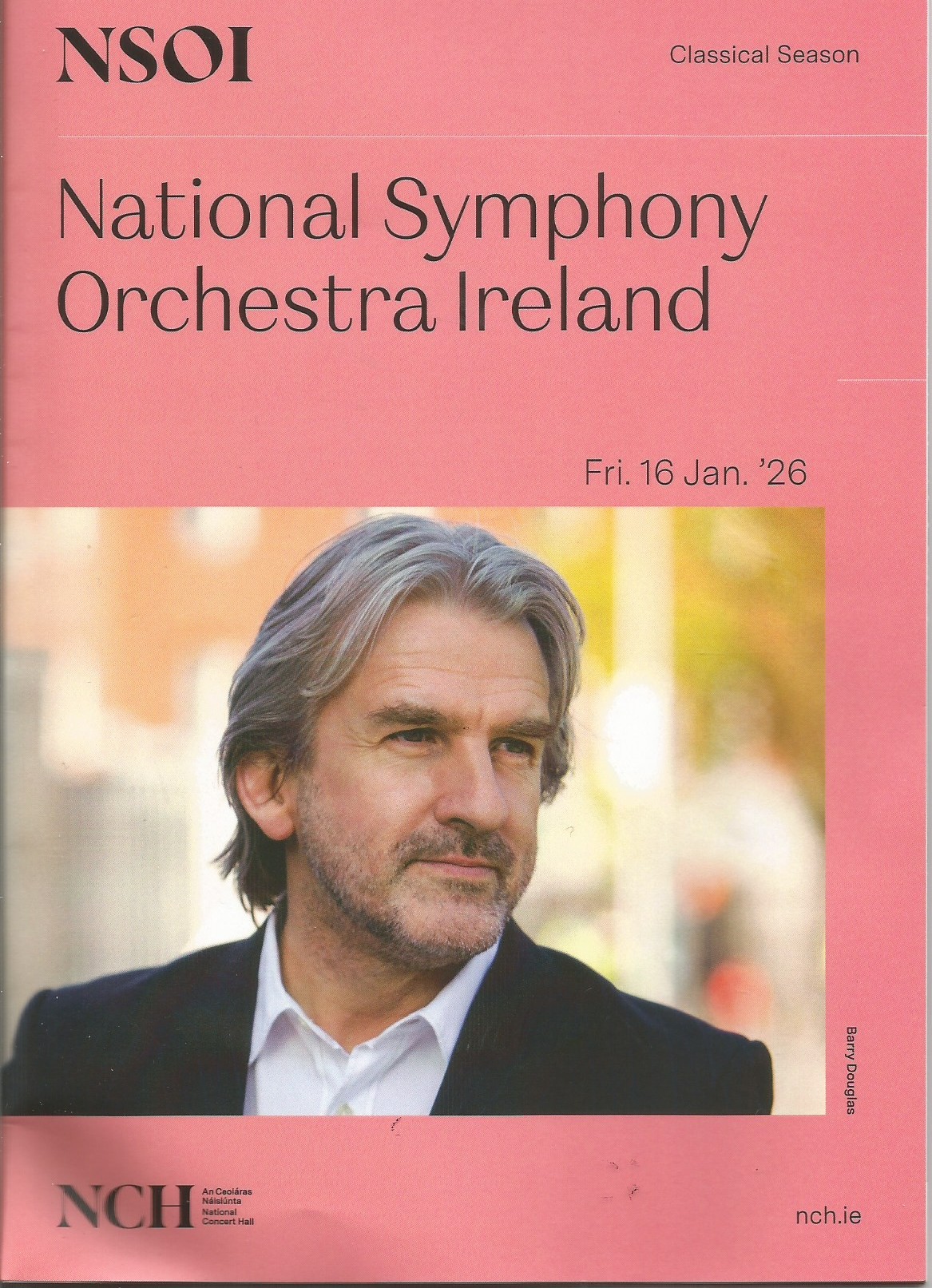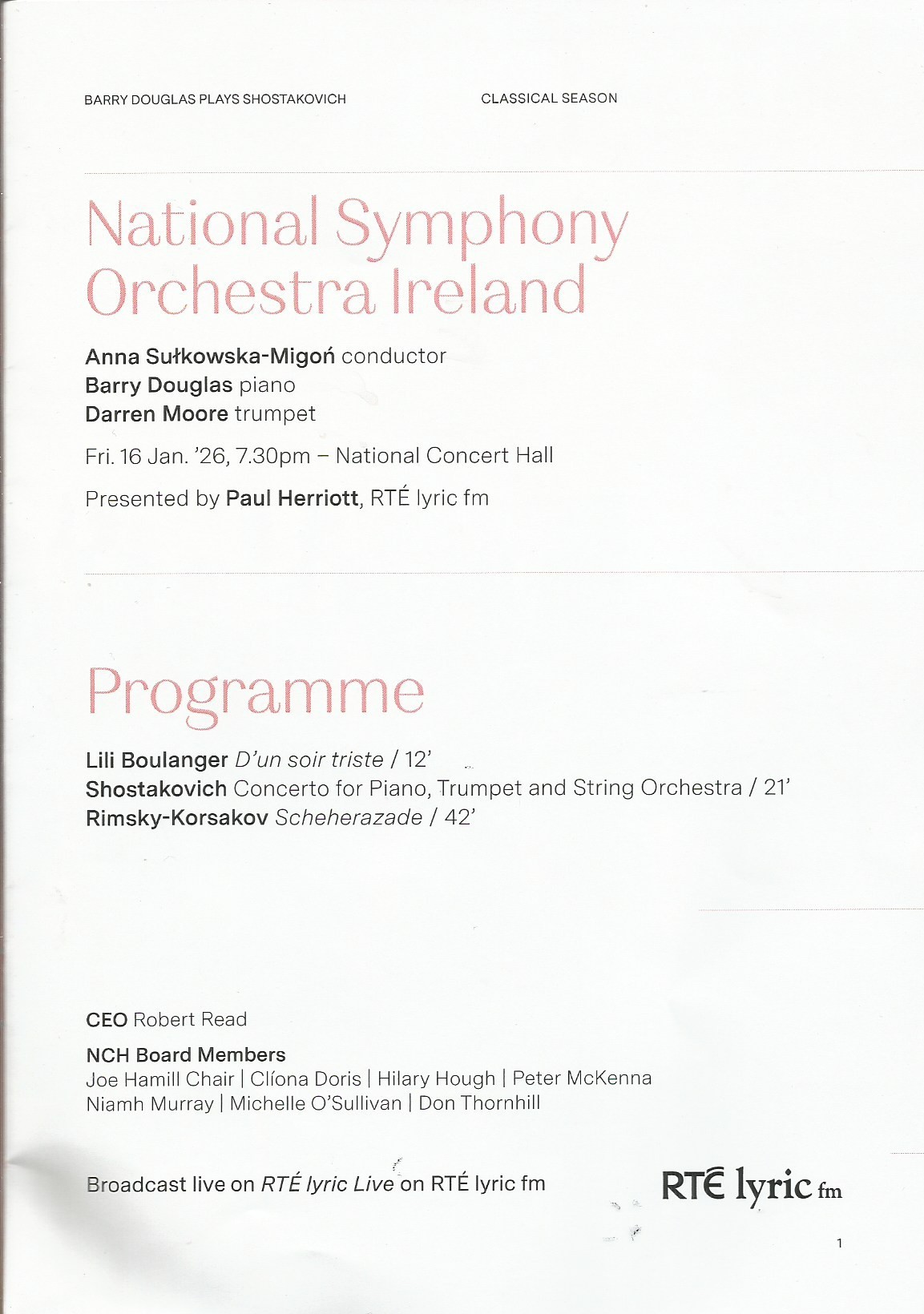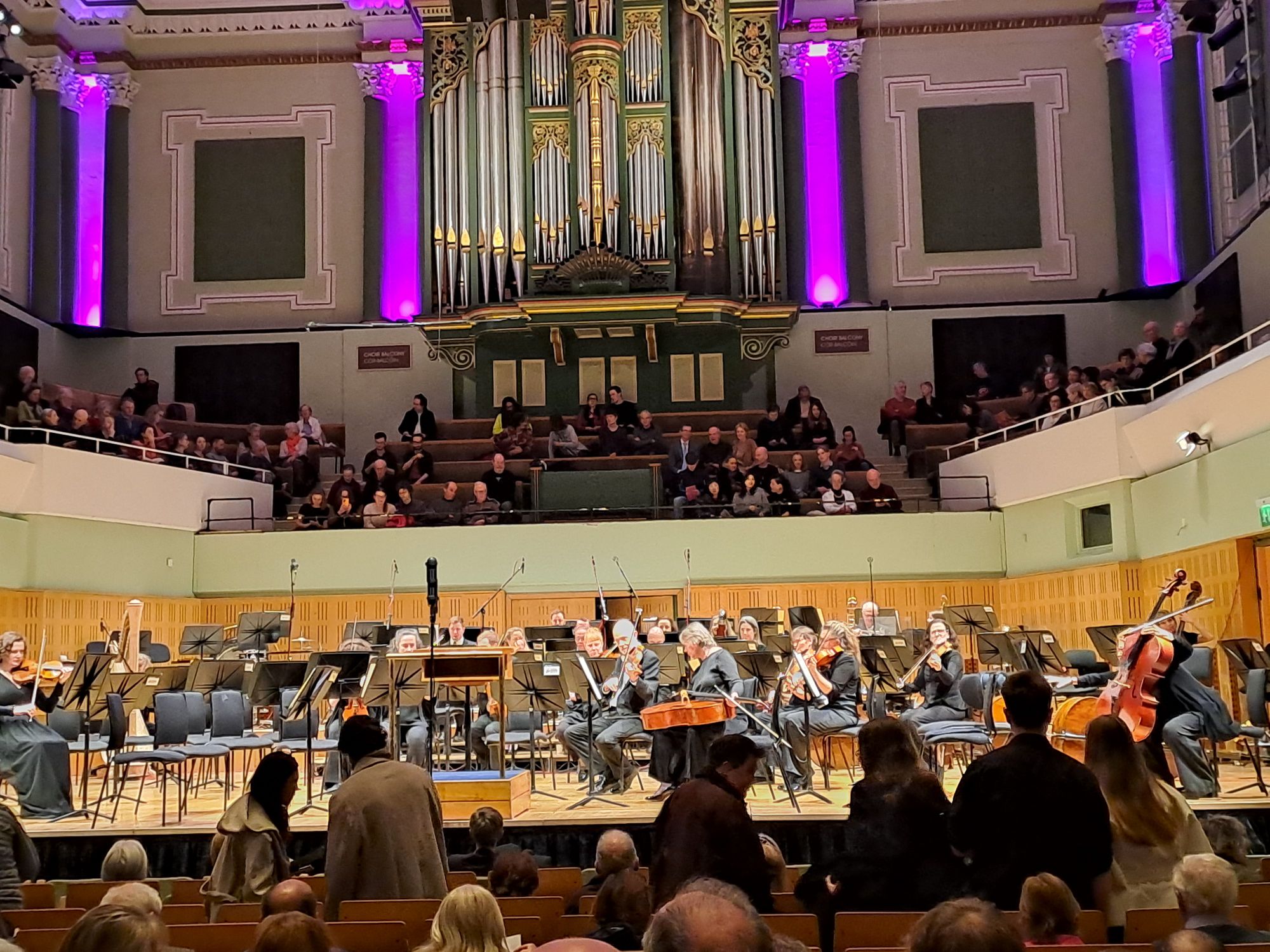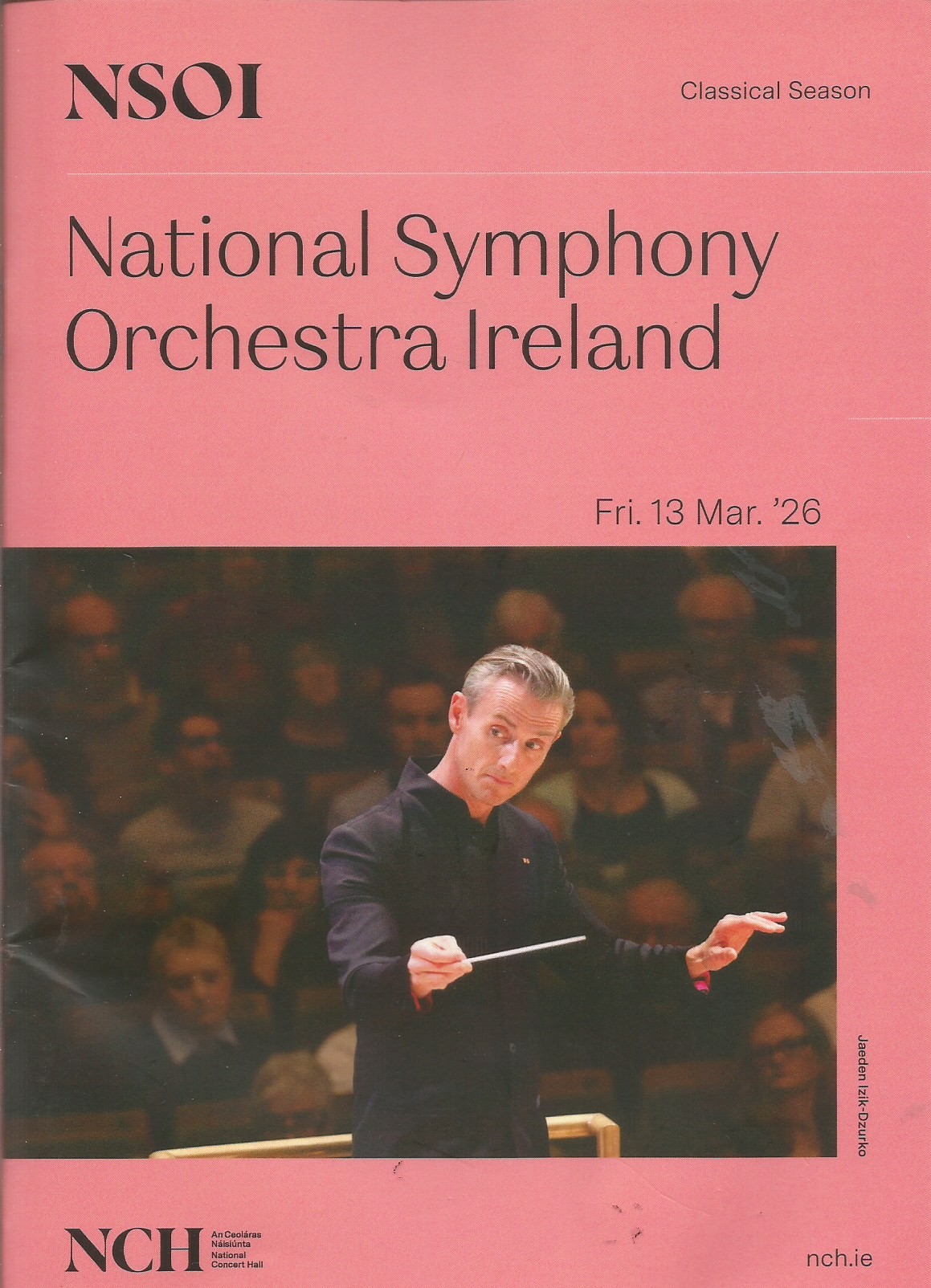
A couple of weeks ago I blogged about a concert at the National Concert Hall that included a performance of a Mozart Piano Concerto by Boris Giltburg. The pianist did an encore piece – the Arabeske in C major by Robert Schumann – which I’ve been meaning to post because it was very nice. I managed to find this recording performed by Boris Giltburg himself, not at the NCH but in Georgia:
Archive for the Music Category
Schumann: Arabeske in C major (Op. 18) – Boris Giltburg
Posted in Music with tags Arabesque in C Major, Boris Giltburg, Robert Schumann on December 17, 2025 by telescoperBlue Christmas Again
Posted in Jazz with tags Blue Christmas, Bob Dorough, Gil Evans, Miles Davis on December 12, 2025 by telescoperI’ve had a very busy penultimate week of term and am out of energy so instead of attempting a new post I thought I’d repost this “festive” classic. I posted this one during the “festive” season” in 2013 and haven’t posted it since. Until now. The band is led by none other than Miles Davis; the other members are Frank Rehak (trombone), Wayne Shorter (tenor sax), Paul Chambers (bass), Jimmy Cobb (drums), and Willie Bobo (bongos); the arrangement is unmistakably by Gil Evans. The vocalist is the legendary Bob Dorough who also wrote the lyrics.
“Bah Humbug” never sounded so cool!
P.S. I’m not particularly blue myself, just tired…
Mozart and Bruckner at the National Concert Hall
Posted in Biographical, Music, Uncategorized with tags Anja Bihlmaier, Anton Bruckner, Boris Giltberg, Bruckner Symphony No. 9, Mozart Piano Concerto No. 15, National Concert Hall, National Symphony Orchestra Ireland, Wolfgang Amadeus Mozart on December 6, 2025 by telescoper

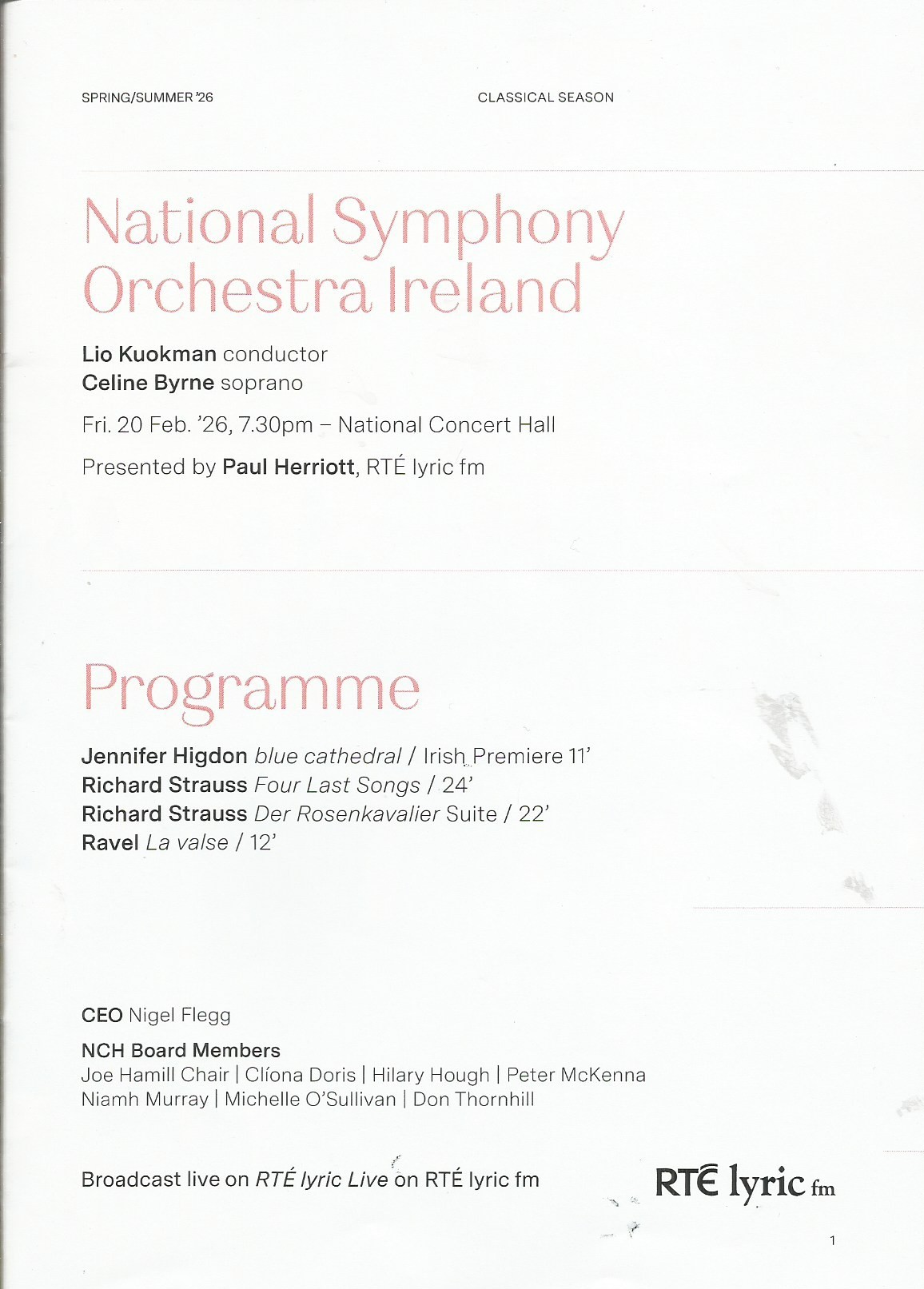
I was worried I might have to miss last night’s concert by National Symphony Orchestra Ireland conducted by Anja Bihlmaier at the National Concert Hall. I bought the ticket some weeks ago and was looking forward to it, but I had been a bit unwell earlier in the week and didn’t want to go only to cough all the way through, possibly infecting others on the way. By Friday afternoon, however, I felt a lot better and took the decision to go for it. I’m very glad I did because I enjoyed the music enormously and didn’t cough or sneeze once!
There were only two items on the menu, another pairing of Mozart and Bruckner.
In the first half we heard the Piano Concerto No. 15 by Wolfgang Amadeus Mozart played by Boris Giltberg. This piece was written in 1784 when the composer had reached the ripe old age of 28. It’s an enjoyable and entertaining piece, not perhaps as profound as some of the later piano concertos (Mozart wrote 27 altogether), but well worth listening to. It’s also regarded as one of the most difficult to play, though Boris Giltberg made it look easy enough and was clearly enjoying himself while he played it as I’m sure did the composer when he performed it for the first time in Vienna. The three movements follow a standard fast-slow-fast pattern; the last being a sprightly Rondo, part of which features in the soundtrack of an episode of Inspector Morse: Who Killed Harry Field?
After generous applause, Giltberg returned to the stage to play a very solo encore piece. I didn’t recognize it, but someone I know who was there told me it was by Robert Schumann but didn’t know the name. When I got home I spent a good half-hour going through recordings until I finally identified it as the Arabeske in C Major. Anyway, it was a very nice way to send us into the wine break.
After the interval we had Anton Bruckner‘s monumental Symphony No. 9, which was unfinished at Bruckner’s death in 1896. Insufficient material was recovered after the composer’s death to enable a reconstruction of the missing 4th movement, so this work is generally performed in its incomplete state with only three movements. Even so, it’s an immense work in both length and ambition, lasting over an hour in performance and calling for a large orchestra.
The majestic first movement (marked Feierlich, Misterioso; solemn & mysterious) with its soaring themes and thunderous climaxes always puts me in mind of a mountaineering expedition, with wonderful vistas to experience but with danger lurking at every step. At times it’s rapturously beautiful, at times terrifying. It’s not actually about mountaineering, of course – Bruckner meant this symphony to be an expression of his religious faith, which, in the latter years of his life must have been pretty shaky if the music is anything to go by.
The second movement (Scherzo) is all juddering rhythms, jagged themes and harsh dissonances reminiscent (to me) of Shostakovich. It alternates between menacing, playful and cryptic; the frenzied animation of central Trio section is especially disconcerting.
The last movement (Adagio) begins restlessly, with an unaccompanied violin theme and then becomes more obviously religious in character in various passages of hymn-like quality, still punctuated by stark crescendi. In this movement Bruckner doffs his cap in the direction of Richard Wagner, especially when the four Wagner tubas appear, and the movement reaches yet another climax with the brass bellowing out the initial violin theme. This dies away and the movement comes to an unresolved, poignant conclusion. With a long pause in silence as if to say “that’s all he wrote”, the concert came to an end.
Although I’ve loved this work for many years I’ve only ever heard it once before in concert. The live performance definitely adds other dimensions you will miss on a recording and I enjoyed it enormously. For one thing you can see how hard the musicians – especially the cellos and basses – have to work. The sight of a large symphony orchestra working together to produce amazing sounds is quite something.
The National Symphony Orchestra Ireland may not be the Berlin Philharmonic but I was generally very impressed, there was split note in the brass section near the end, but this was a minor blemish. The performance was very warmly received by the audience. The NCH wasn’t full, but it was quite a good attendance.
That’s not quite the end of my concert-going for 2025. I’m off to Messiah next week. Well, you have to, don’t you? It’s Christmas..
One Hundred Years of the Hot Five
Posted in History, Jazz with tags Gut Bucket Blues, Johnny Dodds, Johnny St Cyr, Kid Ory, Lil Armstrong, Lil Hardin, Louis Armstrong, Louis Armstrong and his Hot Five on November 12, 2025 by telescoperExactly one hundred years ago today, on 12th November 1925, five musicians gathered in the Okeh studios in Chicago to create musical history. The band was Louis Armstrong and his Hot Five and they were about to embark on a series of recording sessions that would result in a rich treasury of 20th century music in the form of 33 sides recorded between November 1925 and December 1927.
The band (pictured above) consisted of Louis Armstrong (on cornet on this track, although he switched to trumpet by the time of the later sessions). Kid Ory played trombone Johnny Dodds Clarinet. Lil Hardin (who was married to Louis Armstrong at the time and credited as Lil Armstrong) played piano and Johnny St Cyr played banjo or guitar. For many people, the collective imagination and sheer drive of Armstrong, Dodds and Ory made them just about the perfect front line. The way they take this one out at the end is a great example.
I won’t even try to write a detailed analysis of this historic record. I’ll just make a couple of points about the Hot Fives.
First, this band never played together as such in live concerts; they were strictly a studio band. In fact, they always sounded like a bunch of friends getting together to have fun making music, which is no doubt because that’s what they were. Most of the records they made were done in a single take, too.
Second, the line-up was unusual because it didn’t have a full rhythm section. At least part of the reason for this was that, at the time, drums were very difficult to record. In Louis Armstrong’s recorded reminiscences he talks about the fact that drums would often make the needle jump when cutting a record if they were were positioned close to the recording equipment. On the other hand if they were too far away to avoid that happening then they often couldn’t be heard at all. The low-frequency response of old fashioned recording systems made bass lines largely inaudible too. Anyway, it was decided that the excellent combination of Lil Hardin’s piano and Johnny St Cyr’s banjo would provide a sufficient framwork. So they were, though later on, in May 1927, a brass bass and drums were added to create the Hot Seven who made a further 11 sides, including the all-time classic Potato Head Blues.
Finally I’ll just remark that according to Satchmo’s memoirs, this track Gut Bucket Blues was the first to be recorded. It does sound like it too, as he introduces the members of the band. I wonder if they knew at this first session what a sensation these records were going to create?
P.S. I know it’s a bit scratchy, but it’s 100 years old. It’s amazing to me that you can hear anything at all.
Ravel, Dessner and Beethoven at the National Concert Hall
Posted in Music with tags Anastasia Kobekina, Beethoven Symphony No. 3, Bryce Dessner, Eroica Symphony, Ludwig van Beethoven, Maurice Ravel, National Concert Hall, National Symphony Orchestra Ireland, Pavane pour une infante défunte, Trembling Earth on November 8, 2025 by telescoper

Yesterday evening I made my way through a rather rainy Dublin to the National Concert Hall for a very enjoyable concert by the National Symphony Orchestra Ireland conducted this time by André de Ridder. Incidentally, the Orchestra has been searching for a new Principal Conductor for some time and as now made an appointment in the form of Alexander Shelley, but he won’t take up the baton until September 2026 so until then there will continue to be a number of guest conductors and, it has to be said, a rather piecemeal programme.
Last night’s performance followed a very typical programme for a concert of classical music: a short piece as an appetiser (often an overture or similar), an instrumental concerto featuring a guest soloist, then a wine break, followed by a full symphony or some other large work. They don’t all follow that format, but many do. I always like it when at least one of the pieces is something I’ve never heard before. That was the case last night.
We started with the orchestral version of Pavane pour une infante défunte, played very well but, as always seems to be the case, rather too slowly for my tastes. That particular piece was on the menu at NCH in March this year and I made the same complaint then. I like the piece a lot, but I wish orchestras wouldn’t take it at a funeral pace!
Next one up was the world premiere of a brand new composition by Bryce Dessner called Trembling Earth. This is a cello concerto and it was written for Russian cellist Anastasia Kobekina. One never knows what to expect from a world premiere but this turned out to tremendous. It’s not a cello concerto of the traditional style – divided into movements – but is in a series of sections, with the cello introducing each theme which is then taken up by the orchestra followed by another, and so on. The texture varies from tough and sinewy to soft and lyrical and the solo passages require great virtuosity, some thing Anastasia Kobekina definitely has.
The composition was apparently inspired by a set of landscapes by Norwegian artist Edvard Munch, so I suppose each section might relate to a particular painting. The sections are very varied, with one based on the theme of Dido’s Lament (When I am laid in Earth...) by Henry Purcell, another with very distinct echoes of Ravel, and another showing more than a nod to Philip Glass in its ostinato sections. At the end of the piece, which is about 25 minutes long, there were immediate cheers and a standing ovation, and the composer came on stage to receive the accolades. “Prediction is very difficult”, said Niels Bohr, “especially about the future”, but I think this work will quickly establish itself in the repertoire. I’d love to hear it again.
The concert would have been worth it just for that one piece, but after the interval we came back for the main course, The Symphony No. 3 in E♭ major (“Eroica”) Ludwig van Beethoven. I’ve blogged about a number of different performances of different Beethoven symphonies over the years, so I’m quite surprised to discover that I’ve never written about this one. It’s hard to know what to say about it really,, except that it’s a magnificent work in its own right as well as being historically important. Before this one, which was published in 1806, symphonies (including not only Beethoven’s First and Second, but those of Mozart, Haydn and others) were much shorter (typically around 20 minutes) and much more constrained in form. This composition – which shares some elements with Mozart’s Symphony No. 39 and was apparently inspired by it – ushered in the era of the epic symphony that culminated with the likes of Mahler and Bruckner. The duration performance we heard last night was about 45 minutes. The first movement, in sonata form, is especially complex.
An interesting point about last night’s performance was the arrangement of the orchestra on stage. From the point of view of the Conductor, the first violins were on the far left (as usual), the cellos and basses were to the front and left, violas to the front and right, and second violins on the far right. I am not sure of the reason for this departure from tradition – second violins are usually adjacent to the firsts, with the cellos and basses on the right – but it was interesting how different it sounded compared to the usual layout.
This superb concert provided a great finish to a very tiring week. Thanks to the NCH for putting on such a wonderful programme. As an added bonus, the rain had stopped by the time it was over so I didn’t get drenched on my way home.
Autumn Leaves – Cannonball Adderley
Posted in Jazz with tags Art Bl;akey, Art Blakey, Cannonball Adderley, Hank Jones, Sam Jones on October 23, 2025 by telescoperIt’s been a cool autumn day so this seems appropriate. It’s from the classic 1958 album Somethin’ Else which was Cannonball Adderley’s first as a leader, and one of Miles Davis’s last as a sideman (also a rare recording for Miles on the Blue Note label). Adderley went on to play alto sax with the great Miles Davis sextet that recorded Kind of Blue, and Miles obviously influenced this album enormously, but the rhythm section here is different from that band’s – Art Blakey on drums, Hank Jones on piano, and Sam Jones on bass. Miles Davis was also responsible for this arrangement of the standard Autumn Leaves, which he based on a version by Ahmad Jamal.
Clyne, Tchaikovsky and Shostakovich at the National Concert Hall
Posted in Biographical, Music with tags Anna Clyne, Anna Rikitina, Dmitri Shostakovich, Mairéad Hickey, National Symphony Orchestra Ireland, Pyotr Ilyich Tchaikovsky, Restless Oceans, Shostakovich Symphony No. 5, Tchaikovsky Violin Concerto on October 18, 2025 by telescoper

It had been over a month since my last visit to the National Concert Hall in Dublin so I was happy to be able to attend this week’s Friday night concert last night. It was great to see that the venue was very full too. I think that was at least partly down to the fact that one of the pieces featured Irish violinist Mairéad Hickey who has a sizeable local following. Conductor for the evening with National Symphony Orchestra Ireland was Anna Rakitina (who was born in Russia).
The concert began with a short piece by Anna Clyne called Restless Oceans. This is an energetic and an excellent way to get the orchestra revved up for the rest of the evening. I’d never heard this work before and I think it must be the first time I’ve seen a performance in which the string section sang or hummed a wordless accompaniment in one part and, in another, the whole orchestra provided extra percussion by stamping their feet.
After that zesty appetiser, Mairéad Hickey appeared on stage, resplendent in a green dress, to perform the first course proper, the Violin Concerto by Pyotr Ilyich Tchaikovsky. This is a familiar work but it was ravishingly played by Mairéad Hickey, who seem to revel in the virtuosic elements of this work, as well as bringing out the lyricism in the more romantic passages. The only things I don’t like about this composition are the gratuitously showy cadenzas which go on far too long, in my opinion. The audience clearly loved the performance, though, as did I, and we were treated to an encore in the form of some traditional Irish fiddle playing which was lovely.
After the wine break, we had the main dish for the evening, the Symphony No. 5 by Dmitri Shostakovich. This is a very famous work and one of the higlights of the entire symphonic repertoire. It is also perhaps the most accessible of all the Shostakovich symphonies. It was an immediate success with Soviet critics and public alike when it was first performed in 1937, and though it marked Shostakovich’s return to favour with the authorities after his denunciation by Stalin, this work has the composer’s very characteristic sense of things not being quite as they seem on the surface. Indeed, in this and many other of his compositions, seems to manage to say one thing at the same time as saying the exact opposite of that thing; nowadays this might be called `constructive ambiguity’. This is especially true in the finale, in which the sense of triumph it ostensibly portrays seems rather forced, so it approaches a parody of itself. This tension between possible interpretations gives the piece a palpable sense of danger.
Overall the Fifth Symphony is a sombre work, the dark undertone established right at the start with an imposing theme on the cellos and double basses, but it has passages of great beauty too, especially in the slow third movement. Like all great symphonies – and this is one of the greatest – it takes you on a journey full of of excitement and interest. It was a compelling performance by the NSOI, with outstanding playing by the whole orchestra, but especially the woodwinds.The 45 minutes or so of this performance seemed to fly by. It’s ending ending was greeted with rapturous applause and a standing ovation from many in the audience.
It’s interesting to consider that only 60 years had elapsed between the composition of these pieces by Tchaikovsky and Shostakovich, but what different musical worlds they represent!
“Celebrated Air” on the Piano
Posted in Music with tags Air on the G string, Alexander Siloti, Celebrated Air, Johan Sebastian Bach, Valentina Lisitsa on September 30, 2025 by telescoperA while ago I went to a concert that featured a Mozart Piano concerto with soloist David Fray. I mentioned then that his encore was a piece by Johannn Sebastian Bach, arranged for piano. I thought I’d post a performance of the same piece today.
Originally the second movement “Air” from Johann Sebastian Bach’s Orchestral Suite No. 3, this piece became known as the Air on the G string when it was arranged for solo violin and orchestra, by August Wilhelmj, which involved transposing it down from D Major to C Major so that the violin part could be played entirely on the lowest of the four strings. It’s also sometimes called the (and sometimes “Celebrated Air”, which is more appropriate when it is played on anything other than a violin. The piano version performed by David Fray was arranged by Alexander Siloti and I think it’s very beautiful, based on a beautifully simple bass. Bach’s keyboard pieces often have a left-hand part which is interesting on its own. You can also see hear why jazz musician’s like Bach so much; the left hand provides such a steady but rich foundation for improvisation with the right hand.
Anyway, here is a nice performance of the same piece, at a gently swinging tempo, not unlike a slow blues, by Ukrainian pianist Valentina Lisitsa.
One of the Youtube commenters calls this version “melancholy”, which I don’t agree with at all! Whatever it is, it’s a nice way to spend 5 or 6 minutes relaxing in between lectures.
McTee, Mozart & Strauss at the National Concert Hall
Posted in Music with tags David Fray, Ein Heldenleben, Leonard Slatkin, Mozart Piano Concerto No. 20, music, National Concert Hall, National Symphony Orchestra Ireland, Richard Strauss, Wolfgang Amadeus Mozart on September 13, 2025 by telescoper

As it was foretold, last night I went to the National Concert Hall in Dublin for the opening performance of the new season by the National Symphony Orchestra Ireland, this time under the baton of veteran conductor Leonard Slatkin.
The appetiser for this concert was Timepiece by American composer Cindy Mctee. It’s a short piece, quite new to me before last night, with a slowish introduction leading into a very energetic main body of the work. This piece brought out some fine playing by the orchestra, especially the percussion section. You can read more about this intriguing and enjoyable composition in the composer’s own words here. She was in the audience last night, and came up on stage at the end of the performance to receive the plaudits.
Next we had a very familiar piece: the Piano Concerto No. 20 in D Minor by Wolfgang Amadeus Mozart, with David Fray at the piano. Mozart apparently composed this in a rush to meet the deadline of its first performance, but it doesn’t seem that way. The three movements (marked Allegro, Romanza and Allegro Assai) are very different in mood: the first (which is quite long) is brooding and rather Sturmy and Drangy, while the second is much gentler; both these movements feature memorable tunes; the third is much more pyrotechnical, with a very propulsive start and some virtuosic cadenzas. I think the last was played the best. David Fray is a curious performer to watch: he sat in the same sort of chair as the members of the orchestra – one with a back – rather than the usual stool, and had a very unusual posture. He slouched, in fact; he often turned round to look at the musicians behind him too. Anyway, he played very well indeed and for an encore he gave us some Bach (a solo piano arrangement of Air on the G String), which was lovely.
After the wine break we came back for a performance of Ein Heldenleben (“A Hero’s Life”) by Richard Strauss. I had never heard this piece in full before last night, and I have to say I didn’t like it much. There are some very nice passages in it, and there was some excellent playing by the brass and solo violin by NSOI leader Elaine Clark, but overall I found it a rather aimless reworking of some of Strauss’s other tone poems (some of which are actually very good). It’s also far too long for what it has to say.
The “Hero” of the title is of course meant to be the composer himself, which says something of the high regard in which Strauss held himself. At times the piece is tediously bombastic. The composer was 34 when he wrote this piece; about the same age that Mozart was when he died. I don’t think had he lived the latter would have written a self-indulgent piece like this crowing about his own achievements, which were far greater than those of the former.
Still, at least I can now say I’ve heard Ein Heldenleben…
P.S. For those of you wondering: no, the President of Ireland did not attend this concert.
September in the Rain
Posted in Jazz with tags Lionel Hampton, Mezz Mezzrow, September in the Rain on September 1, 2025 by telescoperI’ve been seeing the phrase vibe coding bandied about quite a lot these days and it always makes me think of Lionel Hampton. Since it’s now September and it’s raining outside, today it made me think of this recording of Lionel Hampton playing September in the Rain. How’s that for a link?
This track was recorded in Paris in 1953, an LP of which was released in 1956. I have a later issue of it. It features members of Hamp’s band, which was ona European tour at the time, alongside a number of local musicians. For a long time it puzzled me that among the musicians present was clarinettist Mezz Mezzrow whose style didn’t seem to fit. Eventually it was explained to me that Mezzy was the man who could be relied upon to supply appropriate smoking materials. This number however is chiefly Hamp on his own, on vibes (naturally), and frequently accompanying himself on vocals (sort of).