Archive for the Music Category

Vladimir Ashkenazy and the Philharmonia Orchestra

Posted in Music with tags , , , , , , , , , on November 21, 2016 by telescoper

I was indisposed over the weekend so I wasn’t able to do a write-up of the concert I attended at St David’s Hall on Friday evening, featuring the Philharmonia Orchestra conducted by Vladimir Ashkenazy in a programme of all-Russian music. Ashkenazy is of course best known as a pianist, but he has in recent years increasingly appeared in public performances as a conductor, apparently preferring to confine his piano playing to the recording studio. I’d never seen him in the flesh before and was surprised when this rather diminutive man bounded onto the stage and, hardly pausing for breath, started the concert. He’s obviously not one for hanging about.

First item on the menu was the Overture to the Opera Prince Igor by Alexander Borodin. At least the piece is attributed to Borodin, but no trace of the original score has ever been found; the piece as performed nowadays was entirely reconstructed from memory by Alexander Glazunov. It’s a rather conventional overture for the time, consisting of a sort of fast-forward of some of the outstanding themes and musical motifs that occur in the Opera.

In case you didn’t know Borodin was only a part-time composer. His day job was as a Professor of Organic Chemistry. He also died quite young – at the age of 53 – suffering a heart attack at a fancy dress ball.
Given is relatively short life and his occupation with other matters, Borodin didn’t write all that much music, but what survives is of generally very high quality, and this piece is no exception. A very nice warm-up for the larger works to come.

(Yes, I say Borodin was “quite young” at the age of 53 because that’s how old I am…)

Next up was one of the most familiar concert pieces of the entire classical repertoire, the  Piano Concerto No. 1 by Pyotr Ilyich Tchaikovsky. Certainly the spectacular opening, with its fanfare-like introduction followed by a dramatic string theme supported by huge chords from the piano, must be one of the best-known introductions to a classical work. It’s curious though that the theme that gives it such an imposing start is not heard anywhere else in the concerto, though what follows is hugely absorbing and entertaining, if a bit theatrical for some tastes. It’s not too theatrical for me, I hasten to add. I love it.

(Coincidentally, Tchaikovsky also died at the age of 53.)

The soloist for the performance was Alice Sara Ott who played with great verve and virtuosity. It’s a piece that calls for some muscular playing, and despite her slender build, Alice Sara Ott was up tot the task. She practically lifted herself up off the stool on a number of occasions to generate enough downward force on the keys.

After the interval we had Symphony Number 1 in D Minor by Sergei Rachmaninov. The first performance of this work in 1897, conducted by Glazunov with the composer in the audience, was a complete disaster and the piece was so badly received that Rachmaninov refused to allow it to be published (and even destroyed the score). It wasn’t until 1945 that the orchestral parts were found and the symphony reconstructed that it was performed again. I think it’s a very satisfying symphonic work. Although ostensibly in D Minor it spends most of the time in major keys (F major in the second movement, B♭ major in the third, and D major in the finale).  Like all great symphonies it takes the listener on a journey through a very varied soundscape – and times wistful and  and at others exuberant. I particularly enjoyed the lengthy coda at the end of the 4th movement.

I really don’t know why this work was so savaged by the critics when it was first performed, although Rachmaninov laid the blame firmly at  the conductor’s feet. I think he would have appreciated last night’s concert a lot more than

[twitter-f0llow screen_name=’telescoper’]


Roopa Panesar – Raga Puriya Gat

Posted in Music with tags , , , , , , , on November 16, 2016 by telescoper

Last night I listened to an absolutely fascinating live concert of Indian Classical Music on BBC Radio 3. I know very little about this kind of music, but was captivated by the energy, spontaneity and sense of excitement – not to mention the extreme virtuosity – of the playing. I wish I knew more so I’ve decided to enlist the help of the blogosphere to suggest recordings suitable for the education of an ignorant person like myself. Please offer your suggestions through the comments box below.

In the meantime, though, here is a clip featuring one of the musicians from last night’s concert, Roopa Panesar on sitar (the large stringed instrument) with the amazing Sukhwinder Singh on tabla (the small drums) and Gunwant Kaur on the tanpura. There’s a lot of improvisation in a Raga such as this, which gives it a lot of the freewheeling flavour of Jazz (complete with audience applause at particularly exciting moments) but it inhabits a sound world all of its own and is underpinned by wonderfully fluid rhythmic pulse.

Your Molecular Structure – R.I.P. Mose Allison

Posted in Jazz on November 16, 2016 by telescoper

R.I.P. Mose Allison (1927-2016)

Midnight Blues

Posted in Jazz with tags , , on November 15, 2016 by telescoper

It’s amazing what you can find on Youtube…

This extraordinary recording of a slow blues was made in 1944. It’s extraordinary for two reasons.

One is that it is far longer than most discs of the time, and was recorded at 33 1/3 rpm rather than the 78 rpm that was usual for the time. The reason why that is extraordinary is that the long-playing record wasn’t introduced until 1948 so this track had to wait about five years until it was released commercially. The sound quality is unusually good for the period and it’s great to hear the musicians stretch out in a way that wasn’t possible on a 78rpm record. Notice also that it’s not just a string of solos, there are duets and ensemble passages , all very characteristic of authentic New Orleans music.

The other extraordinary thing is the band: Bunk Johnson (tpt) Jim Robinson (tmb); George Lewis (clt); Alcide “Slow Drag” Pavegaeu (bss); Lawrence Marrero (bjo); and Warren “Baby” Dodds (dms). Most of these musicians who had grown up in New Orleans but had not joined the mass exodus of great musicians (including  Louis Armstrong) who left for Chicago when Storyville was closed down in 1917. Most of the jazzmen who stayed behind fell into obscurity compared to those who left. Bandleader on this occasion,   Bunk Johnson was a case in point. He was born way back in 1879 and played with some of the legends of early New Orleans Jazz, a connection with history which was enough to make him a sort of “patron saint” of the revivalist movement when he was rediscovered in the 1940s.

One musician who had moved to Chicago (with his brother, clarinettist Johnny Dodds) was Baby Dodds, the first really great Jazz drummer, who had played alongside his brother and Louis Armstrong in  King Oliver’s Band as well as on the glorious Hot Fives and Hot Sevens. His playing is barely audible on most of those old records, but he is heard to good effect on this track.

Anyway, I think it’s a superb performance, dripping with nostalgia for an era of music that would have been lost had it not been for these priceless recordings…


Daphnis et Chloé at St David’s Hall

Posted in Music with tags , , , , , , , on November 11, 2016 by telescoper

Taking a short break from today’s duties – which are substantial – I’ve just got time to mention that last night I went once again to a concert at St David’s Hall in Cardiff. This time it was the BBC National Orchestra of Wales under the direction of conductor laureate Tadaaki Otaka, who were joined for the second half of the performance by the BBC National Chorus of Wales. The concert was broadcast live last night on BBC Radio 3, although I didn’t listen to it on the radio myself because I was there in person. In fact I only just got there in time because last night they switched on the Christmas lights in Cardiff city centre and I had to make my way through the crowds to get to St David’s Hall.

The programme began with an appetizer in the form Mozart’s, brief but dramatic overture to the opera Idomeneo which Mozart wrote when he was just 25. It’s interesting how much more attention one tends to pay to an overture when it’s detached from the main event it is supposed to precede. In fact you sometimes even find people talking during the overture at the Opera, which as far as I’m concerned is a crime of the most serious order. Anyway, the Idomeneo overture  is in a compact sonata form, which is something I’d never appreciated before despite having seen the Opera a number of times.

After that there was a memorable performance of  Prokofiev’s Second Violin Concerto with soloist Thomas Zehetmair. I’d never heard this piece before, and was captivated from the very opening in which the soloist enters alone without any orchestral preface or accompaniment. The piece consists of two sprightly and intense allegro movements either side of a more lyrical adagio. It’s a very virtuosic solo piece but also full of interesting melodies and innovative orchestration. I was sitting in the stalls directly in front of the cellos and basses who had to work phenomenally hard, sometimes doubling the melodic line of the much nimbler solo violin. Great stuff.

The interval was followed by a complete performance of the music to the ballet Daphnis et Chloé by Maurice Ravel. As is the case with Stravinsky’s Firebird (which I heard in St David’s Hall a few weeks ago) music from this ballet is often played in the form of a suite or, in the case of this ballet, two suites, but I have to say the whole is much greater than the sum of the suites. It’s a glorious (and very sensual) work, brilliantly orchestrated, full of vibrant colours and lush textures, and even more wonderful when accompanied by the wordless singing of the massed ranks of the BBC National Orchestra of Wales. The score lasts a full hour, but that time seemed to flash by in this performance which was extremely well received by a very appreciative audience.

Anyway, for the next month you can listen to the whole concert on the BBC iPlayer so feel free to add your comments below if you get the chance to hear it.

The only downside of the evening was that on the way out I bumped into disgraced former Conservative MP and current UKIP AM, Neil Hamilton, along with equally ghastly wife. So traumatised was I by that experience that I was forced to visit the Urban Tap House for a beer before walking home.

Famous Blue Raincoat – R.I.P. Leonard Cohen

Posted in Music, Poetry with tags , on November 11, 2016 by telescoper

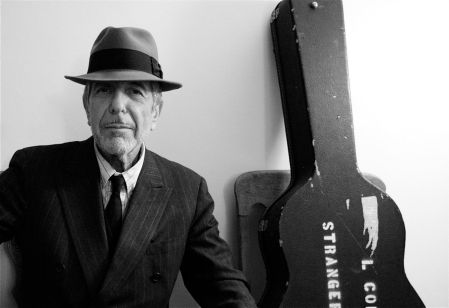
leonard-cohen

I heard the news this morning of the death, at the age of 82, of the great Leonard Cohen (above). The media are full of appreciations of his work and comments from admirers. I can add very little except that so many of the comments I’ve seen on social media have described his death as like the loss of an old friend, which is exactly how I feel.  He often dealt with dark and troubling themes, but always with defiant humour instead of despair: “There’s a crack in everything, that’s how the light gets in”.

Sadly the light has gone out, this time for good. At least he will live on in our hearts through his music, though sadly he won’t live to win the Nobel Prize for Literature (which I think he deserved more than Bob Dylan).

As a tribute here is what I think is his best song, Famous Blue Raincoat

Rest in Peace, Leonard Cohen (1934-2016).


P.S. I don’t mind telling you that I’ve just about had enough of 2016.


They Can’t Take That Away From Me

Posted in Jazz with tags , , , , , , , on November 10, 2016 by telescoper

This seems an appropriate piece of music for these days. It’s an unusual but deeply moving performance by the  legendary Lester Young who  was best known as a tenor saxophonist, but decided to play clarinet on two numbers that wound up on an album called Laughin’ to Keep from Cryin’. I have the original vinyl LP, which was issued on the Verve label, but it’s still waiting for me to transfer it to digital. The other members of the band are Roy Eldridge and Harry Edison (trumpets), Herb Ellis (guitar), Hank Jones (piano), George Duvivier (bass) and Mickey Sheen (drums).There were lots of problems making the record, apparently, but it did produce some fine music including this devastatingly tragic version of the standard They Can’t Take That Away From Me which is among the very best recordings he ever made.

At the time of this recording, in February 1958, Lester Young was terminally ill with cancer – he died just a year later at the age of 49.  Despite being barely able to stand, struggling with his breath control, and playing almost in slow motion, he manages to cast his fading light over this tune in a way that’s heartbreaking as well as beautiful.

Hallowe’en Again…

Posted in Biographical, Music with tags , , , on October 31, 2016 by telescoper

It’s Hallowe’en again, and although I feel I should concoct something appropriate, I really don’t have time. I’ve decided therefore to recycle a couple of items I’ve previously posted on this lamentable occasion.

We never had Halloween when I was a kid. I mean it existed. People mentioned it. There were programmes on the telly. But we never celebrated it. At least not in my house, when I was a kid. It just wasn’t thought of as a big occasion. Or, worse, it was “American” (meaning that it was tacky, synthetic and commercialized).

So there were no Halloween parties, no costumes, no horror masks, no pumpkins and definitely no trick-or-treat when I was a lad.

Having never done trick-or-treat myself as a child, I never really had any clue what it was about until relatively recently. I’d always assumed “Trick or Treat?” was a rhetorical question or merely a greeting like “How do you do?”.

In fact my first direct experience of this peculiar custom  didn’t happen until I was in my mid-thirties and had moved to a suburban house in Beeston, just outside Nottingham. I was sitting at home one October 31st, watching the TV and – probably, though I can’t remember for sure – drinking a glass of wine, when the front door bell rang. I didn’t really want to, but I got up and answered it.

When I opened the door, I saw in front of me two small girls in witches’ costumes. Behind them, near my front gate, was an adult guardian, presumably a parent, keeping a watchful eye on them.

“Trick or Treat?” the two girls shouted. Trying my best to get into the spirit but not knowing what I was actually supposed to do, I answered “Great! I’d like a treat please”.

They stared at me as if I was mad, turned round and retreated towards their minder who was clearly making a mental note to avoid this house in future. Off they went and I, embarrassed at being exposed as a social inadequate, retired to my house in shame.

Ever since then I’ve tried to ensure that I never again have to endure such Halloween horrors. Every October 31st, when nightfall comes, I switch off the TV, radio and lights and sit soundlessly in the dark so the trick-or-treaters think there’s nobody home.

That way I can be sure I won’t be made to feel uncomfortable.

Anyway, despite my own  reservations about Hallowe’en, I’ve decided to resurrect the following little video which seems to be appropriate for the occasion. It’s made of bits of old horror B-movies but the music – by Bobby “Boris” Pickett and the Crypt-kickers is actually the second single I ever bought, way back in 1973…

You Spin Me Right Round

Posted in Biographical, Music with tags on October 25, 2016 by telescoper

News yesterday of the death, at the age of 57, of Pete Burns reminded me of this number from 1985 by Dead or Alive. This seemed to be playing every time I went to a club in those days and is thus a kind of theme song for happy times, now lost forever.

R.I.P. Pete Burns (1959-2016)

Mahler: Symphony No. 2 (“Resurrection”)

Posted in Music with tags , , , , , , , , , , on October 21, 2016 by telescoper

Last night I was at St David’s Hall in Cardiff yet again, this time for a piece that I’ve never heard in a live performance: Symphony No.2 (“Resurrection”) by Gustav Mahler. This is a colossal work, in five movements, that lasts about 90 minutes. The performance involved not only a huge orchestra, numbering about a hundred musicians, but also two solo vocalists and a sizeable choir (although the choir does not make its entrance until the start of the long final movement, about an hour into the piece). In my seat before the concert I was particularly struck by the size of the brass section of the orchestra, but it turned out to be even larger than it looked as there were three trumpets and three French horns hidden offstage in the wings for most of the performance – they joined the rest of the orchestra onstage for the finale.

The musicians involved last night were the Orchestra and Chorus of Welsh National Opera, and the Welsh National Opera Community Choir, conducted by Tomáš Hanus who is the new music director of Welsh National Opera; this was his St David’s Hall debut. Soloists were soprano Rebecca Evans (who was born in Pontrhydyfen, near Neath, and is a local favourite at St David’s Hall) and mezzosoprano Karen Cargill (making her St David’s debut).

I don’t really have the words to describe what a stunning musical experience this was. I was gripped all the way through, from the relatively sombre but subtly expressive opening movement through the joyously dancing second movement that recalls happier times, the third which is based on a Jewish folk tune and which ends in a shattering climax Mahler described as “a shriek of despair”, the fourth movement is built around a setting of one of the songs from Das Knaben Wunderhorn, sung beautifully by Karen Cargill who has a lovely velvety voice very well suited to this piece, which seems more like a contralto part than a mezzo. The changing moods of the work are underlined by a tonality that shifts from minor to major and back again. All that was wonderfully performed, but it was in the climactic final movement – which lasts almost half an hour and is based on setting of a poem mostly written by Mahler himself, sung by Rebecca Evans, that what was already a very good concert turned into something truly remarkable.

On many occasions I’ve written about Welsh National Opera performances in the opera theatre and in the course of doing so I’ve very often mentioned the superb WNO Chorus. They weren’t called upon until the final movement, but as soon as they started to sing they lifted the concert to another level. At first they sang sitting down, which struck me as a little strange, but later on I realised that they were holding something in reserve for the final moments of the work. As the symphony moved inexorably towards its climax I noticed the offstage brass players coming onto the stage, the choir standing up, and the organist (who had been sitting patiently with nothing to for most of the performance) took his seat. The hairs on the back of my neck stood up in anticipation of a thrilling sound to come. I wasn’t disappointed. The final stages of this piece are sublime, jubilant, shattering, transcendent but, above all, magnificently, exquisitely loud! The WNO Chorus, responding in appropriate fashion to Mahler’s instruction to sing “”mit höchster Kraft” combined with the full force of the Orchestra and the St David’s Hall organ to create an overwhelming wall of radiant sound. Superb.

Mahler himself wrote of the final movement: “The increasing tension, working up to the final climax, is so tremendous that I don’t know myself, now that it is over, how I ever came to write it.” Well, who knows where genius comes from, but Mahler was undoubtedly a genius. People often stay that his compositions are miserable, angst-ridden and depressing. I don’t find that at all. It’s true that this, as well as Mahler’s other great works, takes you on an emotional journey that is at times a difficult one. There are passages that are filled with apprehension or even dread. But without darkness there is no light. The ending of the Resurrection Symphony is all the more triumphant because of what has come before.

The end of the performance was greeted with rapturous applause (and a well-deserved standing ovation). Congratulations to Tomáš Hanus, Karen Cargill, Rebecca Evans and all the musicians who took part in last night’s concert which is one that I’ll remember for a very long time.

P.S. You might be interested to know that St David’s Hall has been ranked in the world’s Top Ten Concert Halls in terms of sound quality. Those of us lucky enough to live in or near Cardiff are blessed to have such a great venue and so many superb great concerts right on our doorstep!

P.P.S. The concert got a five-star review in the Guardian.