It’s too hot today to stay inside blogging at lunchtime, so here’s some lovely music from the Gadfly Suite by Dmitri Shostakovich. I’ve been called a Gadfly myself from time to time, but I’m also partial to a bit of romance now and then….
Follow @telescoperArchive for the Music Category
Romance – from the Gadfly
Posted in Music with tags Dmitri Shostakovich, Gadfly Suite, Romance on July 17, 2014 by telescoperThis Is Our Music – A tribute to Charlie Haden
Posted in Jazz with tags Charlie Haden, Don Cherry, Ed Blackwell, Jazz, Ornette Coleman, This is Our Music on July 14, 2014 by telescoperI was saddened at the weekend to hear of the death, on Friday 11th July, at the age of 76, of the great jazz bassist, Charlie Haden. I always associate Charlie Haden with a series of great records he made with Ornett Coleman and Don Cherry during the late 50s and early 60s, including The Shape of Jazz to Come and Change of the Century, both of which I’ve blogged about already. I thought I’d pay a little tribute to Charlie Haden by writing about another of these masterpieces, a disc called This Is Our Music. As with the other two, this is also available in full on Youtube so you can listen to it here:
When he first arrived on the jazz scene the licence Coleman allowed himself in his improvisations drew criticism bordering on abuse from several prominent musicians. This a view echoed, for example, by the great Charles Mingus in quote I got from another blog about Ornette Coleman
Now aside from the fact that I doubt he can even play a C scale in whole notes—tied whole notes, a couple of bars apiece—in tune, the fact remains that his notes and lines are so fresh. So when [the jazz dj] Symphony Sid played his record, it made everything else he was playing, even my own record that he played, sound terrible.
Although he clearly admired his originality, Mingus may have been right about the very young Ornette Coleman’s technical ability; but I don’t think any unbiased listener could argue that he lacked mastery of his instrument by the time this record was made, in 1960. His skill in sustaining notes (always difficult on alto sax, which he plays throughout this album) is especially evident on this album in the standard Embraceable You whilst the precision of his articulation at any temp makes it quite clear that he really had little to learn in any aspect of control of his instrument. The slurs and distortions that are so much a part of his style are beautifully managed, and combine with his daring tonal approach to give the impression of great freedom that he strove to convey in his music.
It used to be question whether the liberties in which Coleman indulged were not so as extreme as to preclude overall unity, yet for all his virtuosity in rhythmic and melodic invention, he displays a genuine continuity of line in everything he does on this record. On Blues Connation, for example, his solo evolves with impeccable logic, each phrase growing almost inexorably out of the one before, whilst the general melodic shape bears continuous affinity to the theme. Moreover, his music boasts an intensity of feeling that no charlatan could ever hope to achieve. As I hear it, the dominant emotion in his playing at fast tempo is not love, as some have claimed, so much as fear, although this mood is often relieved by flashes of lyrical sadness. In the slower pieces, such as Beauty is a Rare Thing and Embraceable You, and the medium-paced Humpty Dumpty, the latter sentiment comes through even more strongly.
Don Cherry was an ideal partner, for his work is cast in a similar mould, but at this stage in his own development he did tend to stand in Coleman’s shadow. Drummer Ed Blackwell is very good throughout, but Charlie Haden is nothing short of brilliant, which is why I chose this as a tribute piece for him.
The bassist Haden not only displays all the classic jazz virtues expected of him, but also possesses an amazing sense of anticipation that enables him to work hand in glove with the two hornmen. Blackwell is neither a loud nor an aggressive drummer, but he evinces genuine drive and the interweaving mobility he and Haden achieve together is truly remarkable in its own right as well as fitting well with the richness of the leader’s own work.
Had I the time, I could write a lot more about this album in particular and about Charlie Haden in general, but all I can do his suggest that you listen to the LP for yourself. Coleman was still refining his concept of how his Quartet should function, so it’s a little rough around the edges in places, and in any case I know many devout jazz fans who find this kind of music challenging. It is worth it, though. Charlie Haden was only 22 when This Is Our Music was recorded. He went on to many great things during his subsequent career. Sadly that spark has now gone out, but he will live on in our hearts through his music.
Rest in Peace, Charlie Haden, Jazz legend (1937-2014).
Follow @telescoperWhen David heard that Absalom was slain…
Posted in Music with tags 2 Samuel 18:33, Bible, Thomas Tomkins, When David Heard that Absalom was slain.. on July 4, 2014 by telescoperI heard this beautiful music on Radio 3 this morning. It stopped me in my tracks and couldn’t do anything until it was finished. It’s by someone who’s quite new to me called Thomas Tomkins, a Welsh composer who lived from 1572 to 1656. This piece is setting of a biblical text from the 2nd Book of Samuel (Chapter 18 Verse 13) when David learns of the death of his son Absalom. In the King James version this reads
Follow @telescoperAnd the king was much moved, and went up to the chamber over the gate, and wept: and as he went, thus he said, O my son Absalom, my son, my son Absalom! would God I had died for thee, O Absalom, my son, my son!
When you and I were young, Maggie
Posted in Jazz with tags Maggie, When you and I were young on July 1, 2014 by telescoperVery busy day today so just time for a quick post of a piece of music. No political interpretation is to be put on this choice; Maggie Thatcher and I were never young at the same time. I’m just proving that football isn’t the only field to have produced a famous John Barnes:
Follow @telescoper
Mu süda, ärka üles
Posted in History, Music with tags Cyrillus Kreek, Estonia, Estonian TV Girls' Choir, Tallinn on June 28, 2014 by telescoperWell, the conference is over. I did my summary talk this afternoon and most of the conference attendees have already begun their journey home. I’m coming back to England tomorrow so I spent the early evening doing a bit of exploration. The conference schedule has been so packed that this is the first time I’ve been able to act like a tourist. I have to say the old town of Tallinn really is exceptionally beautiful, especially in the bright summer sunshine. Here’s a couple of pictures I took on my stroll.
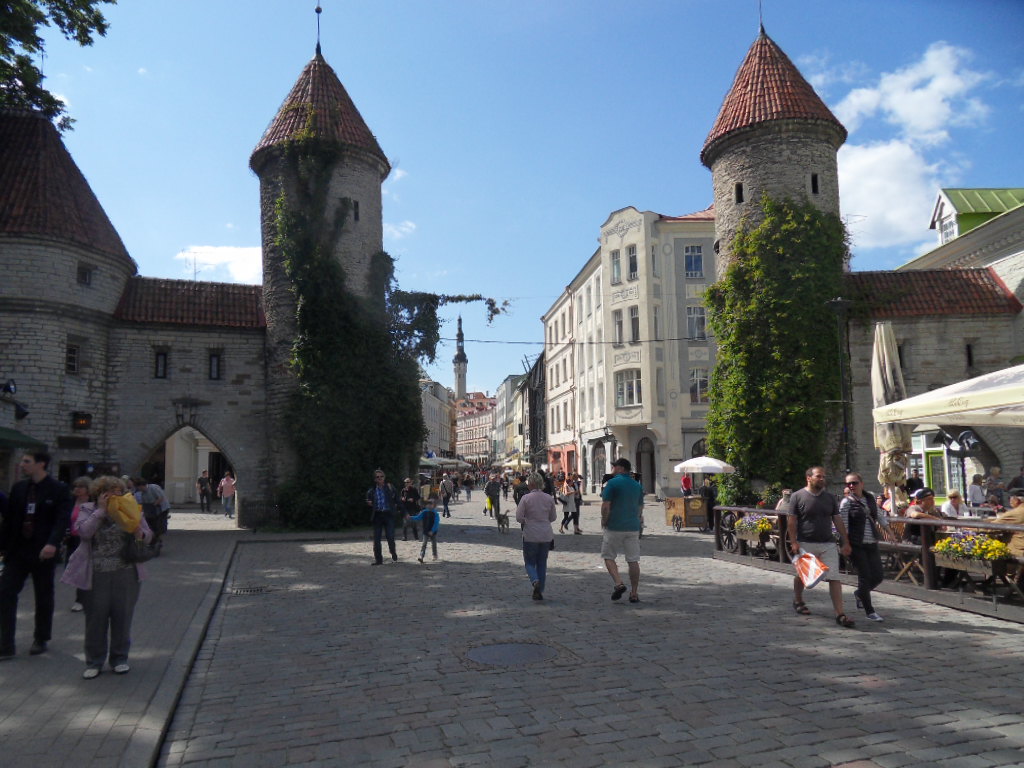
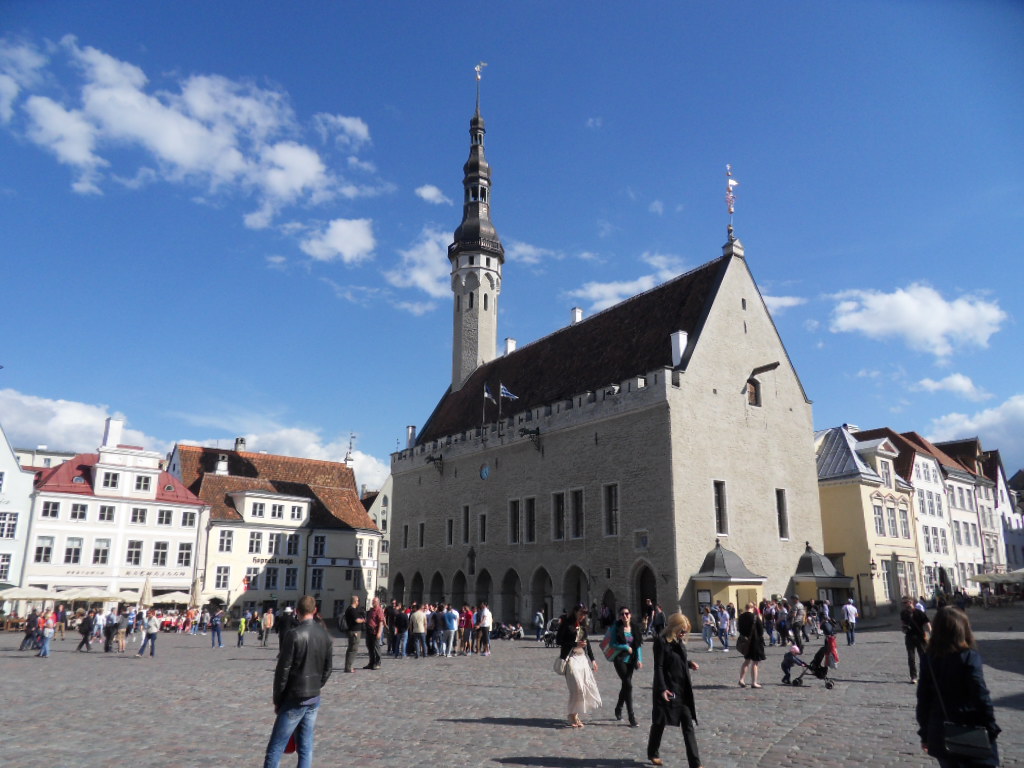

On Friday we had the conference dinner at the House of the Blackheads, which doesn’t sound so promising in English but is in fact a spending old building in the centre of Tallinn. To my delight we were serenaded by a choir (The Estonian Girls’ TV Choir). Estonia is a small country, with a population of only 1.3 Million, but it has an exceptionally strong musical tradition especially in choral music. Estonia has more choirs per unit population than any other country in the world, or so I’m told. Even more than Wales!
Anyway, this is the folk hymn they started with last night; the lights were dimmed in the ancient hall and the girls stood around the dining hall holding candles as they sang. The effect was stunning. Mu süda, ärka üles which means Awake, my heart is a traditional song, but the wonderful arrangement is by a composer who is quite new to me, Cyrillus Kreek.
I’ll complete my series of summaries of the conference tomorrow morning.
Follow @telescoperMusic for the Solstice
Posted in Music with tags Felix Mendelssohn, Overture to a Midsummer Night's Dream on June 21, 2014 by telescoperWell, in case you didn’t realize, the summer solstice (when the Sun reaches its most northerly point in the sky) occurred at 11.51 BST today. I guess that means it’s all downhill from here. Anyway, this gives me some sort of excuse for me posting a piece of music I’ve loved ever since I was a young child for its energy and wit. It’s the Overture to a Midsummer Night’s Dream, which was written by Felix Mendelssohn when he was just 17 years old, and even so it’s his Opus 21. This performance is by the Leipzig Genwandhausorchester conducted by Kurt Mazur. Enjoy!
Follow @telescoperSong for my Father
Posted in Jazz with tags Horace Silver, Joe Henderson, Song for my father on June 19, 2014 by telescoperI was saddened last night to hear of the death at the age of 85 of the great Jazz pianist Horace Silver. BY way of a small tribute here’s the original composition Song for my Father as issued on Blue Note in 1964. Silver managed to fuse the forthright hard bop style he pioneered with the (then) trendy Bossa Nova beat to create a jazz classic. Listen out for a wonderful solo by the fabulous Joe Henderson on tenor sax too.
RIP Horace Silver (1928-2014)
Follow @telescoperTräume
Posted in Music with tags Kirsten Flagstad, Richard Wagner, Träume, Wesendonck Lieder on June 11, 2014 by telescoperI know this old record is a bit crackly, but just listen to the voice! This is the wondrous Kirsten Flagstad, recorded in 1948 with Gerald Moore on piano, singing Träume, the last of the five Wesendonck Lieder by Richard Wagner.
As a person Wagner was definitely a complete shit, but you have to admit he wrote some beautiful music. Perhaps there really is some good in every person…
Follow @telescoperDialogues des Carmélites
Posted in Opera with tags BBC Radio 3, Dialogues des Carmélites, Francis Poulenc, Royal Opera House, Sir Simon Rattle, Streetwise Opera on June 8, 2014 by telescoperI don’t usually blog about Opera unless it’s to do with a performance I’ve actually attended in person, but I couldn’t resist posting something about the live broadcast from the Royal Opera House in Covent Garden of Dialogues des Carmélites by Francis Poulenc that I heard last night on BBC Radio 3.
I’m basically a complete ignoramus when it comes to the music of Poulenc. With the exception of a few small chamber pieces of his that I’ve heard (and very much liked) I don’t know much about him as a composer at all. Last night’s performance however has inspired me to rectify that omission. To that end I’d be grateful of any recommendations through the comments box.
Anyway, back to Dialogues des Carmélites. This is based on the true story of the martyrdom of sixteen Carmelite nuns during the French Revolution. Not knowing what to expect I was completely stunned by the music, much more melodic than I had expected, and beautifully played by the Orchestra of the Royal Opera House under the direction of Sir Simon Rattle. There are so many references to other composers in this piece that my head was spinning, but the strongest influence I could hear was Giacomo Puccini. Indeed, at times it sounded more like Puccini than Puccini ever did! I was gripped by the whole performance, but the ending, with the nuns singing the Salve Regina as they walk one by one to the scaffold, the dread sound of the guillotine repeatedly falling was utterly horrific and utterly compelling. In fact it was such a powerful experience I was trembling at the finish. Perhaps the fact that it was an audio broadcast only made it even more intense, precisely because so much was left to the imagination. It wasn’t exactly easy listening, but as a piece of music drama it was a triumph.
The entire performance is available for the next seven days on the BBC iPlayer in High Definition sound via this link. If you make time to listen to it, I promise you won’t regret it – although the ending might give you nightmares!
Another thing worth mentioning was that this was the largest cast ever to appear on the stage of the Royal Opera House; no less than 167 people altogether. Among those involved were members of Streetwise Opera, a charitable organization quite new to me, which uses music to help homeless people make positive changes in their lives. This is such a brilliant idea that I sent a donation to support their work. I urge you to do likewise.
Follow @telescoperMoses und Aron
Posted in Opera with tags Arnold Schoenberg, Lothar Koenigs, Moses und Aron, Sir John Tomlinson, Wales Millenium Centre, Welsh National Opera on May 25, 2014 by telescoperLast night I found myself once again in the Wales Millennium Centre in Cardiff Bay, the bank holiday weekend giving me enough breathing space to head back to Wales for a short break and take in an Opera.
As it turned out there was a rare treat on the menu: the first night of a new Welsh National Opera production of Moses und Aron by Arnold Schoenberg. It was well worth the trip from Brighton.
Schoenberg had only completed two of the three acts by the time of his death in 1951 so the Opera is unfinished. On the other hand the Biblical story of the Exodus is so familiar that it doesn’t matter too much that some is missing. But although the plot is well known the Opera gives it several new dimensions.
Moses is chosen by God to lead his people from captivity but he is deeply troubled by the difficulty of this task because of his old age and the ‘clumsiness of his tongue’. Moses’ brother Aron has a much easier way with words (and pictures) so they join forces and lead the Jews from captivity into the wilderness.
Moses has deep reservations about Aron’s freedom with the use of images and other gimmicks, with good reason. In Act 2 while Moses is away receiving the Ten Commandments and whatnot, leaving Aron in charge, Aron permits all kind of lewd and ungodly behaviour, all starting with his use of images to depict God. Upon Moses’ return all that comes to an end, but it has exposed an irreconcilable disagreement between the two brothers about what if anything of the divine can ever be expressed in words. Moses’ concept of God is absolute and unknowable, requiring faith rather than understanding; Aron is content to use the Method of Images.
I’m not qualified to go into the theology behind all this, but it did have some resonance with me as a scientist. How much of the truth of creation do we capture with our words and equations, or are they just images?
Anyway, back to the Opera. The staging was modern, Act I was a lecture room or conference centre. Moses appeared as an ageing professor and Aron as a sort of Teaching Assistant. The Israelites were depicted as rowdy and occasionally violent students. The set changed slightly in Act 2 to resemble a movie theatre, implying that Aron’s images were cinematic, presumably violent and pornographic.
Moses was played by the legendary Sir John Tomlinson. His deeply sonorous voice and compelling stage presence provided a perfect focus for the production. Aron was Mark Le Brocq, whose fine performance was all the more remarkable because he was understudy for Rainer Trost who was unwell; to pick up such a challenging part at a few hours’ notice can not be easy and he did wonderfully well. As always, the Chorus of Welsh National Opera were also excellent.
Schoenberg’s music for Moses un Aron is resolutely serialist, which will no doubt put some people off. I found it gripping and starkly beautiful, performed with consummate artistry by the Orchestra of Welsh National Opera under the direction of Lothar Koenigs.
All in all, yet another wonderful evening of music drama courtesy of WNO. Only two performances of Moses und Aron were planned for Cardiff this season; the other is next Friday (30th May). I’m glad that the Wales Millennium Centre was nearly full, as I hope WNO will continue putting on rare and challenging music like this. Unfortunately it seems the Arts Council have other ideas, and have just cut their grant to WNO. Fewer new productions and more revivals are in store from now on.
Follow @telescoper

