
Archive for the Politics Category
Where Government Ministers Come From..
Posted in Politics on November 28, 2018 by telescoperWe and They
Posted in Biographical, Literature, Politics with tags BrExit, Citizen of Nowhere, ireland, nationalism, nationality, Rudyard Kipling, Theresa May on November 25, 2018 by telescoperAll good people agree,
And all good people say,
All nice people, like Us, are We
And every one else is They.
(from `We and They‘, by Rudyard Kipling.)
A few days ago one of my colleagues here in Maynooth mentioned that he found it amusing that, although I’ve been living and working here in Ireland for less than a year, I have already taken to referring to the British as `They’ rather than `We’. He went on to point out that he noticed this transformation from First Person to Third Person some months ago.
I hadn’t realised that I was doing this, but I suppose it is a reflection of the fact that I have accepted that I will almost certainly be spending the rest of my working life in Ireland, and will probably end my days here too. It has taken relatively little time of observing Britain from the other side of the Irish Sea to recognize that it is changing into something grotesque and horrible. I want no part of what it is becoming, a squalid xenophobic rathole run by crooks, liars, and narrow-minded bigots. My new home is far from perfect, but it’s a damn sight better than Brexit Britain.
About a year ago I wrote (from Cardiff) about my reasons for moving to Maynooth. Here is a quote:
Because I’ve lived here all my life I thought I would find it difficult to leave Britain. I was quite traumatised by the Brexit referendum, as one would be by the death of a close relative, but it made me re-examine my life. There is a time when you have to move on, and that’s what I’m doing. I’m done here.
I haven’t changed my mind.
Not that I now consider myself fully Irish. Passport and citizenship notwithstanding, I still feel like a foreigner here and probably always will. I lived for over fifty years in Britain and do not have sufficient experience of Ireland to feel really part of it. Yet. That may come. But to appropriate the phrase Theresa May used in her Lancaster House speech last year I am proud to be for the time being, and perhaps forever, a `Citizen of Nowhere’. I don’t mind that, and a little bit of autobiography that might explain why I see things the way I do.
I was born in Wallsend (on Tyneside) in the North East of England. My parents were both born just before World War II started, also in the area where I was born. Of my four grandparents, one was born in England, one in Northern Ireland, one in Scotland, and one in Wales. I always smile when I had to put my nationality on a form, because I always put `United Kingdom’. Of course being born in England makes me English too, but I find that less defining than `UK’ or `British’ or even `Geordie’, and now of course there’s the Irish dimension. To be honest, my ancestry means that I generally find the whole concept of nationality fundamentally silly. I find nationalism silly too, except for those occasions – regrettably frequent nowadays – when nationalism takes on the guise of xenophobia. Then it is truly sinister. Nationalism is a tool by which unscrupulous individuals whip up hatred for political gain, regardless of the economic or social consequences. This is what lies behind Brexit.
Anyway, talking about Theresa May, it appears that the Prime Minister has written a letter to the British public asking for them to support her `deal’. I find it very curious that she has done this when, without another referendum or a General Election, the British public is denied any way of either expressing or withholding such support. Is this an admission that there will have to be another vote?
It appears from her letter that the PM is particularly happy about one aspect of the deal:
We will take back control of our borders, by putting an end to the free movement of people once and for all.
Apart from the fact that the UK always had control of its borders anyway, I find it absolutely astonishing that any politician could brag about removing from its own citizens the right to free movement across 27 countries. Freedom of movement was and is one of the great benefits of the European Union. Outside the EU, Theresa May’s `hostile environment’ in which all foreigners are viewed with suspicion and contempt will become even more hostile. It is just a matter of time before the unlawful deportations that the Home Office have inflicted on members of the Windrush generation will begin happening to Europeans currently living in the United Kingdom.
Towards the end of her awful letter, there is this:
We will then begin a new chapter in our national life. I want that to be a moment of renewal and reconciliation for our whole country. It must mark the point when we put aside the labels of ‘Leave’ and ‘Remain’ for good and we come together again as one people.
Excuse me, but the time for reconciliation was in the immediate aftermath of the 2016 Referendum result. Instead, Mrs May went out of her way to insult, denigrate and marginalize everyone who voted Remain; she never apologized for the `Citizens of Nowhere’ jibe and her pals in the right-wing added other pejoratives like ‘saboteur’ and ‘enemy of the people’. Like so many other things she says and does, Mrs May’s letter is so phony it is painful.
Worse, the Prime Minister has continued to insult European citizens working in the UK by accusing them of `jumping the queue’. It seems that the Prime Minister just can’t stop her deep-seated xenophobia showing itself from time to time. It’s her defining characteristic, and it is sure to be the defining characteristic of post-Brexit Britain.
Follow @telescoperWomen-only Professorships in Ireland
Posted in Education, Politics with tags academia, gender, gender discrimination, ireland, women-only professorships on November 16, 2018 by telescoperEarlier this week the Irish Government made an announcement that has ruffled a few feathers: it aims to create a number of new senior positions at Professor level in Irish Universities that are open only to female candidates. I don’t know the details of how this scheme will work, but I understand that the positions will be targeted at subject (and perhaps geographical) areas in which there is a demonstrable gender imbalance and the scheme will cost about €6M.
Reactions to this among people I know have been very varied, so it seems a good topic on which to have a simplistically binary poll:
For the record, I should state that I am broadly in favour of the idea, but I’d like to know more about how these positions will be allocated to institutions, how they will be advertised and how the recruitment will be done. I’ll also add that my main worry about this initiative is that it might distract attention away from the need for Irish higher education institutions to have much better promotion procedures; see, e.g. here. There are plenty of female lecturers in Irish universities, but they seem to face ridiculous difficulties getting promoted to Professorships.
Follow @telescoper
What are we going to do now?
Posted in Politics, Television with tags BrExit, Spike Milligan on November 15, 2018 by telescoperOn this tumultuous day in British politics, this blog is proud to be able to show exclusive behind-the-scenes footage of the Cabinet discussions at Number 10 Downing Street:
Follow @telescoperA Suspension of Hostilities
Posted in History, Politics with tags armistice day, History, Politics, Poppy, Remembrance Sunday on November 11, 2018 by telescoperAmong all the images produced during this weekend’s commemorations of the centenary of Armistice Day, this image of Angela Merkel and Emmanuel Macron struck me as particularly moving.
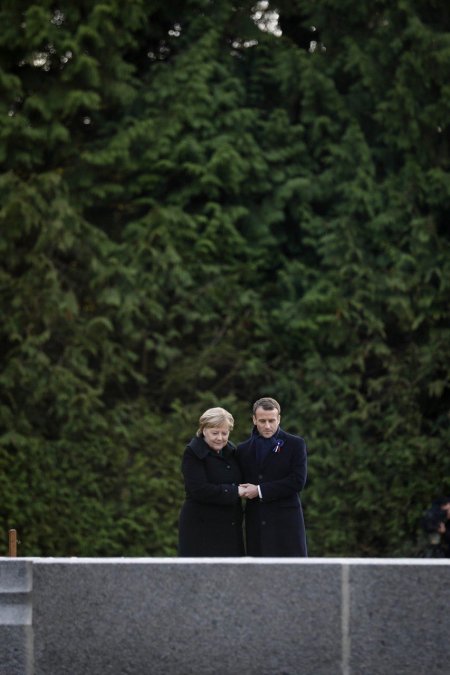
Part of the reasons is that it reminded me of this photograph, of President Mitterand and Chancellor Kohl, taken in 1984:
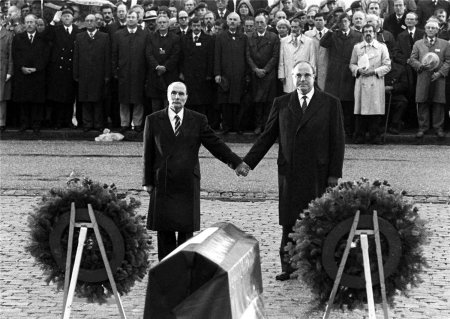
Exactly one hundred years after the truce that effectively ended the First World War, these images remind us how much suffering took place before Europe reached a point at which war between France and Germany became unthinkable. That peace now looks increasingly fragile as the forces of nationalism, spurred on by populist demagogues, and funded by greedy disaster capitalists, threaten to tear apart the institutions that have brought Europe together in a spirit of mutual cooperation for so long. All that has been achieved could so easily be lost.
As Fintan O’Toole has written in a long article in this weekend’s Irish Times, the First World War is, in many ways, still being fought. The Second World War was certainly very much a continuation of the First, after a break of just over twenty years, to which the short-sightedness of Western governments in their treatment of Germany was a contributing factor. The end of the First World War saw not only the disintegration of the German Empire (and the abdication of the Kaiser), but also the collapse of Tsarist Russia, and the end of the Austro-Hungarian and Ottoman Empires to boot. We are still living with the consequences of that upheaval.
All this reminds us – or should remind us – that the word `armistice’ means `a truce’ or `a suspension of hostilities’ rather than a lasting peace, and it is by no means impossible we could be sleepwalking to disaster once more. As President Macron put it in his speech today
Les démons anciens resurgissent : des idéologies nouvelles manipulent des religions, l’Histoire menace de reprendre son cours tragique. Faisons une fois de plus ce serment des Nations de placer la paix plus haut que tout, car nous en connaissons le prix.
Frankly, I fear very much for the future and take solace only in the fact that I am no longer young.
I have found the pomp and ceremony of this year’s official Armistice commemorations very difficult to endure. Perhaps there are some people, including some in high places, who have learned the lessons of history, but it is also clear that there are very many who have not.
Which brings me to the poppy. I have written quite a few pieces on this blog, around the time of Remembrance Sunday, about the wearing of a poppy, the last being in 2016. I have worn a poppy at this time of year for most of my adult life, but I decided last year to stop.
For one thing, there is no pressure to wear a poppy here in Ireland. Indeed, many Irish people see the poppy mainly as a symbol of British militarism and colonial oppression. Even at Friday’s concert to mark the Armistice I saw only a few audience members wearing a poppy, and most of them were the shamrock version commemorating the sacrifice of Irish soldiers during the Great War.
But I don’t think I’ve ever really been that susceptible to peer pressure, so that’s not the main reason for my not wearing a poppy. The main reason is that over the past couple of years the poppy has been appropriated by the likes of racist thug, career criminal and founder-member of the EDL, Stephen Yaxley-Lennon (also known as Tommy Robinson):

I simply cannot bring myself to wear the same badge as this creature, nor can I stand the hypocrisy of those politicians who make a show of wearing it while happily encouraging the rise of nationalism. Enough is enough. The message of the poppy is supposed to be `Lest We Forget’. I’m afraid far too many have already forgotten.
Follow @telescoperThe March for a People’s Vote
Posted in Politics on October 20, 2018 by telescoper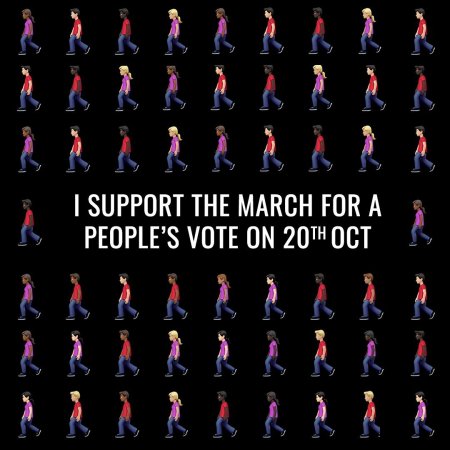
I can’t be there in London today because of other commitments here in Ireland but I send my very best wishes to everyone marching in London today.
It seems the weather is good so I hope you all have a fantastic day!
Update: it seems that one or two people have turned up:
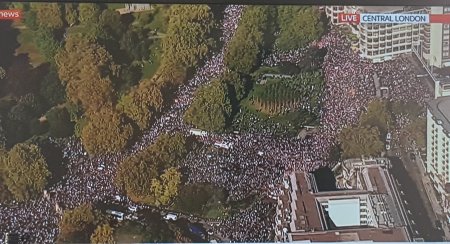
It turns out there were about 700,000 at the demonstration. The march won’t in itself change anything, but everyone who took part in it will surely now feel stronger and more energised for the struggles to come, while those on the other side are getting seriously rattled.
Imagine the scale of the protests when the Government announces its intention to proceed without a Withdrawal Agreement.
Follow @telescoperUnion Matters
Posted in Education, Politics with tags IFUT, Irish Federation of University Teachers, UCU, Universities and Colleges Union, Universities Superannuation Scheme, USS on October 14, 2018 by telescoper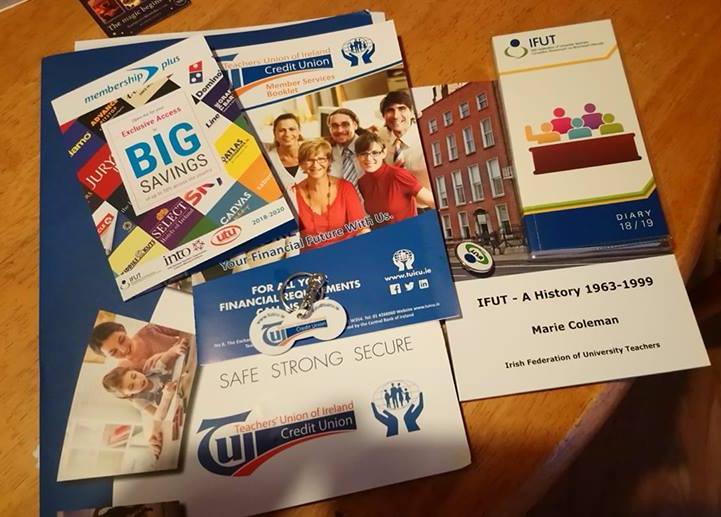
The above collection of goodies arrived last week in a Welcome Pack from the Irish Federation of University Teachers (IFUT), my new trade union. I sent in an application to join some time ago, and was getting a bit worried that it might have been lost, but then confirmation arrived in the form of my membership card along with a pen, a badge, a lanyard, an application form for a Credit Union and various other bits and bobs. It’s only by standing together that academics in Irish universities have any hope of exerting enough pressure on the Government to get it to reverse the persistent underfunding of Higher Education in this country. Even then it won’t be easy – last week’s budget had nothing whatsoever in it for universities or students.
Incidentally, according to the online budget calculator, I’ll be a princely €28 per month better off next year as a result of small changes in taxation, but it seems to me that the priority should have been to help the less well off and it failed to do that. No doubt, however, the cautious approach to public finances shown by the Government is largely down to the uncertain effects of Brexit.
While I am on about unions, some of the readers of this blog will recall that I was participating in industrial action by UCU (the Universities and Colleges Union) in the UK earlier this year in relation to proposed cuts to pensions in the Universities Superannuation Scheme (USS). I have since left that scheme, deferring my benefits from it until I retire, but I couldn’t resist passing on a link to an article I read yesterday, which argues that USS’s valuation (which resulted in a deficit) rests on a large and demonstrable mistake and, when this is corrected there is no deficit as at 31 March 2018 and no need for detrimental changes to benefits or contributions.
Could it be that all that pain was caused by an accounting error? If so, then heads should roll!
Follow @telescoperDean’s Lecture – Prof. AC Grayling
Posted in Politics with tags A.C. Grayling, BrExit, People's Vote on October 11, 2018 by telescoper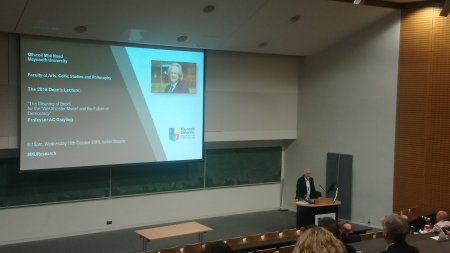
Just a quick note to mention that yesterday evening I attended the annual Dean’s Lecture in the Faculty of Arts, Celtic Studies and Philosophy at Maynooth University. This year it was delivered by the renowned philosopher Professor A.C .Grayling and was on the subject of The Meaning of Brexit for the ‘Westminster Model’ and the Future of Democracy. It was a fascinating talk, that involved a historical survey of the development of Parliamentary democracy in the UK (and elsewhere) in the light of the ongoing Brexit fiasco, ending with the case for a `People’s Vote’ as the only likely way out of the current impasse.
You can find a longer review of the lecture by a fellow Maynooth blogger here.
It was also pleasant to have the chance to have a brief chat with the speaker over a glass of wine at a reception after the lecture. Professor Grayling seems a very nice chap! I just wish I shared his optimism. I hope I’m proved wrong, but I fear that things are going to get very nasty in Britain very soon.
Follow @telescoperVoting Matters
Posted in Maynooth, Politics, The Universe and Stuff with tags Blasphemy, Blasphemy Referendum, Hubble's Law, IAU, International Astronomical Union, Referendum on October 4, 2018 by telescoperAt last I have this afternoon free of teaching and other commitments, and having fortified myself with lunch in Pugin Hall, I’m preparing to make an attempt on the summit of the Open Journal of Astrophysics now that all the outstanding administrative obstacles have been cleared. Before shutting myself away to do up the loose ends, however, I thought I’d do a quick post about a couple of electoral matters.
The first relates to this, which arrived at my Maynooth residence the other day:
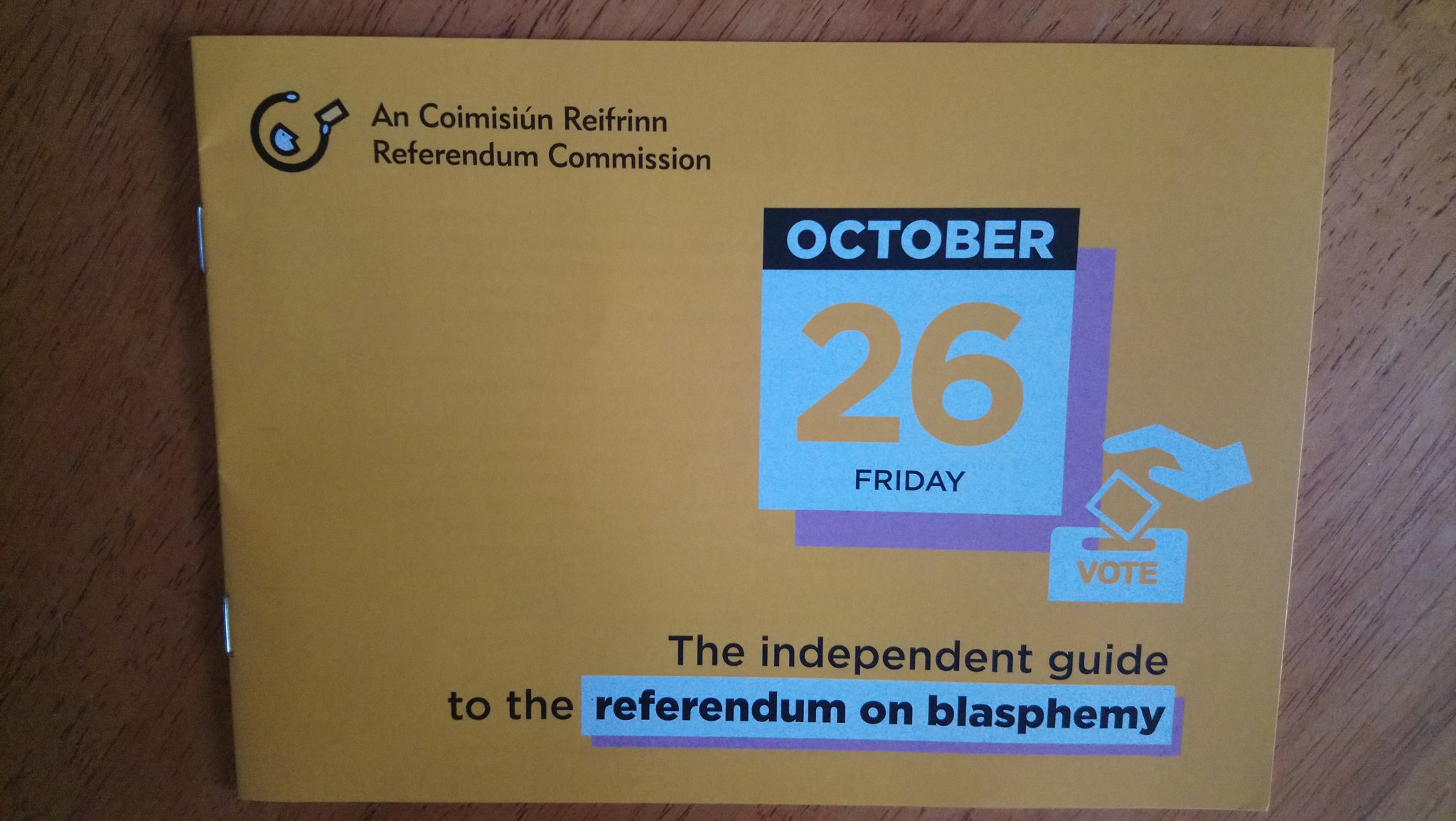
This document reminded me that there is a referendum in Ireland on the same day as the Presidential election I mentioned at the weekend. The contents of the booklet can be found here. In brief,
At present, the Constitution says that publishing or saying something blasphemous is an offence punishable under law. Blasphemy is currently a criminal offence. The referendum will decide if the Constitution should continue to say that publishing or saying something blasphemous is a criminal offence. If the referendum is passed, the Oireachtas will be able to change the law so that blasphemy is no longer a criminal offence.
Having read the booklet thoroughly and thereby having understood all the issues, and the implications of the vote, I have decided that I will vote in favour of making blasphemy compulsory.
The other matter being put to a vote is something I just found out about today when I got an email from the International Astronomical Union concerning an electronic vote on Resolution B4, that the Hubble Law be renamed the Hubble-Lemaître law. For background and historical references, see here. I don’t really have strong opinions on this resolution, nor do I see how it could be enforced if it is passed but, for the record, I voted in favour because I’m a fan of Georges Lemaître…
Follow @telescoper
The Strumia Affair
Posted in Politics, The Universe and Stuff with tags Alessandro Strumia, CERN, gender, Physics, Science on October 3, 2018 by telescoperI’m very late to this story as it broke over the weekend when I was preoccupied with many things, but it has triggered quite a reaction in the media (including here in Ireland). The story involves a physicist by the name of Alessandro Strumia who works at the University of Pisa in Italy. This person used the opportunity provided by a Conference on Theory and Gender to deliver a talk that contained highly inflammatory comments about gender and physics ability.
As a service to the community I’ve uploaded the slides for Strumia’s talk to Slideshare so you can read them here if you’re interested in his argument:
There are detailed discussions of Strumia’s talk by fellow bloggers Philip Moriarty here and Jon Butterworth here. Between them they cover most of what I’d say on the topic if I had time so I’ll direct you to them rather than repeat the arguments here. There are a host of other reaction pieces elsewhere, and I won’t attempt to summarize them either. Suffice to say that the old argument that `women are intrinsically not as good at physics as men’ has been refuted many times using solid empirical evidence; see the above post by Philip. It’s no wonder, though, that women get put off doing physics, when there are people like Alessandro Strumia in the field and potentially responsible for evaluating the performance of female staff.
What I will do add is that, for someone who purports to be a scientist, Strumia’s use of evidence is shockingly unscientific. His argument is riddled with non sequitur, unjustified assumptions and formulaic prejudice. Apart from everything else I think this is symptomatic of a malaise that is a widespread affliction in the field theoretical physics nowadays, which is worst among string theorists (which Strumia is not), namely a lack of basic understanding of, or even interest in, the proper application of scientific method.
Follow @telescoper

