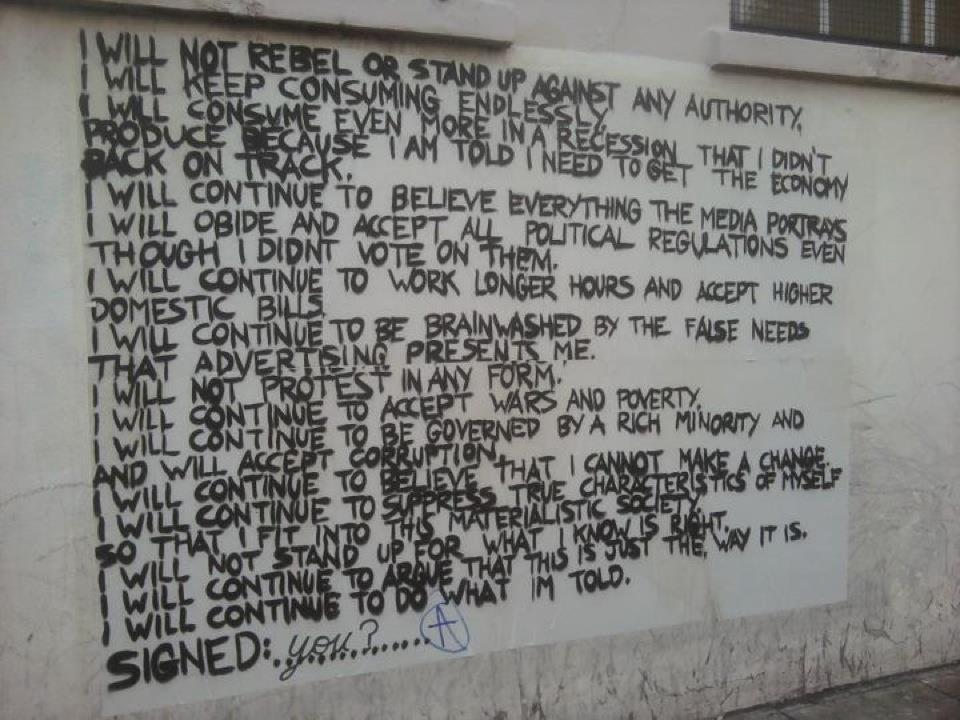
Looking at the news feeds during my last evening in rainy Copenhagen, I see that the Leader of the Opposition, Ed Milliband, has weighed in with an armful of brand new platitudes he obviously acquired during the riots, including a dig at so-called “academic” studies into the causes of violent disorder.
I think this is a big mistake. A serious academic study would undoubtedly reveal a deep sociological connection between mob violence of the type recently experienced in England and the soccer hooliganism of the 70s and 80s. The pioneering research discussed in the following news clip offers a radical suggestion for solving the problem of youth violence.
I’m in Copenhagen, yet again, for the third time in as many months, this time for a workshop arranged by the Dark Cosmology Centre at the Niels Bohr Institute. It’s my talk this morning, in fact, so although I’m up early I haven’t got much time to post. I have to work on my talk to see if there’s a way I can make it all fit in 30 minutes!
Copenhagen is a pretty familiar place to me, but this has to be the most unsettling trip I’ve ever made here. I’m not talking about the long delay at Heathrow airport before we took off; I’ve come to expect that. The airport clearly can’t cope with the level of traffic it is supposed to handle during the summer months, so you have to reckon on at least an hour delay inbound and outbound. Sitting on the tarmac for an hour while being told over and over again that it will be “just a few minutes” really does bring out the grumpy old man in me. Still, at least I didn’t lose any luggage.
No, the reason this is such an unsettling trip is that back home in Blighty all hell seems to have broken lose, with riots in the streets of, first, London and now apparently Birmingham, Liverpool and Bristol. I was also on the march in 1990 that turned into the Poll Tax riot. I was appalled by the violence that day and got myself and my friends away from trouble as soon as it flared, but it has to be said that it did lead to a change in the law, something Parliament had failed to achieve.
Back to the present, I note that the Tesco at Bethnal Green, where I used to live, has apparently been looted. I hope all my friends in London are keeping themselves safe.
I don’t think there’s anything I can say about these riots that wouldn’t be ill-informed, unhelpful, or even downright stupid. I am however old enough to remember that such things have happened before, in deprived inner-city areas, including Liverpool and Bristol. The circumstances were similar too. Given the public spending cuts that have hit community programmes extremely hard, it doesn’t surprise me that some have decided to lash out, especially at the Police, whose criminal collusion with the media over phone-tapping and draconian tactics in dealing with lawful protests has turned many others against them .
I find it hard to separate these signs of social disintegration from the large-scale economic landscape. The huge level of debt accumulated by banks during the Credit Crunch of 2008 has now been absorbed by governments across the globe, who are attempting to deal with it by cutting public spending rather than raising taxes. Meanwhile the bankers have accepted their bailouts with glee, paying themselves bonuses by the bucketful and no doubt squirreling away the dosh in the Cayman Islands. If the state sanctions greed on that scale, is it surprising that people at the bottom of the heap decide to join in by looting the local supermarket?
The young have the right to feel particularly disillusioned. The current generation has lived beyond its means for too long and, realising it too late, is trying to pay for it by mortgaging the future. The opportunities our young people, especially those from less affluent backgrounds, can look forward to, in terms of education and jobs, will be much poorer than my generation.
I’m not usually one to endorse the view of the Daily Telegraph, but I think this piece hits the nail pretty much on the head. As Karl Marx would have said, it’s all about alienation, and I can tell you it’s not just the “underclass” that’s feeling it at the moment.
None of which is to condone the violence: you can be angry with the looters and the arsonists and those engaged in wanton destruction, but that doesn’t mean you shouldn’t try to understand why it’s happening.
But I’m very afraid that there’s going to be a lot more of this. The sovereign debt crisis is far from over. In many ways it has only just begun. There will be deeper cuts in public spending, greater inequality, greater social divisions and more upheavals like this. I think we’re in for a rough ride. I’m just glad I’m no longer young.
It’s been a while since I’ve blogged about local affairs, but the emergence of three items of news in the past few days has given me an opportunity to remedy that.
First, and hot off the press this morning, is the news that Cardiff University has at last decided who its next Vice-Chancellor will be after the incumbent, David Grant, retires next year. The lucky winner is Professor Colin Riordan, who is currently Vice-Chancellor of the University of Essex (which apparently exists). His background is in the humanities, and his speciality post-war German literature. Since his previous institution doesn’t have a Physics Department, we’re probably safe for a few years until he finds out Cardiff has one and decides to close it.
Anyway, Professor Riordan became a Vice Chancellor for the first time at the age of 48, which is the same age I am now. Maybe I should be climbing aboard the gravy train? I hear there’s a vacancy as Vice Chancellor at the University of Essex. I would apply, but I fear I have all the wrong vices…
That brings me to yesterday’s news that Cardiff University, along with all theproper most other universities in Wales, is to charge annual tuition fees of, you guessed it, £9K. This is despite recent reports that the Higher Education Funding Council for Wales (HEFCW) was set to refuse permission to set such high fees. I always thought it was inevitable that Welsh universities would want to charge as much as possible to bring funding levels closer to those in England, but it remains to be seen what effect the new regime will have on student recruitment. The £9K level is substantially higher than the Welsh Assembly Government’s initial estimate of £7K so it also remains to be seen what the implications are for the WAG budget. We live in interesting times…
However, not wishing to end on a down note, I’ll finish by passing on a bit of up-beat news. Apparently – according to the esteemed National Geographic Magazine – Cardiff is one of the top ten places in the world to visit in 2011, coming in at Number 6 in this rigorously compiled and totally objective league table. I’m usually a bit skeptical about such things, but who could possibly disagree with the ranking?
1. Muskoka Orange County, Ontario, Canada
2. Patagonia, Argentina
3. San Juan Islands, Washington
4. Minneapolis, Minnesota
5. Glacier Bay National Park, Alaska
6. Cardiff, Wales
7. Stockholm Archipelago Sweden
8. Azores, Portugal
9. Roatan, Honduras
10. Istria, Croatia
I had just finished the exciting job of marking my examinations and collating all the results with coursework when I noticed a rumour circulating on twitter about the Higher Education Funding Council for Wales (HEFCW) having rejected plans by all Welsh universities to charge higher fees than the basic £4K laid down by the Welsh Assembly Government. The rumour later developed into a story on the NUS website and then on the local BBC News, Wales Online and the Times Higher.
In case you’re not up with the intricacies of Welsh Higher Education policy, universities here in the Principality will, from 2012, be allowed to charge fees of up to £9K per annum (as in England) if and only if they have approval from HEFCW for plans relating “to widening access and to improving the student experience.” Note there’s apparently no requirement of providing a better education in that. As a mere university teacher I have no idea at all what has gone into Cardiff University’s plan nor do I know why it is deemed satisfactory. Such things are done by our lords and masters in the University administration.
It does seem strange, though, that the process works this way, i.e. that HEIs have to produce plans that they hope will be accepted by HEFCW. Why doesn’t HEFCW simply tell the HEIs what they have to do to be able to charge the fees? I wonder how the clear the guidance from HEFCW was. It might be a case of “Read my mind to see what I want, and if you don’t give it to me I’ll shoot you”.
Universities wishing to charge £9K (which is, predictably, nearly all of them) had to submit their plans to HEFCW by the end of May. Several universities did so, including Cardiff, Aberystwyth, Bangor, and even Glamorgan, who all want to charge the maximum £9K. HEFCW has now announced that none of them meet the standard needed to charge more than £4k. There’s still quite a bit of time for universities to amend their plans before the deadline of 11th July, so this is by no means the end of the story, but it has certainly set alarm bells ringing where I work!
The point is that the Welsh Assembly Government is heavily cutting the funds it allocates to Welsh Universities from 2012, so if institutions are not allowed to charge sufficiently high fees to recoup that loss then many departments are going to be in really big trouble, especially those teaching expensive subjects.
I asked for Hefcw to be thorough and robust when scrutinising the fee plans submitted by our higher education and further education institutions. It is clear that they have been and I heartily endorse this.
There are a number of ways of reading the lie of the land here. One is that it’s actually a sensible process of consultation between individual institutions and HEFCW. Since this is uncharted territory for both there may well be things that need to be clarified on both sides, and HEFCW may therefore be engaging in a sensible process of consultation and iteration in order to help institutions produce acceptable plans. It could also represent an element brinkmanship, so the Minister and HEFCW can be seen to be flexing a bit of muscle, in contrast to the situation in England, where it appears the government has no power to prevent institutions charging higher fees. I always felt it was inevitable that Cardiff, as a Russell Group University, would want to charge £9K, but I can imagine Leighton Andrews being irritated by places like Glamorgan wanting to charge the same.
Whatever game is being played, it’s a very dangerous one and the stakes are very high. The Welsh Assembly Government has already indicated it will pay the fees of any Welsh domiciled students wherever they study in the UK. For the most part that will mean £9K per student per year for Welsh students wanting to study in England. If Welsh universities can only charge £4K per year for students coming from England to Wales then there will be a huge imbalance in funds flowing in and out of the higher education sector. In effect, the Welsh Assembly Government will be subsidising English universities at the expense of Welsh ones.
Currently the number of English students coming to Wales exceeds the number of Welsh students studying in England. The WAG’s plan relies on a net influx of funds to offset the cuts in central funding needed to pay student bursaries. However, English students do not come in equal numbers to all Welsh institutions. More come to Cardiff University than, say, Bangor. So how will this extra income from England benefit the Welsh HE sector generally? Is the proposal to cut HEFCW funds to Universities who succeed in attracting English cash cows students and redistribute the dosh among those institutions that don’t? That hardly seems equitable to me.
I’m certainly not in a panic about this news, although I may be on July 11th when we find out the final outcome. In the meantime, as a humble academic at the bottom of the ladder when it comes to such matters, I’ll get on with my teaching and research and pray that those in charge actually know what they’re doing…
Big news this morning was the release of the Queen’s Birthday Honours List for 2011 which, if you’re interested, you can download in full here. The awards that made the headlines were a knighthood for Bruce Forsyth and gongs for England cricket stars Andrew Strauss and Alastair Cook. A smattering of academics (including an astrophysicist and a particle physicist) were also among those to get invitations to Buckingham Palace in order to receive honours of various sorts from Her Majesty.
The honours system must appear extremely curious to people from outside the United Kingdom. It certainly seems so to me. On the one hand, I am glad that the government has a mechanism for recognising the exceptional contributions made to society by certain individuals. Musicians, writers, sportsmen, entertainers and the like generally receive handsome financial rewards, of course, but that’s no reason to begrudge a medal or two in recognition of the special place they occupy in our cultural life. It’s good to see scientists recognized too, although they tend not to get noticed so much by the press.
On the other hand, there are several things about the system that make me extremely uncomfortable. One is that the list of recipients of certain categories of award is overwhelmingly dominated by career civil servants, for whom an “honour” goes automatically with a given rank. If an honour is considered an entitlement in this way then it is no honour at all, and in fact devalues those awards that are given on merit to people outside the Civil Service. Civil servants get paid for doing their job, so they should have no more expectation of an additional reward than anyone else.
Honours have relatively little monetary value on their own, of course so this is not question of financial corruption. An honour does, however, confer status and prestige on the recipient so what we have is a much more subtle form of perversion.
Worse still is the dishing out of gongs to political cronies, washed-up ministers, and various sorts of government hangers-on. An example of the latter is the knighthood awarded to Steve Smith, Chair of Universities UK, who stated, apparently without humorous intent,
Normally the UUK president gets a knighthood in the summer after they finish, so I was expecting it – in the sense that you ever expect these things – in July next year.
I read this as meaning
Usually the UUK president is rewarded for being a spineless government lackey after they’ve finished, but I’ve been such a brilliant spineless government lackey I’m getting my reward early.
Although the honours system has opened up a little bit over the last decade or so, to me it remains a sinister institution that attempts to legitimise the self-serving nature of its patronage by throwing the odd bone to individuals outside the establishment. I don’t intend any disrespect to the individuals who have earned their knighthoods, MBEs, OBEs, CBEs or whatnot. I just think they’re being rewarded with tainted currency.
And that’s even before you take into account the award of a knighthood to the loathsome homophobic spiv Brian Souter. Well, I mean. Does anyone really think it’s an honour to be in the same club as him? I find it deeply offensive that he could have been considered an appropriate person to be on the list. If you feel the way I do, please sign the petition here.
Well, it’s out now. You can find the web version of the report here and it’s also available as a PDF file there. There’s also a press release with the headline
MPs warn astronomy and particle physics budgets cuts will hit UK science hard
Journalists have obviously been busy overnight – the report was released at midnight, I believe – and there are stories all over the press this morning, including The Guardian, and the journal Science as well as the BBC. The Royal Astronomical Society and the Institute of Physics have also been quick to respond.
Apart from the savage cuts themselves – which the committee correctly suggest will reduce astronomy and particle physics spending by 2014/15 to about 50% of the level it was at in 2005 – the great tragedy of this story is that it has taken so long to recognize the scale of the disaster. Most of the damage was done way back in 2007 when the Science and Technology Facilities Council (STFC) was first set up. I’d suggest there is an error in the tense of the verb “to hit” in the headline above. It would be more accurate as
MPs warn astronomy and particle physics budgets cuts HAVE ALREADY hit UK science hard, and are getting worse all the time..
Last year’s Comprehensive Spending Review had relatively good news for STFC, with a settlement corresponding to level funding in cash terms. However, the Bank of England has recently stated that it expects inflation to reach 5% this year, which means that science will actually be getting 5% year-on-year real terms cuts on top of what it received in 2007. It’s a pretty dire situation.
The report also raises a doubt over whether the current Chief Executive, Keith Mason, has the “ability to command the confidence of the scientific community”. No shit.
I don’t have time to write much more on this right now as I have lectures to do, but perhaps others out there might feel the urge to start a discussion through the comments box…
I think I’ve caught up with most of the signficant things that happened during my travels, so I thought I’d end this series of updates with some local news from Cardiff (and Wales generally).
First, I can pass on some information relating to the number of potential students applying to study Physics (and related subjects) this forthcoming academic year (2011/12) in the School of Physics & Astronomy at Cardiff University. I blogged about this a few months ago when it became obvious that we were having a bumper year. As it turns out, we finished with applications up by a whopping 53% on last year.
Second, and related to the first item, the detailed allocations of university funding in Wales have finally filtered down all the way from HEFCW, through the Cardiff University management, and onto individual schools. As it happens, this has also turned out not too badly for us here in Physics & Astronomy. For various reasons we’ve finally been given the increase in student numbers that we have been requesting for some time without success. In fact we’ve been given an extra 60 funded places, which is a significant uplift in our quota and a much-needed financial boost for the School. This has happened basically because of HECFW‘s desire to bolster STEM subjects as part of a range of measures related to the Welsh Assembly Government’s plans for the regions.
Unfortunately the admissions team have so far been proceeding on the basis that demand would exceed supply for this year so has set our undergraduate offers rather high. In order to fill the extra places that have been given to us late in the day, even with our vastly increased application numbers we may have to go into the clearing system to recruit some of the extra bodies. We’ll have to wait until the A-level results come out in August, however, before we know what the situation really is.
It would have been a lot easier if we’d known the rules at the start of the game, rather than near the end, but that’s the way it goes when politicians start tinkering with things…
We will have to lay on extra tutorials and laboratory sessions to cope with the anticipated increase in student numbers, which will be a bit of a struggle, but the extra money they bring in should keep the wolf from the door for a while.
These documents make it clear that Wales lags far beyond England and (particularly) Scotland in terms of investment in, and productivity of, its scientific research. In its recommendations for Wales, CASE included
The Higher Education Funding Council for Wales must increase its investment in research – as well as improving the research base directly, this investment should bring more success in winning competitive, UK-wide funding. The indirect costs of charitably funded research should continue to be covered.
Policies should continue to build up the critical mass of research through collaboration, including with overseas researchers or businesses.
As I reported recently, we (Cardiff, Swansea and Aberystwyth) have tried to persuade HECFW to fund a Welsh physics initiative, intended to achieve precisely what CASE suggests. Unfortunately HECFW turned our bid down. At least for the short term, additional investment in physics research is clearly not on the agenda for HEFCW. There’s not much sign of it happening in the future either, but we will have to wait and see…
Well chaps and chapesses, I’m back to base after a very enjoyable break in foreign climes. I won’t bore you with interminable holiday snaps and the like, however. Suffice to say that, although it was good to get away from it all for a bit, it’s also nice to be back to Blighty. I’ve got quite a few things to catch up with on at home, at work, and on the blog, and I’ll try to return to fairly frequent postings now that I’m home.
I thought I’d start with one of the big events that happened while I was away. Not the Royal Wedding, which I successfully avoided completely although I only narrowly escaped seeing some of it on an outdoor big screen (which I had assumed would be showing some form of sporting contest). Not the killing of Osama Bin Laden, either. Nor even the AV referendum, which went the way I expected. No, I think the first thing I should comment on is the result of the elections to the National Assembly for Wales which I followed, as best I could, by Twitter and on the net via my Blackberry while I was away. I wasn’t helped by the fact that North Wales decided not even to start counting votes until the morning after Polling Day, thus holding up the final results by half a day. Perhaps that’s because the count was done in Llandudnno, where people generally go to bed about 10pm?
This was the first Senedd election I have had the opportunity to vote in, even though I had to do it postally. For the Welsh Assembly elections, each voter gets two votes. One is cast just as in a General Election, i.e. by picking one candidate for one’s own consituency – in my case Cardiff West. This is a safe Labour seat, previously held by former First Minister Rhodri Morgan, and it was no surprise to see the Labour candidate romp home with an increased majority. Of the 60 members of the Welsh Assembly, 40 are elected directly through constituency votes like this.
Incidentally, one of the other candidates in this constituency was Neil McEvoy, standing for Plaid Cymru. McEvoy is currently deputy leader of Cardiff City Council (which is run by a coalition of LibDems and Plaid Cymru councillors) and is an enthusiastic champion of the building of a major road into Bute Park for use by heavy lorries. It might have been better for the people of Cardiff – especially those who appreciate its wonderful green spaces – had Councillor McEvoy been elevated to the Senedd, because that would prevent him doing further damage on behalf of the Council. In the end, though, he trailed in third place in the Welsh Assembly poll so will presumably remain on the Council.
Meanwhile, back at the polls. Voters in the Welsh Assembly elections get another regional vote in addition to their constituency vote, which they can cast for a closed party list. There are 5 regions in Wales, each of which elects 4 members to the Assembly taking its full complement to 60. The so-called Additional Member system uses the d’Hondt divisor formula to allocate regional AMs in accordance with the following algorithm:
Party list votes are totalled from each of the constituencies making up the region.
These totals are then divided by the number of constituency seats each party has won – plus one.
The party with the highest resulting total elects one Additional Member.
That party’s divisor is then increased by one (because of its victory)
Step 2 is repeated with the updated number of seats.; again, the highest resulting total wins a seat.
The process is then repeated until all Additional Members are elected.
The aim of the system is to compensate parties which pile up lots votes in constituencies but fail to win many seats there. Under the d’Hondt system, they are much more likely to gain additional regional members. Conversely, parties which do well in constituency elections will do less well in the top-up seats. The idea is that the final outcome is much more proportional than it would be based on constituency votes alone. It’s not perfect, of course. Welsh Labour won precisely 50% of the seats in the Senedd, but with considerably less than 50% of the popular vote.
This system probably sounds quite complicated – especially considering the difficulty many people seem to have had understanding the Alternative Vote, which is much simpler! – but it is actually fairly straightforward to operate. It does, however produce a few unexpected consequences.
In the 2011 Welsh Assembly elections the constituency vote held up very well for the Conservative Party. This was probably helped by a relatively low turnout of just over 40%, because ensuring the core Tory voters turned out for the poll was probably all the campaign strategists needed to do. However, the unexpected success of the Conservatives in the constituency vote led to one notable casualty when the additional members were calculated. The Conservative leader in the Welsh Assembly, a regional member, Nick Bourne, found himself a victim of the party’s own success: he lost his seat, and the Tories now need a new leader.
In summary, Welsh Labour did pretty well, returning 30 out of the total of 60 Assembly Members, up 4 on the last election. The Conservatives, somewhat surprisingly, were up 2 on 14. It was a bad night for Plaid Cymru, who lost four members to end on 11. The Liberal Democrats did poorly in the constituency vote, losing all but one of their seats, but picked up 4 regional members courtesy of d’Hondt. No other parties won any seats.
What happens next? Labour could try to form a minority administration on their own, but it seems more likely that they will try to find a coalition partner. The previous administration involved a combination of Labour and Plaid Cymru, but the latter did so badly in these elections that they may decide that they don’t want to play anymore. That would make the LibDems favourites, although they might be considered a bit toxic after their poor showing elsewhere in the UK. We’ll just have to wait and see what emerges from the discussions (which have presumably already started). I’ll be following it all with particular interest because, amongst other things, there might be important implications for Higher Education in Wales if Labour go it alone or the LibDems replace Plaid in the governing coalition.
There were, of course, elections going on last week throughout the United Kingdom. I haven’t got time to comment on all the results, but fortunately I found this interesting and informative summary of the situation Nationwide…
Posted in Politics on April 23, 2011 by telescoper
Here’s an interesting discussion of the Alternative Vote versus First Past The Post voting systems. This is the issue to be decided at the Referendum on 5th May in case you didn’t know…
On May 5th the UK will vote in a referendum for only the second time ever. (The first time was in 1975, when we voted on whether to remain in the EU, or the Common Market as it was then called.) Now we have a chance to decide whether to retain our current voting system, misleadingly known as First Past The Post, or whether to switch to the Alternative Vote. Let me come clean straight away. Although in this post I shall try to write dispassionatel … Read More
We’re now into the last week of teaching term here in Cardiff, and I’m feeling like I’m running the final stages of a marathon. I like the idea of fitting all the second semester’s teaching in before the Easter break but I have to admit I’m struggling to make the distance, especially because so many things have to be done this week before we finish. Next week I’m off to the National Astronomy Meeting in Llandudno too. For all these reasons (and a few others) I won’t have much blogging time for a bit, so my posts may be a bit thin on the ground (or whatever it is that the blogosphere rests on).
However, I couldn’t resist using this blog to express my opinion about one of the big news items of the day, the introduction, today, in France, of a ban on women wearing of the veil in public. I think it’s particularly interesting timing after the discussion of religion and science that arose after I reblogged a post by Andy Lawrence about the Templeton Prize.
Frankly, I think the new French law is monstrous. I’m not a Muslim, but it is abhorrent to me that the state should seek to prevent individuals expressing their religious beliefs. I obviously don’t think anyone should be forced to wear the veil against their will, but in an open society those who choose to wear it should be allowed to do so. And I don’t buy the argument that it’s some sort of identification issue, either. What’s next, a ban on sunglasses and balaclavas? No. In any case there are only about 2,000 women in France who regularly wear the veil. Let’s make no bones about it, this law is specifically intended to pander to anti-Muslim sentiments. It stinks. I like to think we’d never allow such a thing in this country.
But here’s the flip side. I read at the weekend of the case of a candidate for the forthcoming Welsh Assembly Elections. Sion Owens is on the South Wales West Regional List for the British National Party (BNP). At the weekend he was arrested under the Public Order Act after a video emerged in which he was seen to be burning a copy of the Qur’an. Apparently the original charge was dropped today when Mr Owens appeared before the Magistrates Court in Swansea, but investigations are still continuing.
I haven’t seen the video so can’t comment further on what precisely Mr Owens is alleged to have done. I’m not an expert on the Public Order Act(s) either- or at least not the parts that deal with religiously motivated offences – but some sections are open to extremely broad interpretations, and that’s really what the problem is.
I would say though that I’m the last person to want to support the BNP, which as far as I’m concerned is an extremist organisation run by right-wing thugs for the benefit of other right-wing thugs. It seems possible, therefore, and perhaps even likely, that this person did set alight to the Qur’an with the specific intention of provoking religious tension. If that were the case then it would clearly fall within the law as defined by the Public Order Act.
However, even if that were the case I have to say I do not think that what he did should be a criminal offence. It might be abusive, uncivilised, and reprehensible – words not infrequently applied to the BNP, I might add – but I don’t think it should be illegal. If we’re going to have a truly free society we have to get used to the idea that people have the right to do and say things we wouldn’t do or say ourselves. And if people even want to vote for creatures like Mr Owens, they should be allowed to do so….
The views presented here are personal and not necessarily those of my employer (or anyone else for that matter).
Feel free to comment on any of the posts on this blog but comments may be moderated; anonymous comments and any considered by me to be vexatious and/or abusive and/or defamatory will not be accepted. I do not necessarily endorse, support, sanction, encourage, verify or agree with the opinions or statements of any information or other content in the comments on this site and do not in any way guarantee their accuracy or reliability.