Approaching the 10th anniversary of the untimely death at the age of 48 of David MacKay, who was Regius Professor of Engineering at the University of Cambridge. I wrote about him at the time of his passing here. I’ve just been told about a one-day meeting in Cambridge on March 27th 2026 to remember David and his work and thought I would do a quick post to pass on a flier (below) about the meeting in case any readers of this blog would like to attend.
Archive for the R.I.P. Category
Remembering David MacKay
Posted in R.I.P. with tags David Mackay, In Memoriam on February 25, 2026 by telescoperR.I.P. Yannick Mellier (1958-2025)
Posted in Euclid, R.I.P., The Universe and Stuff with tags Cosmology, Euclid, Euclid Consortium, Gravitational Lensing, Yannick Mellier on December 21, 2025 by telescoper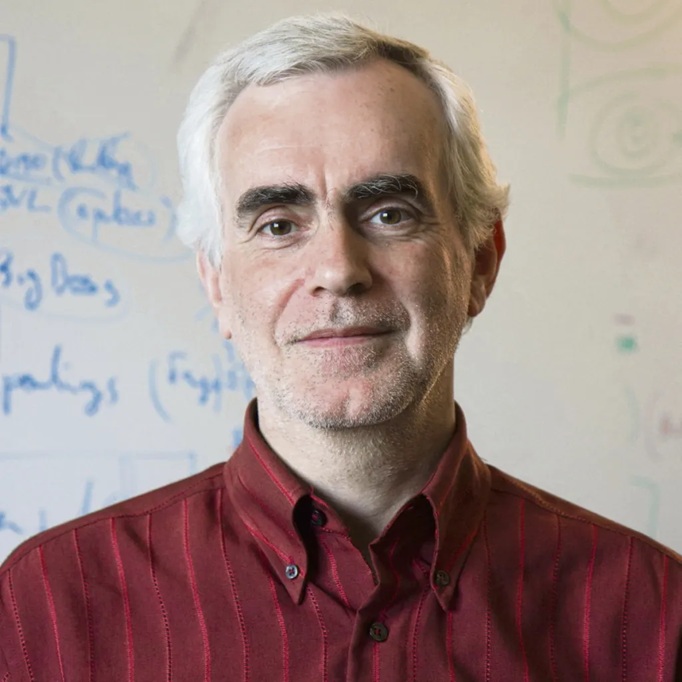
Last night I received a message via the Euclid Consortium conveying the very sad news of the death, at the age of 67, of the French astrophysicist and cosmologist Yannick Mellier (pictured left). Among many other things, Yannick was the Euclid Consortium Lead in which role he took on enormous responsibility for getting the project started and, with his team, keeping everything running. His loss is incalculable.
Yannick’s research work focussed on cosmology and the search for dark matter using gravitational lensing. Back in 1987 he was part of the observational team that discovered the first giant arc produced by strong gravitational lensing. He also did pioneering work in the field of weaking gravitational lensing with the Canada-France Hawaii Telescope in that regard starting back in 2000.
For well over a decade now Yannick had been involved with the European Space Agency’s Euclid mission. He was a major force right from the beginning, making the proposal, and after it was accepted leading the Consortium assembled to bring the project into being, preparing for launch, and dealing with the first data. The Euclid Consortium is a huge collaboration and it is impossible to overestimate the scale of the task facing the Lead. The first full data release (DR1) from Euclid will take place towards the end of next year (2026). It is sad beyong words that he did not live to see this.
During the period when I was Chair of the Euclid Consortium Diversity Committee I had a number of interactions with Yannick, sometimes dealing with difficult and confidential matters. I found him to be a man of great wisdom and sensitivity. Despite having many other things to deal with, including a long-term illness, he was unfailingly supportive and his advice was always sound.
The following is an excerpt from the message sent out yesterday:
Yannick’s death leaves a huge void within the consortium and our community. Those of us who have been here the longest know how hard he worked to make the Euclid project a success. He became its embodiment, working tirelessly to ensure its success; we owe him an immense debt of gratitude, and we will surely have the opportunity to reflect in detail on all that we owe him.
Indeed. I hope the Euclid Consortium – and the international cosmological community generally – will, at some stage, organize an appropriate tribute to Yannick.
Rest in Peace, Yannick Mellier (1958-2025)
Ar dheis Dé go raibh a anam
R.I.P. Patricia Routledge (1929-2025)
Posted in R.I.P., Television with tags Kitty, Patricia Routledge, Television, Victoria Wood: As Seen on TV on October 3, 2025 by telescoperVery sad news arrived today of the death at the age of 96 of the wonderful Patricia Routledge. I guess she is best known for her portrayal of Hyacinth Bucket of Keeping Up Appearances, but to me she will always be Kitty in Victoria Wood: As Seen on TV back in the 1980s. She did many other things besides, but here by way of a tribute is an example of Kitty holding forth as was her wont (although usually not in inebriated fashion). Cheadle just won’t be the same without her.
R.I.P. Patricia Routledge (1929-2025)
R.I.P. George F. Smoot (1945-2025)
Posted in Biographical, R.I.P., The Universe and Stuff with tags COBE, Cosmic Background Explorer, Cosmic Microwave Background, George Smoot, John Mather, large-scale structure of the Universe, Nobel Prize for Physics 2006 on September 26, 2025 by telescoper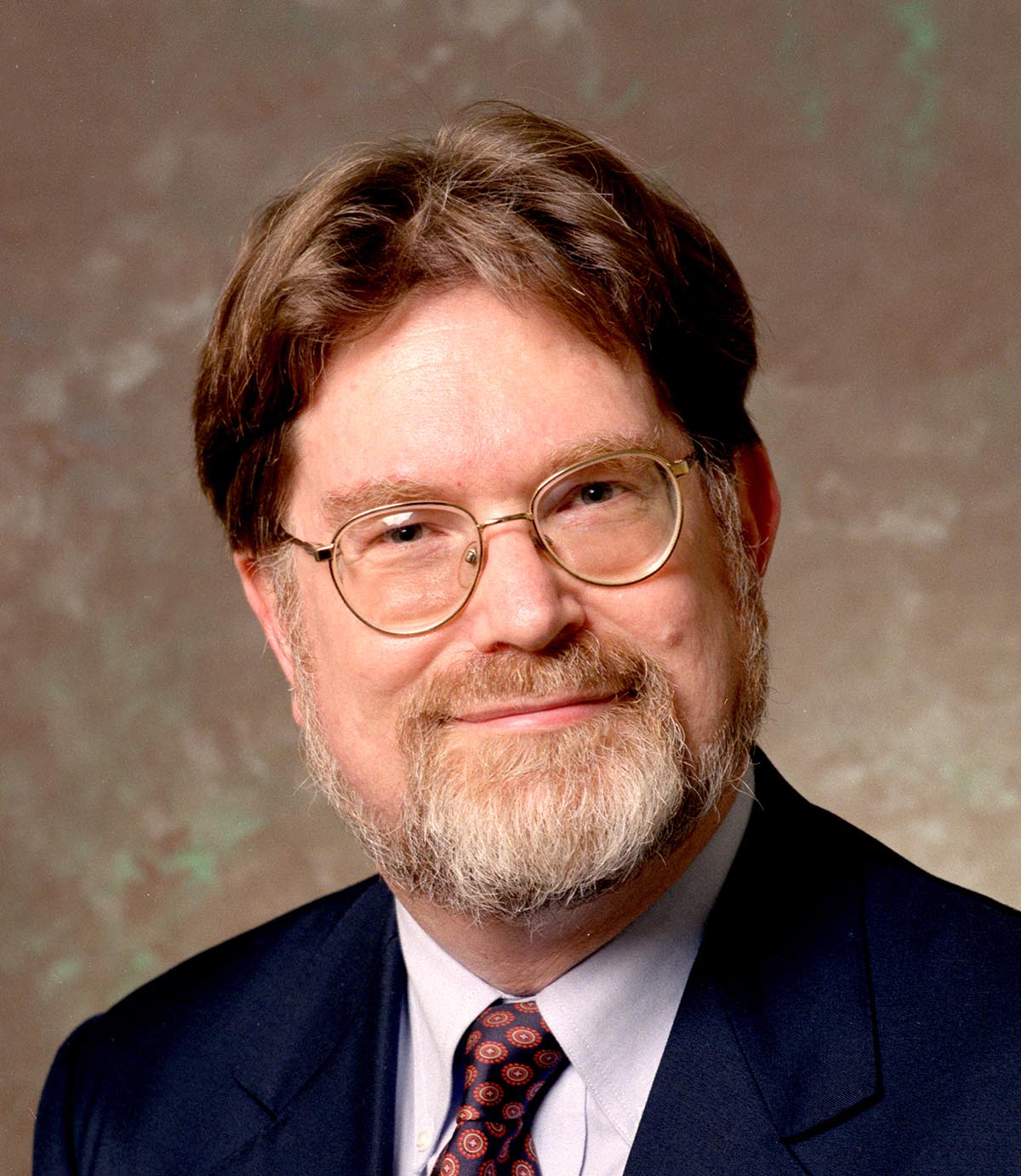
I’m very sad to have to report the death, at the age of 80, of eminent cosmologist George Smoot, who passed away at his home in Paris on 18th September. The news has been reported in France, where George had been living in recent years, but doesn’t seem to have been covered in the international media yet. I thought I would just record some personal relfections and reminiscences here, rather than try to pre-empt the official biographies.
George Smoot was an experimental astrophysicist who is best known for his research in observational cosmology, particularly on the cosmic microwave background. In 2006, jointly with John Mather, he was awarded the Nobel Prize for Physics for measurements made by the COBE satellite that, without exaggeration, ushered in a new era of cosmology. George led the paper Structure in the COBE Differential Microwave Radiometer First-Year Maps that reported the first detection of variations in temperature of the cosmic microwave background across the sky predicted by theories of cosmological structure formation.
I was fortunate enough to meet George many times over the years and to get to know him quite well. The first time was at a meeting in Durham for which this was the conference photo:
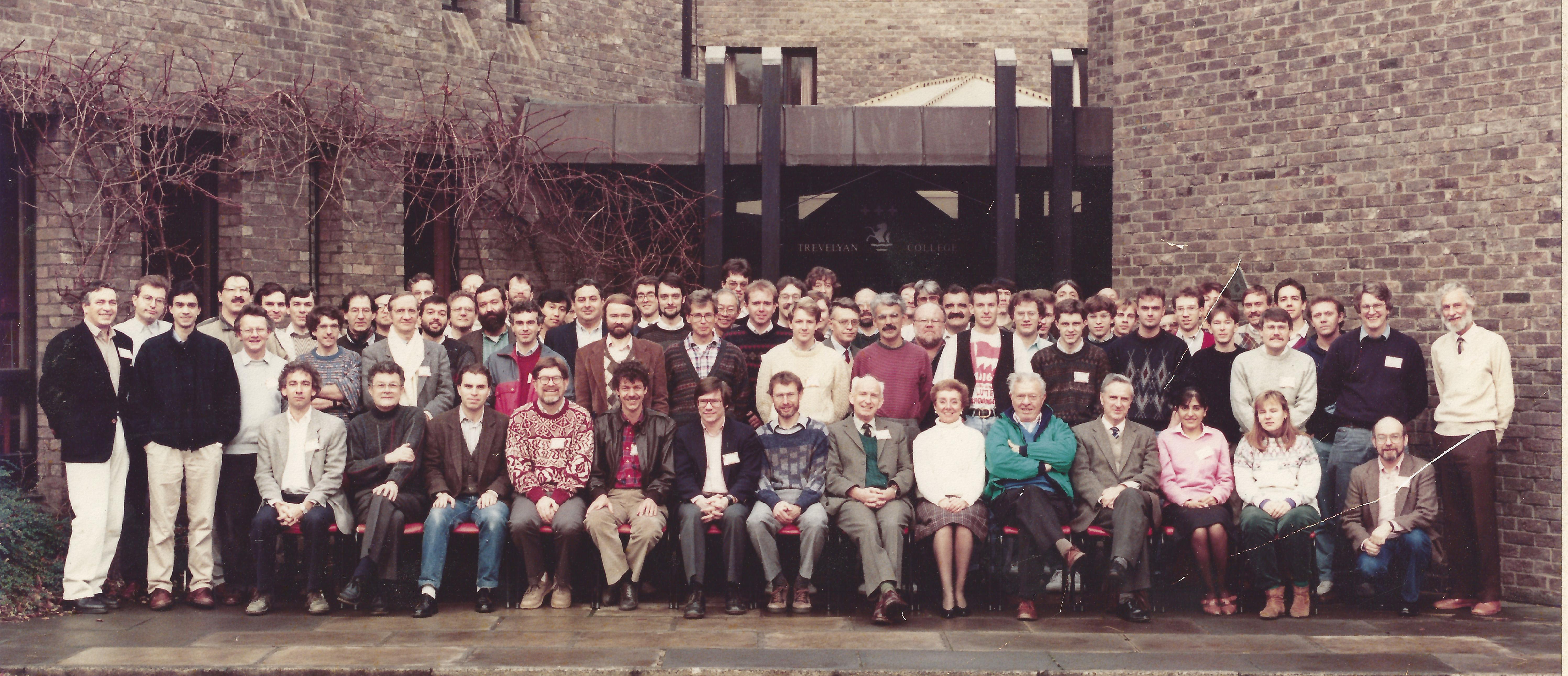
George is just to the left of centre in the front row with the red-and-white sweater.
What I remember about that meeting is that I gave a contributed talk there (a short one, because I was a mere postdoc at the time). Some time after that, George Smoot gave an invited talk during the course of which he mentioned (positively) the work I had spoken about. I was gobsmacked to have my little contribution recognized by someone so eminent, and it did wonders for my scientific self-confidence. I got the chance to have a conversation with George in person some time later at that meeting and found him very good value: he was both interesting and amusing to talk to. He was someone who took mentorship seriously, and didn’t confine it to those people he was working with directly.
Over the years I met George regularly at scientific meetings, including numerous times at the (then) Daniel Chalonge schools in Sicily and in Paris where we often chatted about science and other things over coffee breaks and dinner. I always found him hugely knowledgeable about many things, but he also had an almost child-like curiosity about things he didn’t previously know. He didn’t quite jump up and down with excitement when he learnt something interesting, but almost. He could also be very direct when disagreeing, which meant that some people found him a bit abrasive. He fell out with other members of the COBE time when he threw away the agreed protocol for the announcement of results in 1992. That caused a lot of bad feeling at the time, but it seems that by the time the Nobel Prize was awarded, some degree of reconciliation had been achieved. I was lucky enough to attend the Prize Ceremonies and at the ball afterwards chatted with both George and John Mather who seemed on very amiable terms then.
Anyway, in the early noughties George invited me to spend some time at the Lawrence Berkeley Laboratory, a visit that I enjoyed enormously. He was a very generous and thougtful host and I was looked after very well. One day at LBL he asked me if the hotel was OK. I replied that it was, but one thing I didn’t like about staying in a hotel was that I liked to cook and that was impossible in a hotel room. I thought nothing more of that conversation until the end of the day when George appeared and asked me if I wanted to “do dinner” at his house that evening. I answered in the affirmative so he drove me to his house, which was very fancy, set into the hillside overlooking Berkeley – like the sort of place I imagine a film star would live – and had a very large and well-provisioned kitchen.
It soon became clear that I’d misunderstood the invitation, in that “do dinner” didn’t mean “eat dinner” but “make dinner”. Although I was slightly taken aback I set about finding what he had in the refrigerator and on the shelves. There being a plentiful supply of spices, I decided to make a tandoori-style dish of chicken baked with yoghurt, with a couple of side dishes, none of which took long to cook. When everything was getting ready I wanted to add some lemon juice but couldn’t find any lemons in the fridge. I asked George if he had any lemons, at which point he showed me into the garden where he had several lemon trees in full fruit. I’ve never lived anywhere that this would be possible! I think he enjoyed the dinner because he paid me back a few days later with a dinner at Chez Panisse. He was quite the bon viveur.
(After that short visit, I was planning to spend a sabbatical year in Berkeley in 2005, but the United States Embassy in London put paid to that idea and I went to CITA in Toronto instead.)
The last encounters I had with George were online; he was in the audience when I gave talks in the Chalonge-de Vega series organized by Norma Sanchez in 2021 (here and here). I think he had already moved to Paris by that time. The first of these talks was about open access publishing in astrophysics; George subsequently co-authored a paper in the Open Journal of Astrophysics.
My favourite quote from George came during a discussion we had at Berkeley when I suggested that some methods used for studying the cosmic microwave background could be applied to the distribution of galaxies. His response was “Galaxies are shit”. To avoid offending my friends who work on galaxies, what he meant by that was that he thought galaxies were too messy for any statistical measurements to sufficiently reliable to compete with the CMB. I think he would have preferred a universe in which all galaxies were identical, like electrons.
I’m sure many others will have their own personal reflections on their interactions with George Smoot, but he also had a huge influence on many people who never met him personally, through his enormous contributions to astrophysics and cosmology. We will no doubt read many professionally-written official obituaries in days to come, but all I can say in a personal blog post is that he was a character, a very original thinker, a fine scientist, and a very nice man. Along with many others, I will miss him enormously.
Rest in Peace, George Fitzgerald Smoot III (1945-2025) .
Update: Here is an `In Memoriam’ piece from from the Berkeley Lab.
R.I.P. Tom Lehrer (1928-2025)
Posted in Music, R.I.P. with tags Satire, Tom Lehrer on July 27, 2025 by telescoperI just heard that the great musical satirist Tom Lehrer has passed away at the age of 97. I was trying to pick one of his songs to post as a tribute but I couldn’t decide which one to choose. I was going to go with “The Elements” but that would be lost on an audience of astronomers for whom there are only Hydrogen, Helium and Metals…
So instead of picking one tune I thought I’d share an entire concert of his, recorded in 1967 in Denmark, that contains no fewer than 17 of his songs including such favourites such “The Elements” and “The Vatican Rag” but also some less familiar numbers. There are even Danish subtitles to help you.
The Sixties were a hot time for satire, and it’s amazing how well some of Tom Lehrer’s songs stand up sixty years later, even today when satire is mostly impossible. Tom Lehrer”s irreverent, and sometimes rather dark, humour brought laughter into the lives of so many people.
It’s worth mentioning that, having decided that he’d made quite enough money, Tom Lehrer released all his songs into the public domain. Class.
R.I.P. Tom Lehrer (1928-2025)

R.I.P. Lalo Schifrin (1932-2025)
Posted in Jazz, R.I.P. with tags Dizzy Gillespie, Gillespiana, Lalo Schifrin on June 30, 2025 by telescoperI’ve just caught up with the news of the death last week of composer, arranger and pianist Lalo Schifrin. He was 93. Most of the media coverage of his passing concentrates on his many excellent TV and movie scores, such as Mission Impossible*, Dirty Harry and Bullitt, but he was first and foremost a Jazz musician so I thought I’d pay tribute by posting a relatively early work by him.
Lalo Schifrin was a huge fan of trumpeter Dizzy Gillespie whom he met when Gillespie toured Schifrin’s home country of Argentina in 1956. This long piece, Gillespiana was written for Gillespie’s big band in 1958. You can here in it many of the musical ideas that Schifrin was later to include in his film scores. In 1960, Lalo Schifrin moved to York and joined Gillespie’s band as a pianist after the departure of Junior Mance. He only stayed with the band for a couple of years but together they made some great records, especially Dizzy on the French Riviera (which I have blogged about here).
Anyway, Gillespiana is suite in five movements (Prelude, Blues, Panamerica, Africana, and Toccata) that takes up an entire album that was released in 1960. It’s not so well known nowadays but I think it’s great. It gives ample opportunity not only to listen to Dizzy’s trumpet and Lalo Schifrin’s piano – as well as the enormously underrated alto saxophonist and flautist Leo Wright – but also to enjoy the wonderful arrangements.
*The original theme for Mission Impossible is written in 5/4 time. Not a lot of people know that the resulting rhythmic pattern (dash dash dot dot) is Morse code for the letters M I…
R.I.P. Edmund White (1940-2025)
Posted in Biographical, LGBTQ+, Literature, R.I.P. with tags A Boy's Own Story, Edmund White on June 6, 2025 by telescoperI was saddened to hear of the death on Tuesday at the age of 85 of novelist Edmund White. Like many gay men of my age I read his semi-autobiographical novel A Boy’s Own Story as a teenager, and it had a profound effect on me.

It’s the story of an adolescent boy coming to terms with his sexuality in the American mid-West during the 1950s. It is as frank about the description of gay sex as it is truthful about the confusion that goes with being a teenager. When I bought it I didn’t realize it was going to be so sexually explicit, as the whole subject of gay sex was very much taboo in those days. I didn’t think it was possible to write about such things in such a matter-of-fact way and at the same time so beautifully. The book is also unflinching in its description of the personality flaws of the central character.
The Irish Times has a collection of reflections by various writers on Edmund White that say far more, and far more eloquently, than I ever could. I’ll just say, as a (now) sixty-something gay man that Edmund White helped me on my journey to self-acceptance when I was a struggling teenager all those years ago, and for that I will always be profoundly grateful.
Rest in peace, Edmund White (1940-2025).
R.I.P. Jayant Narlikar (1938-2025)
Posted in Biographical, R.I.P., The Universe and Stuff with tags conformal gravity theory, Cosmology, Hoyle-Narlikar gravity, IUCAA, Jayant Narlikar, Pune, steady state cosmology on May 20, 2025 by telescoper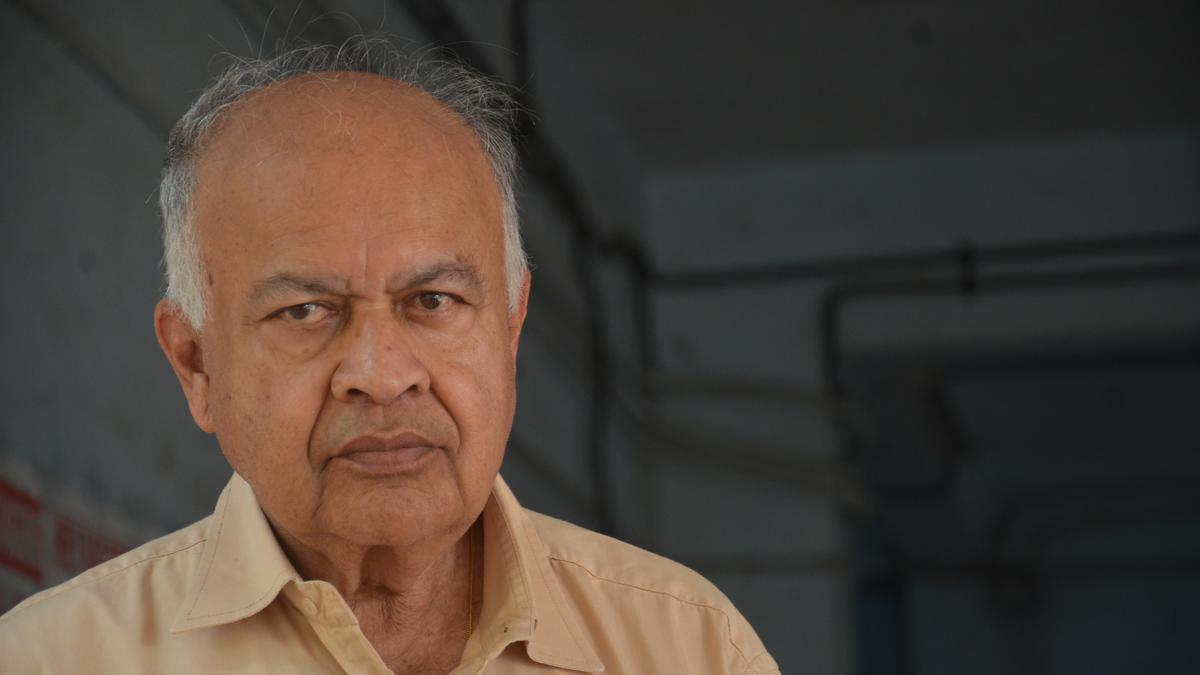
I heard this morning of the death at the age of 86 of renowned Indian cosmologist Jayant Vishnu Narlikar. I understand he died peacefully in his sleep in Pune after a brief illness.
Scientifically, Jayant Narlikar is probably best known for his work with Fred Hoyle on a conformal gravity theory and as an advocate of the Steady State theory of cosmology. In India however his fame extended far beyond the world of research, as an educator and science popularist, as well as Founder-Director of the Inter-University Centre for Astronomy and Astrophysics (IUCAA) in Pune. Those who met him – as I was lucky enough to do – will also remember him as a kind and gracious man, and a self-effacing inspirer of young scientists. During my visit I gave a talk there, which Narlikar attended, and we had a very nice conversation afterwards from which I learnt a huge amount.
The Directorship at IUCAA came with a house which had a very nice lawn, on which I remember playing croquet with Donald Lynden-Bell and others, but that’s another story. Another random thing I remember is that I remember is that Narlikar’s username on the IUCAA email system was “jvn” and he was often referred to informally by that name.
Although he never really abandoned the Steady State cosmology, despite the weight of evidence in favour if the Big Bang, it is to Narlikar’s great credit that he didn’t try to impose his own scientific ideas on those working at IUCAA. In fact he assembled an excellent group of cosmologists and astrophysicists and encourage them to do whatever they liked.
I first visited IUCAA in 1994 to work with Varun Sahni. In those days Westerners mainly went to Pune to visit an ashram (usually the one run by the guru Rajneesh). I remember when I arrived on the train from Mumbai and tried to get a taxi to the IUCAA campus, the driver asked me “which ashram?” I had long hair and a beard at that time, so I looked a potential hippy. I said, “No ashram. Professor Narlikar”. He knew exactly where to take me; “Narlikar” was a household name in India, where the newspapers are awash with tributes today (e.g. here) and where his loss will be keenly felt.
Rest in peace Jayant Narlikar (1938-2025)
R.I.P. Jerry Ostriker (1937-2025)
Posted in R.I.P., The Universe and Stuff with tags Astrophysics, Cosmology, Dennis Overbye, galaxy formation, Jeremiah P. Ostriker, Jerry Ostriker, Princeton on April 9, 2025 by telescoper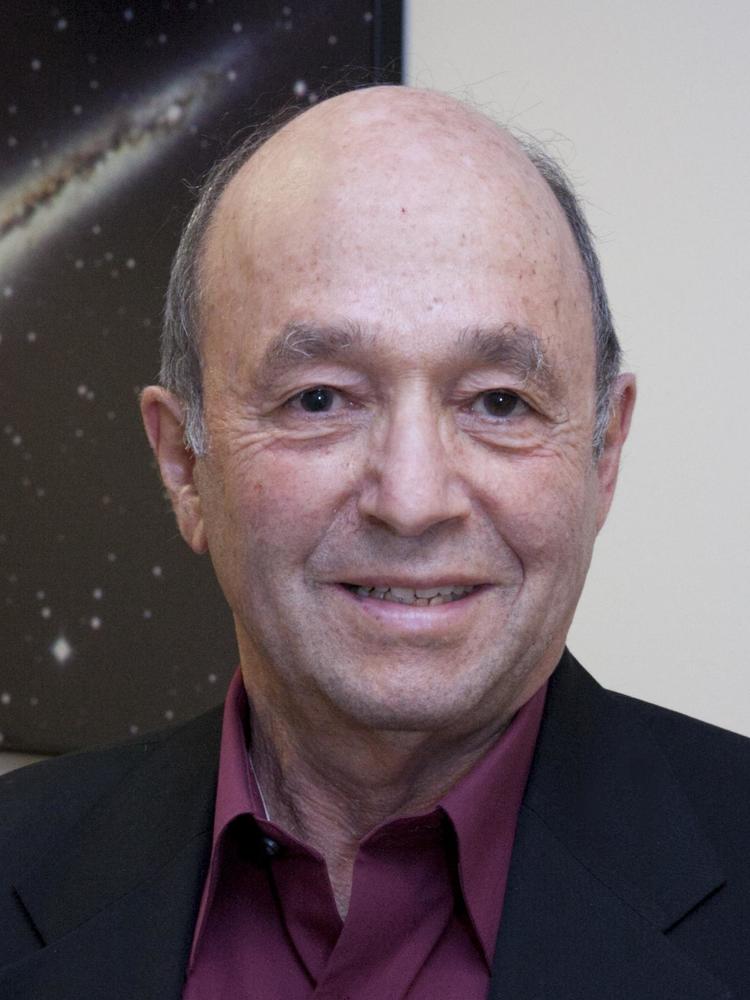
Once again I find myself using this blog to pass on sad news. This time it is of the death of renowned astrophysicist Jerry Ostriker (pictured left in 2012), who passed away on Monday 6th April 2025 just a week before his 88th birthday.
Jeremiah Paul Ostriker (to give his full name) was an extremely energetic, versatile and influential theorist who worked on a wide range of problems in diverse areas of astrophysics and produced a number of classic papers. Close to my own specialism I would quote two in particular: one written with Jim Peebles in 1973 about the stability of galactic disks; and the other with Martin Rees in 1977 about the role of gas cooling and fragmentation in determining the size of galaxies and clusters. He also did much to establish the use of hydrodynamic simulations in cosmology and was an early adopter of the current standard cosmological model, including a cosmological constant. He worked on many other things too, including pulsars and galactic nuclei.
I only met Jerry Ostriker a few times, mainly at conferences – where he was never shy to contribute to discussions after talks – but also once back in the 1990s when I was a visitor Princeton (where he was Professor). I didn’t have much time to talk to him then as he always seemed to be on the go, so I never really got to know him personally. After spending most of his career in Princeton, including a spell as Provost, in 2001 Ostriker moved to Cambridge for a short stint as Plumian Professor, before returning to Princeton.
There is a very nice obituary of Jerry Ostriker by Dennis Overbye in the New York Times.
Rest in peace, Jerry Ostriker

 In the Dark