Last night, while I was waiting for Derry Girls to come on, I watched a part of Prime Time on RTÉ, a segment about how many people intending to visit Kilmainham Gaol Museum in Dublin had bought tickets online only to find out they had been scammed and the tickets weren’t valid. Worse, having entered their credit card details into a phoney website they then either lost further money or had to cancel their compromised cards. You can read more about this scandal here.
A major part of the success of this scam is that Google search highlighted the fake sites – several of them – by ranking them above the official site in search results All you need to do to get your site promoted in this way is to pay money to Google. Although Google had been informed about this con, at least some of the sites concerned were still up and running when the programme went out last night. It seems to me that Google was and is a party to this fraudulent activity, but it’s unlikely to be prosecuted, presumably for the same reason that nobody is prosecuting X/Grok for its illegal production and distribution of child pornography: the Irish State is deep in the pockets of Big Tech and won’t stand up to it whatever crimes it commits.
Anyway, I have some recommendations. First, don’t use Google search. Second, if you do use Google search, then at least disable “sponsored” searches as these include fraudulent sites. There are various ways to do this but they depend on your browser and OS so you will have to find out. Finally, no tickets to Kilmainham Gaol are available from any third-party providers, so use the official site. The front page should look like this:
If it doesn’t look like that then you have landed in the wrong place and should leave.
Please don’t let this put you off visiting Kilmainham Gaol Museum. It’s an important part of Ireland’s story. It was, for example, where the leaders of the 1916 Easter Rising were executed by firing squad. It is very busy, though, so you will almost certainly have to buy tickets in advance; a small number are released each morning but they go very quickly.
A jazz version of an old song from an album called A Charlie Brown Christmas may not seem a very promising concept but I like it, so there. The original lyrics of O Tannenbaum don’t refer to Christmas at all, incidentally, but it has become a Christmas standard. This version is by the Vince Guaraldi Trio and it was recorded 60 years ago in 1965. Vince Guaraldi was a fine jazz pianist who had an interesting solo career as well as playing with bands led by Woody Herman and Carl Tjader, among others. He is best remembered, however, for composing the music that went with TV adaptations of the Peanuts cartoons written and illustrated by Charles M. Schulz of which this is a nice example.
This week is the penultimate week of teaching term at Maynooth and, as usual at this stage of the Semester, we’re getting busier and busier. The examinations for January have been sent off for printing and are (presumably) ready to go, and I’m up to date with all my coursework gradin so I am, miraculously, on schedule as far as teaching is concerned. I should finish covering the respective syllabuses by Tuesday 16th, with the remaining teaching sessions devoted to revision. I don’t have any lectures on Fridays this term, so my teaching ends, a day before the end of term, on Thursday 18th December. To celebrate the end of term I’ll be presenting the students in the last session of my Engineering Mathematics module the gift of a final Class Test. I’m not sure when I’ll get to correct it. Oh, and our Department Christmas Dinner is on Wednesday 17th.
I’ll soon have to decide when to pause the publication of new papers at the Open Journal of Astrophysics and prepared for next year’s Volume 9. A certain person is insisting that I take a complete break for at least a week, so I think we’ll probably stop on Christmas Eve and begin again in the New Year.
In the meantime, term goes on. I have three lectures to get ready for tomorrow. Incidentally, my mid-Semester feedback suggested that I start each lecture with an introduction to say what I’m going to be covering. Here are some examples of what I’ve been doing in response:
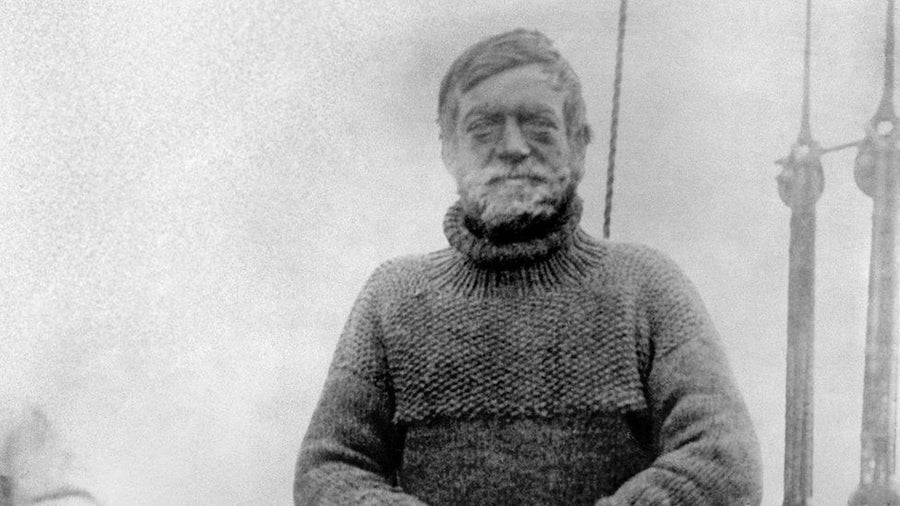
I notice this morning a short item about a museum in Athy about explorer Ernest Shackleton, who was born in Kilkea which is near Athy. There was a museum there before, but it has been much expanded and renovated. I must make an expedition there one day to see it, as Athy is in County Kildare only about 60km to the south of Maynooth.
Seeing this article reminded me that some months ago I watched a documentary series called Shackleton: Death or Glory. It’s not a new series, but I hadn’t seen it before, and found it gripping and inspiring. You can see the entire series (3 episodes) on Youtube here. The idea was to reproduce the situation that Shackleton and his crew faced in 1916 when they had to abandon their expedition to cross Antarctica when their ship, Endurance, was trapped in the ice. The courage and leadership he showed in saving all their lives is awe-inspiring.
To cut a long and amazing story short, in 1914 Shackleton led an expedition to cross Antarctica on foot for the first time. But disaster struck before even reaching the continent. His ship Endurance was trapped in sea ice and he and his 27 men were marooned. Realising that the ship would be crushed, he ordered the crew to take everything they could, including the (three) lifeboats. They made a camp on the ice and stayed there several months, but it was clear they could not remain there indefinitely, so they set off with their provisions in the lifeboats towards Elephant Island, a perilous journey of almost 300 km, through freezing water thick with blocks of ice.
Elephant Island was safer that the ice shelf from which they had escaped but it was nowhere near any trade route so chance of being rescued by a passing ship was zero. The outlook was grim. A slow death from starvation and exposure seemed inevitable.
Shackleton could see only one (remote) possibility of rescue, which was to take one of the boats and try to find help. That meant travelling across the open sea to South Georgia, a journey of some 1500 km. Not just any sea, mind you: the notoriously stormy and treacherous South Atlantice. It was a very tall order but in his diary he calmy recorded his thought process, which was basically that if they all stayed put they would certainly die and if the rescue party perished those left behind would be no worse off. He had to take the chance.
Shackelton picked five men and set off in one of the lifeboats – a 22ft wooden vessel – across the merciless ocean, in an apparently desperate attempt to reach the only possible help at the Stromness Whaling station in South Georgia. The rest of the crew – 22 men – were left on Elephant Island.
Almost unbelievably, Shackleton and his five men survived 16 days at sea and made the crossing. But his gruelling mission didn’t end there, because they arrived on the wrong side of the island of South Georgia. The boat and two of the crew were in poor shape by then so they could not continue by sea. Shackleton, taking two men with him, had to traverse about 40km of an unchartered mountain range, without any mountaineering equipment in order to reach the safety of Stromness. Shackleton successfully raised the alarm, but the story was still far from over. The first thing Shackleton had to do was collect the two men he had left on the other side of South Georgia. All six were safe.
Now he had to think about the other 22 still at Elephant Island. In search of more appropriate ships, Shackleton went first to the Falkland Islands and then to Chile. Several rescue attempts failed, because of the pack ice and, once because of a fire onboard. Eventually he persuaded the Chilean Navy to lend him a steam tug, the Yelcho, which made it to Elephant Island. The men there were in poor shape, hungry and demoralised, almost but they were all alive. Against all the odds, Shackleton, saved every single one of his men from what must have seemed like certain death.
Aside from his physical courage and endurance, two characteristics exemplify the quality of Ernest Shackleton’s leadership: one is that he would never ask any of his men to do anything he wouldn’t do himself, and the other is that he put the wellbeing of his men at the centre of all his decisions. Can you say those things about your “Leader”?
These days we hear a lot of talk, in various contexts, about leadership but most of the people who claim to show leadership don’t know the meaning of the word. Next time you hear some useless twit claiming to be a leader, think about Ernest Shackleton and judge them by his standards.
Very sad news arrived today of the death at the age of 96 of the wonderful Patricia Routledge. I guess she is best known for her portrayal of Hyacinth Bucket of Keeping Up Appearances, but to me she will always be Kitty in Victoria Wood: As Seen on TV back in the 1980s. She did many other things besides, but here by way of a tribute is an example of Kitty holding forth as was her wont (although usually not in inebriated fashion). Cheadle just won’t be the same without her.
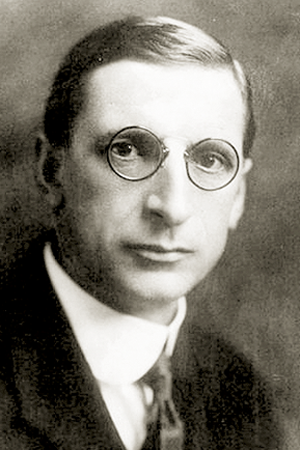
On September 4th, when I posted a piece about the forthcoming Presidential Election in Ireland, I forgot to mention that just two days earlier was the 50th anniversary of the funeral of Éamon de Valera, founder of Fianna Fáil (one of the two largest political parties in Ireland) and architect of the Irish constitution, who died on 29th August 1975 at the age of 92. Here’s some coverage at the time by (British) Movietone News, the commentary is rather generous to him:
De Valera (nickname `Dev’) is an enigmatic figure, who was a Commandant in the Irish Republican Army during the 1916 Easter Rising, but despite being captured he somehow evaded execution by the British. There’s no evidence, incidentally, that he escaped the firing squad because he was born in America. Dev subsequently became Taoiseach (Prime Minister) and then President (Head of State) of the Irish Republic.
Eamon de Valera, photographed sometime during the 1920s.
There’s no question in my mind that de Valera is the most significant Irish politician of the 20th Century, which is not to say I fid him an agreeable figure at all and his legacy isn’t particularly positive. Nevertheless, his funeral was perhaps as significant event for the Irish as that of Winston Churchill had been for the British just a decade earlier.
Over the past couple of weeks RTÉ television broadcast a two-part documentary called Dev: Rise and Rule; the second part was on last night. It is quite nicely made, but disappointingly superficial and lacking in any real historical insight. The suggestion that it would “decode” Dev was unfulfilled. This is a pity because RTÉ often does good documentaries.
Anyway, this gives me an excuse to mention again, Dev’s connection with Maynooth. De Valera was a mathematics graduate, and for a short time (1912-13) he was Head of the Department of Mathematics and Mathematical Physics at St Patrick’s College, Maynooth, which was then a recognised college of the National University of Ireland. The Department became incorporated in Maynooth University when it was created in 1997. Mathematical Physics is no longer a part of the Mathematics Department at Maynooth, having first become a Department in its own right, then changing its name to the Department of Theoretical Physics and then, just last year, being subsumed within a new Department of Physics.
De Valera missed out on a Professorship in Mathematical Physics at University College Cork in 1913. He joined the the Irish Volunteers, when it was established the same year. And the rest is history. I wonder how differently things would have turned out had he got the job in Cork?
The last episode of Simon Schama‘s BBC TV series A History of Britain, called “The Two Winstons”, follows the story of the Second World War and its immediate aftermath through the eyes of two very different Englishmen, George Orwell and Winston Churchill. Near the end of the programme Schama talks about the year 1948, when a very sick Orwell wrote his last major novel, Nineteen Eighty-Four. I’ve reconstructed this section from the subtitles on my DVD of the series.
It starts with a direct quote from 1984
In our world there will be no love but the love of Big Brother, no laughter but that of triumph. No art, no science, no literature, no enjoyment, but always and only, Winston, there will be the thrill of power. If you want a picture of the future, imagine a boot stamping on a human face forever.
It continues with the voice of Simon Schama as narrator
To clear his head of the static hum of postwar London, Orwell went as far away as he could without actually leaving Britain, to the very edge of the kingdom – the Hebridean island of Jura. No electricity, no telephone, post twice a week, maybe.
And it was here, in the remotest cottage he could find, typing in bed with the machine on his knees, knowing he hadn’t long to live, that Orwell concentrated on what mattered most to him, and to Britain – the fate of freedom in the age of superpowers. As Churchill issued his grim warnings, Orwell created a common or garden plain man’s Winston – Winston Smith. The year was 1948.
When we think of 1984, most of us think of the tyranny of drabness and mass obedience ruled by Big Brother, a world of doublespeak where war is peace and lies are truth. But Orwell’s last masterpiece is most powerful and most lyrical when it describes Winston’s resistance to dictatorship, a guerrilla action fought, not with guns and barricades, but by literally taking liberties, a walk in the country, an act of love, the singing of an old nursery rhyme.
Winston Smith did all these forbidden things, prompted by a dim memory of a time when they were absolutely normal. The last refuge of freedom against Big Brother is memory. The greatest horror of 1984 is the dictator’s attempt to wipe out history.
I thought of the last sentence when I read about Donald Trump’s plan to rewrite American history for the 250th anniversary of the Declaration of Independence, but that’s just one example amid the rise of authoritarian regimes around the world. In the context of the TV programme, Schama was making a case for the importance of history as a discipline, but there is something else important to say: we should not forget the past but, perhaps even more importantly, neither should we forget about the future we wanted to see. The present is not the future I hoped for when I was younger, even in 1984, but the story isn’t over yet.
Today is the day that 133 Cardinals gather in the Vatican to enter the autoclave (is this right? Ed) in which they will elect the next Pontiff of the Roman Catholic Church. Good luck to them, as it seems like they will be under a lot of pressure for the next few days.
For some reason this news reminded me of the late great Irish comedian Dave Allen. He was hugely popular on British TV in the 70s and 80s. He had his own show in a prime-time slot on Saturday evenings on BBC1 for many years, which was mandatory family viewing in our house. The show included some pre-recorded sketches but I think the best bits involved him just sitting, talking and telling stories. He wasn’t a stand-up comedian. He didn’t often tell jokes either, his humour was mainly observational and satirical, especially about politics and religion. Although an atheist he never really mocked religious belief, but he did make fun of the pomposity and hypocrisy that often goes with it.
The hierarchy of everything in my life has always bothered me. I’m bothered by power. People, whoever they might be, whether it’s the government, or the policeman in the uniform, or the man on the door—they still irk me a bit.
Anyway, here he is telling a joke that seems relevant.
P.S. He always made out that the glass on the table beside him contained whisky, but it was always just a dash of ginger ale with an ice cube in it.
This just appeared on Youtube a couple of days ago and I couldn’t resist sharing it here. It is from a BBC programme in the series Jazz 625 and is presented by a chap called Humphrey Lyttelton, himself a trumpeter and bandleader. Although Humph is best known as a musician on the traditional side of jazz, he was very broadminded about music and extremely knowledgeable about more modern forms, as he demonstrated on his long-running radio show The Best of Jazz, which I listened to avidly as a teenager and which introduced open my eyes and ears to lots of new things including “hard bop“, which is the genre to which this belongs.
This programme was broadcast in 1965, at which time the BBC Television programmes were all in black-and-white so the recording has been “colourized”, and think the sound has been remastered too. It sounds great.
Anyway, the band featured here is Art Blakey and the Jazz Messengers. I was lucky enough to hear a couple of later incarnations of this group play live in the 1980s. There’s no need to run through the personnel or tunes because Humph does so in the recording. I will just add that the intro and outro are Thelonious Monk’s 52nd Street Theme.
Beware, all thieves and imitators of other people’s labour and talents, of laying your audacious hands upon our work.
Albrecht Dürer, 1511
I’ve remembered that quotation since it was uttered by Inspector Morse in the episode Who Killed Harry Field? Albrecht Dürer wasn’t referring to Artificial Intelligence when he said it, but it does seem pertitent to what’s going on today.
There’s an article in The Atlanticabout a huge database of pirated work called LibGen that has been used by Mark Zuckerberg’s corporation Meta to train its artificial intelligence system. Instead of acquiring such materials from publishers – or, Heaven forbid, authors! – they decided simply to steal it. That’s theft on a grand scale: 7.5 million books and 81 million research papers.
The piece provides a link to LibGen so you can search for your own work there. I searched it yesterday and found 137 works by “Peter Coles”. Not all of them are by me, as there are other authors with the same name, but all my books are there, as well as numerous research articles, reviews and other pieces:
I suppose many think I should be flattered that my works are deemed to be of sufficiently high quality to be used to train a large language model, but I’m afraid I don’t see it that way at all. I think, at least for the books, this is simply theft. I understand that there may be a class action in the USA against Meta for this larceny, which I hope succeeds.
I think I should make a few points about copyright and authorship. I am a firm advocate of open access to the scientific literature, so I don’t think research articles should be under copyright. Meta can access them along with everyone else on the planet. It’s not really piracy if it’s free anyways. Although it would be courteous of Meta to acknowledge its sources, lack of courtesy is not the worst of Meta’s areas of misconduct.
In a similar vein, when I started writing this blog back in 2008 I did wonder about copyright. Over the years, quite a lot of my ramblings here have been lifted by journalists, etc. Again a bit of courtesy would have been nice. I did make the decision, however, not to bother about this as (a) it would be too much hassle to chase down every plagiarist and (b) I don’t make money from this site anyway. As far as I’m concerned as soon as I put anything on here it is in the public domain. I haven’t changed that opinion with the advent of ChatGPT etc. Indeed, I am pretty sure that all 7000+ articles from this blog were systematically scraped last year.
Books are, however, in a different category. I have never made a living from writing books, but it is dangerous to the livelihood of those that do to have their work systematically stolen in this way. I understand that there may be a class action in the USA against Meta for this blatant larceny, which I hope succeeds.
The views presented here are personal and not necessarily those of my employer (or anyone else for that matter).
Feel free to comment on any of the posts on this blog but comments may be moderated; anonymous comments and any considered by me to be vexatious and/or abusive and/or defamatory will not be accepted. I do not necessarily endorse, support, sanction, encourage, verify or agree with the opinions or statements of any information or other content in the comments on this site and do not in any way guarantee their accuracy or reliability.





 In the Dark