Archive for the The Universe and Stuff Category

Gravitational Waves Flash!

Posted in The Universe and Stuff with tags , , , , on October 13, 2017 by telescoper

I got up early this morning to hitch a ride in a car to Mumbai so that I can give a talk this afternoon. We left Pune about 6am and got here about 8.30 so the trip was a quite a bit quicker than coming here! I’ll post about that and include some pictures when I get a moment, but first I’ll post a quick announcement.

There will be an announcement on Monday 16th October at 10am EDT (3pm BST; 7.30pm in Pune) by `the National Science Foundation (NSF) as it brings together scientists from the Laser Interferometer Gravitational-Wave Observatory (LIGO) and Virgo collaborations, as well as representatives for some 70 observatories’. Further details can be found here. The European Southern Observatory has also announced that it will be holding a press conference on Monday about an `unprecedented discovery’.

The fact that it involves LIGO, Virgo and representatives of other observatories strongly suggests that this announcement will address the subject of the rumours that were flying around in August. In other words, it’s likely that on Monday we will hear about the first detecting of a coalescing binary neutron star system with an optical counterpart. Exciting times!

I’ll be back in Pune by Monday and will probably be able to watch the announcement and will update if and when I can.

Post-Planck Cosmology: Day 4

Posted in Talks and Reviews, The Universe and Stuff with tags , on October 12, 2017 by telescoper

So here we are at the end of the meeting, after a fourth and final day of wide-ranging cosmology talks. I did the first presentation at 9am. I won’t summarize my own lecture because you can find the slides here:

Here are two pictures of me in action:

me_2

me_1

After that we had, amongst others, invited talks by Subhabrata Majumdar on the eROSITA all-sky X-ray survey and Somak Raychaudhury (Director of IUCAA) on large-scale structures in the local universe, Kandu Subramanian on primordial magnetic fields and Anvar Shukurov on Probabilistic Topology and Morphology (a change to the advertised title). There were also a number of shorter talks of diverse nature mainly on the subject of large-scale structure and galaxy formation.

I have known Kandu Subramanian since I was a student at Sussex and he was a postdoc there. At that time he was working mainly on gravitational lensing. I haven’t seen him for quite a long time and was surprised to see that now his hair has gone completely white. That’s what happens to you if you work on primordial magnetic fields.

The afternoon session overran and I had an appointment for Skype call so I had to leave before the closing remarks, so let me take this opportunity to thank the conference organisers for putting together such an interesting meeting and especially for inviting me back to Pune after all this time. It has been very enjoyable.

Many of the conference guests have already left and some are leaving tomorrow. I am staying in India for a few more days, however. Tomorrow morning I’m going to Mumbai to give a talk at the Tata Institute for Fundamental Research. I have to get up early tomorrow for that trip so I think I’ll take an early night.

Post-Planck Cosmology: Day 3

Posted in The Universe and Stuff with tags , , , , on October 11, 2017 by telescoper

Before carrying on with my daily updates from this meeting on Post-Planck Cosmology I’ll just remark that this is a great venue: it has all the facilities necessary to keep a group of cosmologists happy…


At the tea break this morning I managed to find a shot that included all four of the statues in the main quadrangle too:

This morning kicked off with Roy Maartens discussing the cosmological potential of the Square Kilometre Array and other future galaxy surveys, one of his main points being the benefit of using multiple tracers to beat down some of the problems with single surveys.  The first phase of this project, SKA1,  will deliver 10 million redshifts with z<0.6. With SKA2 that will go up to 1 billion galaxies out to z<2, but many things can be done without redshifts using intensity mapping. SKA1 is some way off, but the precursor `Meerkat' consisting of 64 × 13.5 metre dishes will be hopefully starting next year in South Africa.

We then had a series of talks about reionization and the formation of the first stars, an epoch usually referred to as `Cosmic Dawn' or `First Light', taking us into lunch.

In the afternoon we had talks loosely grouped around the theme of `classical cosmology' – using geometric or other probes to study the expansion history of the Universe. This session included a talk by Chris Messenger of the LIGO collaboration about the beginnings of gravitational wave cosmology, though as the current generation of detectors is only sensitive to relatively nearby sources for the time being the main effort will be devoted to distance scale measurements, attempting to measure the Hubble constant directly without the need for the traditional distance ladder.

The last part of the day was devoted to a panel discussion, chaired by Francois Bouchet that was interesting and wide-ranging but largely motivated by responses to Paul Steinhardt's talk last night.

Now, no conference dinner to tear me away tonight – but I do have to finish my talk, which is at 9am tomorrow – so that will have to do for now. Toodle-pip!

Post-Planck Cosmology: Day 2

Posted in The Universe and Stuff with tags , , on October 10, 2017 by telescoper

Just finished the last session of the day and it’s only half an hour before the conference dinner begins, so I’ll just do a brief summary.

The weather in Pune continues to be `interesting’:

It’s pouring down at the moment, in fact. The session I chaired started late because we had to postpone the conference photograph because of inclement weather.

Anyway, this morning’s talks were primarily about the difficulties of measuring B-mode polarization in the cosmic microwave background. Carlo Baccigalupi gave a perspective on foregrounds from Planck and Zeeshan Ahmed updated us on Keck/BICEP progress. There are no new results from the latter – we’ll have to wait for data from the extra 220 GHz channel – but Zeeshan also spoke about a proposal for the next generation ground-based experiment, glamorously named CMB-S4 – details of which can be found here.

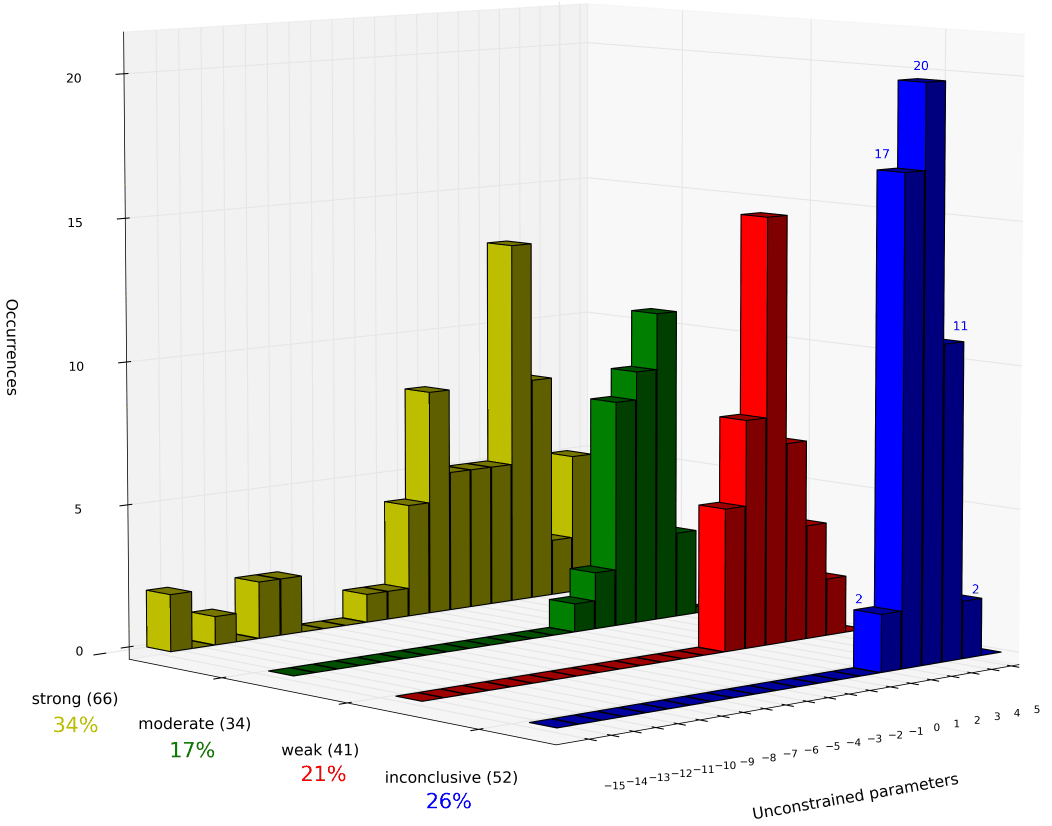
The afternoon was largely devoted to early universe physics, including inflation. We’re only two days in to the conference but already several speakers have showed this plot (from here), which shows the extent to which current cosmological data disfavours various inflationary models:

Some are disfavoured, but clearly there are still lots of viable models! Too many!

For the final session of the day we were joined by Paul Steinhardt via Skype from the USA. He gave a very cogent and stimulating talk arguing that the prevailing paradigm (i.e. inflation) was about to be overturned. I don’t have time to do a full summary of his contribution, but you can check out a previous post about some of the issues he raised, and here’s a picture of the last slide of his presentation:

Anyway, that will have to do. The conference dinner beckons.

Post-Planck Cosmology: Day 1

Posted in The Universe and Stuff with tags , , , on October 9, 2017 by telescoper

Well, I’m just back to my guest flat from a pleasant birthday party for one of the conference organizers, Tarun Souradeep, is now in the same decade as me! I don’t have time to write about all the talks today so apologies to anyone I don’t mention by name. I also got called away to have tea with an old friend so missed the final session and consequently missed the last session. I can’t do that again tomorrow as I’m chairing the last session tomorrow (including a presentation from Paul Steinhardt via Skype).

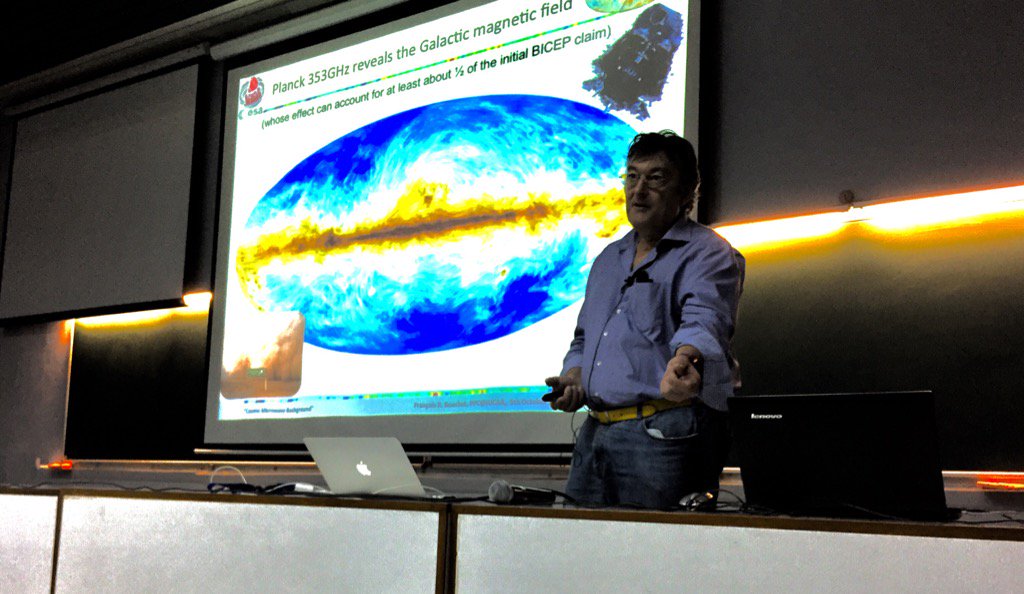
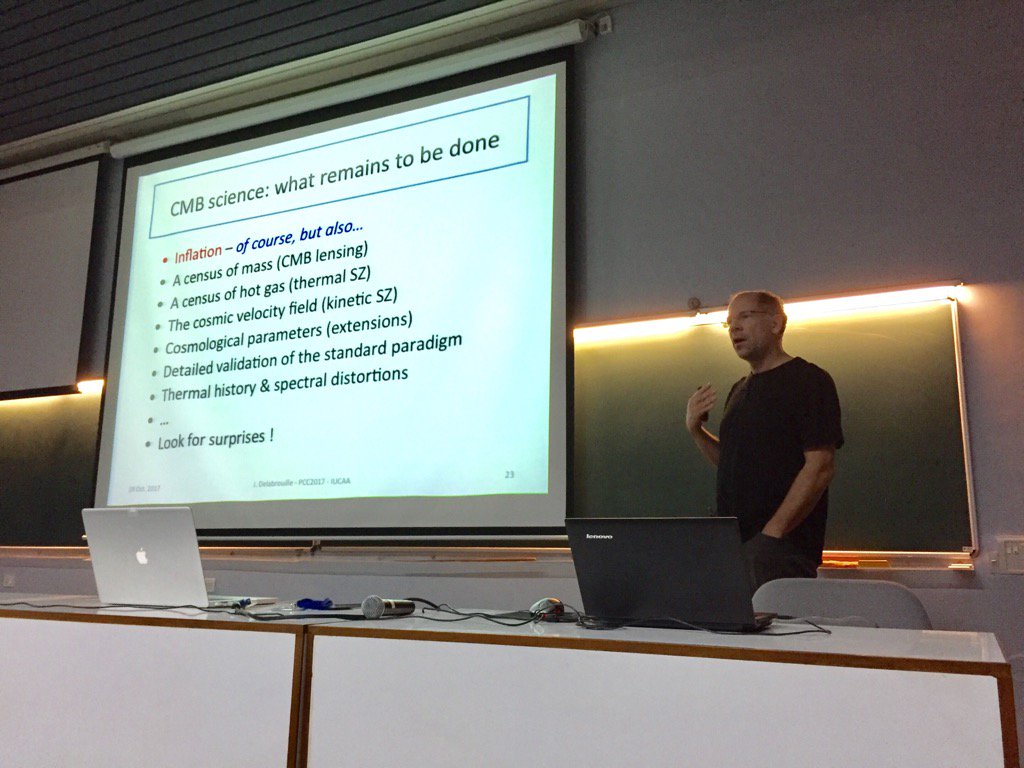
Also, I forgot to take my camera to today’s session so here are a couple of pics that I’ve stolen without permission from the Director of IUCAA, Somak Raychaudhury showing Francois Bouchet and Jacques Delabrouille who gave the first two talks.

Here are some brief notes.

Francois Bouchet delivered an expert summary on the state of cosmology up to and including the Planck mission. He started by saying out that before the discovery of the cosmic microwave background, cosmology was a `semi-crackpot subject’ and went on to show how much the field has moved on: there are no longer any semi-crackpots in cosmology. Three particularly interesting points he made on his grand tour were: (i) that the `inflationary prediction’ that the spectral index of primordial density fluctuations is not that n=1 (which was argued for before inflation by Harrison and Zeld’dovich) but n=0.96, and that the difference between these numbers is very significant; (ii) there aren’t enough independent modes in the (2D) CMB to improve current limits on non-Gaussianity by much so we will have to use (3D) galaxy clustering data; and (iii) the apparent `tension’ in measurements of the Hubble constant is not solely a problem with the CMB (he mentioned this paper in particular.

Next up, Jacques Delabrouille spoke about future CMB space missions. Unfortunately none of the three putative missions currently on the table (LiteBIRD, CORE and PIXIE) has been selected for Phase A by the relevant space agencies. Although not officially dead, any of these will need to find international partners to proceed, and none will be launched for at least a decade. The current generation of CMB scientists will therefore probably have to rely on ground-based data for the immediate future. However, he was ambitious in the science goals for future missions: `we want to measure it all!’

We then had a series of talks about various matters, including the resurgence of interest in spectral distortions of the CMB that I blogged about recently.

Anyway, that will do for this evening. I’ll try to post about Day 2 tomorrow, though it is the conference dinner in the evening so I may not be in a fit state!

Post-Planck Cosmology

Posted in The Universe and Stuff on October 9, 2017 by telescoper

I slept in a little this morning as my alarm didn’t go off. It turned out I’d set it to 7pm instead of 7am. Not a great start to the conference!

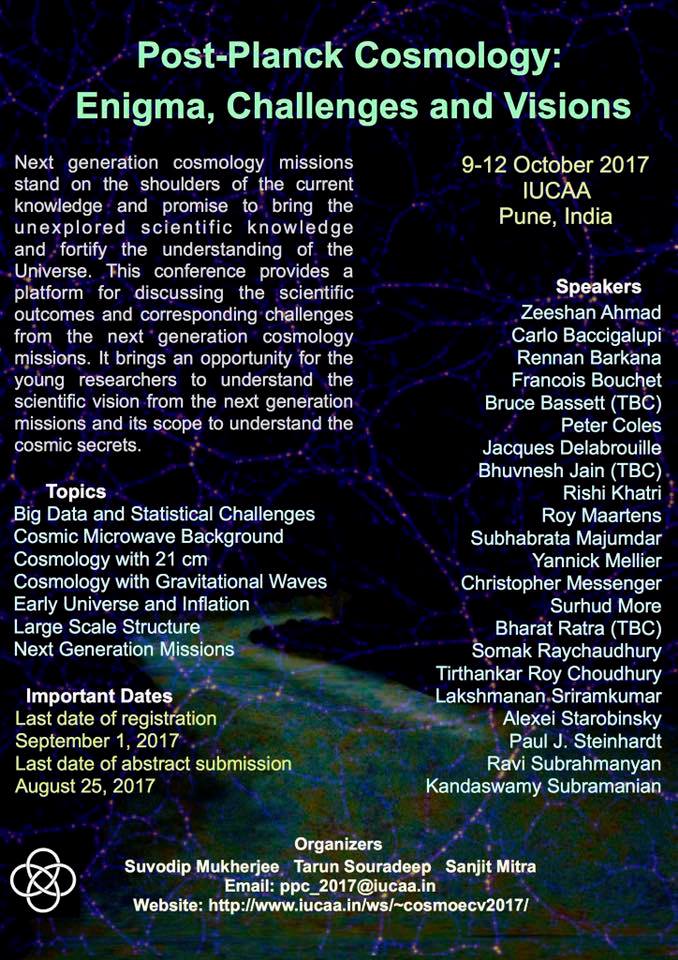
Anyway, we’ll soon be starting this meeting so I thought I’d post the conference poster.

I’ll try to post summaries of each day if I get the time in the evenings.

Now, time for breakfast!

Return to IUCAA

Posted in Biographical, The Universe and Stuff with tags , on October 8, 2017 by telescoper

This afternoon I roused myself from my slumbers and took a stroll around the campus of the Inter-University Centre for Astronomy and Astrophysics (IUCAA). You can read more about IUCAA here.

I was last here in 1994, at which time I was working with Varun Sahni on a long review article for Physics Reports. We didn’t quite get it all finished during the month or so I was here then, but it was submitted the following year.

Given that was over twenty years ago it shouldn’t really be a surprise that I don’t remember the place all that well, but in fact it has changed quite considerably with lots of new buildings. I’m not staying in the guest accommodation area I was in last time, but in a new part just round the corner. I’ve got a small apartment, actually,including a kitchen but I think I’ll be eating at the refectory most of the time.

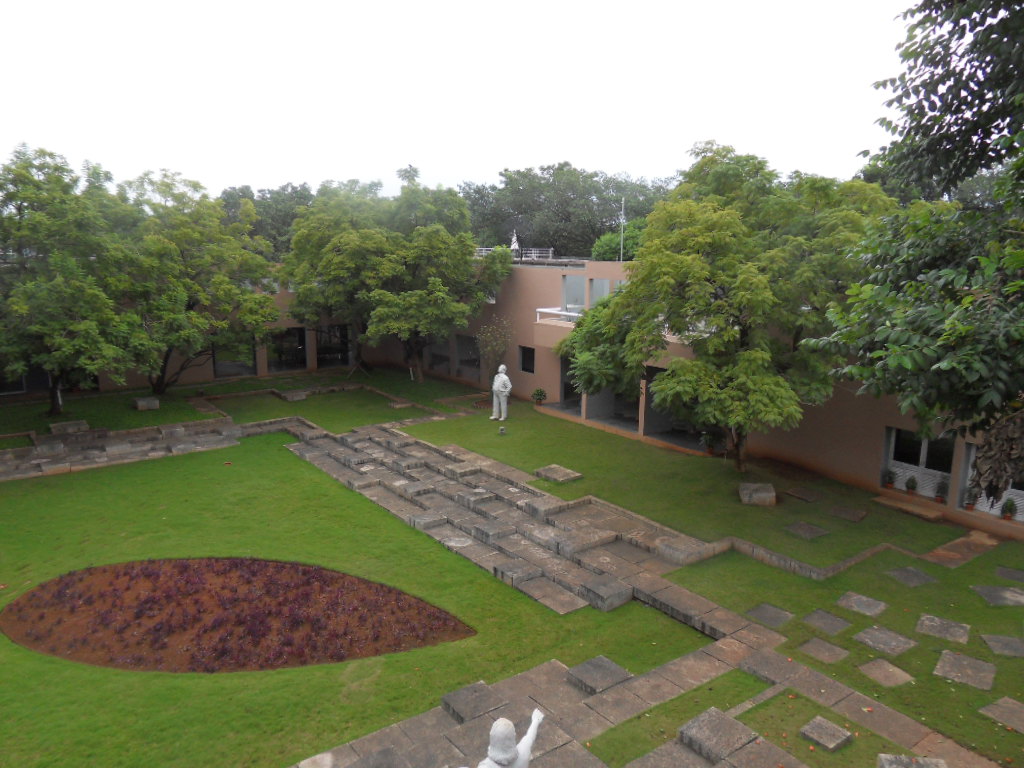
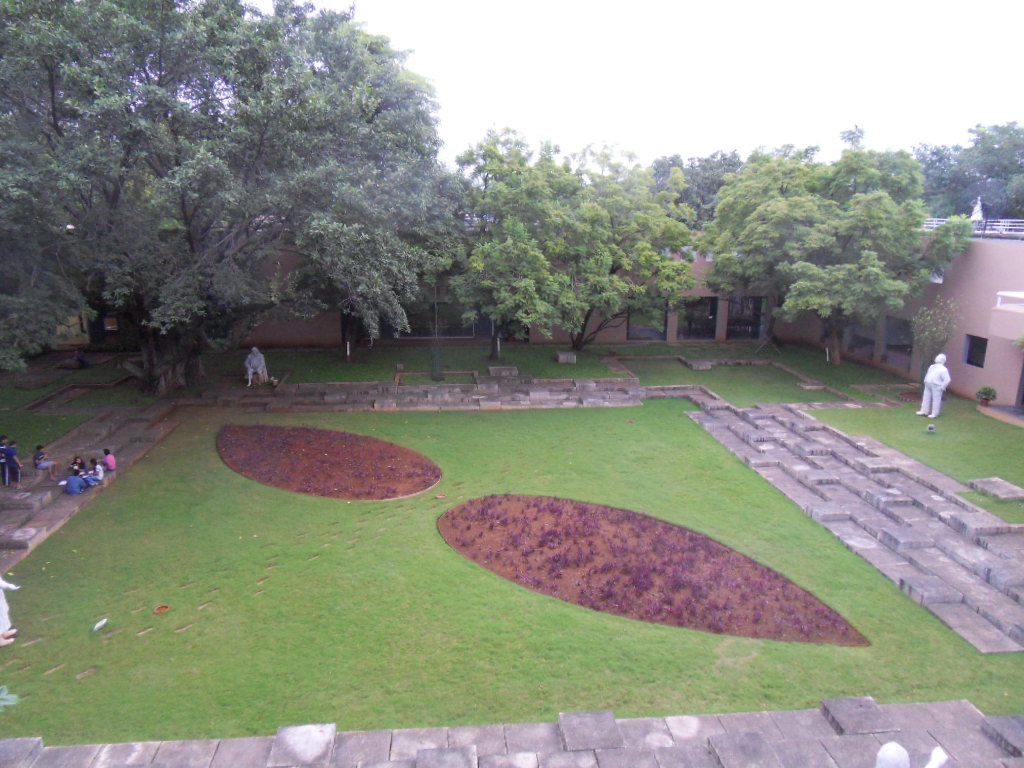
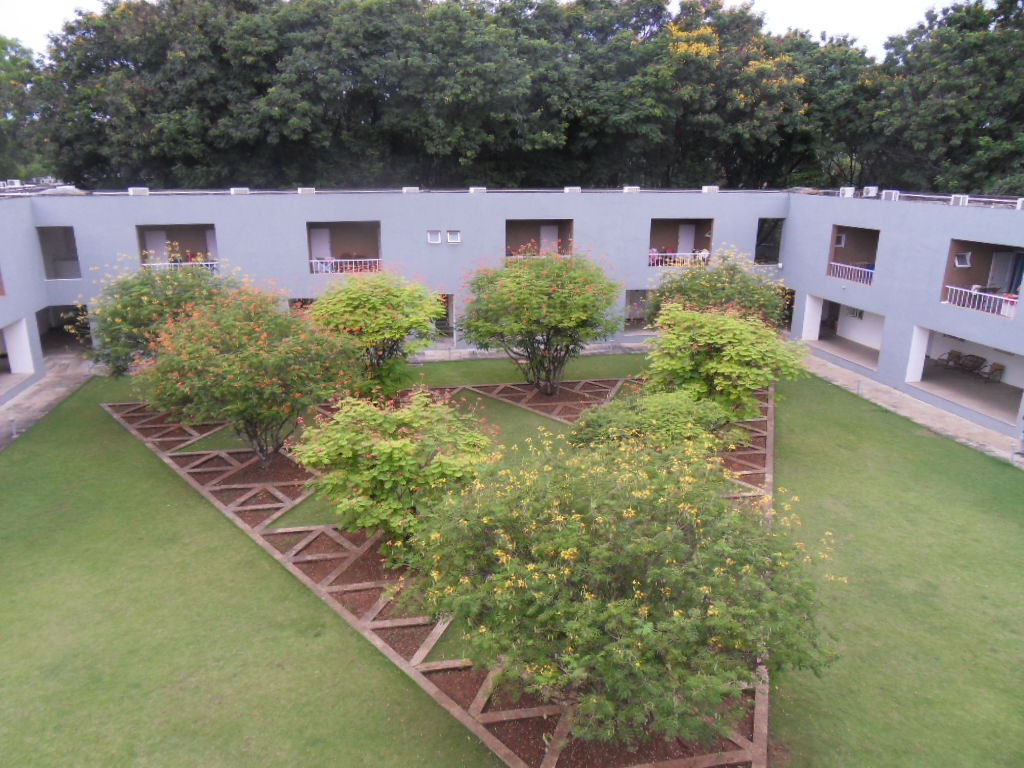
Anyway, here are some snaps of parts of the IUCAA complex I did recognize:

There are four statues in the main quadrangle which is featured in the first three pictures. These are of:  Sir Isaac Newton (seated under the tree), Albert Einstein (standing with hands in pockets); Galileo Galilei (in the robe with arms akimbo); and Aryabhata the great Indian mathematician-astronomer. It’s quite hard to get all four into one picture, even from the roof!

Anyway, there’s dinner and drinks coming up at 7.30 so that’ll do for a first post. The meeting starts tomorrow morning and I’ll try to tweet/blog about interesting bits until it finishes at the end of the week. The meeting is called Post-Planck Cosmology: Enigma, Challenges and Visions, so I’ll try tweeting with #PPCIUCAA2017 as the hashtag and see if it catches on!

The 2017 Nobel Prize for Physics goes to…

Posted in The Universe and Stuff with tags , , , , , on October 3, 2017 by telescoper

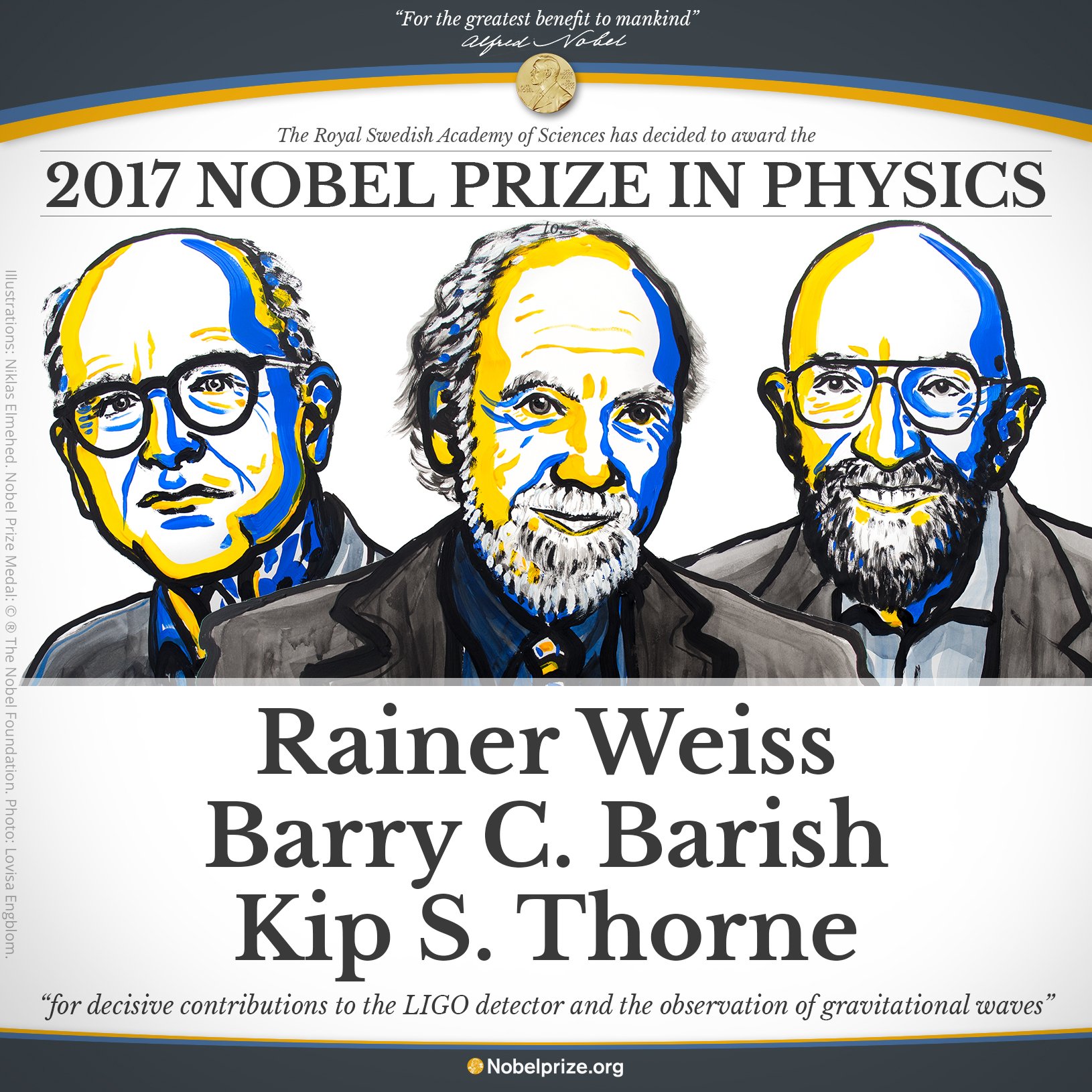
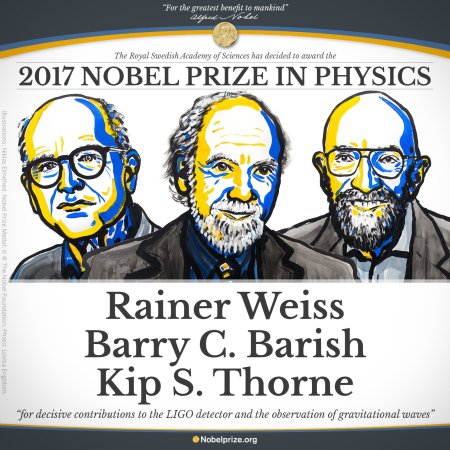
Usually at this time of year I make a point of watching the live announcement of the Nobel Prize for Physics, but this time I was otherwise engaged. On the other hand, this year was the least surprising announcement I can remember for a long time. Confirming almost everyone’s expectations, the award goes to Rainer Weiss (MIT), Barry C. Barish (Caltech) and Kip S. Thorne (Caltech) “for decisive contributions to the LIGO detector and the observation of gravitational waves”. You can see the full citation here.

Perhaps one surprise the split (50% to Weiss and 25% each to Barish and Thorne). I suppose the reason is that it divides the prize equally between MIT and Caltech. Ronald Drever, who had shared in other awards for the LIGO discovery (e.g the Gruber,  Shaw and Kavli prizes), sadly passed away earlier this year.

Anyway,  heartiest congratulations to the winners and also to all the other members of the LIGO Scientific Collaboration who collectively earned this award! That includes the Gravitational Physics group at Cardiff University who will no doubt be getting pissed celebrating in appropriate style.

Two thoughts. One is that the LIGO Collaboration is very large (the papers have over a thousand authors) but the Nobel Prize rules do not allow this award to be divided among more than three people. This is a problem for `Big Science’ which is always done by large teams. In a real sense, the Nobel Prize for physics reflects the way physics was done when it was founded, over a hundred years ago. It seems to me the limitation perpetuates the myth of the lone genius, when science doesn’t really work like that nowadays. I’m not sure it ever did, actually. I  wonder if they’ll ever change?

Another thing that struck me is that the interval between discovery and award seems to be decreasing. For example, he Cosmic Microwave Background was discovered in 1965, but Penzias and Wilson were not awarded the Nobel Prize for its discovery until 1978. I attended the Nobel Prize ceremony in 2005, when George Smoot and John Mather were award the prize for COBE which had happened over a decade earlier. This time the gap between discovery and award is just two years. I suppose that proves that we live in an accelerating universe (Nobel Prize 2011).

Anyway there are too many people in LIGO for them all to be able to attend the Prize Ceremony and Banquet in Stockholm in December, but I hope the winners don’t just give their invitations to senior members of the LIGO collaboration. Perhaps some form of lottery might be organized to allow early career researchers to attend?

As I’ve mentioned before on this blog I had the honour to be invited to the 2006 Nobel Prize ceremony. As a matter of fact, I still have this:

The chocolate has probably gone off by now, though. I stress that I attended not as a winner but as a guest of the Nobel Foundation. It was a wonderful occasion, of which I have very special memories. I’m sure everyone who does get to attend will have a ball! (Geddit?)

Although the Nobel Prize has its limitations as a true reflection of scientific contributions, I still has value in that for once the news media are talking about a great human achievement which contrasts with much of the stuff we have to hear about these days.

Gravitational Wave Flash

Posted in The Universe and Stuff with tags , , , on September 27, 2017 by telescoper

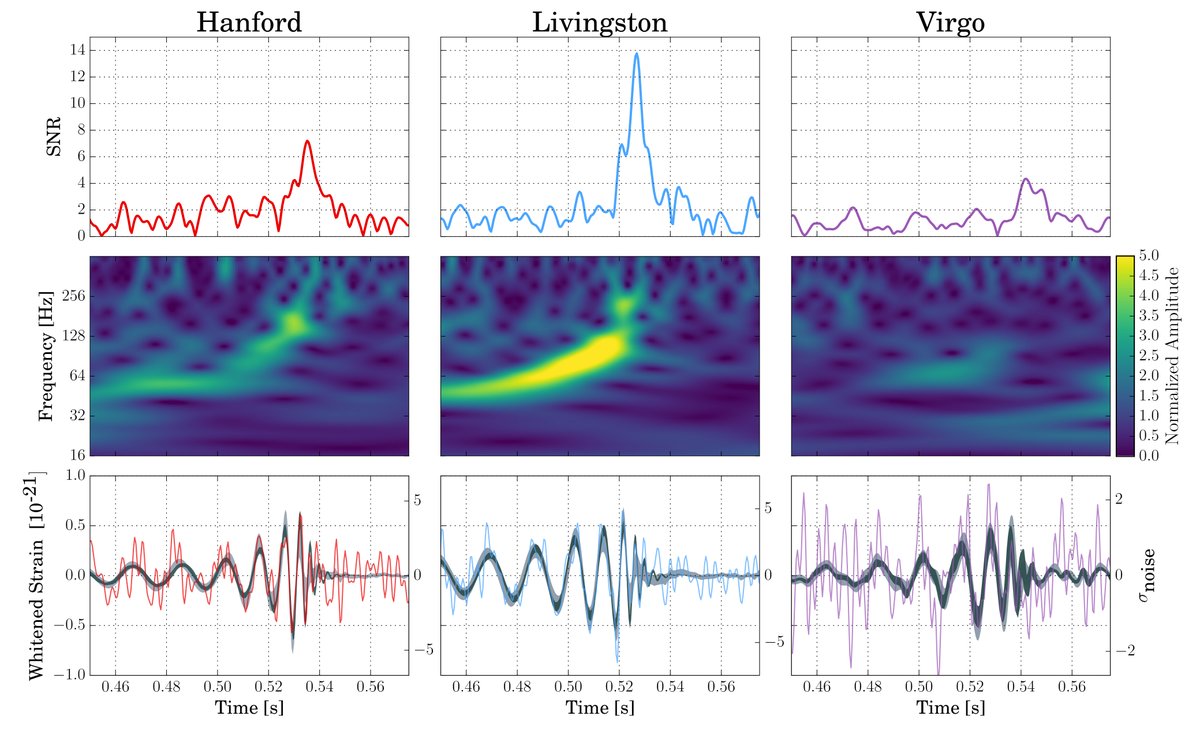
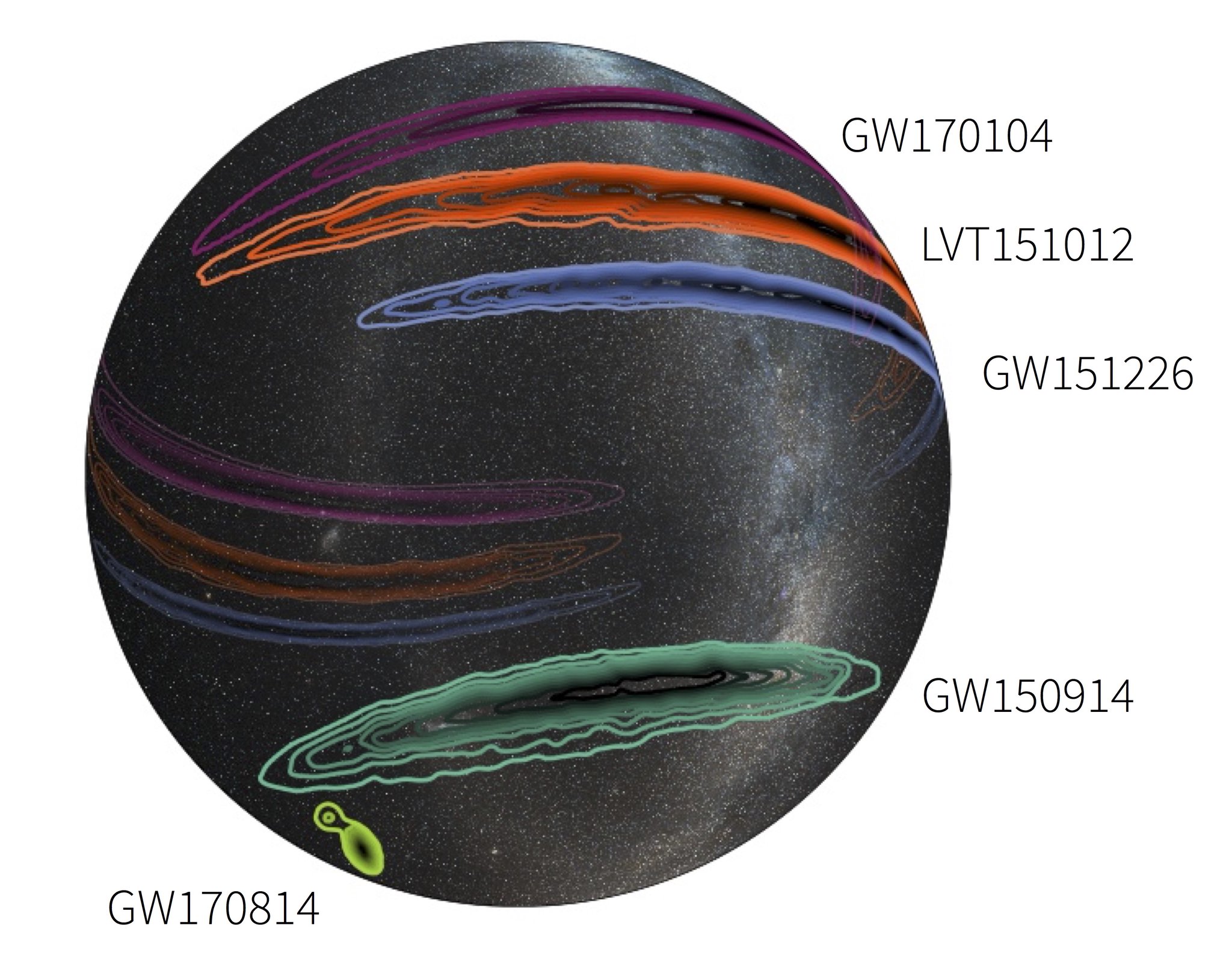
Inconveniently timed just before I was due to go to the pub, a new announcement has come out from the LIGO and Virgo gravitational wave detectors. This time it reports a coalescing binary black hole system detected by all three instruments. The new source is called GW170814, which indicates that the signal from it was received by the detectors on the day I returned from Copenhagen this summer!

Here’s the key figure:

The paper is here and there’s a Nature comment piece here.

I have to say that, on its own, the Virgo `detection’ looks rather marginal to me, but assuming that it is a detection this graphic shows how much it helps to localize the source compared to previous signals:

More on this in due course, perhaps, but now I’m off for a pint or two…

Free Will in the Theory of Everything

Posted in The Universe and Stuff with tags , , on September 21, 2017 by telescoper

There’s a very thoughtful and provocative paper on the arXiv by Gerard tHooft, who (jointly) won the Nobel Prize for Physics in 1999. It’s well worth reading, even if you decide you don’t agree with him!

From what is known today about the elementary particles of matter, and the forces that control their behavior, it may be observed that still a host of obstacles must be overcome that are standing in the way of further progress of our understanding. Most researchers conclude that drastically new concepts must be investigated, new starting points are needed, older structures and theories, in spite of their successes, will have to be overthrown, and new, superintelligent questions will have to be asked and investigated. In short, they say that we shall need new physics. Here, we argue in a different manner. Today, no prototype, or toy model, of any so-called Theory of Everything exists, because the demands required of such a theory appear to be conflicting. The demands that we propose include locality, special and general relativity, together with a fundamental finiteness not only of the forces and amplitudes, but also of the set of Nature’s dynamical variables. We claim that the two remaining ingredients that we have today, Quantum Field Theory and General Relativity, indeed are coming a long way towards satisfying such elementary requirements. Putting everything together in a Grand Synthesis is like solving a gigantic puzzle. We argue that we need the correct analytical tools to solve this puzzle. Finally, it seems to be obvious that this solution will give room neither for “Divine Intervention”, nor for “Free Will”, an observation that, all by itself, can be used as a clue. We claim that this reflects on our understanding of the deeper logic underlying quantum mechanics.

The full paper can be downloaded here.