Archive for the The Universe and Stuff Category

A test of Gaia Data Release 1 parallaxes: implications for the local distance scale [IMA]

Posted in The Universe and Stuff on September 19, 2016 by telescoper

One of the important cosmological issues that will be addressed by GAIA (which I blogged about last week) is the local distance scale, more precisely whether some modification to the calibration of Cepheid distances may be needed. This paper looks at this question using the GAIA DR1 results, and finds that – as yet – there isn’t any evidence of major problems, but it’s early days. The “tension” between “direct” estimates of the Hubble constant and those from Planck remains unresolved.

arxiver's avatararXiver

http://arxiv.org/abs/1609.05175

We present a comparison of Gaia Data Release 1 (DR1) parallaxes with photometric parallaxes for a sample of 212 Galactic Cepheids at a median distance of 2~kpc, and explore their implications on the distance scale and the local value of the Hubble constant H_0. The Cepheid distances are estimated from a recent calibration of the near-infrared Period-Luminosity P-L relation. The comparison is carried out in parallax space, where the DR1 parallax errors, with a median value of half the median parallax, are expected to be well-behaved. With the exception of one outlier, the DR1 parallaxes are in remarkably good global agreement with the predictions, and the published errors may be conservatively overestimated by about 20%. The parallaxes of 9 Cepheids brighter than G = 6 may be systematically underestimated, trigonometric parallaxes measured with the HST FGS for three of these objects confirm this trend. If interpreted as an independent…

View original post 171 more words

!Happy Birthday GW150914!

Posted in The Universe and Stuff with tags , , on September 14, 2016 by telescoper

A birthday message to the first gravitational wave source to be detected, from my new office mate, Bernard Schutz!

bfschutz's avatarThe Rumbling Universe

Just a year ago today, after travelling some 1.4 billion years, the gravitational wave chirp we christened GW150914 passed through Earth. It disturbed the two gravitational wave detectors of the LIGO observatory enough for us to notice it, to get excited about it, and to get a large fraction of the general public excited about it! But GW150914 just kept on going and is now one further year along in its journey through the Universe. And it will keep going, spreading out and getting weaker but not otherwise being much disturbed, forever. Literally forever.

And GW150914 hardly noticed us! When we observe the Universe with our telescopes, detecting light or radio waves or gamma rays from the enormous variety of luminous objects out there, we capture the energy that enters our telescopes. The photons from a distant star terminate their journeys in our telescopes, leaving a tiny hole in the…

View original post 982 more words

New: Top Ten Gaia Facts!

Posted in Astrohype, The Universe and Stuff with tags , , , on September 14, 2016 by telescoper

After today’s first release of data by the Gaia Mission, as a service to the community, for the edification of the public at large, and by popular demand, here is a list of Top Ten Gaia Facts.

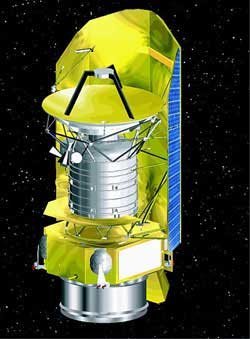
Gaia looks nothing like the Herschel Space Observatory shown here.

Gaia looks nothing like the Herschel Space Observatory shown here.


  1. The correct pronunciation of GAIA is as in “gayer”. Please bear this in mind when reading any press articles about the mission.
  2. The GAIA spacecraft will orbit the Sun at the Second Lagrange Point, the only place in the Solar System where the  effects of cuts in the UK science budget can not be felt.
  3. The data processing challenges posed by GAIA are immense; the billions of astrometric measurements resulting from the mission will be analysed using the world’s biggest Excel Spreadsheet.
  4. To provide secure backup storage of the complete GAIA data set, the European Space Agency has commandeered the world’s entire stock of 3½ inch floppy disks.
  5. As well as measuring billions of star positions and velocities, GAIA is expected to discover thousands of new asteroids and the hiding place of Lord Lucan.
  6. GAIA can measure star positions to an accuracy of a few microarcseconds. That’s the angle subtended by a single pubic hair at a distance of 1000km.
  7. The precursor to GAIA was a satellite called Hipparcos, which is not how you spell Hipparchus.
  8. The BBC will be shortly be broadcasting a new 26-part TV series about GAIA. Entitled WOW! Gaia! That’s Soo Amaazing… it will be presented by Britain’s leading expert on astrometry, Professor Brian Cox.
  9. Er…
  10. That’s it.

Gaia’s First Data Release!

Posted in The Universe and Stuff with tags , , , on September 14, 2016 by telescoper

It seems like only yesterday that I was blogging excitedly about the imminent launch of the European Space Agency’s Gaia Mission. In fact it was almost three years ago – 1000 days to be precise – and today the world of astronomy is a-flutter with excitement because we’ve just seen the first release of data from the mission. You can find an overview with links to all the yummy data here. I can’t resist pointing out the adoption of a rigorously Bayesian method for dealing with partial or incomplete data when a full astrometric solution is not possible due to insufficient observations. If you want to go straight to the data archive you go here or you could try one of the other data centres listed here. It’s great that all this data is being made freely available, but this is only the first set of data. It’s just a hint of what the mission overall will achieve.

If you would prefer some less technical background to the mission have a look here.

Here’s a summary (courtesy of ESA) of what Gaia has achieved so far:

cstyyenwgaa7fa

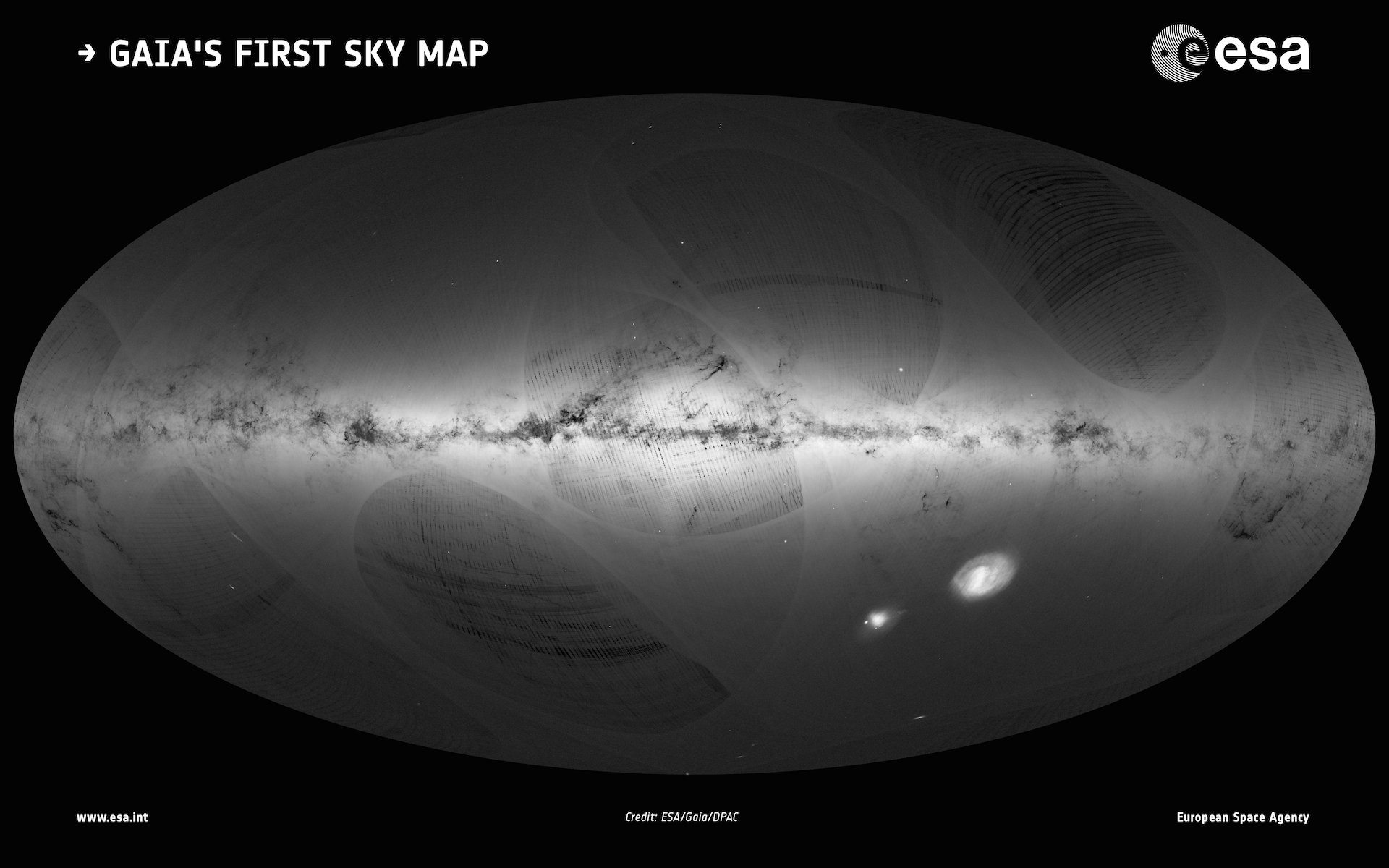
There’s much more to Gaia than pictures, but here’s the first map of the sky  it produced:

cstpe32weaeiwmw

I remember first hearing about Gaia about 15 years ago when I was on a PPARC advisory panel and was immediately amazed  by the ambition of its objectives. As I mentioned above, Gaia is a global space astrometry mission, which will make the largest, most precise three-dimensional map of our Galaxy by surveying more than a billion stars; DR1 is really just a taster as the measurements will become more complete and more accurate as the mission continues.

In some sense Gaia is the descendant of the Hipparcos mission launched in 1989, but it’s very much more than that. Gaia monitors each of its target stars about 70 times over a five-year period. It is expected to discover hundreds of thousands of new celestial objects, such as extra-solar planets and brown dwarfs, and observe hundreds of thousands of asteroids within our own Solar System. The mission is also expected to yield a wide variety of other benefits, including new tests of the  General Theory of Relativity.

Gaia will created an extraordinarily precise three-dimensional map of more than a thousand million stars throughout our Galaxy (The Milky Way) and beyond, mapping their motion, luminosity, temperature and chemical composition as well as any changes in such properties. This huge stellar census will provide the data needed to tackle an enormous range of important problems related to the origin, structure and evolutionary history of our Galaxy. Gaia will do all this by repeatedly measuring the positions of all objects down to an apparent magnitude of 20. A billion stars is about 1% of the entire stellar population of the Milky Way.

For the brighter objects, i.e. those brighter than magnitude 15, Gaia  measures their positions to an accuracy of 24 microarcseconds, comparable to measuring the diameter of a human hair at a distance of 1000 km. Distances of relatively nearby stars are measured to an accuracy of 0.001%. Even stars near the Galactic Centre, some 30,000 light-years away, have their distances measured to within an accuracy of 20%.

It’s an astonishing mission that will leave an unbelievably rich legacy not only for the astronomers working on the front-line operations of Gaia but for generations to come.


Bayes Factors via Savage-Dickey Supermodels [IMA]

Posted in Bad Statistics, The Universe and Stuff on September 12, 2016 by telescoper

How could I possibly resist reblogging an arXiver post about “Savage-Dickey Supermodels”?

arxiver's avatararXiver

http://arxiv.org/abs/1609.02186

We outline a new method to compute the Bayes Factor for model selection which bypasses the Bayesian Evidence. Our method combines multiple models into a single, nested, Supermodel using one or more hyperparameters. Since the models are now nested the Bayes Factors between the models can be efficiently computed using the Savage-Dickey Density Ratio (SDDR). In this way model selection becomes a problem of parameter estimation. We consider two ways of constructing the supermodel in detail: one based on combined models, and a second based on combined likelihoods. We report on these two approaches for a Gaussian linear model for which the Bayesian evidence can be calculated analytically and a toy nonlinear problem. Unlike the combined model approach, where a standard Monte Carlo Markov Chain (MCMC) struggles, the combined-likelihood approach fares much better in providing a reliable estimate of the log-Bayes Factor. This scheme potentially opens the way to…

View original post 53 more words

Cosmology: Galileo to Gravitational Waves – with Hiranya Peiris

Posted in The Universe and Stuff with tags , , , on September 9, 2016 by telescoper

Here’s another thing I was planning to post earlier in the summer, but for some reason forgot. It’s a video of a talk given at the Royal Institution earlier this year by eminent cosmologist Prof. Hiranya Peiris of University College London. The introduction to the talk goes like this:

Modern fundamental physics contains ideas just as revolutionary as those of Copernicus or Newton; ideas that may radically change our understanding of the world; ideas such as extra dimensions of space, or the possible existence of other universes.

Testing these concepts requires enormous energies, far higher than what is achievable by the Large Hadron Collider at CERN, and in fact, beyond any conceivable Earth-bound experiments. However, at the Big Bang, the Universe itself performed the ultimate experiment and left clues and evidence about what was behind the origin of the cosmos as we know it, and how it is evolving. And the biggest clue is the afterglow of the Big Bang itself.

In the past decade we have been able to answer age-old questions accurately, such as how old the Universe is, what it contains, and its destiny. Along with these answers have also come many exciting new questions. Join Hiranya Peiris to unravel the detective story, explaining what we have uncovered, and how we know what we know.

Hiranya Peiris is Professor of Astrophysics in the Astrophysics Group in the Department of Physics and Astronomy at University College London. She is also the Principal Investigator of the CosmicDawn project, funded by the European Research Council

She is also a member of the Planck Collaboration and of the ongoing Dark Energy Survey, the Dark Energy Spectroscopic Instrument and the Large Synoptic Survey Telescope. Her work both delves into the Cosmic Microwave Background and contributes towards the next generation galaxy surveys that will yield deep insights into the evolution of the Universe.

I’ve heard a lot of people talk about “Cosmic Dawn” but I’ve never met her…

Anyway, here is the video. It’s quite long (almost an hour) but very interesting and well-presented for experts and non-experts alike!

Update: I’ve just heard the news that Hiranya is shortly to take up a new job in Sweden as Director of the Oscar Klein Centre for Cosmoparticle Physics. Hearty congratulations and good luck to her!


Theory of Gravitational Waves [CL]

Posted in The Universe and Stuff with tags on September 8, 2016 by telescoper

Since gravitational waves are quite the thing these days I thought I’d reblog this arXiver post of a nice review article that covers all the basics for the benefit of anyone interested in finding about a bit more about the subject.

arxiver's avatararXiver

http://arxiv.org/abs/1607.04202

The existence of gravitational radiation is a natural prediction of any relativistic description of the gravitational interaction. In this chapter, we focus on gravitational waves, as predicted by Einstein’s general theory of relativity. First, we introduce those mathematical concepts that are necessary to properly formulate the physical theory, such as the notions of manifold, vector, tensor, metric, connection and curvature. Second, we motivate, formulate and then discuss Einstein’s equation, which relates the geometry of spacetime to its matter content. Gravitational waves are later introduced as solutions of the linearized Einstein equation around flat spacetime. These waves are shown to propagate at the speed of light and to possess two polarization states. Gravitational waves can interact with matter, allowing for their direct detection by means of laser interferometers. Finally, Einstein’s quadrupole formulas are derived and used to show that nonspherical compact objects moving at relativistic speeds are powerful gravitational wave…

View original post 44 more words

250 Years of Dalton

Posted in History, The Universe and Stuff with tags , on September 6, 2016 by telescoper

Having a quick look at Twitter this morning as I drank my coffee I discovered that today is the 250th anniversary of the eminent English scientist John Dalton, who was born on 6th September 1766. Dalton is most famous in the United Kingdom for his work on chemistry and physics, and somewhat less so for his pioneering studies of colour blindness. I didn’t know until quite recently, in fact, that the birthday of John Dalton, who was himself colour blind, is also  Colour Blindness Awareness Day so I thought I’d do a quick post to mark the occasion. You might also be interested in this old guest post on the subject of colour and colour perception.

Here’s a test for some of the main types of colour blindness – can you read the numbers?

Colour_Blind

Colour blindness comes in different forms and affects a significant fraction of the population, with a much higher rate of occurence in males (up to 1 in 10 in some groups) than in females (about 1 in 200). It also varies significantly across different populations, with particularly low rates for, e.g., Fijian males (0.8 %) and much higher frequencies among, e.g. Russian males (9.2%). I am not colour-blind myself, but I know several colleagues who are. In fact at the meeting I was at last week, when one speaker decided to show two different sets of results on a graph by plotting one in red and the other in green, there were howls from several in the audience who couldn’t tell them apart. It’s very easy to make careless mistakes like this in preparing lecture materials when it takes only a small effort to make them suitable for all. I urge colleagues who teach to remember that if they are 100 men in the audience the likelihood is that there will be around 8 to 10 who are colour blind.

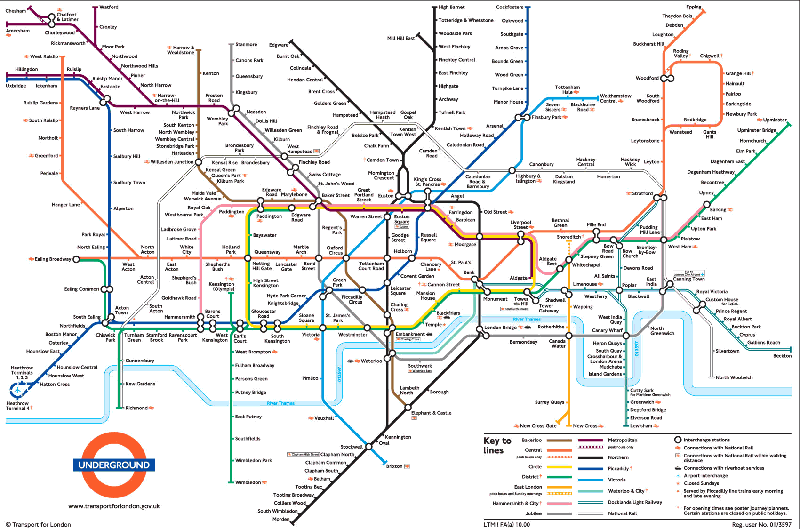
Thinking about this makes you realise how many maps and other designs rely on full colour perception for their effect. I’ve previously celebrated the London Underground map as an excellent example of graphic design, but it must be a nightmare to a person who is colour blind!

tube_map


It’s also worth mentioning that standard instructions at many institutions for marking examination papers is that the first marker should do  them in red ink and the second marker in green….

This all reminds me of the late Professor Francesco Lucchin, who first invited to Italy to work with the  astronomy group in Padova back in the early 1990s. Francesco and I ended up writing a book together and during the course of working on that he told me that he was “daltonic”. I later found out that this word does exist in English, but it is not in common usage as a word meaning “colour blind”. The standard word in Italian for “colour blind” is “daltonico” and there are many other variants in other European languages, such as the French “daltonien”. It’s very curious that Dalton’s name is so strongly associated with colour blindness across the European continent but not in the country of his birth. I wonder why this is?

By the way, if I understand correctly, the English word “daltonic” refers to a specific form of red/green colour blindness called deuteranopia, whereas the foreign variants can refer to any form of colour blindness.

P.S. You would have thought that the 25oth anniversary of Dalton’s birth would at least have warranted a Google doodle, but apparently not.

Jobs in Gravitational Waves at Cardiff University

Posted in The Universe and Stuff with tags , , , , on September 5, 2016 by telescoper

Gradually settling back in here to the School of Physics & Astronomy at Cardiff University, I thought I’d indulge  in a bit of promotional activity and point out that, following on from the recent detection of gravitational waves by the Advanced LIGO Consortium, of which  Cardiff University is a member, there are two opportunities open for jobs in gravitational physics.

One is in the area of Gravitational Wave Astronomy. Here is the blurb:

The current Cardiff Gravitational Physics group has expertise in gravitational-wave data analysis, numerical relativity and source modelling, and astrophysical interpretation, and consists of four full-time and two part-time academic staff, two research fellows, five postdoctoral researchers and nine PhD students. Our research is supported by the UK Science and Technology Facilities Council (STFC), the Royal Society, and the European Horizon 2020 programme. The group is a founding member of GEO600, a member of the Laser Interferometer Gravitational-Wave Observatory (LIGO) Scientific Collaboration and has played a leading role in these collaborations from their inception through to the recent first direct detection of gravitational waves, and is also active in planning and development of future detectors, such as LIGO-India, Einstein Telescope and Laser Interferometer Space Antenna (LISA).

This new appointment is part of a long-term expansion of the group, to broaden and strengthen our current research in gravitational-wave astronomy, and to build a world-leading group in gravitational-wave experimentation.

For the full advertisement, links to further particulars etc, see here.

The other is the area of Gravitational Wave Experimentation:

The current Cardiff Gravitational Physics group has expertise in gravitational-wave data analysis, numerical relativity and source modelling, and astrophysical interpretation, and consists of four full-time and two part-time academic staff, two research fellows, five postdoctoral researchers and nine PhD students. Our research is supported by the UK Science and Technology Facilities Council (STFC), the Royal Society, and the European Horizon 2020 programme. The group is a founding member of GEO600, a member of the Laser Interferometer Gravitational-Wave Observatory ( LIGO) Scientific Collaboration and has played a leading role in these collaborations from their inception through to the recent first direct detection of gravitational waves, and is also active in planning and development of future detectors, such as LIGO-India, Einstein Telescope and Laser Interferometer Space Antenna ( LISA).

This new appointment is part of a long-term expansion of the group, to broaden and strengthen our current research in gravitational-wave astronomy, and to build a world-leading group in gravitational-wave experimentation, with additional appointments expected in the near future.

For full details on this one see here.

The second appointment is intended to build on existing strengths by adding a more experimental dimension to Cardiff’s research in Gravitational Waves.


Back to Cosmology, Data Analysis and Cardiff

Posted in Biographical, The Universe and Stuff with tags , on September 1, 2016 by telescoper

Today is my first day back in the School of Physics and Astronomy at Cardiff University. Although my job title, Professor of Theoretical Astrophysics, is the same as it was when I was here in a previous incarnation it will be quite a different job and I’m going to be located in a different building (though not far from my old office). In fact my office is in a newly refurbished space connected with the Data Innovation Research Institute just on the other side of a car park from my old office. It looks like being an exciting time over the next few months and years as new staff across a range of disciplines join the Institute, expanding its research portfolio from astrophysics (especially gravitational wave research) into biomedical sciences and beyond.

Here’s a little video about the Data Innovation Research Institute, which is about conducting fundamental research into the aspects of managing, analysing and interpreting massive volumes of textual and numerical information:

But for the moment it’s been a day for administrative matters: taking my P45 to the Human Resources Department, getting my new Staff ID card, trying to get myself set up on the University computer network, and so on. Oh, and I’ve agreed to do some teaching in the Spring Semester, a Level 4 module on The Physics of the Early Universe. It will be nice to be teaching some cosmology again!