Archive for the Uncategorized Category

A Google Remedy

Posted in Uncategorized with tags , , on January 8, 2025 by telescoper

A few days ago I posted an article moaning about the enshittification of Google Search. Usually posting a piece like that achieves nothing except letting off a bit of steam. This time, however, one of the comments suggested a way to decrapify Google Search. Thanks to Andy Newsam for the tip.

The remedy is udm14.com:

If you click on udm14.com you will find out more about this useful site including how to share it. It doesn’t solve all the problems with Google, which are many and various, but it’s a start…

Nollaig shona daoibh go léir!

Posted in Uncategorized on December 25, 2024 by telescoper

Here we are then, Christmas Day. I thought I’d do a quick yule blog in between finishing a rather late breakfast and starting the preparations for dinner*.

Let me just wish you all a Merry Christmas, Nollaig Shona, Nadolig Llawen, Fröhliche Weihnachten, Joyeux Noël, Buon Natale, Feliz Navidad, Feliç Nadal, Glædelig Jul, etc…

And in the words of a traditional Irish toast:

Go mbeirimid beo ar an am seo arís!

(“May we live to see this time next year”)

*Roast duck, with a port and redcurrant sauce, braised red cabbage, honey-roast carrots and parsnips, and roast potatoes.

Recommendation Letters in Astronomy

Posted in Uncategorized with tags , , , , , , on December 16, 2024 by telescoper

There’s an interesting paper on arXiv with the title On the Use of Letters of Recommendation in Astronomy and Astrophysics Graduate Admissions and the abstract

Letters of recommendation are a common tool used in graduate admissions. Most admissions systems require three letters for each applicant, burdening both letter writers and admissions committees with a heavy work load that may not be time well-spent. Most applicants do not have three research advisors who can comment meaningfully on research readiness, adding a large number of letters that are not useful. Ideally, letters of recommendation will showcase the students’ promise for a research career, but in practice, the letters often do not fulfill this purpose. As a group of early and mid-career faculty who write dozens of letters every year for promising undergraduates, we are concerned and overburdened by the inefficiencies of the current system. In this open letter to the AAS Graduate Admissions Task Force, we offer an alternative to the current use of letters of recommendation: a portfolio submitted by the student, which highlights e.g., a paper, plot, or presentation that represents their past work and readiness for grad school, uploaded to a centralized system used by astronomy and astrophysics PhD programs. While we argue that we could eliminate letters in this new paradigm, it may instead be advisable to limit the number of letters of recommendation to one per applicant.

Barron et al, arXiv:2412.0871

This reminds me of an old post (from 2009) on the topic of recommendation letters or testimonials that proved quite controversial at the time. I’ll rehash part of it now because my views have changed, though the situation is similar to the UK where I was based when I wrote the original post.

In my view, the role a reference letter should be as factual as possible, and probably the most important thing it contains is confirmation that the information given by a student in their application is accurate. This could be done in a simple pro forma, and referees are often asked to complete such things nowadays. I think this is reasonable, but the questionnaires concerned are frequently so poorly designed as to be useless.

The principal bone of contention with my earlier post was whether a Professor should ever write critical or even negative comments when asked to recommend a student for a place on a graduate course. In most of my career I haven’t really thought of these letters as much “recommendations” as “references” or “testimonials” which are supposed to describe the candidate’s character and abilities in a manner that is useful to those doing the recruitment. They are not meant to be written in absurdly hyperbolic terms nor are they meant to ignore any demonstrable shortcomings of the applicant. They are supposed to advise the people doing the recruitment of the suitability of the candidate in a sober, balanced and objective way. Fortunately, most students applying to graduate schools are actually very good so there are many more positives than negatives, but if there are weaknesses in my view these must be mentioned. Hype should not be involved. The point is that the referee is not only providing a service for the student but also for the recruiting school. On this basis, it is, I think, perfectly valid to include negative points as long as they can be justified objectively. I – and I’m sure others on this side of the pond – have been criticized by our transatlantic colleagues for writing very reserved recommendation letters, but having one year received references from a US institution on behalf of 4 different students all of whom were apparently the best student that institution had ever had in physics, I think I prefer the understated style.

However, references transcripts and other paperwork can only establish whether a student has reached the threshold level of technical competence that is needed to commence a research degree. That’s a necessary but not sufficient condition for their success as a scientist. The other factors – drive, imagination, commitment, diligence, etc – are much harder to assess. I think this part has to be done at interview. You can’t just rely on examination results because it’s by no means true that the best students at passing examinations necessarily evolve into the best graduate students.

A big change in the 15 years since I wrote my original post is that undergraduate programmes now often include some form of research project and students often have access to internships of various kinds. The performance of a student on such programmes is clearly important in determining their likely performance as a graduate student, so comments on these could be invaluable to a selection committee.

To respond to the paper above, therefore, I would say there is a case for reducing the number of reference letters to one, factual letter, and to base most of the selection on interviews. This would I think make the system fairer, but would not reduce workload as the interviews would take longer to organize and carry out.


The Valencia Flood Disaster

Posted in Uncategorized with tags , , on October 31, 2024 by telescoper

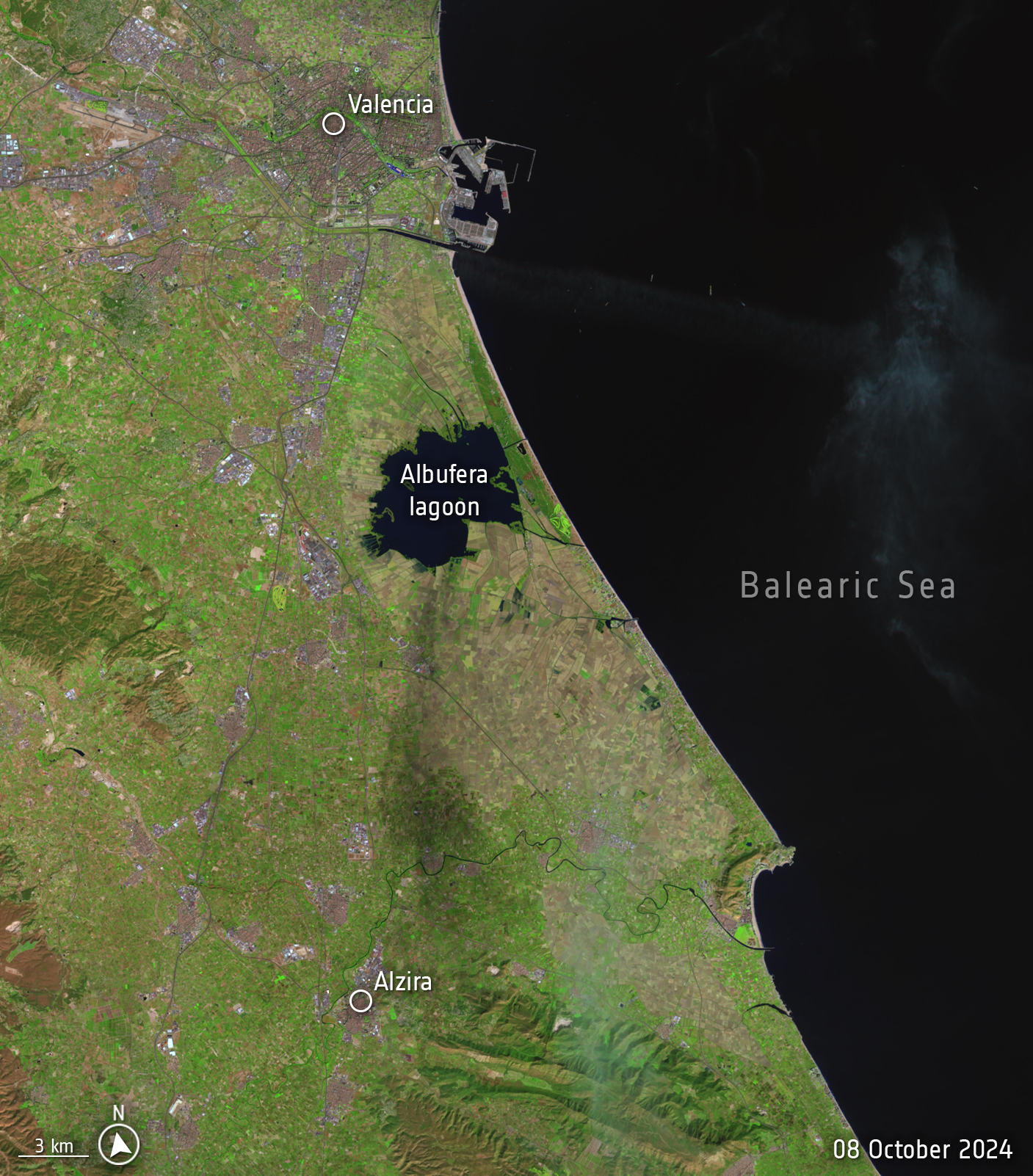
The death toll resulting from the terrible floods in the Valencia region of Spain has now risen to 158 and seems set to get higher as bodies are recovered from mud and collapsed buildings. Condolences to everyone affected. I was in the city of Valencia just a few months ago, though not in the part of the region most affected.

If you want to see how bad the floods were then take a look at these satellite images from the European Space Agency‘s website taken three weeks apart by the Landsat-8 satellite.

Intermission

Posted in Uncategorized on August 28, 2024 by telescoper

It behoves me to disappear from the blogosphere for a couple of days – perhaps not even as long as that – so there will be a (hopefully) short interlude until I return.

An Irish Heatwave

Posted in Uncategorized on July 23, 2024 by telescoper

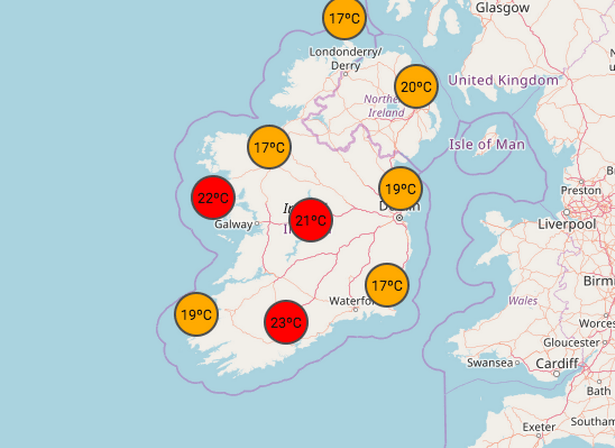
I like the helpful way that Irish weather forecasts warn the public that a summer heatwave is on the way by showing the regions of excessively high and potentially dangerous temperatures in red, like this:

First Flight of Ariane 6

Posted in Uncategorized with tags , on July 9, 2024 by telescoper

Five minutes to go!

Update: it all seemed to go very well, but the timing of the launch was badly planned by the EuropeanSpaceAgency, as it clashed with the semi-final between Spain and France in the European Championship.

Call for Editors at the Open Journal of Astrophysics

Posted in Open Access, Uncategorized with tags , , , , , , , , , , , , , on July 7, 2024 by telescoper

Just over halfway into 2024 the number of papers submitted to the Open Journal of Astrophysics continues to rise, as demonstrated by this nice graphic which shows the submission stats for the last five years:

The increasing number of articles is of course very welcome indeed, but it is increasing the load on our Editorial Board and that includes me! We’re therefore looking for volunteers to join the team, in any area of astrophysics. As a reminder, here are the areas we cover, corresponding to the sections of astro-ph on the arXiv:

  1. astro-ph.GA – Astrophysics of Galaxies. Phenomena pertaining to galaxies or the Milky Way. Star clusters, HII regions and planetary nebulae, the interstellar medium, atomic and molecular clouds, dust. Stellar populations. Galactic structure, formation, dynamics. Galactic nuclei, bulges, disks, halo. Active Galactic Nuclei, supermassive black holes, quasars. Gravitational lens systems. The Milky Way and its contents
  2. astro-ph.CO – Cosmology and Nongalactic Astrophysics. Phenomenology of early universe, cosmic microwave background, cosmological parameters, primordial element abundances, extragalactic distance scale, large-scale structure of the universe. Groups, superclusters, voids, intergalactic medium. Particle astrophysics: dark energy, dark matter, baryogenesis, leptogenesis, inflationary models, reheating, monopoles, WIMPs, cosmic strings, primordial black holes, cosmological gravitational radiation
  3. astro-ph.EP – Earth and Planetary Astrophysics. Interplanetary medium, planetary physics, planetary astrobiology, extrasolar planets, comets, asteroids, meteorites. Structure and formation of the solar system
  4. astro-ph.HE – High Energy Astrophysical Phenomena. Cosmic ray production, acceleration, propagation, detection. Gamma ray astronomy and bursts, X-rays, charged particles, supernovae and other explosive phenomena, stellar remnants and accretion systems, jets, microquasars, neutron stars, pulsars, black holes
  5. astro-ph.IM – Instrumentation and Methods for Astrophysics. Detector and telescope design, experiment proposals. Laboratory Astrophysics. Methods for data analysis, statistical methods. Software, database design
  6. astro-ph.SR – Solar and Stellar Astrophysics. White dwarfs, brown dwarfs, cataclysmic variables. Star formation and protostellar systems, stellar astrobiology, binary and multiple systems of stars, stellar evolution and structure, coronas. Central stars of planetary nebulae. Helioseismology, solar neutrinos, production and detection of gravitational radiation from stellar systems.

We are looking for experienced scientists in any of these areas, and it would indeed be useful to have people who can cover a range of subjects (as some of our existing editors do), but there are two specific topics that have seen a big increase recently: (a) galaxy formation simulations (especially involving hydrodynamics) covered by astro-ph.CO; and (b) galactic dynamics, covered by astro-ph.GA. The latter increase is driven Gaia data, an immensely rich source for discovery science.

Since we don’t charge authors or readers we can not offer payment to Editors but it is nevertheless a way of providing a service to the community.

Please get in touch either through the Open Journal website here, or through a message Mastodon here, BlueSky here, or Facebook here. You could even send a message through this form:

Go back

Your message has been sent

Warning
Warning
Warning
Warning.

Interlude

Posted in Uncategorized on July 3, 2024 by telescoper

I finally decided to take my ailing laptop to the computer hospital where I hope it can be restored to health reasonably soon (or put out of its misery and replaced with a new one). In the meantime, however, I will be taking a break from blogging.

Normal services will be resumed as soon as possible but, for the time being, there will now follow a short intermission.

To Valencia!

Posted in Barcelona, Open Access, Uncategorized on June 25, 2024 by telescoper

Ailing* laptop notwithstanding, I’ll shortly be taking the train to Valencia where I’ll be giving a talk tomorrow. The trip is about 350km each way and takes about 2 hours and 50 minutes. That’s a bit slower than the very fast train to Madrid but it looks like it’s all along the coast, so hopefully it will be quite enjoyable.

*I managed to get it to boot up into Windows, but it is running so extremely that I can’t do much on it. I have no idea what the issue is.