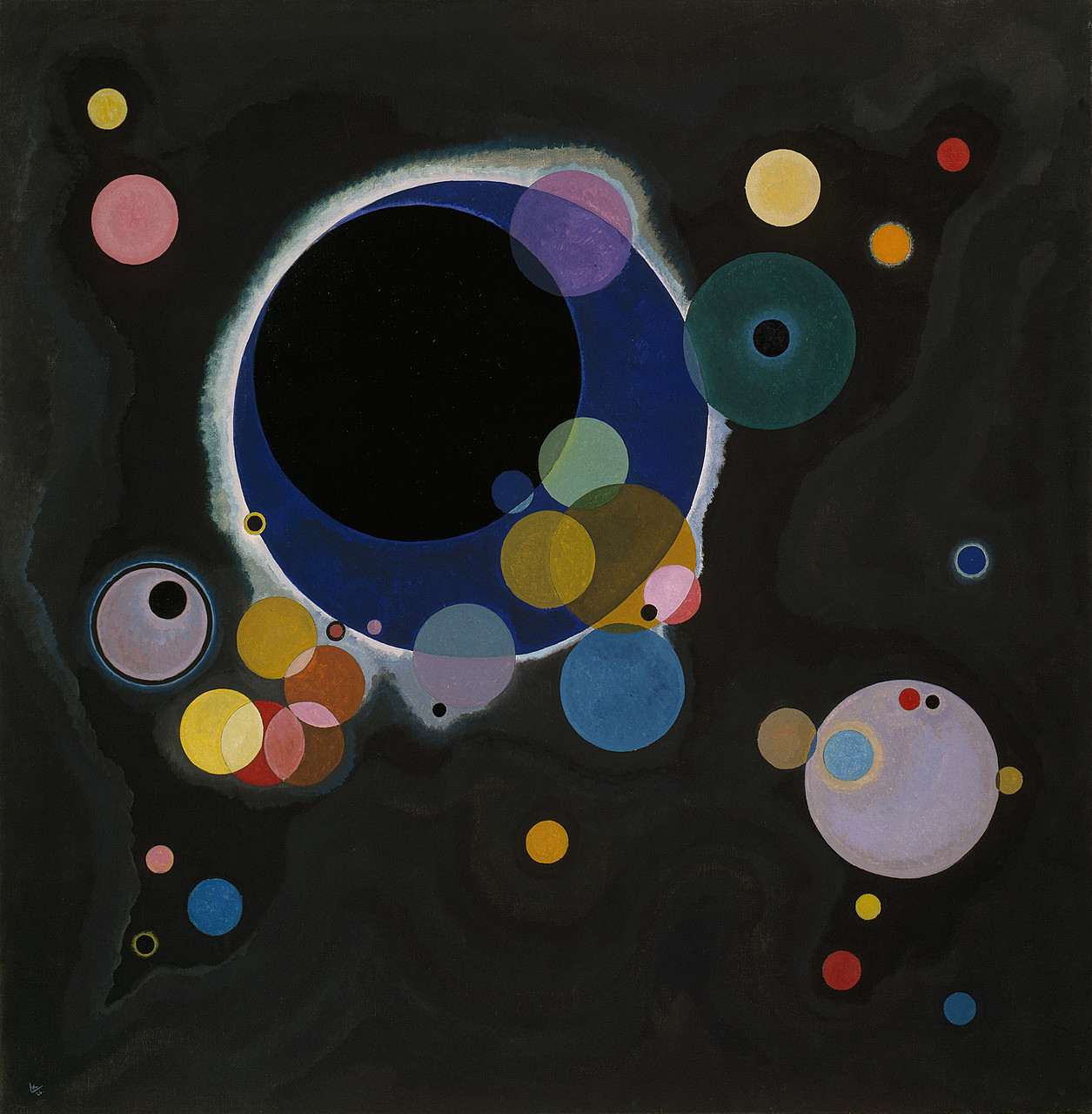
Einige Kreise by Wassily Kandinsky (1926; oil on canvas, 140.7 x 140.3 cm, Guggenheim, New York)
Einige Kreise by Wassily Kandinsky (1926; oil on canvas, 140.7 x 140.3 cm, Guggenheim, New York)
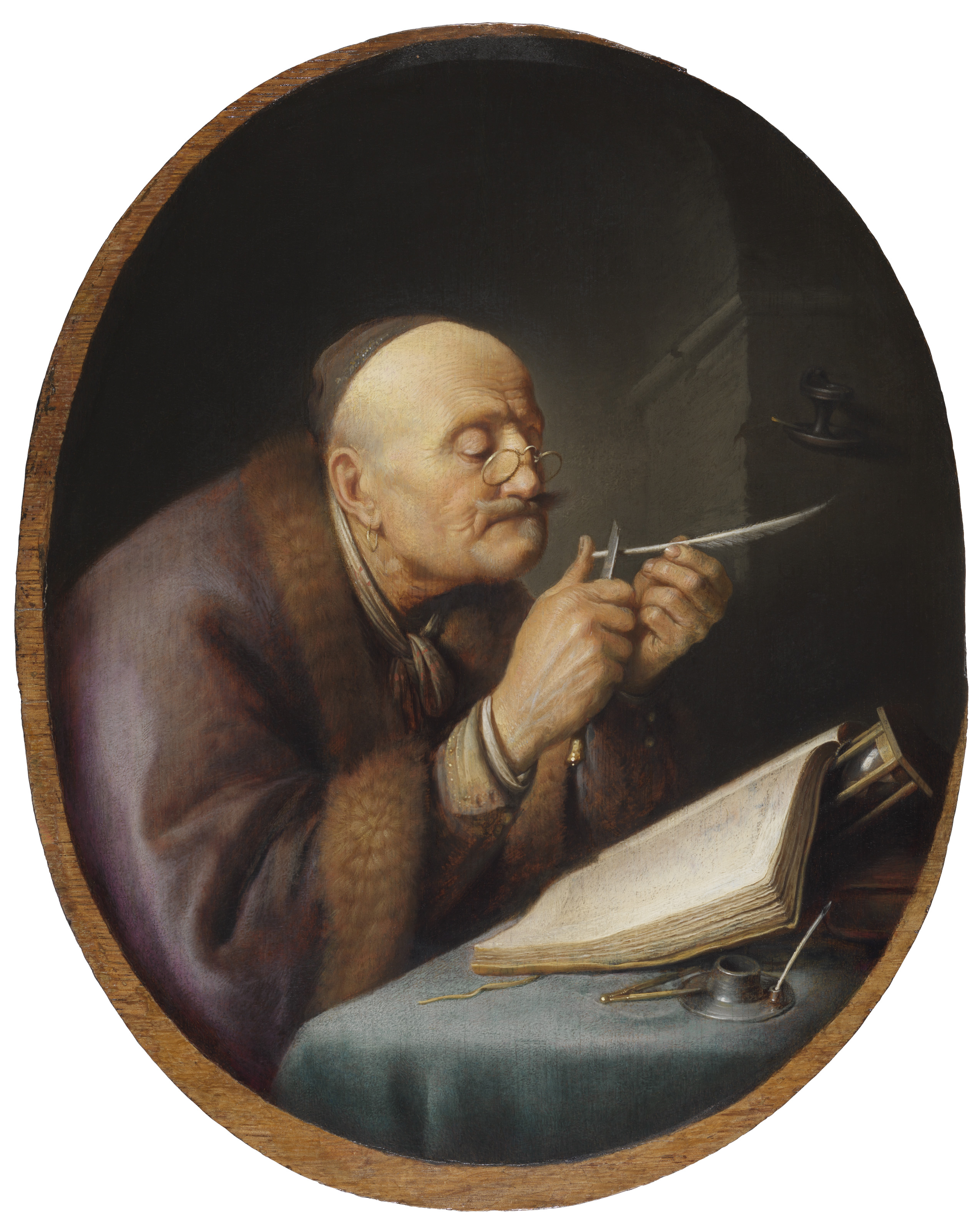
Scholar Sharpening His Quill by Gerrit Dou (c. 1632-35, oil on oval panel, 26.3 x 21.2 cm, private collection)
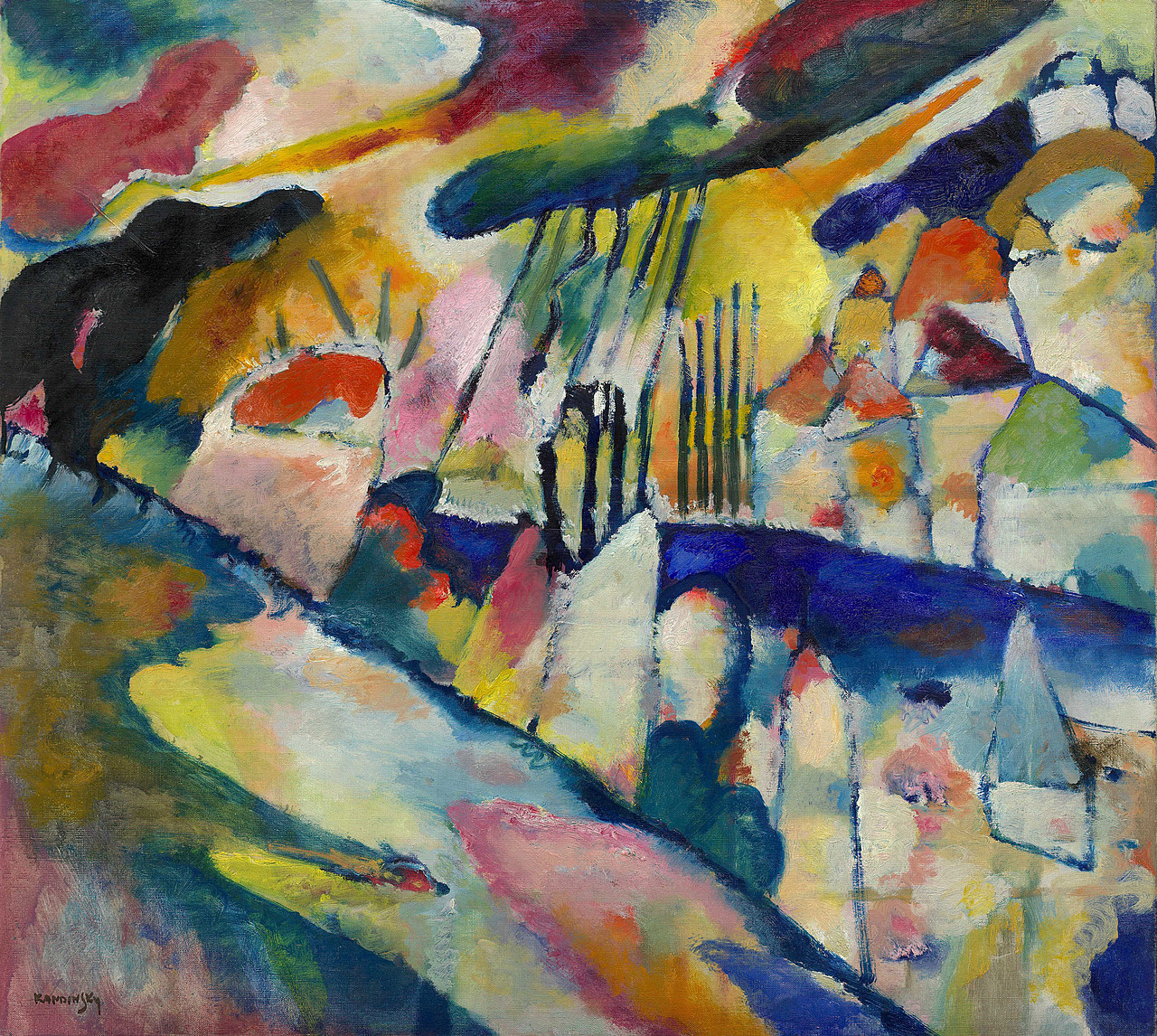
Landschaft mit Regen by Wassily Kandinsky (1913; oil on canvas, 70.5cm x 78.4 cm, Guggenheim, New York)
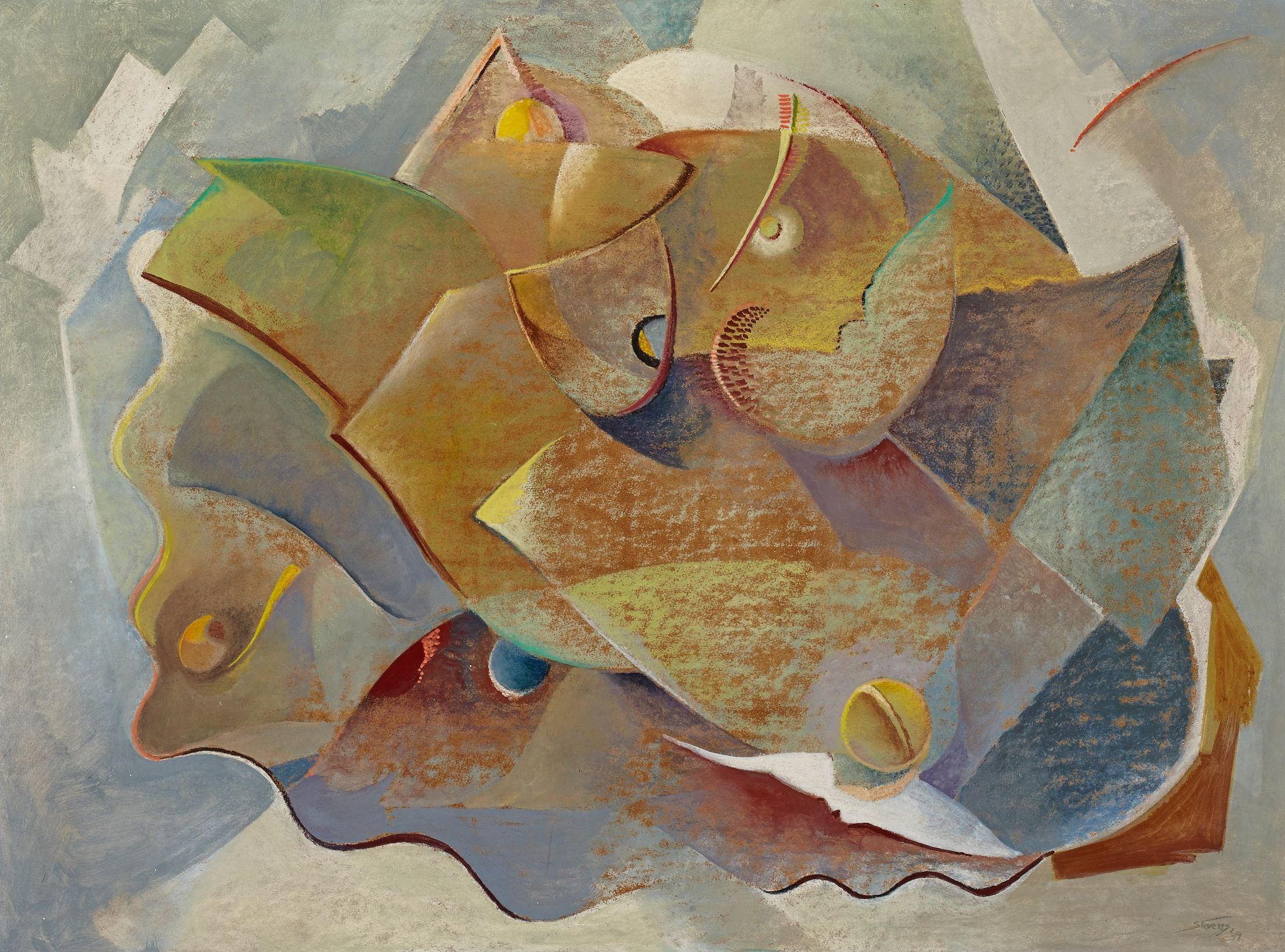
Winged Form by Will Henry Stevens (1939, tempera and oil on paper, mounted on canvas, 26 x 35 in, Indianapolis Museum of Art)
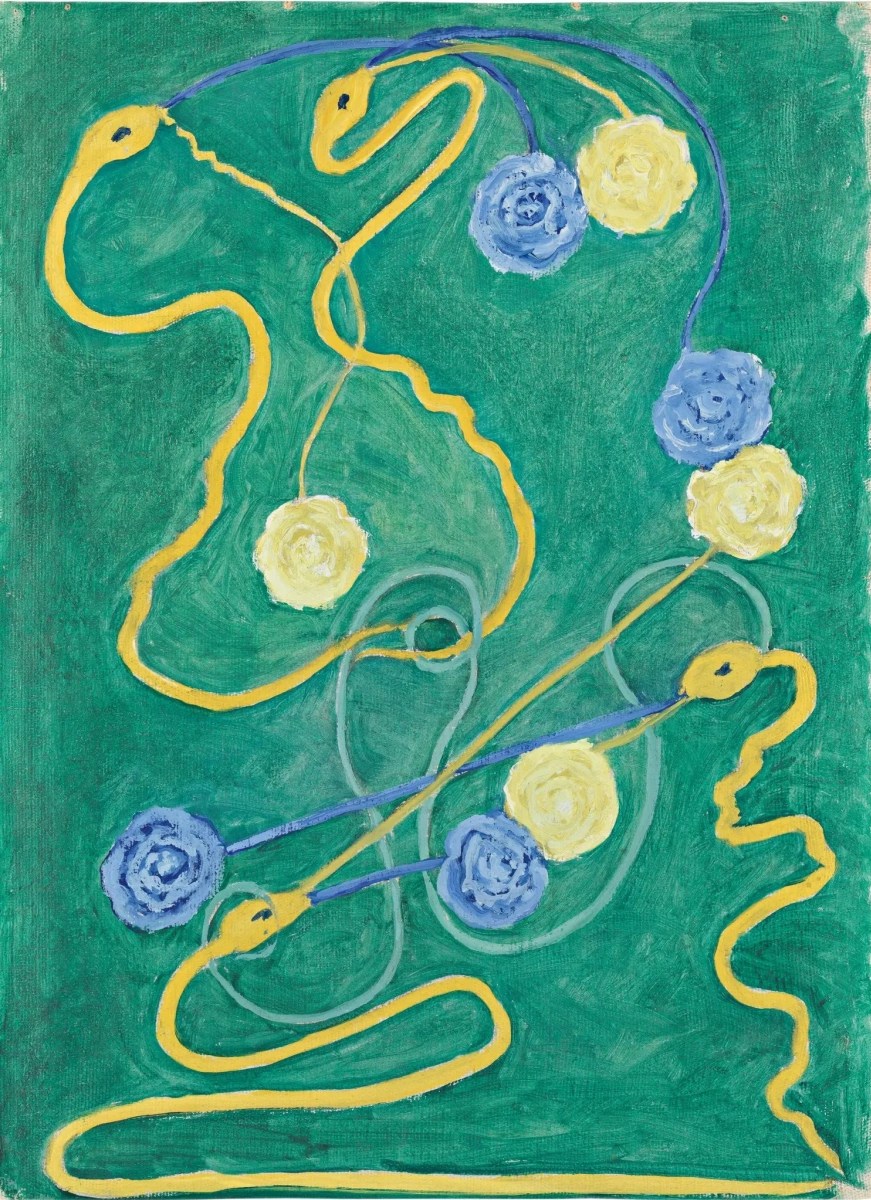
One of a series of 26 small canvasses called Group I. Primordial Chaos by Hilma af Klimt (1906-7, Oil on Canvas, 52.5×37 cm).
A major exhibition of works by Swedish artist Hilma af Klmit (1862-1944) will start in October (2026) and run until January (2027) at the National Gallery of Ireland.
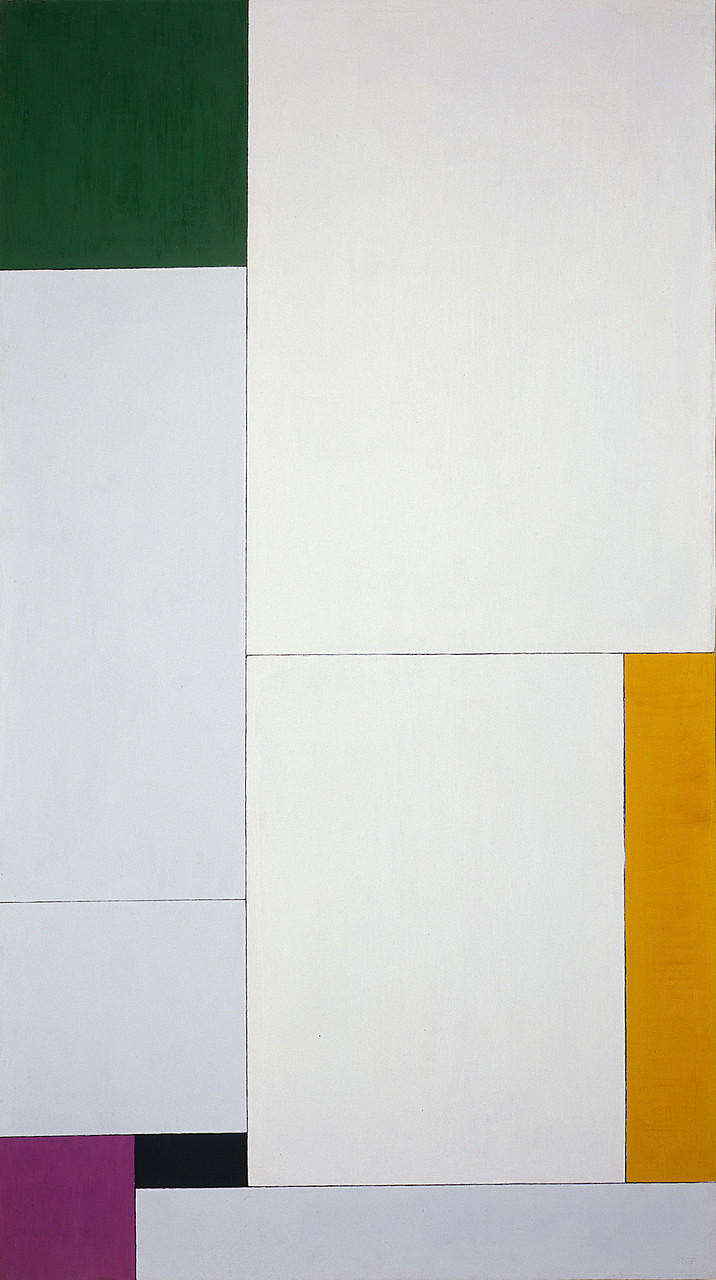
Composition Derived from the Equation with Green, Orange, Violet (Black) by Georges Vantongerloo (1930, Oil on Canvas, 119.4 x 68.2 cm, Guggenheim Museum, New York)
I leave it as an exercise to the reader to determine how this painting is derived from the stated equation.
I can’t remember when I was last in the Victoria and Albert Museum but it’s long enough ago for me to have forgotten how big it is. It being free to get in and very near to why I am we are staying it was an easy decision to head there this morning before going to the Pride festivities. In fact it was so enjoyable and so extensive we were a bit late leaving. It’s definitely well worth a visit if you’re in London.
I remember the Raphael Cartoons from when I was last at the V&A. They’re very well done – an example is on the right below – but I didn’t find them very funny. In fact I couldn’t see the joke in any of them!
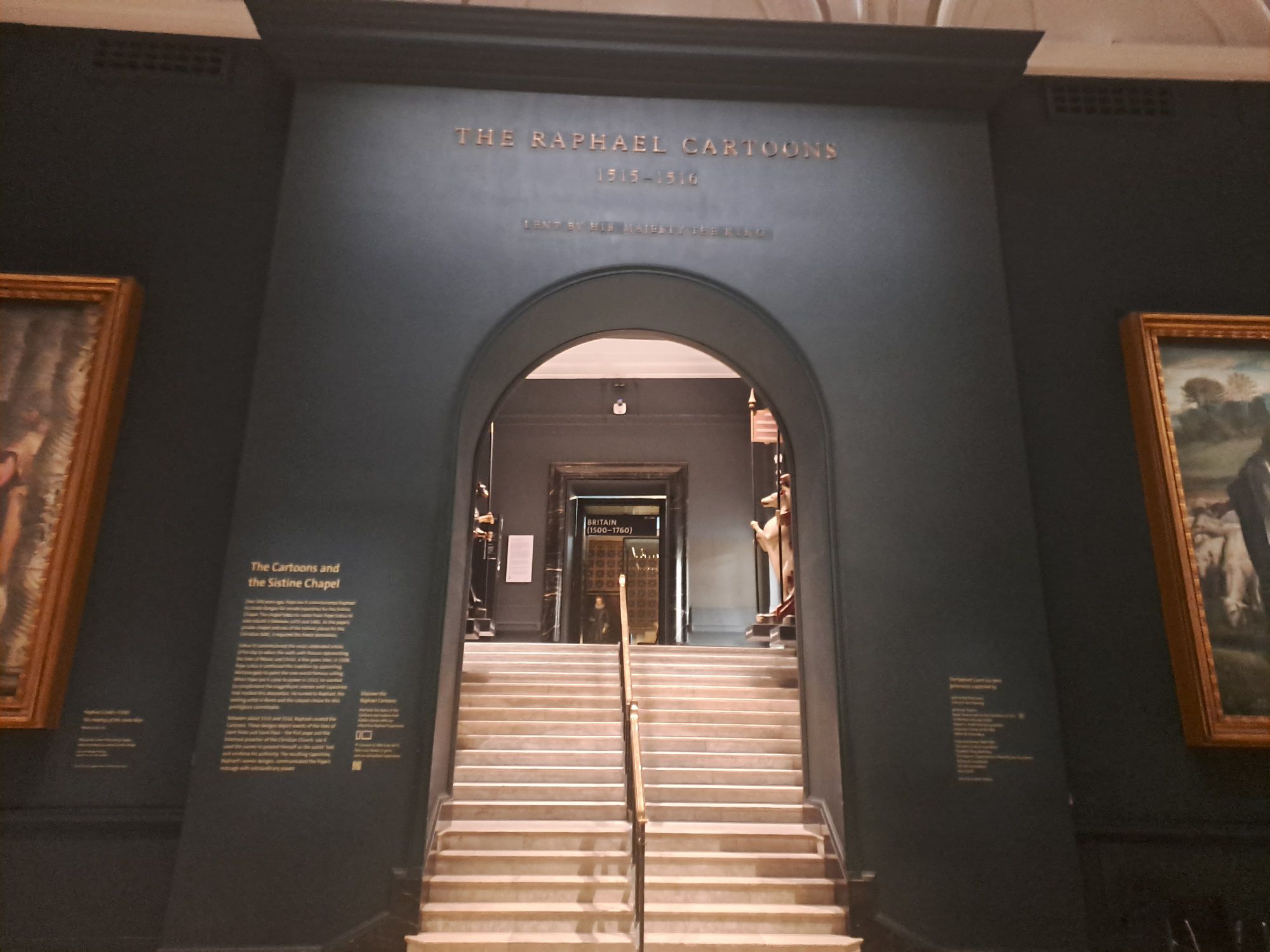
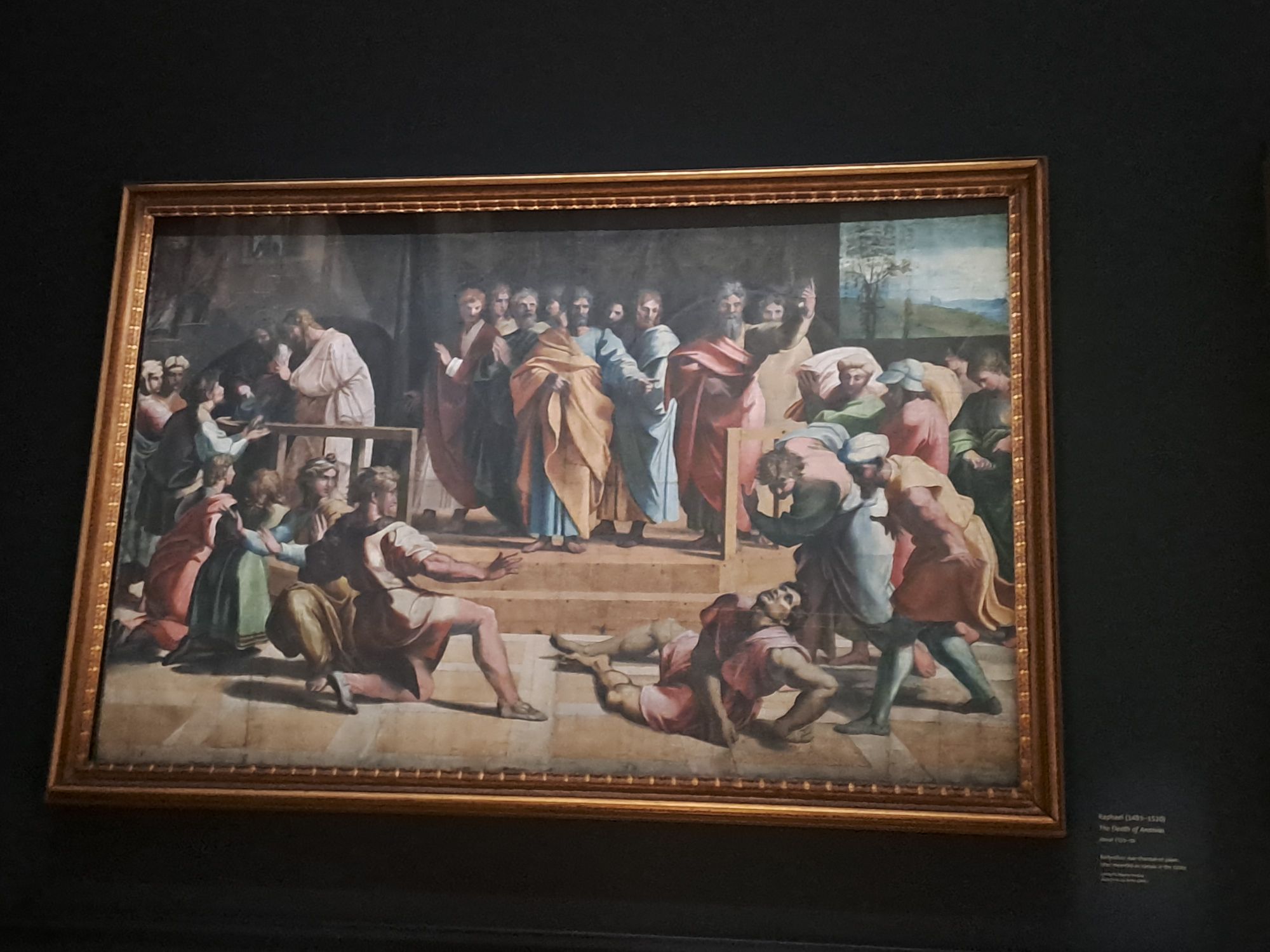
Just so you don’t think I’m a complete ignoramus, the “cartoons” are complete designs for tapestries – they would be placed underneath the loom as a template for the weavers to follow. Incidentally, the Bayeux “Tapestry” – currently on display in the British Museum – is not a tapestry at all. Being stitched rather than woven, it’s an embroidery not a tapestry. The Raphael cartoons were made for tapestries that hang on the walls in the Sistine Chapel in the Vatican, intended to complement Michelangelo’s famous ceiling. I still don’t know who did the floor.
I’m not very good at taking pictures in galleries, especially when I’ve got company as I had today, but in the light of yesterday’s post I couldn’t resist this:
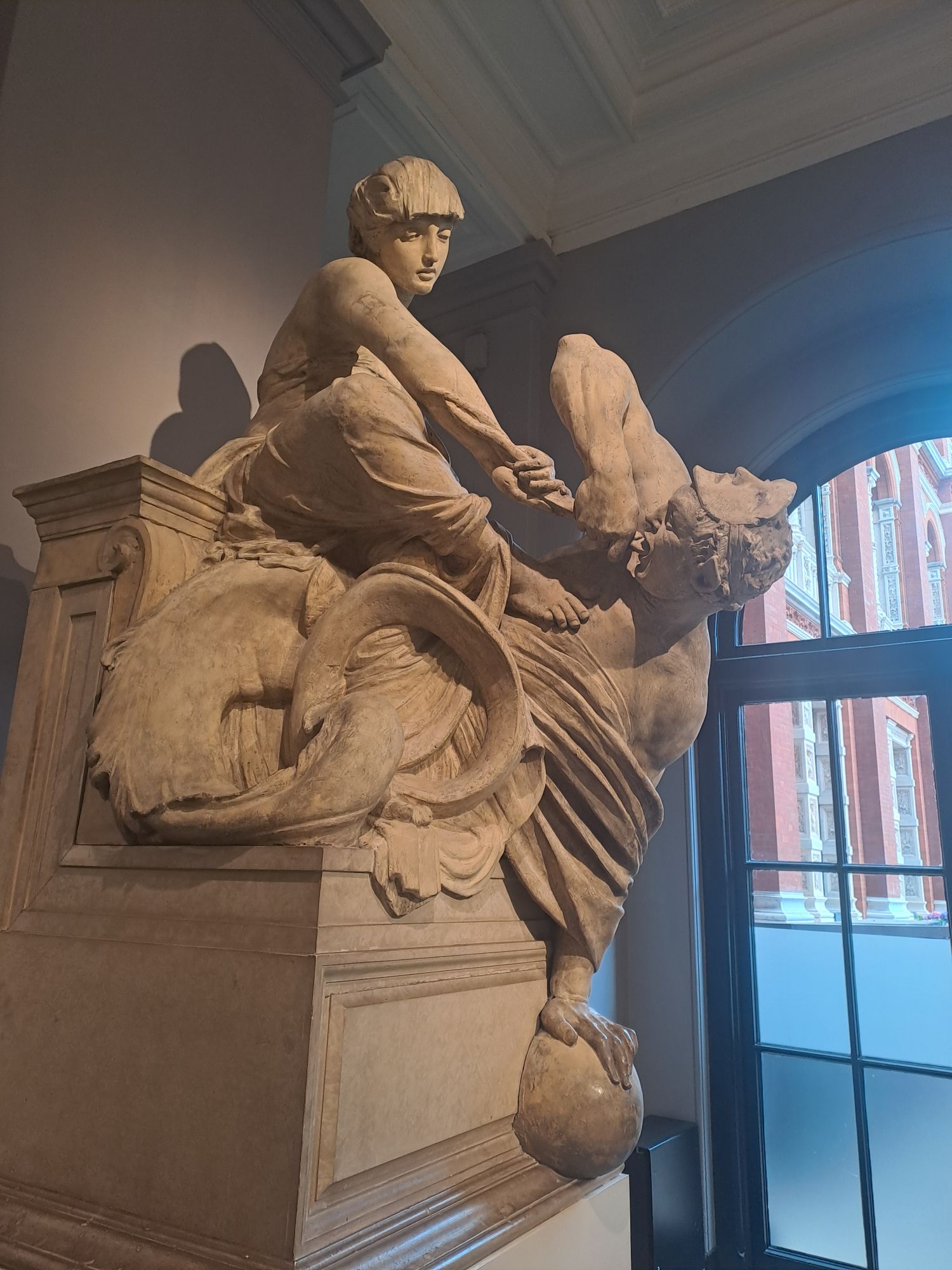
It’s a plaster study by Alfred Stevens for a sculpture that would form part of the memorial to the Duke of Wellington in St Paul’s Cathedral. It’s called Truth and Falsehood (there is another called Valour and Cowardice).
In this work Truth tears out the double tongue of Falsehood and pushes aside the mask concealing his grotesque features. His serpent-tails are exposed beneath the drapery.
Another thing I was reminded of by today’s visit is the prominent role played in the early days of the Victoria & Albert Museum in South Kensington by the artist Frederic Leighton, who featured in a recent post.

Flaming June by Frederic Leighton (1895, Oil on Canvas, 120 ×120cm, Museo de Arte de Ponce, Puerto Rico)
Since this June has seen a heatwave across Europe and even here in Ireland, I was reminded of the expression “Flaming June” which I thought until relatively recently was some sort of folk expression or quotation from a poem, but it is instead the title of this Pre-Raphaelite painting by Frederic Leighton of a lady wearing what looks like a dress made out of old curtains. Apparently the oleander branch seen in the upper right symbolizes the fragile link between sleep and death. It looks to me like she must be attending a seminar. You can read more about this painting here.
As well as a hugely popular artist in his lifetime (though his reputation has not endured), Leighton holds the record for the shortest ever peerage: he was made Baron Leighton just the day before he died. The title he had been given was to be hereditary but as he had no offspring the title became extinct at his death.
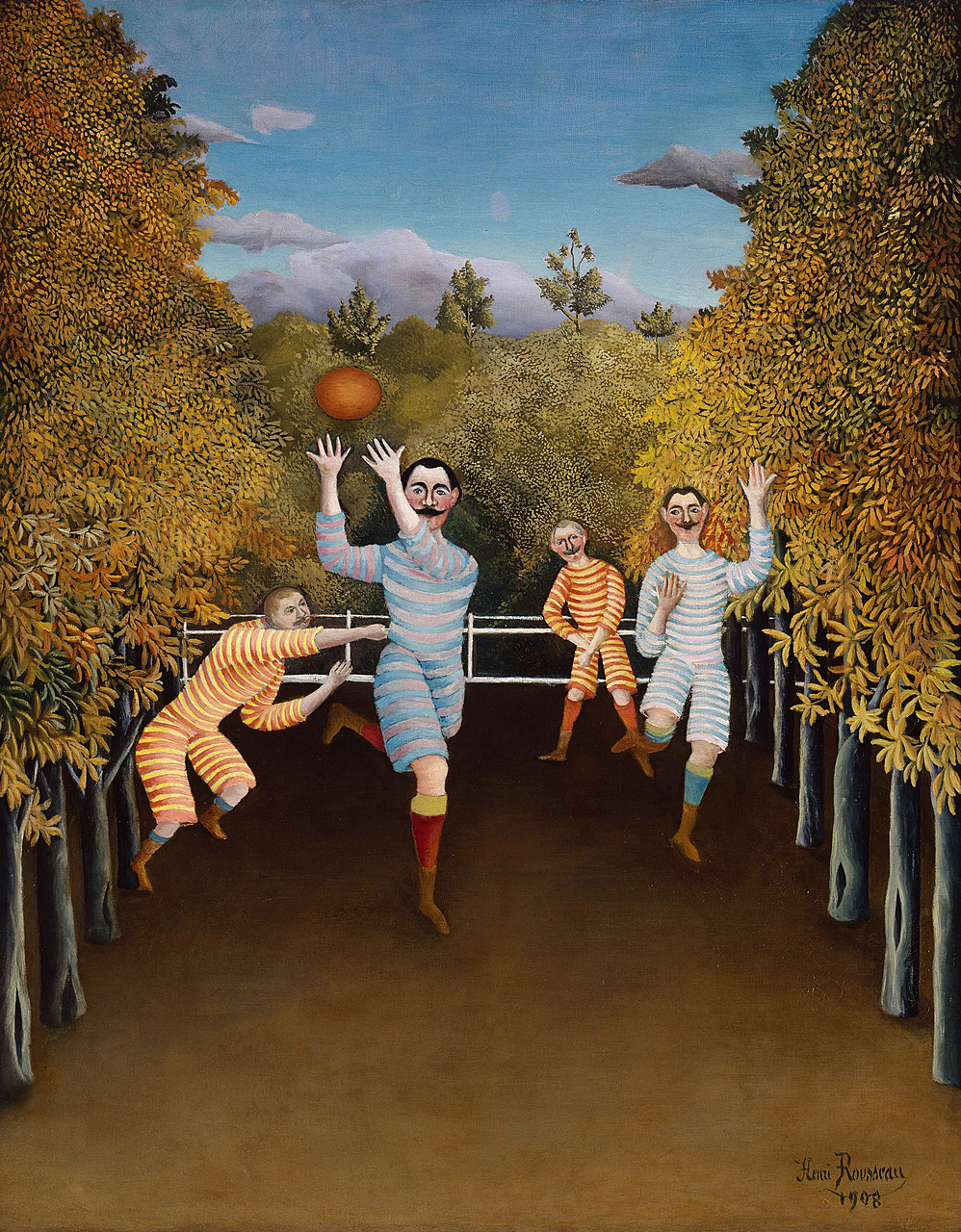
The Football* Players (Les joueurs de football) by Henri Rousseau (1908, Oil on Canvas, 100.3 x 81.1 cm, Guggenheim Museum, New York)
(Obviously it’s Rugby Football…)
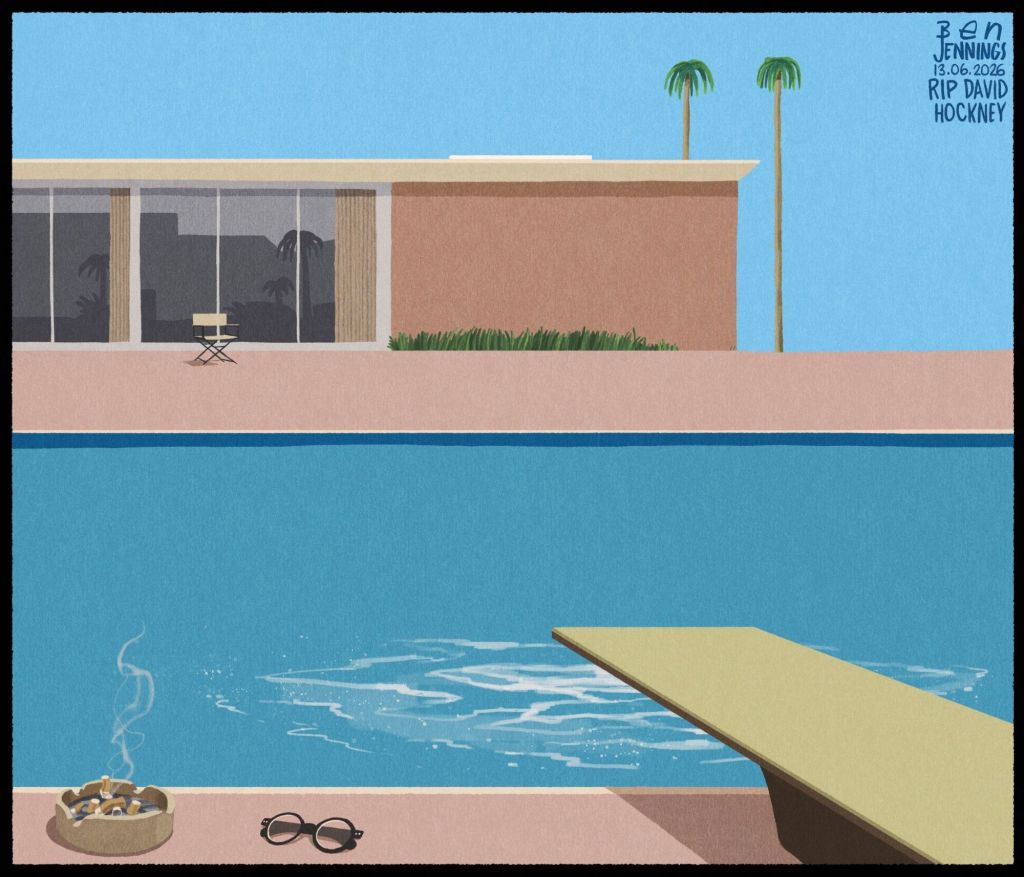
Today brought sad news of the death of artist David Hockney at the age of 88. Hockney was one of the leaders in the pop art movement, which involved assimilating and distilling ideas from popular culture and his career spanned painting, drawing, photography, printmaking and stage design. The last exhibition I saw by him consisted of wonderful drawings done on an IPad. That was about 15 years ago; he remained remarkably active and productive well into old age.
Throughout his career, Hockney’s work was often inspired by his fascination with light, especially its interplay with water, as well as his unique sense of space and unusual use of colour. His most famous early expressions of these were realised in California, where he became obsessed with the bright sunshine and the plethora of swimming pools.
As Hockney’s fame grew his work became very collectible, commanding huge prices at auction, so much of it ended up in private collections. This large-scale work, A Bigger Splash, painted in 1967, followed a smaller painting, The Splash (1966). The earlier work fetched around $30M at auction and is in a private collection, but A Bigger Splash can be seen at Tate Britain. The spare composition and distinctive palette are his instantly recognisable trademarks.
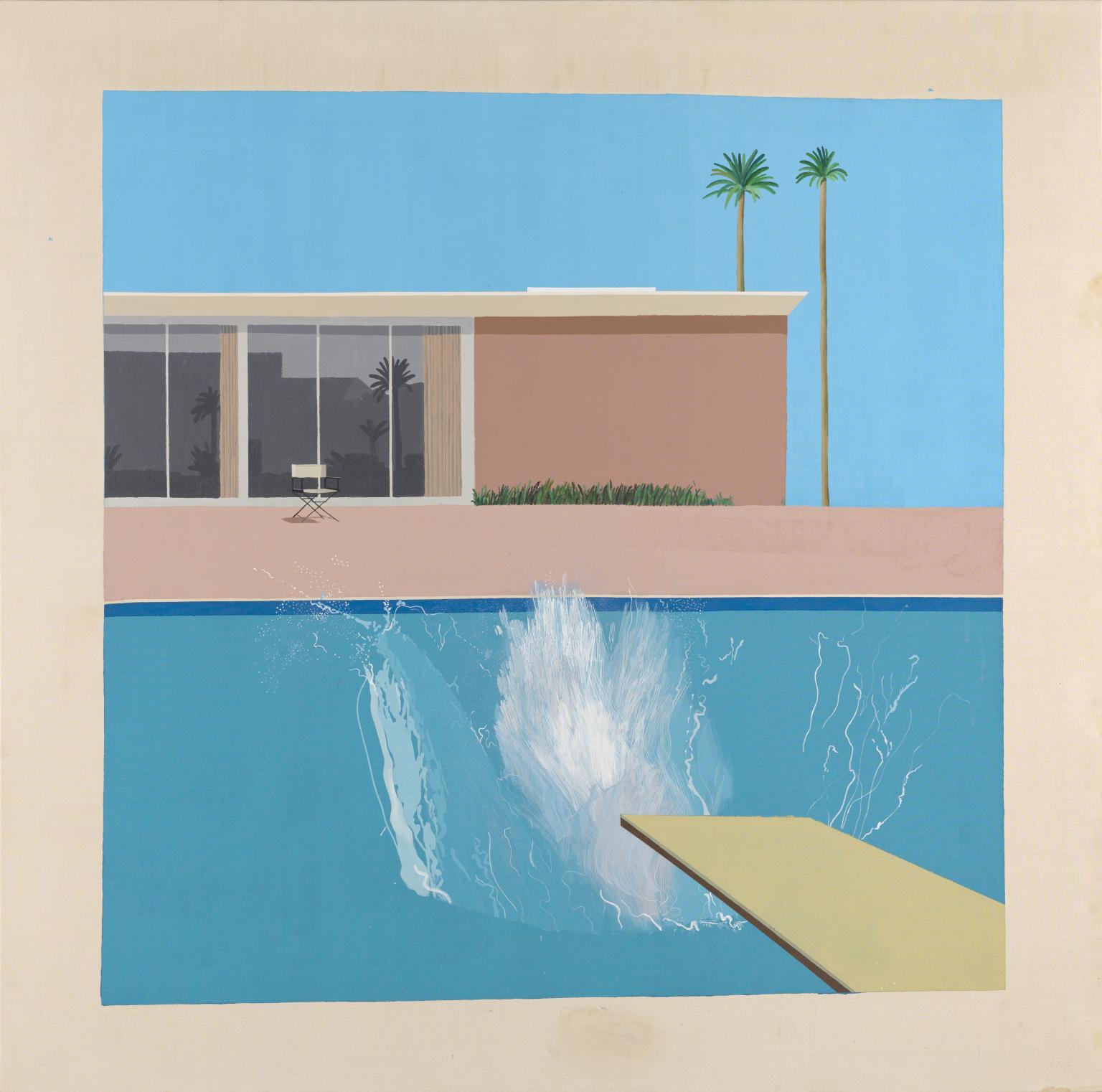
A Bigger Splash by David Hockney (1967, Acrylic on Canvas, 242.5 × 243.9 cm, Tate Britain, London)
Update: here’s a very poignant cartoon by Ben Jennings.