Not long ago I posted an item about the swans of Maynooth, expressing anticipation of the forthcoming cygnets. Well, they have arrived at last; seven in total. Here’s a picture I took this morning near the harbour and one a couple of days ago further along the Royal Canal.
near the harbourin midstream
The family probably won’t go far from their nest while the cygnets are very small, and the adults will stay very close to their little ones for quite a while, but soon they’ll be taking longer journeys and the youngsters will roam a little on their own. I spoke to two guys who work by the canal who have a little shed next to the harbour on the Royal Canal. They told me that when they’ve grown up a bit the cygnets regularly knock on the door of the shed to ask for food. They also warned me not to make any sudden movements near the Swan family, as Mr Swan can be very aggressive. All of them were very relaxed when I saw them, however.
P.S. It is interesting that the word “swan” is Germanic (cf. Schwann) while the word “cygnet” is via French cygne (cf. Latin cygnus, Greek κύκνος); the Irish word for “swan” is “eala”.
It’s halfway through the last week of teaching term, and it’s been a busy day. Earlier on, I gave my final “proper” lecture of the Semester in Advanced Electromagnetism, about the reflection and transmission of electromagnetic waves at interfaces. That’s basically optics, but done in terms of the electric and magnetic fields. I have two more classes this week, on Friday, but these will be revision tutorials devoted to going through past examination questions etc. I’ve had special requests for problems involving conformal transformations and the method of images, so that should be fun!
Meanwhile, my Computational Physics class are working hard on their projects, due in on Friday. My office is opposite the lab so I’ve had a few students coming to ask for help, but mostly they are just beavering away. I hope most of them are writing up by now. I just did a quick check and nobody has submitted anything yet. I suppose that, as usual, they will all wait until the last minute!
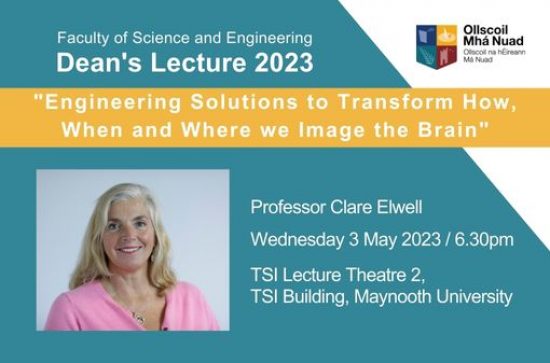
I have a telecon coming up in a few minutes, but after that I’ll be attending this public lecture:
The speaker, Professor Clare Elwell is a physicist at University College London, where she is the Director of the Near Infrared Spectroscopy (NIRS) Group. Specifically, Prof Elwell develops non-invasive techniques to study brain function, paving the way for defining early markers of autism, developing more targeted care following brain injury, and for better understanding brain development in global health settings. Prof Elwell described her pioneering work in using invisible near infrared light to probe the human brain. Near Infrared Spectroscopy (NIRS) is a portable, wearable, low-cost brain imaging technology which can be used to study the brain in newborn babies, toddlers and adults in a range of different scenarios.
I’ll post an update when I get home after the lecture. Actually, there’s no need because the lecture was streamed and a recording is now available. The lecture starts a fairly long way in and the sound didn’t start until part-way through the introductions so I’ve cued the link to the start of the lecture itself.
It was a very interesting lecture by a very engaging speaker. The audience was smaller than I’d expected, though, with less than a hundred in the theatre. This might be because it was scheduled in the middle of the last week of teaching term, which is a very busy time of year for academic staff.
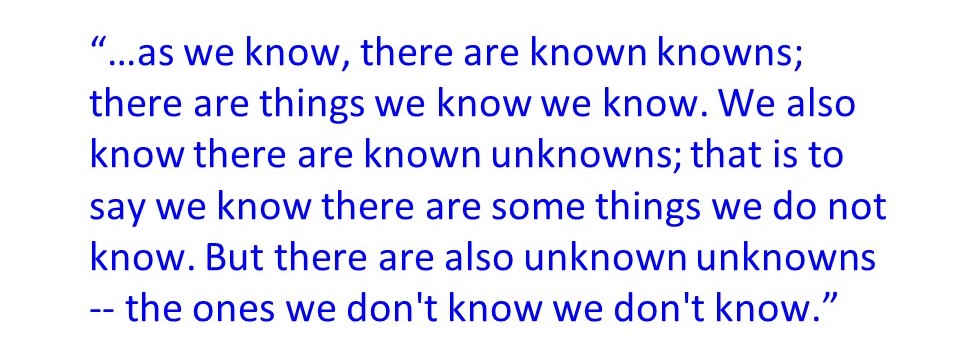
I was surprised today that some students I was talking to couldn’t identify the leading American philosopher and social scientist responsible for this pithy summation of the limits of human knowledge:
Obviously it’s from before their time. How about you? Without using Google, can you identify the origin of this clear and insightful description?
The Shelbourne Hotel, viewed through the trees at the North-East corner of St Stephen’s Green
I was a bit early arriving into Dublin for the concert on Friday so decided to take a walk around St Stephen’s Green. It was a pleasant evening, and the park was quite busy with people, some sitting on the grass and some strolling around as I was. This was 28th April 2023.
The scene must have been very different 107 years ago. The Easter Rising of 1916 started on Easter Monday (24th April of that year), and ended on Saturday 29th. St Stephen’s Green was a focus of the first day of hostilities, as I blogged about here. It is obvious why the rebel forces considered this park an important location to control as it is at the junction of several main roads. On the other hand if you actually visit the location you will see a big problem, namely that the Green itself is surrounded on all sides by very tall buildings, including the swanky Shelbourne Hotel to the North.
When a contingent of about 120 members of the Citizens Army arrived in St Stephen’s Green on Easter Monday, 24th April 1916, they immediately began erecting barricades outside, and digging trenches inside, the Park. They did not, however, have the numbers needed to seize and hold the buildings around it except for the Royal College of Surgeons building to the West.
The following morning, Tuesday 25th April, the British moved two machine guns into position, one in the Shelbourne Hotel (on the 4th floor) and the other in the United Services club, along with numerous snipers. According to eyewitness accounts, almost every window in the hotel had a sniper in it. From these vantage points British soldiers could shoot down into the Park, making it impossible for the rebels to move around safely. The position inside the Green being untenable the Rebels effected an orderly (but perilous) withdrawal to the Royal College of Surgeons which they had fortified for the purpose. And that’s where they stayed until the surrender at the end of the Rising.
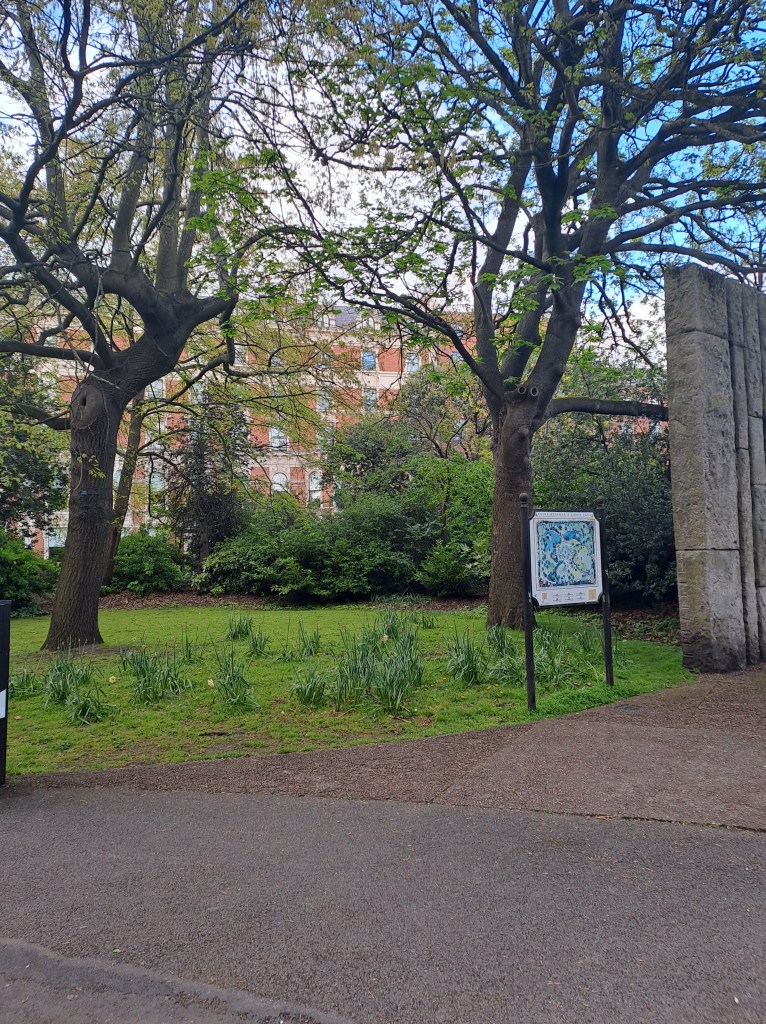
St Stephen’s Green is full of mature trees – there are about 750 at present – which would have been in full leaf at the time. Something I have occasionally wondered about is the extent to which the trees in late April might have afforded the rebels cover from the snipers and machine guns aimed into the park. It being the same time of year when I visited on Friday, and assuming the trees looked roughly the same as in 1916, I had a look around to see what protection they might have offered.
The answer, as you can see from the photo, is not very much…
It’s time for the announcement of yet another new paper at the Open Journal of Astrophysics. In fact it’s a little overdue, because we published this one on Friday 28th April but what with the impending holiday weekend, it slipped my mind to post it on here.
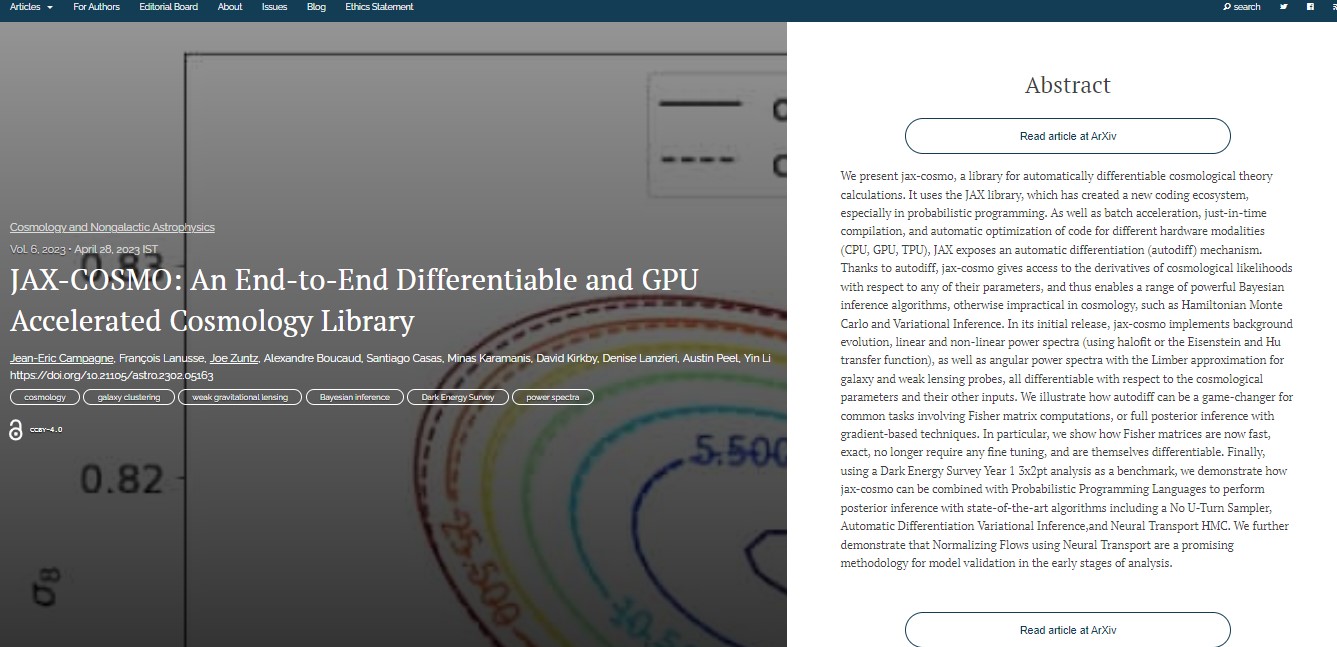
The latest paper is the 15th paper so far in Volume 6 (2023) and the 80th in all. This is another one for the folder marked Cosmology and Nongalactic Astrophysics and its title is “JAX-COSMO: An End-to-End Differentiable and GPU Accelerated Cosmology Library”. The software and related documentation referred to in this paper can be found here.
The lead author of this paper is Jean-Eric Campagne of the Université Paris-Saclay in France, and there are nine co-authors based in France, Germany, USA, UK, China and Switzerland.
Here is a screen grab of the overlay which includes the abstract:
You can click on the image of the overlay to make it larger should you wish to do so. You can find the officially accepted version of the paper on the arXiv here.
As well as being International Workers Day, today, 1st May, is Beltane (Bealtaine in Irish) is an old Celtic festival. The month of May is called Bealtaine in Irish and May Day is called Lá Bealtaine, which is one of the so-called Cross-Quarter Days that lie (roughly) halfway between the equinoxes and solstices, in this case the Spring Equinox and the Summer Solstice. The upshot of all this is that today is a Bank Holiday, so I have the day off.
If the weather holds I shall spend a bit of time in the garden. Yesterday was quite warm but very showery. I tried three times to hang out my washing to dry in broad sunshine only to have to bring it in again when a torrential downpour arrived. Eventually I gave up.
On the corresponding days last year, the year before and the year before that I was wondering about how the pandemic would pan out. Back on May 1st 2020 I didn’t think it would last until May 2021 and back in 2021 I did not forecast that we would still have over a thousand new infections every day in May 2022. Fortunately the pandemic seems to be dying down, though the consequences will be with us for some time.
After toady’s holiday we have four days left of teaching term at Maynooth University, then there’s a study week for the students and then the exams begin. I’ve more-or-less managed to keep on track so my remaining classes will be mainly revision. It will be quite a busy week though. Friday 5th May is the deadline for this year’s Computational Physics projects, so I’m anticipating last-minute queries all week. As well as this, and revision lectures and tutorials, I will be attending the annual Dean’s Lecture on Wednesday and attending a concert performance by members of Irish National Opera in the Aula Maxima on campus on Thursday as part of the Arts and Minds Festival.
Taking the opportunity of the Bank Holiday weekend to catch up on some other blogs, I found this video on Peter Woit’s Not Even Wrong. It’s by Angela Collier. It’s a bit long for what it says, and I find the silly game going on while the speaker talks very irritating, but the speaker makes some very good points and it’s well worth watching all the way through. The most important message it conveys, I think, is how the hype surrounding string theory contributed to increasing public distrust of science and the media.
If I were a string theorist I probably wouldn’t appreciate this video, but I’m not and I do!
I know it’s the Bank Holiday weekend but I could resist a quick post about a new paper that hit the arXiv yesterday (where all new astrophysics papers worth reading can be found). It is led by Joe McCaffrey who is a PhD student in the Department of Theoretical Physics at Maynooth University. The paper has been submitted to the Open Journal of Astrophysics, but obviously I am conflicted so have assigned it to another editor.
As many of you will be aware, there’s been a considerable to-do not to mention a hoo-hah about the detections by JWST of some galaxies at high redshift. Some of these have been shown not to be galaxies at high redshift after all, but some around z=10 seem to be genuine.
Anyway, the abstract of Joe’s paper is this:
Recent observations by JWST have uncovered galaxies in the very early universe via the JADES and CEERS surveys. These galaxies have been measured to have very high stellar masses with substantial star formation rates. There are concerns that these observations are in tension with the ΛCDM model of the universe, as the stellar masses of the galaxies are relatively high for their respective redshifts. Recent studies have compared the JWST observations with large-scale cosmological simulations. While they were successful in reproducing the galaxies seen in JADES and CEERS, the mass and spatial resolution of these simulations were insufficient to fully capture the early assembly history of the simulated galaxies. In this study, we use results from the Renaissance simulations, which are a suite of high resolution simulations designed to model galaxy formation in the early universe. We find that the most massive galaxies in Renaissance have stellar masses and star formation rates that are entirely consistent with the observations from the JADES and CEERS surveys. The exquisite resolution afforded by Renaissance allows us to model the build-up of early galaxies from stellar masses as low as 104 M⊙ up to a maximum stellar mass of a few times 107 M⊙. Within this galaxy formation paradigm, we find excellent agreement with JADES and CEERS. We find no tension between the ΛCDM model and current JWST measurements. As JWST continues to explore the high redshift universe, high resolution simulations, such as Renaissance, will continue to be crucial in understanding the formation history of early embryonic galaxies.
arXiv:2304.13755
The key figure is this one:
The solid curves show the number of galaxies of a given mass one would expect to see as a function of redshift in fields comparable to those observed with estimated values from observations (star-shaped symbols). As you can see the observed points are consistent with the predictions. There’s no tension, so you can all relax.
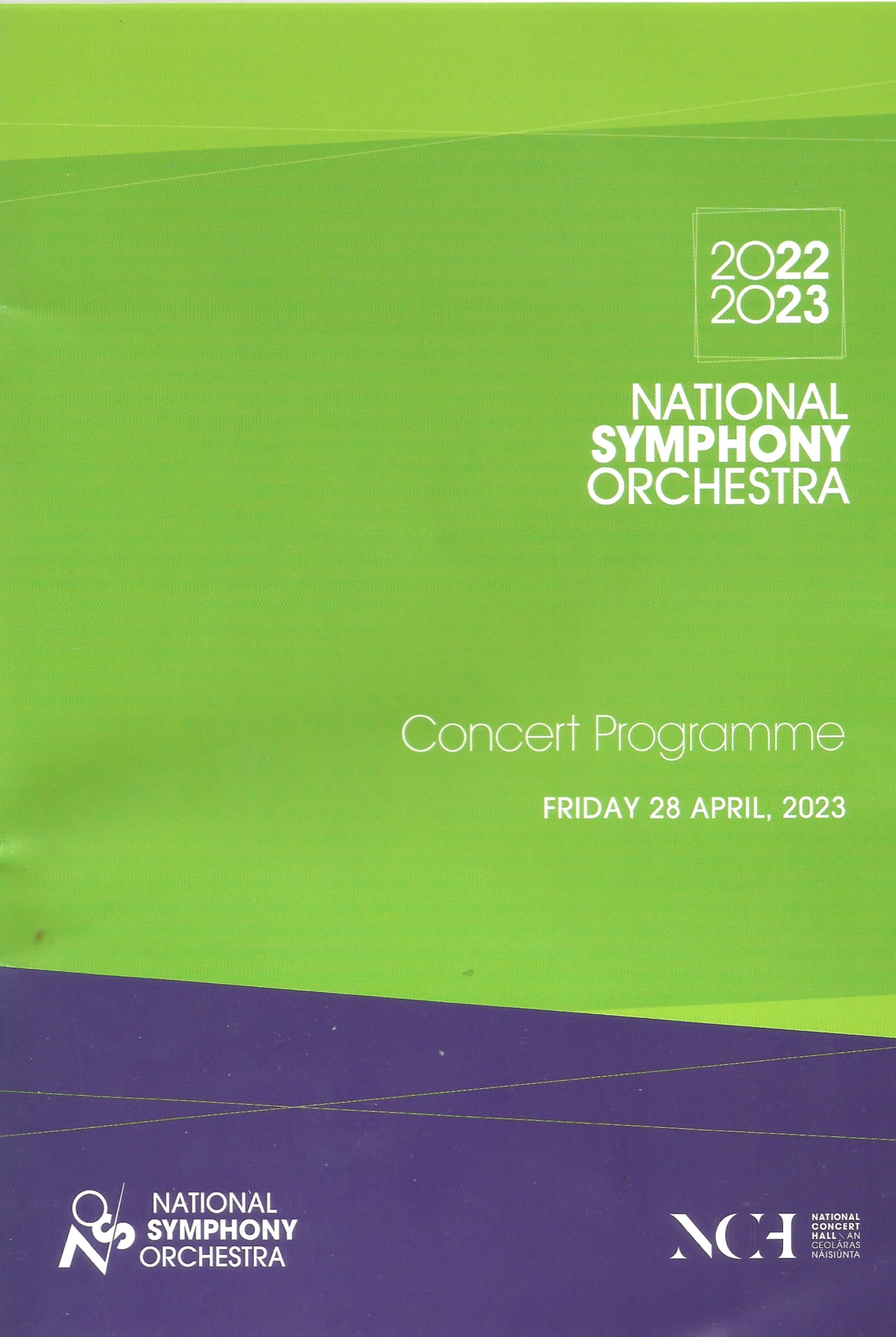
Looking back through my old blog posts, I find that the last time I went to a concert at the National Concert Hall was 10th February 2023. Owing to pressure of work I’ve had neither the time nor the energy to make the trip into Dublin since then, but last night I finally managed to get there for the excellent programme shown above, which was also broadcast live on RTÉ Lyric FM.
On this occasion the National Symphony Orchestra was conducted by Ruth Reinhardt, who last conducted the Orchestra during the pandemic in one of those weird occasions for which most of the musicians were masked, as was she. Anyway, for tonight’s performance she was unmasked long with the rest of the band.
Anton Webern’s Passacaglia(his Opus 1) was a new one on me. It’s not in the 12-tone style he adopted later as a member of the 2nd Viennese School, and can properly be regarded as a (very) late Romantic piece. It’s an intriguing variation of the Passacaglia form (originally a stately dance in triple time built on a bass theme) in that it’s not really a dance and it’s not in triple time, but it is introduced by a theme of eight notes played pizzicato on the strings, which is then followed by a set of variations. The piece only runs about 12 minutes but it packs a lot in. I found it very absorbing and enjoyed it enormously.
The Four Last Songs were published after his death, so Richard Strauss never heard them performed. The very first time they were performed was in 1950 at the Royal Albert Hall, by the London Philharmonia. One can only imagine what it must have been like for the orchestra making this music live for the very first time. Apparently the first time any of them had seen the score was when they turned up for the rehearsal. I’m sure they knew as soon as they started playing that it was a masterpiece.
Last night we heard these songs sung by Amanda Majeski, who arrived on stage resplendent in a black evening gown. I was somewhat surprised to see her using a score for this performance. I would have thought that this was such a standard component of the repertoire that all sopranos would know all the songs off by heart. Perhaps it was just nerves, but I thought the first song, Frühling, lacked warmth but as the concert went on Amanda Majeski got into her stride and by the time she got to Im Abendrot (my favourite) she reached the right level of intensity.
I must single out the leader of the National Symphony Orchestra Elaine Clark for her gorgeous playing of the lovely violin solo in the third song, Beim Schlafengehen. I don’t mind admitting that it brought a tear to my eye.
Incidentally, as far as I know the Four Last Songs were not specifically intended to be performed together as they inevitably are these days. Although the last is my favourite, I think the first three (all based on poems by Herman Hesse) have much more in common with each other than Im Abendrot (which is a poem by Joseph von Eichendorff).
After the wine break we had Symphony No. 3 (“Scottish”) by Felix Mendelssohn. Inspired by a visit to Scotland in 1829 – the first movement was actually composed that year in Edinburgh – it wasn’t completed until over a decade later and should probably be No. 5, but who’s counting? It’s a piece on four movements, with little or no break between them. The first movement starts with a slow theme, like a hymn, but then becomes much more reminiscent of the Hebrides Overture composed in 1830. The landscape of the other three movements is very varied, sometimes cheery, sometimes lush, sometimes tempestuous. The final movement Allegro Vivacissimo has a marking guerriro (“warlike”), which in parts it is, but it also has calmer and more reflective passages before the rumbustious finale.
I always enjoy watching the musicians in these concerts, and could see last night that they were all enjoying themselves hugely. Well done to Ruth Reinhardt and the National Symphony Orchestra for an excellent performance. The hall was by no means full, which was a shame, but the concert was warmly appreciated by those of us there in the audience and no doubt by those listening on the radio.
Now there’s only a month or so to the finale of this concert season so I must try to make the most of the few remaining performances before the summer break…
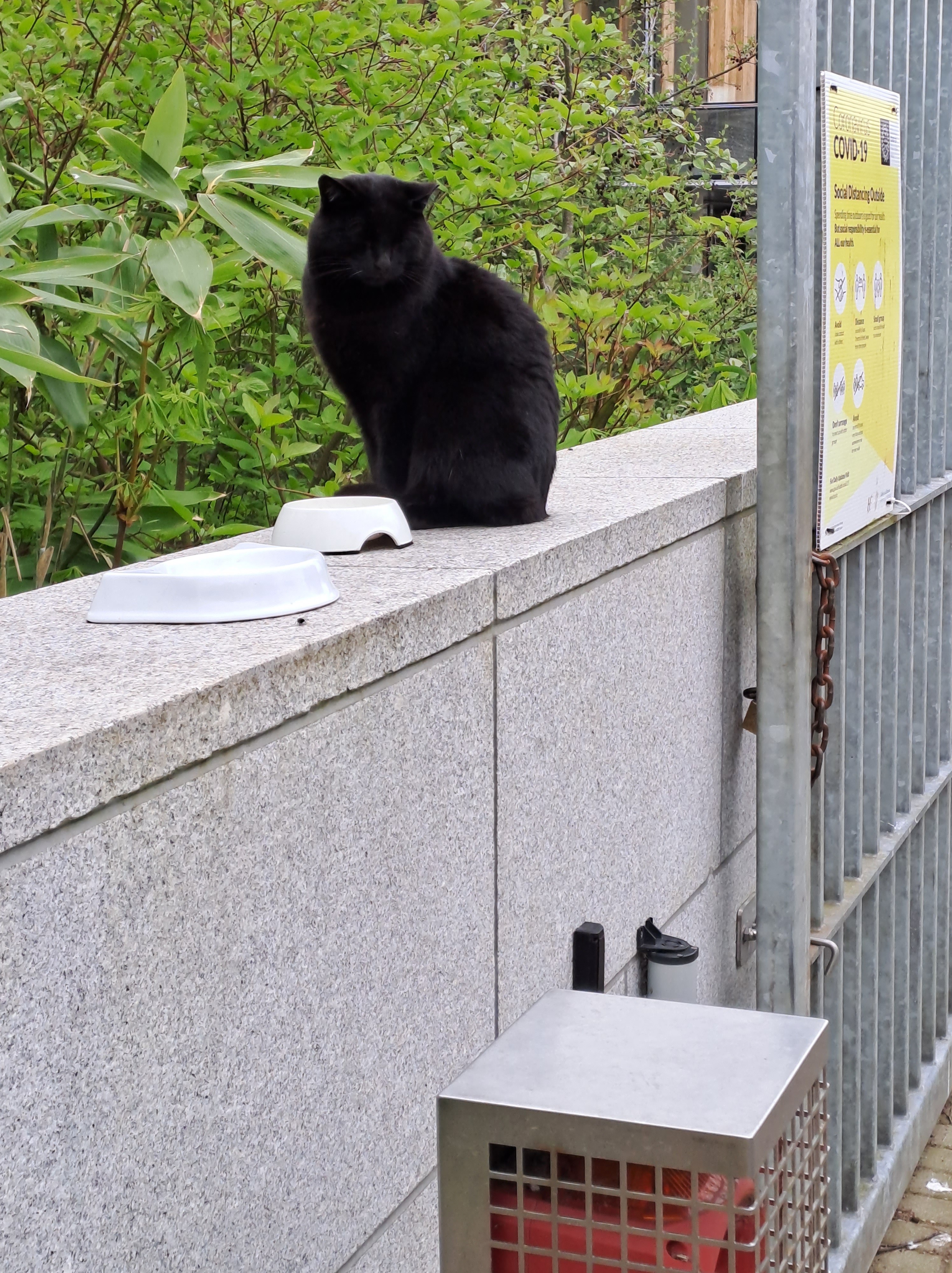
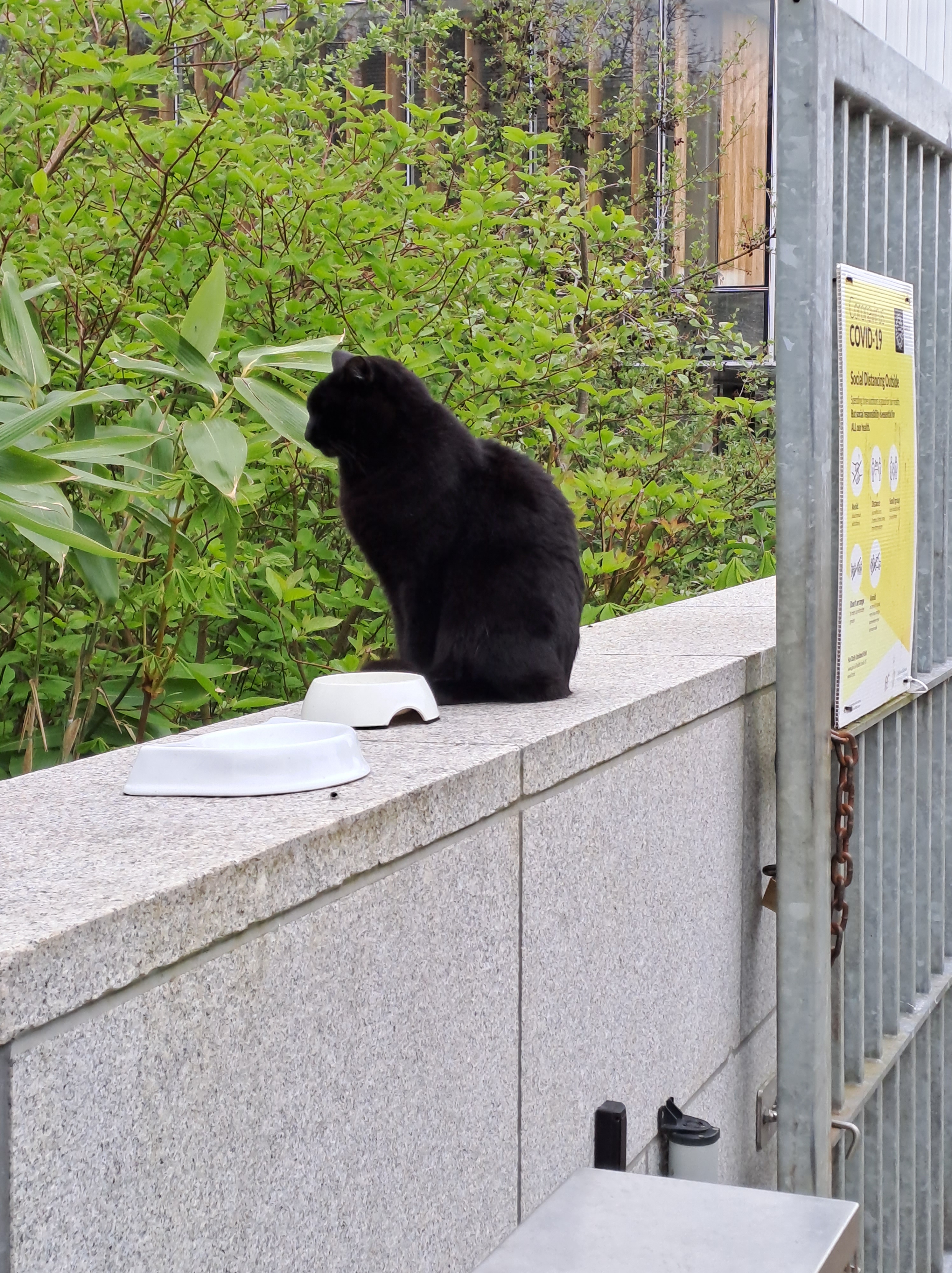
It’s the Friday of the penultimate week of teaching term at Maynooth University, and it’s also a long weekend with the May Bank Holiday on Monday. I thought I would just give an update on our resident feline before I go to a seminar and then head into Dublin for a concert. I passed by Maynooth University Library Cat yesterday on my way back to the Department after lunch, and although he seemed well he wasn’t very sociable. I think he generally gets a bit sleepy after lunch. At any rate he seemed reluctant to open his eyes!
The views presented here are personal and not necessarily those of my employer (or anyone else for that matter).
Feel free to comment on any of the posts on this blog but comments may be moderated; anonymous comments and any considered by me to be vexatious and/or abusive and/or defamatory will not be accepted. I do not necessarily endorse, support, sanction, encourage, verify or agree with the opinions or statements of any information or other content in the comments on this site and do not in any way guarantee their accuracy or reliability.






 In the Dark