More Hubble Constant Tension

Posted in The Universe and Stuff with tags , , , on October 14, 2019 by telescoper

Here’s the abstract of another contribution to ongoing discussions around so-called tension between different estimates of the Hubble Constantpolldaddy (see this blog passim):

You can find the actual paper (by Lin, Mack and Hou) on the arXiv here.

Now, before Mr Hine starts to fill up my blocked comments folder with rants, I will add a few comments of my own.

First, at the Royal Astronomical Society on Friday I discussed all this with a renowned observational astronomer and expert on stellar distance measurements. He agreed with me that if the `tension’ is indeed real then it is far more likely to be a problem with stellar distance measurements than the cosmology.

Second, I am writing a review of all this to be published in Astronomy & Geophysics next year. Watch this space.

Third, this gives me an excuse to include yet again my poll on whether you are worried about the “tension”:

Dinner with Wagner

Posted in History, Opera with tags , , , on October 13, 2019 by telescoper

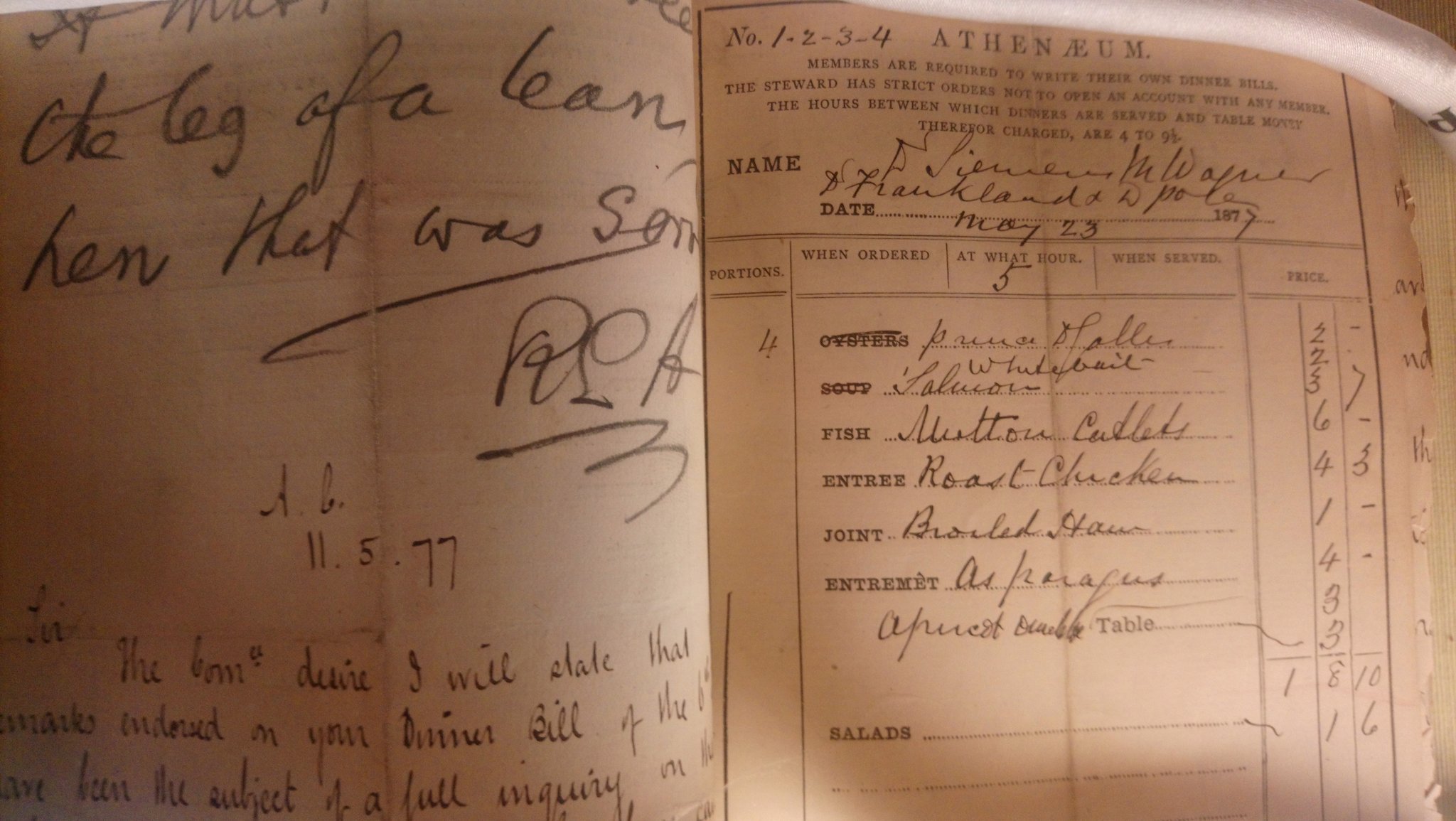
Before dinner with the RAS Club on Friday evening I was looking through the display cabinets at the Athenaeum and saw this, the record of a dinner involving a member and guests on 23rd May 1877. The member was electrical engineer, businessman and Fellow of the Royal Society Carl Wilhelm Siemens and among is guests was Richard Wagner:

Dinner started early and was evidently a lengthy affair, much like Wagner’s operas!

That reminds me of a famous review of one of Wagner’s operas by a critic who clearly wasn’t a fan.

Parsifal is an Opera by Richard Wagner that starts at half past five. Three hours later, you look at your watch and it’s quarter to six.

P.S. There is a photograph taken of Wagner (whose 64th birthday was on 22nd May) during his visit to London in 1877:

Antony Gormley at the Royal Academy

Posted in Art with tags , , on October 11, 2019 by telescoper

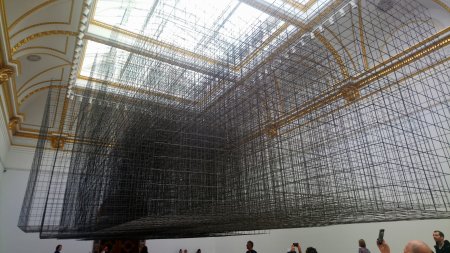
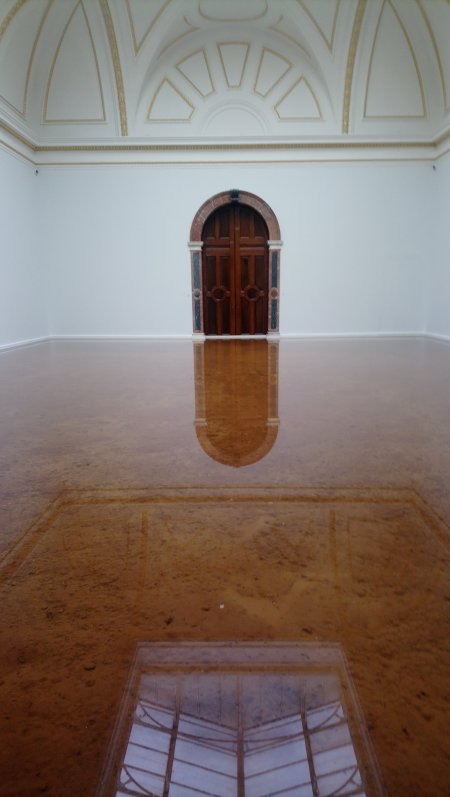
One of the nice things about the location of premises of the Royal Astronomical Society in Burlington House is that it’s right next to the Royal Academy. I took advantage of this proximity yesterday to have a look at the exhibition of work by Antony Gormley. The Main Gallery was very busy as I did my tour but I spent a very enjoyable time wandering around the various rooms and, in some cases, inside the installations therein.

The Royal Academy is a very traditional gallery space and it was the ingenious use of that space within the formal confines of the gallery that I found most impressive. In some of the rooms thin steel bars run through and out from the doors like beam of laser light. Two such beams arrive in one room where they are joined by a vertical bar of the same type, setting up coordinate axes for the whole show.

Here are some snaps I took on the way around:

Clearing

Matrix

Lost Horizon

Cave

Host

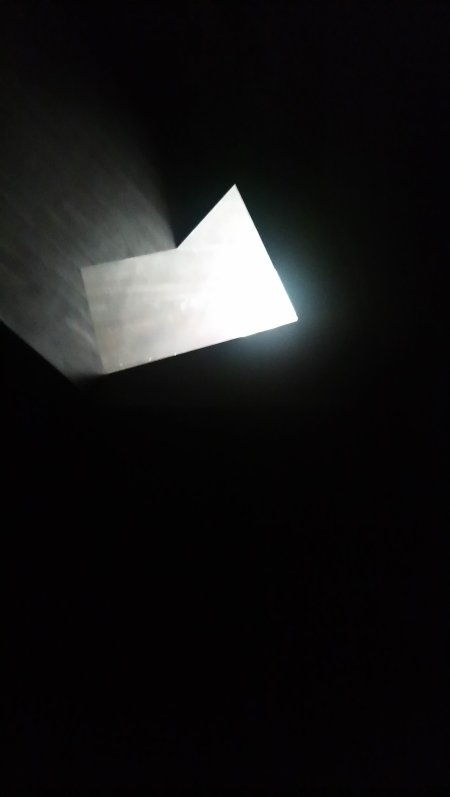
`Cave’ is a large sculpture in rolled steel that you can go into. Parts of it are very dark; the photograph I took was from inside looking out. `Lost Horizons’ has typical Gormleyesque human figures standing upright, upside-down and horizontally on the floor ceiling and walls, an idea that resonates with the coordinate axes mentioned above, which you encounter just before entering this room.

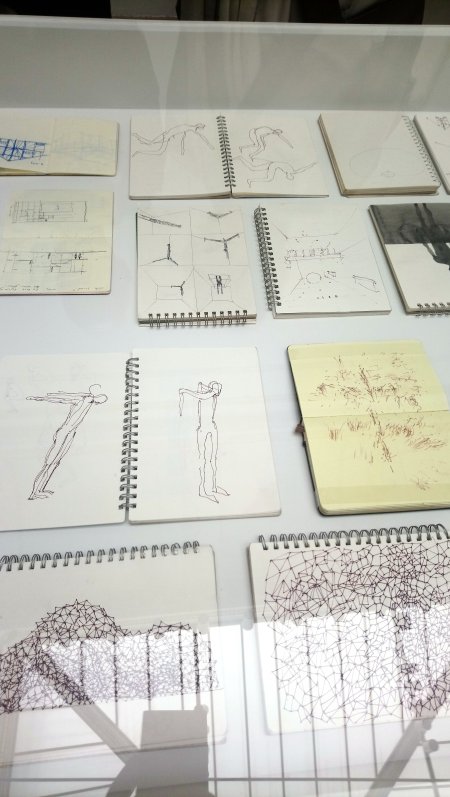
But one of the most fascinating parts of the exhibition is the large collection of Gormley’s workbooks, which show how he develops his ideas, always with reference both to the form and materials of his sculpture and the space into which they are to be placed.

The exhibition is open until 3rd December 2019. Do catch it if you can!


Diversity, Inclusion, Rain and Brexit

Posted in Biographical, Politics with tags , , , , on October 11, 2019 by telescoper

So here I am in a very rainy London. I arrived yesterday for a meeting of the IOP Diversity and Inclusion Committee, which was an interesting occasion with many new things about to unfold, tempered by a bit of sadness that the wonderful Head of Diversity at the IOP, Jenni Dyer, is leaving shortly to take up a new job. However will we manage?

Anyway, instead of flying back to Ireland last night after the meeting, I stayed in London last night because today there is an ordinary meeting of the Royal Astronomical Society at Burlington House, to be followed by a Club Dinner. I’ll be going home to Ireland tomorrow.

Unfortunately the weather has put a dampener on my plans to spend a bit of time wandering around London because it is raining quite heavily and is forecast to do so for the rest of the day. Still, at least the hotel I’m in has WIFI so I can get a few things done this morning before venturing out into the inclement conditions.

Meanwhile the pound is rising against the euro on optimism that there may be a Brexit deal on the horizon after yesterday’s meeting between Boris Johnson and Leo Varadkar. Nobody knows the details but it seems likely that it’s basically the same as Theresa May’s `deal’ except that the `backstop’ is to be replaced by what is effectively a  customs border in the Irish Sea.  My personal preference would be Boris Johnson thrown in the Irish Sea.

I doubt the Democratic Unionists will be happy with this, but Johnson is probably gambling that enough Labour quitlings will vote for it that he no longer needs their support. Of course, that all depends on whether what was discussed yesterday turns into a concrete legally-binding agreement signed off by the EU.

P.S. Bookies’ odds on a No-Deal Brexit on October 31st have drifted out from 4/1 to 5/1.


Peebles Princeton Press Conference

Posted in The Universe and Stuff with tags , , on October 10, 2019 by telescoper

Here I am in the Departure Lounge of Dublin Airport’s Terminal 2 ready for a quick trip to Poundland. To fill in a few minutes before my flight I thought I’d post this video of the press conference held at Princeton University upon the announcement of the award of a Nobel Prize to Jim Peebles. It’s full of interesting things but I particularly liked this quote:

My advice is not to aim for prizes and awards. They will come or they won’t. Don’t judge your career by their number, by the count of prizes. We’re in this for the joy of research, the fascination, the love of science. That is the reward really…

Don’t judge yourself by the awards. Judge yourself by how well you have done, and do your best.

For me that sums up the whole reason for being a physicist. Even those of us who have no chance of winning awards or prizes and whose achievements are at most modest can still feel the joy and the love of science. That is the reward.


Blind Man, Blind Man

Posted in Jazz with tags , , , on October 9, 2019 by telescoper

I heard this on the radio the other night and thought I’d share it here as it’s been a very busy day and I haven’t got the energy to do anything else. It’s from My Point of View the second album Herbie Hancock made for the Blue Note label and was released in 1963. This number is quite reminiscent of the 16-bar blues Watermelon Man, the big hit from his first album but this one has a relaxed soul jazz groove all of its own, backed by straight eights played by the 17-year old drummer Tony Williams and there are nice solos by Grant Green on guitar, Hank Mobley on tenor and Hancock himself on piano.  Donald Byrd plays trumpet on this track, but doesn’t take a solo.


A Nobel Prize for Jim Peebles!

Posted in The Universe and Stuff with tags , , , , , , on October 8, 2019 by telescoper

I’ve just dashed back in excitement to the office from two hours of mandatory Financial Report Training to write a quick post before my 12 o’clock lecture on Astrophysics & Cosmology because of the news about the award of the 2019 Nobel Prize for Physics.

My recent post was half right in the sense that half this year’s prize goes to Michel Mayor and Didier Queloz for the discovery of an extrasolar planet. I don’t know either of them personally, but heartiest congratulations to both!

My heart lept with joy, however, to see the other half of the prize go to Jim Peebles (above) for his work on theoretical cosmology. Much of the reason for that is that I’ve had the great honour and pleasure to meet Jim many times over the years. He is not only a truly great scientist but also a extremely nice man whose kindness and generosity is universally recognized. He’s not known as `Gentleman Jim’ for nothing!

The other reason for the excitement is that I was completely taken by surprise by the announcement. I had feared that his chance of winning a Nobel Prize had passed – I argued at the time that Jim should have been awarded a share of the 2006 Nobel Prize because without his amazing pioneering theoretical work the importance of the cosmic microwave background for cosmology and the large-scale structure of the Universe would not have been established so rapidly. As an author of the first paper to provide a theoretical interpretation of the signal detected by Penzias and Wilson, Jim was there right at the start of the modern era of cosmology and his subsequent work constructed the foundations of the theory of structure formation through gravitational instability. I was sad that he didn’t get a share in 2006 for this work, but am absolutely delighted that this has been rectified now!

This was one of the first cosmology books I ever bought. It’s an amazing piece of work that has been essential reading for cosmologists for almost 40 years!

Congratulations to Jim!

Now let me think about what to say to my students about this!

Dark Matter Day at DIAS

Posted in Books, Talks and Reviews, Talks and Reviews, The Universe and Stuff with tags , , on October 7, 2019 by telescoper

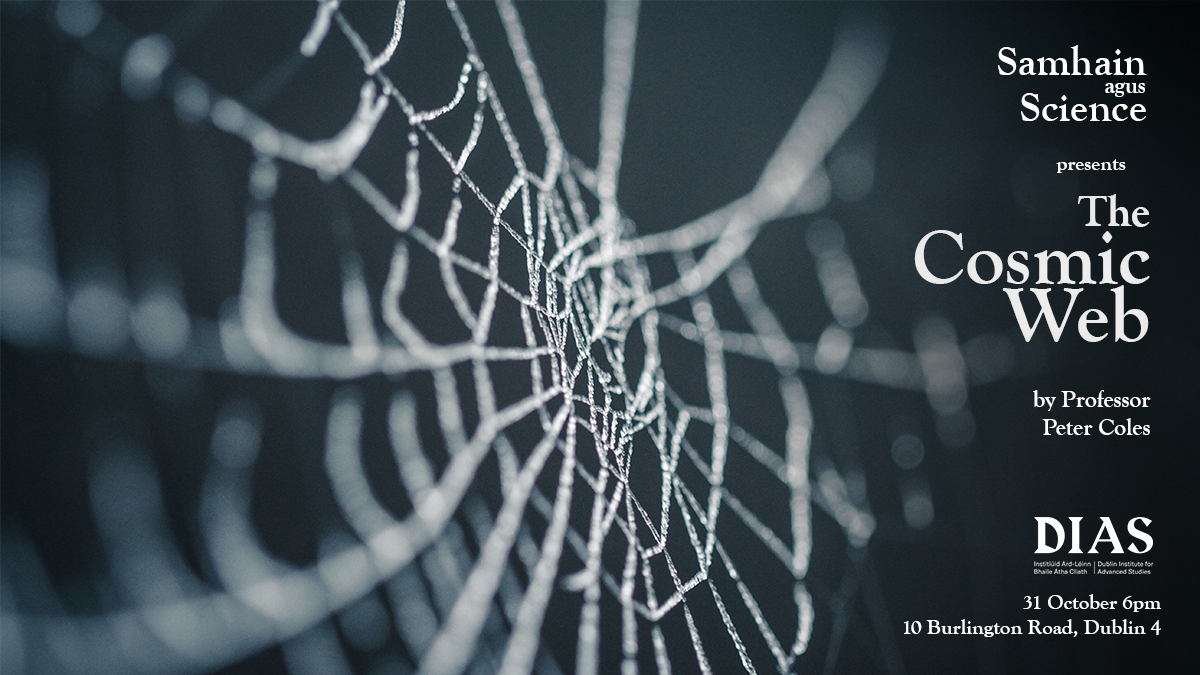
Just a quick post to mention that I’m giving a public talk at the Dublin Institute for Advanced Studies (DIAS) on Dark Matter Day, October 31st 2019, coincidentally the same day as Halloween. I am particularly grateful to be invited to give a talk that evening because it allows me to avoid getting involved in trick-or-treat or any of that nonsense.

Here is the nice advert the people at DIAS have made for the event:

The talk is free, but you need to sign up here as the venue is not infinitely large. You can also find some more details about the talk there.

Nobel Prize Time Approaches

Posted in Science Politics, The Universe and Stuff with tags , on October 6, 2019 by telescoper

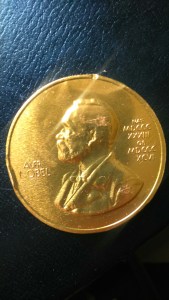
Just a quick reminder that this year’s crop of Nobel Prizes will be announced next week, with the one of most personal interest to me – the Physics Prize – being due on Tuesday 8th October. Before going on here is a picture of my own Nobel Prize Medal:


It’s actually chocolate inside, though it is 13 years old and by now probably inedible if not toxic. You can read about how I got it here.

Anyway, as usual there has been quite a lot of speculation about these awards. Despite not having a great track-record of success some persist in trying to use citation metrics as a predictor; see here for example. Others have a less formulaic approach; see e.g. here.

I don’t really have any idea who is going to get it this year, but here are three possibilities:

  • Extrasolar Planets. This has to be a strong contender, but to whom should the prize be awarded?  Possible winners include Didier Queloz, Aleksander Wolszczan, Dale Frail, and Michel Mayor, but the maximum number allowed to win is three….
  • Geometric Phase. Although if they were going to win they probably would have done so by now, I still think there’s an outside change for Michael Berry and Yakir Aharonov.
  • Quantum Information. This isn’t my area but is very hot these days. It’s also very broad so I’m not sure what specific area and which individuals would prompt an award – quantum cryptography is a possibility, but who?

Anyway, I’d welcome other suggestions through the comments box.


Topical Mechanics Problems

Posted in Politics, The Universe and Stuff with tags , , , on October 6, 2019 by telescoper

In writing the homework problems for my first-year Mathematical Physics module I was sorely tempted to include some political references but I restrained myself in order not to cause any offence. That doesn’t stop me posting some examples here, however, so here are three examples of the sort of thing I had in mind:

  1. Arlene and Boris arrange to have a secret meeting near the Irish British Border. Arlene drives a car at 20 mph along a straight road that takes her within one mile of a customs post where Boris is waiting. Boris has a bicycle on which his top speed is 12 mph and he wishes to leave the customs post at the last possible minute to intercept Arlene. How far away is Arlene when Boris leaves the customs post, and how far must Boris cycle to meet her?
  2. Donald falls 200m from the top floor of Trump Tower. Neglecting air resistance, what is Donald’s velocity when he hits the ground? Assuming he has a mass of 200 kg and he is brought to rest by the impact, what is the energy dissipated? Is this likely to cause serious damage (to the sidewalk)?
  3. Jacob is reclining on a bench in the House of Commons with his head against an arm rest. The coefficient of static friction between Jacob and the armrest is 0.3 and between Jacob and the seat it is 0.4. Assuming that Jacob is infinitely thin, one-dimensional and entirely rigid, calculate the minimum angle he can make with the bench without slipping.

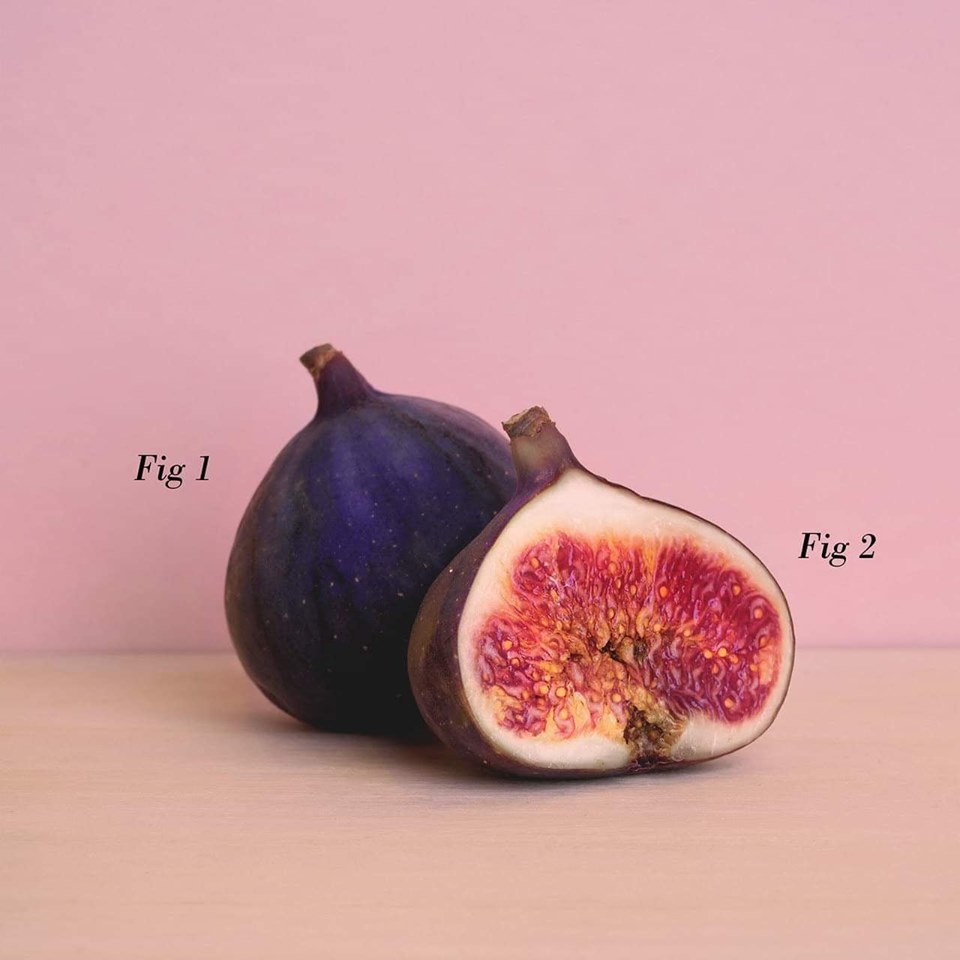
You may wish to refer to Fig 1 and Fig 2 here.