Investigating Sexual Harassment in Universities

Posted in Education with tags , on June 12, 2019 by telescoper

This morning I came across a piece in the Guardian about a report from the UK Office for Students about hate crime and sexual harassment in Universities.

One of the recommendations of the report is that that Universities should hire specialist staff to investigate sexual harassment.

I’ve thought a lot about this issue since I blogged about the Bode versus Mundell case a few years ago (here and here). I hope we can all agree that we need to strive to create working environments wherein harassment and bullying simply do not happen, but sadly they do happen and until that changes we need to find ways of dealing with the perpetrators fairly but firmly and promptly.

In another post I made two suggestions.

The first was that organizations of a sufficient size to bear the cost should have independent misconduct investigators rather than relying on staff from the same workplace. This role could even be fulfilled by someone from a different organization altogether. Universities, for example, could set up a shared resource to deal with this kind of thing. I’ve now come to the conclusion that such investigators should not be employees of the university in question, as they would come under pressure to hush things up – which clearly happens now. It seems to me that far too many institutions prioritize limiting reputational damage over doing the right thing for their staff and students.

Having independent investigators would avoid any real or perceived conflict of interest but, perhaps more importantly, a dedicated investigator could carry out the work much more quickly than a senior academic who is busy with many other things and who would probably have had only cursory training.

The other suggestion I made is that confidentiality agreements covering related disciplinary matters should become void if an employee leaves the institution, whether that is as a result of dismissal or because they leave before investigations are completed. That would put an end to the game of “pass the harasser”.

I am not saying that these will solve the problem completely. To mind they are necessary but not sufficient. Any further suggestions through the comments box are welcome.

Ten Little Englanders

Posted in Politics on June 11, 2019 by telescoper

Starring an illustrious cast of sociopaths, liars and drug addicts, Ten Little Englanders is an adaptation of one of Agatha Christie’s most famous detective stories, usually known by its less offensive title And Then They Were None.

Plot Summary: A group of of ten people find themselves on a small isolated island off the coast of Europe, lured there by the promise of a job as Prime Minister. One by one they all perish, stabbed in the back apparently by each other. But who could have struck the last blow? (continued, page 94).

Boards and Consultations

Posted in Education, Maynooth with tags , , , on June 10, 2019 by telescoper

Back from Helsinki, I’m now in the midst of Examination Board business. That’s two Boards for me, one for the Department of Theoretical Physics and the other for the Department of Engineering (as I’ve been teaching Engineering Mathematics).  We’ve already Preliminary meetings for both and this afternoon had the `Final’ Board for Engineering in the presence of the external examiners. The Final ‘Board’ for Theoretical Physics with the external is on Thursday. But that’s not the end of it – there is an overall University Examination Board that covers all courses in the University to formally bring an end to the examination process.

That’s quite a lot of Boards.

It is not until after all the Boards have done their business that the students get their marks and not long after that we have a Consultation Day, where

Staff will be available in all Departments to discuss results with students. Students are entitled to see their examination scripts if they wish, these will be generally available on this day or at another mutually convenient time.

When I was Head of the School of Mathematical and Physical Sciences at Sussex University I tried to introduce such a system there, but it was met with some resistance from staff who thought this would not only cause a big increase in workload and but also lead to  difficulties with students demanding their marks be increased. That has never been my experience elsewhere: only a handful take up the opportunity and those that do are told quite clearly that the mark cannot be changed.  Last year I had only one student who asked to go through their script. I was happy to oblige and we had a friendly and (I think) productive meeting.

If I had my way we would actually give all students their marked examination scripts back as a matter of routine. The fact that we don’t is no doubt one reason for relatively poor performance in student satisfaction surveys about assessment and feedback. Obviously examination scripts have to go through a pretty strict quality assurance process involving the whole paraphernalia of examination boards (including external examiners), so the scripts can’t be given back immediately but once that process is complete there doesn’t seem to me any reason why we shouldn’t give their work, together with any feedback written on it,  back to the students in its entirety.

I have heard some people argue that under the provisions of the Data Protection Act students have a legal right to see what’s written on the scripts – as that constitutes part of their student record – but that’s not my point here. My point is purely educational, based on the benefit to the student’s learning experience.

Anyway, I don’t know how widespread the practice is of giving examination scripts back to students so let me conduct a totally unscientific poll. Obviously most of my readers are in physics and astronomy, but I invite anyone in any academic discipline to vote:

And, of course, if you have any further comments to make please feel free to make them through the box below!

Michael Gove on Drugs

Posted in Politics with tags , , on June 10, 2019 by telescoper

Michael Charlie Gove

After Michael Gove’s admission of past cocaine use, I confess I am not sure what line to take. On the one hand, a criminal offence of this type is not to be sneezed at, but on the other I may be slightly prejudiced by the fact that he has always got up my nose anyway. I imagine, however, that most readers will agree that he has made himself look a right Charlie and may have blown his chances of a position of powder. (Shurely “power”? Ed.) Unless, of course, he gets some sort of joint appointment. It’s more likely however that he will be kicked into the long grass.

On a serious note, I think there are huge problems with the way society criminalizes drug users not least because the privileged classes are far less likely to be charged than others guilty of the same offence. I don’t think custodial offences are the right way to deal with drug users, neither do I think that a person like Michael Gove should get off without punishment when others do not.

Given that Mr Gove has admitted to possession and use of a Class A drug it seems not unreasonable for him to be charged by the Police. If he pleads guilty he should perhaps get a suspended sentence but the crime he has committed should be entered on his record, with all that implies for his future job prospects (which are hopefully zero anyway).

UPDATE: Today Chris Grayling admitted to having tried coke once – but he couldn’t get the can up his nose.

Dark Energy – Lectures by Varun Sahni

Posted in The Universe and Stuff with tags , , on June 9, 2019 by telescoper

I thought I’d share this lecture course about Dark Energy here. It was delivered by Varun Sahni at an international school on cosmology earlier this year. The material is quite technical in places but I’m sure these lectures will prove a very helpful introduction to, for example, new PhD students in this area. Varun has been a very good friend and colleague of mine for many years, and he is an excellent lecturer!

Here are the three lectures:

Why we need Pride

Posted in LGBTQ+ with tags , , on June 8, 2019 by telescoper

This month is LGBT Pride Month and this year I am looking forward to attending my first ever Dublin Pride.

I do occasionally encounter heterosexual people who trot out the tedious `when is it Straight Pride?’ in much the same way as much the same people ask when is it `International Men’s Day’?

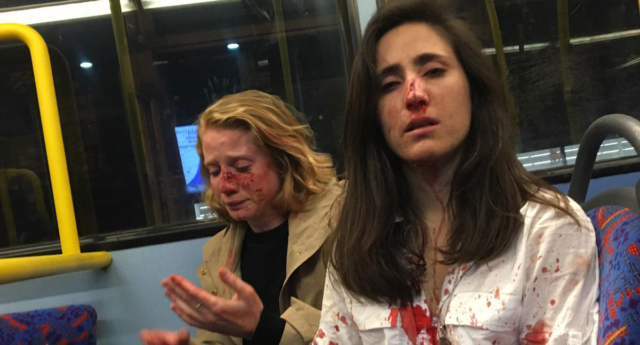
Well, have a look at this picture and read the accompanying story and ask yourself when have you ever been beaten up because of your sexual orientation?

It seems heterosexual privilege comes with blinkers in the same way that male privilege and white privilege do. Anything that threatens this sense of entitlement is to be countered to be countered, with violence if necessary. The above example is an extreme manifestation of this. The yobs on that night bus apparently think that lesbians only exist for the amusement of straight men. When the two women refused to comply, they were attacked. This is however, an attitude that reveals itself in a whole spectrum of behaviours, including the bone-headed dismissal of any attempt to encourage diversity of any form in any environment.

From Helsinki to Maynooth

Posted in Biographical, Euclid with tags , on June 7, 2019 by telescoper

So here I am, back in Maynooth once more, one more Euclid Consortium meeting over and one more coffee cup added to the Departmental collection..

Euclid 2019 is still going on as I write, but I had to leave this morning in order to get back in time for an Examination Board meeting this afternoon. The morning flight to Dublin with Finnair left at 8.15 (local time) from Helsinki and I was up at 5.30 to make sure I got to the airport on time. That means I was up at 3.30am Dublin time, so I’m more than a little tired. I hope the meeting doesn’t go on too long!


P.S. Next year’s Euclid Consortium meeting will be in Sitges….!!

Equality, Diversity and Euclid

Posted in Euclid, The Universe and Stuff with tags , , on June 7, 2019 by telescoper

So here I am, back in my hotel, after the second pleasant wine and food reception of the week – this time hosted by the University of Helsinki. I have to leave early tomorrow morning to get back to Maynooth so I’m not among those going for dinner afterwards.

It’s been a very satisfying meeting, in terms of scientific content, organization and even the weather which has been warm and sunny throughout.

That said I feel obliged to mention one less than satisfactory episode which happened this afternoon. Euclid is a very large consortium working on a complex mission. That requires certain management structures to be put in place, including how to deal with the many scientific publications that will hopefully result from the Euclid mission to be as fair as possible to everyone working on the various projects as well as ensuring the scientific quality of resulting papers.

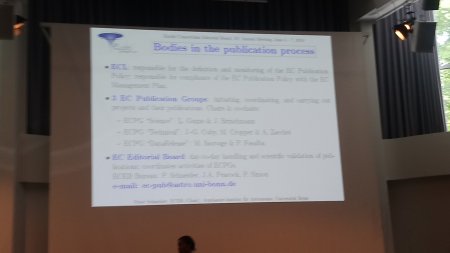
This afternoon a very distinguished senior member of the Euclid Consortium presented an overview of the publication policy on behalf of the Editorial Board which included this slide:

Not knowing all the names I didn’t think twice about the various panels until at the end of the talk a member of the audience pointed out that none of the individuals named are female.

I wasn’t alone in being surprised that such a situation had arisen, especially since Euclid has a Diversity Committee. But what made matters worse was the apparently dismissive response of the speaker, which caused a sharp intake of breath around the auditorium, and left many with the impression that the Consortium needs to look at whether unconscious or other bias might have been involved in the selection of these members. The impression given may have been inadvertent but appearances matter, and I know I’m not the only person who was troubled by what went on this afternoon. I sincerely hope the Diversity Committee looks into this issue as soon as possible.

UPDATE: 21st June 2019. I understand that this issue has been looked into in depth by the Euclid Consortium and active measures are being taken to improve the gender balance in future, which is a very positive outcome.

D-Day 75 Years On

Posted in Art, History with tags , , , , on June 6, 2019 by telescoper

Today is the 75th anniversary D-Day, the start of the Allied landings on the beaches of Normandy. I thought I’d mark the occasion by posting a slightly edited version of a piece I wrote about 9 years ago about this very famous picture:

This remarkable photograph was taken at 8.32am on 6th June 1944 on “Queen Red” beach, a sector in the centre-left of Sword Area, during the early stages of the D-Day invasion. The precise location is near La Brèche, Hermanville-sur-Mer, Normandy. The shutter clicked just as the beach came under heavy artillery and mortar fire from powerful German divisions inland.

Some time ago I came across a discussion of this image in the Observer. As the article describes, it consists of “a series of tableaux that look like quotations from religious art”. The piece goes on

In the foreground and on the right are sappers of 84 Field Company Royal Engineers. Behind them, heavily laden medical orderlies of 8 Field Ambulance Royal Army Medical Corps (some of whom are treating wounded men) prepare to move off the beach. In the background, men of the 1st Battalion, the Suffolk Regiment and No 4 Army Commando swarm ashore from landing craft.

The sapper in the bottom left, looking directly into the camera, is Jimmy Leisk who was born in Shetland. His strained expression gives the impression that he’s trying to escape from the photograph; through his eyes we get a glimpse of the grim reality of armed conflict. His colleague, turning away from the lens, seems to be calling to the men behind, but the image of his head and upper body links with the more distant figures forming a dramatic arc that pulls you into the centre of the picture before veering off to the right. Each element of this image tells its own story, but apart from one person in the foreground, all the faces are all hidden from view. I’m sure these anonymous figures were all just as frightened as the man in the foreground, but their individual identities are lost as they blend into graphic depiction of the monumental scale of the invasion. It’s a truly wonderful work of art, and a brilliant piece of storytelling, at the same level as an Old Master, but this is made all the more remarkable by the fact that the photographer was risking his life to take this picture.

This photograph, which was taken by Sergeant Jim Mapham of the Army Film and Photography Unit, was described by the US Press as “the greatest picture of the war”.

Jim Mapham was one of seven cameramen of the AFPU who went in on D-Day: Sgt Ian Grant, Sgt Christie, Sgt Norman Clague (killed), Sgt Desmond O’Neill (wounded), Sgt Billie Greenhalgh (wounded) and Sgt George Laws. Their work forms an extraordinary record of the invasion and is still widely used by the media – but rarely credited.

Robert Capa, the famous Hungarian photographer, was also on the beaches that morning, pinned down in the waves by enemy fire. But while he clambered on to a landing craft to get his pictures back to London, Sgt Mapham moved inland with the invasion force…

Jim Mapham survived the D-Day campaign and entered Germany with the army to document the fall of the Third Reich and the horrors of the Belsen concentration camp. He died in 1968. Until today I’d never heard of him. His name should be much more widely celebrated. I understand that the complete set of photographs he took on D-Day can be found in the Imperial War Museum‘s photographic archive.

As a final comment let me add that, contrary to popular myth, the landings at the Sword beaches were by no means a pushover. It’s true that the American forces, especially at Omaha beach, suffered heavier casualties on the actual landings – primarily because they failed to get their tanks and heavy artillery pieces ashore. However, the British troops at Sword were the only ones at any of the five landing areas to encounter strong German Panzer divisions on D-Day.

The main assault force at Sword beach was the British 3rd Infantry Division and its primary objective on the day of the invasion was to capture the city of Caen. As it turned out, the fighting was so heavy that they didn’t manage to take Caen until over a month after D-Day.

In fact it is worth remembering that the Allies failed to achieve any of their goals for D-Day itself: as well as Caen, Carentan, St. Lô, and Bayeux all remained in German hands. Only two of the beaches (Juno and Gold) were linked on the first day, and it wasn’t until 12 June that all five beachheads were connected. The battle to secure and expand the foothold took far longer than anticipated and the success of the operation was by no means the foregone conclusion that some would have you believe.

5th June 23.15 GMT

Posted in Literature, The Universe and Stuff with tags , , , on June 6, 2019 by telescoper


Blessent mon cœur
D’une langueur
Monotone.


(This excerpt from a poem by Paul Verlaine formed a coded message broadcast to the French resistance by Radio Londres, 5th June 1944 at 23.15 GMT informing them that the Allied invasion of France was imminent. Preceded by extensive airborne operations, the landings on the beaches of Normandy began on the morning of 6th June 1944.)