The Negative Mass Bug

Posted in Astrohype, Open Access, The Universe and Stuff with tags , , , , , on February 25, 2019 by telescoper

You may have noticed that some time ago I posted about  a paper by Jamie Farnes published in Astronomy & Astrophysics but available on the arXiv here which entails a suggestion that material with negative mass might account for dark energy and/or dark matter.

Here is the abstract of said paper:

Dark energy and dark matter constitute 95% of the observable Universe. Yet the physical nature of these two phenomena remains a mystery. Einstein suggested a long-forgotten solution: gravitationally repulsive negative masses, which drive cosmic expansion and cannot coalesce into light-emitting structures. However, contemporary cosmological results are derived upon the reasonable assumption that the Universe only contains positive masses. By reconsidering this assumption, I have constructed a toy model which suggests that both dark phenomena can be unified into a single negative mass fluid. The model is a modified ΛCDM cosmology, and indicates that continuously-created negative masses can resemble the cosmological constant and can flatten the rotation curves of galaxies. The model leads to a cyclic universe with a time-variable Hubble parameter, potentially providing compatibility with the current tension that is emerging in cosmological measurements. In the first three-dimensional N-body simulations of negative mass matter in the scientific literature, this exotic material naturally forms haloes around galaxies that extend to several galactic radii. These haloes are not cuspy. The proposed cosmological model is therefore able to predict the observed distribution of dark matter in galaxies from first principles. The model makes several testable predictions and seems to have the potential to be consistent with observational evidence from distant supernovae, the cosmic microwave background, and galaxy clusters. These findings may imply that negative masses are a real and physical aspect of our Universe, or alternatively may imply the existence of a superseding theory that in some limit can be modelled by effective negative masses. Both cases lead to the surprising conclusion that the compelling puzzle of the dark Universe may have been due to a simple sign error.

Well there’s a new paper just out on the arXiv by Hector Socas-Navarro with the abstract

A recent work by Farnes (2018) proposed an alternative cosmological model in which both dark matter and dark energy are replaced with a single fluid of negative mass. This paper presents a critical review of that model. A number of problems and discrepancies with observations are identified. For instance, the predicted shape and density of galactic dark matter halos are incorrect. Also, halos would need to be less massive than the baryonic component or they would become gravitationally unstable. Perhaps the most challenging problem in this theory is the presence of a large-scale version of the `runaway’ effect, which would result in all galaxies moving in random directions at nearly the speed of light. Other more general issues regarding negative mass in general relativity are discussed, such as the possibility of time-travel paradoxes.

Among other things there is this:

After initially struggling to reproduce the F18 results, a careful inspection of his source code revealed a subtle bug in the computation of the gravitational acceleration. Unfortunately, the simulations in F18 are seriously compromised by this coding error whose effect is that the gravitational force decreases with the inverse of the distance, instead of the distance squared.

Oh dear.

I don’t think I need go any further into this particular case, which would just rub salt into the wounds of Farnes (2018) but I will make a general comment. Peer review is the best form of quality stamp that we have but, as this case demonstrates, it is by no means flawless. The paper by Farnes (2018) was refereed and published, but is now shown to be wrong*. Just as authors can make mistakes so can referees. I know I’ve screwed up as a referee in the past so I’m not claiming to be better than anyone in saying this.

*This claim is contested: see the comment below.

I don’t think the lesson is that we should just scrap peer review, but I do think we need to be more imaginative about how it is used than just relying on one or two individuals to do it. This case shows that science eventually works, as the error was found and corrected, but that was only possible because the code used by Farnes (2018) was made available for scrutiny. This is not always what happens. I take this as a vindication of open science, and an example of why scientists should share their code and data to enable others to check the results. I’d like to see a system in which papers are not regarded as `final’ documents but things which can be continuously modified in response to independent scrutiny, but that would require a major upheaval in academic practice and is unlikely to happen any time soon.

In this case, in the time since publication there has been a large amount of hype about the Farnes (2018) paper, and it’s unlikely that any of the media who carried stories about the results therein will ever publish retractions. This episode does therefore illustrate the potentially damaging effect on public trust that the excessive thirst for publicity can have. So how do we balance open science against the likelihood that wrong results will be taken up by the media before the errors are found? I wish I knew!

The Morning After

Posted in Biographical, Cardiff, Rugby with tags , , on February 24, 2019 by telescoper

So it’s not even 8am and I’m already sitting in Cardiff Airport waiting for my flight back to Ireland.

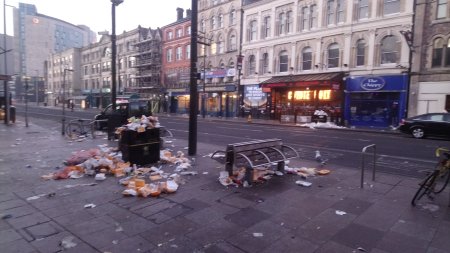
On the way to the bus stop in the City Centre I had to pick my way through the mess created by yesterday’s rugby crowd: empty beer bottles, plastic glasses and fast food containers lay all around, the pavements were sticky with spilt booze and massed formations of seagulls wheeled and shrieked looking for leftovers to scavenge.

No doubt there will be an organised cleanup but it hadn’t started when I walked through town around 7am.

I didn’t see any of yesterday’s match, but when Wales pulled the score back from 10-3 to 10-9 I got restless listening to the radio and went outside for a walk.

The thing about having a huge stadium right in the city centre is that the sounds coming from it permeate all of Cardiff. Sometimes they are recognisably human: cheers, jeers, applause, singing and stadium public address announcements. Often though, they are indistinct primordial murmurings, as if Gandalf were giving battle to a Balrog in the bowels of the Earth somewhere under Westgate Street.

But there was no mistaking the din a couple of minutes before the end when Wales scored the try that killed off the game and sent the home supporters into ecstasy. No doubt there’ll be more than a few hangovers in Cardiff this morning!

Wales play Ireland at the Principality Stadium on 16th March, with a possible Grand Slam in the offing. If that comes about the celebrations will no doubt make last night seem like a vicarage tea party!

Anyway, hopefully I will be back in Maynooth in a few hours to get next week’s lectures ready.

In Cardiff on Match Day

Posted in Cardiff, Rugby with tags , , , , on February 23, 2019 by telescoper

I’m in Cardiff today and have just been for a walk into town and back. It’s a lovely sunny springlike day with a temperature of around 13 degrees. There’s an abundance of daffodils in Bute Park.

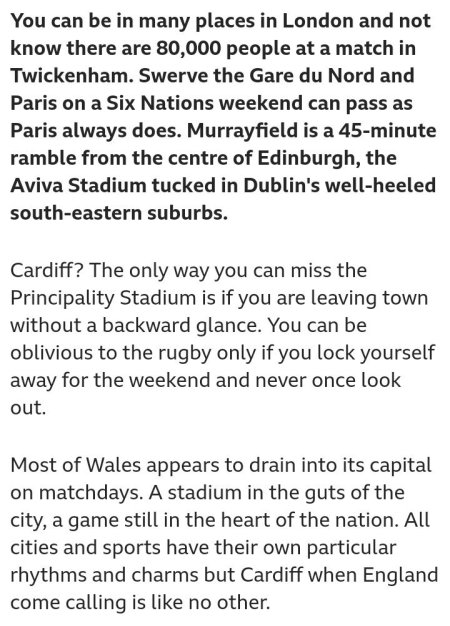
Today is of course the occasion for the Wales versus England match in this year’s Six Nations Rugby tournament. This excerpt from a piece by Tom Fordyce on the BBC website is spot on:

Although the match doesn’t start for several hours, all the main roads are already closed so you can stroll around the City without worrying about cars. There’s a lot of people crammed into town, but a very good atmosphere around the place. I haven’t got a ticket for the match and don’t feel like watching in a packed pub either so I’ll just follow it on the radio.

After two impressive performances so far this year, England are probably favourites but you never know! They have also won the last five Six Nations matches between these two teams. But with their home crowd behind them Wales might well bring England’s run to an end.

I’ll make only one prediction: it will be a very physical game.

P. S. On my way home I passed two clearly inebriated England fans trying to find a way into the empty cricket ground at Sophia Gardens. It took quite some time to explain to them that it was not the rugby ground, despite the fact that the Principality Stadium was in clear view about half a mile away…

UPDATE: I was certainly right about it being a physical game! But a strong second-half comeback against a tiring England gave Wales victory by 21 to 13. Diolch, Cymru!

Please Just Give to Cystic Fibrosis

Posted in LGBTQ+ with tags , , , , on February 23, 2019 by telescoper

Many of the readers of this blog will know – or at least know of – Professor David Smith, chemist and LGBT campaigner at the University of York.

Sadly, Dave’s husband Sam passed away last week at the age of 39, after a long and courageous battle against Cystic Fibrosis. My thoughts are with Dave at this time as he comes to terms with this terrible loss.

It feels so useless just to express sadness or offer condolences, however heartfelt they may be, but at least there is something practical and tangible to do as well.

Sam’s last wish was to give something back to the doctors and nurses who cared for him at the Adult Cystic Fibrosis Ward at St James’ Hospital in Leeds and the Transplant Ward at the Freeman Hospital in Newcastle.

There is a JustGiving page here.

Please consider making a donation, to remember Sam, for Dave, and to help ensure that these dedicated teams can continue to give the support and care that their patients need.

LGBT History Month

Posted in Biographical, History, LGBTQ+ on February 22, 2019 by telescoper

I’ve been out of circulation today so haven’t had time to do a proper post. I will however take this opportunity to remind you all that this is LGBT History Month, which is something I should have mentioned earlier!

And talking of history I notice that a year ago today saw the start of the UCU industrial action over pension cuts. So much has happened since, that seems like decades ago!

Heroic Failure: Brexit and the Politics of Pain

Posted in Literature, Maynooth, Politics with tags , , on February 21, 2019 by telescoper

Before Christmas I attended a very enjoyable event here in Maynooth featuring journalist, historian and literary critic Fintan O’Toole talking his book Heroic Failure: Brexit and the Politics of Pain. I bought the book and had it signed by the author. Sadly, as I do far too often these days, I put the book on my shelf and promptly forgot about it as I got distracted by a myriad of other things.

This week I finally got round to reading it and very enjoyable it is too, though I expect people who voted Leave won’t like it, as it is probably a bit close to the bone for them.

The book deals with the Brexit referendum, the chaos it unleashed in British politics and the challenges posed to the island of Ireland by a ‘No Deal Brexit’. In particular the book examines how a country that once had colonies is redefining itself as an oppressed nation requiring liberation; the dreams of revolutionary deregulation and privatization that drive Arron Banks, Nigel Farage and Jacob Rees-Mogg; and the silent rise of English nationalism, the force that dare not speak its name. He also discusses the fatal attraction of heroic failure, once a self-deprecating cult in a hugely successful empire that could well afford the occasional disaster: the Charge of the Light Brigade, or Franklin lost in the Arctic. Now failure is no longer heroic – it is just failure, and its terrible costs will be paid by the most vulnerable of Brexit’s supporters, and by those who may suffer the consequences of a hard border in Ireland and the breakdown of a fragile peace.

It’s a very witty book which is at its best picking apart some of the some-contradictory rhetoric deployed by Leave campaigners, such as how the UK can be both grandiosely jingoistic and bullied by the EU at the same time, pulling in references from historical events and literature as well as contemporary culture (including Fifty Shades of Grey, the references to which were lost on me because I haven’t read it). It’s also very perceptive in its observation of how strongly the legacy of World War 2 pervades attitudes towards Brexit, especially the silly references to `Dunkirk Spirit’ and the rest that are the stock-in-trade of many Leavers.

Anyway, I heartily recommend this book to both Leavers and Remainers but it might induce a sense of humour failure in the former.


Elisabeth Jerichau-Baumann – Havfruen

Posted in Art with tags , , , , on February 20, 2019 by telescoper

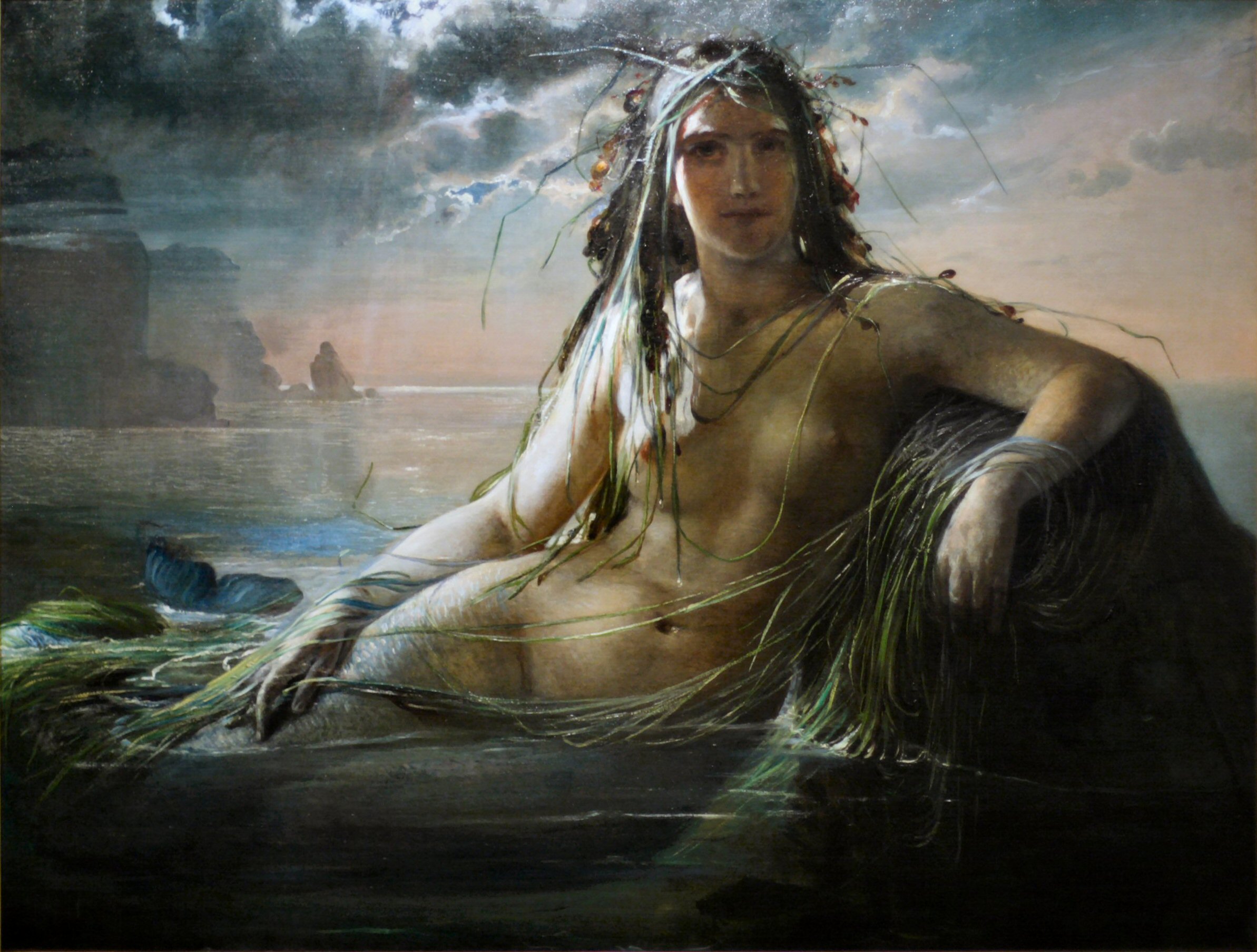
Something else I discovered in the Glyptoteket in Copenhagen on Saturday was the art of Polish-Danish painter Elisabeth Jerichau-Baumann, who lived from 1819 until 1881. There are many of her compositions on display in Copenhagen. I found some of them very conventional and even a bit sentimental, but she undoubtedly had a distinctive way of handling light and some of her paintings are very fine indeed. I thought I’d pick this one to share as it is a large and striking oil painting that greets you when you enter the first room of Danish art (upstairs).

The title of this is Havfruen (`The Mermaid’).

Incidentally, one of the few things I know how to say in Danish is Den lille Havfrue (`The Little Mermaid’), largely because of the famous statue which is a local Copenhagen landmark. This illustrates an interesting feature of Danish grammar. Instead of adding a definite article, as one would do in English, a singular definite noun is denoted by adding the indefinite article en (or elided form) as a suffix at the end of the noun. This is the rule unless the noun is qualified by an adjective, in which case a definite article `Den’ is put at the front. Hence `the Mermaid’ is Havfruen but `the little Mermaid’ is Den lille Havfrue, owing to the presence of the adjective lille. The Mermaid above may or may not be little, but the painting certainly isn’t!

Danish grammar isn’t really all that hard – quite similar to German, actually – but the pronunciation is very challenging!

Cardiff Blues: Sustainability and UK Universities

Posted in Cardiff, Education with tags , , , on February 20, 2019 by telescoper

Just before I left on my travels last week I saw a rather depressing news item about Cardiff University. It seems that, after posting a deficit of £22.8 M last year, the University is planning to cut about 380 staff positions. According to the news item:

“The university plans to reduce current staff levels by 7%, or 380 full-time equivalent over five years,” said vice chancellor Colin Riordan in an email to staff.

Since I left Cardiff University in the summer I didn’t get the email from which this is quoted and I don’t know the wider picture. (If anyone would like to forward the V-C’s email to me I’d be very interested.)

The news item also says

Its aim is to get back into surplus by 2019-20 and it wants to cut staffing costs from 59.6% of total income to no more than 56% of income by 2022-23.

Between you and me I was quite surprised that a University can be spending less than 60% of its income on staff, since staff are by far its most valuable resource. Bear in mind also that academic staff will be responsible for only a fraction of this expenditure. In some universities this fraction is only about half. Cutting this still further seems a very retrograde step to me, as it means that student-staff ratios will inevitably rise, making the institution less attractive to prospective students, as well as increasing the workload on existing staff to intolerable levels.

I sincerely hope none of my former colleagues in the School of Physics & Astronomy is affected by the deterioration of the University’s finances. At least the news item I referred to does mention new investments in Data Science, so that is presumably a positive development for the Data Innovation Research Institute with which I was formerly associated.

Incidentally, best wishes to anyone at Cardiff who is reading this, and good luck against England in the Six Nations on Saturday!

I’ve mentioned Cardiff here just because I noticed a specific news item (and I used to work there) but it seems a number of other universities are suffering financial problems. There are cold winds blowing through the sector. Many institutions (including Cardiff) have committed to ambitious building programs funded by a combination of borrowing and on optimistic assumptions about growth in student numbers and consequent increases in fee income. Although I no longer work in the UK Higher Education system, I do worry greatly about its sustainability. Even from across the Irish Sea the situation looks extremely precarious: the recent boom could easily end in some institutions going bust. I don’t think that will include Cardiff, by the way. I don’t think the Welsh Government would ever allow that to happen. But I think the English Government wouldn’t act if an English university went bankrupt.

Piano in the Foreground

Posted in Biographical, Jazz with tags , , , on February 19, 2019 by telescoper

Judging by the statistics provided by WordPress about the traffic on this blog, there’s less than overwhelming interest in the posts I do about Jazz. Whenever I put such an item on here the number of hits invariably goes down nearly as steeply as when I post poetry. On the other hand, there is at least some overlap between people who like Jazz and people who read this blog for other reasons. Last week, for example, during the public defence of a PhD thesis in Copenhagen the candidate made reference to an album by the great pianist, composer and bandleader Duke Ellington. A large part of the dissertation was devoted to foreground contamination of the cosmic microwave background, which is why Piano in the Foreground came up. I even asked a question about the album cover at the end of the talk – I recognized Duke Ellington and drummer Sam Woodyward, but couldn’t name the bass player. It turned out to be a trick question, in that two bass players appear in the personnel listing of the album, but the one in the picture is Aaron Bell.

Undaunted by the likely negative impact on my blog statistics, I thought I would share the album here. Ellington didn’t record many albums with a piano trio, which is a great shame as he had a wonderful individual style that comes across very well in that setting. He was also extremely influential pianist – you can definitely hear his influence in Thelonious Monk, for example.

Here is the whole album via Youtube and very fine it is too. I hope you enjoy it as much as I did listening to it over the weekend for the first time in decades!

Lecture Demonstration

Posted in Education, The Universe and Stuff with tags , , , , on February 18, 2019 by telescoper

I am very proud to be at the forefront of teaching innovation, frequently deploying sophisticated new technology in the classroom for the benefit of the student learning experience.

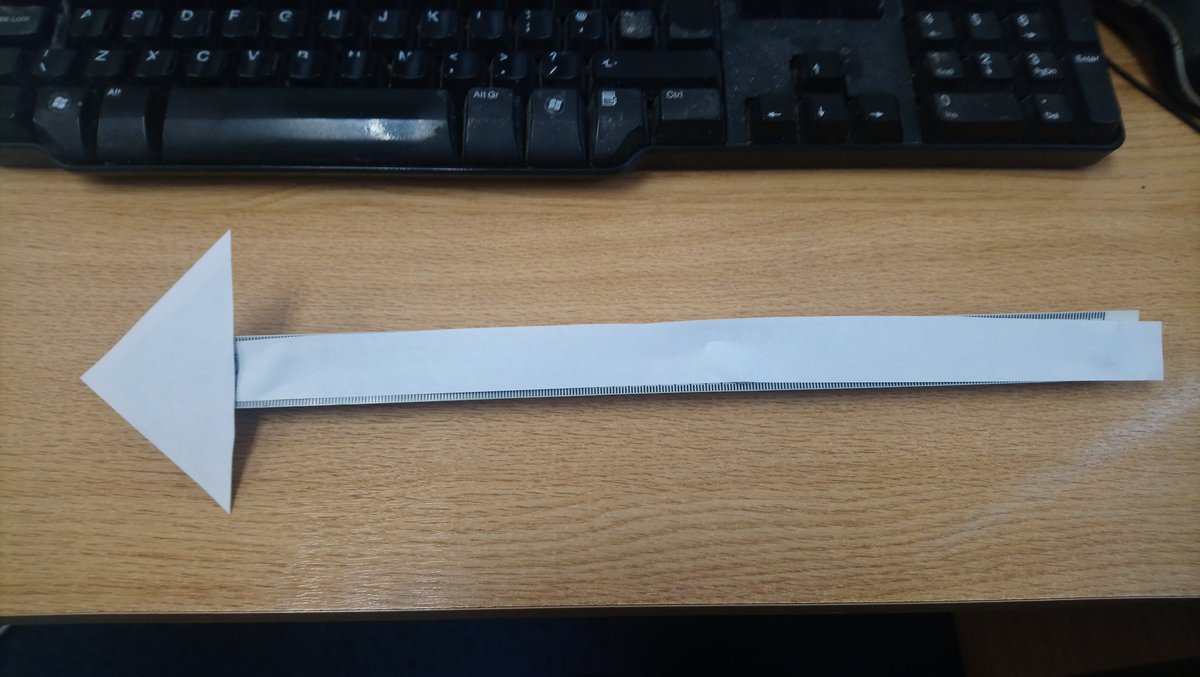
I thought I’d share one of the latest devices I have developed for the Linear Algebra part of my module on Engineering Mathematics as I am all too aware that not all lecturers have such a firm grasp of the range pf possibilities offered by novel educational appliances.

This sophisticated yet lightweight tool utilizes a pressure-sensitive adhesive (`blu tack’) to attach shapes cut from a flexible sheet of a substance derived from cellulose pulp (`paper’) to a rigid plastic geometric measuring device (`ruler’) in order to represent the magnitude and direction of a vector. Illustrated here is the version designed for use with a chalkboard; an alternative version in black is available for use with a whiteboard. The head can be detached in order to separate the concept of magnitude from that of direction.

Made from lightweight materials this device is easily carried to and from the lecture theatre and can be deployed in all weather conditions (apart from rain, wind, snow, etc).

This simple yet effective hi-tech teaching tool is available for purchase throughout the European Union for just €19.99 and in the United Kingdom for £599.50.