The Meaning of Advent

Posted in Uncategorized on December 2, 2018 by telescoper

This morning I noticed that today is Advent Sunday.

For those of you not familiar with the terms used in the liturgical calendar, the word ‘advent’ is derived from the words ‘ad’ and ‘vent’, and it thus describes the season of the year in which people loudly express strong opinions about television commercials. For examples, see here.

There is, however, much more to this time of year than venting about ads. To my mind nothing sums up the true spirit of Christmas than this unicorn in pink lederhosen:

A Year In Maynooth

Posted in Biographical, Maynooth on December 1, 2018 by telescoper

Well, it’s December 1st, which means that it’s a year to the day since I started my current job in Maynooth.

I started here part-time and from December 2017 until summer 2018 I had to commute back and forth between Wales and Ireland. I’m glad I don’t have to do that anymore!

This term has been my first full-time in Maynooth and with two new modules to teach it has been hard work, but it’s been nice to get back to teaching physics again and I’m very glad I had institutional support needed to get the Open Journal of Astrophysics up and running on a permanent basis.

Terms here in Maynooth involve 12 weeks of teaching (plus a study week in the middle), and this year that means we teach all the way until Friday 21st December. That’s three weeks away, which means there’s one quarter of the teaching still to do. I’ve therefore decided to take a break this weekend before entering the home straight, which is why I’m sitting in Dublin Airport as I write this…

More Science Beards of Note

Posted in Beards, The Universe and Stuff with tags , , , , , , , , , , , , , , on November 30, 2018 by telescoper

Following yesterdays post in response to the news that the Bank of England has released a list of names of the scientists who have been nominated to appear on the new £50 note, I have collected a few more great beards of British science.

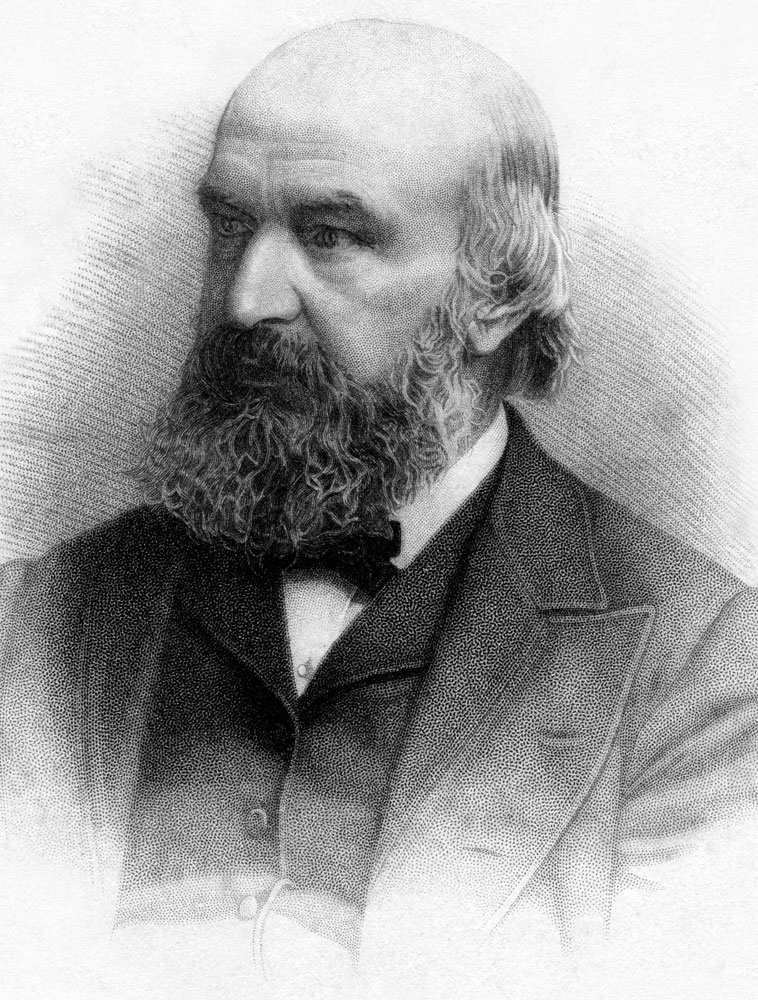
If you recall, Beard Liberation Front spokesperson Keith Flett has argued on his blog for Lord Kelvin (William Thomson) who is indeed a worthy candidate, being both a very distinguished scientist and the possessor of a splendid beard:

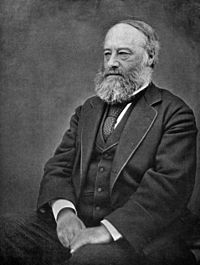
However, it must be pointed out that Kelvin was just one of many distinguished British scientists to have been hirsute, especially in the Victorian Era. Two that spring immediately to mind are James Prescott Joule (after whom the SI unit of energy is named):

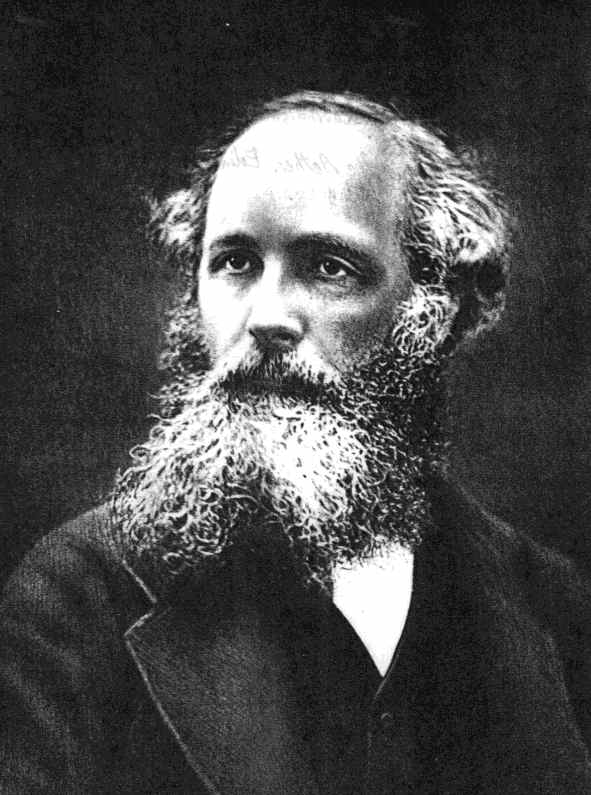
There is also of course James Clerk Maxwell, who formulated the classical theory of electromagnetism:

I posted those three yesterday, but here are some extras.

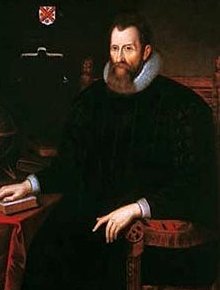
First, from an older era, there is John Napier (1550-1617) the mathematician and astronomer perhaps most famous for inventing logarithms:

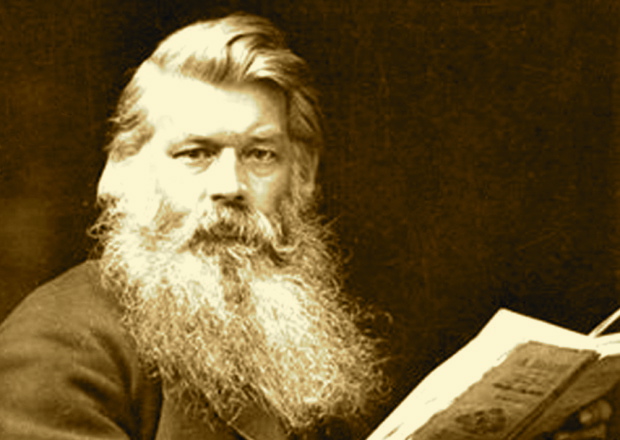
Next is Joseph Swan, noted for the development of the incandescent light bulb who, incidentally, was born in Sunderland (which is in the Midlands).

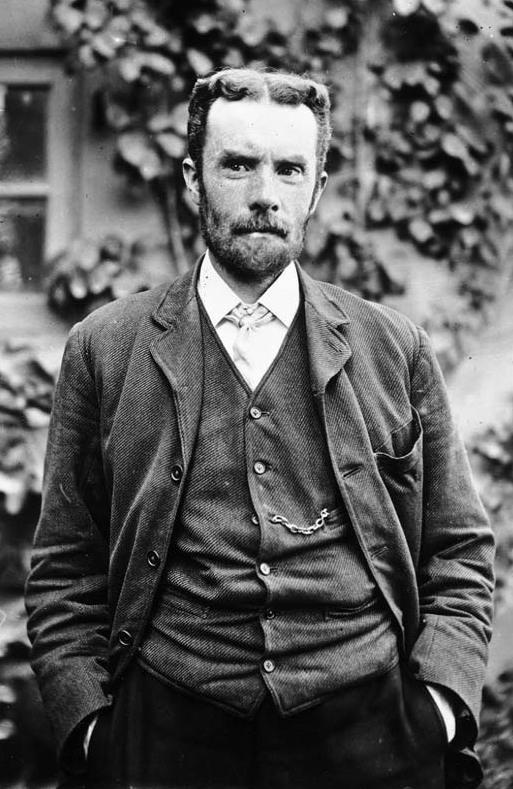
Then there is engineer, mathematician and physicist Oliver Heaviside

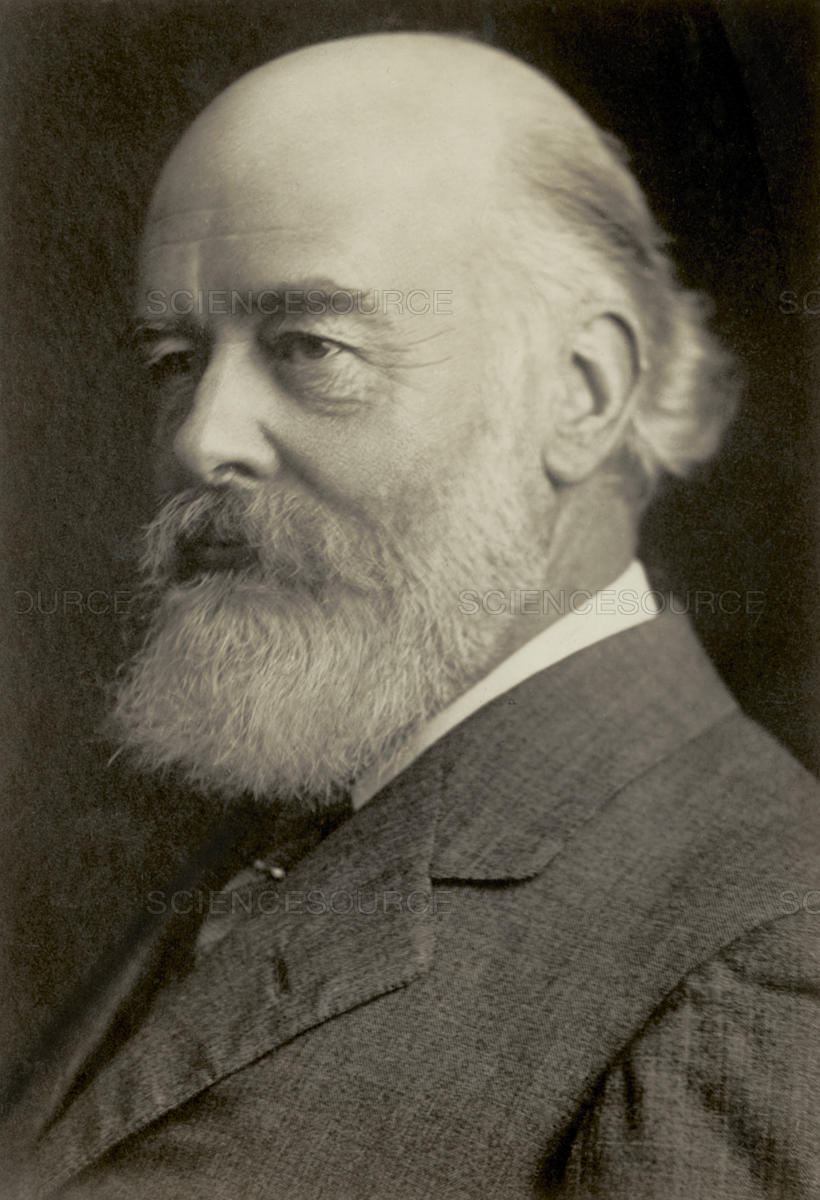
Oliver Lodge is best known for his work on the development of radio communications:

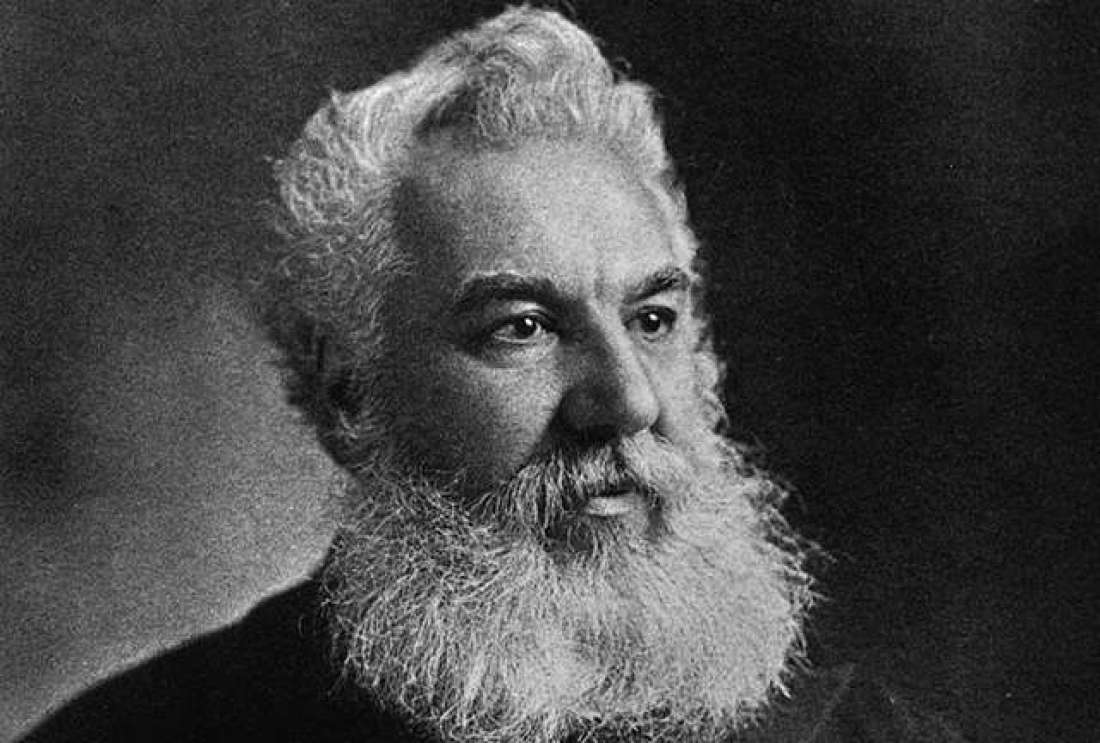
Another well-known hirsute scientist inventor is Scottish-born Alexander Graham Bell, whose strongest association is with the first working telephone system.

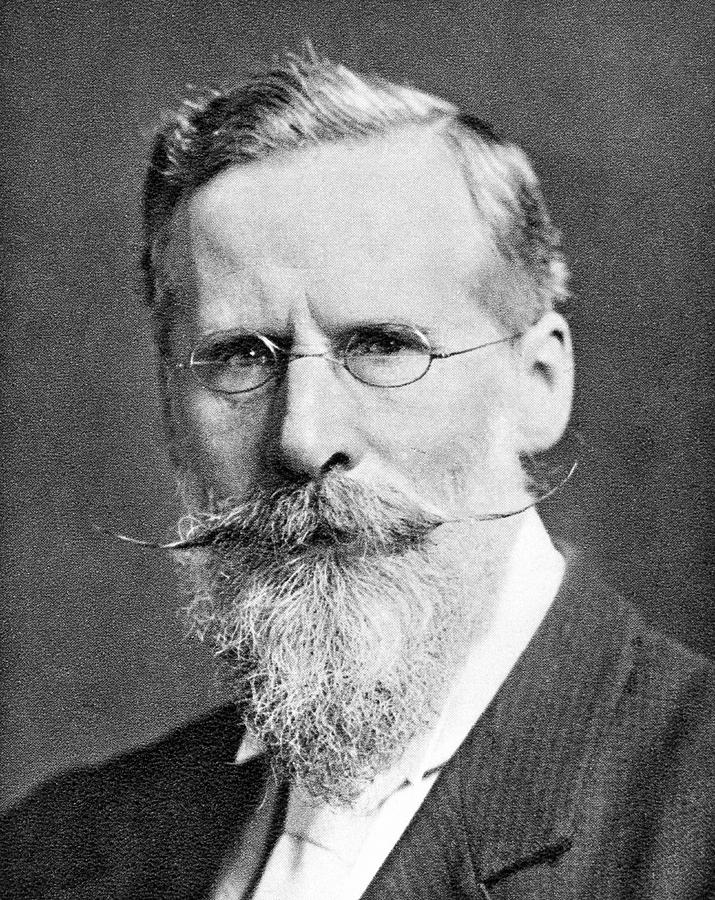
Here’s physicist, chemist and physical chemist William Crookes:

And finally in this batch there is astronomer and mathematician John Couch Adams who did not grow a beard until relatively late in life, but whose facial hair definitely deserves recognition:

Anyway, please keep them coming! You can submit other candidates through the comments box. If you include a link to a picture I will update and include in this post. Note, however, that to be eligible the person must: (a) be a scientist; (b) be British; (c) be dead; and (d) not have been on a banknote before. For example, Charles Darwin has previously been on the tenner so he is ruled out and many other famous beards in science are ruled out by virtue of not being British.

It’s World Aids Day Tomorrow…

Posted in LGBTQ+ with tags on November 30, 2018 by telescoper

Just a reminder that tomorrow is World Aids Day 2018, so make sure you get your ribbon!

image

Science Beards of Note

Posted in Beards, The Universe and Stuff with tags , , , , , , , on November 29, 2018 by telescoper

So the Bank of England has released a list of names of the scientists who have been nominated to appear on the new £50 note. In response to this, Beard Liberation Front spokesperson Keith Flett has argued on his blog for Lord Kelvin (William Thomson) who is indeed a worthy candidate, being both a very distinguished scientist and the possessor of a splendid beard:

However, it must be pointed out that Kelvin was just one of many distinguished British scientists to have been hirsute, especially in the Victorian Era. Two that spring immediately to mind are James Prescott Joule (after whom the SI unit of energy is named):

There is also of course James Clerk Maxwell, who formulated the classical theory of electromagnetism:

Anyway, please submit other candidates through the comments box. If you include a link to a picture I will update and include in this post. Note, however, that to be eligible the person must: (a) be a scientist; (b) be British; (c) be dead; and (d) not have been on a banknote before. For example, Charles Darwin has previously been on the tenner so he is ruled out and many other famous beards in science are ruled out by virtue of not being British.

Are lectures dying out?

Posted in Education on November 29, 2018 by telescoper

Here’s a blog post from an academic (in Engineering) at Dublin City University.

I have thought similar things from time to time. I enjoy lecturing – mainly because I like talking about physics and astrophysics – but I am unsure of how much they add to the students’ education. In fact, when I was a student, I think I learned relatively little from attending lectures (although I still have most of my undergraduate notes). For me the real learning came from working through problems. For that reason I tend to keep the content of my lectures relatively light on detail, but use tutorials and worked examples a lot.

As it happens, I’m about to do this term’s teaching evaluations. I’m giving the two modules I’m teaching this semester for the first time. I’m looking forward to finding out what the students think so I can improve things next year. Even if the response is positive there are always things you can do better.

Greg Foley's avatarTales from Academia

There’s a small lecture theatre beside my office that holds about 40 students. I regularly pass it and peep in to see what’s going on. Originally I did it out of nosiness but these days I’m interested in attendance rates.

Most of the time when I look in there is a handful of students looking bored or knackered, with quite a few looking at their phones. In fairness, the lectures seem a bit dull and often involve a scientist or mathematician writing on the blackboard with his/her back to the students.

I’ve also noticed that it’s much easier this year to find a car parking space. I’m usually in before 8am but even on days when I’m not in until 10am or so, I rarely have trouble finding a place. This was not true just a few years ago.

And now, when I have a 9am lecture, I tell the…

View original post 212 more words

Where Government Ministers Come From..

Posted in Politics on November 28, 2018 by telescoper

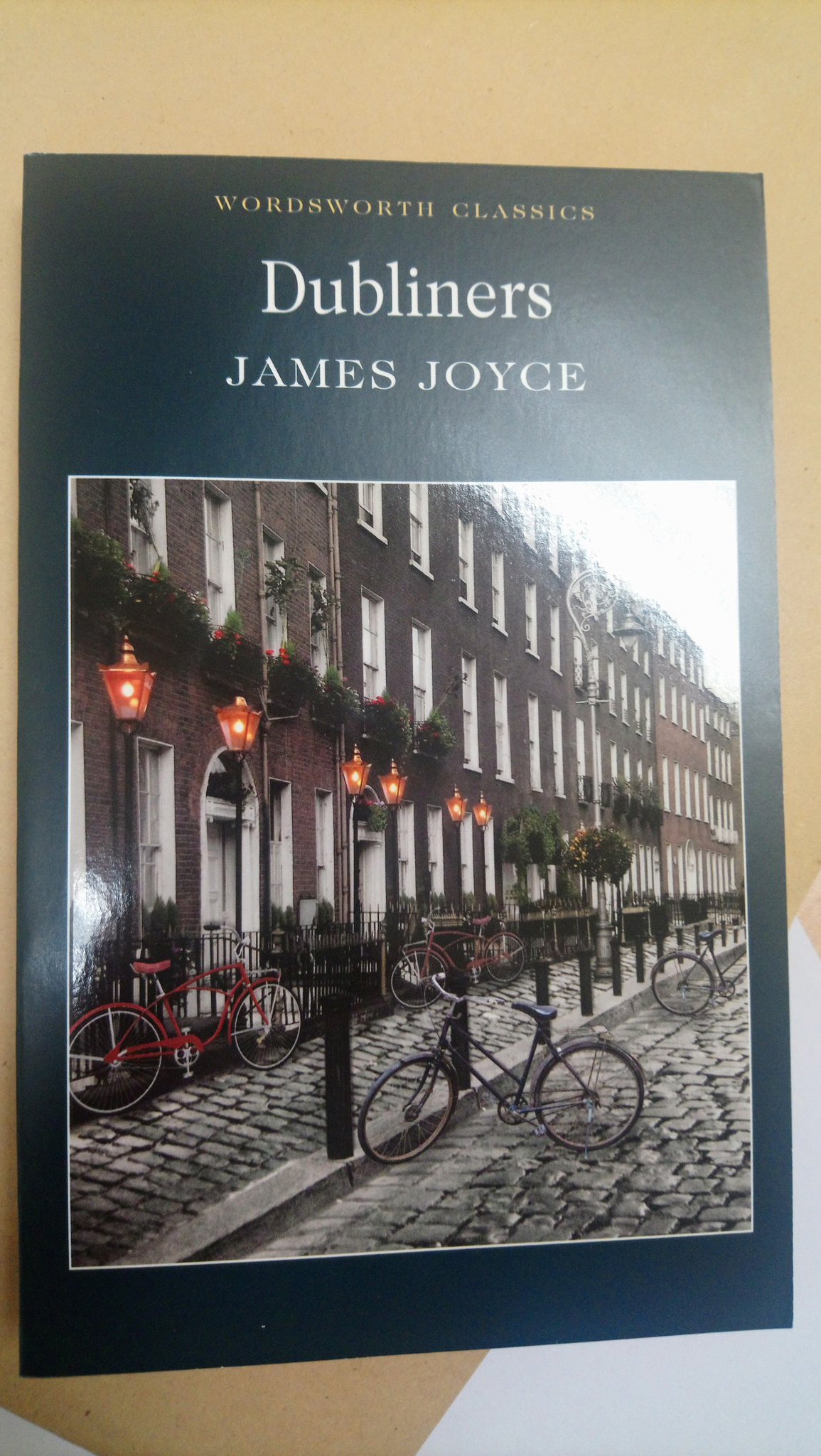
A Book of Note

Posted in Literature with tags , on November 28, 2018 by telescoper

I’ve been too busy today to do a proper blog, but I did pop out at lunchtime to buy the above book (for the princely sum of €3). I can’t believe I haven’t read it before now, but I am definitely looking forward to it and will be making a start at the weekend!


Plan S for Open Access: Guidance and Feedback

Posted in Open Access with tags , , , , , on November 27, 2018 by telescoper

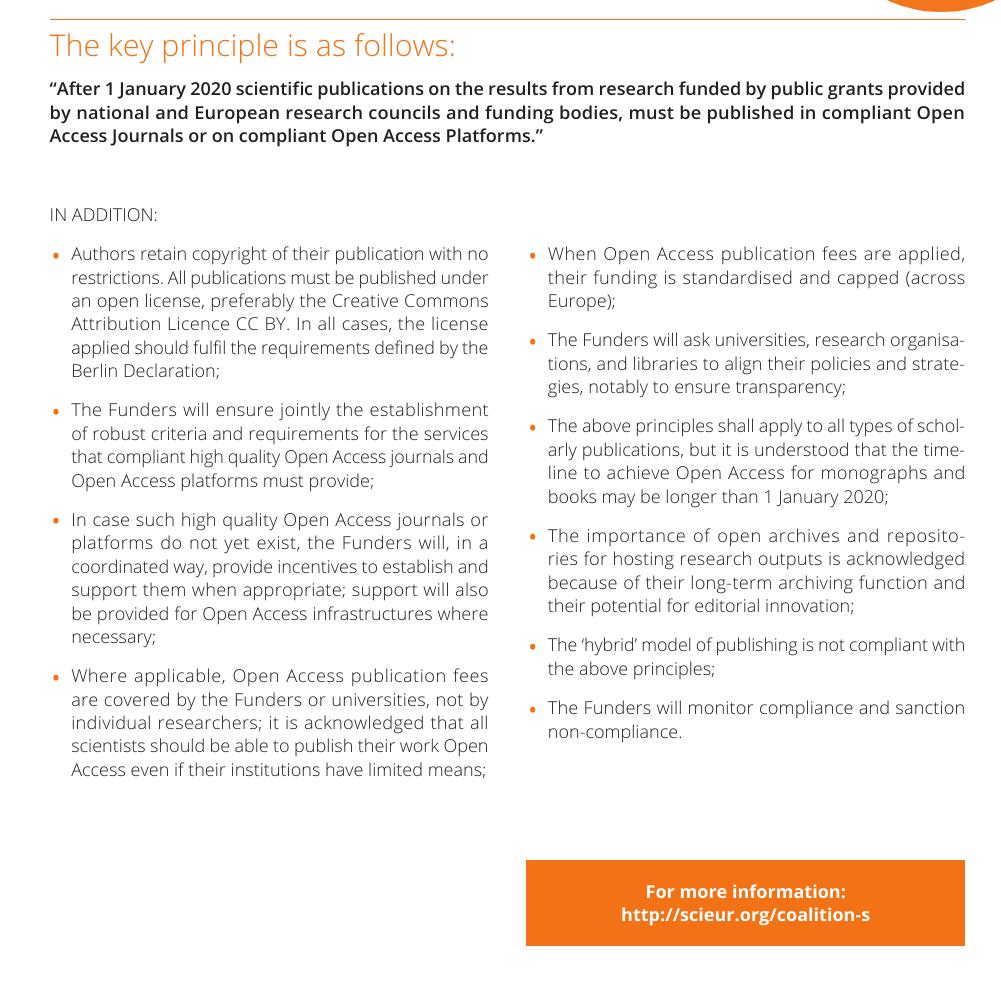
Those of you interested in the topic of Open Access Publishing, and Open Science generally, will no doubt already have heard of `Plan S’. For those that haven’t it is a proposal by 11 European Nations to give the public free access to publicly funded science. The 11 countries involved in this initiative are: France, Italy, Austria, Ireland, Luxembourg, the Netherlands, Norway, Poland, Slovenia, Sweden, and the UK. Together, these nations compise `cOAlition S’ – the `OA’ is for `Open Access’ – to carry out the plan, which can be found here.

Here is a summary:

I have blogged about this and some of the reactions to it before (e.g. here and here).

I’m writing today, however, to pass on an important piece of news, which is that comprehensive technical guidance on how to comply with Plan S has now been issued by Coalition S, where. you can also submit feedback on the guidance.

I’ve got quite a busy day teaching today and have so far only just skimmed the guidance. At first sight it looks a lot more flexible than some people feared. Comments are welcome belo.

My main preoccupation will, however, be to ensure that the Open Journal of Astrophysics can be made compliant (if it isn’t already)..


Physics: Mathematical or Theoretical or Experimental?

Posted in Education, Maynooth, The Universe and Stuff with tags , , , on November 26, 2018 by telescoper

Fresh from doing two Open Day talks last week I thought I’d write a few words here about something that cropped up in the question-and-answer session.

For a start, I should explain that here at Maynooth University there are two Physics departments, one the Department of Theoretical Physics (of which I am a Faculty member) and the other the Department of Experimental Physics. These two units are in the same building but are largely separate in terms of teaching and research.

For instance, when students enter on our General Science degree programme they have to choose four subjects in the first year, including Mathematics (much as I did when I did my Natural Sciences degree at Cambridge back in the day). Picking `double physics’ (i.e. Experimental Physics and Theoretical Physics) uses up two of those choices, whereas Physics was a single choice in the first year of my degree.

To confuse matters still further, the Department of Theoretical Physics only recently changed its name from the Department of Mathematical Physics and some of our documentation still carries that title. I got asked several times at the weekend what’s the difference between Theoretical Physics and Mathematical Physics?

As far as Maynooth is concerned we basically use those terms interchangeably and, although it might appear a little confusing at first, having both terms scattered around our webpages means that Google searches for both `Mathematical Physics’ and `Theoretical Physics’ will find us.

It’s interesting though that Wikipedia has different pages for Mathematical Physics and Theoretical Physics. The former begins

Mathematical physics refers to the development of mathematical methods for application to problems in physics. The Journal of Mathematical Physics defines the field as “the application of mathematics to problems in physics and the development of mathematical methods suitable for such applications and for the formulation of physical theories”. It is a branch of applied mathematics, but deals with physical problems.

while the latter starts

Theoretical physics is a branch of physics that employs mathematical models and abstractions of physical objects and systems to rationalize, explain and predict natural phenomena. This is in contrast to experimental physics, which uses experimental tools to probe these phenomena.

The difference is subtle,and there is obviously a huge amount in common between these two definitions, but it is perhaps that Theoretical Physics is more focused on the use of mathematics to account for the results of experiment and observations whereas Mathematical Physics concerns itself more with the development of the necessary mathematical techniques, but I’m sure there will be readers of this blog who disagree with this interpretation.

For the record here is what Wikipedia says about Experimental Physics:

Experimental physics is the category of disciplines and sub-disciplines in the field of physics that are concerned with the observation of physical phenomena and experiments. Methods vary from discipline to discipline, from simple experiments and observations, such as the Cavendish experiment, to more complicated ones, such as the Large Hadron Collider.

I’d say that theoretical physicists are more likely than mathematical physicists to be working closely with experimentalists. I count myself as a theoretical physicist (that’s what I did in Part II at Cambridge, anyway) though I do work a lot with data.

Anyway, as an experiment, I asked the audience at my Open Day talks if they could name a famous physicist. Most popular among the responses were the names you would have guessed: Einstein, Hawking, Feynman, Dirac, Newton, Schrodinger, and some less familiar names such as Leonard Susskind and Brian Greene. Every single one of these is (or was) a theorist of some kind. This is confirmed by the fact that many potential students mention similar names in the personal statements they write in support of their university applications. For better or worse, it seems that to many potential students Physics largely means Theoretical (or Mathematical) Physics.

Although it is probably good for our recruitment that there are so many high-profile theoretical physicists, it probably says more about how little the general public knows about what physics actually is and how it really works. For me the important thing is the interplay between theory and experiment (or observation), as it is in that aspect where the whole exceeds the sum of the parts.

It might seem a bit strange to have two Physics departments in one University – though it seems to work alright in Cambridge! – but I think it works pretty well. The one problem is that there isn’t a clear entry point for `Physics’ without an adjective. Students can carry Theoretical Physics and Experimental Physics through all the way to final year and get a joint honours degree (50% theory and 50% experiment) or they can pick one to do single honours, but we might attract a few more students if the former possibility were just called `Physics’. Perhaps.