Why you should proofread your emails before sending them..

Posted in Uncategorized on June 9, 2018 by telescoper

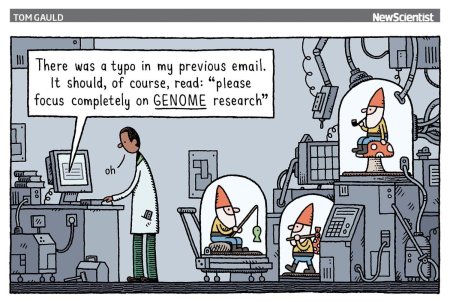
If you have any amusing email gaffes to report please do so through the comments box. I have a few.

My favourite was from a (female) astronomer who replied to decline an email invitation to give a seminar because she was “too busty”.

There was also a “here is the reviled version of our paper”.

I also liked the one that included the phrase “your model has many appalling features”..

BBC NOW: Tchaikovsky and Shostakovich at St David’s Hall

Posted in Biographical, Music with tags , , , , , on June 8, 2018 by telescoper

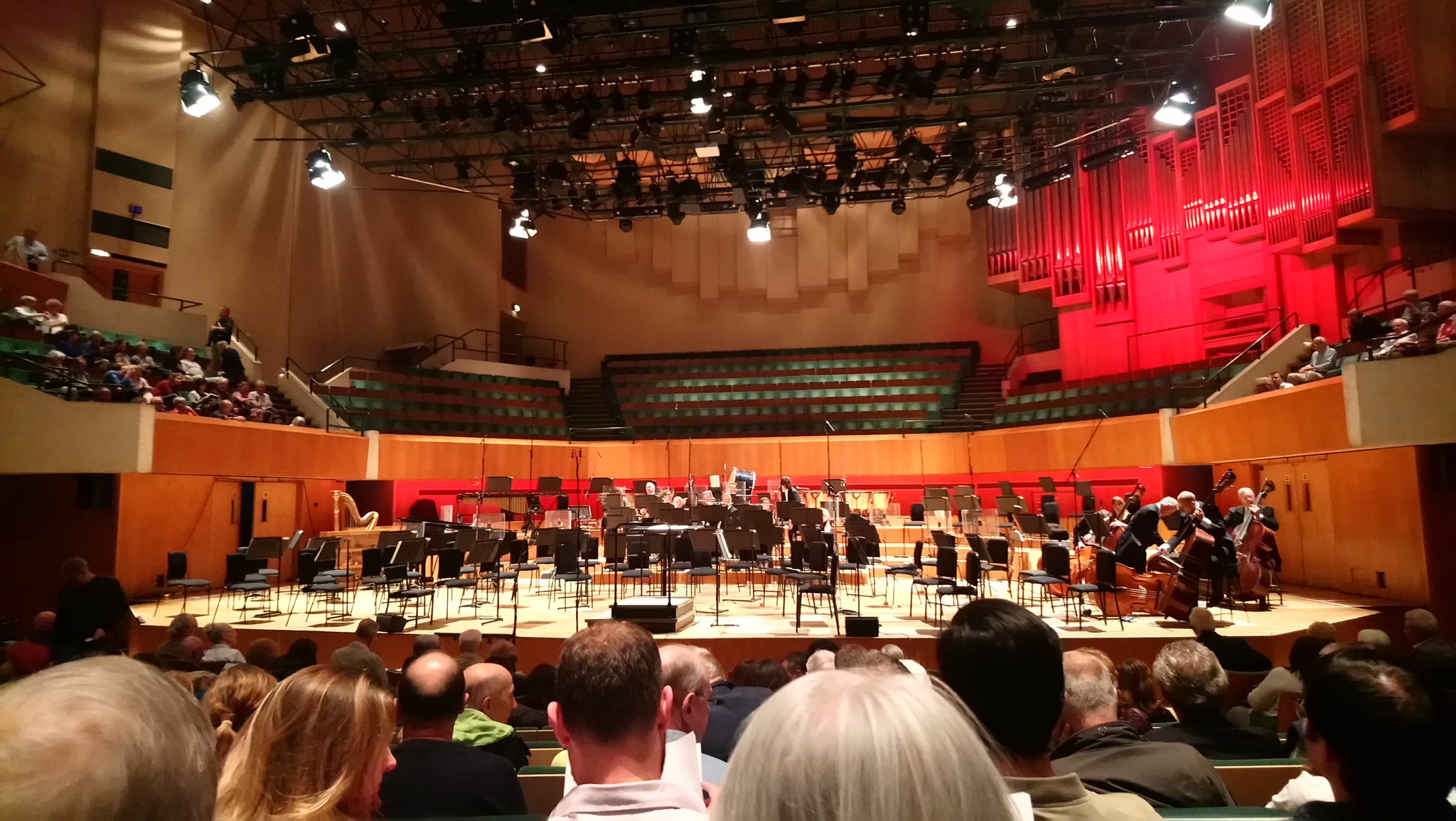
Last night I took my seat in St David’s Hall for a concert by the BBC National Orchestra of Wales under the direction of Principal Conductor Thomas Søndergård. It was an all-Russian menu, and very enjoyable it was.

The first course was the Violin Concerto by Pyotr Ilyich Tchaikovsky. It’s a familiar work but it was ravishingly played by Latvian soloist Baiba Skride, who seemed to revel in the virtuosic elements of this work, as well as bringing out the lyricism in the more romantic passages. The Orchestra were on top form too. I particularly enjoyed the way they dealt with the introduction of the famous `big tune’ in the first movement: brisker and with less of the tendency to wallow in it than you find in many performances.

Then, after the wine break, we had the main dish for the evening, the Symphony No. 5 by Dmitri Shostakovich. This is a very famous work and is perhaps the most accessible of all the Shostakovich symphonies. It was an immediate success with Soviet critics and public alike when it was first performed in 1937, and though it marked Shostakovich’s return to favour with the authorities after his denunciation by Stalin, this work has the composer’s very characteristic sense of things not being quite as they seem on the surface. Indeed, in this and many other of his compositions, he seems to manage to say one thing at the same time as saying the exact opposite of that thing; nowadays this might be called `constructive ambiguity’. This is especially in the finale, in which the sense of triumph is almost a parody of itself. Overall the Fifth Symphony is a sombre work, the dark undertone established right at the start with an imposing theme on the cellos and double basses, but it has passages of great beauty too, especially in the slow third movement. Like all great symphonies – and this is one of the greatest – it takes you on a journey full of of excitement and interest. The 45 minutes or so of this performance seemed to fly by, and its ending was greeted with rapturous applause and a standing ovation from many in the audience.

It’s interesting to consider that only 60 years had elapsed between the composition of these two pieces, but what different worlds they represent!

Anyway, the full strength National Orchestra of Wales, produced a gripping performance of this tremendous work with every section playing at the top of its form and the finale really brought the house down. But you don’t have to take my word for it – the whole concert will be broadcast on BBC Radio 3 next Tuesday, 12th June.

This concert is the last of the BBC National Orchestra of Wales season at St David’s Hall and indeed the last of at St David’s with Thomas Søndergård as Principal Conductor (though he will be conducting the Orchestra a couple of times at the Proms this summer). I wish him all the very best for his future musical adventures. It’s also the last concert by the BBC National Orchestra of Wales I’ll be attending before departing for Ireland. I don’t think I’ll get much chance to hear them after I’ve relocated, so let me take this opportunity to thank every single member of the Orchestra for the many performances I’ve enjoyed over the years, and to wish them well for the future.
History of astronomy – reading the classics

Posted in History, The Universe and Stuff on June 7, 2018 by telescoper

I’m sharing this excellent blog post here on this blog for the edification and benefit of anyone interested in the history of astronomy as it contains a really useful list of references and comments related thereto!

thonyc's avatarThe Renaissance Mathematicus

Most non-specialists get their knowledge of the history of astronomy from general surveys of the subject or from even more general surveys of the history of science. The information contained in these on Ptolemaeus, Copernicus and the other boys in the history of astronomy band is often from secondary if not tertiary or even quaternary sources and as a result also often inaccurate if not completely false. The solution to this problem is of course to read the originals but not all of us are blessed with the linguistic abilities necessary to tackle second century Greek or Early Modern Latin, to say nothing of Galileo’s seventeenth century Tuscan. However, the current scholar interested in the classical texts from the history of astronomy is blessed with modern, annotated English translations of these and in this post I want to briefly present these and some secondary literature to assist in understanding them.

View original post 1,650 more words

Captain James Doohan

Posted in History, Television with tags , , , , , on June 6, 2018 by telescoper

The pictures above are photographs of a young Captain James Doohan of the Royal Canadian Artillery.

Doohan was in action on D-Day where he served with exceptional courage and distinction during the assault on Juno beach. He killed two enemy snipers and successfully led his men on foot through a minefield. Doohan was then hit six times by machine gun fire, 4 times in the leg, once in the finger, and once in the chest. The latter round would probably have killed him but for the cigarette case he had in his tunic pocket which deflected the bullet.

In case you haven’t yet realised, after the war was over, James Doohan became an actor, best known for the role of ‘Scotty’ in the TV series Star Trek…

Captain James Doohan was just one of around 160,000 officers and men who took part in the invasion of Normandy that began on 6th June 1944.

Another, not now famous, whose name along with many others, I came across this morning while waiting for my plane, was a George Jones of No 4 Commando who landed at Ouistreham (Sword beach) with the 1st Special Service Brigade around 7.30am on D-Day. Between the beach and Pegasus Bridge, four miles inland, his unit was constantly under fire and all but 80 of his 500 comrades were killed or wounded.

George Jones, James Doohan and countless other brave men like them were fighting to liberate a continent from Nazi tyranny. It is to our shame that so many today who owe their freedom to the sacrifices of an earlier generation are once again marching to the fascist drum.

Back to Cardiff again..

Posted in Cardiff, Maynooth with tags , on June 6, 2018 by telescoper

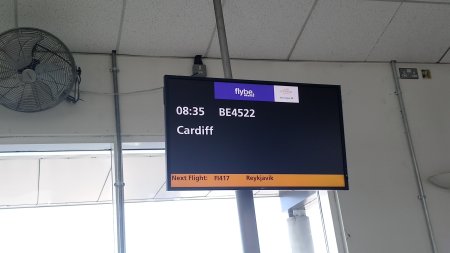
So here I am again, back in sunny Cardiff (if a bit later than planned). My flight from Dublin was supposed to depart at 8.35, but didn’t go until over an hour later. The delay was allegedly caused by a lightning strike last night that required the plane to be checked before take-off. Although they must have known about this mishap for some time, FlyBe didn’t bother to tell us anything about the reason for the delay or how long it would be. This was the scene at the (unstaffed) departure gate at about 9.15am. The lack of communication or any form of customer service compounds the irritation caused by such delays.

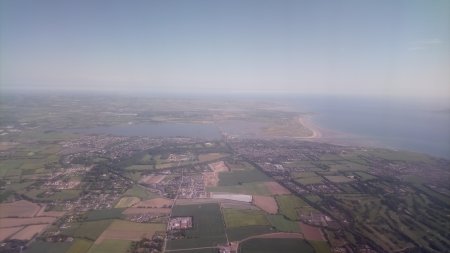
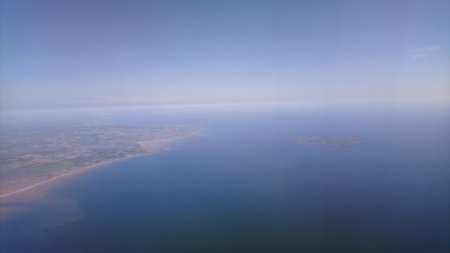
Anyway, once airborne, it was a pleasant flight. Here are two pictures just after taking off from Dublin Airport, with a view up to Malahide in the North.

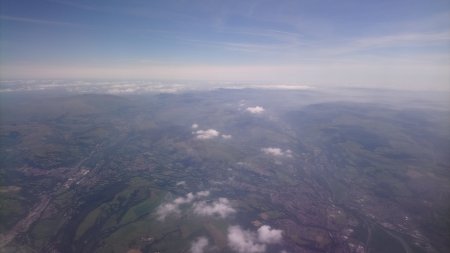
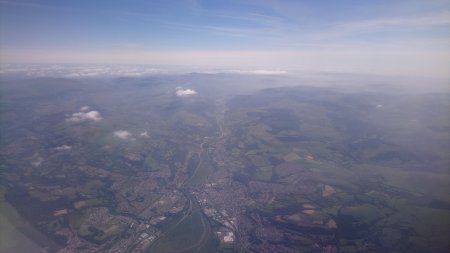
And here are a few more flying over Wales about 10 minutes before landing.

We landed about 85 minutes late in Cardiff, but it’s lovely weather here so I’m not as grumpy as I might have been. Now, to work.

A Mini-Introduction To Information Theory

Posted in The Universe and Stuff with tags , , , on June 5, 2018 by telescoper

The last link to an arXiv paper I posted here seems to have proved rather popular so here’s another that I think is well worth reading, this time by Ed Witten:

This article consists of a very short introduction to classical and quantum information theory. Basic properties of the classical Shannon entropy and the quantum von Neumann entropy are described, along with related concepts such as classical and quantum relative entropy, conditional entropy, and mutual information. A few more detailed topics are considered in the quantum case.

It’s not really `very short’ as it is nearly 40 pages long, but it does tackle a very big topic so I won’t quibble about that. You can download a PDF of the full paper here.

As always, comments are welcome through the comments box.

Lá Saoire i mí Mheitheamh

Posted in Biographical, History, Maynooth, Uncategorized with tags , , , on June 4, 2018 by telescoper

So here I am, in Maynooth, on my birthday. I’ve made such an impression here in Ireland since I arrived that they’ve declared this day a national holiday so I’ve got the day off.

The June Bank Holiday (Lá Saoire i mí Mheitheamh) in Ireland is actually the equivalent of last week’s late May Bank Holiday in the UK, in that both have their origin in the old festival of Whitsuntide (or Pentecost) which falls on the 7th Sunday after Easter. Because the date of Easter moves around in the calendar so does Whit Sunday, but it is usually in late May or early June. When the authorities decided to fix a statutory holiday at this time of year, presumably to reduce administrative difficulties, the UK went for late May and Ireland for early June. Whit Sunday was actually on 20th May this year.

Incidentally, when I was a lad, ‘Whit Week’ was always referred to as ‘Race Week’. Geordie Ridley’s famous music hall song The Blaydon Races begins “I went to Blaydon Races, ’twas on the 9th of June, Eighteen Hundred and Sixty Two on a summer’s afternoon…”. Easter Sunday fell on 20th April in 1862, so Whit Sunday was on 8th June. After raucous scenes at the Blaydon Races, they were scrapped and replaced with a Temperance Festival on the Town Moor in Newcastle which evolved into one of the largest open-air funfairs in Europe, The Hoppings.

Anyway, with this birthday, I have now reached the minimum retirement age in the UK university pension scheme, so I could start drawing my pension when I leave Cardiff University next month. For a time I was planning to do that, but Ireland has given me a new lease of life, so to speak, so thoughts of retirement have receded.

Today also represents a short hiatus before our formal Exam Board meeting tomorrow, then I’ll be back in Cardiff for exam business there. And next week I’ll be in neither Cardiff nor Maynooth…

Ode to Tayto

Posted in Uncategorized with tags , , on June 3, 2018 by telescoper

One of the deep cultural differences I have discovered between Ireland and the United Kingdom lies in the arena of potato crisps.

Here the crisp of choice for the discerning consumer is the Tayto, a brand I have not seen elsewhere (though apparently it is also made under licence in Northern Ireland). So familiar is the name Tayto over here that people use it to refer to any kind of crisp, in much the same way that in the UK you might use ‘Hoover’ to refer to any kind of vacuum cleaner.

If you don’t believe that a humble potato crisp can be a cultural phenomenon then note that there is even a Tayto Park which is only 30 minutes from Dublin but which, regrettably, I have not yet visited.

Tayto’s crisps have been around since 1954 and the manufacturer is credited with inventing the method of production of flavoured potato crisps. Tayto has the right, therefore, to call itself the original potato crisp.

Naturally, while in Ireland I try to buy locally produced items whenever possible, so I have sampled Tayto crisps on a number of occasions. They come in a relatively narrow range of flavours, but the Cheese & Onion variety is definitely nicer than, e. g. Walkers.

The Maynooth Pound

Posted in History, Maynooth with tags , , on June 2, 2018 by telescoper

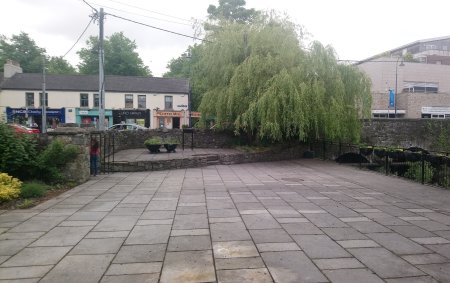
Taking a stroll around Maynooth this afternoon I came across a little bit of local history that I thought I would share. On the appropriately name Pound Lane, right next to the stream that used to run past an ancient mill where there is now a shopping centre, there is a small enclosure called the Maynooth Pound, marked with this sign:

If you can’t read the sign it explains that this is the only surviving example of a type of pound which used to be common all over Ireland. Stray animals were brought here to be fed and watered before being reunited with their owners (for a small fee).

The walls are of interesting dry stone construction and have survived the passage of time rather well; they were built in 1822, although the Pound itself is a bit older.

The interior of the Pound was virtually derelict until quite recently but has been tidied up and is now a pleasant place to sit down and perhaps feed the birds. The old mill was famous for its crows, of which there are still a great many in Maynooth although they tend now to congregate on the playing fields near the Royal Canal.

In the picture, the mill stream is to the right of the shot and you can see the roof of the Manor Mill shopping centre to the upper right.

Does Physics need Philosophy (and vice versa)?

Posted in mathematics, The Universe and Stuff with tags , , on June 1, 2018 by telescoper

There’s a new paper on the arXiv by Carlo Rovelli entitled Physics Needs Philosophy. Philosophy Needs Physics. Here is the abstract:

Contrary to claims about the irrelevance of philosophy for science, I argue that philosophy has had, and still has, far more influence on physics than is commonly assumed. I maintain that the current anti-philosophical ideology has had damaging effects on the fertility of science. I also suggest that recent important empirical results, such as the detection of the Higgs particle and gravitational waves, and the failure to detect supersymmetry where many expected to find it, question the validity of certain philosophical assumptions common among theoretical physicists, inviting us to engage in a clearer philosophical reflection on scientific method.

Read and discuss.