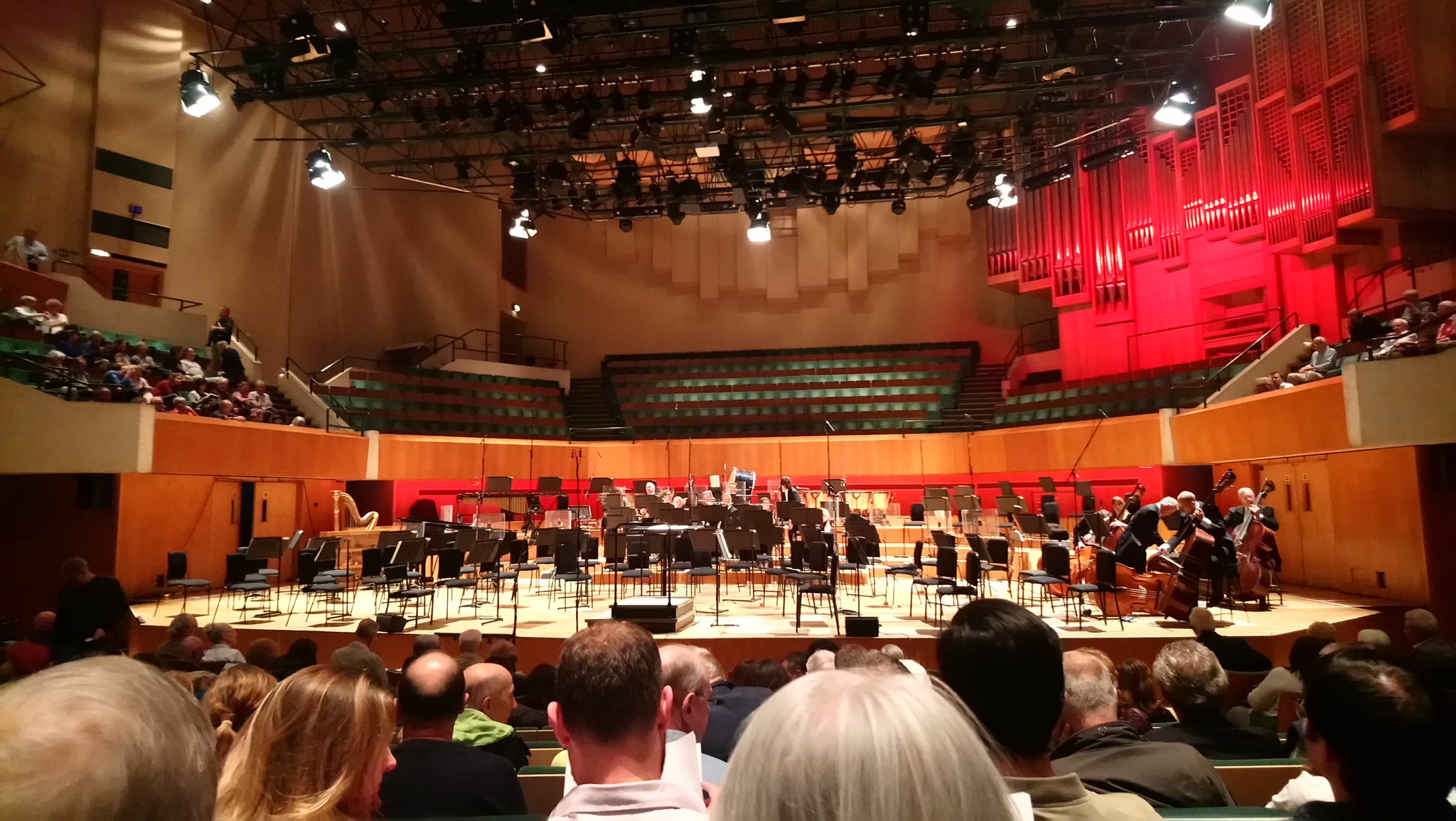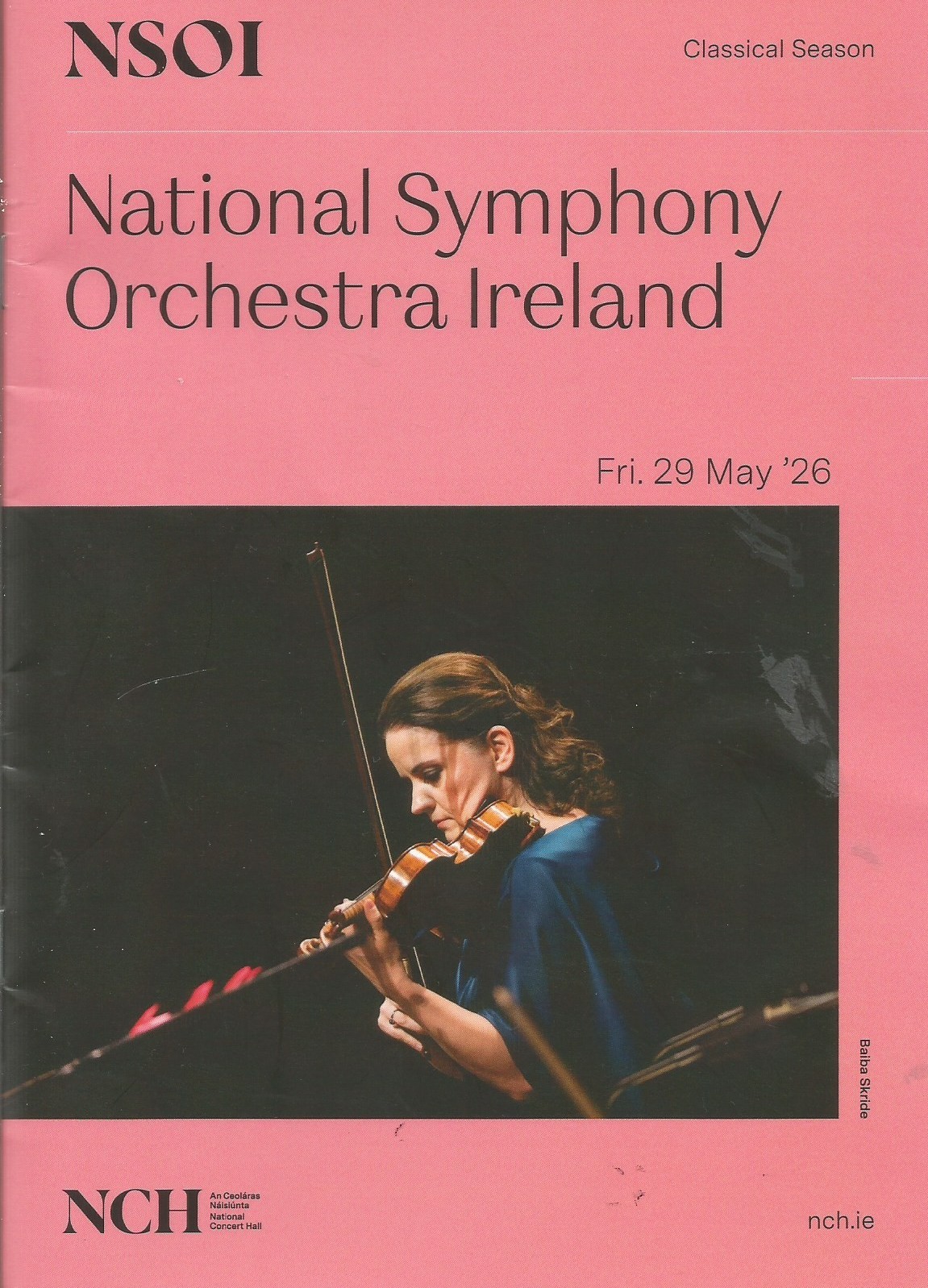
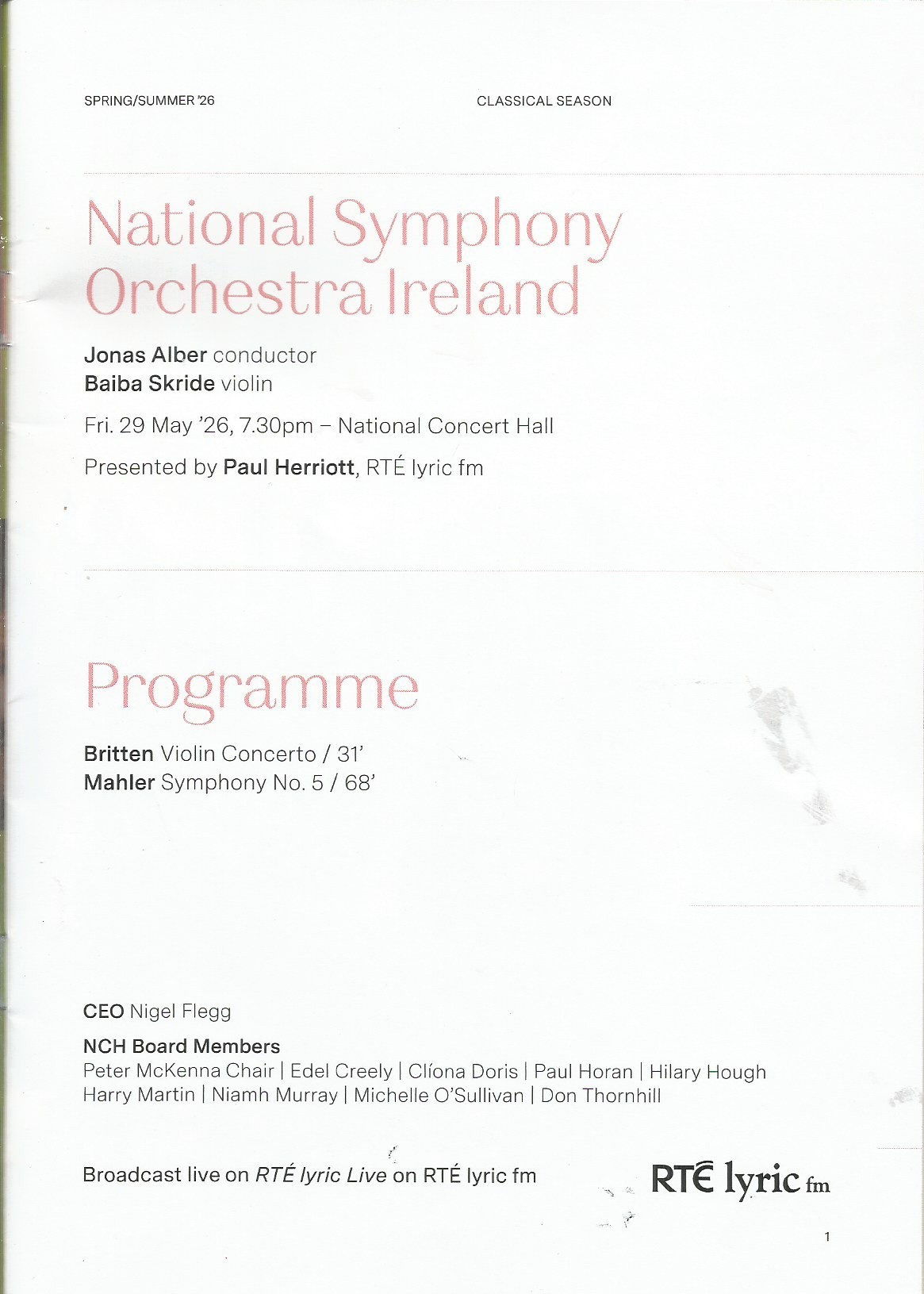
Having finished my exam marking the previous day and with a Bank Holiday weekend ahead, I had a spring in my step as I walked through a sunny Dublin yesterday evening for the season finale of concerts by National Symphony Orchestra Ireland of 2026. The guest conductor for the evening was Jonas Alber. As usual for the closing concert of the season there was a very full house. There were only two items on the menu, but it was a substantial feast, so much so that I only just made it back to Pearse after the concert for the train home!
The first piece was new to me – the Violin Concerto by Benjamin Britten. This was written in 1939 just after Britten moved to the United States. It’s an unusual piece that reminded me very much of Prokofiev, especially the second movement which is a very long scherzo. The third movement involves a Passacaglia (thematic variations played over a repeated bass pattern), rather reminiscent that deployed in the Opera Peter Grimes. Overall its atmosphere is tonally ambiguous, brooding and restless, with uneasy introspection sometimes giving way to sudden outbursts. It’s an absorbing piece which places strong demands on the soloist. Latvian violist Baiba Skride played superbly throughout, taking the feverishly virtuosic cadenzas in her stride.
After the wine break, much needed because of the warm weather we had Mahler’s Fifth Symphony. This work is best known for the 4th movement Adagietto but I’ve always felt that section fits rather uncomfortably with the rest of the composition. That’s not to say that I dislike the Adagietto, which I think is one of the most beautiful movements in all music, and regularly makes me shed a tear. I just think it’s a bit of a detour from the rest of the work. I suppose one should think of it as a sort of intermezzo, a restful interlude before the journey reaches its climax in the 5th movement Rondo which was played with electrifying passion last night.
Mahler’s Fifth Symphony veers across a vast emotional landscape. The conductor Bruno Walter described it as “passionate, wild, pathetic, buoyant, solemn, tender, full of the sentiments of which the human heat is capable, but still ‘only’ music”. Although by no means an atonal work, there isn’t really a clear tonal signature: at least five different keys are used and there are passages in which the key is ambiguous.
The first movement begins with a funeral march, introduced with a solo trumpet statement like a fanfare, followed by lyrical passages from the strings. The second movement is extremely tempestuous, contrasting moods of melancholy and frenzy, with the trumpet theme from the first movement returning. The third movement, a long Scherzo, is unexpectedly playful, with two thematic forms bouncing off each other. Then there’s the soulful longing of the Adagietto, beautifully played last night to a rapt audience and the joyful finale in an unambiguously major key. The Fifth is by no means Mahler’s longest symphonic work but it still lasts well over an hour. So gripping was the performance, however, that I didn’t look at my watch once.
This was a superb concert, with the large orchestral forces marshalled superbly by Jonas Alber. I have to mention the brass section and especially the trumpet of Darren Moore, who was brilliant.
That may be the last concert of the 25/6 season, but the brochure for thr 26/7 season arrived through my letterbox on Friday morning.
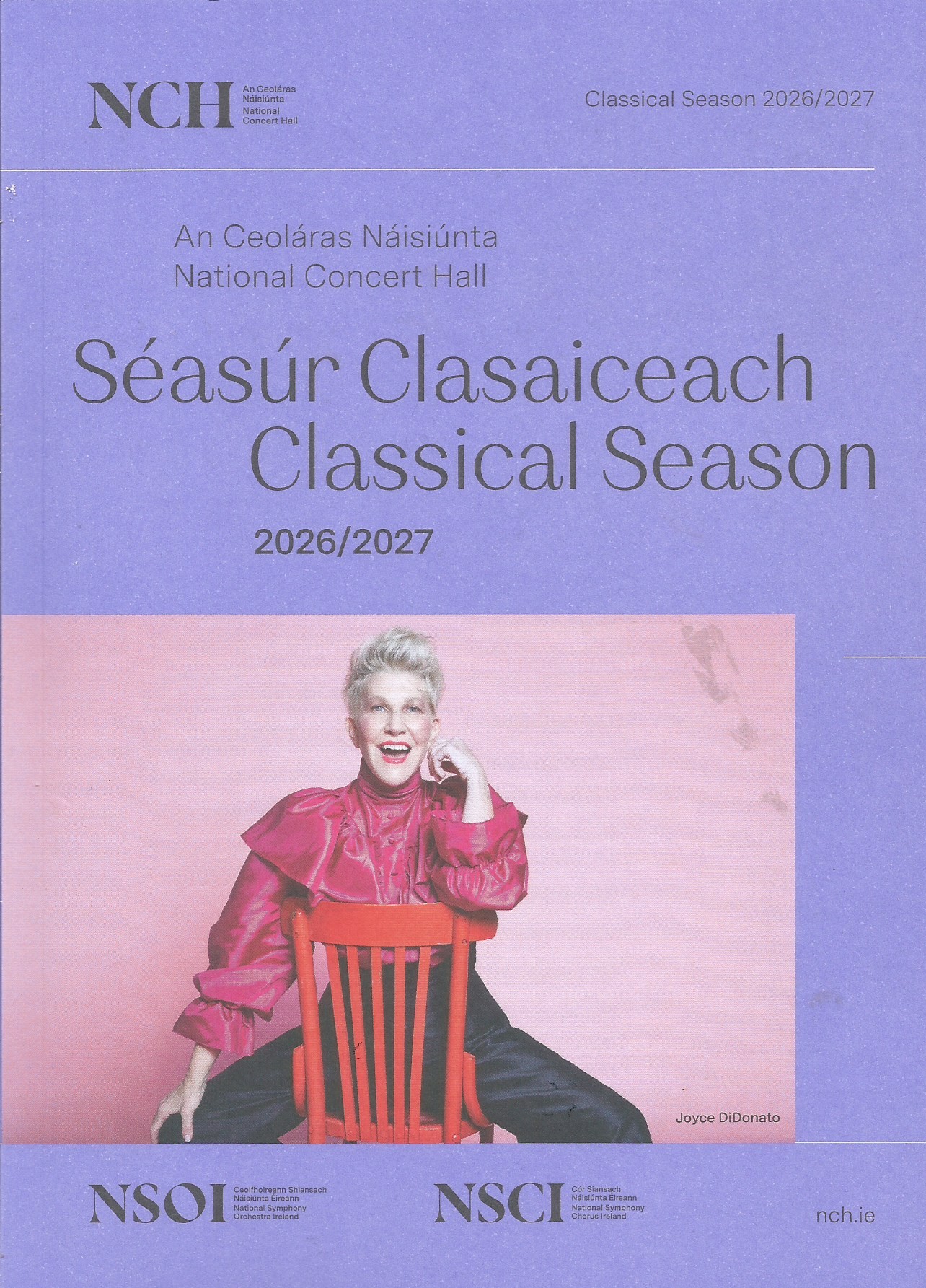
There will be other music at the NCH over the summer, but the first of the regular series of Friday concerts will be on September 11th, when it will be Mahler again. Appropriately enough it will be a performance of his Symphony No. 2 “Resurrection”…