What the Power Spectrum misses

Posted in The Universe and Stuff with tags , , , , , , , on August 2, 2017 by telescoper

Just taking a short break from work I chatted over coffee to one of the students here at the Niels Bohr Institute about various things to do with the analysis of signals in the Fourier domain (as you do). That discussion reminded me of this rather old post (from 2009) which I thought might be worth a second airing (after a bit of editing). The discussion is all based on past cosmological data (from WMAP) rather than the most recent (from Planck), but that doesn’t change anything qualitatively. So here you are.
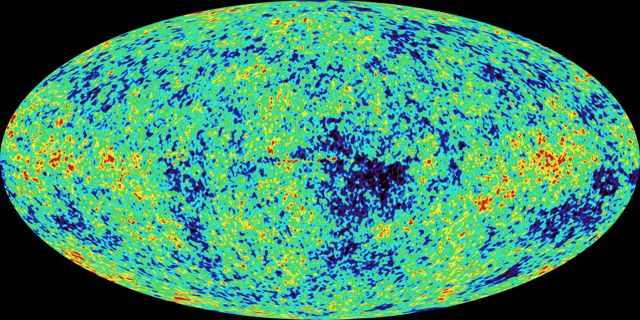
WMapThe picture above shows the all-sky map of fluctuations in the temperature of the cosmic microwave background across the sky as revealed by the Wilkinson Microwave Anisotropy Probe, known to its friends as WMAP.

I spent many long hours fiddling with the data coming from the WMAP experiment, partly because I’ve never quite got over the fact that such wonderful data actually exists. When I started my doctorate in 1985 the whole field of CMB analysis was so much pie in the sky, as no experiments had yet been performed with the sensitivity to reveal the structures we now see. This is because they are very faint and easily buried in noise. The fluctuations in temperature from pixel to pixel across the sky are of order one part in a hundred thousand of the mean temperature (i.e. about 30 microKelvin on a background temperature of about 3 Kelvin). That’s smoother than the surface of a billiard ball. That’s why it took such a long time to make the map shown above, and why it is such a triumphant piece of science.

I blogged a while ago about the idea that the structure we see in this map was produced by sound waves reverberating around the early Universe. The techniques cosmologists use to analyse this sound are similar to those used in branches of acoustics except that we only see things in projection on the celestial sphere which requires a bit of special consideration.

One of the things that sticks in my brain from my undergraduate years is being told that `if you don’t know what you’re doing as a physicist you should start by making a Fourier transform of everything. This approach breaks down the phenomenon being studied into a set of  plane waves with different wavelengths corresponding to analysing the different tones present in a complicated sound.

It’s often very good advice to do such a decomposition for one-dimensional time series or fluctuation fields in three-dimensional Cartesian space, even you do know what you’re doing, but it doesn’t work with a sphere because plane waves don’t fit properly on a curved surface. Fortunately, however, there is a tried-and-tested alternative involving spherical harmonics rather than plane waves.

Spherical harmonics are quite complicated beasts mathematically but they have pretty similar properties to Fourier harmonics in many respects. In particular they are represented as complex numbers having real and imaginary parts or, equivalently, an amplitude and a phase (usually called the argument by mathematicians),

Z=X+iY = R \exp(i\phi)

This latter representation is the most useful one for CMB fluctuations because the simplest versions of inflationary theory predict that the phases φ of each of the spherical harmonic modes should be randomly distributed. What this really means is that there is no information content in their distribution so that the harmonic modes are in a state of maximum statistical disorder or entropy. This property also guarantees that the distribution of fluctuations over the sky should have a Gaussian distribution.

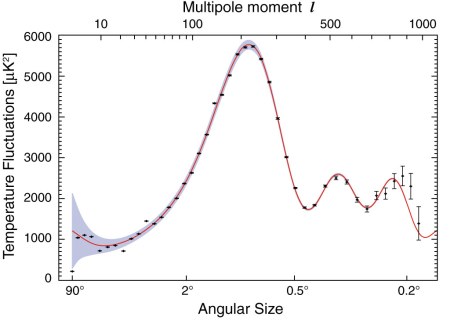
If you accept that the fluctuations are Gaussian then only the amplitudes of the spherical harmonic coefficients are useful. Indeed, their statistical properties can be specified entirely by the variance of these amplitudes as a function of mode frequency. This pre-eminently important function is called the power-spectrum of the fluctuations, and it is shown here for the WMAP data:
080999_powerspectrumm

Although the units on the axes are a bit strange it doesn”t require too much imagination to interpret this in terms of a sound spectrum. There is a characteristic tone (at the position of the big peak) plus a couple of overtones (the bumps at higher frequencies). However these features are not sharp so the overall sound is not at all musical.

If the Gaussian assumption is correct then the power-spectrum contains all the useful statistical information to be gleaned from the CMB sky, which is why so much emphasis has been placed on extracting it accurately from the data.

Conversely, though, the power spectrum is completely insensitive to any information in the distribution of spherical harmonic phases. If something beyond the standard model made the Universe non-Gaussian it would affect the phases of the harmonic modes in a way that would make them non-random.

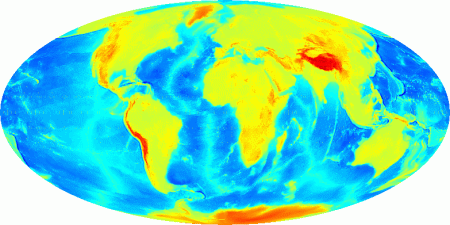
However,I will now show you how important phase information could actually be, if only we could find a good way of exploiting it. Let’s start with a map of the Earth, with the colour representing height of the surface above mean sea level:
sw_world

You can see the major mountain ranges (Andes, Himalayas) quite clearly as red in this picture and note how high Antarctica is…that’s one of the reasons so much astronomy is done there.

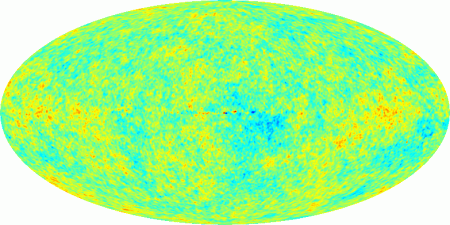
Now, using the same colour scale we have the WMAP data again (in Galactic coordinates).
sw_ilc

The virture of this representation of the map is that it shows how smooth the microwave sky is compared to the surface of the Earth. Note also that you can see a bit of crud in the plane of the Milky Way that serves as a reminder of the difficulty of cleaning the foregrounds out.

Clearly these two maps have completely different power spectra. The Earth is dominated by large features made from long-wavelength modes whereas the CMB sky has relatively more small-scale fuzz.

Now I’m going to play with these maps in the following rather peculiar way. First, I make a spherical harmonic transform of each of them. This gives me two sets of complex numbers, one for the Earth and one for WMAP. Following the usual fashion, I think of these as two sets of amplitudes and two sets of phases. Note that the spherical harmonic transformation preserves all the information in the sky maps, it’s just a different representation.

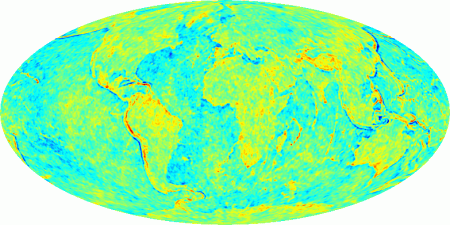
Now what I do is swap the amplitudes and phases for the two maps. First, I take the amplitudes of WMAP and put them with the phases for the Earth. That gives me the spherical harmonic representation of a new data set which I can reveal by doing an inverse spherical transform:
sw_worldphases

This map has exactly the same amplitudes for each mode as the WMAP data and therefore possesses an identical power spectrum to that shown above. Clearly, though, this particular CMB sky is not compatible with the standard cosmological model! Notice that all the strongly localised features such as coastlines appear by virtue of information contained in the phases but absent from the power-spectrum.

To understand this think how sharp features appear in a Fourier transform. A sharp spike at a specific location actually produces a broad spectrum of Fourier modes with different frequencies. These modes have to add in coherently at the location of the spike and cancel out everywhere else, so their phases are strongly correlated. A sea of white noise also has a flat power spectrum but has random phases. The key difference between these two configurations is not revealed by their spectra but by their phases.

Fortunately there is nothing quite as wacky as a picture of the Earth in the real data, but it makes the point that there are more things in Heaven and Earth than can be described in terms of the power spectrum!

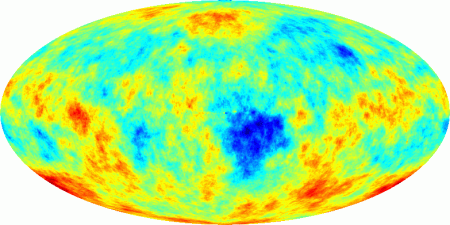
Finally, perhaps in your mind’s eye you might consider what it might look lie to do the reverse experiment: recombine the phases of WMAP with the amplitudes of the Earth.
sw_ilcphases

If the WMAP data are actually Gaussian, then this map is a sort of random-phase realisation of the Earth’s power spectrum. Alternatively you can see that it is the result of running a kind of weird low-pass filter over the WMAP fluctuations. The only striking things it reveals are (i) a big blue hole associated with foreground contamination, (ii) a suspicious excess of red in the galactic plane owing to the same problem, and (iiI) a strong North-South asymmetry arising from the presence of Antarctica.

There’s no great scientific result here, just a proof that spherical harmonic phases are potentially interesting because of the information they contain about strongly localised features

PS. These pictures were made by a former PhD student of mine, Patrick Dineen, who has since quit astrophysics  to work in the financial sector for Winton Capital, which has over the years recruited a number of astronomy and cosmology graduates and also sponsors a Royal Astronomical Society prize. That shows that the skills and knowledge obtained in the seemingly obscure field of cosmological data analysis have applications elsewhere!


Copenhagen Again

Posted in Biographical, The Universe and Stuff with tags , , on August 1, 2017 by telescoper

As you might have inferred from my earlier post, I’m back again in the wonderful city of Copenhagen, as a guest of the Niels Bohr Institute. I’ve been here almost every year since my first visit here way back in the 1980s. I didn’t come here last summer, as I was too busy finishing off my duties at Sussex and relocating back to Cardiff so it’s nice to be back again now. I’m staying in one of the `9 small homes‘ that comprise a hotel near the NBI. I’ve stayed here before though not in my current small home, which is actually a self-contained apartment on the ground floor with its own front door. It’s also got a small kitchen so I can cook for myself when I don’t feel like eating out (like tonight). Incidentally, `hjem’ (the Danish word for `home’) is pronounced exactly as `home’ is pronounced in Geordie (i.e. as `hyem’). I did some shopping earlier this evening and attempted to speak Danish when I paid for my groceries. As always, however, I got a reply in English.

I realised only this morning that it’s a year since I left my previous job. I haven’t done half the things I had hoped to do in the year after stepping down as Head of School, but that’s partly because it took quite a while to get over certain health problems and also because quite a few things have come up that I didn’t anticipate. From what I’m told the old place is doing just fine without me!

Coincidently (?), I have arrived here at the Niels Bohr Institute at precisely the time that there is a delegation here from LIGO and there’s been a lot of serious – but good-natured – discussion of `The Danish Paper‘ that came out some time ago and which questioned some aspects of the data analysis of the first detection of gravitational waves. I think there are still quite a few issues to be resolved between the two groups. Although they do seem to be converging on what’s going on, I don’t think this controversy will be fully concluded until more data are made public, as the currently available time series are not exactly those used in the actual LIGO analysis.

I think this discussion can only be of benefit to the science community in the long run, especially if it encourages LIGO to get more fully into the spirit of open science, by releasing more data for use of researchers outside the consortium.

August, a poem by Viggo Stuckenberg

Posted in Poetry with tags , , , on August 1, 2017 by telescoper

Hr. Preben pusler i Skovens Bryn,
fæster Doner, binder Bær, Bær saa rosenrøde,
bryder et Blad og bøjer en Kvist,
at liflig de Bær kunne gløde.

‘Kramsfugl! Kramsfugl! nu er det Tid!
Falder Havren, synger Segl over alle Agre,
bliver ej større en eneste Blomst,
ej Lundene mere fagre!

Gunild! Gunild! nu gulnes goldt
alle Løfter, al Lokken, al Leg fra Skærsommer!
Viger den Haand, som ikke jeg greb,
og aldrig vi sammen kommer!

Thi længst er leden den lyse Vaar,
levnet Nætter i Mulm, levnet flygtende Fugle!
Den, som ved det, maa sidde kvær
og skogre som gammel Ugle!’

Hr. Preben pusler i Skovens Bryn,
fæster Doner, binder Bær, Bær saa lifligt røde:
‘Kramsfugl! Dig sender jeg hende kvalt
og ler stor Elskov til Døde!’

by Viggo Stuckenberg (1863-1905)


The Beard and Hat-Trick Test

Posted in Beards, Cricket with tags , , , on July 31, 2017 by telescoper

I’ve just arrived where I shall be for the next two weeks (of which more anon), but I couldn’t resist noting today’s remarkable finale of the Third Test between England and South Africa, which ended with Moeen Ali taking the last three wickets in consecutive balls. A hat-trick, no less. Quite a spectacular ending for the 100th Test Match played at the Oval.

I was so excited by Moeen’s performance that I tweeted about it and ended up on the BBC website with this analysis:

Fame at last!

The `inimitable Keith Flett’ didn’t need any encouragement from me to write a blog post pointing out that Moeen is the first England player with a beard ever to take a Test hat-trick.

Incidentally, there were quite a few comments on social media about the timing of Joe Root’s declaration, mainly arguing that he’d waited too long. I certainly wouldn’t have declared unless and until England had a lead of 450+, so thought he got it about right. More importantly, his team won with plenty of time to spare.

It’s been a truly topsy-turvy series so far, with England thumping South Africa at Lord’s and the Oval, but losing heavily at Trent Bridge in between. I wonder what will happen in the final test, at Old Trafford?

Probably it will rain…

They called it Passchendaele

Posted in History, Poetry with tags , , , , on July 31, 2017 by telescoper

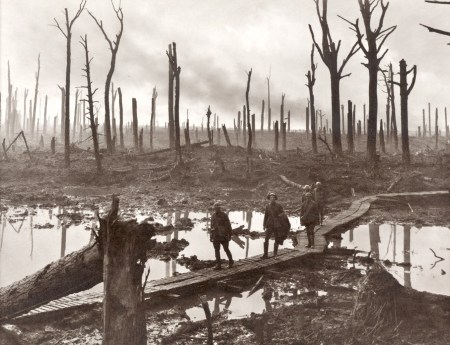
Pass

One hundred years ago today, on 31st July 1917, the Third Battle of Ypres began. The battle, often called the Battle of Passchendaele, staggered on until November with hundreds of thousands of troops killed. The Allied assault on Ypres was ultimately intended to break through the German lines and capture submarine bases on the Belgian coast. That objective was not reached, and territorial gains were limited to just a few miles at terrible cost in suffering and death.

David Lloyd George, Prime Minster at the time, wrote in his memoirs:

Passchendaele was indeed one of the greatest disasters of the war … No soldier of any intelligence now defends this senseless campaign …

Others have argued that the Battle of Passchendaele had the important strategic role of taking pressure of the French army further South, which was so close to breaking point that mutinies were breaking out. Although the casualties on both sides were unsustainable, the German High Command knew that American reinforcements would soon enter the fray, and that if they were to win the War it would have to be with a knockout blow the following year. The German offensive of 1918 made substantial inroads through the Allied lines, even threatening Paris, until it was eventually halted and turned into a full-scale retreat.

Whatever the military outcome of the Battle, there is no question about the scale of the suffering of the troops (many of whom, at this stage of the War, were conscripts). The area in which the action took place was mainly low-lying, with a water table just a couple of feet below the surface. The myriad of small streams ditches, and drainage channels that had been developed over centuries to turn it into farmland, were destroyed by heavy shelling so the soldiers had to contend with heavy mud, often strewn with body parts and deep enough to drown in, as described by Siegfried Sassoon in his poem Memorial Tablet:

Squire nagged and bullied till I went to fight,
(Under Lord Derby’s Scheme). I died in hell—
(They called it Passchendaele). My wound was slight,
And I was hobbling back; and then a shell
Burst slick upon the duck-boards: so I fell
Into the bottomless mud, and lost the light.

At sermon-time, while Squire is in his pew,
He gives my gilded name a thoughtful stare:
For, though low down upon the list, I’m there;
‘In proud and glorious memory’ … that’s my due.
Two bleeding years I fought in France, for Squire:
I suffered anguish that he’s never guessed.
Once I came home on leave: and then went west…
What greater glory could a man desire?

Whenever I read about the terrible events of past wars, the important thing (to me) is not strategy or objectives but the suffering  that had to be endured by ordinary soldiers. It’s important to remember things like Passchendaele to remind ourselves how lucky we are to be living in a time of relative peace. The way the world is heading, however, I worry that may soon be coming to an end. Lest we forget? Far too many people have already forgotten.

P.S. Among those killed in action on the first day of Passchendaele was Welsh poet Hedd Wyn, whom I wrote about here.

P.P.S. The troops shown in the picture above are in fact Australian gunners: the picture was taken in October 1917.


Building Baby Universes

Posted in Books, Talks and Reviews, The Universe and Stuff with tags , on July 29, 2017 by telescoper

I’m going to be off on some travels soon, but before I go I’ll take the opportunity for a spot of gratuitous self-promotion. The next (August) edition of Physics World contains a review by yours truly of the book A Big Bang in a Little Room: The Quest to Create New Universes by Dr Zeeya Merali.

The above illustration accompanies the article but to find out any more you’ll have to read Physics World! 

Euclid’s Flagship Simulation

Posted in Euclid, The Universe and Stuff with tags , , on July 28, 2017 by telescoper


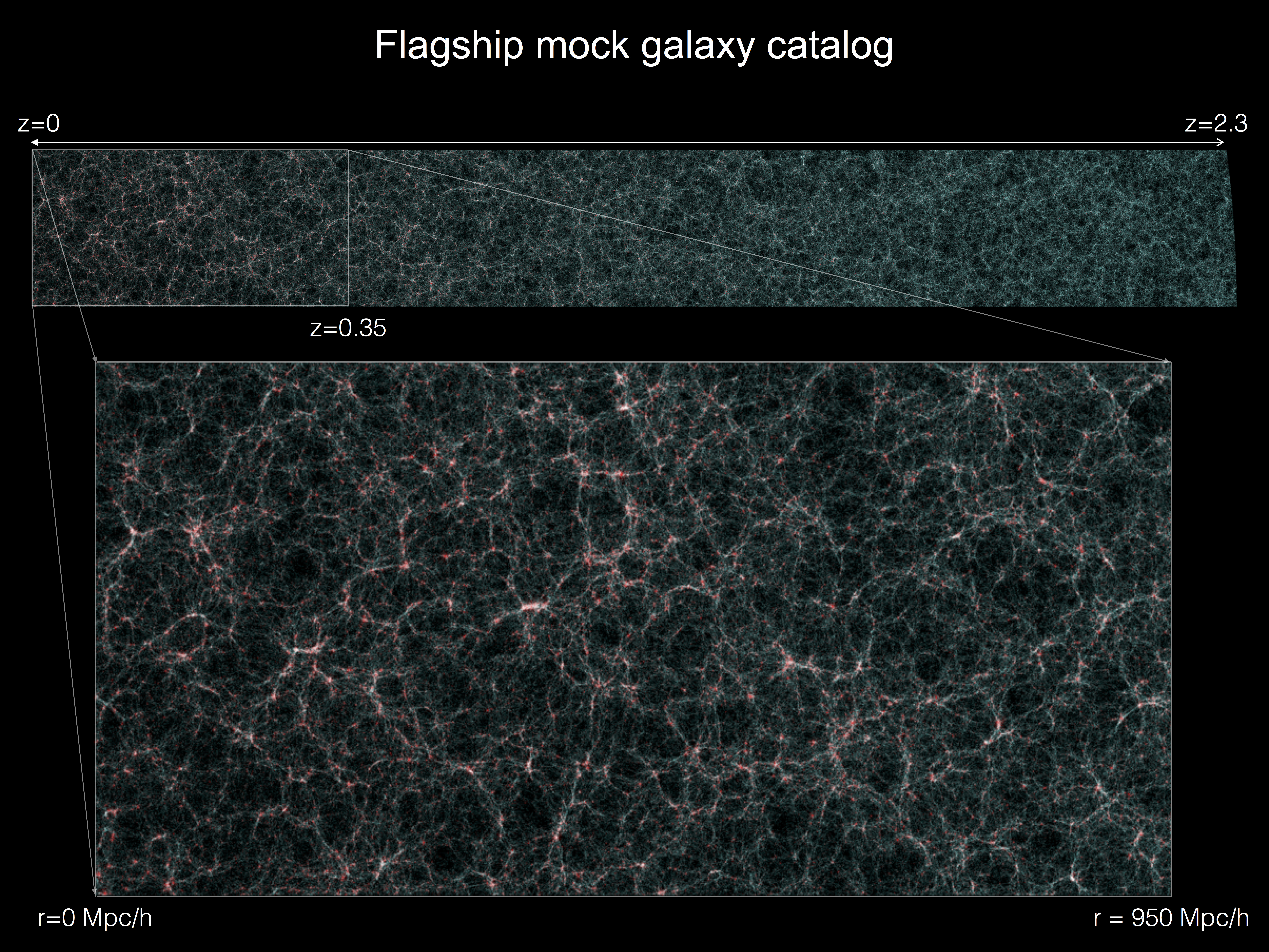
Credit: J. Carretero/P. Tallada/S. Serrano for ICE/PIC/U.Zurich and the Euclid Consortium Cosmological Simulations Science Working Group.

The above image is taken from the world’s largest simulated galaxy catalogue, which has been constructed to help prepare for the  forthcoming Euclid space mission. The image actually shows only a small part of the full Euclid Flagship mock galaxy catalogue, which contains more than 2 thousand million galaxies distributed over the 3-dimension cosmological volume that Euclid will survey. Synthetic galaxies in this simulation mimic with great detail the complex properties that real sources display: ranging from their shapes, colours, luminosities, and emission lines in their spectra, to the gravitational lensing distortions that affect the light emitted by distant galaxies as it travels to us. The simulation is large enough to allow full `light-cone’ effects to be taken into account, as the look-back time to the edge of the Euclid survey volume is long enough for significant evolution to have occurred; according to the standard cosmological model, the time taken for light to travel from redshift z=2.3 to now is about 10.8 billion years, a significant fraction of the age of the Universe.

`Mock’ catalogues like this are needed to plan large observational programmes, whether using space missions or ground-based facilities, and to help prepare the data analysis strategies and tools needed to deal with the real data when it arrives. They can also be used to make excellent images for PR and outreach purposes.

The use of the word `simulation’ always makes me smile. Being a crossword nut I spend far too much time looking in dictionaries but one often finds quite amusing things there. This is how the Oxford English Dictionary defines SIMULATION:

1.

a. The action or practice of simulating, with intent to deceive; false pretence, deceitful profession.

b. Tendency to assume a form resembling that of something else; unconscious imitation.

2. A false assumption or display, a surface resemblance or imitation, of something.

3. The technique of imitating the behaviour of some situation or process (whether economic, military, mechanical, etc.) by means of a suitably analogous situation or apparatus, esp. for the purpose of study or personnel training.

So it’s only the third entry that gives the meaning intended to be conveyed by the usage in the context of cosmological simulations. This is worth bearing in mind if you prefer old-fashioned analytical theory and want to wind up a simulationist!

In football, of course, you can even get sent off for simulation…

The 1967 Sexual Offences Act

Posted in History, LGBTQ+ with tags , , on July 27, 2017 by telescoper

1967 act

Just a short post to note that today is the 50th anniversary of the day that the Sexual Offences Act (1967) received the Royal Assent (27th July 1967). This Act partially decriminalised sex between two male adults provided both were over the age of 21 at the time. I’ve emphasised `partially’ because the number of prosecutions of men for consensual sexual acts actually went up in the years following this law. It was not until 2000 that the Sexual Offences (Amendment) Act 2000 equalised that age of consent at 16 for both homosexual and heterosexual behaviours throughout the United Kingdom. The 1967 Act was problematic in many ways, but it was a start…

CMB Spectral Distortions Revisited

Posted in Biographical, The Universe and Stuff with tags , , , , , , , , , on July 27, 2017 by telescoper

While uploading some bibliographic information for bureaucratic purposes yesterday I noticed that an old paper of mine had recently attracted a number of citations. The paper was written while I was a postdoctoral research fellow in the Astronomy Centre at the University of Sussex in 1990, but not published until 1991 by which time I had moved to Queen Mary College (as it was then called). The citation history of this article is actually quite interesting:

You can see that it was cited a bit immediately after publication, then endured a long spell from 1997 to 2012 in which nobody seemed interested in it, then experienced something of a revival. It currently has a total of about 49 citations, which doesn’t exactly make it a classic in a field which is extremely active, but it’s nice to see it hasn’t been forgotten entirely.

Here is the abstract of the paper:

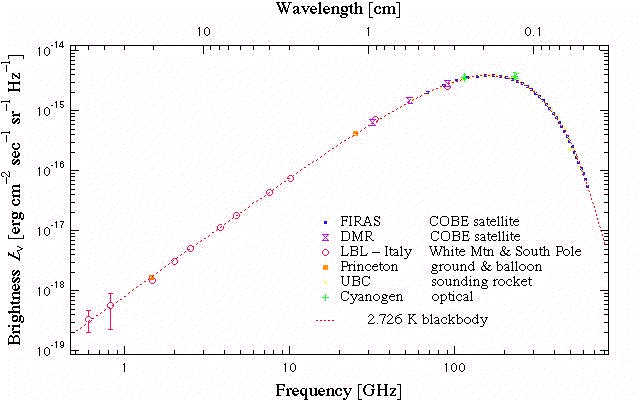
As the abstract makes clear we wrote this paper in response to a measurement of the spectrum of the cosmic microwave background radiation by the FIRAS instrument on the satellite COBE that had demonstrated that it was extremely well fitted by a Planck spectrum, with little room for any deviation away from a perfect black-body shape. Here’s the measured curve from COBE and some other experiments at the time:

The accuracy of the fit allows one to place limits on any process happening in the early Universe that might produce a distortion of the spectrum. There are a number of things that could do this. Any energy released in the early Universe takes time to thermalise, i.e. for the radiation field and the matter to come into thermal equilibrium via Compton scattering, double Compton scattering and Bremsstrahlung. Imperfect thermalisation produces a spectrum which doesn’t quite match the Planck curve.

Two types of distortion are possible, both introduced in classic papers from 1969 and 1970 by Rashid Sunyaev and Ya. B. Zel’dovich. One type is called a y-distortion (which corresponds to photons being shifted from low frequency and the other is called a μ-distortion, which is described by inserting a chemical potential term to the usual Planck formula for the black-body spectrum. Observational limits on both forms of distortion are very tight : |y|<1.5 ×10-5; |μ|<1.5 ×10-5, which places stringent limits on any energy release, including that which would arise from the dissipation of primordial acoustic waves (which is what John and I concentrated on in the paper).

So why did interest in this get revived a few years ago? The answer to that is that advances in relevant technology have now made it possible to think about an experiment that can measure much smaller spectral distortions than has hitherto been possible. A proposal for an experiment, called PIXIE, which includes such a measurement, is described here. Although spectral distortions are only a secondary science goal for PIXIE, it could push down the upper limits quoted above by a factor of 1000 or so, at which level we should expect to see departures from the Planck curve within the standard model, which would be a very important test of basic cosmological theory.

That all depends on whether PIXIE – or something like it – goes ahead.


Par scores in T20 cricket

Posted in Cricket with tags , , on July 26, 2017 by telescoper

So last night Glamorgan won a Natwest T20 Blast match against Gloucestershire by 25 runs having batted first and scored 176 off their 20 overs. Glamorgan are now top of the `South Division’, despite having three games rained off. They play second-placed Surrey on Friday. Weather permitting.

Anyhow, last night when I saw the result I got to wondering what the par score is for a first innings in Twenty20 (i.e. median score for a winning side batting first).  Would you have expected them to win with a score of 176? The answer – and the answers to many other questions – can be found in this interesting post.

P.S. If you can’t be bothered to read the post, the median winning score for men’s T20 matches is about 164 so Glamorgan had a better-than-even chance of winning after their first innings.

Ben Raue's avatarStrike Rate

I haven’t blogged for the last two weeks – partly because life has been busy, but also because I’ve struggled to come up with anything to say that provides particular insights about individual BBL or WBBL matches that are being played. I will return to this, and will continue to post key stats about various matches on the Strike Rate twitter account.

In this post, I’m posting my analysis of ‘par scores’ for T20, and how they vary between the men’s and women’s game, and in different parts of the world. This is useful for understanding what sort of score can be expected in particular conditions.

Par scores are calculated as run rates, which can be converted into total scores by multiplying by 20. This is more useful than raw total scores, since not all innings last for the full 20 overs. When a team wins in the second innings…

View original post 759 more words