Gravity in the Quantum Vacuum

Posted in The Universe and Stuff with tags , , , , , on May 18, 2017 by telescoper

Yeterday I noticed an interesting paper which has been on the arXiv for a few months but which has just been published in Physical Review D and has been highlighted by the Editors of that esteemed journal. The authors are Qingdi Wang, Zhen Zhu and Bill Unruh – all of them from the University of British Columbia in Vancouver.

Here is the abstract:

You can click on the image if it is too small to read. As you will see it suggests that we may have been thinking about the effect of vacuum energy in completely the wrong way in the context of Dark Energy.

It’s a long paper (35 pages) which I haven’t had time to work through completely yet, and I don’t know whether it will stand up. I have to say, though, that I’ve long left that the problem of dark energy will only be solved by a fundamental reappraisal of the underlying physics, rather than adding new fields or other such contrivances.

I’d be interested in comments from people who have read the paper thoroughly. I’m flying back to Blighty this evening so I hope I can study the article more thoroughly on the plane.

R.I.P. Rhodri Morgan (1939-2017)

Posted in Politics with tags , , on May 18, 2017 by telescoper

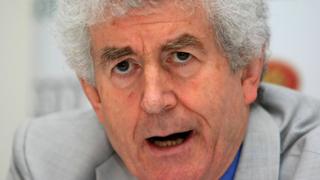
I was very sad this morning to find the news that Rhodri Morgan passed away yesterday at the age of 77. Rhodri Morgan was the first First Minister of Wales (a post he held from 2000 to 2009) and was also Assembly Member for my constituency until 2011. Rhodri Morgan was a hugely important figure in Welsh Labour Party. As  a charismatic leader and capable administrator,  he was extremely  influential  in the campaign for Welsh devolution and  was held in very high regard across the political spectrum.

I was reminded of Rhodri Morgan earlier this week as I realised that  14th May 2009 (i.e. eight years ago on Sunday) the date on which the Planck and Herschel spacecraft were launched. Was that really so long ago?

Rhodri Morgan was still First Minister when he visited the School of Physics & Astronomy at Cardiff University on the day of the launch. He came across as very likeable, down-to-earth and funny. He’ll be missed by a great many people, but most of all by his wife Julie to whom I express my sincere condolences.

Rest in peace, Rhodri Morgan (1939-2017).


International Day Against Homophobia, Transphobia & Biphobia

Posted in History, LGBTQ+ with tags , , , , on May 17, 2017 by telescoper

Today is May 17th, which means that it is International Day Against Homophobia, Transphobia and Biphobia. If you’re wondering why May 17th was chosen, it’s to commemorate May 17th 1990, which is when the World Health Organisation removed homosexuality from its list of “mental illnesses”.


Please remember at although attitudes in the UK are much more enlightened than they were only a few years ago, homophobic violence still happens with distressing frequency and in over 70 countries around the world being gay is still a criminal offence.

Even if you don’t identify yourself as LGBT+ then this should still be an important day for you. Here, for example, is a handy guide produced by Pride in STEM on how to be an ally:

Taking the Biscuit

Posted in Beards, History with tags , on May 17, 2017 by telescoper

During the course of a short perambulation around Bologna this morning I came across this statue of Giuseppe Garibaldi, the famous biscuit manufacturer.

Apologies for the stray light affecting the picture. It was a very sunny morning!

I was subsequently surprised to discover via the interwebs that the Garibaldi biscuit is in fact an English invention, first produced in 1861 and was inspired by a visit to England by Garibaldi in 1854. No doubt it was his impressive beard that made him so popular.

Talked Out

Posted in Biographical with tags , , on May 16, 2017 by telescoper

It has been a busy day. Partly this was because I had to give a talk (of which more in due course) but mostly it was thanks to the kind hospitality of my hosts, particularly Lauro Moscardini, whom I have known for many years. I’m just back to the hotel after an extremely pleasant dinner with Lauro at Trattoria Serghei, which is just a few yards from my hotel. I had Tortelloni Burro e Salvia followed by Coniglio Arrosto, accompanied by a fine Sangiovese, in case you’re interested.

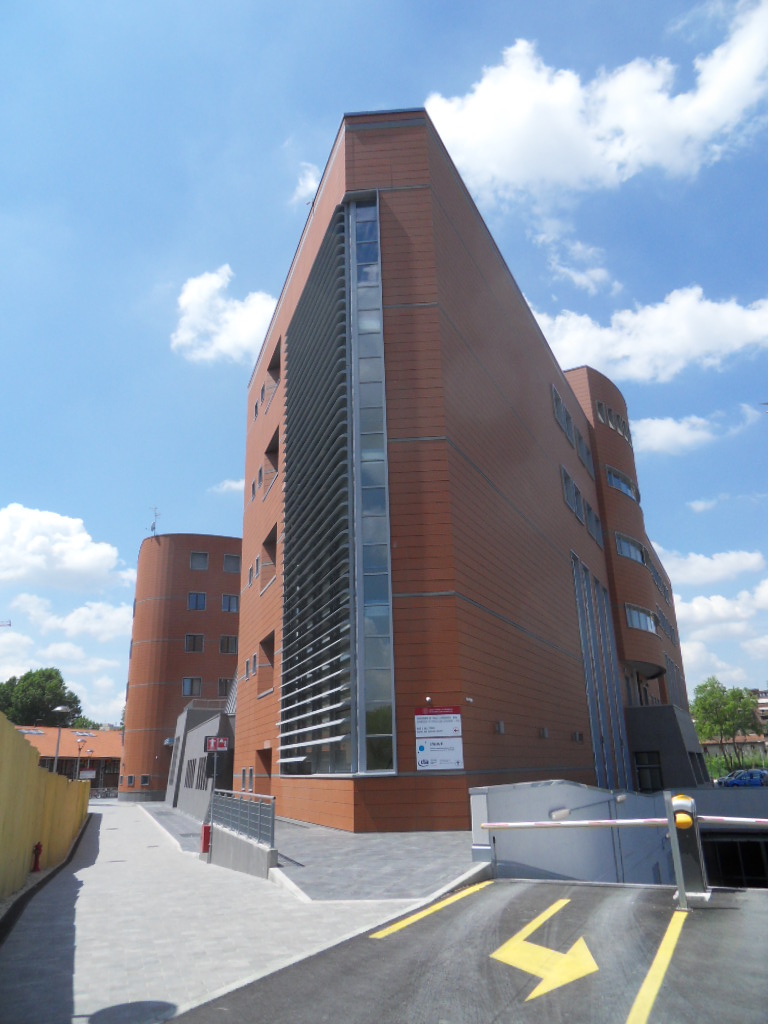
When I got up this morning I soon realised the weather was beautiful so instead of getting the bus to the Observatory I decided would just walk there. It turned out to be a good decision. Despite being rather further than the previous site, it only took me 45 minutes to get there, and that included a stop for a coffee. The building is brand new. So new that it’s not fully occupied, but I managed to find my way to the guest office easily. Impressively, despite the incomplete state of much of the interior, I found the WIFI working perfectly.

Anyway, it has been a busy but very enjoyable day. I’ll say more about what my talk was about when I get back home. I’m doing another one on Thursday on a completely different subject, and will no doubt have a completely different dinner too!

Arrivato a Bologna

Posted in Biographical with tags , , on May 15, 2017 by telescoper

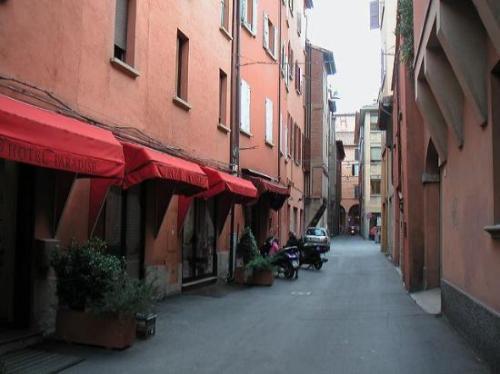
After after a journey consisting of train+bus+plane+bus I’ve made it to my destination. I’m here in Bologna for a few days, giving a couple of talks and hopefully having some useful discussions. They’ve booked me into the Hotel Paradise shown above. The title may be a little overstated but it’s a nice friendly little place right in the centre of the city.

Tomorrow I shall be visiting the Osservatorio Astronomico di Bologna, which is part of the Istituto Nazionale de Astrofisica. I’ve been to Bologna before, but the astronomers have moved to a new building which is further out of town than the old one, so it will be a bit of an adventure trying to find it. No doubt I’ll demonstrate yet again my ability to get on the wrong bus…

Anyway, that’s all for now. It is necessary for me to eat a pizza. I hope to have the chance to take a few pictures while I’m here, but that can wait!

A New Measurement of the Expansion Rate of the Universe – Adam Riess

Posted in The Universe and Stuff with tags , , on May 14, 2017 by telescoper

Here’s a nice talk by Nobel Laureate Adam Riess delivered on May 11th at the Harvard-Smithsonian Centre Center for Astrophysics and is now available for you to watch at your leisure. It’s an hour long, but well worth watching if you’re interested in cosmology in general and in apparent tension between different determinations of the Hubble constant in particular.

Here’s the description of the talk, which is introduced first by Bach and Daniel Eisenstein:

The Hubble constant remains one of the most important parameters in the cosmological model, setting the size and age scales of the Universe. Present uncertainties in the cosmological model including the nature of dark energy, the properties of neutrinos and the scale of departures from flat geometry can be constrained by measurements of the Hubble constant made to higher precision than was possible with the first generations of Hubble Telescope instruments. A streamlined distance ladder constructed from infrared observations of Cepheids and type Ia supernovae with ruthless attention paid to systematics now provide 2.4% precision and offer the means to do much better. By steadily improving the precision and accuracy of the Hubble constant, we now see evidence for significant deviations from the standard model, referred to as LambdaCDM, and thus the exciting chance, if true, of discovering new fundamental physics such as exotic dark energy, a new relativistic particle, or a small curvature to name a few possibilities. I will review recent and expected progress.

And here’s the talk in full.

After watching the video you be interested in voting in my totally unscientific poll on the matter:

Eye Tech

Posted in Uncategorized on May 13, 2017 by telescoper

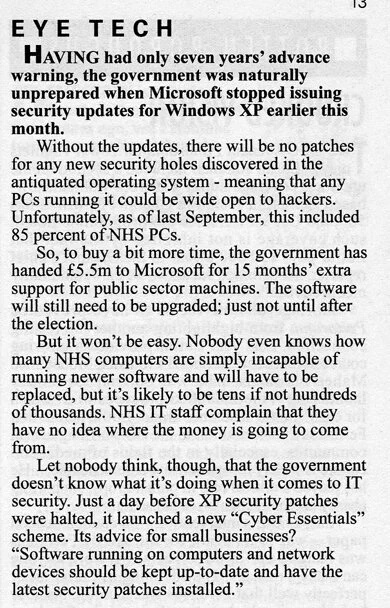
Along with Sid and Doris Bonkers I’m a subscriber to Private Eye magazine, from which publication (18/4/2014) I offer you this: 

No further comment necessary.

Spring Rain

Posted in Biographical, Poetry on May 12, 2017 by telescoper

This poem accurately describes what happened to me walking home yesterday evening…

The storm came up so very quick
It couldn’t have been quicker.
I should have brought my hat along,
I should have brought my slicker.

My hair is wet, my feet are wet,
I couldn’t be much wetter.
I fell into a river once
But this is even better!

by Marchette Chute (1909-1994)

Inflationary Perturbation

Posted in The Universe and Stuff with tags , , , , , , on May 11, 2017 by telescoper

I thought I’d just draw the collective attention of my vast readership (Sid and Doris Bonkers) to a bit of a row that has broken out between two groups of cosmologists concerning the theory of cosmic inflation.

This kerfuffle started with an article entitled Pop Goes The Universe in Scientific American by Anna Ijjas, Paul Steinhardt, and Avi Loeb that (among other things) asserts that inflation “cannot be evaluated using the scientific method” and is consequently not a scientific theory. Another group of cosmologists (including Alan Guth, the author of the paper that launched the inflationay universe model) penned a response that was signed by a long list of leading scientists, thirty-three of them to be precise. The original authors then issued a response to the response. Sean Carroll (who was one of those who signed the response the original paper has written a nice blog post summarizing the points of disagreement.

I’m not going to attempt to post a detailed response to every issue raised in this correspondence, but I will make a few points.

First, I think it’s important to realize that there isn’t a single simple definition of `the scientific method’: there are lots of scientific methods, each of which may employed to a greater or lesser degree in different disciplines. Most scientists would probably agree that some notion of `testability’ has to be included if a theory is said to be scientific, but it seems to me that testability is not an absolute, in the sense that not all predictions of a theory need to be observable for the theory as a whole to be testable to a degree. A theory might predict the existence of a phenomenon A that is impossible for all practical purposes to observe, but if that theory also has another necessary consequence B that is observed then the theory does not deserve to be dismissed as unscientific.

One aspect of modern inflationary theory that is singled out for criticism has been the incorporation of the idea of a multiverse. I have to make the confession here that I don’t like the concept of the multiverse, nor do I like the way it has become fashionably mainstream in the field. I’ve never seen it as a necessary (or even useful) addition to inflation theory. However, suppose you have a model of inflation that leads to something like Linde’s version of the multiverse. Causally disconnected domains of this multiverse may indeed not be observable, but if the theory has other necessary implications for things we can observe in our local universe then it is testable to a degree.

My position (such as it is) is that I like the idea of inflation, largely because: (a) it’s very neat; and (b) it provides a simple mechanism for generating fluctuations of the right form to account for so many of the observable properties of our universe, especially the fluctuations we measure in the cosmic microwave background seen by Planck:

These observations don’t prove that inflation is right, nor do they narrow down the field of possible inflationary models very much, but they do seem to be in accord with the predictions of the simplest versions of the theory. Whether that remains true for planned and future observations remains to be seen. Should someone come up with a different theory that matches existing data and can account for something in future data that inflation can’t then I’m sure cosmologists would shift allegiance. The thing is we don’t have such an alternative at the moment. Inflation is the preferred theory, partly for want of compelling alternatives and partly because we need more data to test its predictions.

That said, there are one or two points on which I agree with Ijjas, Steinhardt and Loeb. In particular there has developed what I consider to be a pathological industry dreaming up countless variations of the basic inflation model. There is now a bewildering variety of such models, few of which have any physical motivation whatsoever. I think this is a particularly a grotesque manifestation of the absurd way we measure scientific `success’ in terms of counting publications and how that has driven unhealthy research practice.

No doubt many of you disagree or wish to comment for other reasons either on the original communications or on my comments. Please feel free to offer your thoughts through the box below!