The Arctic Convoys

Posted in History with tags , on September 29, 2016 by telescoper

Today also marks a far less happy anniversary. On this day 75 years ago, on 29th September 1941, the Allied Convoy PQ 1 set sail from Hvalfjörður in Iceland; it arrived in Arkhangelsk in Northern Russia on October 11. This wasn’t the first of the Arctic convoys – that was Operation Dervish,  which set out in August 1941 , but it was the first of the most famous sequence, numbered from PQ 1 to PQ 18. The PQ sequence was terminated in September 1942, but convoys resumed in 1943 with a different numbering system (JW) for the duration of the Second World War. For every PQ convoy there was also a QP convoy making the return journey; the counterpart of the JW sequence was RA.

The Arctic convoys carried military supplies (including tanks and aircraft) to the Soviet Union after Germany invaded in the summer of 1941. Their purpose was largely political – to demonstrate the willingness of the Allies to support the Soviet Union, especially before before a second front could be opened.
Arctic Convoy

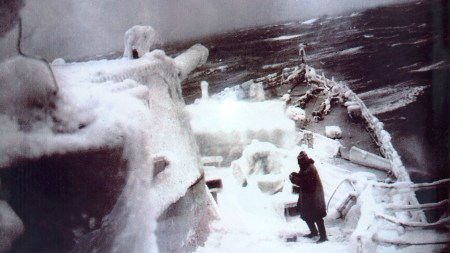
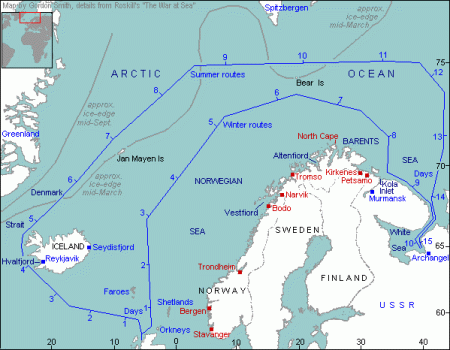
The reality of the Arctic convoys was unimaginably grim. Slow-moving merchant ships had to run the gauntlet of German U-Boats and aircraft. During the summer, when the Arctic ice retreated, the convoys took a longer route but the long daylight hours of an Arctic summer made for an exhausting journey with the constant threat of air attack. In the winter the route was shorter, but made in terrible weather conditions of biting cold and ferocious storms.
ww2mr110arctic

The map is taken from this site, which also gives detailed information about each convoy.

As it happens, one of my teachers at school (Mr Luke, who taught Latin), who was also an officer in the Royal Navy Reserve, served on Royal Navy escort vessel in some of the Arctic convoys in 1941.  I was interested in naval history when I was a teenager and when he told me he had first-hand experience of the Arctic convoys I asked him to tell me more. He talked about the bitter cold but about everything else he refused to speak, his eyes filling with tears. I didn’t such things understand then, I was too young, but later I saw that it was less that he wouldn’t talk about it, more that he couldn’t. Terrible experiences leave very deep scars on the survivors.

The most infamous convoy in the PQ series was PQ 17 which sailed on June 27 1942 from Reykjavik. Rumours that the German battleship Tirpitz had left its berth in Northern Norway to intercept the convoy led to the Admiralty issuing an order for the escort to withdraw and for the convoy to disperse, each vessel to make its way on its own to its destination. The unprotected merchant ships were set upon by planes and submarines, and of the 35 that had left Reykjavik, 24 were sunk. It was a catastrophe. Just a year earlier, Convoy PQ 1 had arrived at its destination unscathed.

There is a project under way to set up a museum as a lasting memorial to the brave men who served during the Arctic convoys. I think it’s well worth supporting. Although the 75th anniversary of the arrival of Dervish was commemorated earlier this year, the courage and sacrifice of those who served in this theatre is not sufficiently recognised .


Happy 70th Birthday to the “Third Programme”!

Posted in Jazz, Music, Opera, Uncategorized with tags , on September 29, 2016 by telescoper

I’ve just got time for a quick post-prandial post to mark the fact that 70 years ago today, on September 29th 1946, the British Broadcasting Corporation (BBC) made its first radio broadcast on what was then called The BBC Third Programme. The channel changed its name in 1970 to BBC Radio 3, but I’m just about old enough to remember a time when it was called the Third Programme; I was only 6 when it changed.

radio-times

It was a bold idea to launch a channel devoted to the arts in the depths of post-War austerity and it was perceived by some at the time as being “elitist”. I think some people probably think that of the current Radio 3 too. I don’t see it that way at all. Culture enriches us all, regardless of our background or education, if only we are given access to it. You don’t have to like classical music or opera or jazz, but you can only make your mind up if you have the chance to listen to it and decide for yourself.

My own relationship with Radio 3 started by accident at some point during the 1990s while I was living in London. I was used to listening to the Today programme on Radio 4 when I woke up, but one morning when my alarm switched on it was playing classical music. It turned out that there was a strike of BBC news staff so they couldn’t broadcast Today and had instead put Radio 3 on the Radio 4 frequency. I very much enjoyed it to the extent that when the strike was over and Radio 4 reappeared, I re-tuned my receiver to Radio 3. I’ve stayed with it ever since. I can’t bear the Today programme at all, in fact; almost everyone on it makes me angry, which is no way to start the day.

Over the years there have been some changes to Radio 3 that I don’t care for very much – I think there’s a bit too much chatter and too many gimmicks these days (and they should leave that to Classic FM) – but I listen most days, not only in the morning but also in the evening,  especially to the live concert performances every night during the week. Many of these concerts feature standard classical repertoire, but I particularly appreciate the number of performances of new music or otherwise unfamiliar pieces.

I also enjoy Words and Music, which is on Sunday afternoons and Opera on 3, which includes some fantastic performances Live from the Metropolitan Opera in New York, and which is usually on Saturday evenings. And of course the various Jazz on 3 programmes: Jazz Record Requests, Jazz Line-up, Geoffrey Smith’s Jazz, etc.

It’s not the just the music, though. I think BBC Radio 3 has a very special group of presenters who are not only friendly and pleasant to listen to, but also very knowledgeable about the music. They also have some wonderful names: Petroc Trelawny, Clemency Burton-Hill, and Sara Mohr-Pietsch, to name but a few. There’s also a newsreader whose name I thought, when I first heard it, was Porn Savage.

I feel I’ve found out about so many things through listening to Radio 3, but there’s much more to my love-affair with this channel than that. Some years ago I was quite ill, and among other things suffering very badly from insomnia. Through the Night brought me relief in the form a continuous stream of wonderful music during many long sleepless nights.

I wish everyone at BBC Radio 3 a very happy 70th birthday. Long may you broadcast!


Relocation, Relocation, Relocation

Posted in Biographical, Uncategorized with tags , on September 28, 2016 by telescoper

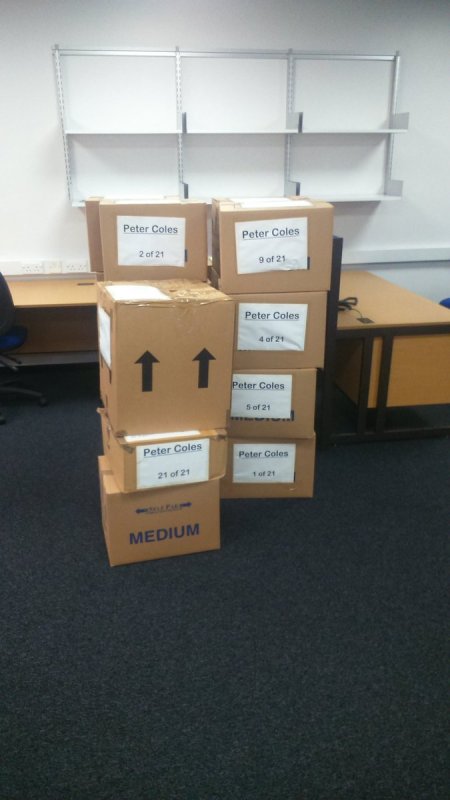
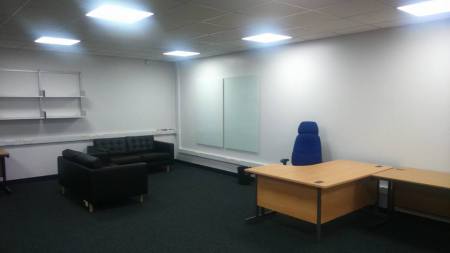
It seems my relocation to Cardiff is now more-or-less complete. The boxes of stuff from my old office at the University of Sussex arrived on Monday and I’ve been gradually stacking the books on the shelves in the rather large office to which I’ve been assigned:

relocation

In fact the removals people caught me on the hop, as they said they would phone me about an hour before they were due to arrive but didn’t do so. I was quite surprised to see all the boxes already there when I came in on Monday!

I was planning to have all this delivered a while ago to my house, because I didn’t think I was going to be given an office big enough to accommodate much of it. But then I had to delay the removal because my visit to hospital was put back so I wouldn’t have been able to receive it. Then I found out I had plenty of space at the University so I decided to have it all moved here.


office

I’ll be sharing this space with other members of the Data Innovation Research Institute, but for the time being I’m here on my own. The books make it look a bit more “lived-in” than it did when I arrived, though the mini-bar still hasn’t arrived yet.

It’s actually about four years since I was appointed to my previous job at Sussex; I moved there from Cardiff in early 2013. It’s a bit strange being back. I didn’t imagine when I started at Sussex that I would be returning relatively soon, but then I didn’t imagine a lot of the things that would lead to my resignation. From what I’ve heard, many of those things have been getting even worse since I left. I think I’ll keep a discussion of all that to myself, though, at least until I write my memoirs!


Formation of black holes in the dark [HEAP]

Posted in The Universe and Stuff with tags , on September 28, 2016 by telescoper

Given the title of my website I could hardly resist reblogging this arXiver post. I’m not an expert on Black Hole (BH) formation, so would be interested to hear opinions on how plausible is this idea that massive BHs might form via implosion rather than following a Supernova explosion.

arxiver's avatararXiver

http://arxiv.org/abs/1609.08411

A binary black hole (BBH) with components of 30-40 solar masses as the source of gravitational waves GW150914 can be formed from a relatively isolated binary of massive stars if both BHs are formed by implosion, namely, by complete or almost complete collapse of massive stars with no energetic SNe accompanied by a sudden mass loss that would significantly reduce the mass of the compact objects, and in most cases unbind the binary system. BBHs can also be formed by dynamical interactions in globular clusters, if the BHs are formed with no energetic SNe that would kick the BHs out from the cluster before BBH formation. Besides, if BHs of ~10 solar masses as in the source GW151226 are formed by implosion, the formation of BBHs would be prolific, and their fusion would make an important contribution to a stochastic gravitational wave background. Theoretical models set mass ranges for…

View original post 183 more words

Aurora over Reykjavik

Posted in Uncategorized with tags , on September 28, 2016 by telescoper

If you had been in Reykjavik on Sunday evening, 25th September 2016, this is what you would have seen:

Credit: Sævar Helgi Bragason & Snorri Þór Tryggvason.

Music by Wolfgang Amadeus Mozart (2nd Movement, Clarinet Concerto in A major K622).


The Possible Plumes of Europa

Posted in The Universe and Stuff with tags , , , , , , , on September 27, 2016 by telescoper

I was too busy yesterday to write a post about the latest hot news from the NASA Hubble Space Telescope, so here’s a quick catch-up.

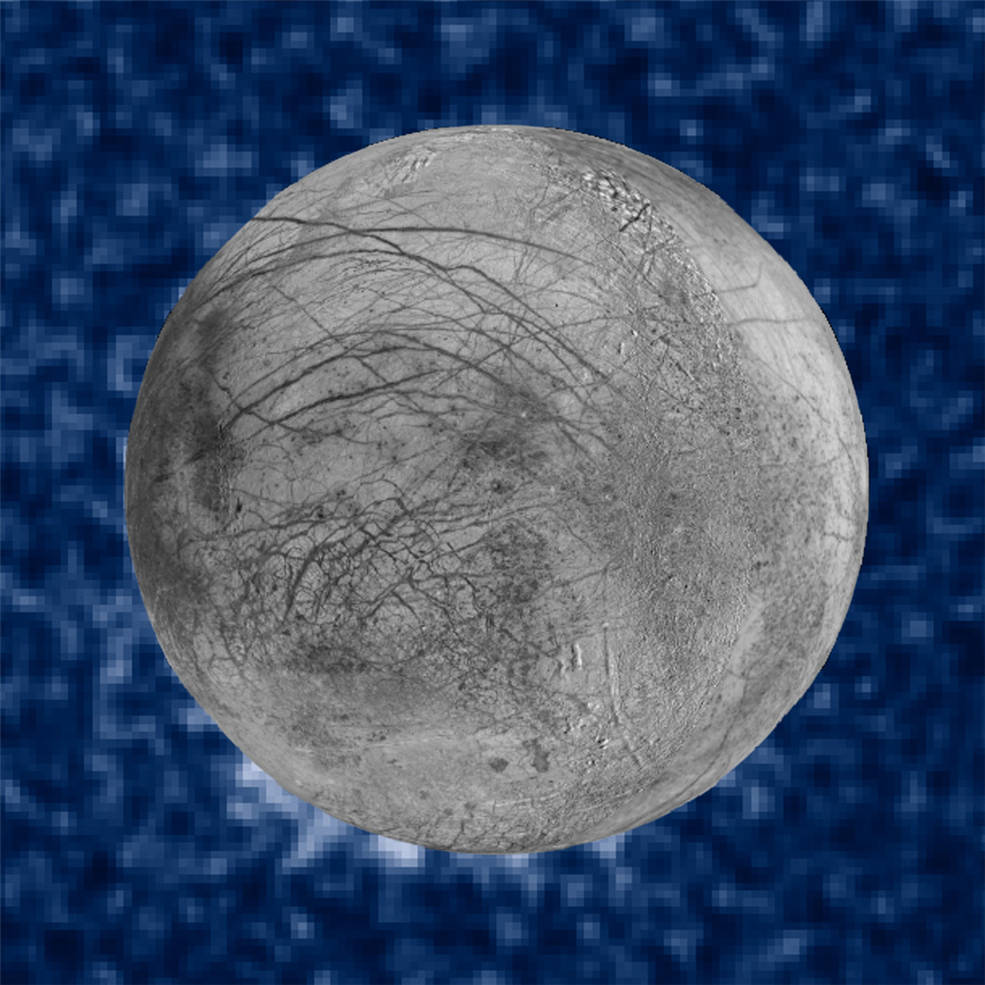
It seems that Europa, the smallest of the four Galilean moons of Jupiter, may from time to time be releasing “plumes” of water vapour. It has long been speculated that there might be large quantities of liquid water under Europa’s extremely smooth icy crust. Here’s a picture of possible plumes (to the bottom left of the image) in which a high-resolution picture of the surface of Europa has been superimposed.

europa

Picture Credits: NASA/ESA/W. Sparks (STScI)/USGS Astrogeology Science Center

There’s also short video explaining the possible discovery here.

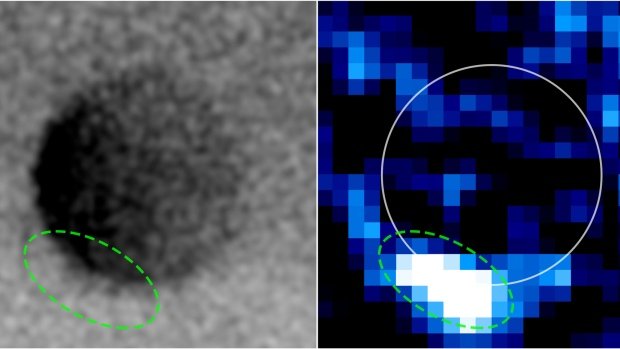
It’s not obvious at first sight that features like that shown above are caused by water erupting through Europa’s surface. On the face of it they could, for example, be caused by the impact of a smaller body. However,  long-term observations of this phenomenon suggest out-gassing is much more likely.  The Hubble Space Telescope’s Imaging Spectrograph was used to study what are essentially Aurorae powered by Jupiter’s strong magnetic field in which the presence of excited states of hydrogen and oxygen provide evidence for the disintegration of water molecules through interaction with electrons in this highly energetic environment. The images were taken when Europa was in front of Jupiter so they are seen were seen in silhouette.

There is also evidence that these appearance of these plumes is periodic, and that they are more likely to occur when Europa is further from Jupiter than when it is closer. A plausible theory is that water is released from cracks in Europa’s surface which open and close owing to a combination of tidal gravitational and magnetic effects.

I wouldn’t say this was definite proof of the water interpretation. These observations push the capability of the Hubble Space Telescope to the limit because the features are so faint. For information here’s what the raw image looks like (left)  and with enhanced contrast (right):

raw_image


Verification of these results through independent means is clearly an important priority, though likely to prove challenging. The plume interpretation is possible, but whether it is yet probable I couldn’t say!


My First Contribution to the Scientific Literature.

Posted in Biographical, The Universe and Stuff on September 26, 2016 by telescoper

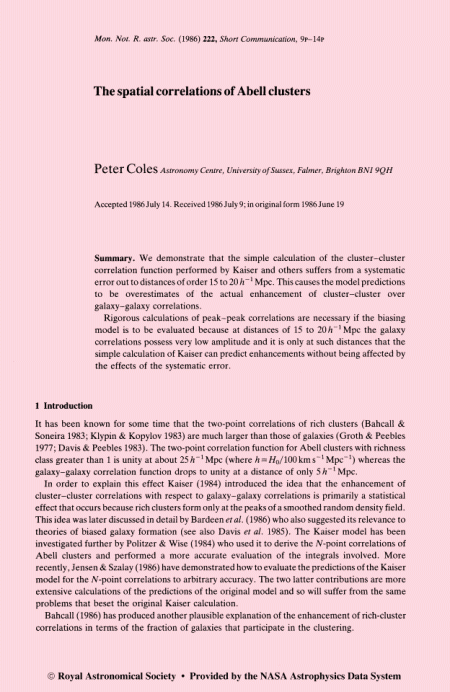
I suddenly realized yesterday that I had forgotten to mark the important anniversary of an event that had immense impact on the field of cosmology. On 15th September 1986, just over thirty years ago, my first ever scientific paper was released into the public domain.

Here is the front page:

mnras_paper

This was before the days of arXiv so there isn’t a copy on the preprint server, but you can access the whole article here on NASA/ADS.

I know it’s a shitty little paper, but you have to start somewhere! I’m particularly sad that, looking back, it reads as if I meant to be very critical of the Kaiser (1984) paper that inspired it. I still think that was a brilliant paper because it was based on a very original idea that proved to be enormously influential. The only point I was really making was that a full calculation of the size of the effect Nick Kaiser had correctly identified was actually quite hard, and his simple approximation was of limited quantitative usefulness. The idea was most definitely right, however.

I was just a year into my PhD  DPhil when this paper came out, and it wasn’t actually on what was meant to be the subject of my thesis work (which was the cosmic microwave background), although the material was related. My original version of this paper had my supervisor’s name on it, but he removed his name from the draft (as well as making a huge number of improvements to the text). At the time I naturally assumed that he took his name off because he didn’t want to be associated with such an insignificant paper, but I later realized he was just being generous. It was very good for me to have a sole-author paper very early on. I’ve taken that lesson to heart and have never insisted – like some supervisors do – in putting my name on my students’ work.

Seeing this again after such a long time brought back memories of the tedious job of making and distributing hard copies of preprints when I submitted the paper and sending them by snail mail to prominent individuals and institutions. Everyone did that in those days as email was too limited to send large papers. Nowadays we just shove our papers on the arXiv, complete with fancy graphics, and save ourselves a lot of time and effort.

I was actually surprised that quite a few recipients of my magnum opus were kind enough to respond in writing. In particular I got a nice letter from Dick Bond which began by referring to my “anti-Kaiser” preprint, which made me think he was going to have a go at me, but went on to say that he found my paper interesting and that my conclusions were correct. I was chuffed by that letter as I admired Dick Bond enormously (and still do).

Anyway, over the intervening 30 years this paper has received the princely total of 22 citations -and it hasn’t been cited at all since 2000 – so its scientific impact hardly been earth-shattering. The field has moved on quickly and left this little relic far behind. However, there is one citation I am proud of.

The great Russian scientist Yacob Borisovich Zel’dovich passed away in 1987. I was a graduate student at that time and had never had the opportunity to meet him. If I had done so I’m sure I would have found him fascinating and intimidating in equal measure, as I admired his work enormously as did everyone I knew in the field of cosmology. Anyway, a couple of years after his death a review paper written by himself and Sergei Shandarin was published, along with the note:

The Russian version of this review was finished in the summer of 1987. By the tragic death of Ya. B.Zeldovich on December 2, 1987, about four-fifths of the paper had been translated into English. Professor Zeldovich would have been 75 years old on March 8, 1989 and was vivid and creative until his last day. The theory of the structure of the universe was one of his favorite subjects, to which he made many note-worthy contributions over the last 20 years.

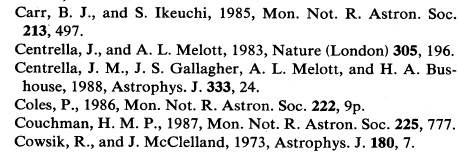
As one does if one is vain I looked down the reference list to see if any of my papers were cited. I’d only published the one paper before Zel’dovich died so my hopes weren’t high. As it happens, though, my very first paper (Coles 1986) was there in the list:

reference

Sonnet No. 73

Posted in Poetry with tags , on September 24, 2016 by telescoper

That time of year thou may’st in me behold 
When yellow leaves, or none, or few, do hang
Upon those boughs which shake against the cold, 
Bare ruin’d choirs, where late the sweet birds sang. 
In me thou see’st the twilight of such day, 
As after sunset fadeth in the west, 
Which by-and-by black night doth take away,
Death’s second self, that seals up all in rest. 
In me thou see’st the glowing of such fire 
That on the ashes of his youth doth lie, 
As the death-bed whereon it must expire 
Consum’d with that which it was nourish’d by. 
   This thou perceivest, which makes thy love more strong,
   To love that well which thou must leave ere long.

by William Shakespeare (1564-1616)

The Worthless University Rankings

Posted in Bad Statistics, Education with tags , , , on September 23, 2016 by telescoper

The Times Higher World University Rankings, which were released this weekk. The main table can be found here and the methodology used to concoct them here.

Here I wish to reiterate the objection I made last year to the way these tables are manipulated year on year to create an artificial “churn” that renders them unreliable and impossible to interpret in an objective way. In other words, they’re worthless. This year, editor Phil Baty has written an article entitled Standing still is not an option in which he makes a statement that “the overall rankings methodology is the same as last year”. Actually it isn’t. In the page on methodology you will find this:

In 2015-16, we excluded papers with more than 1,000 authors because they were having a disproportionate impact on the citation scores of a small number of universities. This year, we have designed a method for reincorporating these papers. Working with Elsevier, we have developed a new fractional counting approach that ensures that all universities where academics are authors of these papers will receive at least 5 per cent of the value of the paper, and where those that provide the most contributors to the paper receive a proportionately larger contribution.

So the methodology just isn’t “the same as last year”. In fact every year that I’ve seen these rankings there’s been some change in methodology. The change above at least attempts to improve on the absurd decision taken last year to eliminate from the citation count any papers arising from large collaborations. In my view, membership of large world-wide collaborations is in itself an indicator of international research excellence, and such papers should if anything be given greater not lesser weight. But whether you agree with the motivation for the change or not is beside the point.

The real question is how can we be sure that any change in league table position for an institution from year to year are is caused by methodological tweaks rather than changes in “performance”, i.e. not by changes in the metrics but by changes in the way they are combined? Would you trust the outcome of a medical trial in which the response of two groups of patients (e.g. one given medication and the other placebo) were assessed with two different measurement techniques?

There is an obvious and easy way to test for the size of this effect, which is to construct a parallel set of league tables, with this year’s input data but last year’s methodology, which would make it easy to isolate changes in methodology from changes in the performance indicators. The Times Higher – along with other purveyors of similar statistical twaddle – refuses to do this. No scientifically literate person would accept the result of this kind of study unless the systematic effects can be shown to be under control. There is a very easy way for the Times Higher to address this question: all they need to do is publish a set of league tables using, say, the 2015/16 methodology and the 2016/17 data, for comparison with those constructed using this year’s methodology on the 2016/17 data. Any differences between these two tables will give a clear indication of the reliability (or otherwise) of the rankings.

I challenged the Times Higher to do this last year, and they refused. You can draw your own conclusions about why.

End of Summer, Start of Autumn

Posted in Biographical, Cricket with tags , , , on September 22, 2016 by telescoper

It’s a lovely warm sunny day in Cardiff today, but it is nevertheless the end of summer. The autumnal equinox came and went today (22nd September) at 14.21 Universal Time (that’s 15.21 British Summer Time), so from now on it’s all downhill (in that the Subsolar point has just crossed the equator on the southward journey it began at the Summer Solstice).

Many people adopt the autumnal equinox as the official start of autumn, but I go for an alternative criterion: summer is over when the County Championship is over. It turns out that, at least for Glamorgan, that coincided very closely to the equinox. Having bowled out Leicestershire for a paltry 96 at Grace Road in the first innings of their final Division 2 match, they went on to establish a handy first-innings lead of 103. They were then set a modest second-innings target of 181 to win. Unfortunately, their batting frailties were once again cruelly exposed and they collapsed from 144 for 4 to 154 all out and lost by 26 runs. That abject batting display sums up their season really.

Meanwhile, in Division 1 of the Championship, Middlesex are playing Yorkshire at Lord’s, a match whose outcome will determine who wins the Championship. Middlesex only need to draw to be champions, but as I write they’ve just lost an early wicket in their second innings, with Yorkshire having a first-innings lead of 120, so it’s by no means out of the question that Yorkshire might win and be champions again.

Another sign that summer is over is that the new cohort of students has arrived. This being “Freshers’ Week” there have been numerous events arranged to introduce them to various aspects of university life. Lectures proper being in Monday, when the Autumn Semester begins in earnest. I don’t have any teaching until the Spring.

This time of year always reminds me when I left home to go to University, as thousands of fledgling students have just done. I went through this rite of passage 34 years ago, getting on a train at Newcastle Central station with my bags of books and clothes. I said goodbye to my parents there. There was never any question of them taking me in the car all the way to Cambridge. It wasn’t practical and I wouldn’t have wanted them to do it anyway. After changing from the Inter City at Peterborough onto a local train, me and my luggage trundled through the flatness of East Anglia until it reached Cambridge.

I don’t remember much about the actual journey, but I must have felt a mixture of fear and excitement. Nobody in my family had ever been to University before, let alone to Cambridge. Come to think of it, nobody from my family has done so since either. I was a bit worried about whether the course I would take in Natural Sciences would turn out to be very difficult, but I think my main concern was how I would fit in generally.

I had been working between leaving school and starting my undergraduate course, so I had some money in the bank and I was also to receive a full grant. I wasn’t really worried about cash. But I hadn’t come from a posh family and didn’t really know the form. I didn’t have much experience of life outside the North East either. I’d been to London only once before going to Cambridge, and had never been abroad.

I didn’t have any posh clothes, a deficiency I thought would mark me as an outsider. I had always been grateful for having to wear a school uniform (which was bought with vouchers from the Council) because it meant that I dressed the same as the other kids at School, most of whom came from much wealthier families. But this turned out not to matter at all. Regardless of their family background, students were generally a mixture of shabby and fashionable, like they are today. Physics students in particular didn’t even bother with the fashionable bit. Although I didn’t have a proper dinner jacket for the Matriculation Dinner, held for all the new undergraduates, nobody said anything about my dark suit which I was told would be acceptable as long as it was a “lounge suit”. Whatever that is.

Taking a taxi from Cambridge station, I finally arrived at Magdalene College. I waited outside, a bundle of nerves, before entering the Porter’s Lodge and starting my life as a student. My name was found and ticked off and a key issued for my room in the Lutyens building. It turned out to be a large room, with a kind of screen that could be pulled across to divide the room into two, although I never actually used this contraption. There was a single bed and a kind of cupboard containing a sink and a mirror in the bit that could be hidden by the screen. The rest of the room contained a sofa, a table, a desk, and various chairs, all of them quite old but solidly made. Outside my  room, on the landing, was the gyp room, a kind of small kitchen, where I was to make countless cups of tea over the following months, although I never actually cooked anything there.

I struggled in with my bags and sat on the bed. It wasn’t at all like I had imagined. I realised that no amount of imagining would ever really have prepared me for what was going to happen at University.

I  stared at my luggage. I suddenly felt like I had landed on a strange island, and couldn’t remember why I had gone there or what I was supposed to be doing.

After 34 years you get used to that feeling…