A Bridge Question

Posted in Uncategorized with tags , on April 3, 2016 by telescoper

image

Catching up on all the important journals after a short holiday I found the above deal in the Bridge column of The Oldie.

I’m not sure I would have the courage to bid to 7NT as South – 7♦ seems a more likely contract – but in the game described that’s what happened.

West led the 8♦, which in my view plays directly into South’s hands. Declarer already has 12 tricks guaranteed, and the 13th needed for a Grand Slam comes easily if West holds the Q♣, which is indeed the case. However, South didn’t even need the club finesse to succeed in taking all 13 because East discarded two clubs as South played off the obvious Diamond and Spade winners, so the Queen fell to either the A♣ or the K♣ on a club lead.

My question, though, as a mediocre player, is why did West lead a diamond?  South had opened with 1♦, and North had jumped to 3♦  before South’s slam try with 4NT (Blackwood). Against 7♦ West’s would have been a standard defensive lead of a trump, but in No Trumps surely it is better here to follow convention and lead the 4th highest of the longest suit, ie the 8♥? South would then have to play the Ace from dummy, which at least destroys one line of communication as the A♦ can no longer provide an entry to dummy.

I think Declarer still makes the contract but my question is, against this lead, does South have to try the club finesse?

Wrote for Luck

Posted in Uncategorized on April 1, 2016 by telescoper

Some interesting comments on frequencies in the National Lottery. I stopped playing when it went up to £2. I figured a pound wasn’t too high a price for a small frisson of excitement when the draw was taking place, but two pounds was too much…

quantixed's avatarquantixed

Fans of probability love random processes. And lotteries are a great example of random number generation.

The UK National Lottery ran in one format from 19/11/1994 until 7/10/2015. I was talking to somebody who had played the same set of numbers in all of these lottery draws and I wondered what the net gain or loss has been for them over this period.

The basic format is that people buy a line of numbers (6 numbers, from 1-49) and try to match the six numbers (from 49 balls numbered 1-49) drawn from a machine. The aim is to match all six balls and win the jackpot. The odds of this are fantastically small (1 in ~14 million), but if they are the only person matching these numbers they can take away £3-5 million. There are prizes for matching three numbers (1 in ~56 chance), four numbers (1 in ~1,032),  five numbers (1…

View original post 577 more words

The Trouble with Hitomi

Posted in The Universe and Stuff with tags , , on March 31, 2016 by telescoper

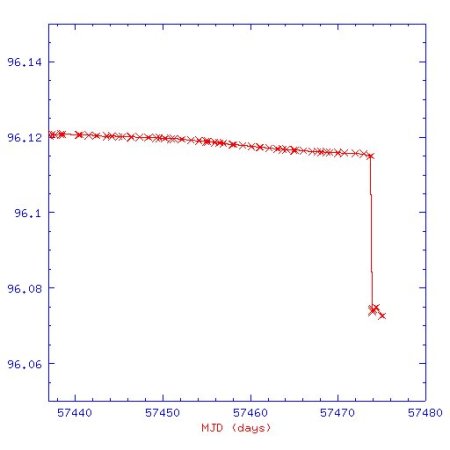
One of the stories I’ve been following a bit while taking a break from blogging has been that of the Japanese X-ray satellite Hitomi (formerly known as ASTRO-H), which was launched into a low-Earth orbit on February 17th 2016, experienced a “communication anomaly” on Saturday March 26th. It has now become clear that this was more than a simple communications glitch. Astronomer Jonathan McDowell posted this diagram on Twitter that showed a sudden decrease in the orbital period of the satellite:CekOyLxXEAAeNxF

Students of orbital dynamics will know that a decrease in orbital period corresponds to a decrease in the semi-major axis of the orbit, so Hitomi actually fell during this episode. It dropped only slightly – look at the % change on the graph – but by enough to be very worrying.

The plot thickened still further when radar detected five pieces of debris near the satellite and visual observations indicated the spacecraft to be tumbling rapidly. That suggested a very grim picture.

Putting the evidence together it seems that some kind of explosive event – possibly connected with out-gassing of cryogenic material from one of the on-board experiments – had damaged the satellite, changed its orbit and set it spinning uncontrollably.

Since then ground stations have picked up some signals from Hitomi, which is good news,  but these broadcasts are just from the on-board beacon. It has not yet proved possible to communicate with the attitude control system which is the only way to get it back into a stable state.

Obviously it’s touch and go as to whether the Japanese Space Agency JAXA will be able to regain control of Hitomi, but at least there’s more hope than on Saturday when many of us thought the vehicle had fallen apart. In fact the pieces of debris reported may be rather small (ten cm or so is detectable) and the main body of the telescoper may be intact. Maybe.

Update: April 1st. Tracking facilities are now reporting 11 pieces of debris, and also suggesting the object whose period is plotted in the above graph may not be the main part of the spacecraft. This does not sound good.

Update: April 2nd. The debris from Hitomi has now spread out due to different orbital speeds. The two largest pieces are both spinning out of control. I would say at this point that hope of a recovery has now disappeared. It’s very sad.

How to cite social media in academic writing

Posted in Uncategorized on March 30, 2016 by telescoper

I have often wondered how to do this properly. Now I know!

I am told my blog has been cited in the literature a few times but I have been unable to find any evidence for this as I don’t think there’s any mechanism for tracking citations to blogs. Or is there?

Sue Beckingham's avatarSocial Media for Learning

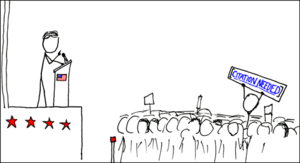
Image source: https://en.wikipedia.org/wiki/Wikipedia:Citation_needed Image source: https://en.wikipedia.org/wiki/Wikipedia:Citation_needed

Referencing and citation is an important part of any writing. This post looks at some recommendations and consideration when citing social media. Citations have several important purposes:

  • to uphold intellectual honesty (or avoiding plagiarism),
  • to attribute prior or unoriginal work and ideas to the correct sources, to allow the reader to determine independently whether the referenced material supports the author’s argument in the claimed way,
  • and to help the reader gauge the strength and validity of the material the author has used. (Wikipedia)

At Sheffield Hallam University (SHU) the Guide to Referencing offers detailed guidance for producing citations and references according to the Harvard method in the Harvard-SHU style recommended by the library. You may be asked to use another method, or a variation of the Harvard style. If this is the case, you may wish to refer to guidance that matches this style. However the recommendations below…

View original post 834 more words

Farewell, Independent, and thanks for all the dictionaries..

Posted in Biographical, Crosswords, Uncategorized with tags , , , , , on March 30, 2016 by telescoper

I thought I’d resume blogging activity rather gently with a short post to mark the end of an era. Both the Independent and the Independent on Sunday have ceased to exist, at least in their print editions.  It was about three years ago that I switched from the Observer to the Independent on Sunday, which involved switching from the Azed cryptic crossword to Beelzebub for my most testing weekly crossword challenge. I stopped doing the Saturday Prize Cryptic puzzle in the Saturday Guardian too, in favour of the Independent Saturday Prize crossword in the Independent which immediately paid dividends in terms of prizes!

For crossword aficianados both the Azed and Beelzebub crosswords are composed by strict adherents of the rules set by the great Ximenes and both feature grids with no black squares, in contrast to the more normal Everyman puzzle. Jonathan Crowther, who sets the Azed puzzles is the successor to Ximenes in the Observer; he’s been setting puzzles there since 1971.

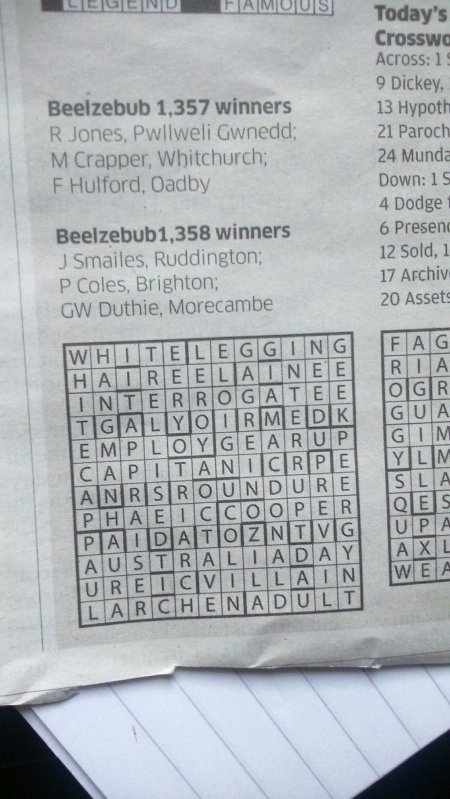
Anyway, the last Independent on Sunday was published on Sunday 20th March and it included a list of the winners of the last two Beelzebub puzzles; the very final one was No. 1,358:

Beelzebub

It’s a nice way to mark the end of an era! One last dictionary to add to the collection. I’ve completely lost track of the number of books of words I’ve won from the weekly puzzles in the Independent, but it’s certainly more than 50. I’ve given many away but there’s still a large stack in Dorothy’s office.

Anyway, I spent some of my Easter weekend off doing the Guardian  prize crossword (extra-large size, but quite easy) followed by Everyman and Azed in the Observer. I guess that’s my diet from now on…


Interlude

Posted in Uncategorized on March 19, 2016 by telescoper

For reasons I’d rather not go into at the moment, I’ve decided to take a break from blogging for a while. I’ll probably be back after Easter, but in the meantime there will be a short intermission.


More fine structure silliness …

Posted in Bad Statistics, The Universe and Stuff with tags , on March 17, 2016 by telescoper

Wondering what had happened to claims of a spatial variation of the fine-structure constant?

Well, they’re still around but there’s still very little convincing evidence to support them, as this post explains…

R.I.P. Asa Briggs (1921-2016)

Posted in History with tags , , on March 16, 2016 by telescoper
ASA

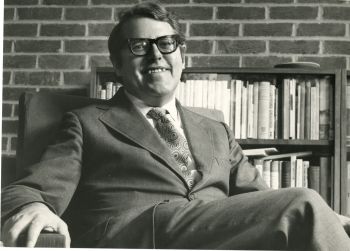
Asa Briggs (1921-2016)

The frivolity of yesterday’s post it’s time today for a piece of sad news. Eminent historian and distinguished former Vice Chancellor Asa Briggs (Lord Briggs of Lewes) has passed away at the age of 94.

There will be many others who can comment more meaningfully on his immense contribution to academic research, but it seems to me that Asa Briggs was a rare example of a historian whose work transcended the boundaries of academic research. Even an ignorant astrophysicist like me has read his marvellous Social History of England , for example. He was Vice Chancellor of Sussex University from 1967 until 1976, but when he retired from his post as Provost of Worcester College, Oxford, in 1991, he lived in Lewes which is just a few miles up the road from the Falmer campus so his association with the University remained strong.

Having twice been based at Sussex during my career I was of course familiar with Asa’s name and work but it wasn’t until two years ago that I finally got to meet him, at a Commemoration Dinner in the Royal Pavilion. For some reason I was seated next to him at this event and we talked about a wide range of subjects, including football. He was quite frail at that time, but full of good humour and very friendly. In short he was excellent company and clearly a very nice man.

Rest in Peace Asa Briggs (1921-2016).


Cavete, Quod Idibus Martiis

Posted in Film, History with tags , , on March 15, 2016 by telescoper

Today is the Ides of March and we’re entering the final straight before crossing the finishing line of term and collapsing in a sweaty mess into the arms of the Easter holiday. I’ve been ridiculously busy today so, being too knackered to think of anything else to post, I thought I’d tap into a priceless bit of British cultural history relevant to this auspicious day.

This is from the First Folio Edition of Carry On Cleo, and stars the sublime Kenneth Williams as Julius Caesar delivering one of the funniest lines in the whole Carry On series. The joke may be nearly as old as me, but it’s still a cracker…


The Great Photon Escape

Posted in The Universe and Stuff with tags , on March 14, 2016 by telescoper

Although it won’t be launched for a few years yet, the communications team behind the James Webb Space Telescope project, or JSWST for short, is already gearing up. Here’s a nice video they’ve made which I came across the other day and thought I would share on here..