Campaigners warn on Guy Fawkes night pogonophobia

Posted in Beards, History on November 5, 2015 by telescoper

No beards on your bonfire please!!

kmflett's avatarKmflett's Blog

Beard Liberation Front

PRESS RELEASE           2nd November

Contact Keith Flett     07803 167266

CAMPAIGNERS WARN ON GUY FAWKES BONFIRE NIGHT POGONOPHOBIA

guy

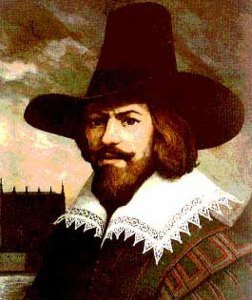
The Beard Liberation Front, the informal network of beard wearers, has warned of Guy Fawkes pogonophobia as bonfires around the country burn effigies of a hirsute man on Thursday evening and the following weekend.

Pogonophobia is the ancient Greek for an irrational fear or hatred of facial hair, known as beardism in modern English.

The BLF says that November 5th is the traditional highlight of the pogonophobes year as they burn an effigy of what they assume to be a dangerous radical figure with a beard, although few will openly discuss their often deep seated concerns about beard wearers

BLF Organiser Keith Flett said the irony is that Guy Fawkes was a deeply reactionary character who, had he lived now, would almost certainly not have had a beard under any…

View original post 32 more words

MADCOWS and Extreme Galaxy Clusters

Posted in The Universe and Stuff, Uncategorized with tags , , , on November 4, 2015 by telescoper

I thought I’d do a quick post just to have an excuse to post this very pretty picture I found in a press release from  JPL:

extreme cluster

This is a distant galaxy cluster found in the “Massive And Distance Clusters Of Wise Survey“, which is known by its acronym “MADCOWS”. Ho Ho Ho. If the previous link is inaccessible, because you don’t have a subscription, then don’t worry: the paper concerned is available for free on the arXiv. If the previous link isn’t inaccessible, because you do have a subscription, then do worry because you’re wasting your money…

Anyway the abstract of the paper, by Gonzalez et al., reads:

We present confirmation of the cluster MOO J1142+1527, a massive galaxy cluster discovered as part of the Massive and Distant Clusters of WISE Survey. The cluster is confirmed to lie at z = 1.19, and using the Combined Array for Research in Millimeter-wave Astronomy we robustly detect the Sunyaev–Zel’dovich (SZ) decrement at 13.2σ. The SZ data imply a mass of M200m = (1.1 ± 0.2) × 1015M, making MOO J1142+1527 the most massive galaxy cluster known at z > 1.15 and the second most massive cluster known at z > 1. For a standard ΛCDM cosmology it is further expected to be one of the ~5 most massive clusters expected to exist at z ≥ 1.19 over the entire sky. Our ongoing Spitzer program targeting ~1750 additional candidate clusters will identify comparably rich galaxy clusters over the full extragalactic sky.

I added the link to WISE, by the way.

This cluster is obviously an impressive object, and galaxy clusters are always “extreme” in the sense that they are defined to be particularly large concentrations of mass, but this one is actually in line with theoretical expectations for such objects. The following graph shows the spread of extreme cluster masses expected as a function of redshift:

If you mentally plot the mass and redshift of this beastie on the diagram you’ll see that it’s well within the comfort zone. As extreme objects go, this one is quite normal!

From Physics to Powerlifting!

Posted in Education, Sport on November 3, 2015 by telescoper

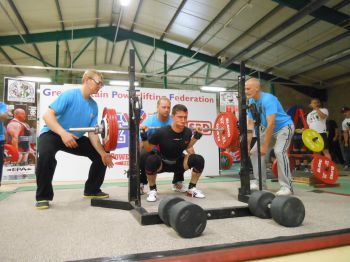
I couldn’t resist posting a quick item relating to Nathaniel Wiesendanger Shaw, a student in the Department of Physics & Astronomy here at the University of Sussex. Nathaniel is a student on our Theoretical Physics (Research Placement) programme, which means that he works during the summer gaps in his course attached to one of our research groups. He also survived my attempts to teach the joys of Green’s functions, conformal transformations and assorted topics in mathematical physics when he was in his 2nd year.

However that’s not the focus of a recent news item about him. Here he is in action:

Nathaniel

In fact Nathaniel is an accomplished powerlifter and, after a win in the All England Powerlifting Championships in August, he will soon be travelling to Canada to compete in the Commonwealth Championships in Vancouver. I don’t know the first thing about powerlifting, but I think this story just demonstrates that physics students can and do get involved in interesting stuff outside physics. In fact when I welcome new students at the start of each academic I stress how important it is to achieve a balance between work and life. I honestly believe that taking a break from studies to do something different every now and then – whether it’s sport or music or whatever – actually makes you a better student.

Anyway, good luck to Nathaniel in Vancouver in December!


Why I wear a poppy

Posted in Biographical, History with tags , , on November 3, 2015 by telescoper

Once again we’re coming up to Remembrance Sunday, an occasion to remember those who have given their lives in conflicts past and present. This is always held on the second Sunday in November in the United Kingdom, so that it is close to the date of anniversary of the armistice that formally ended the First World War, on 11th November 1918. Another way to commemorate this  is the observance of two minutes’ silence at 11am on 11th November itself. I plan to do that, next Wednesday (which is the 11th November). I’ve kept my calendar free at 11am precisely for that purpose.

Then there  is the wearing of a poppy. The poppy appeal raises money for veterans and their families, but the wearing of these little red paper flowers is something that not everyone feels comfortable with. Some people think that to wear a poppy is to celebrate militarism or even Britain’s imperialist past. I don’t see it that way at all. In fact, if someone asked me to wear a badge to support Britain’s participation in the invasion of Iraq, I’d certainly refuse.

I wrote about my reaction to the horror and futility of war some time ago, so I’ll try not to repeat myself except to say that, to me, the poppy is not about celebrating war or military prowess or imperialism, it’s simply about remembering those who died. In fact, one of the main reasons the paraphernalia of  Remembrance Day observances (the Poppy, the Cenotaph, the Tomb of the Unknown Soldier, etc) were set up in the first place was to remind not just people but also governments of the devastation caused by World War One. That’s why the Remembrance Day ceremonial laying of wreaths takes place in Whitehall, right at the heart of government. The ritual  was specifically intended to be a warning to the politicians who had brought the conflict about not to allow it to happen again.

As a young lefty student I grappled with the implications of the poppy appeal. The Peace Pledge Union produces white poppies, as an overtly anti-war symbol of remembrance. For a time I wore a white poppy but, although I am against war, I don’t think a policy of non-violence would have helped much against Hitler’s Nazi regime and therefore can’t really call myself an out-and-out  pacifist. One year I wore both white and red poppies, but since then I’ve decided to stick with a red one.

Of course many in the Establishment would like the poppy to turn into a symbol of obedience, a kind of alternative national flag. Some people choose not to wear it precisely because it has that implication. The sight of some hypocritical warmongerers wearing the poppy at the Cenotaph on these occasions sickens me, but their betrayal does not make me want to stop wearing it myself. Neither does the fact that our politicians seem content to give away the freedoms that so many died to protect.

People have  a wide range of views about the poppy and its meaning. There is no “right” answer – every person’s attitude is shaped by a number of factors, not least by whether or not they have lost a loved one in any form of armed conflict.  Some of us wear wear a poppy, some don’t. It’s a matter of choice. The fact that we have a choice is important in itself. I would probably refuse to wear a poppy myself if someone tried to make it compulsory.

Some poppy sellers use the slogan  Wear Your Poppy With Pride, but the original meaning  is much better expressed by the original, Lest We Forget. I’m not sure I wear mine with pride at all, in fact. What I feel is really more like shame, at the wastefulness and stupidity of armed conflict. I count myself incredibly lucky that I have never had to live through anything like that, not only because I’ve had a relatively peaceful and comfortable life, but also because I have never been tested in the way previous generations were. I wear the poppy to acknowledge their bravery and to recognize my own good fortune.  When I stand for the two minutes silence I remember those all who fell fighting on all sides of all wars, and  fallen civilians too.

When the newsreader Jon Snow decided not to wear a poppy on TV a few years ago, there were angry complaints. I’m sure he didn’t mean disrespect to the cause but disliked the pressure being put on him to conform. I can see his point. It has to be voluntary if it is to mean anything at all. . But in the end I agree with Euan Ferguson’s piece in the Observer a few years ago:

I don’t like pressure being put on people to conform. Orthodoxy and fear are always to be regretted and today’s society is over-condemnatory, swift to its manufactured outrage. But this change seems to have come from below, not been ordered by bullies: the daily reports of life and death in the forces, of the danger other 20-year-olds daily find themselves facing. And is the symbolism of the poppy being degraded as it is customised? No. You can’t do much to the fabulous simplicity of this symbol. And the poppy doesn’t preach: it’s not about “right” or “wrong” wars, but about brave dead soldiers. And the message was, never, Remember in the way we tell you to remember. It is, simply, Lest We Forget.

So, yes. I am wearing a poppy again this year. Lest we forget.

GEORDIE LAMP

Posted in History with tags , , on November 2, 2015 by telescoper

This reminds me of one of the two plausible explanations for the origin of the word “Geordie” – that miners from the Newcastle area favoured lamps of the type invented by George Stephenson described in this article, while those in the rest of the country (including the Midlands) used the Davy Lamp, invented around the same time in 1815.

The other explanation of the origin of Geordie relates to the 1715 Jacobite rebellion, when the city of Newcastle upon Tyne closed its gates to the rebel army from Scotland and declared its loyalty to King George I. The rebels were eventually defeated at the Battle of Preston.

The word “Geordie” is thus either 200 or 300 years old depending on which account you believe…

imechearchive's avatarIMechE Archive and Library

This year marks 200 years since the invention of the Geordie Lamp – a revolutionary invention by George Stephenson – which is on view off our reception until Christmas.

Committee for the Renumeration of George Stephenson for hi Committee for the Remuneration of George Stephenson for his Safety Lamp Invention

In 1812, Stephenson was an engine-wright at Killingworth High Pit. In this role, he was in charge of all of the colliery machine of the Grand Allies. Because this machinery was not only above ground, but also below, Stephenson spent a lot of time actually down in the mines carrying out maintenance and repairs. He was all too well aware of the poor working conditions that the miners had to deal with, and the casualties that took place due to firedamp explosions. Indeed, in a previous role, he had been working at the West Moor pit in when a firedamp explosion killed 10 miners.

Firedamp is the combination of…

View original post 520 more words

Fog

Posted in Poetry with tags , , on November 2, 2015 by telescoper

The fog comes
on little cat feet.

It sits looking
over harbor and city
on silent haunches
and then moves on.


by Carl Sandburg (1878-1967)


Interlude

Posted in Uncategorized on October 29, 2015 by telescoper

It now behoves me to spend some time away from the office. Normal service will be resumed as soon as possible but in the meantime there will be a short intermission…


1995 World Cup Memories

Posted in Biographical, Rugby with tags , , , , , , , , on October 28, 2015 by telescoper

So, the 2015 Rugby World Cup final takes place this weekend. It’s been an interesting tournament with some memorable games (and some notable disappointments). Anyway, I suddenly remembered that in 1995 I was in South Africa during the Rugby World Cup. In fact I was visiting George Ellis at the University of Cape Town to work on a book, which was published in 1997. The book is now rather out of date, but I think it turned out rather well and it was certainly a lot of fun working on it!

Was that really twenty years ago?

Of course it was a complete coincidence that I timed my trip to Cape Town exactly to cover the period of the Rugby Word Cup. Well, perhaps not a complete coincidence. In fact I was lucky enough to get a ticket for the semi-final of that tournament between England and New Zealand at Newlands, in Cape Town. I was in the stand at one end of the ground, and saw New Zealand – spearheaded by the incredible Jonah Lomu – score try after try in the distance at the far end during the first half. Here is the first, very soon after the kickoff when Andrew Mehrtens wrong-footed England by kicking to the other side of the field than where the forwards were lined up. The scrambling defence conceded a scrum which led to a ruck, from which this happened:

Even more impressively I had a very good view when Zinzan Brooke scored at the same end with a drop-goal off the back of a scrum. Not many No. 8 forwards have the skill to do that!

It was one-way traffic in the first half but in the second half England played much better, with the result that all the action was again at the far end of the pitch. However, right at the end of the match Jonah Lomu scored another try, this time at the end I was standing. I’ll never forget the sight of that enormous man sprinting towards me and am glad it wasn’t my job to try to stop him, especially have seen what happened to Underwood, Catt and Carling when they tried to bring him down.

Anyway, I hope it’s a good final on Saturday. For what it’s worth, I did pick the two finalists correctly before the tournament. I’m expecting the All Blacks to beat Australia comfortably, but am not going to bet on the result!

A Young Person’s Guide to Neutrino Physics

Posted in The Universe and Stuff with tags , , on October 28, 2015 by telescoper

I couldn’t resist sharing this charming video about neutrino physics. I don’t know who this Samantha is, but I think she’s a star!

Commercially-driven research should be funded by loans, not grants

Posted in Politics, Science Politics with tags , , , on October 27, 2015 by telescoper

I couldn’t resist a very quick comment on an item in yesterday’s Financial Times. The article may be behind a paywall, so here’s a short extract giving the essential point:

Ministers are considering proposals to replace research grants to industry with loans, in a move that business leaders fear would damage Britain’s ability to innovate.

The reason for mentioning this is that I suggested the very same idea on this blog about five years ago. My general point was the logical inconsistency in swapping grants for loans in the case of university students on the grounds that they are the beneficiaries of education and should be able to pay back the investment through earnings, when the same argument is not applied to businesses that profit from university-based research. I wonder if BIS have been reading this blog again?

For what it’s worth I’ll repeat here my personal opinion view that “commercially useful” research should not be funded by the taxpayer through research grants. If it’s going to pay off in the short term it should be funded by private investors or venture capitalists of some sort. Dragon’s Den, even. When the public purse is so heavily constrained, it should only be asked to fund those things that can’t in practice be funded any other way. That means long-term, speculative, curiosity driven, scientific research.

This is pretty much the opposite of what the Treasury seems to have been thinking for the last five years. It wants to concentrate public funds in projects that can demonstrate immediate commercial potential. Taxpayer’s money used in this way ends up in the pockets of entrepreneurs if the research succeeds and, if it doesn’t, the grant has effectively been wasted. My proposal, therefore, is to phase out research grants for groups (either in universities or in business) that want to concentrate on commercially motivated research and replace them with research loans. If the claims they make to secure the advance are justified they should have no problem repaying it from the profits they make from patent income or other forms of exploitation. If not, then they will have to pay back the loan from their own funds (as well as being exposed as bullshit merchants). In the current economic situation the loans could be made at very low interest rates and still save a huge amount of the current research budget for higher education. Indeed after a few years – suggest the loans should be repayable in 3-5 years, it would be self-financing. I think a large fraction of research in the Applied Sciences and Engineering should be funded in this way.

The money saved by replacing grants to commercially driven research groups with loans could be re-invested in those areas where public investment is really needed, such as pure science and medicine. Here grants are needed because the motivation for the research is different. Much of it does, in fact, lead to commercial spin-offs, but that is accidental and likely to appear only in the very long term. The real motivation of doing this kind of research is to enrich the knowledge base of the UK and the world in general. In other words, it’s for the public good. Remember that?

Most of you probably think that this is a crazy idea, but if you do I’ll ask you to now think about how the government funds teaching in universities and ask yourself why research is handled in such a different way.